As OpenAI angles its way into healthcare, Anthropic is hot on its tail.
On Sunday, it announced Claude for Healthcare, a suite of tools that allow healthcare providers and consumers to leverage the company’s chatbot for medical purposes through “HIPAA-ready products.”
Claude can now review prior authorization requests, appeal insurance claims, triage patient messages, and support healthtech development for startups, Anthropic said in its announcement.
For patients, users can grant Claude access to lab results and health records to summarize medical history, explain test results, and recognize patterns in fitness and health metrics. Anthropic said the “integrations are private by design,” noting that users can choose exactly what information they want to share with Claude, must explicitly opt in to allow the chatbot access to their records, and that the data will not be used to train models.
In a livestream on Monday, Anthropic CEO Dario Amodei said the AI and medical fields need to work together to deploy it safely, ethically, and quickly. “Healthcare is one place you do not want the model making stuff up,” he said.
“It’s not a replacement for a doctor … it’s a second opinion, and that is usually very helpful,” Amodei added. “Not everyone is getting the quality of care that they could get if they had the help of these systems.”
The release comes days after OpenAI debuted ChatGPT Health, which provides users with personalized health and wellness insights on topics like workouts, diets, and test results, based on their medical records and synced data from fitness apps. And on Monday, OpenAI announced it was acquiring a one-year-old startup, Torch Health, to bolster health record ingestion in ChatGPT Health.
Beyond personal health recommendations, several tech giants are eyeing biotech and life sciences to make better use of AI.On Monday, Nvidia and Eli Lilly announced a $1 billion investment over five years into a lab that would use AI to aid in drug discovery. Additionally, Nvidia and Microsoft researchers, working on an international team, used AI to discover new gene-editing and drug therapies.
But getting AI involved in personal health can be a risky endeavor, as evidenced by Google’s withdrawal of AI health summaries after serving up inaccurate and misleading healthcare information that put users at risk.
AI in healthcare is a double-edged sword. Of course, AI has fundamental issues that make its usage in health problematic. These systems still hallucinate and offer up false information with full confidence. AI models are also parrots, ready to spill out their training data when prompted in just the right way. But the US has a healthcare problem, with more than 26 million people, roughly 8% of the population, currently uninsured. And with 40 million people a day already asking ChatGPT for healthcare advice, these tech firms face the challenge of making their models as safe and accurate as possible when health and safety are at stake.
For millions of people, losing their sense of smell quietly reshapes daily life.Meals lose nuance, familiar places feel strangely distant, and critical warning signals like smoke, gas or spoiled food become harder to register.Smell’s deep links to memory and emotion make its absence especially disorienting, and once damaged, the system is notoriously difficult to restore. That challenge has led some researchers to stop asking how to fix smell, and start asking whether its information might reach the brain another way.
Smell loss, or anosmia, affects tens of millions of people worldwide, often following viral infections,head trauma, or neurological disease.Unlike vision or hearing, olfaction depends on fragile neural pathways that connect directly to brain regions involved in emotion and memory. When those pathways are disrupted, the result is not just sensory loss, but a profound change in how people experience the world.
In a study published in Science Advances, researchers explored an alternative strategy that sidesteps the damaged olfactory system entirely. Instead of trying to restore smell itself, they focused on preserving what smell provides: information about the chemical environment around us. In other words, they asked whether perception could be rebuilt by disentangling how odors are detected from how they are experienced.
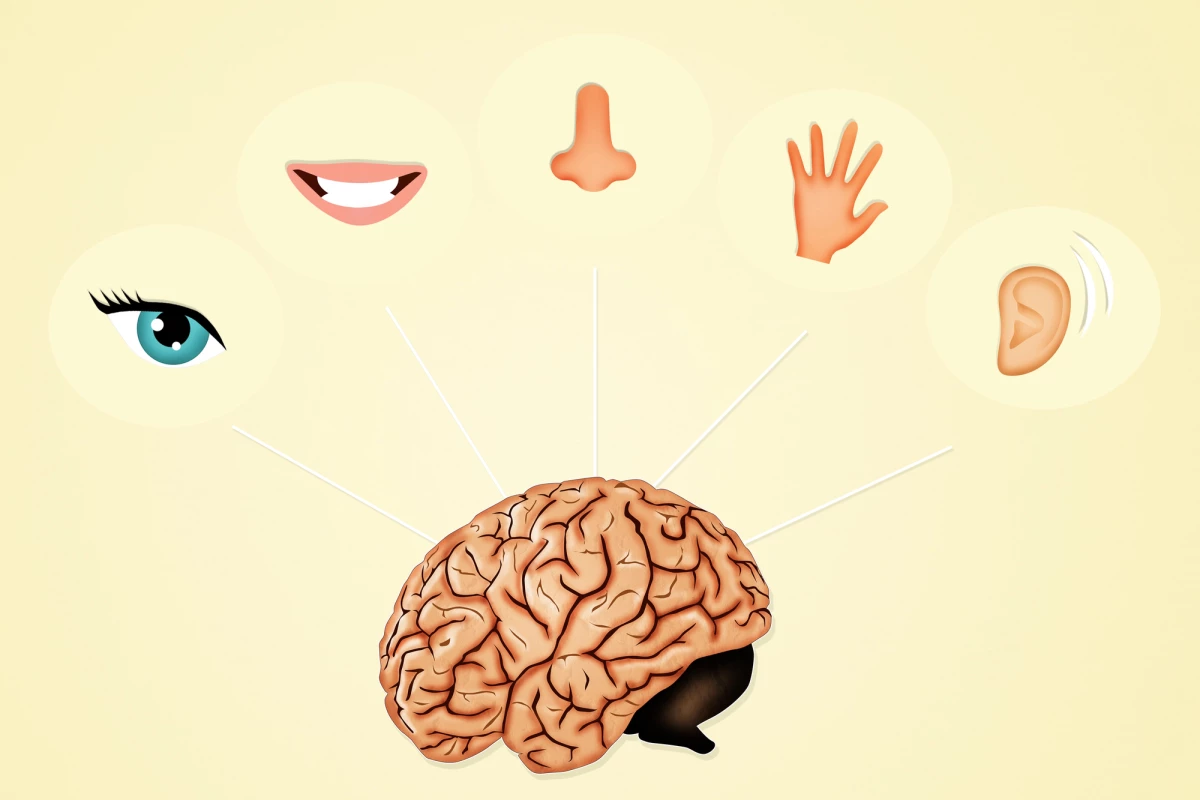
Their prototype device does exactly that. It separates detection from perception, first capturing odors in the air with an artificial sensing system and translating them into a digital signature. That information is then delivered to the brain through a different sensory channel, one that remains functional even when smell is lost. Rather than activating the olfactory nerve, the system stimulates the trigeminal nerve, a sensory pathway in the nasal cavity responsible for conveying touch, temperature, and irritation.
The stimulation produces a distinct physical sensation inside the nose. Users are not smelling in the traditional sense. Instead, with training, the brain learns to associate specific stimulation patterns with particular odors, allowing people to tell smells apart through sensation rather than scent. In effect, the brain builds a new interpretive map, using touch to stand in for chemical perception.
This approach draws on a concept known as sensory substitution, in which information from a missing or impaired sense is rerouted through a functioning one.The nasal cavity is uniquely suited for this strategy because it houses both systems side by side: the olfactory network for smell and the trigeminal system for somatosensory signals. By leveraging that second pathway, the device offers a way to transmit odor information without relying on the damaged circuitry of smell.
To test the idea, the researchers ran a series of experiments involving 65 participants, including people with normal olfaction and others with partial or complete smell loss. Participants were able to detect odorant molecules using the device, and most could reliably distinguish between different odors. Crucially, the system performed just as well for individuals who could not smell as it did for those who could, suggesting that the trigeminal pathway provides a stable and broadly accessible route for transmitting these signals.
The device does not restore the sensory richness or emotional immediacy of smell, and the researchers are careful not to frame it as a replacement. At this stage, it remains a proof of concept. But it demonstrates something new: that the brain can learn to access chemical information through touch when smell itself is no longer available.
More broadly, the work reflects a shift in how sensory loss might be addressed. Rather than focusing solely on repairing damaged systems, it suggests that perception itself can be rebuilt by translating information across senses.
For people living with anosmia, that reframing offers a quieter form of possibility, not the return of smell, but a new way to engage with the chemical world through learning, adaptation, and experience.
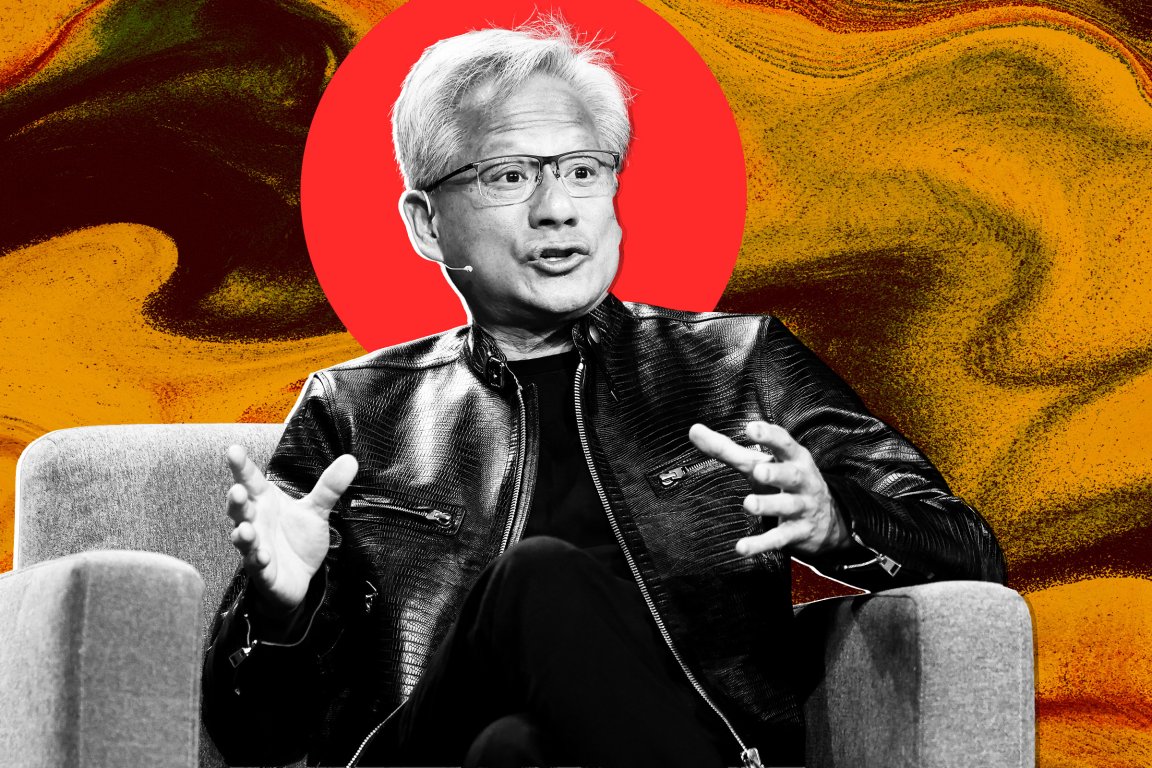
Illustration by Tag Hartman-Simkins / Futurism. Source: Caroline Brehman / AFP via Getty Images
Commander of multi-trillion dollar computing hardware empire Jensen Huang thinks everyone should stop being so negative about AI and all the ways it could potentially upend civilization, because it’s a “doomer narrative” that’s “not helpful to society,” TechSpot reports.
The Nvidia chief made these remarks during a recent episode of the No Priors podcast, in which he more or less dismissed dire predictions for AI’s future as nothing but science fiction.
“I think we’ve done a lot of damage with very well-respected people who have painted a doomer narrative, end of the world narrative, science fiction narrative,” Huang said. “And I appreciate that many of us grew up and enjoyed science fiction, but it’s not helpful. It’s not helpful to people. It’s not helpful to the industry. It’s not helpful to society. It’s not helpful to the governments.”
“Doomer messages causes policy, and that policy may affect the industry in some way,” he added.
Scrambling his take somewhat Huang then caveated that he doesn’t totally dismiss everything that AI critics have to say.
“It’s too simplistic to say that everything that the doomers are saying are irrelevant,” Huang said. “That’s not true. A lot of very sensible things are being said,” he added, neglecting to provide any examples.
Nvidia’s chips are essential for training AI models, and the rabid demand for them has catapulted the chipmaker to a nearly $5 trillion valuation. To keep the gravy train going, Huang has sometimes been even more of an AI booster than the actual AI companies themselves. When Anthropic CEO Dario Amodei warned that AI could erase half of entry-level white collar jobs in the next five years, Huang countered that Amodei was just fearmongering to make it seem like Anthropic was the only company responsible enough to build AI.
And to be fair to Huang, it’s a good point, with a lot of apocalyptic-sounding warnings of AI risks tending to distract from its more mundane issues. Nonetheless, Huang has made plenty more outlandish AI claims himself, such as reportedly telling his employees that they’re “insane” if they don’t use AI to do everything — nevermind his out-of-touch proclamation that AI won’t take your job, but will instead make you work even harder.
I’m a tech and science correspondent for Futurism, where I’m particularly interested in astrophysics, the business and ethics of artificial intelligence and automation, and the environment.
Dusty Deevers: Islam Is Not Merely A Religion Like So Many People Say. It's A Military Conquest And Terrorism Driven Civilization That Is Particularly At War With Christian Civilization. @DustyDeeverspic.twitter.com/nUeNdkpxT9
🚨 JUST IN: Democrats are now TERRIFIED that the Trump affordability agenda is surging ahead of the midterms
– 1 year 10% cap on credit card rates – BLOCK big investors from buying up homes – Force Big Tech to pay their own electricity at data centers – $200B mortgage bond… pic.twitter.com/qJeUnqwD8a
Published: Jun 17, 2025, 13:16 IST | Updated: Jun 17, 2025, 13:16 IST
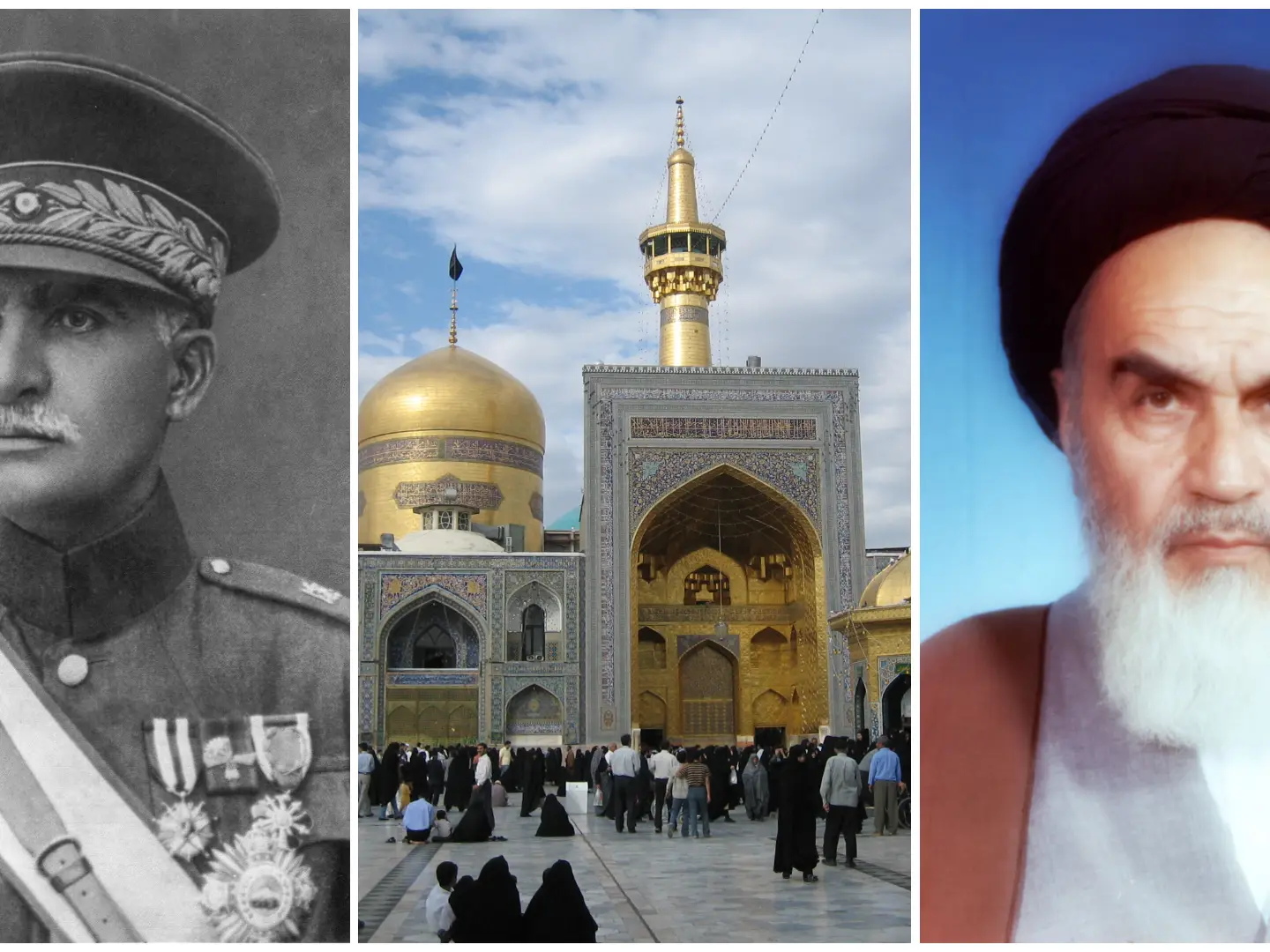
Reza Shah Pahlavi, Imam Reza shrine, and Ayatollah Khomeini are shown in this combo Photograph: (others)
Story highlights
Did you know that Iran, once part of the vast Persian empire, was a much more secular, hybrid and tolerant nation?
Israel’s attacks on Iran and its counteroffensive have brought unprecedented global attention to the Islamic Republic and its regime. Many are wondering how the theocratic state became the arch rival of the Jewish nation, leading to the current flare-up of hostilities. The religious identity of Iran, as an Islamic Republic, is at the core of its political and strategic belligerence towards Israel. But did you know that Iran, once part of the vast Persian empire, was a much more secular, hybrid and tolerant nation?Let’s dive into how Iran moved from a hybrid-secular nation to an Islamic country.
Religious makeup of Iran
Iran is a Muslim-majority nation, with nearly 99 per cent of the population self-identifying as Muslim. Out of this, nearly 95 per cent or around 85 per cent of the total population, isShia Muslim. Shias, who number around 80 million out of the nearly 87.6 million total population, are the majority community. Shia Islam was established as the official state religion during the Safavid dynasty of 1501–1736.
Sunni Muslims, while a prominent community in the rest of West Asia, are a minority in Iran, consisting of around 5 to 10 per cent of the Muslim population, or up to 10 per cent of the total population, and is estimated to be around 9 million people (Note that these are only figures in a range, as there could be undercounting of several minority communities). Most Sunnis belong to ethnic minority groups like the Kurds, Turkmen, Arabs, Baloch, and some Persians, and live mainly in provinces like Kurdistan, Sistan-Baluchistan, and Hormozgan.
Non-Muslim communities are less than 1 per cent of the population. They include Christians, Baha’is, Zoroastrians, Jews, Yarsanis, and Sabean-Mandaeans.
Note that many of the minority communities were persecuted, exiled or undercounted. Iran once hosted one of the largest Jewish populations in the region, for instance, before many of them were forced out. In Iran’s past, Zorastrians – or Parsis – were driven out by Muslim conquerers and went into exile to various countries, including India. Bahai’s are another silenced community.
Is Islam really a big part of Iranians’ daily life?
Given the population figures, the obvious answer is yes, but there are some shifts observed by recent surveys, like the one by GAMAAN in 2020.
It found that only 40 per cent of respondents self-identified as Muslim (32 per cent Shia, 5 pc Sunni and 3 pc Sufi).
There may be a bias in this study as the survey might have been done only among urban and literate respondents.
Was Iran less ‘Islamic’ before 1979?
The best way to describe Iran just before the Islamic Revolution of 1979 would be as hybrid-secular. Under the Pahlavi dynasty of 1925–1979, which ruled just before the 1979 Islamic Revolution, religion and state were partially separated.
Reza Shah Pahlavi, who ruled from 1925–1941, led a modernisation drive in Iran, offering a limited amount of secularisation. The Shah cut down the Shia clergy’s influence. He centralised state power and brought in legal codes influenced by the West. He brought in secular reforms like a ban on the hijab in 1936, and promoted Western dress. Under his rule, mosques and Islamic seminaries lost autonomy, with the state taking control of education and judicial systems.
Mohammad Reza Shah, who ruled from 1941–1979, continued with these policies. The stress was on modernisation and Westernisation, with undercurrents of secularism.
The Islamic clergy was marginalised, with new reforms like the 1963 White Revolution, which included land reforms and women’s suffrage.
The state, not the clergy, was in charge of waqf, or Islamic religious endowments.
Secular laws were introduced on many aspects of life, even as Shia Islam remained the official state religion as enshrined in the 1906 Constitution.
Side note here: The secular policies were creating disenchantment in Islamic clerics and religious people. There was also criticism that the Shah dynasty was beholden to the Anglo-American powers and former colonialists. Another point to note is that Iran was not fully secular like Turkey at the time, as the Shahs had continued the state’s links to Shia Islam. Much of the society was still very religious.
The Islamic clergy continued to have influence in rural areas and among traditional people who opposed the Shahs.
So at best, Iran under the Pahlavis can be described as a hybrid of monarchy with secular laws and reforms, with a society that was still largely followers of Shia Islam.
Under the Shahs, the state looked back at Iran’s pre-Islam past for inspiration and national identity, based on its Persian heritage, with events celebrating Cyrus the Great, even as it sidelined Islamic religious authorities.
Such a secularism, brought by decree from the top, had its pitfalls. As mentioned earlier, the Islamists and conservative sections of the society were angry, and that resentment was a factor that led to the Islamic Revolution.
What was Iran’s religion before it became a nation?
Remember that Iran, in its current form as a nation, is part of a vast Persian empire that once spanned almost half the globe. So one has to look at present-day Iran as an inheritor of millennia of evolution when it comes to religion.
Pre-Islam Iran was the land where religions came and went
From around 1000 BCE to 651 CE, Zoroastrianism was the predominant religion of empires centred around present-day Iran. The Achaemenid, Parthian and Sasanian empires had a religion that stressed on good versus evil. Ahura Mazda was their supreme deity. Fire temples and priestly classes known as the Magi were central to religion.
Under these empires, new religions and cults emerged, and old ones are thought to have coexisted with them.During Achaemenid Empire, other communities that lived in the Persian region included Jews, Christians, and those following Mithraism and Manichaeism.
The Muslim conquest of 651 CE started the change in Iran’s religious landscape
Islam was introduced to the Iranian region through the Arab Muslim conquests. Over the subsequent centuries, most Iranians converted, mainly to Shia Islam.
By the 10th century AD, Shia Islam became deeply rooted in Iran, particularly with the Buyid dynasty and Safavids. At this time, Zoroastrians were persecuted. They and other minorities like Jews and Christians lived as protected, yet second-class citizens, generally known as ‘dhimmis’.
Safavid Dynasty of 1501–1736 enforced the conversion of the Sunni population and established a strong Shia clergy. This was the era that brought in Iran’s current Shia national identity. The Qajar Dynasty of 1789–1925 continued the Shia dominance, with the clerics given vast powers over key aspects of life like law and education.
The stranglehold of religion was eased with the Constitutional Revolution
In the late 19th century, during and under the influence of British colonialists, Western ideas like nationalism and constitutionalism were introduced to Iran.
This led to the 1906 Constitutional Revolution, and Iranian nationhood. The constitution, while keeping Shia Islam as the state religion, still allowed limited religious freedoms for minorities like Zoroastrians, Jews and Christians.
A parliament was introduced, and the powers of the monarchy, by this time under attack by the Western colonial powers, had been weakened.
Iran’s transition from semi-secular to Islamist
Resentment towards the Pahlavi Dynasty of 1925–1979, particularly about its promotion of a pre-Islamic identity for Iran, was the seed for the Islamic Revolution of 1978–79. The clergy, whose powers were cut short by the Shahs, wanted to gain back control. Socially, Shia Islam was still the dominant force, which meant that at the ground level, religious minorities faced discrimination despite the legal protections ensured in the constitution.
The Islamic Revolution was in fact, prompted and led by a disgruntled group of clerics, conservatives and traditionalists. They saw in the Shah’s dynasty the influence of Western cultural imperialism, which was aimed at preserving the Anglo-American interests, mainly in the then recently-emerged oil wealth of Iran. While the Western powers continued to plunder Iran’s wealth, the country’s economy suffered under the Shahs.
It is from this disgruntlement that figures like the Ruhollah Ayatollah Khomeini emerged.
Khomeini, who was living in exile at the time, advocated for a nation governed under Islamic principles. That was the beginning of the Islamic Revolution of 1979.
Post Islamic Revolution: How Iran went back to Shia Islam
The Islamic Revolution was a reaction to both the Shah regime, and the Anglo-American petrodollar interests that kept it in power.
At the time, a return to Islamic principles was seen as the best way for Iran to come out of the Western influence, with the accusation that Iran’s economy was suffering at the hands of the British-US duo, particularly the oil.
After the Islamic Revolution, Khomeini established a nation under the so-called Velayat-e Faqih or Guardianship of the Islamic Jurist. Once again, Shia Islam, already the dominant religion, became the preeminent force of the state, with a cleric, the Supreme Leader in the form of Khomeini, becoming the ultimate authority.
Sharia law changed the face of Iran’s religious life
A new constitution, established in 1979 enshrined Shia Islam as the state religion. Sharia, or Islamic law became the governing force for legal, social, and political aspects of Iran.
Under Sharia, the state strictly enforced Islamic codes on dress and behaviour. Shia rituals like Ashura became central to national identity, and the clergy dominated politics and education.
Technically, the non-Shia Muslims such as the Sunnis, as well as Zoroastrians, Jews, and Christians are recognised as minorities, but in reality, their rights are limited, while unrecognised groups like Baha’is face persecution.
Currently, Iran remains a theocracy, with Shia Islam as the ideological backbone.
The government funds religious institutions, and the clergy controls key sectors.
Will Iran go back to being hybrid -secular?
Dissent is actively curtailed in Iran, which has witnessed several movements against the theocratic state, all of which were forcibly suppressed. Many of these movements are secular and reformist in nature, but are concentrated in urban youth and intellectuals, while the rural folk still remain highly religious.
There is a segment of society yearning for reform and more liberal attitudes towards religion and life, yet the state retains tight control over these matters.
Sometimes, these tensions come to the fore, as seen in the 2022 anti-veil protest in the wake of Mahsa Amini’s death in police custody.
For the time being, those wanting reforms and the Islamist state are in a tense coexistence.
Vinod Janardhanan, PhD writes on international affairs, defence, Indian news, entertainment and technology and business with special focus on artificial intelligence. He is the de…Read More
The president went as far as to sign an executive order calling the highly addictive and extremely potent synthetic opiate a “weapon of mass destruction.”
Yet the latest research shows something inconvenient for that narrative: a sharp reduction in fentanyl overdoses that started before Trump took office, almost certainly in response to policy under his predecessor Joe Biden.
As researchers noted in a paper published in the journal Science this week, fatal overdoses from synthetic opioids like fentanyl plummeted after peaking at 76,000 in 2023 in the US, dropping by over a third by the end of 2024. (Full numbers aren’t in yet for 2025, but provisional data from the CDC suggests another double-digit percentage drop.)
The researchers proposed a possible explanation, writing that a “major disruption in the illicit fentanyl trade, possibly tied to Chinese government actions,” may have “translated into sharp reductions in overdose mortality beginning in mid- or late-2023 and continued into 2024 across both the US and Canada.”
In other words, as Axiom reports, diplomatic pressure has proven far more effective than efforts to crack down on drug dealers on the street.
“That is heartening because street-level enforcement can result in large and racially disproportionate increases in incarceration while at the same time there is little evidence that tougher domestic enforcement, either at the street level or at the wholesale level, can make drugs more expensive or make them harder to acquire,” the paper reads.
The researchers used data from the US and Canadian governments, as well as discussions on Reddit, to come to their conclusion. They found that Beijing starting to shut down Chinese companies that were supplying Mexican criminal groups with precursor chemicals to fentanyl in 2023 was associated with the decline in fentanyl deaths.
In other words, a major supply chain disruption, which started long before Trump started his second term, was likely behind the decline.
The US Drug Enforcement Administration also noted in its 2025 National Drug Threat Assessment that Chinese chemical suppliers were “wary of supplying controlled precursors to its international customers, demonstrating an awareness on their part that the government of China is controlling more fentanyl precursors.”
“This demonstrates how influential China can be and how much they can help us — or hurt us,” Keith Humphreys, coauthor and former White House drug policy adviser under president Barack Obama, told the Washington Post.
It’s not a given that the positive trend will continue. For one, CDC data found that there was a small increase in fatal overdoses between January 2024 and January 2025, bucking seventeen months of declines.
University of North Carolina epidemiologist Nabarun Dasgupta suggested there may be a far simpler reason why overdoses dropped: the habits of drug users may have changed, with some choosing to cut back.
“It’s not a straight line between drug supply and overdose deaths because of protective behaviors that have been adopted in between,” he told WaPo.
I’m a senior editor at Futurism, where I edit and write about NASA and the private space sector, as well as topics ranging from SETI and artificial intelligence to tech and medical policy.



&imwidth=800&imheight=600&format=webp&quality=medium "Muslim country Iran wasn't always ‘Islamic’: How it went from hybrid secular to theocratic state")