The Deep View: How AI could reshape human memory and attention

How AI could reshape human memory and attention
AI could change the way we remember, and the way we pay attention.
In Season 2, Episode 2 of The Deep View: Conversations, Editor-in-Chief Jason Hiner sits down with Bobak Tavangar, CEO of Brilliant Labs, one of the most intriguing startups in AI hardware today.
While trillion-dollar giants like Meta and Google race to define the future of AI glasses, Brilliant Labs is taking a radically different path: building in public, going open-source with both software and hardware, and centering their next product, the Halo glasses, around something deeply human.
How AI could reshape human memory and attention
The focus? A conversational AI agent for your long-term memories and conversations.
This isn’t just about smarter wearables. It’s about a bigger idea:
+ Can AI help us be more present, not less?
+ Could technology support memory, reflection, and intention instead of distraction?
+ What does privacy look like when AI can recall your life?
Jason and Bobak also explore:
What he learned during his time at Apple. Why AI hardware is one of the hardest frontiers in tech. The challenging process of finding a co-founder. Bobak’s philosophy on communicating on social media with purpose, not hype
Bobak is one of the most thoughtful founders in the AI space, consistently elevating the conversation beyond features and into questions of values, agency, and human experience.
If you care about where AI, wearables, memory, and attention intersect, this is a conversation you don’t want to miss.
Subscribe to The Deep View: Conversations podcast in your favorite podcast player for more unique conversations with the brightest minds solving the biggest challenges in AI. You can also subscribe on YouTube.
Posted in Uncategorized | Leave a comment

Elon Musk: Very long list. America should require ID to vote. It’s a no-brainer!

Elon Musk

@elonmusk

Very long list. America should require ID to vote. It’s a no-brainer!

Posted in Uncategorized | Leave a comment

Massimo: @Rainmaker: Before you lose your temper, remember: one minute of rage can come with a five-hour price tag on your health.

Massimo

@Rainmaker1973

Just 1 minute of anger can weaken your immune system for 4 hours. Before you lose your temper, remember: one minute of rage can come with a five-hour price tag on your health.

Research shows that even a brief outburst of anger floods the body with stress hormones like cortisol, which can shut down parts of your immune system for four to five hours afterward. During that window, your defenses against viruses, bacteria, and inflammation are noticeably weaker—leaving you more prone to getting sick.

It’s not only explosive anger that hurts. Chronic stress from bottled-up frustration or ongoing tension has the same corrosive effect, steadily eroding immunity and raising the long-term risk of heart disease, diabetes, and frequent infections.

The takeaway is clear: learning to stay calm isn’t just about feeling better in the moment. Simple tools—deep breathing, mindfulness, or a quick walk—can shield your body from the hidden damage of negative emotions. Keeping your cool quite literally keeps you healthier.

[Glaser, R., & Kiecolt-Glaser, J. K. (2005). Stress-induced immune dysfunction: Implications for health. Nature Reviews Immunology, 5(3), 243–251]

Posted in Uncategorized | Leave a comment

Carl Jung’s Final Message Before He Died : What He discovered. Jung’s Final TRUTH

Posted in Uncategorized | Leave a comment

China pulse: New Epstein files confirm … not only trafficked minors….

=============

Posted in Uncategorized | Leave a comment

MOATS Interview George Galloway and Professor Jeffrey Sachs: Trump is crazy Starmer is beyond Belief.

Posted in Uncategorized | Leave a comment

Philosopher Michael Sandel on the “Poisoning” of U.S. Politics : Amanpour & Co

Posted in Uncategorized | Leave a comment

Neuroscience.com: Hippocampus Predicts Rewards by Reorganizing Memories

Neuroscience News Logo

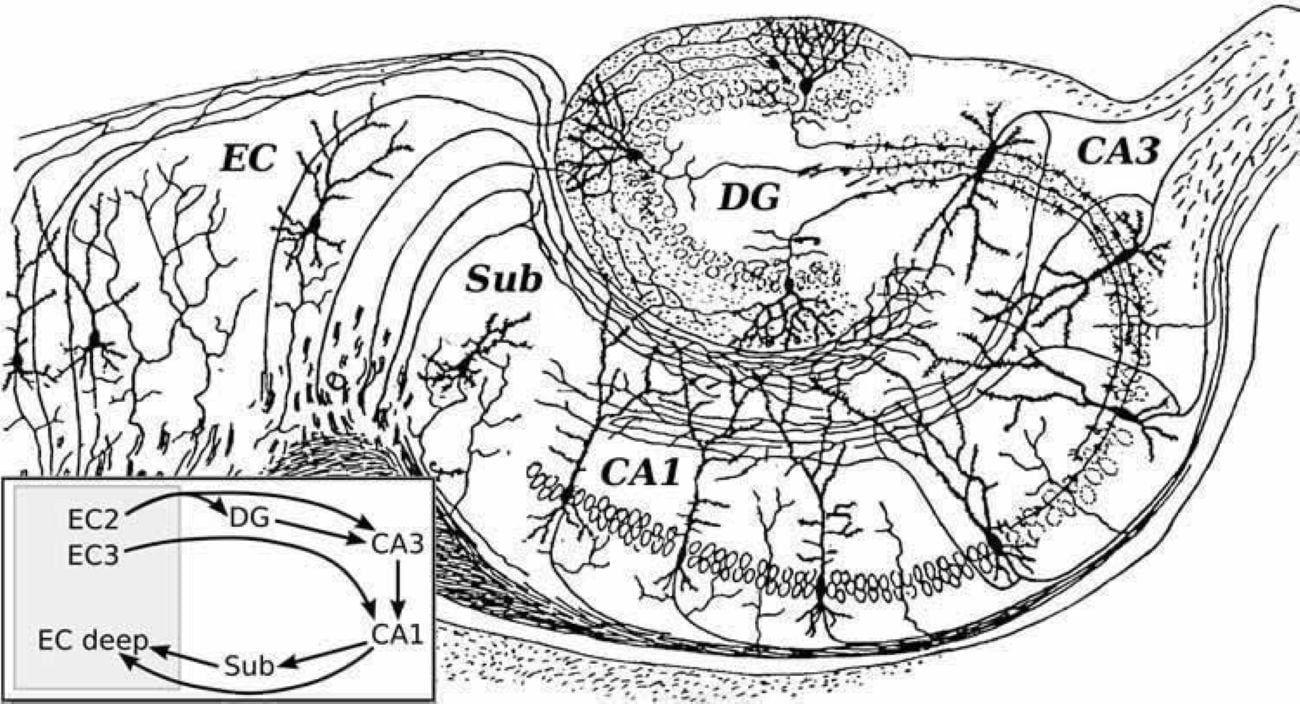
The image shows a drawing of a hippocampus.

The image of the hippocampus in the public domain.

Hippocampus Predicts Rewards by Reorganizing Memories

ElectrophysiologyFeaturedNeuroscience

·January 29, 2026

Summary: A new preclinical study reveals that the hippocampus does more than just store memories; it actively reorganizes them to predict future rewards. By tracking brain activity over several weeks, researchers discovered that hippocampal neurons shift their activity to fire before a reward is reached, essentially building a predictive model of the world. These findings offer a new framework for understanding why learning and decision-making are often the first functions to decline in Alzheimer’s disease.

Source: McGill University

Key Facts:

  • Predictive Mapping: The hippocampus updates its “internal model” of the world daily, shifting neural activity from the moment of reward to the moments leading up to it.
  • Advanced Imaging: Researchers used calcium imaging (making neurons glow) to track specific cells over weeks, capturing slow learning processes invisible to traditional electrodes.
  • Beyond Pavlov: While simple reward learning is linked to primitive brain circuits, this study shows the hippocampus uses complex memory and context for sophisticated anticipation.
  • Alzheimer’s Insight: The breakdown of this predictive signaling may explain why Alzheimer’s patients struggle with decision-making and learning from new experiences.

A preclinical study published in Nature has found evidence that the hippocampus, the brain region that stores memory, also reorganizes memories to anticipate future outcomes.

The findings, from researchers at the Brandon Lab at McGill University and their collaborators at Harvard University, reveal a learning process that had not been directly observed before.

“The hippocampus is often described as the brain’s internal model of the world,” said senior author Mark Brandon, Associate Professor in McGill’s Department of Psychiatry and Researcher at the Douglas Research Centre. “What we are seeing is that this model is not static; it is updated day by day as the brain learns from prediction errors. As outcomes become expected, hippocampal neurons start to respond earlier as they learn what will happen next.”

A new view of learning in action

The hippocampus builds maps of physical space and past experiences that help us make sense of the world. Scientists have known these maps change over time as brain activity patterns shift, a phenomenon that is currently assumed to be random.

The new findings demonstrate the changes are not random, but structured. Researchers obtained these findings by tracking brain activity in mice as the mice learned a task with a predictable reward.

“What we found was surprising,” said Brandon. “Neural activity that initially peaked at the reward gradually shifted to earlier moments, eventually appearing before mice reached the reward.”

Rather than relying on traditional electrodes, which can only track neurons for short periods, the researchers used new imaging techniques that cause active neurons to glow. The Brandon Lab is among the first in Canada to use this technology, enabling the team to follow cells over several weeks and track slow changes that traditional methods often miss.

Insights into learning and Alzheimer’s disease

Simpler forms of reward learning have long been associated with more primitive brain circuits, as famously demonstrated by Ivan Pavlov’s experiments, which showed that animals can associate a cue, such as a bell, with food. The new findings suggest the hippocampus supports a more sophisticated version of this process, using memory and context to anticipate outcomes.

Alzheimer’s disease patients often struggle not only to remember the past but also to learn from experience and make decisions. By showing that the healthy hippocampus helps turn memories into predictions, the study offers a new framework for understanding why learning and decision-making are affected early in Alzheimer’s disease and opens the door to research into how this predictive signal may fail and be restored.

Editorial Notes

  • This article was edited by a Neuroscience News editor.
  • Journal paper reviewed in full.
  • Additional context added by our staff.

About this Hippocampus Research

  • Source: McGill University
  • Contact: Keila DePape
  • Image: The image is in the public domain

Original Research:
“Predictive Coding of Reward in the Hippocampus” by Mohammad Yaghoubi and Mark Brandon et al., was published in Nature. This research was supported by funding from Fonds de recherche du Québec – Santé and the Canadian Institutes of Health Research.
DOI: 10.1038/s41586-025-09958-0 

About the Brandon Lab

The Brandon Lab was founded in 2015 at the Douglas Research Centre at McGill University by Professor Mark Brandon. The lab investigates the core mechanisms of memory, including how memories are encoded, stored, and retrieved in the brain. It also studies how memory breaks down in Alzheimer’s disease, with the goal of identifying strategies to protect and restore memory.

Posted in Uncategorized | Tagged , , , , | Leave a comment

Memory Rewritten: Study Finds No Clear Line Between Episodic and Semantic Retrieval

Neuroscience News Logo

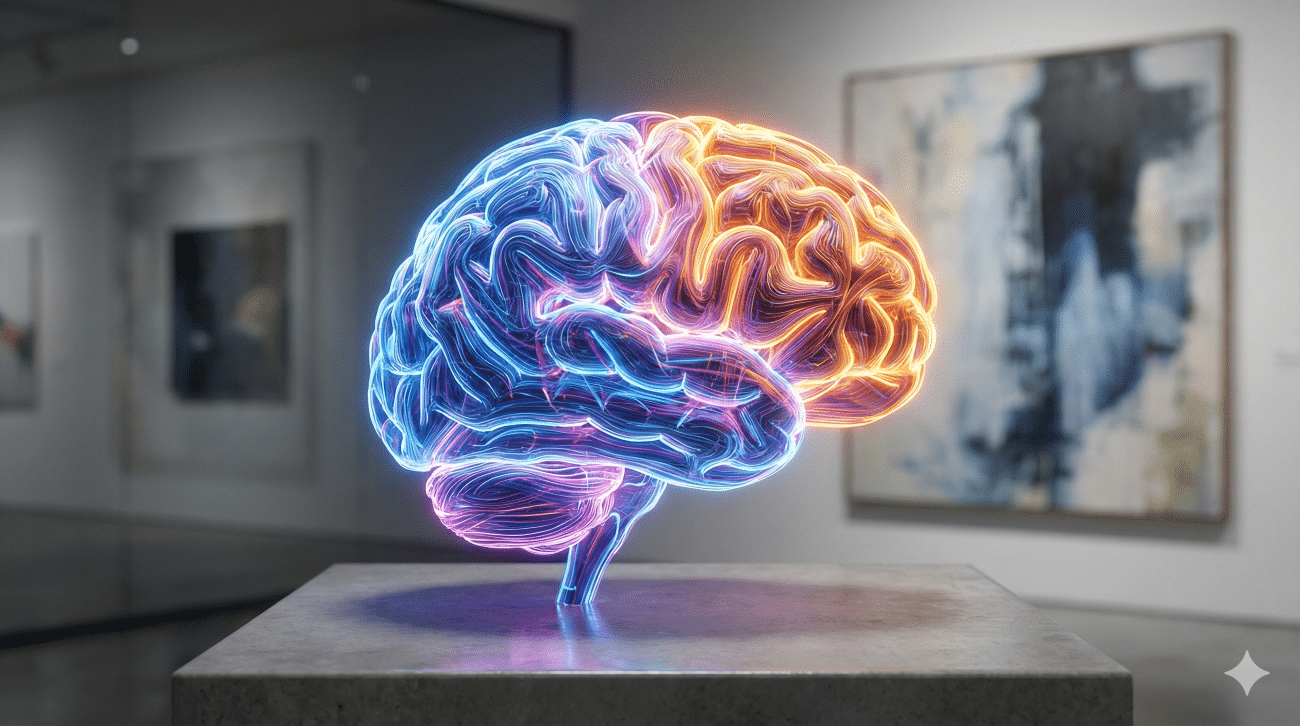
A realistic, modern art style 3D rendering of a human brain displayed on a concrete pedestal in a gallery setting. The brain is illuminated with intricate neon filaments in contrasting blue and orange, representing the intertwined nature of episodic and semantic memory.

The image is credited to Neuroscience News.

Memory Rewritten: Study Finds No Clear Line Between Episodic and Semantic Retrieval

Featured Neuroscience Psychology

·January 27, 2026

Summary: A new study into how different parts of memory work in the brain has shown that the same brain areas are involved in retrieving different types of information. The findings challenge the traditional view that episodic (personal) and semantic (fact-based) memories are processed by distinct systems.

Source: University of Nottingham

Key Facts:

  • The Discovery: Researchers found considerable overlap in brain regions involved in both semantic and episodic retrieval, contradicting the idea that they are distinct neural entities.
  • Methodology: The study used fMRI scans on 40 participants who recalled pairings between logos and brand names—some based on real-world knowledge (semantic) and others learned during the study (episodic).
  • Implications: Understanding that the “whole brain” is involved in different memory types could lead to new intervention strategies for Alzheimer’s and dementia.
  • Collaboration: The research was a joint effort between the University of Nottingham and the University of Cambridge.

A new study into how different parts of memory work in the brain has shown that the same brain areas are involved in retrieving different types of information, the findings could redefine how memory is understood and studied.

Researchers from the School of Psychology at the University of Nottingham and the Cognition and Brain Sciences Unit at the University of Cambridge have examined episodic and semantic memory, combining task based and fMRI data and have shown that there is no difference in neural activity between successful semantic and episodic retrieval. The findings have been published today in Nature Human Behaviour. 

Episodic memory refers to the ability to remember a past event that occurred in a particular spatial and temporal context. This type of memory supports the human capacity to re-experience events from our past, as a form of “mental time travel”. Semantic memory, on the other hand, refers to the ability to remember facts and general knowledge about the world that are retrieved independently from their original spatial or temporal context. 

In this research the team examined how information associated with successful episodic and semantic memory is processed and stored, using tasks that are more closely matched. 40 participants recalled pairings between logos and brand names, where the pairings corresponded to real-world knowledge (semantic task), or were learned in an initial study phase (episodic task).

fMRI (Functional Magnetic Resonance Imaging) scanning was used whilst participants were asked to recall details about the associated brand from their prior knowledge in the semantic task, or details about the pairing in the study phase in the episodic task.

fMRI is a non-invasive brain imaging technique that maps brain activity by detecting changes in blood flow, showing which areas are active during tasks like speaking, moving, or thinking. It works by sensing increased oxygen-rich blood flow to active neurons, creating dynamic 3D maps that help doctors and researchers understand brain function, plan surgeries, and study neurological conditions.  

Dr Roni Tibon, Assistant Professor in the School of Psychology led the study, she said: “We were very surprised by the results of this study as a long-standing research tradition suggested there would be differences in brain activity with episodic and semantic retrieval. But when we used neuroimaging to investigate this alongside the task based study we found that the distinction didn’t exist and that there is considerable overlap in the brain regions involved in semantic and episodic retrieval.

“These findings could help to better understand diseases like, dementia and Alzheimer’s as we can begin to see that the whole brain is involved in the different types of memory so interventions could be developed to support this view.”

Because, for many years, episodic and semantic memories were considered to be distinct entities, a research tradition had developed in which they are explored separately. The consequence of this is a lack of within-study designs that tap into both systems.

Dr Tibon continues: “Based on what we already knew from previous research in this area we really expected to see stark differences in brain activity but any difference we did see was very subtle, I think these results should change the direction of travel for this area of research and hopefully open up new interest in looking at both sides of memory and how they work together.”

Editorial Notes:

  • This article was edited by a Neuroscience News editor.
  • Journal paper reviewed in full.
  • Additional context added by our staff.
Posted in Uncategorized | Tagged , , , , | Leave a comment

The Rundown Tech: Musk wants to merge his empires

Musk wants to merge his empires
Image source: Ideogram / The Rundown
The Rundown: Elon Musk is reportedly exploring a merger that would combine SpaceX with xAI or Tesla — or with both — into one super-conglomerate, potentially ahead of a monster IPO that could value SpaceX at $1.5T.
The details:
SpaceX is in discussions to merge with xAI ahead of a June 2026 IPO worth up to $50B, cheekily timed to a rare planetary alignment and Musk’s birthday.Separately, the space tech giant has discussed the feasibility of a tie-up with Tesla — an idea some investors are pushing.Two entities with “merger sub” in their names were established in Nevada on January 21, with SpaceX CFO Bret Johnsen listed as an officer.SpaceX is targeting an IPO that would value the company at about $1.5T, which would make it the biggest IPO of all time.
Why it matters: Musk has long been criticized for spreading himself too thin across too many companies. A mega-merger would flip that narrative — consolidating rockets, satellites, AI, social media, and possibly EVs into a single publicly traded juggernaut. As one investor put it: “You want to invest in Elon? Here you go. You get all this.”
Posted in Uncategorized | Leave a comment