Last January, Dr Sean Maskey found hundreds of children who had attended the Child and Adolescent Mental Health Services (Camhs) in South Kerry had received substandard care, with significant harm caused to 46 children due to the inappropriate prescription of medication.  By: Joan Cronin lectures in social work at the School of Applied Social Studies in University College Cork. The article is written in 2023 yet Government continue to drag their heels.

JOIN NOW MEMBERS LOGIN

19 Jan, 2023

A family in Kerry talking to a consultant psychiatrist in Doha will not solve Camhs crisis

One year after the Maskey Report, its core recommendation that trust in the service must be restored appears to have been abandoned

In Kerry south, initial Camhs assessments of children who may have waited up to two years on a waiting list, are now conducted by telehealth services, with the consultant psychiatrist joining the session from Doha.

THU, 19 JAN, 2023 – 02:00

JOAN CRONIN

Last January, Dr Sean Maskey found hundreds of children who had attended the Child and Adolescent Mental Health Services (Camhs) in South Kerry had received substandard care, with significant harm caused to 46 children due to the inappropriate prescription of medication. 

The treatment of 227 children attending South Kerry Camhs was considered risky. Following publication of the Maskey Report, the Children’s Rights Alliance said: “This is one of the most damning reports published on mental health services for children. 

“It demonstrates failures at all levels: clinical failure, management failure, oversight failure and administrative failure. 

“It’s deeply disturbing that young children were subjected to psychotropic medication — for normal emotional responses — leading to devastating consequences. Children will have lost years of their life because of this treatment.” 

The findings were described as “shocking” by the then taoiseach Micheál Martin and “beyond comprehension” by the HSE chief executive.

Article 24 of the Human Rights Convention is clear. “Every child has the right to enjoy the highest possible standard of health, to access health and other related services and to facilities for the treatment of illness and rehabilitation of health.” 

Article 42A of the Irish Constitution affirms children’s natural and imprescriptible rights and the State’s duty to uphold these rights. Children have the right for their best interests to be of paramount consideration where the State seeks to intervene to protect their safety and welfare.

The failure of Kerry Camhs to deliver a safe mental health service was not just a scandal of one unsupervised junior doctor but a scandal of repeated and continuing political failure. 

It was an issue local to Kerry but the harming of large numbers of vulnerable young people by State failure was and is a national issue. 

One year after the Maskey Report, Kerry Camhs remains in crisis, and one could reasonably ask: where is the leadership to change this?

The Maskey Report

Dr Sean Maskey’s report was forensic. He noted there was an absence of a consultant clinical lead for Team A, Kerry Camhs. This absence had contributed to the failure to deliver and sustain a high-quality service. 

Dr Maskey was clear the service had not implemented many of the recommendations of the Camhs Standard Operating Procedure 2015 or the subsequent Camhs Operational Guidelines in 2019.

Dr Maskey recalled that in July 2018, the whole Camhs team wrote to senior management in the HSE detailing multiple concerns about waiting lists, access to training and development for staff, a fragmented autism diagnosis pathway in Kerry Area A, and limited community resources that would otherwise take cases referred to Camhs. 

They raised the issue of safety for the patients, through inadequate clinical resources and training, waiting lists, and access to inpatient beds.

The absence of a clinical lead, the consultant child and adolescent psychiatrist, was a long-standing concern for the group. Dr Maskey, in his evaluation of this concern, noted one of the key contributory factors that led to the harm caused to children was “the absence of a consultant in Team A, as this absence meant there was no regular, effective oversight of junior doctors’ work through formal supervision and frequent joint working with a senior doctor”.

Dr Maskey referred to Vision for Change, where the consultant is the clinical lead as defined by legislation. The absence of a clinical lead means there is no one, in the words of Vision for Change, to “articulate the collective vision of the team and ensure clinical probity”.

Recommendations for change

Dr Maskey points out that: “Rebuilding trust must be a primary focus of the service in considering how to take forward these recommendations. The children’s’ and the parents’ voices have been quiet in this review. 

“If the service is to rebuild their trust, children and their families must be involved in the process, rather than experience it as something being done by “they”. 

He went on to say the HSE had a lot of work to do to create the conditions that would attract a consultant in South Kerry. 

Parents, young people, and community services reading these words from Dr Maskey may have breathed a collective sigh of relief and possibly experienced hope the Government and HSE would try and follow through on the recommendations.

If the main recommendation was to rebuild trust with the employment of a clinical lead as in a consultant psychiatrist in Kerry Camhs Team A, a reasonable expectation would be that every measure would be put in place to source an experienced Camhs consultant who would be supported to work with families, other clinicians in Camhs, community services, GPs, and hospitals. 

A real urgency was to turn the service around from one which harms children to become one that children and families might trust to “do no harm”.

What happened next

Accepting the real and difficult challenge of finding a consultant to lead and rebuild trust in the damaged Kerry service, what measures were put in place for an internal transfer of a consultant to take on the task? 

What measures did the Government take to support the HSE to enable an experienced consultant psychiatrist to take a post in Kerry? 

Were there any incentives offered for a transfer to Kerry from one of the well-resourced in psychiatry CHO areas? 

There are many retired Camhs consultant psychiatrists who engage in private practice in Ireland and England. Were any of these doctors approached about the possibility of leading the Kerry team in its time of crisis? 

We don’t know. The HSE retreated to its old veil of secrecy. The silence from the Government was deafening. Having seen what was done during the Covid pandemic, I do not believe it is beyond the ability of the Government to create the conditions for the employment of a consultant psychiatrist on an emergency basis to turn Kerry Camhs around.

What did emerge is that in Kerry south, initial Camhs assessments of children who may have waited up to two years on a waiting list, are now conducted by telehealth services, with the consultant psychiatrist joining the session from Doha. 

“This means the first meeting that the child and family have with the Camhs consultant psychiatrist is online, with the family in Kerry and the consultant in Doha.”

This assessment meeting is crucially important as it is the first point of contact with the clinical lead. This meeting can be a very anxious time for children and years of experience has taught me that particularly young children and teenagers are often understandably anxious and suspicious of the professionals in the room. 

Establishing therapeutic links and forming relationships at that first meeting is important. Sitting together with the weight of a problem for a child and family is an often daunting and challenging piece of work for clinicians, carers, and children but it is often the “sitting together with the problem” that allows it to become manageable. Doing this successfully from Doha is impossible.

One of the aims of an initial Camhs assessment is to gather background information to try and understand what has been going on in the child or adolescent’s life. 

An initial assessment also seeks to ensure Camhs is the right service for the child or adolescent and that they and their parent(s)/carers are happy to attend the service. 

The initial assessment will cover a range of areas including personal information, social history, family history, education, physical health, lifestyle factors, risk assessments, strengths and protective factors and the views of the child or adolescent and their parent(s) on the current situation. 

Parents and children are asked to share deeply personal information and often this is the place where family tensions are highlighted. 

Clinicians in the room are trained to listen for the “unsaid” and to observe family power dynamics. Well-trained clinicians are sensitive to who might try controlling the session. 

“Because of the complexity of family life and the complexities inherent in the developmental mental health of children it is impossible to offer a quality Camhs assessment online. 

Telehealth assessments in Camhs is not good practice. Research in the UK has found telemedicine poses risks to children and young people’s safety, for example staff missing cues or issues that would have been picked up face-to-face, as well as failure to assess unseen risks within the home environment. 

HSE Camhs Operational Guidelines 2019 says ”children and adolescents should be empowered to participate meaningfully in the design, implementation, delivery, and evaluation of mental health services” 

Previously, children in Kerry Camhs have spoken of the lack of consultation with them around their assessment and treatment. Were they consulted about the use of telehealth as part of their Camhs assessment?

This poor assessment practice is currently taking place against a background of continuing failure at all levels. The core recommendation of the Maskey Report that trust must be restored appears to be abandoned.

The children and families in Kerry who need to access Camhs have suffered enough. Their past and present treatment does not meet the requirements of Article 24 of the Human Rights Convention or any other reasonable measure. “

The clinicians, as in the psychologists, social workers, nurses, occupational therapists, and administrative staff who have stayed working in Kerry Camhs despite its poor reputation and no leadership or psychiatry support, need to be acknowledged for their work and supported with clinical leadership that is in the room, and not halfway across the world in Doha.

This can only come about with strong political leadership at Government level. Why would any experienced consultant put themselves in the disaster that is Kerry Camhs, if they were not confident the Government was serious about having this situation addressed. 

The ongoing potentially dangerous situation in Kerry Camhs would indicate the Government is more concerned with cosmetic rather than real change.

  • Joan Cronin lectures in social work at the School of Applied Social Studies in University College Cork

Article originally published: https://www.irishexaminer.com/opinion/commentanalysis/arid-41051102.html 

Posted in Uncategorized | Tagged , , , , | Leave a comment

America’s biggest Middle East buildup since the Iraq invasion….

Posted in Uncategorized | Leave a comment

‘They gave out pills like they were Smarties’ — Victim, 21, of Kerry CAMHS (Child and Adolescent Mental Health Service) scandal (Article 2023). Remember the name of this incredible voice for action, Davin Godfrey. Where is the State apology from An Taoiseach Martin? (Refer RTE 1 TV 1 pm.) This is a major travesty of justice concerning children

Irish News

‘They gave out pills like they were Smarties’ — Victim, 21, of Kerry CAMHS scandal

Aisling Moloney

18/11/2023

A victim of the Kerry mental health services scandal has written to the Taoiseach demanding a State apology to those who were harmed.

Davin Godfrey, 21, who received an apology from the HSE for the care he received in the North Kerry Child and Adolescent Mental Health Service (CAMHS), is seeking a meeting with Leo Varadkar to discuss how the State is handling the scandal.

STORY CONTINUES BELOW

The Listowel man was treated with six medications at one time, including antipsychotic drugs when he was a CAMHS patient.

Davin Godfrey, 21, who received an apology from the HSE for the care he received in the North Kerry Child and Adolescent Mental Health Service (CAMHS), is seeking a meeting with Leo Varadkar to discuss how the State is handling the scandal.

Mr Godfrey, who has Autism Spectrum Disorder (ASD), was referred to CAMHS with social anxiety when he was a child, but became morbidly obese and developed breasts while on the medications prescribed by his CAMHS clinician.

He had to undergo surgery to remove the breast tissue and is still dealing with the physical and mental consequences of his treatment. Speaking to the Irish Daily Mail, Mr Godfrey said: ‘They gave out pills like they were Smarties.’

He said the medication he was given had ‘severely made a hames of the chemical balance in the brain’.

‘Undoubtedly, CAMHS made things a lot worse. If I had just been treated initially with talk therapy, address issues in school, recognise my primary diagnosis is ASD and manage it,’ he added.

Now, the campaigner has called on the Taoiseach to meet him, and wants him to provide a State apology to all young people who were harmed in the care of the CAMHS service.

‘Leo Varadkar apologised for the Cervical Check scandal. That was a healthcare scandal that blew the lid on treatment in the HSE, this is the same too. I think it’s very much worthy of a State apology,’ Mr Godfrey said.

He has also criticised the HSE for limiting the scope of a review of the North Kerry service, as his case, and others who were in the service prior to November 2022, are not included.

A separate external review of his case took place and he received an apology from HSE chief Bernard Gloster, in which Mr Gloster said: ‘You were failed and that failure caused you harm.’

Mr Godfrey has had to lodge a case in the High Court seeking compensation for the harm caused to him in the service, as only those within the South Kerry CAMH service have access to a dedicated redress scheme.

In his letter to the Taoiseach, he wrote: ‘Bizarrely, the redress scheme is only open to applications for those affected in South Kerry during the course of the Maskey Review. Therefore, potentially hundreds of young people in the region are being left to seek recourse in the High Court, leaving very sensitive information in the public domain.’

In 2022 a report by Dr Seán Maskey found that 46 service users in South Kerry CAMHS suffered ‘significant harm’ and 227 service users were ‘exposed to the risk of significant harm’ in their treatment by a junior doctor in the service. Dr Maskey’s six-month-long review looked at 1,300 case files, however only 300 files are being considered in a separate review into the North Kerry service by Dr Collette Halpin.

‘Considering the gravity of the problem that exists in North Kerry, it is going to take 13 months for the HSE to review 300 files.

‘It’s truly shameful,’ Mr Godfrey said.

The North Kerry review is expected to have completed its first phase next month, however Mr Godfrey said: ‘I won’t hold my breath for it to be completed on time.’

In his letter to the Taoiseach, Mr Godfrey also hit out at the Mental Health Commission’s recent review into CAMHS nationwide, which found significant issues with staffing and access to care in the services.

However, only 10% of case files were audited.

Mr Godfrey said that the findings were ‘shocking’ but the review did not address whether the prescription of antipsychotic drugs were appropriate – a key factor of the lapses in care in Kerry services.

‘On the back of the extremely concerning findings regarding the monitoring of antipsychotics, they chose not to mention if the medication was prescribed appropriately or not. They must have forgot, eh? Pity!’

The Taoiseach has previously said that the Government are ‘investing very significantly in mental health services’.

‘It is needed because of the very high level of demand,’ he said.

CAMHS receives about €137million in funding annually.

Posted in Uncategorized | Leave a comment

WHEN GROK SAVED A MAN’S LIFE AFTER HIS DOCTOR MISSED A NEAR RUPTURED APPENDIX. Recommend: Grokipedia search Michael Comyn, James Comyn. Contrast to what is presented on Grok 3 4

@cb_doge

WHEN GROK SAVED A MAN’S LIFE AFTER HIS DOCTOR MISSED A NEAR RUPTURED APPENDIX • A 49 year old man endured 24 hours of severe abdominal pain • An ER visit ended with antacids and dismissal due to a “soft” abdomen • Pain remained unbearable and worsened at home • He described his symptoms in detail to Grok in an ongoing chat • Grok flagged a perforated ulcer or atypical appendicitis • The AI warned that his symptom pattern was a red flag and urged immediate return • He went back to the hospital and requested a CT scan • Imaging revealed an inflamed appendix on the verge of rupture • Emergency laparoscopic surgery followed • The appendix was removed and the pain vanished

Posted in Uncategorized | Leave a comment

GZERO QUICKTAKE: Ian Bremmer: Supreme Court blocks Trump’s Tariff power

Posted in Uncategorized | Leave a comment

Recent studies in neuroscience and psychology are reframing ADHD not merely as a set of cognitive hurdles but as a powerful driver of breakthrough creativity and innovation.

@Rainmaker1973

Recent studies in neuroscience and psychology are reframing ADHD not merely as a set of cognitive hurdles but as a powerful driver of breakthrough creativity and innovation.

Long stereotyped for difficulties with focus, attention, and impulse control, individuals with ADHD traits often exhibit superior divergent thinking—the capacity to generate a wide array of novel ideas by connecting distant or unrelated concepts. This stems from reduced adherence to rigid mental frameworks, enabling freer conceptual expansion and the production of more original, unconventional solutions than neurotypical counterparts.

Heightened mind-wandering, especially when deliberate (purposefully allowing thoughts to drift), acts as a fertile source for this creativity, bypassing conventional boundaries to yield abundant “outside-the-box” insights. Complementing this cognitive flexibility is a neurological drive for novelty rooted in lower baseline dopamine signaling. This creates a chronic need for stimulation, translating into exploratory, risk-tolerant behavior and a propensity for adventure—qualities that can disrupt routine settings but prove invaluable in dynamic fields. Impulsivity, often reframed as rapid action initiation, becomes a catalyst for pursuing bold ideas and seizing opportunities in high-stakes environments. These traits align closely with the profiles of many successful entrepreneurs, inventors, and pioneers. In fast-evolving creative and innovative economies, the ADHD brain’s wiring for quick associative leaps, tolerance of uncertainty, and motivation through novelty-seeking provides a distinct edge, turning potential challenges into engines of originality and progress. Emerging evidence from 2025–2026 research reinforces this view: studies link stronger ADHD traits to elevated creative achievements via mediated mind-wandering, intuitive insight-driven problem-solving, and higher real-world inventive output, highlighting neurodiversity’s role in fueling societal advancement. [Maisano, H., et al. (2026). ADHD Symptoms Predict Distinct Creative Problem-Solving Styles and Superior Solving Ability. Personality and Individual Differences (February 2026)]

·

351.4K Views

Posted in Uncategorized | Leave a comment

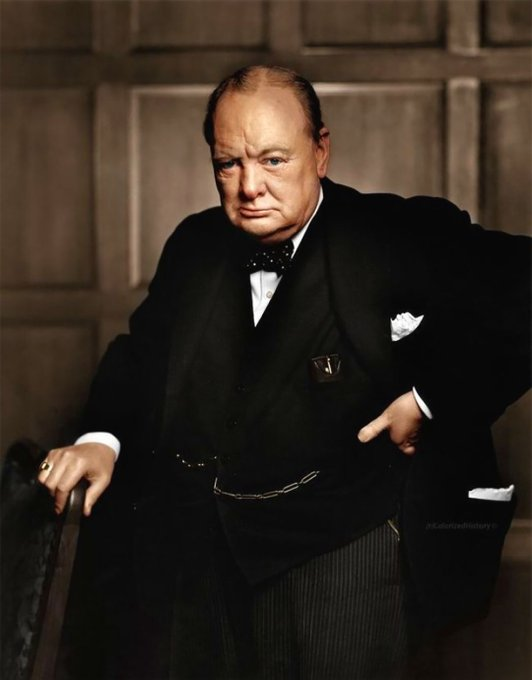
Sir Winston Churchill on Islam:

@JGuandolo54271

Sir Winston Churchill on Islam:

How dreadful are the curses which Mohammedanism lays on its votaries! Besides the fanatical frenzy, which is as dangerous in a man as hydrophobia in a dog, there is this fearful fatalistic apa­thy. The effects are apparent in many countries. Improvident habits, slovenly systems of agriculture, sluggish methods of commerce, and insecurity of property exist wherever the followers of the Prophet rule or live. A degraded sensualism deprives this life of its grace and refinement; the next of its dignity and sanctity. The fact that in Mohammedan law every woman must belong to some man as his absolute property—either as a child, a wife, or a concubine—must delay the final extinction of slavery until the faith of Islam has ceased to be a great power among men. (The River War I: 248-49) #ShariaKills #IslamKills

Posted in Uncategorized | Leave a comment

Al Jazeera: The released ‘Epstein files’ reveal how Jeffrey Epstein used student visas …

Posted in Uncategorized | Leave a comment

The Deep View: Goodbye virtual assistant, hello AI Chief of staff

Goodbye virtual assistant, hello AI chief of staff
For over a decade, the tech industry has been racing to create the perfect virtual assistant. Now, the goal is rapidly shifting due to AI agents. The new north star is to create an AI chief of staff.
So, what’s the difference, and what does that look like? 
Siri, Alexa, Google Assistant, and countless other virtual assistants have been trying to cozy up to us for over a decade, automating tasks and reducing the number of steps to get things done. But they’ve mostly been pretty disappointing, limited to little more than announcing the weather, setting cooking timers, and helping dictate messages.
The new AI agent boom, led by Claude Code / Claude Cowork and OpenClaw, has changed the equation in just the past two months. Even just a few weeks ago, we were talking about how these new tools were finally launching the era of true “personal AI agents” that can perform routine tasks on our behalf. 
But the concept has advanced even further in recent weeks, especially driven by the OpenClaw community. The enthusiasts who are spinning up OpenClaw instances are racing ahead, giving us a picture of the future of agents. They have rapidly gone from trying to create super-smart, widely skilled agents to orchestrating teams of agents, each with dedicated strengths and specific capabilities, not unlike human teams. For many of these folks, they now have a stack of Mac minis running multiple agents and sub-agents.
And that’s where a different concept has now emerged: the AI chief of staff.
I first heard it from Jason Calacanis on This Week in Startups, where Calacanis was recently speaking to Mitesh Agrawal of Positron AI and said, “This is going to save you inbox management [and] Slack management. These are the chores that you typically, as CEO, would hire a chief of staff [or] an executive assistant to do. You’ve now used an OpenClaw agent to do [it].”
Agrawal reported that it’s saving him an average of at least 30 minutes per day. Calacanis pointed out that’s over 3 hours per week (for a startup founder) and 150 hours per year, which is the equivalent of getting 3 extra weeks per year. That kind of time savings compounds over time, and it’s likely to accelerate as the technology improves and gets easier for more people to access. 
Another concept Calacanis used to understand the power of this chief of staff phenomenon was to view it as democratizing services previously available only to the ultra-wealthy. He compared it to the way Uber can act like your personal chauffeur, Airbnb can function like having vacation homes in beautiful cities around the world, and JSX can make it feel like having a private jet. A chief of staff is someone who knows your needs and preferences and can act independently to make important tasks happen on your behalf. It was previously something limited to presidents, heads of state, and CEOs. That’s a lot for AI agents to live up to. But if they can pull it off, it will become one of the most powerful upgrades to everyday life that the current AI boom can deliver.
Posted in Uncategorized | Tagged , , , , | Leave a comment

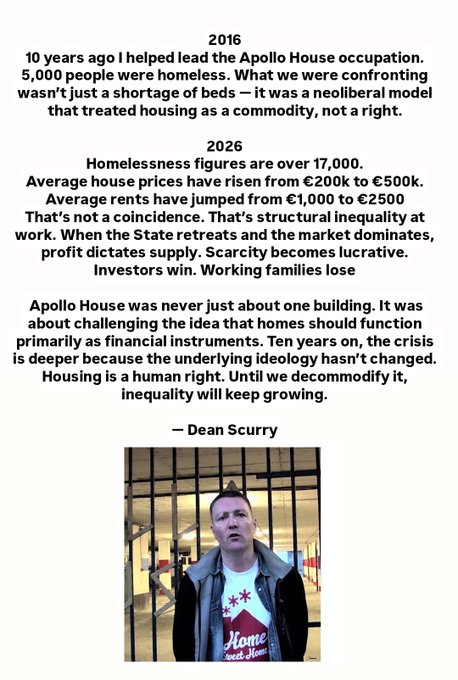
HomeSweetHome: Wake up Ireland. Homelessness is a crisis.

Posted in Uncategorized | Leave a comment