The tanker war is escalating, and the clock on America’s oil reserves may be ticking just as fast.
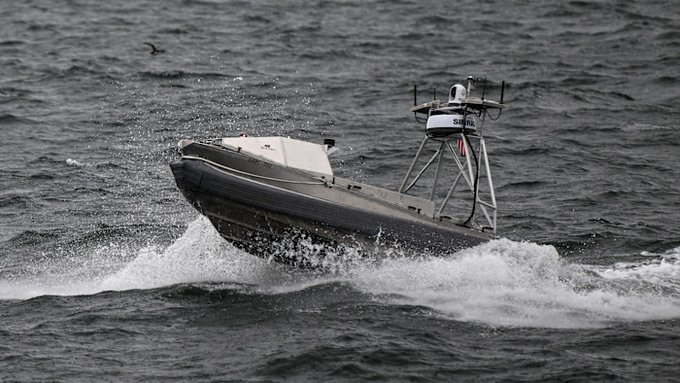
The U.S. and Iran are now trading strikes on tankers, with each move raising the stakes around the Strait of Hormuz.
Intelligence analyst Malcolm Nance says this kind of tit-for-tat escalation can quickly spiral.
“You sink or set fire to this tanker. Now we have three Iranian tankers ablaze. You may kill the crew.”
Meanwhile, the U.S. Strategic Petroleum Reserve is reportedly heading toward a critical level, with around 270 million barrels described as a hard floor.
At that point, the White House faces a brutal choice: protect emergency war stocks or keep enough oil moving to limit the economic fallout. And that may be the question Washington can’t afford to ignore.
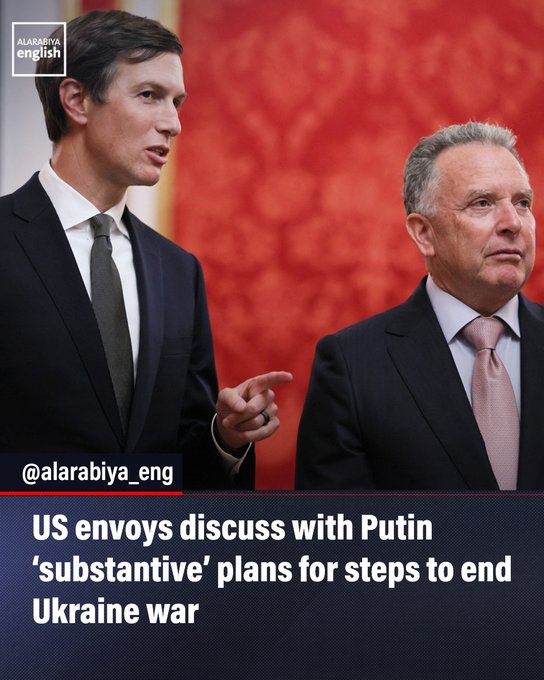
Increasing signals that President Trump has “ordered” Zelensky to end the War.
The US backed NABU investigations inching closer and closer to him are no accident, the power struggles at the top of the possibly outgoing cabal also fit. Maneuvers to survive a deal? Or maneuvers to extract the last profits and run? Very hard to know, but the machinery around Zelensksy is very nervous and hundreds of millions are moving. Add in Ratcliffes visit to Moscow, an advancing Russian army, and the utter devastation of what remains of the Ukrainian economy, and a wider picture emerges. The Winter only brings a multiplier for the effect of Russian strikes. Of course, the Kremlin have allowed space for the Witkoff Kushner visit, and also confirmed (probably to Radcliffe) that the envoys would be safe in Kiev, however, there is absolutely no guarantee the Russians have any stomach for compromise now, they see how effective their ramped up crushing of Kievs economy and logistics has been. Mayne the Kremlin smells the blood in the waters in Kiev? Interesting times.
They changed the doors and gave dementia patients a piece of home back. In the Netherlands certain nursing homes discovered a straightforward yet meaningful solution to help residents with dementia feel safer and more at ease. Staff place life size stickers depicting each person’s original front door on the entrance to their current room. Instead of facing hallways of nearly identical doors residents now recognize something deeply familiar. The specific color the shape and the unique details of the home they once lived in stand out clearly. These custom decals known as True Doors reduce disorientation make individual rooms simpler to identify and help preserve important personal memories. The approach restores dignity for family members. It encourages greater independence for residents according to caregivers. Most importantly it transforms a standard room into a warmer more comforting space that genuinely feels like home. Compassion does not always demand elaborate measures. In many cases it can begin with something as simple as a familiar door. Image created using artificial intelligence for illustration purposes only.
Captain Francis Forster I of Clooneene, the Hunsdon man, the 1649 dragoon, the 1677 patentee, died at Clooneene on 22 September 1698. His heir was Major James Forster, High Sheriff of Galway for James II in 1689–90, who lived at Rathorpe and married Eleanor, daughter of Colonel Gerald Burke of Tyaquin. On 15 July 1691 — three days after Aughrim — Lieutenant-General Ginkel signed a printed protection for “James Forster of Rathorpe.” The original, with Captain Blake-Forster’s 1872 note, is NLI MS 8087.
sources.nli.ie James’s sons were:
John of Crushnabawn, the heir, married Mary Lambert; died without surviving issue in Dublin, 1702.
Captain Francis of Rathorpe — the man below.
In 1689–91 the younger Francis was a Jacobite dragoon captain. Family papers used by Charles Ffrench Blake-Forster place him in Clifford’s horse; a courier in The Irish Chieftains is made to say he belongs to “Captain Forster of Rathorpe’s troop.” After Aughrim a Jacobite stand was remembered at Rathorpe, at Cliagh na gCaol, on the retreat to Limerick. When the city surrendered in October 1691, this Francis went out with the Wild Geese. He was in France through 1692. In 1693 he came home a colonel. That date is the sept’s; a named French regiment has not yet been found in the printed brigade lists. Treat “colonel” as the rank he used thereafter, not as a traced commission in Clare’s or Dillon’s.
libraryireland.com
While John lived, Francis stayed “of Rathorpe.” When John died in 1702 he became Colonel Francis Forster of Clooneene and Rathorpe. On 17 August 1700 — while still the younger brother — he married Mary MacDonnell, only daughter of Captain James MacDonnell of Kilkee (Jacobite, Lord Clare’s regiment). The prerogative licence is the instrument Charles printed; Burke’s Landed Gentry repeats the date. Her brother Randal’s will (4 March 1726) left Colonel Forster £100 for mourning and Mary a ring. That marriage is documented. The earlier Mary O’Donnellan marriage is not in the same class of paper.
archive.org
He died in 1720 (will dated 29 January 1720, proved 1731 in the family account), leaving ten children. The eldest, James, was the last Forster to live at Rathorpe (still there in 1743). The house was then given up; tradition said no woman who slept in one room woke.Simon, a younger son, built at Fiddaun.
From James the later Blake-Forsters of Forster Street, Castle Forster, Ballykeale and Corr descend.
archive.org
mermaid
flowchart TD
F1["Capt. Francis I of Clooneene<br/>d. 22 Sept 1698<br/>m. Mary O'Donnellan"]
J["Maj. James of Rathorpe<br/>Sheriff 1689–90<br/>Ginkel protection 15 July 1691<br/>m. Eleanor Burke of Tyaquin"]
John["John of Crushnabawn<br/>d.s.p. Dublin 1702"]
F2["Capt. then Col. Francis of Rathorpe<br/>France 1691–93<br/>m. Mary MacDonnell 17 Aug 1700<br/>d. 1720"]
F1 --> J
J --> John
J --> F2
That is the man. The article that follows puts him back in the longer line.
The O’Donnellan Blake-Forsters
From Hunsdon, Hertfordshire to Clooneene
A reading of the sept narrative against the records that can still be checked.
1. Two places
The English house is Hunsdon, east Hertfordshire.
Sir Thomas Forster, judge of Common Pleas, was knighted at Whitehall on 7 February 1604 and buried in the chancel of Hunsdon church in May 1612. A descendant who left Ireland in the 1980s later stopped at that church by chance and photographed the monument before smartphones.The Irish house is Clooneene, later Ashfield, in the civil parish of Beagh, barony of Kiltartan, south County Galway — the limestone country of Gort, Kilmacduagh and the Clare border. Rathorpe, Fiddaun and, later, houses in Kilfenora and Drumcreehy sit on the same frontier. The first-edition six-inch sheet that covers the cluster is Ordnance Survey Ireland, Galway Sheet 128 (Beagh, Kilkeedy, Kilmacduagh), on the National Library of Scotland viewer. Ashfield Demesne is still a townland in Beagh. Abbeyknockmoy, the other great Blake-Forster holding, lies north-east, in Tiaquin and Athenry.
mermaid
flowchart LR
H["Hunsdon, Herts<br/>tomb of Sir Thomas, 1612"]
C["Clooneene / Ashfield<br/>Beagh, Co. Galway<br/>patent 18 Aug 1677"]
R["Rathorpe<br/>Jacobite house"]
F["Fiddaun"]
K["Kilfenora / Drumcreehy<br/>Co. Clare"]
A["Abbeyknockmoy<br/>sold 1851"]
H --> C
C --> R
C --> F
C --> K
C --> A
2. English stem, cut short
Sir Thomas Forster of Hunsdon (d. 1612) married Susanna Forster of Iden, Sussex. Their eldest son, Thomas Forster Esq. of Hunsdon, married Anne Baskerville, daughter of William Baskerville of Wanborough, Wiltshire (marriage at Wanborough, 11 June 1609). Anne and her sister Jenever were co-heiresses; Jenever’s husband is named with Anne’s on the Enford inscription. That is the Baskerville fact that matters: first cousins in the next English generation come through Anne’s siblings and through Sir Thomas’s other sons, not through a long Marcher pedigree.Thomas and Anne’s sons included Thomas (heir at Hunsdon), John, Edward, Francis (the Irish settler), Charles and Philip. Francis was baptised at Hunsdon on 17 May 1621. A cadet uncle, Sir Robert Forster of Battle and later Egham, also had a son Francis; the Irish line is the Hunsdon baptism, not the Egham cousin.The 1866 Galway Vindicator sketch inflates some English titles. Parish register, tomb and the Wanborough/Enford stones are the check.
3. The settler:
Captain Francis, son of Thomas of Hunsdon, served as a captain of dragoons in Charles I’s Irish army and is listed among the 1649 Officers — men who had served the king in Ireland before 5 June 1649.After the Restoration that certificate was the ticket to arrears and to a purchase of confiscated land. The enrolled royal grant for Clooneene is dated 18 August 1677 and styles him “his faithful subject, Francis Forster.”He sat among the esquires of the 1688 Galway charter. He died 22 September 1698.
landedestates.ie
Three documents still separate grant from purchase, and they have not all been read line by line:
the 1649 Officers certificate / adjudication
the enrolled patent of 18 August 1677
the Books of Survey and Distribution for Beagh (Galway) and Kilfenora–Drumcreehy–Corcomroe (Clare), where Frost already shows a Francis Foster at Ballagh
What happened to the Irish owners of those townlands is the ordinary Settlement story:
1641 proprietors recorded on the left of the Book of Survey; transplanted, forfeited or reduced after the Confederate and Cromwellian wars; Restoration grantees and purchasers on the right. Clooneene was not empty land. It was redistributed land.
4. Mary O’Donnellan
The sept, Landed Estates, O’Hart and the 1866 Vindicator all say Francis I married Mary O’Donnellan, daughter of Sir James O’Donnellan (Donnellan, Donelan), Chief Justice of the Common Pleas, son of Nehemiah, Archbishop of Tuam, of the Ballydonelan house of Clann Bhreasail. It has not been confirmed in a will, baptism or marriage licence. Sir James’s 1665 prerogative will is not in Vicars’ printed index and has not been produced. Burke gives him, by Anne Barry, four sons and two daughters, unnamed. No second James of Ballydonelan in those years carried the judge’s title. Charles Ffrench Blake-Forster repeated the formula;he did not print a new vital record.On present evidence the identification cannot be proved and is still the most probable reading of the sept: the only titled James who fits the time and the Galway-Dublin world Francis had entered, with two daughters left blank in the printed peerage books.
Ulster’s Office GO MS 467 and the Forster chart GO MS 93, pp. 84–87 are the next places that might name them.Until those folios are read, the site should keep Mary as sept tradition, probable, not proved.Donelan / Donellan / Donnellan / O’Donnellan are the same Connacht name, Ó Domhnalláin. Spelling does not found a new family. The Ulster Donnellans are a different stock. A later, documented Donnellan marriage in the Forster line is collateral: Robert of Ashfield and Knockmoy married Anne Daly of Raford in 1787; Anne’s mother was Letitia Donnellan of Ballydonelan. That shows the two houses still intermarried. It does not replace a missing 1660s licence for Mary.
5. The Jacobite household
mermaid
flowchart TD
F1["Francis I d.1698<br/>m. Mary O'Donnellan *sept / probable*"]
other["Other issue of Francis I<br/>not expanded here"]
John["John d.s.p. 1702"]
Col["Col. Francis d.1720<br/>m. Mary MacDonnell 1700<br/>*licence extant*"]
ten["Ten children"]
F1 --> James
F1 --> other
James --> John
James --> Col
Col --> ten
The family fought for James II, took Ginkel’s paper the week of Aughrim, sent the younger son to France, and brought him home in 1693. They kept Clooneene. That is the unusual part: many Galway Jacobite houses did not.
6. Blake, acres, and the 1851 sale
Francis who inherited in 1752 married Anastasia Blake of Menlough.The style Blake-Forster follows that marriage; the royal licence to take Blake was issued to Robert Blake Foster of Knockmoy on 16 February 1847. O’Donnellan in the sept title was never licensed. It is a family claim. Ashfield left the family in the 1830s.
Abbeyknockmoy, nearly 4,000 acres, was offered in the Encumbered Estates Court in October 1851. Unsold lots went to Dominick Donnellan and Richard C. McNevin, relative and agent. By Griffith’s Valuation those purchases were in the hands of Martin J. Blake of Ballyglunin and James Thorngate. In the 1870s Captain Francis Blake Forster owned 3,593 acres in Galway and 1,308 in Clare; Robert Blake Forster of Corofin owned 572 acres in Galway. In 1906 Marcella Blake Forster held over 250 acres of untenanted land and the house at Corr, barony of Longford.
7. Later heads, as the 1866 sketch and family additions give them
Francis Blake-Forster of Ashfield and Knockmoy (born Raford, 26 November 1787; d. 10 November 1837) married, 14 October 1810, the Hon. Rose ffrench (d. 13 December 1857), daughter of Thomas Hamilton ffrench, 2nd Baron ffrench, and Margaret Redington. Issue included Captain Francis Blake-Forster, J.P., of Castle Forster and Forster Street; Robert of Ashfield; and daughters among them Anne (Butler of Bunahow) and Emily (Daniel McNevin of Ashfield).
Captain Francis Blake-Forster, J.P., of Castle Forster, married in 1846 Mary Josephine, eldest daughter and co-heiress of Henry Comerford of Ballykeale, Co. Clare.Issue included:
Charles Ffrench Blake-Forster (1851–1874), author of The Irish Chieftains; or, A Struggle for the Crown (1872), High Sheriff of Galway 1874, died unmarried at 23. The book is a Jacobite novel with a huge appendix of family notes. It repeats Mary O’Donnellan; it does not print her baptism. Ten other works listed in his preface were never found after his death. Emily Rose was sister, who died within month of Charles ffrench Blake-Forster.
Rose Emily Blake-Forster (also written Emily Rose; Find a Grave indexes her as Rose Emily Blake Forrester), born 1854, third child of Captain Francis Blake-Forster, J.P., of Castle Forster / Forster Street and Mary Josephine Comerford of Ballykeale. Unmarried. Buried at Bushypark, with Charles and their parents. She died on 6 August 1874, aged about twenty. Charles died at Forster Street on 9 September 1874 — five weeks later, not the month after her funeral only. A Galway notice of his death put it plainly: overwork had already worn him down, and “the fatigue and mental anxiety consequent upon the illness and death of a beloved sister proved too much for him to bear.” The family account is that she fell from a horse. Nothing found in print names the ride, the place, or an inquest. The obituary only says illness then death. Keep both: published wording for the sequence; family memory for the fall. They are not in conflict if the fall was the illness.The oil portrait in the hall at Ballykeale is not in a public catalogue. It is a house picture of this girl, not of the earlier Emily Blake-Forster who married Daniel McNevin and lived at Ashfield in the 1830s.The 1866 Vindicator sketch named only Charles and Francis O’Donnellan. Rose Emily was about twelve then; the printed sept list was following the heirs.
Captain Francis O’Donnellan Blake-Forster, High Sheriff 1878, married 1879 Marcella, eldest daughter of Robert Johnston of Arran View, Doolin, co-heiress of Sir Burton Macnamara.
Their children included Francis of Corr (m. 1914 Ethel R. Taaffe); Robert; Donie (The O’Donnellan) Blake-Forster; Catherine (m. 1910 John St George Lucas); Mary (m. 1911 David Crawford Pearson); Frances R. (m. 1918 Arthur Matthew Kelly); Marcella (m. Michael Comyn, K.C.). Michelle, granddaughter of Marcella Blake-Forster, holds the sept extracts from the Galway Vindicator of 20 October 1866.
8. Papers that still decide the open points
Document
Where
What it can settle
1649 Officers certificate
NAI / Record Commission index
Service and arrears of Francis I
Patent 18 Aug 1677
Lodge / Irish Chancery rolls
Townlands granted, not bought
Books of Survey, Beagh and Kilfenora
Virtual Record Treasury / printed IMC
Who lost the land
GO MS 93, pp. 84–87
NLI
Official Forster/Blake-Foster chart; Mary?
GO MS 467 (POS 7020)
NLI
O’Donnellan 1560–1900; Sir James’s daughters?
Ginkel protection, 15 July 1691
NLI MS 8087
James of Rathorpe, already listed
Sir James Donnellan will, 1665
missing from Vicars
Names of the two daughters
Prerogative licence, 17 Aug 1700
cited by Charles
Mary MacDonnell — already firm
There is no deposited “Blake-Forster muniment chest.” Charles worked from one in 1872. O’Connor Donelan papers at Galway (LE10) are the Peterswell cadet from 1698, the wrong branch for Sir James’s girls.
9. How to state it on the family site
Francis of Hunsdon planted Clooneene by a Restoration grant and a 1649 Officer’s claim.The sept says his wife was Mary, daughter of Sir James O’Donnellan. That is unconfirmed and, on present knowledge, the most likely account. Their grandson, Captain then Colonel Francis of Rathorpe, left after Limerick, returned in 1693, married Mary MacDonnell under a licence we can still cite, and took Clooneene when his brother John died.From him the Blake-Forsters of Galway and Clare descend. The English cousins at Hunsdon and the Baskerville first cousins at Wanborough are the other half of the same story — a judge’s grandson on the Shannon limestone, a hundred miles and a civil war from the chancel at Hunsdon.