Simple shifts, like paying closer attention and delegating clearly, not only ease tension at home, but can also build stronger teams, research by Kathleen McGinn, Alexandra Feldberg, and Amanda Nerenberg shows.
The Skills That Strengthen Marriages—and Make Better Managers
Mountains of laundry, cranky children, Zoom calls in the dining room: Many working couples still shiver when they recall how COVID-19 lockdown upended domestic balance in their households.
On the plus side, the pandemic-induced togetherness also boosted gratitude among some couples, who gained a newfound appreciation for one another’s contributions in the home.
One of the things that struck me was that people talked about how grateful they were for their spouses.
In interviewing dual-income, mixed-gender couples in the United States over a two-year period starting in 2020, Harvard Business School’s Kathleen L. McGinn and colleagues found that couples who experienced more gratitude and less resentment for one another shared two key patterns: Men showed greater attunement to household needs, and women delegated tasks to their partners more explicitly.
“One of the things that struck me was that people talked about how grateful they were for their spouses. This ran counter to the press at the time, talking about how COVID was destroying people’s relationships,” McGinn says.
For businesses navigating hybrid work and rising employee burnout, the findings extend beyond the household, indicating that workplaces may also benefit when leaders pay closer attention and delegate assignments. For instance, managers can take the time to notice when work is falling through the cracks, step in proactively to delegate tasks and attend to people’s needs, and make sure responsibilities are clearly shared among teams, McGinn says.
“A really great boss and coworker is one who attends to and cares about the people they work with, who makes sure their employees’ needs are getting met. Those are the same things a good spouse would do,” McGinn says.
McGinn, Baker Foundation Professor and Cahners-Rabb Professor of Business Administration, Emerita, cowrote the paper, “Division of Labor, Multiplication of Gratitude? Gratitude and Resentment Within Households,” with HBS Assistant Professor Alexandra C. Feldberg, Allison Daminger, assistant professor at the University of Wisconsin-Madison, HBS doctoral candidate Amanda Nerenberg, and Rachel Drapper, senior commercial manager of childcare sourcing platform Koru Kids. The article was published in March in the Journal of Marriage and Family.
Couples cultivate gratitude by going the extra mile
Though women have been shouldering less at home and men have been pitching in more since the 1980s, women still report spending roughly 50% more time than men on housework and parenting tasks, according to 2024 US Bureau of Labor Statistics data. This imbalance detracts from women’s well-being, relationship satisfaction, earnings, and career advancement, labor data shows.
That greater attunement led to more gratitude, leading to real changes in behavior.
Women not only complete more physical tasks at home, but McGinn and her colleagues also found that they take on more cognitive or mental labor—the work of anticipating household needs, as well as planning and managing family-related tasks and schedules.
In conducting 209 interviews with 37 men and 41 women, all of whom were in relationships, employed, and had children, the researchers first focused on gratitude for their partners. They defined gratitude for both men and women as the recognition that their partner was going above and beyond to do the unexpected. Women were more grateful than men, with 46% of women and 37% of men expressing gratitude on average in each interview round. Their reasons differed:
Women were often grateful when men were surprisingly proactive. Men impressed their partners by taking charge of household tasks and logistically triaging and anticipating needs. For instance, women whose husbands independently handled dinner might be more grateful than women whose husbands waited to be told where to find the chicken nuggets. “There’s an expectation that men are going to help, but that difference between helping and doing it on their own is what women were most grateful for,” McGinn explains.
Male gratitude revealed entrenched gender dynamics.Men were most grateful when a female partner’s household contributions made their professional lives easier and allowed them to focus on work: keeping kids at bay, handling distractions.
How mismatched expectations fuel resentment
The researchers defined resentment as gratitude’s inverse, not its absence. Predictably, this emotion festered during the pandemic: On average, 49% of men and 69% of women interviewed expressed resentment. Again, their reasons differed:
Women’s resentment focused on under-involvement.They resented when men didn’t meet their expectations for household co-management, causing them to allocate tasks and act like supervisors. They also resented men who didn’t participate meaningfully in cognitive or physical labor. “For women, resentment grew when men weren’t acting on their own to take care of household tasks. Their gratitude came from men stepping in without being bidden,” McGinn says.
Men grew resentful when they felt unrecognized.Men who took on household work sometimes felt that their physical contributions went unappreciated. For instance, maybe he didn’t clean to her standards. They also expressed resentment when they believed their partners expected them to anticipate problems they’d never considered, like remote school logistics.
Why delegation and paying attention matter
Sound familiar? The good news: One-third of couples reported a positive gratitude arc during COVID. For these couples, two important lessons emerged:
Resentment dwindled when women delegated more. “Women’s gratitude expanded when they realized they could ask [for help]—and their partners would be open to that,” McGinn says. “It changed behavior: Men would start giving the ‘gifts’ women wanted them to give, figuring out what it takes to get two kids to school rather than just driving the car. Women basically said: ‘OK, I need to delegate. Rather than doing all this myself, I need to explicitly point out the tasks that need to be done and ask for help figuring out how to tackle them.’”
Resentment also decreased when men became more proactive at home. “It’s not like people don’t pay attention; it’s that we’re gendered in these roles. Spending more time at home together with their families, some of the men started to become aware of how they were ‘helping’ instead of being equal partners. That greater attunement led to more gratitude, leading to real changes in behavior,” McGinn says.
How the workplace can replicate domestic peace
The pandemic might be over, but the dynamics it exposed at home carry important lessons for organizations, McGinn says. Just as couples benefited when partners became more attuned to one another’s needs and more explicit about sharing responsibilities, teams function better when managers recognize employees’ full cognitive load—both professionally and personally—and respond with clarity and flexibility.
Image by Ariana Cohen-Halberstam with assets from AdobeStock/stokkete.
Have feedback for us?
Have questions or feedback for us? Send us a note to hbswk@h
You don’t fight Parkinson’s without ‘raw moments.’ She shared them.
Sue Goldie.By Kent Dayton
Anna Lamb
Harvard Staff Writer
March 23, 2026 4 min read
Chan School’s Sue Goldie felt ‘sheer responsibility’ to let Times journalist tell her story
Adjusting to the reality of an incurable disease is hard, never mind talking about it. Even so, Sue Goldie, the Roger Irving Lee Professor of Public Health at Harvard’s T.H. Chan School of Public Health, decided to share her journey with a stranger.
In October, Goldie, who was diagnosed with Parkinson’s disease in 2021, was the subject of a New York Times feature by John Branch, whom she allowed to follow her life for more than two years. This month, she spoke at the Chan School about fighting the disease and her decision to make that fight public.
“It was not uncomplicated,” Goldie said. “I think it requires a lot of mutual trust to let someone in your life to see you at those raw moments and you really don’t know what they are going to write … I just felt this sheer responsibility to try to speak out loud and to try to give voice to what is so difficult.”
Parkinson’s disease stems from a depletion of dopamine in the brain. Motor issues include tremors, rigidity, and slowness of movement. As the disease worsens, it can cause problems with balance and gait. But the condition runs much deeper than visible symptoms, Goldie noted.
“The one thing about Parkinson’s that is absolutely true is it plays out differently in everyone,” she said, pointing to wide variability in onset of symptoms and timeline.
For her, some initial symptoms appeared while she was training for her first Iron Man competition — a challenge her son had introduced her to.
“I couldn’t put my finger on it, but I just wasn’t feeling well,” she said.
Working with a coach, she continued to bike, run, and swim — all while juggling her regular courseload. Her coach started to notice some weakness on her left side. At the same time, Goldie noticed that her motivation at work was slipping. She was also experiencing a slight tremor.
“Just little signs,” she said. “That was what brought me finally to a neurologist.”
After her diagnosis, Goldie kept training. She and her coach agreed: When the disease started to impose limits on what she could do, they would figure out case-by-case solutions.
In time, she added a long straw on her bike to save herself having to lean over to reach her water bottle. When she lost some mobility in her fingers, she switched to electronic shifting.
“There’s something about problem-solving that feels like you’re moving forward,” she said. “And it leaked over into my work world as well.”
The diagnosis had brought deep anxiety over the potential impact on her academic endeavors.
“It’s really frightening to me to have cognitive effects from Parkinson’s,” she said. “I think when you’re at an academic institution, where the currency of your value is your thinking, the fear I had was about: What does this mean for my identity? What will people think?”
The antidote to her anxiety has been discovering new ways to do what she loves. One example: teaching. While Goldie always took pride in distilling complex ideas during lectures, her tremor made it harder to connect with students.
“So I got an iPad, and I would draw ahead of time, and then I would cut pieces out,” she said. “I would move the pieces around instead of drawing.”
When she showed the technique to a group of high school teachers who had come to the Chan School for a workshop, they were impressed. “And it was just this example where something that was a workaround actually became this sort of pedagogical innovation,” Goldie said.
After the Times story was published, Goldie received hundreds of letters from patients who said they felt seen, and from people who told her that she had helped them see loved ones better. Their words left a mark.
“The best way I can respect the fact that these individuals took time to write to me is to read every one and to try to listen and learn in terms of what I want to do next,” she said.
Adi Imsirovic Lecturer in Energy Systems, University of Oxford
Disclosure statement
Adi Imsirovic does not work for, consult, own shares in or receive funding from any company or organisation that would benefit from this article, and has disclosed no relevant affiliations beyond their academic appointment.
Republish our articles for free, online or in print, under Creative Commons licence.Republish this article
Share article
Print article
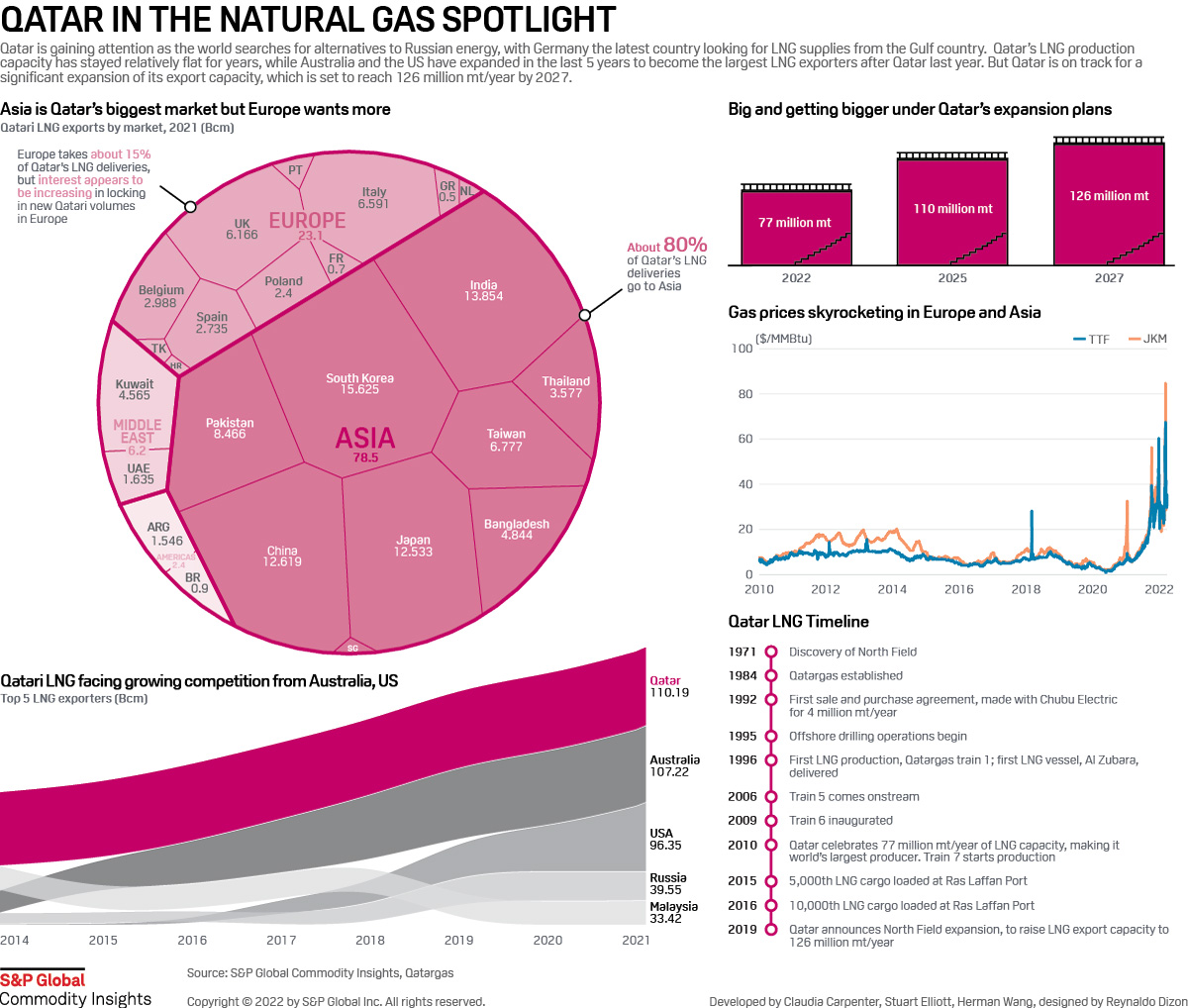
On March 19, Ras Laffan, the largest liquified natural gas (LNG) terminal in the world, supplying one-fifth of the world’s super-chilled fuel, was hit by Iranian missiles and drones. The Qatari terminal suffered substantial damage in the strikes – fires were raging across the gas-to-liquids facility within the complex, which covers 295 square kilometres – the size of a large city.
Investments worth tens if not hundreds of millions of dollars disappeared into thin air. Damage was estimated to be so extensive that QatarEnergy’s CEO, Saad Sherida al-Kaabi, said the company may have to declare a “force majeure” (non-fulfilment of orders due to circumstances outside their control) on long-term contracts. He said this could affect LNG supplies to Italy, Belgium, Korea and China “for up to five years”.
Similar to oil, gas exports from the Persian Gulf supplied about 20% of world demand. But gas (mostly methane) is a very different fuel from crude oil. To move it in liquified form, methane must be chilled to below -162°C.
But at these temperatures steel becomes brittle and shatters. So storing and transporting LNG in ships is expensive and very energy-intensive. Liquefaction and transportation of methane can easily consume 15% of the initial natural gas extracted.
It also means that the infrastructure that enables a highly flammable and explosive fuel to be handled at these extreme conditions has to be complex and consequently very expensive. Ras Laffan, for example, was built over decades and in several phases, costing tens of billions of dollars.
No quick fix
Interestingly, Qatar’s North Field and Iran’s South Pars gas field are part of the same massive geological structure, separated only by a maritime border in the Persian Gulf. Together, they form the world’s largest natural gas field.
So, Iran and Qatar are essentially exploiting the same gas reservoir the same way two people would use straws to drink from the same bottle. The US president, Donald Trump, now appears to have retreated from his threats to blow up “the entirety” of the Iranian gas field – but this geological fact had always made his comments quite ridiculous.
While Qatar exports most of its production, Iran uses the bulk of its gas domestically (although some exports go via pipeline to Turkey and Iraq).
Iran’s South Pars gas field is separated from Qatar’s North Field only by the maritime border in the Persian Gulf. EPA/ABEDIN TAHERKENAREH
But the damage to the complex has been done, and it affects some 17% of the country’s LNG infrastructure. Repairing it will take a long time, precisely because of the complexity of LNG projects.
The plant must be warmed up slowly before repairs and cooled down slowly after. Rapid temperature changes can cause pipes to bend or even snap. And parts of the plant are bulky and hard to transport. The main heat exchangers can be more than 50 metres long, and compressors, turbines and liquefaction trains can easily weigh 5,000 metric tonnes. Storage tanks must be built of special alloys with double walls and customised insulation.
In other words, gas is very different to oil. Recent events have shown just how vulnerable the LNG supplies from the Gulf region are. They are going to affect Asia most, as about three-quarters of Qatar’s LNG ends up there – particularly China, India, Taiwan, South Korea and Pakistan, as well as others.
Most of the rest ends up in Europe – Italy, Belgium, Poland and a small amount to the UK (the UK imported only about 1% of its supply from Qatar last year). The majority of the UK’s imports come from its own UK production in the North Sea and imports from Norway and the US.
However, LNG is a part of the global energy market and the shortfall in production will result in higher prices globally. Gas will end up with the highest bidder, while some nations will probably go back to using coal. This may especially be the case with India, Pakistan, Bangladesh and a few other Asian countries that are very sensitive to high fuel prices.
Some European countries may even see coal as a cheaper option. Following the events in the Gulf, this “spark spread” (the profit margin from gas-fired electricity generation) has fallen, narrowing the gap in Europe with the “dark spread” (profit from generating power using coal).
The benchmark for European gas prices, the Dutch Title Transfer Facility, has more than doubled since mid-January. Coal prices have picked up due to higher demand, but not as much. Unlike oil, the LNG shortage has turned from a logistical problem – the closure of the strait of Hormuz – into a structural one. The damage to the Qatari production facility may take several years to repair. This means that gas prices – already high – are likely to remain elevated for some time.
Things move quickly in the worlds of business and the economy. Trump and the world’s response to him mean the news focus is constantly shifting. Sometimes the global economy can be hard to get a handle on, but our free weekly newsletter offers context and fresh perspectives from academic experts on business, money and the future of work. Straight-talking and straight to your inbox.
Trump and the global rise of fascist anti-psychiatry
Trump’s new executive order uses psychiatry to dismantle social care, expand policing and imprisonment, and exploit public disillusionment. We have seen this before, and we know the consequences.
US Secretary of Health and Human Services Robert F Kennedy Jr and US President Donald Trump participate in an event on ‘Making Health Technology Great Again,’ in the East Room of the White House in Washington, DC, on July 30, 2025 [Jim Watson/AFP]
Despite spending more on psychiatric services and prescribing psychiatric medications at a higher rate than almost any other nation, mental health in the United States over the last two decades has only been getting worse.
Rates of depression, anxiety, suicide, overdose, chronic disability due to mental health conditions, and loneliness have all been rapidly increasing. No quantity of psychiatric drugs or hospitalisations appears adequate to reverse these trends.
Despite this, the US medical and psychiatric establishment has persistently refused to use its substantial political power to demand the transformation of care by expanding non-medical support systems to address the root social causes of mental illness, such as poverty, childhood trauma and incarceration, rather than focusing on reactive treatment via lucrative medication-centric norms. This failing status quo has created an opening for President Donald Trump and Secretary of Health Robert F Kennedy Jr’s emerging plans to remake the nation’s approach to mental health, with disastrous consequences now coming into focus.
Trump and Kennedy have hijacked legitimate anger at a broken system to justify destroying public care infrastructure, including Medicaid, food and housing assistance, harm-reduction and overdose prevention programmes, and suicide-prevention hotlines for LGBTQ youth, while promoting wellness scams and expanding the police state. They focus on the “threat” supposedly posed by psychiatric medications and call to reopen the asylums that once confined approximately 560,000 people, or one in 295 US residents, in horrific conditions, until protests against their cruelty led to their closure beginning in the 1950s.
Trump invokes false claims about mental illness to demonise immigrants, whom he is now hunting via a mass arrest and incarceration campaign. Last month, he signed an executive order that allows police to arrest and forcibly institutionalise poor Americans who are unhoused, deemed mentally ill, or struggling with addiction, effectively incarcerating them for indefinite periods.
Trump’s order, which also defunds housing-first programmes and harm-reduction services, while criminalising homelessness and encampments, contains no provisions to protect people from abuse or from the political misuse of psychiatric labels and institutionalisation to target his opponents. This raises concerns about risks to LGBTQ youth and other vulnerable groups. It also threatens groups upon which the administration has shown a eugenicist fixation: transgender people, people with autism, and others with disabilities that RFK Jr and Trump have characterised as a threat or burden on society.
The order appears to grant the government the power to deem anyone mentally ill or abusing substances, and to confine them indefinitely in any designated treatment facility, without due process. In a context where there is already a profound shortage of psychiatric beds even for short-term treatment, there are no provisions for new funding or regulatory systems to ensure that facilities are therapeutic or humane, rather than violent, coercive warehouses like American asylums of decades past.
Trump’s allies, including some medical professionals aligned with ideologies of social control and state coercion, may dismiss this as overly pessimistic. But that requires ignoring the fact that Trump’s executive order follows Kennedy’s proposal for federally funded “wellness farms”, where people, particularly Black youth taking SSRIs (selective serotonin reuptake inhibitors primarily used to treat anxiety and depression) and stimulants, would be subjected to forced labour and “re‑parenting” to overcome supposed drug dependence.
These proposals revive the legacy of coercive institutions built on forced labour and racialised interventions.Kennedy has also promoted the conspiracy theory that anti-depressants like SSRIs cause school shootings, comparing their risks with heroin, despite a total lack of scientific support for such claims. In his early tenure as health and human services secretary, he has already gutted key federal mental health research and services, including at the Substance Abuse and Mental Health Services Administration (SAMHSA), Centers for Disease Control and Prevention (CDC), and the National Institutes of Health (NIH).
Given this, it is unclear what kind of “treatment”, other than confinement and cruelty, Trump and RFK Jr plan to deliver in their new asylums.
Get instant alerts and updates based on your interests. Be the first to know when big stories happen.Yes, keep me updated
Trump and Kennedy’s lies about mental health, cuts to public care and vision for expanding the incarceration of immigrants, homeless people, and anyone they label as mentally ill, worsen mental health while creating more opportunities to profit from preventable suffering, disability and death. These tactics are not new, and their harmful consequences and political motivations are well established.
From Hungary to the Philippines, right-wing politicians have deployed similar rhetoric for comparable purposes. In a precedent that likely informs Trump’s plan, Brazil’s former president, Jair Bolsonaro, attacked psychiatric reformsas leftist indoctrination and defunded successful community mental health services, replacing them with coercive asylum and profit-based models, while advocating pseudoscience linked to evangelical movements. Bolsonaro claimed to defend family values and national identity against globalist medical ideologies, while sacrificing countless Brazilian lives via policies later characterised by the Senate as crimes against humanity.
Bolsonaro’s record is instructive for anticipating Trump’s plans. Trump has made no secret of his admiration for Brazil’s disgraced former president and their shared political ideologies. Bolsonaro’s reversal of Brazil’s internationally recognised psychiatric reform movement, which emphasised deinstitutionalisation, community-based psychosocial care and autonomy, inflicted profound harm. Under his rule, institutionalisation in coercive “therapeutic communities”, often operated by evangelical organisations, with little oversight, and similar to RFK Jr’s proposed “wellness farms”, skyrocketed.
Investigations revealed widespread abuses in these communities, including forced confinement, unpaid labour, religious indoctrination, denial of medication, and physical and psychological violence. Bolsonaro’s government poured large sums into expanding these dystopian asylums while defunding community mental health centres, leaving people with severe mental illness and substance use disorders abandoned to punitive care or the streets.
This needless suffering pushed more people into Brazil’s overcrowded prisons, where psychiatric care is absent, abuse rampant and systemic racism overwhelming, with Black people accounting for more than 68 percent of the incarcerated population. Bolsonaro’s psychiatric agenda enhanced carceral control under the guise of care, reproducing racist and eugenicist hierarchies of social worth under an anti-psychiatry banner of neo-fascist nationalism.
Trump and Bolsonaro’s reactionary approaches underline a crucial truth: Both psychiatry and critiques of it can serve very different ends, depending on the politics to which they are attached. Far-right politicians often use anti-psychiatry to justify privatisation, eugenics and incarceration. They draw on ideas from the libertarian psychiatrist Thomas Szasz, who argued in the 1960s that mental illness was a “myth”, and called for the abolition of psychiatric institutions.
In the US today, these political actors distort Szasz’s ideas, ignoring his opposition to coercion, by gutting public mental health services under the guise of “healthcare freedom”. This leaves vulnerable populations to suffer in isolation, at the hands of police or fellow citizens who feel increasingly empowered to publicly abuse, or even, as seen in the killing of Jordan Neely in New York City, execute them on subways, in prisons, or on the streets.
By contrast, critics of psychiatry on the left demand rights to non-medical care, economic security and democratic participation. Thinkers such as Michel Foucault, Frantz Fanon, RD Laing and Ivan Illich advocated for deinstitutionalisation not to abandon people, but to replace coercion with community-led social care that supports rights to individual difference. Their critiques targeted not psychiatry itself, but its use by exploitative, homogenising political systems.
To oppose reactionary anti-psychiatry, mental health professionals and politicians cannot simply defend the status quo of over-medicalisation, profit-driven care and the pathologisation of poverty. Millions justifiably feel betrayed by current psychiatric norms that offer little more than labels and pills while ignoring the political causes of their suffering. If the left does not harness this anger towards constructive change, the right will continue to exploit it.
The solution is not to shield America’s mental health systems from critique, but to insist on an expansive political vision of care that affirms the need for psychiatric support while refusing to treat it as a substitute for the political struggle for social services. This means investing in public housing, guaranteed income, peer-led community care worker programmes, non-police crisis teams and strong social safety nets that address the root causes of distress, addiction and disease.
Mental health is fundamentally a political issue. It cannot be resolved with medications alone, nor, as Trump and RFK Jr are doing, by dismantling psychiatric services and replacing them with psychiatric coercion.
The fight over mental health policy is a fight over the meaning of society and the survival of democratic ideals in an era where oligarchic power and fascist regimes are attempting to strangle them. Will we respond to suffering with solidarity, or with abandonment and punishment? Will we recognise the collective causes of distress and invest in systems of care, or allow political opportunists to exploit public disillusionment for authoritarian ends?
These are the questions at stake, not just in the United States, but globally. If the psychiatric establishment refuses to support progressive transformation of mental health systems, we may soon lose them altogether as thinly disguised prisons rise in their place.
If you or someone you know is at risk of suicide, these organisations may be able to help.
The views expressed in this article are the author’s own and do not necessarily reflect Al Jazeera’s editorial stance.
Eric ReinhartPolitical anthropologist, psychiatrist, and psychoanalytic clinicianEric Reinhart is a political anthropologist, psychiatrist, and psychoanalytic clinician based in Chicago. He works with individuals and collectives around the world via remote connections.
Roy Cohn taught Donald Trump the six rules of managing and dominating situations and people. These are those rules and you can see them being utilized to this very day by the man to brutal ends (this is excerpted from the book, The Last American President):
1. Never apologize or admit wrongdoing, ever. Cohn viewed contrition as weakness and would rather die (literally, as it turned out) than acknowledge error or fault. As journalist Ken Auletta, who covered Cohn extensively, noted, “The idea that you can admit a mistake is not part of Roy’s genetic code.” This principle would become so fundamental to Trump’s approach that even faced with irrefutable evidence—a recorded confession of sexual assault on the Access Hollywood tape, for instance—he would deny, deflect, and attack rather than offer the slightest acknowledgment of impropriety.
2. Always counter-attack, and always with greater force than you received. When criticized or accused, Cohn’s response was invariably to hit back harder, to escalate, to make the accuser regret ever mentioning his name. As Cohn himself explained to a reporter: “I bring out the worst in my enemies, and that’s how I get them to defeat themselves.” This tactic became Trump’s signature move, whether attacking Gold Star parents who criticized him, mocking a disabled reporter who questioned his claims, or threatening critics with lawsuits and retribution.
3. Use the legal system as a weapon, not a recourse for justice.Cohn taught Trump that lawsuits were instruments of intimidation, not vehicles for dispute resolution.He filed cases not to win—though winning was nice—but to punish, to harass, and to silence. The expense and stress of litigation was the point, not the legal outcome. Trump would eventually be involved in over 3,500 lawsuits—an unprecedented number for any American businessperson or politician—using the courts not to seek justice but to exhaust opponents with fewer resources.
4. Manipulate the media ruthlessly. Cohn was a master at planting stories, cultivating journalists, and creating controversy to serve his ends. He understood that perception trumped reality, that bold claims often went unchallenged, and that most people would remember the accusation but not the retraction. Trump elevated this approach to an art form, calling reporters using pseudonyms like “John Barron” to plant favorable stories about himself, staging pseudo-events to attract coverage, and later, using Twitter to bypass media filters entirely and inject his unfiltered messages directly into the public consciousness.
5. Use fear as both shield and sword.Cohn understood that people who are afraid—of communists, of crime, of social change, of the “other”—are easier to manipulate and more willing to accept authoritarian solutions. He helped McCarthy weaponize the Red Scare, stoking paranoia about secret communists undermining America from within. Trump would adapt this tactic to the 21st century, stoking fears about immigrants, Muslims, “inner city” crime, and later, a “deep state” conspiracy, always positioning himself as the only solution to these terrifying threats.
6. Build a fortress of loyalty around yourself. Cohn demanded absolute devotion from his clients and associates, and he repaid it in kind, at least until they were no longer useful. He created a network of mutual obligation and fear that served as both sword and shield in his battles. Trump’s infamous demand for loyalty—from James Comey, from his cabinet members, from Republican legislators—and his swift punishment of perceived disloyalty, all echo Cohn’s approach to power.