·
A big thank you to
for putting this together https://nicholasfabiano.ca
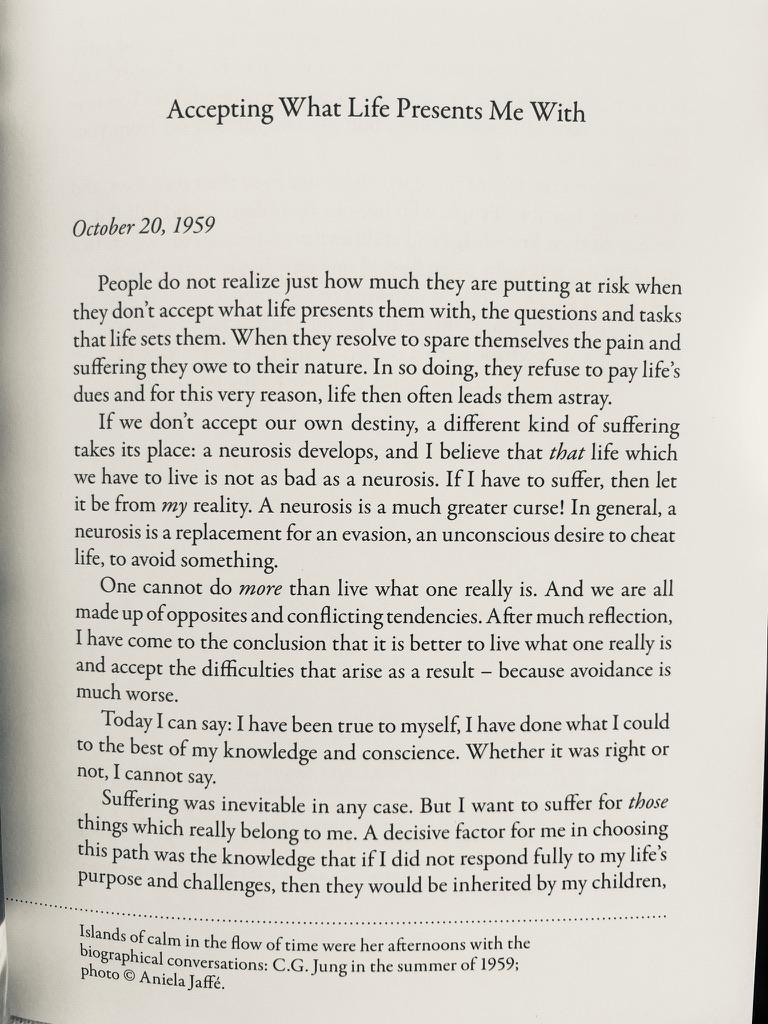
This is probably one of the more important pages I have ever read.
Carl Jung at 84, one year from his death. “One cannot do more than live what one really is.” Jung is saying there is no level above being yourself. And being yourself might be the hardest thing of all. Because it means living in truth with what you actually are, including your tensions, contradictions, limitations, instincts, and complexity.
Too often people are trying to become more than themselves, when the people who seem most deeply satisfied in life have usually become more of themselves. More in tune with their own nature. More willing to live their life their way.
Jung believed most of our troubles come when we have lost contact with our guiding instincts… I think that’s true. I’m still waiting to find someone deeply satisfied in life who is disconnected from themselves, abandoning their own nature, and living someone else’s script. Acceptance of oneself is the essence of the moral problem and the acid test of one’s whole outlook on life. This page also says that suffering is unavoidable. This is necessary suffering. Life will bring pain and heartbreak.
Uncertainty is unavoidable. Grief will show up at your door when you least expect it. Hard decisions will come.
But there is also unnecessary suffering, the suffering that comes from resisting what is happening, refusing what life is asking of you, or not living true to yourself. That type of suffering seems to eat at your soul.
I have come to the conclusion that it is better to Live what one really is and accept the difficulties that arise as a result – because avoidance is much worse. Better to live your own destiny imperfectly than to perform an imitation of someone else’s life perfectly. You can contort yourself, wear every mask, and distract yourself, but eventually you will need to answer, Am I really living life my way?
Apr 5, 2026 Protagonista Podcast
Dutch journalist Paul Vugts has been following events in the Amsterdam underworld for more than 25 years. He writes about drug gangsters, contract killings, and the global cocaine business. He faced death threats, had to leave his home, and lived with his future wife under the protection of an elite police unit in a strictly guarded security regime. Subscribe to OCCRP on YouTube ► https://shorturl.at/BSzsh What Paul and Pavla talked about: 0:00 – What does it mean to be a criminal reporter? 3:10 – Rules: What journalists should not report about criminals 4:05 – The Mocro Mafia and the Marengo trial 7:28 – How Ridouan Taghi and the Mocro Mafia built cocaine routes to Europe 12:00 – How Ridouan Taghi was captured in Dubai 16:13 – Killings linked to people connected to reporting on Taghi 18:10 – Escalation of attacks on lawyers in Amsterdam 20:15 – New trend: Collaboration between different criminal groups 22:15 – “Narco-terror” in the Netherlands 24:50 – Does Paul Vugts feel fear—and why he continues 27:05 – The moment a criminal saved Paul’s life 33:55 – Living under high-security police protection 42:50 – “Test beer” before leaving the protection program
View in browser |
| PRESENTED BY MORGAN STANLEY |
| Axios PM |
| By Mike Allen · Apr 17, 2026 |
 Happy Friday! Today’s newsletter, edited by Alex Fitzpatrick, is 665 words, a 2½-min. read. Thanks to Sheryl Miller for copy editing. Happy Friday! Today’s newsletter, edited by Alex Fitzpatrick, is 665 words, a 2½-min. read. Thanks to Sheryl Miller for copy editing. ️ Situational awareness: The S&P 500 rose about 1.2% and oil prices dipped around 9% by midafternoon after Iran said it reopened the Strait of Hormuz. Get the latest. ️ Situational awareness: The S&P 500 rose about 1.2% and oil prices dipped around 9% by midafternoon after Iran said it reopened the Strait of Hormuz. Get the latest. |
| 1 big thing: Trump expects Iran deal this weekend |
 Photo illustration: Sarah Grillo/Axios. Photo: Beata Zawrzel/NurPhoto via Getty Image Photo illustration: Sarah Grillo/Axios. Photo: Beata Zawrzel/NurPhoto via Getty ImageU.S. and Iranian negotiators will probably meet this weekend to hammer out a final peace deal, President Trump told Axios’ Barak Ravid today. Trump said over the phone: “The Iranians want to meet. They want to make a deal. I think a meeting will probably take place over the weekend. I think we will get a deal in the next day or two. “Multiple U.S. officials and other sources briefed on the negotiations have told Axios that significant progress has been made. Yet gaps still remain on critical issues. One proposal under discussion: The U.S. would release $20 billion in frozen Iranian funds if Iran gives up its stockpile of enriched uranium. (Axios scoop.) The plan also involves a moratorium on Iranian enrichment.️ Trump told Barak that he’s not going to lift his Strait of Hormuz blockade until a deal is reached, and stressed he wants the strait open for everybody. Iran announced today that it would open Hormuz for the rest of the ceasefire, which expires next Tuesday. It’s unclear ifships will brave the narrow waterway, given the uncertain conditions and threat of Iranian mines.  Two of President Trump’s posts this morning. Screenshot: Truth Social Two of President Trump’s posts this morning. Screenshot: Truth Social Trump also said the deal will “make Israel safe” and stressed that “Israel is going to come out great” at the end of the war. At the same time, he made clear he wants Israeli strikes on Lebanon to end: “Israel has to stop. They can’t continue to blow buildings up. I’m not gonna allow it. “Some in the Israeli government oppose a deal and want to continue the wars in Iran and in Lebanon — though that likely won’t be possible without Trump’s approval. |
Looks like AI is not the magical tool that CEOs make it out to be.
Published Apr 15, 2026 3:10 PM EDT
Add Futurism(opens in a new tab)More information

Can’t-miss innovations from the bleeding edge of science and tech Email address Sign Up
CEOs have eagerly grabbed onto AI as a tool to make offices more efficient, and often to reduce headcount via brutal layoffs.
There’s a problem, though: the workers who remain often say they now have to fix a flood of error-ridden AI-generated “workslop” that’s burdening them, paradoxically, with more work than ever.
All this pointless busywork to correct AI-generated output results in hidden costs for companies that embrace the tech, according to The Guardian. One recent survey of 1,150 desk jockeys found that the 40 percent had encountered workslop — defined as “AI-generated content that looks good, but lacks substance” — in the course of their duties, forcing them to waste 3.4 hours per month dealing with it. At scale, that’s significant: all those hours wasted tally up to an estimated $8.1 million of lost productivity for a workplace with 10,000 workers.
The hypothesis is supported by previous research that found that computer programmers become slower when using AI. A widely-cited MIT study found that 95 percent companies that deployed AI don’t see any added revenue from its adoption, despite massive enthusiasm among CEOs.
“Quality decreased significantly, time to produce a piece of content increased significantly and, most importantly, morale decreased,” the copywriter told the paper. “Everything got a whole lot worse once they rolled out AI.”
Workslop problems are also dragging down medical staff. Philip Barrison, a sixth-year MD-PhD student at the University of Michigan Medical School, told The Guardian that a survey he conducted found that many medical workers had to waste time fixing errors, while patients received incorrect or flawed AI-generated emails.
All these anecdotes also illustrate the difference of opinion between workers in the trenches and CEOs in their glass-walled offices; in a survey of 5,000 office workers, 40 percent said using AI didn’t save them time, while 92 percent of executives said AI made them more productive.
With this dissonance of opinion, something has to give. Employees’ direct experience with AI show that detailed work that requires accuracy still needs trained human discernment, which can’t be easily replaced by a bot, hence the spotty adoption and mixed views of people directly involved in production work. That’s a tell that should blunt any eager CEO who’s hot to replace workers with AI.
This issue leads to a logical question that anybody with sense should start asking: if employees find that AI can’t easily reproduce their work at the same level of a trained human being, and CEOs who heavily use AI find that the technology makes them more productive, doesn’t that suggest that workers can’t be replaced while CEOs could be replaced by a bot?
That’s a question some AI experts are starting to ask, because it’s becoming clear that regular office workers — the lifeblood of any company — can’t be easily traded out.
More on AI: AI Use Appears to Have a “Boiling Frog” Effect on Human Cognition, New Study Warns
 Menu
Menu Search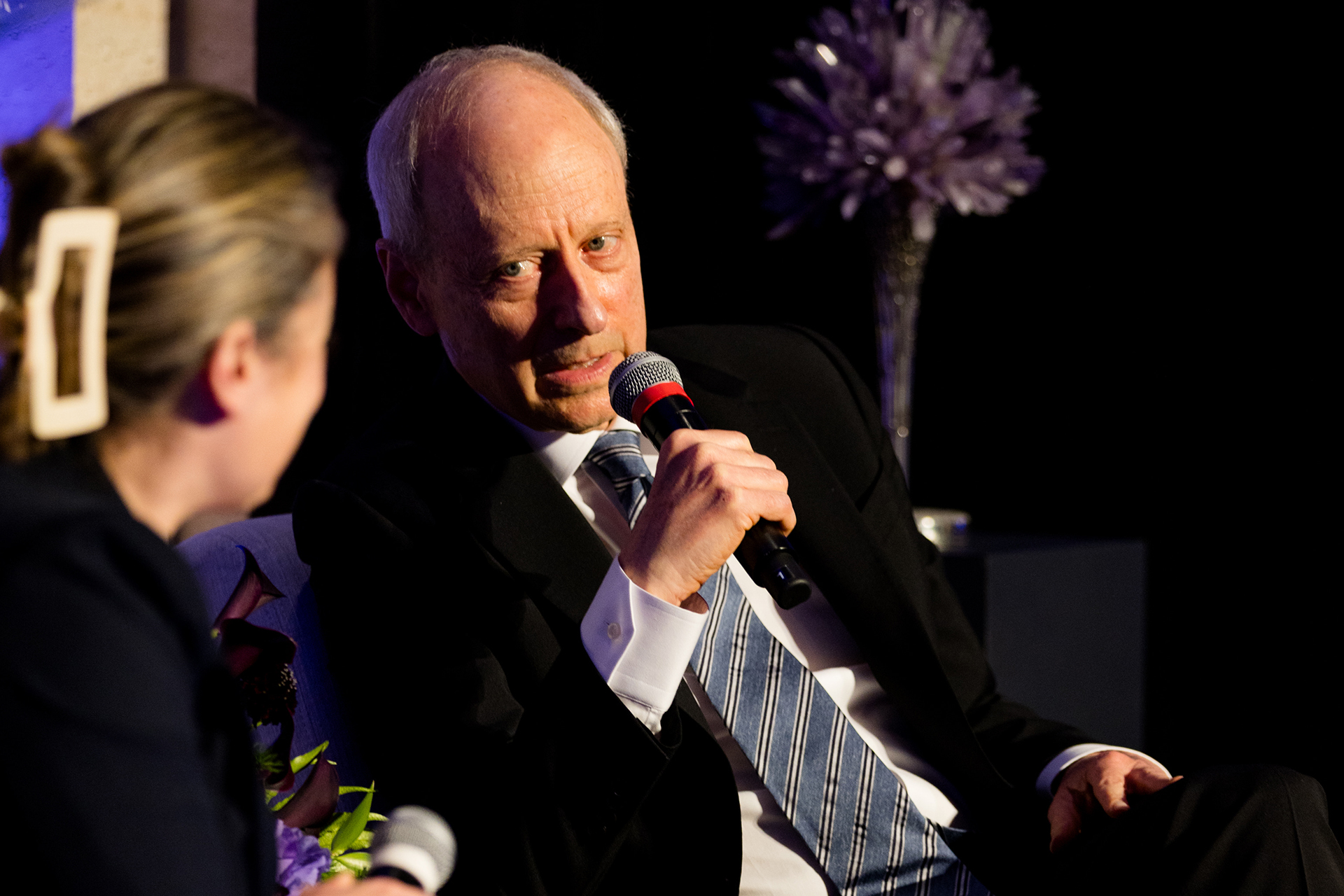
Philosophy helps us solve ‘big questions that matter,’ argues ‘Justice’ professor as he accepts Berggruen Prize
Samantha Laine Perfas
Harvard Staff Writer
April 15, 2026 4 min read
In 1996, political philosopher Michael Sandel predicted in “Democracy’s Discontent” that globalization would “banish ambiguity, shore up borders, harden the distinction between insiders and outsiders, and promise a politics to ‘take back our culture and take back our country,’ to ‘restore our sovereignty’ with a vengeance.”
Flashing forward to the extreme division we see today, these words have proven prophetic. What were the signs?
“At the time, I thought there was a lot of hubris,” and that legitimate concerns of community erosion were being ignored, Sandel said Monday as he received the Berggruen Prize for Philosophy & Culture, an annual award that recognizes top thinkers whose contributions have lasting intellectual and practical impact worldwide.
He was joined in conversation by Chrystia Freeland, the former deputy prime minister and minister of finance of Canada, who currently serves as economic adviser to the president of Ukraine and is the incoming chief executive officer of the Rhodes Trust.
Sandel, the Anne T. and Robert M. Bass Professor of Government, has written extensively on justice, democracy, bioethics, the moral limits of markets, and meritocracy. An online version of his popular Gen Ed “Justice” course has reached a global audience of tens of millions with lectures covering everything from taxation to free speech.
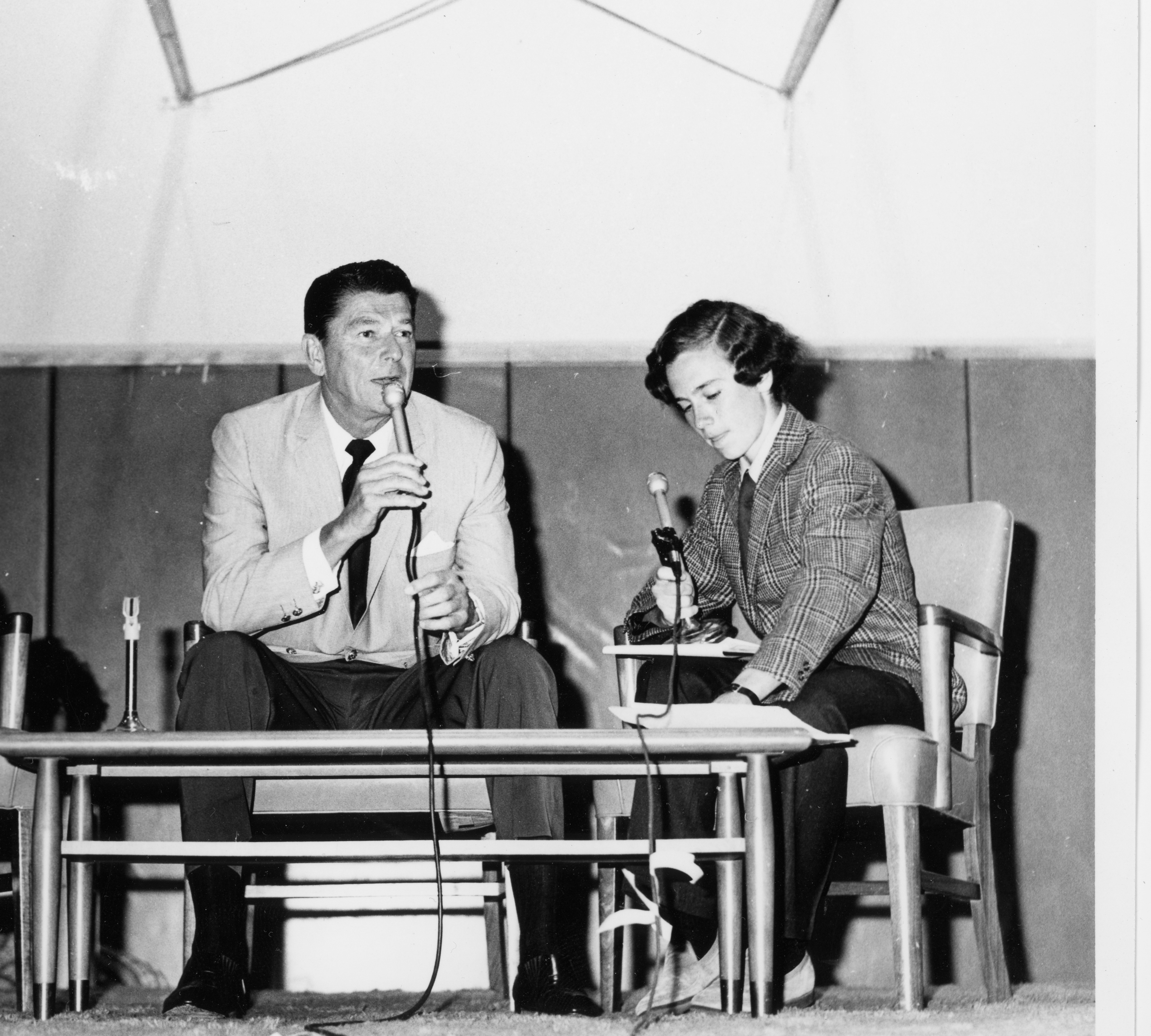
During the ceremony, Freeland and Sandel looked back on Sandel’s life and career, including his high school years in West Los Angeles. Even as a teenager, Sandel had a knack for challenging conventional wisdom. In 1971, he convinced Ronald Reagan, then governor of California, to debate him at his school — by strategically delivering six pounds of jellybeans to his home. He brought in a legal pad full of his toughest questions on the Vietnam War, the United Nations, and voting rights. Reagan responded respectfully and amiably.
At the end of the hour, Sandel wasn’t quite sure what had happened.
“He hadn’t persuaded us of his views, but he had somehow disarmed us, in part because he took us so seriously,” Sandel said of the experience. “And he listened, which is a lesson that I’ll always remember.”
His most recent book, “The Tyranny of Merit” argues that notions of personal success have led to a deeply polarized society.
“There’s an assumption that has tightened its hold on our public understanding of success, that those who’ve landed on top, that their success is their own doing,” Sandel said.
That’s simply not true, he said. Each of us is surrounded by teachers, family, peers, and environments that play a role in our success. Sandel said we should be cultivating in our youth two messages: work hard to develop talent but also acknowledge the luck you’ve received along the way.
This approach might offer a salve to current political fires, Sandel said. Often elites forget that most U.S. citizens do not have a college education, which many view as the ticket to “dignified work in a decent life.”
“That’s a recipe for anger and resentment, and the sense among many working people is that credentialed elites look down on them, and don’t respect their dignity or the work they do,” he said.
Capping the event, which took place at the Harvard Art Museums, Sandel said he is encouraged by the “hunger” of young people to engage in public debate and noted that philosophy plays a crucial role in our ability to solve problems.
“Many people think that philosophy resides in the heavens far beyond the world in which we live. I think that’s a mistake,” he said. “Philosophy belongs in the city where citizens gather and reason together and argue together about big questions that matter to their lives.”
The $1 million award given annually by the Los Angeles-based Berggruen Institute honors thinkers whose work has made a meaningful impact on a world rapidly transformed by social, technological, political, cultural, and economic change. Past laureates include Onora O’Neill, Martha Nussbaum, Ruth Bader Ginsburg, Paul Farmer, and Patricia Hill Collins.