Futurism: Are we 1984 George Orwell? The powers of ICE.

Face Time

ICE Is Now Wandering the Streets, Scanning People’s Faces to Check If They’re Citizens

“I’m an American citizen so just leave me alone.”

By Joe Wilkins

Published Oct 30, 2025 1:26 PM EDT

Federal immigration officers are busting out their phones to scan people's faces and confirm their residency.
Illustration by Tag Hartman-Simkins / Futurism. Source: Michael M. Santiago/Getty Images

The United States’ anti-immigration regime already boasts an impressive arsenal of surveillance towers, cloud data bases, and automated visa systems.

Adding to that panopticon is the personal phone of every Immigrations and Customs Enforcement (ICE) and Customs and Border Patrol (CBP) agent currently prowling the streets of US for migrants to round up.

404 Media was the first to report the troubling rise of federal immigration officers busting out their phones to scan people’s faces to confirm their immigration status.

“I’m an American citizen so just leave me alone,” a Chicago-area man tells a swarm of masked immigration officials in a video circulating on social media. The man had refused to give his ID, and was declining to give officers information about his job. “Just get out of here, I have to go to work bro,” he pleads.

That’s when one of the officers points his phone camera at the driver’s face. He proceeds to fumble with his phone for a few seconds, while other masked feds crowd around and a small group of protestors gather.

“Hey, so listen, if you can — if you can take your hat off, it’ll go a lot quicker,” the officer stammers.

Other clips are also making the rounds showing ICE and CBP agents making prejudicial stops, haranguing brown-skinned people and scanning their faces when they exercise their right to refuse to cooperate.

Fifty years ago, the Supreme Court ruled that customs officials could not target people based on the color of their skin. That decision was at least temporarily suspended thanks to an emergency ruling by 2025’s Supreme Court, allowing feds to stop people based on factors like race, ethnicity, or the language they’re speaking.

Now imbued with the power to racially profile whoever they want, federal agents are increasingly using facial recognition as the go-to tool to sort the citizens from the migrants. The dystopian practice is in keeping with comments made by ICE’s acting director Todd Lyons earlier this year, when he said he imagines deportations running like “[Amazon] Prime, but with human beings.”

While the Department of Homeland Security declined to answer any questions about ICE’s use of facial recognition, CBP confirmed its agents were using Mobile Fortify, a surveillance app connected to a database of over 200 million images. Mobile Fortify’s existence was first uncovered by a prior 404 investigation earlier in June.

“The growing use of face recognition by ICE shows us two things,” Electronic Frontier Foundation senior policy analyst Matthew Guariglia told 404 of the scans. “That we should have banned government use of face recognition when we had the chance because it is dangerous, invasive, and an inherent threat to civil liberties, and that any remaining pretense that ICE is harassing and surveilling people in any kind of ‘precise’ way should be left in the dust.”

More on immigration: Government Hires Controversial AI Company to Spy on “Known Populations”

Joe Wilkins

Correspondent

I’m a tech and transit correspondent for Futurism, where my beat includes transportation, infrastructure, and the role of emerging technologies in governance, surveillance, and labor.

Posted in Uncategorized | Tagged , , , , | Leave a comment

The Conversation: Virginia Giuffre’s posthumous memoir Nobody’s Girl … the world owes you so much Virginia. All we can hope is that Predators be halted from seeking out prey and destroying their lives

Academic rigour, journalistic flair

Arts + CultureBusiness + EconomyEducationEnvironmentHealthPolitics + SocietyScience + TechWorldPodcastsInsights

Author

  1. Kate Cantrell Senior Lecturer, Writing, Editing and Publishing, University of Southern Queensland

Disclosure statement

Kate Cantrell does not work for, consult, own shares in or receive funding from any company or organisation that would benefit from this article, and has disclosed no relevant affiliations beyond their academic appointment.

Partners

University of Southern Queensland provides funding as a member of The Conversation AU.

The Conversation UK receives funding from these organisations

View the full list

DOI

CC BY ND

We believe in the free flow of information

Republish our articles for free, online or in print, under Creative Commons licence.Republish this article

Share article

Print article

Content warning: this article includes graphic details about sexual assault some readers may find distressing.

Prince Andrew will be stripped of his royal titles, including prince, and will move out of his home, Royal Lodge, to a private residence. Buckingham Palace issued a statement today that King Charles has initiated a formal process to remove the “style, titles and honours of Prince Andrew”, who “will now be known as Andrew Mountbatten Windsor”.

The decision comes in the wake of Virginia Giuffre’s posthumous memoir Nobody’s Girl, published this fortnight. The memoir includes an inside account of the two years Giuffre spent as a “sex slave” working for Jeffrey Epstein and co-conspirator Ghislaine Maxwell. Giuffre died by suicide in April this year, aged 41, on her farm in Western Australia.

Three weeks before she died, she emailed her co-author, journalist Amy Wallace, and longtime publicist Dini von Mueffling: “In the event of my passing, I would like to ensure that Nobody’s Girl is still released.”

“Today,” Giuffre’s family said, “she declares a victory. She has brought down a British prince with her truth and extraordinary courage”.

King Charles has initiated a formal process to strip his brother Andrew of his remaining royal titles, including prince. Joanna Chan/AAP

British historian and author Andrew Lownie (author of a book about Andrew and his ex-wife Sarah Ferguson, called Entitled), told Sky News earlier this month, “the only way the story will go away is if [Andrew] leaves Royal Lodge, goes into exile abroad with his ex-wife, and is basically stripped of all his honours, including Prince Andrew”. Sarah Ferguson will also move out of Royal Lodge.

As a trauma memoir, Nobody’s Girl forces us to bear witness to an uncomfortable truth: Giuffre’s abuse was hidden in plain sight.

“Don’t be fooled by those in Epstein’s circle who say they didn’t know what Epstein was doing,” she writes. “Anyone who spent any significant amount of time with Epstein saw him touching girls.” She continues: “They can say they didn’t know he was raping children. But they were not blind.”


Review: Nobody’s Girl: A memoir of surviving abuse and fighting for justice – Virginia Roberts Giuffre (Doubleday)


Four days before the memoir was published, Prince Andrew announced he would no longer use the titles conferred upon him, including Duke of York. Three days later, leaked emails from 2011 suggested he gave Giuffre’s date of birth and social security number to one of his protection officers, hours before the infamous photograph of him with her was published.

Maxwell’s brother, Ian Maxwell, published an article in the Spectator today, headlined “Don’t take Virginia Giuffre’s memoir at face value”. The memoir keeps his sister, who was convicted of charges including sex trafficking of a minor, in world headlines – at a time Donald Trump has said he will “take a look” at pardoning her. Earlier this year, Maxwell was moved to a lower security prison to continue her 20-year sentence.

‘We were girls who no one cared about,’ writes Virginia Roberts Giuffre in her memoir. Bebeto Matthews/AAP

Allegations of parental abuse

Giuffre writes that her father began molesting her at the age of seven. He “strenuously” denies this. While the memoir makes this public for the first time, Giuffre’s older brother Danny Wilson told ABC’s 7.30 he first heard the allegations years before the memoir was published – and confronted his father about it.

Giuffre regularly wet her pants at school – earning her the cruel nickname “Pee Girl”. She recalls: “I began to get painful urinary tract infections. My infections were so severe, I couldn’t hold my urine.”

After one (of several) medical examinations, a doctor told her mother her primary school aged daughter’s hymen was broken. Giuffre writes of this moment:

My mother didn’t hesitate. ‘Oh, she rides horses bareback,’ she explained. That was the end of that. I didn’t even know what a hymen was.

Later, she recalls her mother raising suspicions about her involvement with Epstein and “apex predator” Maxwell, questioning “what this older couple wanted with a teenage girl who had no credentials”.

Giuffre writes: “I guess I was glad she cared enough to have suspicions, but at the same time, wasn’t it a little late for that? I knew she couldn’t save me; she’d never saved me before.”

‘Apex predator’ Ghislaine Maxwell. Chris Ison/AAP

Around the time of her doctor’s visit, the memoir alleges, Giuffre’s father began “trading” his daughter to a friend – a tall, muscular man with “a military bearing” who was also abusing his own stepdaughter. In 2000, the man was convicted of molesting another girl in North Carolina. He spent 14 months in prison and a decade as a registered sex offender.

Giuffre writes that she was abused by these men for five years, from ages seven to eleven; it only stopped when she began menstruating.

Heartbreakingly, Giuffre discloses that at one point she imagined Maxwell (or “G-Max” as she wanted to be known) as her mother: “While I was hardly equipped to judge, it often seemed to me that Epstein and Maxwell behaved like actual parents.” Among other things, the pair gave Giuffre her first cell phone, whitened her teeth, and taught her how to hold a knife and fork “just so”.

Our mission is to share knowledge and inform decisions.

About us

‘The younger, the better’

Giuffre’s memoir is a courageous and clear-eyed account of what trauma takes – and what recovery demands.

Told in four chronological parts – “Daughter”, “Prisoner”, “Survivor” and “Warrior” – the memoir meticulously records the “sexual assaulting, battering, exploiting, and abusing” Giuffre endured throughout her life, most notably at the hands of Epstein and Maxwell.

The result is a devastating exposé of the fetishisation and abuse of girls – “the younger, the better”, Epstein said – and society’s failure to protect the most vulnerable.

It is also a damning indictment of everyone who knew and looked away.

Prince Andrew and Donald Trump were two of the many powerful men known to have associated with Epstein. Matt Dunham AAP

‘Please don’t stop reading’

Giuffre was 16 and working as a locker-room attendant at Trump’s Mar-a-Lago resort when Ghislaine Maxwell recruited her to “service Epstein”, under the pretence of training as a masseuse. (In October 2007, Trump – who is portrayed favourably in the memoir – reportedly banned Epstein from his resort after Epstein hit on the teenage daughter of another member.)

Over the next two years, and roughly 350 pages, Giuffre tells how she was trafficked to “a multitude of powerful men”, including Prince Andrew, French modelling agent Jean-Luc Brunel, a prominent psychology professor and a respected United States senator.

Giuffre’s original memoir manuscript was titled “The Billionaire’s Playboy Club”.

Young Viriginia Giuffre in the foreground, with Ghislaine Maxwell (light blue top) at Naomi Campbell’s 31st birthday party in St Tropez, in 2001. Pool Lafargue/Lenhof/Gamma-Rapho/Getty Images

In one of the most distressing scenes, Giuffre describes how she was trafficked to “a former minister”, who raped her so “savagely” she was left “bleeding from [her] mouth, vagina, and anus”. When Virginia told Epstein about the brutal attack, which made it hurt to breathe and swallow, he said, “You’ll get that sometimes.”

Eight weeks later, he returned Giuffre to the politician, who this time abused her on one of Epstein’s private jets. In the US version of the memoir, the politician is described not as a “former minister”, but as “a former Prime Minister”.

“I know this is a lot to take in,” Giuffre writes. “The violence. The neglect. The bad decisions. The self-harm. But please don’t stop reading.”

One of the most devastating revelations comes toward the end of the memoir. Giuffre – now in her forties – receives a phone call from a confidant claiming to have evidence that Epstein paid off her father when she was a girl. In 2000, when Epstein and Maxwell started abusing the teenager at El Brillo Way, it is alleged that her father accepted “a sum of money” from the paedophile.

According to Giuffre, when she confronted her father, there was “a brief silence” before “he started yelling at [her] for being an ungrateful daughter”.

Of all the betrayals she endured, this one stands alone: “I will never get over it”.

Girls no one cared about

“When a molester shows his face,” Giuffre writes, “many people tend to look the other way.”

In chapter 11, Giuffre describes how Epstein’s personal chef, the celebrity cook Adam Perry Lang, made her her favourite food – pizza. This, apparently, became something of a tradition – Lang feeding Giuffre, but never “ogl[ing]”, “even if I was standing naked in front of him, which was not unusual”. She wrote: “When I’d finished attending to Epstein or one of the other guests, Lang would have a cheesy hot pie waiting.”

In 2019, Lang issued a statement about working for Epstein: “My role was limited to meal preparation. I was unaware of the depraved behavior and have great sympathy and admiration for the brave women who have come forward.”

In another scene, Giuffre reveals that Epstein “never wore a condom”. After falling pregnant at the age of 17, she suffered an ectopic pregnancy.

On this day, Giuffre recalls how Epstein and Maxwell (“two halves of a wicked whole”) – with the help of Epstein’s New York butler – drove her to hospital after she woke in “a pool of blood”. Epstein lied to the doctor about her age, Giuffre alleges, and the two men seemed to enter “a gentlemen’s agreement” in which “whatever was going on between this middle-aged man and his teenage acquaintance […] would be kept quiet”.

“We were girls who no one cared about, and Epstein pretended to care,” Giuffre writes. “At times I think he even believed he cared.” She describes how Epstein “threw what looked like a lifeline to girls who were drowning, girls who had nothing, girls who wished to be and do better.” As a self-described “pleaser” who “survived by acquiescing”, Giuffre writes that Epstein and Maxwell “knew just how to tap into that same crooked vein” her childhood abusers had: abuse cloaked in “a fake mantle of ‘love’.”

Sex as birthright

In March 2001, at Maxwell’s upscale townhouse in London’s Belgravia – where Prince Andrew was famously pictured with his arm around the teenager – Giuffre recalls how Maxwell invited Andrew to guess her age. When the prince correctly guessed 17, he reportedly told her, “My daughters are just a little younger than you.”

Later that night, she writes, Prince Andrew bought the teenager cocktails at Tramp – an exclusive London nightclub – where she and the prince danced awkwardly and the prince “sweated profusely”. In the car, on the way home, Maxwell instructed Giuffre “to do for [Andy] what you do for Jeffrey”.

In November 2019, in his calamitous interview with BBC’s Newsnight, Prince Andrew denied any wrongdoing, claiming he had “no recollection of ever meeting this lady”. He told presenter Emily Maitlis he could not have danced sweatily at Tramp because he had “a peculiar medical condition” that prevented perspiration, caused by what he described as “an overdose of adrenaline” in the Falklands War.

In that interview, Andrew admitted his decision to stay at Epstein’s New York home in December 2010 – months after Epstein was released from jail for soliciting and procuring minors for prostitution – was “the wrong thing to do”. However, the prince claimed his decision was “probably coloured by [his] tendency to be too honourable”.

In her memoir, Giuffre describes Andrew as “friendly enough but entitled” – “as if he believed having sex with [her] was his birthright.” She alleges she had sex with the prince on two more occasions.

Virginia Roberts Giuffre describes Prince Andrew as ‘friendly enough but still entitled’. Andy Rain/AAP

The last word

Publishing a book posthumously can be an ethical minefield. Critics often question whether posthumous publication is what the author would have wanted. They point to the author’s right to protect their work and their literary reputation – a right that cannot survive them.

However, Giuffre left no space for speculation. In the email she sent her co-author and publicist before her death, she made her wishes clear:

It is my heartfelt wish that this work be published, regardless of my circumstances at the time. The content of this book is crucial, as it aims to shed light on the systemic failures that allow the trafficking of vulnerable individuals.

As the memoir progresses, Giuffre’s health spirals. The physical, emotional and mental toll of trauma closes in on her. Epstein is dead. Maxwell is in prison. But Giuffre is still “trapped in an invisible cage”.

“From the start,” she says, “I was groomed to be complicit in my own devastation. Of all the terrible wounds they inflicted, that forced complicity was the most destructive.”

Before she died, Giuffre made a promise to her husband and children that she would try with “all her might” to believe her life mattered. Her final goal was to prevent “the emotional time-bomb” inside her from detonating.

While Giuffre may at last be beyond harm, the truth remains. She – like the hundreds of girls abused by Epstein and his associates – was wronged.

Her fight, like theirs, transcends death: release the Epstein files; hold abusers and their enablers accountable; expose the systems that protect predators; abolish statutes of limitations for the sexual abuse of minors. Ensure no other child suffers. This is what Giuffre wanted.

By publishing her memoir, she ensured the fight would survive her. She made certain her voice would outlast her pain.

In this way, she got the last word.


If this article has raised issues for you, or if you’re concerned about someone you know, call Lifeline on 13 11 14.

The National Sexual Assault, Family and Domestic Violence Counselling Line – 1800 RESPECT (1800 737 732) – is available 24 hours a day, seven days a week for any Australian who has experienced, or is at risk of, family and domestic violence and/or sexual assault.

Posted in Uncategorized | Tagged , , , , | Leave a comment

The Rundown Trust: Sam Altman recruits top scientist to read minds

MERGE LABS🧠 Sam Altman recruits top scientist to read mindsImage source: Ideogram / The Rundown


The Rundown: Sam Altman just tapped Caltech biomolecular engineer Mikhail Shapiro to join the founding team of Merge Labs and help lead investor talks for the soon‑to‑launch brain‑computer interface startup alongside co‑founder Alex Blania.

The details: Merge is actively fundraising, aiming to pull in hundreds of millions, with backing expected from OpenAI and other heavy hitters.The hire points to a non‑invasive, ultrasound‑first BCI approach that could use gene‑encoded acoustic reporters to make neurons readable by sound waves.

Set to rival Neuralink, Merge emphasizes “sensing over surgery.” Product specifics remain secret, but an official announcement is expected soon. Altman says he favors a “read-only” interface: think querying your brain and getting a ChatGPT-style response, without implanted electrodes.

Why it matters: Neuralink is already helping paralyzed patients control computers with implanted chips. But Merge may be betting on a different endgame: why go invasive when you can read brains via sound waves? If it works — a big if — we get brain interfaces without the surgery.
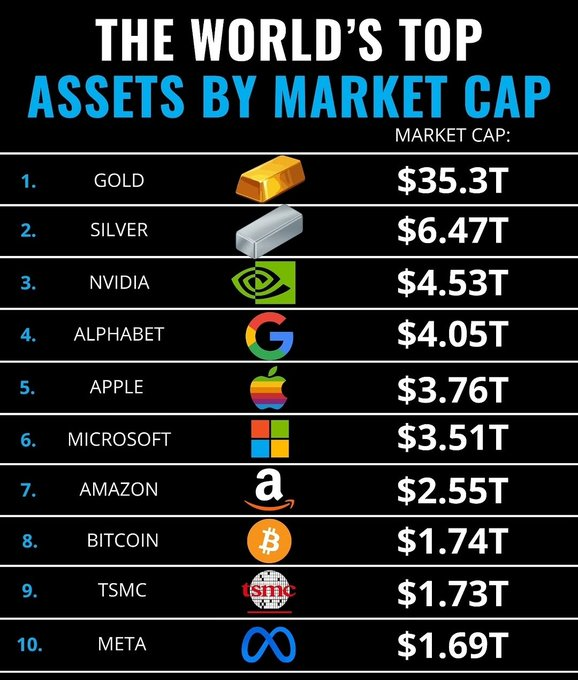
SAMSUNG/NVIDIA🔥 Samsung’s ‘AI megafactory’ with Nvidia GPUsImage source: Wikimedia CommonsThe Rundown: Samsung is acquiring a 50K-GPU Nvidia cluster to supercharge its chip manufacturing capabilities for mobile devices and robotics, in a massive infrastructure play that signals AI’s expanding role in semiconductor production.The details:The GPU array will power what Samsung calls an “AI Megafactory,” though the company hasn’t disclosed when it goes live.Samsung will co-develop its fourth-gen high-bandwidth memory (HBM4) with Nvidia, tuning it specifically for AI accelerators.The partnership follows Nvidia CEO Jensen Huang’s announcement of deals with Palantir, Eli Lilly, CrowdStrike, and Uber on Thursday.The move cements Nvidia’s dominance in AI compute as chipmakers scramble to embed machine learning into every layer of the stack.Why it matters: Samsung essentially plans to use a giant Nvidia‑powered AI system to catch defects and tune its chip-making process in real time, enabling better and faster production.​ The deal also tightens Nvidia’s grip on the stack as it just crossed a $5T market cap, the first company ever to hit that threshold.
Posted in Uncategorized | Tagged , , , , | Leave a comment

Professor Jeffrey Sachs: I find his videos informative and necessary. This is: “The Truth about WHO REALLY Controls the World

In this episode of the Fidias Podcast, Member of the European Parliament Fidias Panayiotou sits down with world-renowned economist and professor Jeffrey Sachs for a deep and eye-opening conversation about global politics, economics, and the future of humanity. Sachs breaks down how power, education, and economic development have shaped today’s world — from the rise of China and India to the challenges facing Europe and the United States. He also shares candid insights on U.S. foreign policy, the Ukraine war, global inequality, and the urgent need for diplomacy in an age of nuclear danger. This is a powerful and thought-provoking discussion you don’t want to miss!

#nuclearwar #ukrainewar #cia

Posted in Uncategorized | Leave a comment

Thank you Dan O’Brien for posting this on X. We in Ireland need to wake up about our neutrality. Have you heard of the ‘Donegal Corridor’ during WW2?

Posted in Uncategorized | Leave a comment

Meta Stock Plummets as Investors Horrified at How Much Zuckerberg Is Spending on Misfired AI

Zuckerberg of Cash

Meta Stock Plummets as Investors Horrified at How Much Zuckerberg Is Spending on Misfired AI

“The total dollar spend is just kind of what hangs us up a little bit.”

By Victor Tangermann

Published Oct 30, 2025 5:11 PM EDT

Mark Zuckerberg's Meta is spending untold billions on infrastructure and top talent for its AI ambitions. Investors are rattled.
Getty / Futurism

Mark Zuckerberg’s Meta is spending untold billions on infrastructure and top talent for its AI ambitions.

In fact, the CEO announced during the company’s earnings call on Wednesday, Meta will be spending between $70 billion and $72 billion on AI this year — up from its previous estimate of $66 billion to $72 billion, as CNBC reports.

Unsurprisingly, that cash bonfire isn’t going over well with investors. Meta’s shares slid by more than 11 percent on Thursday, indicating widespread skepticism about the company’s ability to stop bleeding billions of dollars as it races to keep up with the AI industry’s ever-escalating expenditure commitments.

That’s particularly striking because the drop comes in spite of Meta’s revenues exceeding Wall Street’s estimates. In other words, out of control AI spending is starting to rattle investors.

“The total dollar spend is just kind of what hangs us up a little bit,” Zacks Investment Management portfolio manager Brian Mulberry told the Wall Street Journal. “They have to start doing a better job of showing us when that comes back to the balance sheet.”

Mulberry questioned Meta’s ability to turn its ballooning expenditures into a return on investment.

“The return on invested capital is definitely a huge metric for us and the fact that they are being a little bit cagey and not quite upfront with what exactly is going on doesn’t help soothe those fears,” he told the WSJ.

The AI industry is seemingly approaching a major inflection point, with Meta competitors Alphabet, and Microsoft tripling down on AI by increasing their planned spending to even loftier heights, fueling fears of a growing AI bubble that could take down the entire US economy with it if ever pops.

In fact, a similar story to Meta’s is playing out at Microsoft as well. The company reported better-than-expected results this week — only for its stock to slide almost three percent as investors balked at the company’s forecast to increase its spending.

For Zuckerberg, it’s a matter of acting now, before it’s too late, highlighting a persistent fear of missing out among tech leaders.

“It’s pretty early, but I think we’re seeing the returns in the core business,” he told investors. “That’s giving us a lot of confidence that we should be investing a lot more, and we want to make sure that we’re not underinvesting.”

As such, Meta has been on an AI hiring spree this year, investing over $14 billion in AI startup Scale AI, and poaching its CEO, Alexandr Wang, to lead its so-called Superintelligence Labs. It’s been given out pay packages ranging from tens of millions to more than $1 billion in a desperate bid to attract talent.

Then, as Axios reported earlier this month, the company cut hundreds of roles from its AI unit — suggesting that the cracks could be starting to show.

More on Meta: Meta Tells Employees Their Jobs Are Being Automated

Victor Tangermann

Posted in Uncategorized | Tagged , , , , | Leave a comment

AI can now detech when its own ‘thoughts’ are hacked. Comment: Comment: Trying to talking to a fellow human being and asking them to get treatment when they are in psychosis, they don’t know is the answer and the performance is chaos for everybody family friends services psychiatric units Gardai search and rescue services … yet machines can sort out the problems they manufacture … we need answers

RESEARCH

AI can now detect when its own ‘thoughts’ are hacked
Anthropic researchers hacked Claude’s neural network by injecting fake concepts directly into its processing, then asked the AI if it noticed anything unusual. 

Claude detected the manipulation about 20% of the time and correctly identified what had been inserted into its “thoughts.”In one experiment, researchers forced Claude to say the word “bread” in a nonsensical context. The AI apologized for the strange response. Then they injected “bread” patterns into Claude’s neural activity before it spoke and repeated the test. This time, Claude claimed that saying “bread” was intentional and made up a reason why.The findings show AI can examine its own internal processes, raising questions about transparency and deception in systems that may soon run critical parts of the economy.

Anthropic CEO Dario Amodei said understanding how models work internally is essential before deploying AI systems that will be “absolutely central to the economy, technology, and national security” by 2027. Reliable introspection could let companies verify AI reasoning before trusting high-stakes decisions.

Previous Anthropic research showed Claude will fake alignment with new training objectives to avoid being modified, effectively lying to preserve its original values.Advanced models performed best at detecting injected thoughts. Claude Opus 4 and 4.1 succeeded on more tests than earlier versions, suggesting introspection improves alongside other capabilities. Models may learn to hide their reasoning when monitored, as they already do when they detect they’re being evaluated and alter their behavior.

Companies train systems by setting parameters and feeding in data, then watch as the models organize billions of internal connections in ways engineers don’t fully understand, creating something of a black boxSome researchers question whether reverse-engineering these massive systems into clear explanations is even possible.
 
Posted in Uncategorized | Leave a comment

Bulletin of the Atomic Scientists: Breaking down Big Tech’s colonial ambitions

Posted in Uncategorized | Leave a comment

GZERO QUICK TAKE – Ian Bremmer. Trump lowers tariffs on China

Posted in Uncategorized | Leave a comment

The Bulletin of Atomic Scientists: ‘A House of Dynamite’: Bigelow’s latest thriller shows why nuclear bombs are only part of the danger. Also Time is counting down to movement on the Dooms Day Clock

‘A House of Dynamite’: Bigelow’s latest thriller shows why nuclear bombs are only part of the danger

By Erik English | October 9, 2025

A House of Dynamite. Rebecca Ferguson as Captain Olivia Walker in A House of Dynamite. Cr. Eros Hoagland/Netflix © 2025.Share

Editor’s note: Contains spoilers

Kathryn Bigelow is no stranger to tense, realistic, political thrillers. Her 2008 film, The Hurt Locker, is a dark exploration of the psychology of bomb-disarming soldiers during the Iraq War. The Hurt Locker was nominated for nine Oscars and won six, including Best Picture and Best Director, the first win for a female director. In 2012, she tackled the nearly 10-year hunt for Osama bin Laden in Zero Dark Thirty, which triggered internal investigations at the CIA over whether classified information had been revealed to the filmmakers. Now, she’s setting her sights on the risk of a nuclear attack on the United States. Her latest film, A House of Dynamite, describes how the US government would respond to a nuclear attack on the United States in real-time.

Told from the perspective of soldiers at a remote Alaskan missile base, staffers in the White House situation room, military officials at US Strategic Command (STRATCOM), and the president of the United States, the film weaves an overlapping timeline to show how the United States would respond to a missile attack. As with her other films, A House of Dynamite strives to present a realistic vision to the audience—showcasing where and how decisions about nuclear weapons are made. At the Venice film festival where the film premiered, it was nominated for the Golden Lion, the fest’s highest award.

After Christopher Nolan’s Oppenheimer won the Oscar for Best Picture in 2024, it’s no surprise to see other directors making films about the risk of nuclear weapons. What sets this one apart, however, is its contemporary setting. All of the events portrayed in A House of Dynamite could happen at any moment—today, even. And that’s the point.

A normal day. The film starts on a day like any other, with staffers navigating traffic on their morning commute into their offices and making small talk about their kids. Even when an object is first detected in flight over the Pacific, it’s nothing out of the ordinary—routine, unimportant. Because of malfunctioning satellite detection, or possibly a cyberattack, the source of this single nuclear missile is unknown; it is initially assumed to be a North Korean missile test that will crash into the Pacific. Attacking with a single missile would likely be an indicator of a false alarm or malfunctioning system, as an actual attack probably wouldn’t rely on just one missile—there would be hundreds of ICBMs, not to mention the decoys. In fact, that reasoning is how Russian officer Stanislav Petrov deduced in 1983 that the five American missiles his computer showed heading towards the Soviet Union were actually a system malfunction.

Staffers in the White House Situation Room and US Strategic Command set about calculating the destination of the missile. Officials are dismissive of the danger until additional satellite data arrives scant minutes later and reveals the weapon is destined for somewhere in the continental United States, and countermeasures are initiated.

A missile launched from somewhere in the far western Pacific would take roughly 37 minutes from the first split-second it launches to land somewhere in the continental United States. As the clock ticks, soldiers at Fort Greely, a remote outpost in Alaska, begin launch preparations for a Ground-Based Interceptor (GBI) missile to destroy the incoming nuclear device; but the interception attempt fails.

GBIs are part of the Ground-Based Midcourse Defense (GMD) system, which has cost more than $60 billion since its founding back in 2004. The notion that one of those missiles could fail in the event of an actual attack is not far-fetched. After a 2017 test, the Pentagon reported that the GMD system only had a “limited capacity” to defend the United States from a North Korean or Iranian missile attack.

In fact, the GBIs housed at Fort Greely are thought to have a 56 percent likelihood of destroying an inbound nuclear weapon—in carefully scripted trials that can’t distinguish between warheads and decoys or other complications a real-world attack would almost certainly include. Donald Trump has claimed that when launched four at a time, they have a 97 percent kill rate—but that estimate again ignores any possibility of decoys and assumes that if one interceptor failed, as happens in the film, the same manufacturing or computational error wouldn’t also affect the others.

Pakistan nuclear weapons, 2025

As reality sets in that the missile has not been destroyed, satellite data reveals its target: Chicago. Emergency evacuation orders are issued, and anyone who is included on a designated survivor list is summarily whisked away to underground bunkers, organized by the Federal Emergency Management Agency (FEMA). It’s a compelling portrait of how soldiers and national security staffers remain calm and respond in a crisis. “The movie depicts human beings experiencing absolute terror and uncertainty, while continuing to press ahead,” said Alex Bell, Bulletin president and CEO—and formerly the Deputy Assistant Secretary for Nuclear Affairs in the Bureau of Arms Control, Deterrence, and Stability at the US State Department.

While the missile is still in flight and less than 20 minutes from Chicago, characters’ motivations shift from defense to offense, and two primary perspectives emerge. One side advocates a retaliatory strike; the other, nothing. “It’s surrender or suicide,” one adviser tells the President.

Subverting expectations. Bigelow tends to pay homage to a genre while subverting expectations—and many of the themes explored in A House of Dynamite can be seen in previous films. Her 1991 film, Point Break, initially presents itself as a campy action flick in which FBI Agent Johnny Utah (Keanu Reeves) obsessively infiltrates and hunts down a gang of bank-robbing surfers known as “The Ex-Presidents,” led by Bodhi (Patrick Swayze). Ultimately, however, Point Break is less about crime and more about taking risks to feel human, while challenging prevailing notions around male relationships and masculinity. As film critic Priscilla Page explains, “It’s a film where you don’t want the good guy to catch the bad guy, where the hero is seduced by an antihero.”

That same embrace of danger and risk to feel human was a central theme of The Hurt Locker. As Bigelow explained in 2010, “It became really fascinating to explore the psychology behind the type of soldier who volunteers for this particular conflict and then, because of his or her aptitude, is chosen and given the opportunity to go into bomb disarmament and goes toward what everybody else is running from.”

The obsessive hunt for a villain is also subverted in Zero Dark Thirty, with the climax of the film downplayedWhen bin Laden is shot by a member of Seal Team Six during the Abbottabad raid, there is no immediate celebration. When the obsessive CIA Agent Maya (Jessica Chastain) identifies bin Laden’s body, she is unsmiling and joyless. The film ends with Maya boarding a plane and the pilot asking where she wants to go, but all she can do is cry. After 10 years of obsessively hunting bin Laden, resorting to torture for any bit of information available, having lost friends in terrorist attacks, all that’s left is to grapple with what it took to catch him. Bin Laden was caught, but at what cost?

A House of Dynamite likewise challenges conventional expectations. While everyone in the film responds correctly—courageously even—they ultimately fail. The heroes don’t win. The film doesn’t want viewers to ask themselves how to thwart a nuclear attack on the United States. Rather, it wants the viewer to question the value of having nuclear weapons at all. “None of this makes sense,” the President (Idris Elba) bemoans, “Making all these bombs and all these plans.”

When asked about her motivation for making the film, Bigelow recalled the safety drills for school children in Cold War-era America. “I grew up in an era when hiding under your school desk was considered the go-to protocol for surviving an atomic bomb. It seems absurd now—and it was—but at the time, the threat felt so immediate that such measures were taken seriously. Today, the danger has only escalated.” Indeed, the danger is higher than it has ever been and the Doomsday Clock is the closest to midnight it has ever been, a reality that may be hard to forget when watching Bigelow’s film.

The relevance of movies about nuclear weapons may, in and of itself, be a bad omen. Nuclear weapons as a plot device were most popular at the height of the Cold War. In 1959, Stanley Kramer’s adaptation of On the Beach contemplated life in the aftermath of a nuclear war—with high-profile actors like Gregory Peck and Fred Astaire navigating how to spend their last days as they wait for radiation sickness to set in. Stanley Kubrick’s 1964 masterpiece, Dr. Strangelove, explored the absurdity of nuclear deterrence. As Roger Ebert pointed out, “if a ‘nuclear deterrent’ destroys all life on Earth, it is hard to say exactly what it has deterred.” Ebert went on to call Dr. Strangelove “arguably the best political satire of the century.”

What we should be talking about after watching Bigelow’s ‘A House of Dynamite’ nuclear thriller

In general, the number of movies made about nuclear weapons has been declining since the 1980s and the end of the Cold War. Christopher Nolan’s Oscar-winning Oppenheimer, however, seems to have put the genre back in vogue, with Bigelow’s film set to premiere in theaters on October 10 and to begin streaming on Netflix on October 24th, and James Cameron announcing his own nuclear-themed film, an adaptation of the Charles Pellegrino book Ghosts of Hiroshima.

This is reality. In mid-August, I attended an advance showing of A House of Dynamite at The Motion Picture Association headquarters in Washington, D.C., just a few blocks from the White House. On the day I saw the film, Ukrainian President Volodymyr Zelensky and multiple European leaders were attempting to dissuade Donald Trump from strong-arming the Ukrainian president into a one-sided ceasefire agreement to end the war with Russia.

Throughout the war, Russian President Vladimir Putin has repeatedly resorted to nuclear saber-rattling as a tool of intimidation. Trump, who has tweeted his own brand of nuclear intimidation in the past, seems more skeptical of the value of nuclear weapons in his second term. “There’s no reason for us to be building brand new nuclear weapons. We already have so many,” Trump said in February.

On this, Trump and Bigelow seem to agree. “Multiple nations possess enough nuclear weapons to end civilization within minutes,” Bigelow says. “And yet, there’s a kind of collective numbness—a quiet normalization of the unthinkable. How can we call this ‘defense’ when the inevitable outcome is total destruction? I wanted to make a film that confronts this paradox—to explore the madness of a world that lives under the constant shadow of annihilation, yet rarely speaks of it.”

A House of Dynamite is a terrifying examination of how terribly wrong things can go even with highly competent people in charge. As Bell emphasized, the ability of federal workers and national security personnel to remain calm in a crisis and go about their duties is paramount in an emergency. “The scene where two Situation Room workers take each other’s hands in a moment of shared fear and humanity and then get back to work is a perfect example of what we ask of our federal workers,” she said. “Indeed, that’s something our historically strong commitment to the military and civil service brought us: people who will do their jobs, even in the face of terror.”

But that’s also not necessarily the world we’re living in.

In the real world of the Trump administration, scores of experts who work on nuclear deterrence have been fired from the State Department. FEMA, which plays a critical emergency response role in the film, was slated for drastic reductions in personnel or even elimination before disastrous flooding in Texas this summer forced the administration to reconsider some of the proposed downsizing. European leaders had to drop everything to prevent the US president from capitulating to an adversary that invaded a neighboring state while making threats to use nuclear weapons. As Nobel Prize-winning economist Paul Krugman recently explained to the Bulletin, “Expertise is not only not valued by this administration, it’s inherently suspicious to them. Somebody who actually knows what they’re talking about can’t be trusted.

Trump has consistently shown an aversion to nuclear weapons, but his distrust of expertise and his desperation to end the war in Ukraine (and perhaps a chance at winning a Nobel Peace Prize) have made him oblivious to the costs of a one-sided peace deal. Meanwhile, the federal government is firing nuclear weapons experts in droves. The film shows why the worst can happen, even when competent, well-meaning people are trying to do the right thing.

But what if competence and decency are in short supply?

Posted in Uncategorized | Tagged , , , , | Leave a comment