·
Yes I know. We disagree on global warming, but I think you and
have this issue nailed.
·
Yes I know. We disagree on global warming, but I think you and
have this issue nailed.
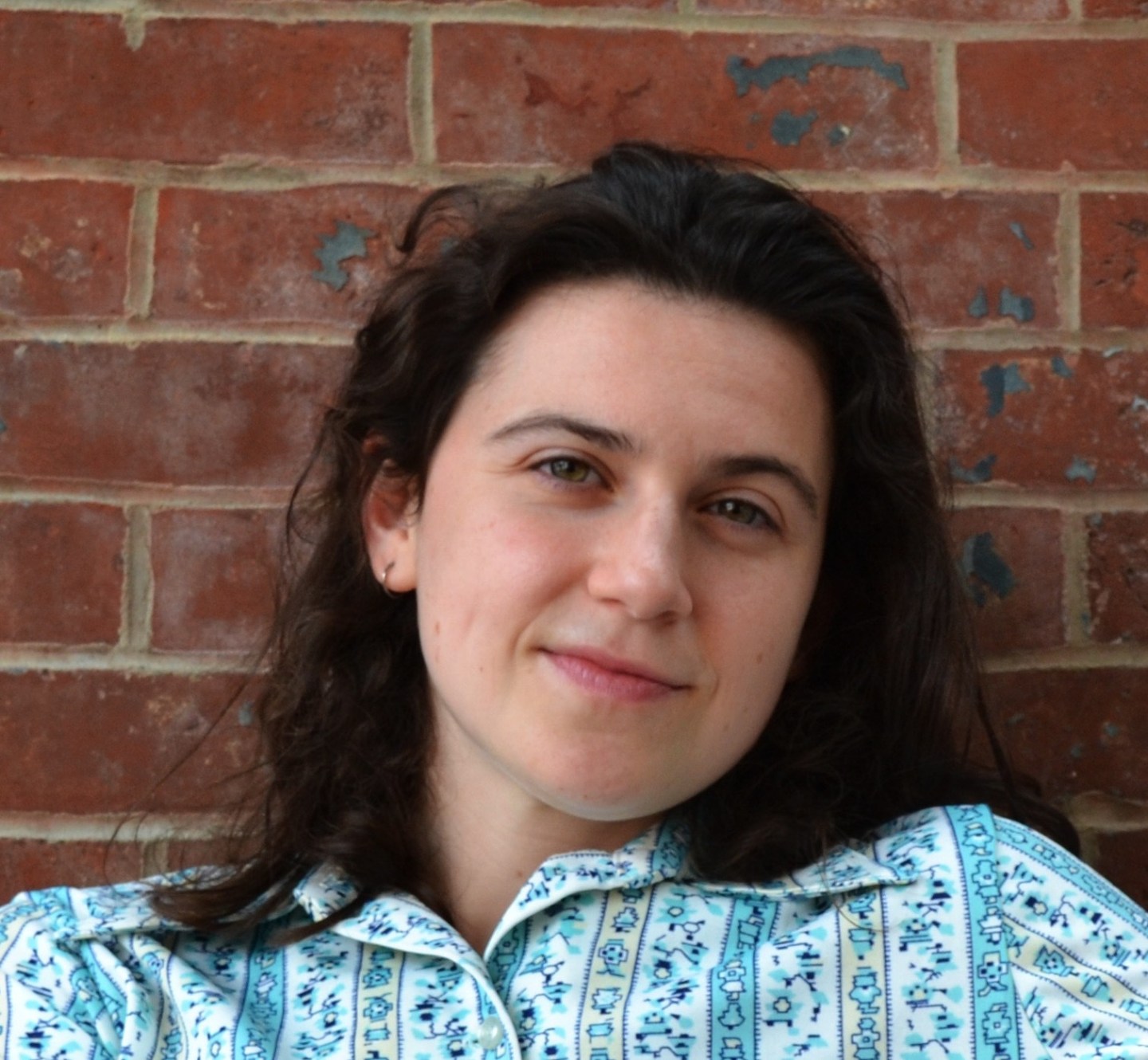
By
Reporter
April 26, 2026, 1:43 PM ET
Add us on

Baby boomers overwhelmingly hold the largest share of household wealth in the U.S.Getty Images
Older Americans may be trading in hustling for retirement, but that hasn’t stopped them from getting richer.
Recommended Video
Baby boomers now hold a record high of the United States’ wealth, Apollo chief economist Torsten Slok noted in a December blog post, citing Federal Reserve data. Compared to 1989, when those over 70 years old held 19% of the wealth in the household sector, older Americans now own 31% of the wealth.
That chunk of change is an outsize share compared to other generations. Baby boomers, who make up about 20% of the U.S. population, hold more than $85 trillion in assets, according to Fed data. By comparison, millennials, who make up about the same percentage of Americans, hold just about $18 trillion, roughly one-fifth that of baby boomers.
Older Americans’ financial success is in especially stark comparison to that of Gen Z, a generation with deep skepticism about the economic future, who feel shut out from entry-level jobs amid the rise of AI, with many sinking into credit card debt as they struggle to repay student loans. As of 2024, the young generation had only $6 trillion in wealth, despite making up the same percentage of the population as their baby boomer and millennial counterparts.
“The baby [boomer] generation has really gobbled up a huge share of household wealth, so it’s left a lot less for other age cohorts,” Edward Wolff, professor of economics at New York University, told Fortune.
America’s septuagenarians were raised by parents who came of age during the Great Depression and learned the hard way the lessons of frugality and the importance of saving money. But the baby boomer generation owes a great deal of their financial security to the stars aligning during their formative years.
In the 1970s when many baby boomers entered the housing market, inflation surged, making buying a home an appealing investment. As home values soared in the following decades, so, too, did the generation’s equity. The older generation has also been boosted by stock ownership, with baby boomers holding 54% of stocks worth more than $25 trillion, according to an early 2025 analysis of Fed data by the Motley Fool. Millennials owned about 8% of stocks worth $3.9 trillion.
But Gen Z, who may be following baby boomers’ lead in stock market investments, have not shared the same good fortune in the housing market. Housing supply has been low since the 2008 recession, exacerbated by sky-high mortgage rates, which disincentivized home sales and contributed to exorbitant home prices.
As a result, 2025 saw a 21% drop in the share of first-time homebuyers, and the age of those buyers reached a record high of 40 years, according to November 2025 data from the National Association of Realtors, leaving Gen Z to wait a little longer for the keys to their first homes. A March 2025 Redfin report found today, just 33% of 27-year-olds own their homes compared to 40% of baby boomers who owned their homes when they were the same age.
“They weren’t able to enjoy the big appreciation of house prices to the same extent as baby boomers,” Wolff said.

Paid Content
From Binance
To be sure, not all baby booms have experienced soaring passive wealth in their twilight years. A growing number of older Americans have “unretired,” part of a trend of a graying workforce that has seen the number of individuals 65 and over who are working has quadrupled since the 1980s. While many of these individuals are working to continue to save money and take advantage of an employer’s health insurance, others are still clocking in simply because they work less-demanding white-collar jobs and are living longer.
Gen Z may be facing generation-defining economic challenges, but there’s hope for them yet. Pew Research Center data from 2024 indicates Gen Z may actually be in better financial shape than young people in past generations: In 2023, Zoomers made a median pay of about $20,000, adjusted for inflation. In 1993, 18- to 24-year-olds made about $15,000. Income growth finally outpacing home price growth may also be a silver lining for prospective home buyers. A 2025 Bank of America report projected that by 2035, Gen Z would be the wealthiest generation with $74 trillion in wealth and is expected to grow to 30% of the population over the next decade.
But part of the equation of Gen Z’s relatively paltry share of wealth is simply because they haven’t had as much time to acquire it, Michael Walden, professor emeritus of economics at North Carolina State University, told Fortune.
“It makes logical sense that older people will accumulate greater percentages of wealth at any point in time because they’ve had more years to invest and reap the returns of their investments,” Walden said.
Beyond just more time, Gen Z will indirectly benefit from the investments made by their parents and grandparents as they await the Great Wealth Transfer that promises to distribute, by some estimations, $124 trillion in inheritance to the younger generations. Just last year, 91 heirs inherited a record $297.8 billion, according to the UBS Billionaire Ambitions Report, a 36% increase from last year.
Walden said the Great Wealth Transfer is coming, but Gen Z and millennials shouldn’t rely on the death of a loved one to begin their wealth acquisition journey in earnest.
“It’s hard to target when that’s going to come, so I would argue to any young person that I would be talking to, have a plan, be consistent with the plan,” he said.
A version of this story was published on Fortune.com on Dec. 8, 2025.
The Fortune 500 Innovation Forum will convene Fortune 500 executives, U.S. policy officials, top founders, and thought leaders to help define what’s next for the American economy, Nov. 16-17 in Detroit. Apply here.
About the Author
By Sasha RogelbergReporter
Sasha Rogelberg is a reporter and former editorial fellow on the news desk at Fortune, covering retail and the intersection of business and popular culture.
Apr 26, 2026 #DrRajPersaud#Trump#Assassination
Donald Trump recently described the attempt on his life as the work of a “lone wolf whack job.” But is that description clinically accurate? 🧠 Consultant Psychiatrist Dr. Raj Persaud dives into the forensic research to explain why US assassinations are unique, why the motives are rarely political, and the “neglected variable” of medical chaos. Featuring rare first-hand testimony from the surgeon who tried to save JFK. Key Topics Covered: The “Whack Job” Myth: Why labeling attackers as “crazy” makes them harder to catch. Forensic Profiling: Why American assassins act alone while the rest of the world organizes. The Psychology of Resentment: Why the US President becomes a target for personal failures. Parkland Trauma Room 1: Reading the chilling testimony of JFK’s surgeon, Ronald Jones. Trump’s Resilience: Why the President’s post-attack behavior reveals a “Goal Achiever” personality.
Search
April 2026
Three scientists taking varied approaches to understanding Alzheimer’s discuss what it will take to move the field forward
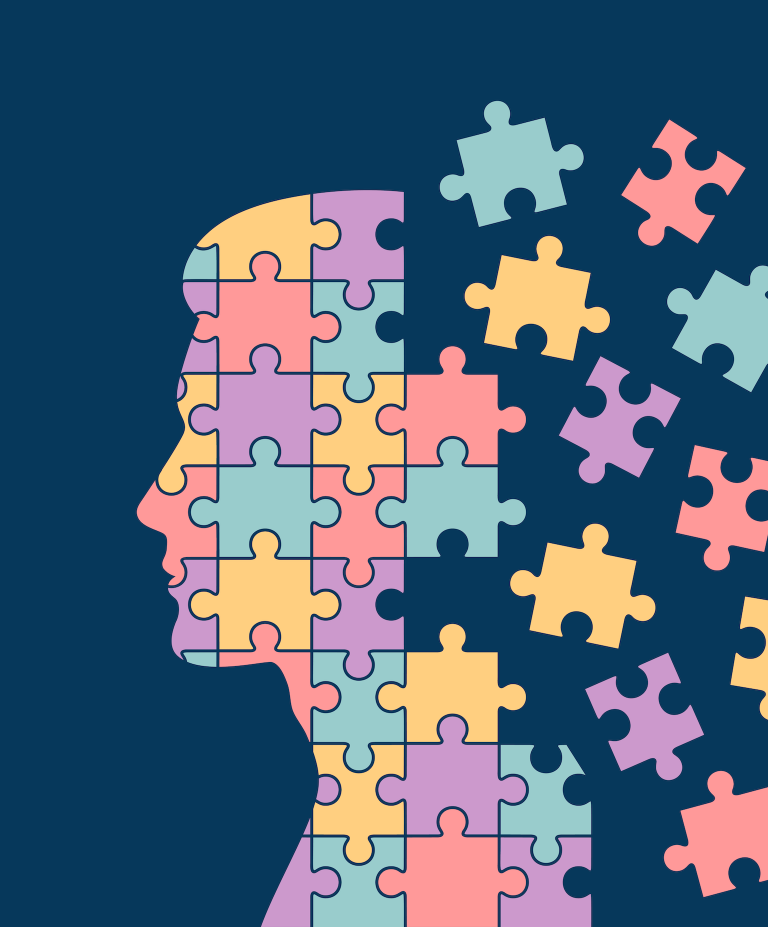
Image: Getty Images/OksanaTkachova
In the 120 years since Alzheimer’s disease was first identified, scientists have worked to unravel the biological details of how it develops and progresses, with the goal of finding ways to prevent it or slow its effects.
Since the 1980s, much of that research has centered on two proteins implicated in the pathology of the disease — amyloid beta protein, which forms plaques between brain cells, and tau protein, which forms twisted fibers called neurofibrillary tangles inside neurons. Scientific interest in Alzheimer’s has been bolstered by the disease’s enormous impact on the aging population: It is currently estimated to affect more than 55 million people worldwide, and that number is expected to rise to more than 150 million by 2050.
“Alzheimer’s disease has proven to be a difficult clinical and scientific problem that until recently has resisted effective therapeutic intervention,” says Bruce Yankner, a professor of genetics in the Blavatnik Institute at Harvard Medical School who studies the molecular genetics of aging and neurodegenerative disorders. “For many years, the focus was on the constituent proteins of the pathology, but there was limited understanding of the disease in its entirety.”
Currently, there is no cure for Alzheimer’s, but the FDA recently approved two new drugs that partially remove amyloid plaques. The therapies, lecanemab and donanemab, mark an important advance in Alzheimer’s treatment “because they address causal factors in the disease rather than just the symptoms,” Yankner says. He notes, however, that while the drugs reduce the rate of cognitive decline in people with early Alzheimer’s, they do not prevent the disease from progressing or restore lost cognitive function. “It is a good first step, but we have some distance to go in treating this disease,” he says.
Yankner, who is also a co-director of the Paul F. Glenn Center for Biology of Aging Research at Harvard, leads one of an interconnected network of Alzheimer’s labs at HMS and its affiliated hospitals studying everything from the most basic biology of the disease to the most promising new avenues for treatment. His recent research focuses on gene regulation and the role of lithium — recently found to be a physiological element — in cognitive function, aging, and the onset of Alzheimer’s disease. Sandeep Robert Datta and Chenghua Gu, both professors of neurobiology at HMS, have pivoted more recently to Alzheimer’s research. Datta is focusing on how the immune system may interact with proteins in the brain to cause the disease, and Gu’s newly launched project is investigating how vascular changes in the brain may contribute.
Together, Yankner, Datta, and Gu are tackling the basic biology of Alzheimer’s from three different angles — a strategy that they feel is essential in a field where progress toward effective treatments has been slow. “I think it’s very important to have a broad research approach, because it’s impossible to predict what is going to bear the most fruit — and sometimes major advances come from unrelated areas of research,” Yankner says.
“I think we should be pluralistic and not partisan,” Datta adds. “There are many, many potential drug targets, any of which could be the key.”
Moreover, Gu notes, casting a wide net protects against devoting too much time and energy to a single research topic in what has proven to be a highly complex and multifaceted disease. “If you bark up the wrong tree, the whole field can be delayed for a long time,” she cautions.
The Yankner Lab initially described how genes are regulated during the aging of the brain and what drives the transition from normal aging to Alzheimer’s disease at a molecular level. Researchers in the lab recently discovered that lithium is found naturally in the brain and other tissues and may play a key role in the disease. An important observation was that lithium is significantly depleted in the brains of older adults with early memory loss, and this change becomes more pronounced with progression to Alzheimer’s disease. “Lithium deficiency appears to occur at two levels: an early reduction in the brain related to reduced uptake, and a later sequestration of brain lithium by amyloid plaques that renders it inaccessible to brain cells,” Yankner says.
When the lab replicated this loss of lithium in mice, the animals developed the cardinal pathological features and cognitive symptoms that define Alzheimer’s disease. The researchers built on these findings to discover a new class of lithium compounds that resist inactivation by amyloid and are highly effective at reducing the pathology of the disease and restoring memory in mouse models. Together, the results provide a new conceptual paradigm for how Alzheimer’s disease may begin.
Yankner says that lithium may help explain a long-standing conundrum in the field: why in some people there is little correlation between dementia and the amount of plaques and tangles in the brain. “People who are able to maintain higher lithium levels may be resistant to the pathology,” he says. “We have data suggesting a correlation between brain lithium and cognitive function in the normal aging population. This is consistent with our experiments in mice in which lithium deprivation during aging results in memory loss even in the absence of Alzheimer-type pathology.” His lab plans to test the hypothesis in larger, long-term studies of the aging human population.
Yankner is also collaborating with physicians at Massachusetts General Hospital and Brigham and Women’s Hospital on a clinical trial that will test whether one of the newly discovered lithium compounds, lithium orotate, is safe and effective in aging individuals with early memory loss and Alzheimer’s. “The results in mouse models are encouraging, but we won’t know about the potential of lithium orotate as a treatment for Alzheimer’s disease until we test it in a randomized clinical trial,” he says.
Datta followed his work on the basic biology of smell into Alzheimer’s research: Over a decade ago, his team discovered a new family of odor receptors that express a gene also implicated as an Alzheimer’s risk factor.
Datta and his team are investigating how this gene might promote Alzheimer’s. They observed that inactivating the gene in mice reduced some Alzheimer’s symptoms. Then, they figured out that the gene enables communication between two types of immune cells: microglia inside the brain and T cells outside the brain. In mice with Alzheimer’s, tau activated microglia, which recruited T cells into the brain and worked with them to cause damage via inflammation. When the gene was inactivated in microglia or T cells, the immune cells stopped interacting.
“This single Alzheimer’s risk gene appears to be acting on two different cell types to facilitate communication between immune systems in the brain and blood, and that interaction seems to be critical for generating Alzheimer’s disease,” Datta says. He adds that the results may also help explain why “just having your brain filled with amyloid or tau isn’t enough to develop Alzheimer’s.”
Datta’s research is ongoing, but he is hopeful that it may offer a new treatment strategy that centers on targeting immune cells — particularly T cells, which are accessible in the blood. “It’s now obvious that your whole immune system changes as a consequence of Alzheimer’s, and that has a lot of practical implications,” he says.
Gu’s entry into Alzheimer’s research is even more recent than Datta’s. Her lab studies two key parts of the brain’s vascular system: the blood-brain barrier, a tightly woven layer of cells that controls access to the brain, and neurovascular coupling, the brain’s mechanism for increasing blood flow to active areas on demand.
Gu’s previous work explored how cells in and around the blood-brain barrier regulate its permeability. Her research on neurovascular coupling revealed how cells lining blood vessels in the brain communicate where blood is needed.
As Gu delved deeper into these systems, she learned that both are known to break down in the early stages of Alzheimer’s. The blood-brain barrier becomes leaky, allowing substances that may damage neurons to enter the brain, while neurovascular coupling becomes impaired, so the brain can no longer efficiently and selectively direct blood.
Gu’s new project is exploring what she calls a “chicken-or-egg” question: whether changes to blood vessels and blood flow in the brain result from or cause Alzheimer’s. Her lab is developing mouse models to probe the genes and pathways that may drive these changes. Since they occur long before amyloid or tau build up, she thinks studying them is essential for understanding the earliest stages of disease.
“I think there’s been a gradual realization in the field that these vascular changes may be an important contributor to Alzheimer’s,” she says.
The researchers agree that progress on Alzheimer’s treatments has been hindered by a lack of basic biological understanding, and that scientists need to interrogate every facet of the disease’s fundamental biology, from proteins and genes to immune components and vascular changes.
“I think pretending that we can cure a disease we don’t fully understand is not really a thing — we can’t just try a bunch of stuff and hope something works,” Datta says. “We need a rational approach, and that is going to take time and understanding of biology.”
Datta adds that because Alzheimer’s involves multiple, interacting systems in the body, understanding it will require an integrative view of its biology. “There is definitely a greater appreciation that as this disease progresses, it moves through phases in which the key players are evolving,” he says. “We need to study all of the players to understand the steps that take you from healthy to sick.”
Or, as Gu puts it, “It’s like we are all working on different corners of a puzzle, and at some point, the full picture will emerge.”
Yet even while focusing on the basic biology, the researchers keep the ultimate goal top of mind: to translate findings from the lab to the clinic. “You always ask yourself, when is the best time to develop a therapy?” Gu says. “If you know very little, the biology won’t be correct and the therapy won’t work — but you also don’t need to wait until everything is known.”
Datta is especially encouraged by the fact that current Alzheimer’s medications do seem to help some patients in certain situations. “That’s a crucial proof of concept that this is an intervenable disease, which has basically changed the conversation,” he says. “It’s clear that you can build a drug that works in humans and changes lives.”
The researchers remain optimistic that as a more complete picture of the biology of Alzheimer’s emerges, so too will new and more effective treatments and interventions. “I think we’re now poised to have a substantial impact on the disease. This is the time to push the boundaries of research on Alzheimer’s in many directions,” Yankner says.
Catherine Caruso is a senior science writer in the HMS Office of Communications and External Relations.
Topics Covered:
Apr 27, 2026
Norah O’Donnell sat down with President Trump to discuss the moment he was rushed out of the White House Correspondents’ Dinner after a gunman charged a security checkpoint. Editor’s note: The video above is an extended version of the interview that was broadcast on 60 Minutes on Sunday, April 26, 2026. “60 Minutes” is the most successful television broadcast in history. Offering hard-hitting investigative reports, interviews, feature segments and profiles of people in the news, the broadcast began in 1968 and is still a hit, over 50 seasons later, regularly making Nielsen’s Top 10.
Subscribe to the “60 Minutes” YouTube channel: / 60minutes Watch full episodes: https://cbsnews.com/60-minutes/full-e… Get more “60 Minutes” from “60 Minutes: Overtime”: https://cbsnews.com/60-minutes/overtime/ Follow “60 Minutes” on Instagram: / 60minutes Like “60 Minutes” on Facebook: / 60minutes Follow “60 Minutes” on X: / 60minutes Subscribe to our newsletter: https://cbsnews.com/newsletters/ Download the CBS News app: https://cbsnews.com/mobile/ Try Paramount+ free: https://paramountplus.com/?ftag=PPM-0…
The least competent people are often the most confident. This is known as the Dunning-Kruger Effect.
The Dunning-Kruger effect is a cognitive bias where people with limited skill or knowledge in a particular area dramatically overestimate their own abilities. The reason is simple yet paradoxical: the same skills needed to do something well are also the skills needed to accurately judge how well you’re doing it. Without that self-awareness, incompetent individuals remain blissfully unaware of their shortcomings — and become overly confident as a result.
As Charles Darwin noted: “Ignorance more frequently begets confidence than does knowledge.” On the flip side, truly skilled people often fall into the opposite trap. Because a task feels easy to them, they assume it must be easy for everyone else. As a result, experts tend to underestimate their own abilities relative to others, while the least competent loudly overestimate theirs.
This creates a striking gap: the people who know the least are often the most sure of themselves, while the most competent frequently doubt their own superiority.
1 of 1,575
Inbox

| John Nosta via Psychology Today <noreply@psychologytoday.com> Unsubscribe | Sun, Apr 26, 8:29 PM (14 hours ago) | ||
to me | |||
| View in web browser AI vs. Human Experience: Where Words Fall Short Exploring the elusive divide between AI representation and experience.  By John Nosta By John NostaKEY POINTS:AI masters description but can never deliver experience.The real risk is fluency that hides the missing depth.We may be losing the instinct to notice the difference.  Source: Alexa/Pixabay Source: Alexa/PixabayWhen I was in college, we made a compound in organic chemistry that smelled like a banana. It was called amyl acetate. If you closed your eyes, it was convincing enough to make you smile. But it wasn’t a banana. Today that playful distinction no longer feels trivial because we’ve built systems that live entirely on the description side of the boundary. I can describe a banana split in exhaustive detail—cost, temperature, the viscosity of melting ice cream against other ingredients—and still not tell you what it is. There is a moment when description ends and experience begins, and that moment only arrives with a spoon. The same is true of love. Shakespeare and Rumi have approached it from different directions, each line of words bringing us closer to something we recognize. But no cluster of language ever becomes the thing itself. Love is not understood until it happens to you. Until it changes you. There is a boundary here and on that we feel more than we define. Representation can approach experience with an almost asymptotic fidelity, yet never become it. Where Description Stops The key insight here is that you can know everything about something and still not know what it is. That isn’t a failure of information. This gap isn’t about quantity, it’s about what information can never be. Experience carries properties that description cannot capture. It is irreversible and unfolds in the context of time. You can’t un-experience something any more than you can unlearn a moment that has changed you. Language, in direct contrast, is free of consequence as it can describe without being changed. That distinction has always been part of being human. What feels different now is where it shows up. One Absence, Seven Names We’ve begun to build artificial intelligence that operates entirely within representation. Large language models generate sentences that are remarkably coherent and hard to distinguish from genuine understanding. But fluency is not understanding, and the feeling of depth is not depth. That’s a sentence worth reading twice. A fascinating paper by Quattrociocchi and associates identifies seven places where human and artificial cognition structurally diverge. But to me, what their taxonomy doesn’t quite say is that all seven point back to the same absence of experience. The authors call the resulting condition Epistemia—the sensation of having an answer without having done the work of forming one. I’ve been thinking about this as a question of direction rather than deficit. We need to understand that human cognition moves through experience and is permanently altered in this process. AI moves across representations, mapping patterns in language and recombining them with techno-precision. And this can feel, from the outside, indistinguishable from thought. Both can arrive at the same sentence without arriving there the same way. I’ve called this anti-intelligence. A system that produces cognitively valid outputs without the conditions that make cognition real. The Danger Isn’t the GapAI gets us close enough to be fooled, and that’s where the real problem begins. The sentence is convincing, the explanation lands squarely in a place of logical contentment. And it’s easy to assume that as representation improves it will eventually cross into experience. But the banana chemical can become arbitrarily more precise and still not be a banana. There is no gradual crossing, only approach.What concerns me more than the gap itself is what Epistemia does to the person on the receiving end. It doesn’t just deliver the sensation of an answer, it gradually erodes the habit of noticing when something is missing.Experience leaves a mark or even a cognitive scar that description never really replicates. And once that mark fades, we might not miss it. That’s the part worth worrying about. John NostaThe Digital Self Technology, Transformation and the Future You |
2 of 1,579
 Axios AM Special Report: Living history
Inbox

| Mike Allen Unsubscribe | Sun, Apr 26, 8:46 PM (13 hours ago) | ||
| to me | |||
| View in browser PRESENTED BY META Axios AM Deep DiveBy Mike Allen · Apr 26, 2026 This special report brings you Axios’ latest reporting on how Washington responded to the attack on last night’s White House Correspondents’ Association dinner. Thanks to executive editor Kate Marino for leading this special issue, and to Axios journalists nationwide — some working with kids in their laps — who logged on to help bring you trustworthy, illuminating coverage.Catch up quick on the investigation.Smart Brevity™ count: 1,363 words … 5 mins. 1 big thing: Future in limbo for D.C. tradition  The Washington Hilton ballroom emptied after last night’s scare. Photo: Tom Brenner/AP The Washington Hilton ballroom emptied after last night’s scare. Photo: Tom Brenner/APFor decades, the White House Correspondents’ Dinner has been a treasured tradition, uniting the press and politicians under one roof at the storied Washington Hilton. Now, the future of that ritual is in question, Axios’ Sara Fischer writes. Why it matters: Last night’s intruder will force security officials and the White House Correspondents’ Association to reconsider whether it’s safe to host the dinner again in that venue, and how the event may need to evolve. President Trump said last night that the dinner will be held again within 30 days. Media executives Axios spoke with are skeptical that it’ll be staged exactly the same way. Hundreds of corporate executives, diplomats and even celebrities fly in for the event, many with their own security teams and protocols. The event requires months of planning for attendees, journalists and administration officials, let alone police and the Secret Service. Zoom in: The dinner, which takes place in the basement ballroom at the Washington Hilton — the same hotel where President Reagan was shot in 1981 — seats 2,000-plus people at nearly 260 tables. Those tables are packed so closely that it can be tough to even get out to walk to the restrooms. After the attack, the Secret Service leaped on tables, across fallen chairs — even over guests — as they yanked Cabinet members from the room.  Screenshot: Truth Social Screenshot: Truth SocialHow it works: Various news organizations host pre-parties at the Hilton that include guests not attending the dinner. So there were likely hundreds more people in the hotel — in close proximity to dozens of officials and CEOs — who weren’t even attending the dinner. The big picture: Since 9/11, government buildings have become much less accessible to the public. But many big public establishments, including the Washington Hilton, remain easy to enter. The bottom line: The dinner this year was supposed to represent a rare moment of bonding between the administration and the press. It became a wake-up call about security risks that could upend the tradition. |
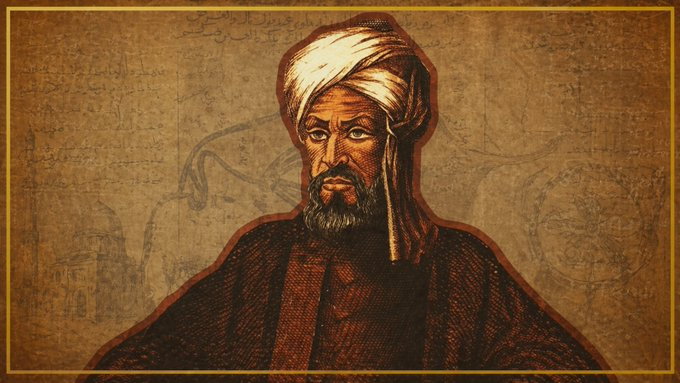
A Persian scholar finished a single math book in 9th century Baghdad that quietly became the foundation for every line of code running on Earth today. I started reading about him at midnight and could not believe how many things in my daily life trace back to one man.
His name was Muhammad ibn Musa al-Khwarizmi. The book is called The Compendious Book on Calculation by Completion and Balancing. Every time you say the word algebra, you are saying his book title. Every time someone says the word algorithm, they are saying his name. Both English words come from him. Both are Latin transliterations of Arabic and of his own identity. The man did not just contribute to mathematics. He named it. Here is the part almost nobody tells you. Al-Khwarizmi was born around 780 CE in Khwarazm, in what is now Uzbekistan. He moved to Baghdad and worked at a research institution called the House of Wisdom, which during the Islamic Golden Age was the single most important center of learning on the planet. The caliph al-Mamun hired the best mathematicians, astronomers, and philosophers from across three continents and put them in one building with one job. Translate, study, and produce new knowledge.
Al-Khwarizmi finished his book on algebra around 820 CE. The Arabic title contained the word al-jabr, which referred to one of the two operations he used to solve equations. When the book was translated into Latin in the 12th century, the Latin world did not have a word for what he had built. So they kept his Arabic word. Al-jabr became algebra. The discipline was named after a single Arabic word in the title of a single book by a single man.
The deeper insight is what he actually changed about how humans think. Before al-Khwarizmi, mathematical problems were solved geometrically. You drew shapes. You measured them. You compared areas. The Greeks had built an entire mathematical tradition on visual proofs and physical constructions. It was beautiful and limited. You could not solve a problem you could not draw. Al-Khwarizmi did something nobody had done before him at this scale. He said you could solve any problem using abstract symbols and rules. You did not need a shape. You needed a procedure. You moved terms across the equation. You cancelled like terms on both sides. You isolated the unknown. He invented the idea that mathematics is a manipulation of symbols according to rules, not a study of physical figures. That single shift made everything that came afterward possible.
Calculus. Differential equations. Linear algebra. Quantum mechanics. None of it works if math is locked inside geometry. He pulled it out. The second thing he did is the one that changed how the world counted forever. He took the Hindu numeral system from Indian mathematics, refined it, and wrote a book introducing it to the Arab world. That system included the concept of zero as a placeholder, and a positional notation where the value of a digit depends on its location.
Roman numerals could not do complex calculation. Hindu-Arabic numerals could. When his book on numerals was translated into Latin as Algoritmi de numero Indorum, the word Algoritmi was just the Latin spelling of his own name. Europeans started calling the new method “doing algorism,” then “running an algorithm.” The word for the most important concept in computer science is literally his name in Latin. The third thing he did is the part that should haunt anyone who works in tech. His method of solving problems was systematic. Step one, do this. Step two, check that. Step three, if condition A, then do X, otherwise do Y.
He wrote down procedures that could be followed by anyone, anywhere, who knew how to read. The procedure did not depend on intuition or genius. It worked because the steps worked. That is exactly what an algorithm is. A finite, deterministic procedure for solving a problem. He did not just give us the word. He gave us the entire concept of programming a thousand years before there was anything to program.
When Alan Turing built the first abstract model of computation in 1936, when John von Neumann designed the first stored-program computer in 1945, when every engineer at Google, OpenAI, Anthropic, and DeepMind writes code in 2026, they are working in a paradigm that started with one man in Baghdad twelve centuries ago. The strangest part is what happens when you walk into any tech office in San Francisco or Bangalore or Lahore today. Engineers say the words algebra and algorithm hundreds of times a day. They do not know whose name they are saying. Almost nobody can spell al-Khwarizmi correctly on the first try. His original Arabic manuscript is preserved at Oxford. His book on Hindu numerals survives only in Latin translation. The Latin version was the textbook that taught medieval Europe how to count.
The man who built the foundation of the AI revolution did not live to see a calculator. He died around 850 CE, a thousand years before the first electric current was sent through a wire. The civilization he built mathematics for collapsed. The library he wrote in burned. His own grave is unmarked. But every algorithm running on every machine on Earth right now still answers to his name.