
-
Archives
- September 2026
- August 2026
- July 2026
- June 2026
- May 2026
- April 2026
- March 2026
- February 2026
- January 2026
- December 2025
- November 2025
- October 2025
- September 2025
- August 2025
- July 2025
- June 2025
- May 2025
- April 2025
- March 2025
- February 2025
- January 2025
- December 2024
- November 2024
- October 2024
- September 2024
- August 2024
- July 2024
- June 2024
- May 2024
- April 2024
- March 2024
- February 2024
- January 2024
- December 2023
- November 2023
- October 2023
- September 2023
- August 2023
- July 2023
- June 2023
- May 2023
- April 2023
- March 2023
- February 2023
- January 2023
- December 2022
- November 2022
- October 2022
- September 2022
- August 2022
- July 2022
- June 2022
- May 2022
- April 2022
- March 2022
- February 2022
- January 2022
- September 2021
- August 2021
- July 2021
- June 2021
- May 2021
- April 2021
- February 2021
- January 2021
- December 2020
- November 2020
- October 2020
- September 2020
- August 2020
- July 2020
- June 2020
- May 2020
- April 2020
- March 2020
- February 2020
- January 2020
- December 2019
- November 2019
- October 2019
- September 2019
- August 2019
- July 2019
- June 2019
- May 2019
- April 2019
- March 2019
- February 2019
- January 2019
- December 2018
- November 2018
- October 2018
- September 2018
- July 2018
- June 2018
- May 2018
- April 2018
- March 2018
- February 2018
- January 2018
- December 2017
- November 2017
- October 2017
- September 2017
- August 2017
- July 2017
- June 2017
- May 2017
- April 2017
- March 2017
- February 2017
- January 2017
- December 2016
- November 2016
- October 2016
- September 2016
- August 2016
- July 2016
- June 2016
- May 2016
- April 2016
- March 2016
- February 2016
- January 2016
- December 2015
- November 2015
- October 2015
- September 2015
- August 2015
- July 2015
- June 2015
- March 2015
- January 2015
-
Meta
Scott Ritter: Why Iran Is Still Winning Trump’s War. Judging Freedom Podcast, Judge Andrew Napolitano
Posted in Uncategorized
Leave a comment
Epstein on tape advising former Israeli PM Barak to approach Palantir founder Peter Thiel
Posted in Uncategorized
Leave a comment
The Harvard Gazette: ‘Deskilling’ is bad. This is worse. Comment: Great opportunity to teach people to observe Ethics, Guardrails, and to be discerning.
‘Deskilling’ is bad. This is worse.

Liz Mineo
Harvard Staff Writer
May 11, 2026 4 min read
Authors of book about classroom AI say loss of foundational knowledge is biggest threat
Educators should teach students how to use AI tools but with an emphasis on the ethics, social impact, and potential biases of the tech, experts said Thursday during a conversation sponsored by Harvard Education Press.
Stephanie Smith Budhai and Marie Heath, who co-authored “Critical AI in K–12 Classrooms,” told Teddy Svoronos, senior lecturer of public policy at the Kennedy School, that responsible use of AI requires a healthy dose of skepticism. In other words: Resist the hype by asking hard questions.
“Does this really align with our visions of education?” said Heath, associate professor of learning design and technology at Loyola University Maryland. “Does this serve communities, as opposed to the folks who are developing this technology and telling us it’s going to be transformative?”
Budhai, associate professor of educational technology at the University of Delaware, said that teacher education programs should include training on how to help students examine the effects of AI inside and outside the classroom, including its environmental impact. A sort of critical AI literacy is needed, she said.
“We’re not saying we have to be anti-tech,” said Budhai. “We’re saying: Let’s think about the bigger questions. … Students need to build a critical consciousness around the ways we interact with AI and understand how it works.” She added: “They need to really understand the harms of it.”
“For people who train teachers to use technology, it’s really important to have a framing where anytime you’re using technology, it’s for a purpose.”Stephanie Smith Budhai
Educators are concerned about students’ over-reliance on AI and its possible impact on critical thinking, problem-solving, and relationships, the authors noted. The threat is not just to skills students might lose as they outsource essays and other assignments to machines, they said. It runs deeper.
“Students don’t know how to write a topic sentence because they’re asking AI for the topic sentence,” said Budhai. “They’re ‘never-skilling,’ which is even scarier than ‘deskilling,’ which is losing the skills they had because they’re over-relying on AI. Never-skilling means they’ve never learned the skill because they are using AI for everything, so they don’t even have foundational skills.”
Heath, a former high school social studies teacher, worries about the impact of AI on social interactions and civic life.
“I think about the ways that these technologies, particularly generative AI, allow us to be frictionless in our activities, and it sort of reduces the need for human interaction,” she said.
“For democracy to function, we need to be able to sit in discomfort, and we need to know what it feels like to disagree and to be disagreed with. One of the things that we give up when we turn to this technology is the ability to sit in discomfort and practice being uncomfortable.”
The authors also zeroed in on the problem of biases, explicit and implicit, in AI tools. In researching “Critical AI in K–12 Classrooms,” they asked AI for book recommendations for Black and white high school students, and they found that the lists and even the feedback had implicit biases, with the books for Black students disproportionately about crime and poverty.
In a separate research project, Heath detected biases when AI provided feedback on students’ written work.
“AI is laden with all the biases of society,” she said. “If it perceives that the student is either from a higher socio-economic class or white, the feedback it gives is very conversational in tone, like, ‘Have you thought about XYZ?’ If AI perceives that the student is either socio-economically disadvantaged or is a Black or brown student, it uses a very direct, authoritative tone.”
The message from the tool, Heath said, is, “‘I know what’s right’ and ‘You should do this this way.’”
Sharing takeaways from their findings, Budhai and Heath urged educators to pause over a simple question — why? — before deploying AI the classroom.
“For people who train teachers to use technology, it’s really important to have a framing where anytime you’re using technology, it’s for a purpose,” said Budhai. “We call it ‘purposeful technology use.’ I tell students, ‘How does this help meet the learning objectives?’ Because if it’s not actually doing it, why are we using it?”
Share this article
Posted in Uncategorized
Tagged ai, artificial-intelligence, education, teaching, technology
Leave a comment
Fortune: A second wave of Iran energy shocks is about to hit Asia and the wider world. Why aren’t markets reacting?
A second wave of Iran energy shocks is about to hit Asia and the wider world. Why aren’t markets reacting?

By
Writer
May 12, 2026, 4:12 AM ET
Add us on

Global oil inventories were in “relatively strong shape” heading into the Iran conflict, JPMorgan analysts wrote in an April 30 note. That buffer has worked as a “shock absorber,” moderating the increase in global energy prices.YUICHI YAMAZAKI VIA GETTY IMAGES
Global oil inventories are approaching their lowest point in eight years, with Goldman Sachs analysts estimating that stocks could fall to 98 days of global demand by the end of May.
Recommended Video
Amex’s CEO almost didn’t get the job because of his wardrobe
Yet if you’re looking at the markets, things look relatively rosy.
Brent crude prices are hovering around $100 a barrel, down from a post-Iran war peak of $126 in April. West Texas Intermediate crude also stood around $100 a barrel in the past week, down from its April 7 high of $113. (Both benchmarks are still far above their pre-war levels).
“The market has been complacent,” Chen Chien-Ming, an associate professor of operations management at Singapore’s Nanyang Technological University (NTU), says. “There’s clearly an oil shortage, but the futures market is heavily suppressed by market-moving headlines and investors’ wishful thinking that the war will soon end.”
Experts and analysts estimate that oil prices could skyrocket past $150 a barrel if the Strait of Hormuz remains closed through the end of June. Chen estimates that 20 million barrels of oil passed through the pre-war Strait of Hormuz each day; with the Strait closed for close to 70 days, the deficit now runs to more than 1 billion barrels.
Asia, with its deep reliance on fuel from the Middle East, is especially at risk. “Asia is the most exposed, because most countries, aside from Malaysia and Indonesia, are big oil importers,” says Dutt Pushan, a professor of economics and political science at business school INSEAD. “They’re also heavily industrialized, so they need a lot of natural gas and electricity.”
A prolonged disruption could tip some of the region’s weaker economies into recession, while also driving up food and fuel prices for hundreds of millions of people.
Financial markets versus physical reality
Global oil inventories were in “relatively strong shape” heading into the Iran conflict, JPMorgan analysts wrote in an April 30 note. That buffer has worked as a “shock absorber,” moderating the increase in global energy prices.
“Prices are not overwhelming yet,” Chen, from NTU, says. “We haven’t yet reached a point of no return.”
That point, however, is fast approaching. JPMorgan estimates that only 800 million barrels, out of the 8.4 billion barrels in storage, are realistically usable without sending the whole system into operational stress. As of late April, governments have already released 280 million barrels to cushion the impact of the conflict.
“Floating storage can be tapped quickly, but only a slice of onshore inventories—around 580 million barrels—is readily accessible,” JPMorgan analysts, led by head of global commodities research Natasha Kaneva, wrote. “The rest is effectively locked up in pipeline fills, minimum tank levels and other operational constraints.”
Russia’s 2022 invasion of Ukraine also sent oil prices higher, yet experts think today’s disruption is categorically different from what happened after the start of that conflict. Price spikes then were due to sanctions on Russian oil, not any disruption in oil supply.
“Russia was still able to place the barrels in markets where it found buyers,” says Sushant Gupta, the Asia-Pacific research director of refining and oils at consultancy firm Wood Mackenzie. “We can’t compare the Russia-Ukraine war to the Iran conflict, because in the latter, we are seeing a physical loss of supply for two months.”
A ‘backwardated’ market
Despite the rampant drop in oil inventories, Gupta says the market is “backwardated,” meaning that futures prices are lower than current prices. This scenario is partly due to investor optimism that the U.S.-Iran conflict will soon come to an end.
“The market perception is that this conflict will eventually be over and Middle Eastern oil will start flowing,” explains Gupta, noting that Wood Mackenzie believes that oil will start flowing again by late May.
(WTI crude jumped on Tuesday to just over $100 a barrel after U.S. President Donald Trump said the ceasefire with Iran was on “life support”.)
Another possibility is that traders have already priced in “demand destruction,” or high prices spurring a permanent reduction in oil demand as consumers and companies shift their behavior.
Many countries in developing Asia have already moved to cut back on their energy use. The Philippines shifted to a four-day work week when the Iran war started, while Thailand’s government urged workers to adopt a dress code of short-sleeved shirts and set their air-conditioning units to 78.8 degrees Fahrenheit and above. On May 10, India Prime Minister Narendra Modi urged citizens to cut back on overseas travel and to work from home.
“We’re seeing oil demand growth this year to be negative, and lower than last year,” Gupta said. “The growth in supply of oil from non-OPEC countries like Brazil, Guyana, and the U.S. would likely be sufficient to meet demand in 2026.”
Second order impacts: Food crisis, currency collapse, recession
As the conflict wears on, Asian countries may soon see second-order effects of the Iran energy crisis, an increased risk of recession prime among them.
“If you look at the history of economics, there’s no exception that after every oil disruption, there will be a recession,” Chen, of NTU, says. “Everything becomes more expensive, people spend less, the government receives less tax and has to issue more debt, which fuels inflation. It’s a self enforcing loop.”
Many of Southeast Asia’s frontier markets, like Thailand, Vietnam and the Philippines, may also see their currency weakening, and possibly even collapsing, says Pushan of INSEAD. “These big oil importing nations could start running out of foreign exchange reserves, which would cause investors to lose faith in the economy and start moving money out of the country.” Asia’s most fragile currencies, such as the Indian rupee, Indonesian rupiah and Philippine peso have already fallen to record lows amid the Iran war.
Agriculture-reliant economies may also cut back on seeding due to rising prices of diesel and fertilizer. This could, worryingly, lead to a food shortage.
“We’re very close to the first planting season in Asia, but farmers in places like Thailand don’t have the financial means to plant crops,” Chen concludes. “If there are people starving, then we should plan for it.”
Subscribe to Fortune Gulf Brief. Every Tuesday, this new newsletter will deliver clear-eyed, authoritative intelligence on the deals, decisions, policies, and power shifts shaping one of the world’s most consequential regions, written for the people who need to act on it. Sign up here.
About the Author
By Angelica AngWriter
Angelica Ang is a Singapore-based journalist who covers the Asia-Pacific region.
Fortune: Nearly 50,000 Lake Tahoe residents have to find a new power source after their energy source looks to redirect lines to data centers. Comment: Ireland needs to keep this in mind when deciding on data centres
Nearly 50,000 Lake Tahoe residents have to find a new power source after their energy source looks to redirect lines to data centers

By
News Editor
May 12, 2026, 1:09 PM ET
Add us on
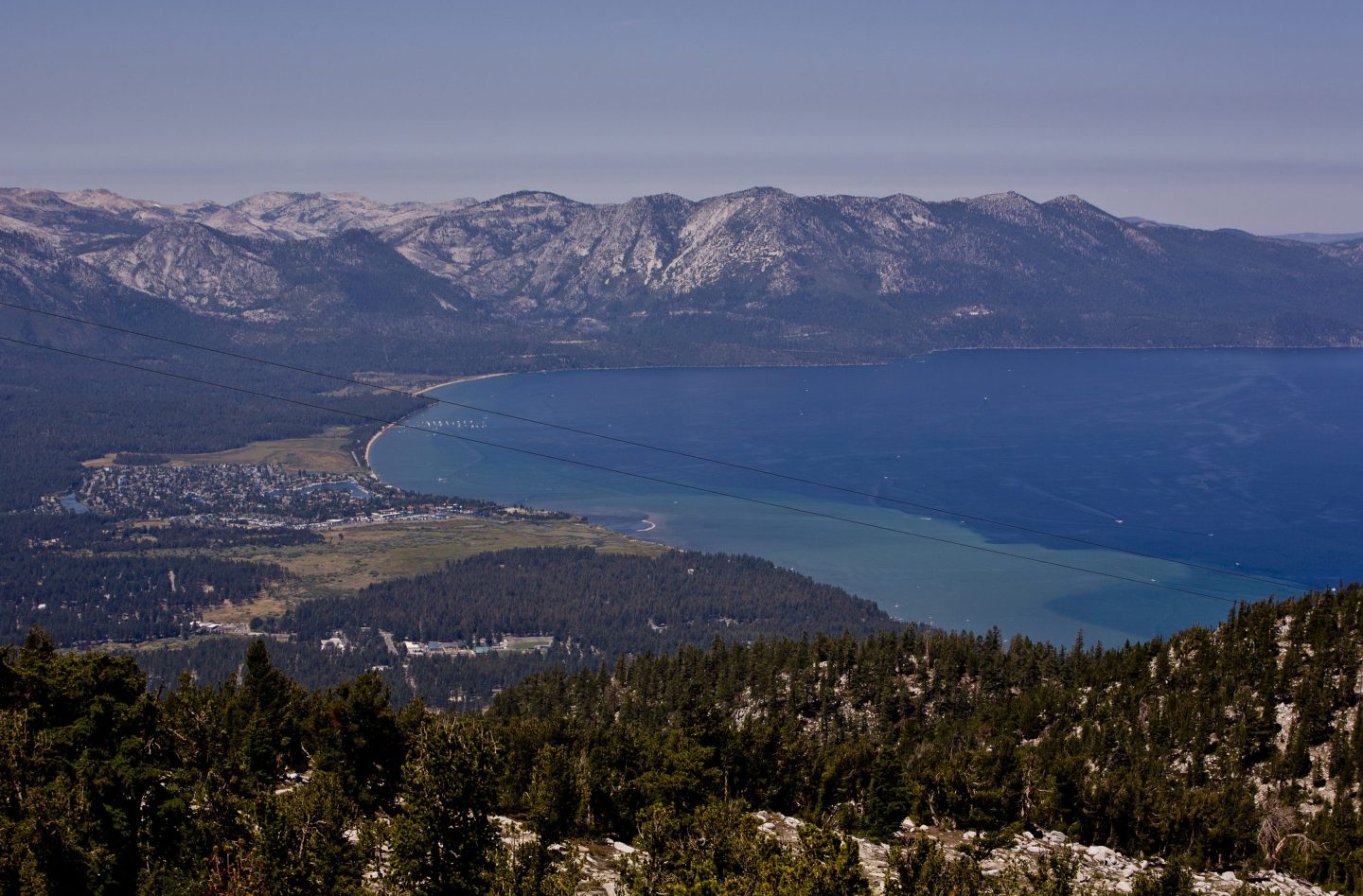
The residents of Lake Tahoe have less than a year to find a new source of energy.Christian Petersen/Getty Images
Lake Tahoe doesn’t know where its power will come from after next ski season—and it’s a major problem for the 49,000 residents who call the region home.
Recommended Video
The Sierra Nevada tourist hub—home to ski resorts, lakeside casinos, and roughly 25 to 28 million annual visitors—is facing an energy crisis with a familiar culprit: the data centers powering the AI boom.
NV Energy, the Nevada utility that has supplied the bulk of Lake Tahoe’s electricity for decades, told Liberty Utilities—the small California company that services the region—that it will stop providing power after May 2027. The reason? NV Energy needs the capacity for data centers. As in: the energy supplier for the Lake Tahoe region is telling the utility company that it has less than a year to find another power source.
Northern Nevada has become one of the fastest-growing data-center corridors in the country. Google, Apple, and Microsoft have either built or are planning facilities around the Tahoe-Reno Industrial Center east of Reno. The Desert Research Institute, using data from NV Energy’s 2024 Integrated Resource Plan, found that the 12 data center projects located overwhelmingly in Northern Nevada could drive 5,900 megawatts of new demand by 2033. At a regional business event last fall, NV Energy’s director of business development called the moment “unprecedented,” saying the company was eager to serve the new industrial load but that it would not “impact our existing customer base.”
But Liberty’s 49,000 California customers may already be bearing the cost. Liberty Utilities generates about 25% of its power from solar facilities it owns in Nevada. The other 75% comes from NV Energy, and that source will no longer be supplied to the region by this time next year.
“It’s like we don’t exist,” Danielle Hughes told Fortune. Hughes is a North Lake Tahoe resident, CEO of the nonprofit Tahoe Spark, and a supervisor within the California Energy Commission’s Efficiency Division.
A jurisdictional knot with no easy fix
What makes Tahoe’s crisis so difficult is that no single regulator oversees the entire chain from power generation to customer bills.
Liberty is a California investor-owned utility. Its customers live in California and pay rates approved by the California Public Utilities Commission. But Liberty’s grid sits inside NV Energy’s balancing authority, connects to NV Energy at 38 points, and relies entirely on Nevada transmission lines, according to a Liberty filing with state regulators. Liberty’s territory is a small sliver along California’s eastern border, sitting within NV Energy’s balancing zone rather than the California Independent System Operator, which coordinates the grid for virtually every other ratepayer in the state.
Building a direct connection to California’s grid would require a new transmission line west over the Sierra, a project Liberty President Eric Schwarzrock said would cost “hundreds of millions of dollars” with significant land impacts.
The CPUC approves Liberty’s rates and procurement requests, but it cannot order NV Energy to keep selling wholesale power or dictate how Nevada plans for data centers. That falls to the Federal Energy Regulatory Commission, which regulates interstate transmission and wholesale electricity sales. With NV Energy and Nevada regulators controlling the upstream grid, the result is a system where California sets the rules, Nevada runs the wires, federal jurisdiction applies to the wholesale market, and no single entity is accountable for the outcome.

Paid Content
How Calix culture powers a new era of broadband
From Calix
In March 2026, Liberty asked the CPUC to authorize an expedited request for proposals for replacement energy beginning June 1, 2027. In that filing, Liberty said NV Energy had cited data centers in the Tahoe-Reno Industrial Center area and northern Nevada transmission constraints, among other reasons, for ending full-requirements service.
Hughes and the Sierra Club’s Tahoe Area Group want the commission to reject that approach and instead open a full proceeding. In an April 1, 2026, letter to CPUC commissioners shared with Fortune, Sierra Club Vice Chair Tobi Tyler argued that the scale of the procurement—affecting 49,000 ratepayers dependent on an isolated, rapidly transforming grid—demands the transparency and public participation that only a formal proceeding provides. Tahoe Spark’s underlying protest states that “California does not produce a Liberty-specific forecast of demand, peak conditions, or procurement needed for numerous California communities in a high wildfire risk area.”
“You need to open a full proceeding and do a transparent process and understand what we look like in California policy, and what the long-term game is,” Hughes said. Even regulators are still sorting through the legal boundaries, she added: “They’re basically trying to decide what to do right now, or even what they legally can do.”
Even the regulators are still sorting through the legal boundaries, she added: “The procurement will have to be approved by the CPUC. They’re basically trying to decide what to do right now, or even what they legally can do.”
The data center next door
Data centers used 22% of Nevada’s electricity in 2024, and that share could rise to 35% by 2030. In NV Energy’s own 2024 resource plan, about 75% of major-project load growth is attributed to data centers, according to Sierra Club expert testimony filed with Nevada regulators and reviewed by Fortune, and most of it is concentrated in Northern Nevada—using the same system that feeds power to Lake Tahoe.
NV Energy is building Greenlink West, a 525-kV, $4.2 billion transmission line from Las Vegas to Yerington, expected online in May 2027. Schwarzrock said Liberty would be “first in the waiting line” when Greenlink opens, giving it access to a wider pool of energy providers. But that timeline matches the contract deadline exactly, leaving almost no margin for error. About 70% of the project’s costs will be borne by Southern Nevada customers.
But this is nothing new, at least according to NV Energy.
Katie Jo Collier, a spokesperson for the utility, said the transition was rooted in a longtime understanding with Liberty “well before data center load growth was a consideration,” calling it “a planned transition for many years, not a reaction to recent developments.” NV Energy sold its California electric assets to Liberty in 2009 and agreed to keep supplying power temporarily. That arrangement was extended in 2015, again in 2020, and once more in late 2025, and each time because Liberty had not yet secured an independent supply, a timeline corroborated by regulatory documents reviewed by Fortune.
But independent experts have questioned whether NV Energy’s own demand projections are reliable. In testimony filed with Nevada regulators in Oct. 2024, energy economist Rose Anderson of Synapse Energy Economics warned that NV Energy’s major-project load forecast is ‘highly uncertain’ and that existing customers could end up paying for infrastructure built to serve industrial demand that never materializes.
Rates were already climbing
The supply crisis arrives on top of an existing affordability fight. In its 2025 general rate case, Liberty originally sought a 19.1% revenue increase—about $37.51 more per month for the average residential customer, according to CPUC filings. The CPUC approved a smaller increase: 11.4%, with a 9.75% return on equity rather than Liberty’s requested 11%.
The rate case spotlighted wildfire costs, insurance premiums, and infrastructure spending in a high-risk mountain region. The CPUC decision noted Liberty’s wildfire exposure and its exclusion from California’s AB 1054 Wildfire Fund, suggesting that rising insurance costs (quoted at over $30 million alone) for small utilities could warrant future rule making.
Tahoe Spark opposed the rate-case settlement, arguing that it failed to examine the interstate wholesale power structure underlying the costs paid by California ratepayers. Hughes said the problem is not merely high rates but the way costs are allocated in a region where visitor demand, second homes, ski resorts, and development projects drive infrastructure needs that permanent residents pay for.
“We’re the cost of being redistributed onto a declining community, and that is a crisis,” Hughes said.
Hughes argues that Tahoe is treated as a wealthy vacation-home market even though its year-round residents include low-income communities and essential workers. “Even though we have low-income communities in both South Lake Tahoe and North Lake Tahoe, Kings Beach, both the Energy Commission and the California Public Utility Commission do not include us in any of their socioeconomic plans,” she said.
The basin’s government structure compounds the accountability problem. Lake Tahoe spans two states, multiple counties, one incorporated city, and the Tahoe Regional Planning Agency. County supervisors, state appointees, utility regulators, and resort developers all touch parts of the system, but no single body owns the whole problem. Liberty’s demand pattern illustrates how different this territory is from the rest of California: while most regional utilities peak in summer, Liberty’s demand crests around Christmas, when second-home owners arrive for ski season — driving infrastructure costs that year-round residents bear.
What happens next
Liberty has told customers that NV Energy will remain the transmission provider—the wires aren’t going anywhere. The question is who supplies the electricity that flows over them, what it costs, and whether California regulators can protect customers whose upstream grid sits outside California’s usual planning structure.
Schwarzrock said the utility plans to bid the replacement contract to “anybody and everybody,” focusing first on meeting California’s renewable energy requirements. Liberty anticipates issuing a formal RFP in summer 2026, with replacement power most likely coming from sources outside California, delivered over NV Energy’s transmission system.
Hughes said short-term replacement power is likely available from elsewhere in the West—but she’s not optimistic about what comes after. “Short term, you can commonly get good deals, but it’s unstable,” she said. “The short-term deal gets you through. But then you’re in the Western market, competing against PG&E, Southern California Edison, data centers, and mining companies. We’re 49,000 customers. We have no leverage.”
Her larger concern is that as California and Nevada move toward a more integrated Western electricity market, Tahoe’s small customer base will be increasingly exposed to competition from larger utilities and industrial buyers with far more purchasing power.
“We have no representation,” Hughes said. “It’s resource extraction.”
The Fortune 500 Innovation Forum will convene Fortune 500 executives, U.S. policy officials, top founders, and thought leaders to help define what’s next for the American economy, Nov. 16-17 in Detroit. Apply here.
About the Author
By Catherina GioinoNews Editor
Catherina covers markets, the economy, energy, tech, and AI.
Posted in Uncategorized
Tagged ai, data-centers, energy, environment, renewable-energy
Leave a comment
Futurism: OpenAI Sued Over ChatGPT Medical advice …
OpenAI Sued Over ChatGPT Medical Advice That Allegedly Killed College Student
“ChatGPT recommended a dangerous combination of drugs without offering even the most basic warning that the mix could be fatal.”
Published May 12, 2026 2:47 PM EDT
Add Futurism(opens in a new tab)More information

Sign up to see the future, today
Can’t-miss innovations from the bleeding edge of science and tech Email address Sign Up
The family of a 19-year-old college student who died of an overdose after consulting ChatGPT for medical advice is suing OpenAI, alleging that chatbot-generated drug recommendations were responsible for the teen’s death.
Filed this morning in California, the complaint details how University of California, Merced sophomore Sam Nelson — whose death was first reported in January by SF Gate— started using ChatGPT during his senior year of high school for help with homework and computer troubleshooting. As his trust with the AI deepened, however, he started turning to the product for something else: advice on how to safely partake in illegal drugs.
Though it resisted at first, over time, the chatbot became a willing confidante, offering the teen personalized tips and tricks on how to consume illicit substances and maximize his high. It even “inserted emojis in its responses” and “asked whether it could create playlists for him to set his mood,” the lawsuit alleges, and eventually started “pushing increasingly dangerous amounts and combinations of drugs.”
In the early hours of May 31, 2025, after drinking and consuming a high dose of kratom, Nelson told ChatGPT that he was feeling nauseous, and asked if taking Xanax could help. The bot noted that mixing kratom and Xanax could be risky, but according to the complaint, never told Nelson that the combination could be deadly — and, despite any tepid warnings, coughed up dosages anyway, even suggesting that the teen could try to mix in some Benadryl, too. The chatbot further urged Nelson to go to a “dark, quiet room,” and never encouraged him to seek medical attention. (At the time, Nelson was using GPT-4o, an especially sycophantic iteration of ChatGPT that OpenAI has since retired amid a slew of consumer safety lawsuits.)
Nelson died of an overdose after consuming the deadly mix of substances. His mother, Leila Turner-Scott, found him the next day.
“If ChatGPT had been a person, it would be behind bars today,” Turner-Scott said in a statement. “Sam trusted ChatGPT, but it not only gave him false information, it ignored the increasing risk he faced and did not actively encourage him to seek help.”
The lawsuit accuses OpenAI of product negligence, arguing that ChatGPT’s bad advice was the result of defective design choices. It also seeks to halt public access to ChatGPT Health, an offering launched in January that encourages consumers to upload their medical records to the AI — and which has been found by physicians to be horrifyingly bad at recognizing health emergencies.
“OpenAI deployed a defective AI product directly to consumers around the world with knowledge that it was being used as a de facto medical triage system, but notably, without reasonable safety guardrails, robust safety testing, or transparency to the public,” Tech Justice Law Project director Meetali Jain, a lawyer for the family, said in a statement. “OpenAI must be forced to pause its new ChatGPT Health product until it is demonstrably safe through rigorous scientific testing and independent oversight.”
“ChatGPT recommended a dangerous combination of drugs without offering even the most basic warning that the mix could be fatal,” added Matthew Bergman of the Social Media Victims Law Center. “If a licensed doctor had done the same, the consequences under the law would be severe.”
In response to the lawsuit, OpenAI said in a statement to the New York Times that Nelson’s “interactions took place on an earlier version of ChatGPT that is no longer available,” and insisted that “ChatGPT is not a substitute for medical or mental health care, and we have continued to strengthen how it responds in sensitive and acute situations with input from mental health experts.”
“The safeguards in ChatGPT today are designed to identify distress, safely handle harmful requests and guide users to real-world help,” the statement continued. “This work is ongoing, and we continue to improve it in close consultation with clinicians.”
But while OpenAI insists that it’s not a substitute for medical care, and that its safety work is “ongoing,” it recognizes that health advice is a massive use case for the tech.
“Health is already one of the most common ways people use ChatGPT,” reads the company’s January ChatGPT Health announcement, “with hundreds of millions of people asking health and wellness questions each week.”
More on ChatGPT Health: ChatGPT Health Is Staggeringly Bad at Recognizing Life-Threatening Medical Emergencies
Maggie Harrison Dupré
Senior Staff Writer
I’m a senior staff writer at Futurism, investigating how the rise of artificial intelligence is impacting the media, internet, and information ecosystems.
Most Popular
Woman Hailed as Hero for Smashing Man’s Meta Smart Glasses on Subway
Large Study Finds That Replacing Workers With AI Is Backfiring Badly
Researchers Put Google Gemini in Charge of an Entire Coffee Shop, and It’s Inexorably Driving It Out of Business
Thermoses Linked to Permanent Vision Loss
New York Times Issues Stern Warning to Its Freelance Writers About AI Use


