OCCRP: The story traced the origins of Russian aluminum, a critical input for the country’s war factories. As it turns out, much of a key raw material, alumina, is supplied by an Irish refinery.

This Monday, we published an investigation showing how European know-how, labor, and resources feed into the supply chains that keep Russia’s military production humming.The story traced the origins of Russian aluminum, a critical input for the country’s war factories. As it turns out, much of a key raw material, alumina, is supplied by an Irish refinery. And it’s not just another market: Reporters found that a majority of the facility’s exports go to Russian smelters. Those smelters sell to a Moscow-based trader which has supplied hundreds of millions of dollars’ worth of aluminum to Russian arms manufacturers.The findings quickly became an international scandal. Within hours, they were being discussed in the Irish parliament, while Belgium’s foreign minister said his country would push the EU to toughen its sanctions regime. But while such cases are often described as “sanctions evasion,” that’s not really what’s happening: In this case, there’s nothing to evade. Exporting alumina to Russia is legal, and though the Irish plant is owned by Russian aluminum giant Rusal, the company is not under any blacklist.
The economic interest is obvious. In parliament, Ireland’s prime minister began his remarks by stressing the plant’s importance as an employer. Much the same argument was made when scrutiny first fell on the facility in 2022. But this story also demonstrates how these arguments are sustained by a measure of plausible deniability. The United States did briefly sanction Rusal in 2018 because its founder, oligarch Oleg Deripaska, is a close Putin ally. But the sanctions were removed after prices spiked — and Deripaska cut his stake to a minority position. (He now owns 45 percent of Rusal’s parent company, and is still its largest shareholder.) The situation in the EU is similar: Deripaska is sanctioned; Rusal is not.As European member states negotiate the EU’s upcoming sanctions package on Russia, some have argued for sanctions on mineral exports to be sharpened. But the case made by policymakers opposed to sanctions is strengthened because Rusal’s aluminum reaches Russian weapons manufacturers through an intermediary, not by direct sale. That, says Alex Prezanti, a co-founder of the State Capture Accountability Project, is a “classic way” of protecting Rusal — not because it’s sanctions evasion, but because it weakens the consensus for sanctions in the first place.“If Rusal was selling directly to weapons companies, it would be easier to coalesce 27 member states to sanction it,” Prezanti says.Meanwhile, Russian strikes on Ukrainian cities, and a renewed Spring offensive in the east, will grind on.
Posted in Uncategorized | Tagged , , , , | Leave a comment

Charlie Rose: WHAT’S HAPPENING IN IRAN. Foreign Policy Professor John J. Mearsheimer

For more than four decades, Professor John J. Mearsheimer, from his position at the University of Chicago, has examined global power and America’s role in the world—often challenging traditional assumptions and language, and creating debate about the aspirations of great powers.

He has suggested that nuclear weapons can enhance stability among nations and that the power of international institutions is limited. He has used the term “offensive realism” to argue that power is the critical factor in relationships among nations, largely setting aside moral considerations.

Mearsheimer has written articles and books that have provoked controversy, especially The Israel Lobby and U.S. Foreign Policy.

Other books include: The Tragedy of Great Power Politics, The Great Delusion: Liberal Dreams and International Realities, Why Leaders Lie, Conventional Deterrence, Nuclear Deterrence, and Liddell Hart and the Weight of History.

This is an important moment to consider the exercise of power—both militarily and economically—as war continues in Iran and Ukraine, and threats to sovereignty emerge elsewhere.

We will consider many issues, including the status of the war in Iran, the possibilities of regime change, how to end the war, the strategies of the United States, Israel, and Iran, the competition between the U.S. and China, the U.S. and Russia, Europe and Russia, what might happen in Cuba and Latin America, and the nature of war itself as drones increasingly dominate warfare in Ukraine and Iran.

Professor John Mearsheimer joins us from the University of Chicago.

Subscribed

Posted in Uncategorized | Leave a comment

The Rundown AI: Wikipedia bans AI from writing its articles

Wikipedia bans AI from writing its articlesImage source: Wikipedia

The Rundown: Wikipedia’s volunteer editors banned the use of AI to write articles on the foundation’s English-language site, a move the policy’s author called a “pushback against enshittification and forceful push of AI by so many companies”.

The details:Prior attempts at broad AI rules failed to reach consensus, but mounting AI-generated errors pushed editors to a near-unanimous 40-2 vote.The ban covers writing or rewriting articles with LLMs, with editors still allowed to use AI for grammar fixes and translations with human review.The policy’s author said the change could “spark a broader change” and “empower communities on other platforms” to set AI rules on their own terms.

StackOverflow and German Wikipedia have enacted similar bans, with Spanish Wikipedia going further to fully ban the use of AI, even for editing purposes.

Why it matters: AI text reportedly surpassed human output for the first time in 2025, and Wikipedia is trying to hold the human line, all while Elon pushes Grokipedia (an AI-created version of Wikipedia) in the exact opposite direction. The internet’s most-used knowledge base bet against the current, but how long that holds is anyone’s guess.

Terms of Service
Posted in Uncategorized | Tagged , , , , | Leave a comment

Axios: China threatens U.S. pharma (there will be implications to manufacturing basis of phara drugs in Ireland too) Watch this trajectory of change

China threatens U.S. pharma
 
Illustration: Aïda Amer/Axios. Photo: Peng Bin/VCG via Getty Images

China’s emergence as a second hub of pharmaceutical innovation could trigger massive changes to the global drug market, including how treatments are regulated and priced in the U.S., Axios’ Caitlin Owens reports.

Why it matters: More cutting-edge therapies are generally a good thing for patients, regardless of where they come from. But the new world order could spark questions over who’ll access those therapies and where money flows. 

By the numbers: China went from being the country of origin for just 8% of the world’s drug development in 2015 to 32.3% in 2024, according to a new study published yesterday in JAMA. 

The U.S., on the other hand, lost ground. In 2015, 48.2% of new programs originated here. By 2024, that number dropped to 37.4%.

During that time, the number of U.S. drug development programs grew from around 5,000 to around 7,000 — but the Chinese programs skyrocketed from fewer than a thousand to more than 6,000. 

Between the lines: The more China succeeds at getting drugs beyond early stages of development, the more likely it is that U.S. regulators will have to make tough decisions about how to evaluate the products.

And Chinese companies could eventually compete with Western ones on price, undercutting today’s lucrative financial model.Read more.
    
 
Posted in Uncategorized | Leave a comment

Axios: Vance in the Spotlight


1 of 1,539

🇮🇷 Axios AM: Vance in spotlight

Inbox

Mike Allen Unsubscribe10:15 AM (1 hour ago)
to me
  View in browser PRESENTED BY GOLDMAN SACHS Axios AMBy Mike Allen · Mar 27, 2026🌸 Happy Friday! Smart Brevity™ count: 1,581 words … 6 mins. Thanks to Zachary Basu for orchestrating. Edited by Eileen Drage O’Reilly and Bill Kole.🏛️ 

New overnight: Around 3 a.m. ET, a Senate voice vote passed a deal to fund much of the Department of Homeland Security, except for immigration enforcement operations. The funding package now goes to the House, which is expected to consider it today. Keep reading. 

President Trump said he’ll sign an order instructing the Homeland Security secretary to immediately pay TSA agents. Keep reading. 

 1 big thing: Vance’s big role Photo illustration of Vice President JD Vance with images including a vintage map the Persian Gulf, a sailor signaling the launch of an F/A-18E Super Hornet aircraft, and the Iranian flagPhoto illustration: Sarah Grillo/Axios. Photos: Brandon Bell and U.S. Navy via Getty Images 

Vice President JD Vance is preparing to take on the most important assignment of his career: steering U.S. efforts to end a war he’d been concerned about waging in the first place, Axios’ Marc Caputo and Barak Ravid report.

Why it matters: Vance has already had multiple calls with Israeli Prime Minister Benjamin Netanyahu, met Gulf allies about the war and been involved in indirect communications with the Iranians. He’s expected to be the top U.S. negotiator in potential peace talks.

Vance was highly skeptical of Israel’s rosy prewar assessment of how the war would unfold, and currently expects the war to continue for another few weeks, according to U.S. and Israeli sources.

Vance advisers think some in Israel are trying to undermine the VP, possibly because they find him insufficiently hawkish. Israeli officials deny that.

President Trump made Vance’s role official in a Cabinet meeting yesterday, asking the VP to give an update on Iran, and noting that he was working with Steve Witkoff and Jared Kushner on the negotiations.

Trump further delays strikes on Iranian energy infrastructure. Screenshot via Truth Social. 

Zoom in: Vance’s seniority in the administration and his well-documented opposition to open-ended conflicts overseas, White House officials say, make him a more attractive interlocutor for the Iranians than Witkoff and Kushner, who oversaw the two previous rounds of failed talks.

Partly for those reasons, Witkoff recommended Vance as lead negotiator.“If the Iranians can’t strike a deal with Vance, they don’t get a deal. He’s the best they’re gonna get,” a senior administration official said.

Vance is prepared to “take his place onstage” — but only if and when direct negotiations commence, according to a White House official.

State of play: Trump extended his deadline for negotiations with Iran yesterday, as Pakistani, Egyptian and Turkish mediators keep trying to organize in-person talks.

Iranian officials told the mediators they’re still waiting for a green light from “top leadership.” If such a summit happens, Vance could sit across the table from Iran’s speaker of parliament, Mohammad Bagher Ghalibaf.

The administration is also considering a major military escalation if diplomacy fails.

Between the lines: During the lead-up to war, Vance was one of the more skeptical internal voices, raising questions about its duration, purpose and impact on U.S. munitions stockpiles, sources say.

Once Trump decided to go to war, though, Vance advocated for using overwhelming force to achieve victory as quickly as possible.

Vance advisers say he’s supportive of Israel, but is concerned about potential gaps between the U.S. and Israeli objectives as the war continues. 

An Iraq War veteran, Vance told The Washington Post two days before bombs dropped on Tehran: “I do think we have to avoid repeating the mistakes of the past. I also think that we have to avoid over-learning the lessons of the past.”Share this story.      2. ⚖️ Judge’s reprieve for Anthropic Animated illustration of the Pentagon Building as the center of a computer circuit board Illustration: Sarah Grillo/Axios 

A federal judge paused the Trump administration’s designation of Anthropic as a supply chain risk, marking an early legal victory for the embattled company, Axios’ Maria Curi reports.The preliminary injunction gives Anthropic relief from ongoing reputational damage and provides greater certainty for commercial partners, the company says. Keep reading.⚡

Scoop: Altman told staff he tried to “save” Anthropic in Pentagon clash

As Anthropic’s negotiations with the Pentagon were collapsing, OpenAI CEO Sam Altman told employees he was trying to “save” his competitor, according to internal Slack messages seen by Axios’ Maria Curi and Zachary Basu.At the same time, Altman privately vented that Anthropic CEO Dario Amodei had spent years trying to undermine him.

On Feb. 26, Altman sent an all-staff message saying OpenAI shared Anthropic’s red lines and wanted to help de-escalate — while making clear he still hoped to strike his own deal with the Pentagon.

He acknowledged that the optics may not look good in the short term. But he stressed the nuance of the situation and said he was committed to acting on principle rather than appearances.

On Feb. 27, Altman relayed to a core group of staff that negotiations between the Pentagon and Anthropic had taken a turn for the worse due to the perception that Amodei was playing to the press. 

Later that day, as the Pentagon’s 5 p.m. deadline approached, Altman told the group that the Pentagon believed it could offer Anthropic an off-ramp from the supply chain risk designation.

Altman remarked that he found it strange to be working so hard to “save” a rival whose CEO had, in his view, spent years trying to destroy OpenAI.Share this story.
Posted in Uncategorized | Tagged , , , , | Leave a comment

Crude oil is arguably the world’s most politically and economically sensitive commodity … Major Oil Shocks 1973 – 2026.

Posted in Uncategorized | Leave a comment

Never count your chickens before they are hatched !!!

Posted in Uncategorized | Leave a comment

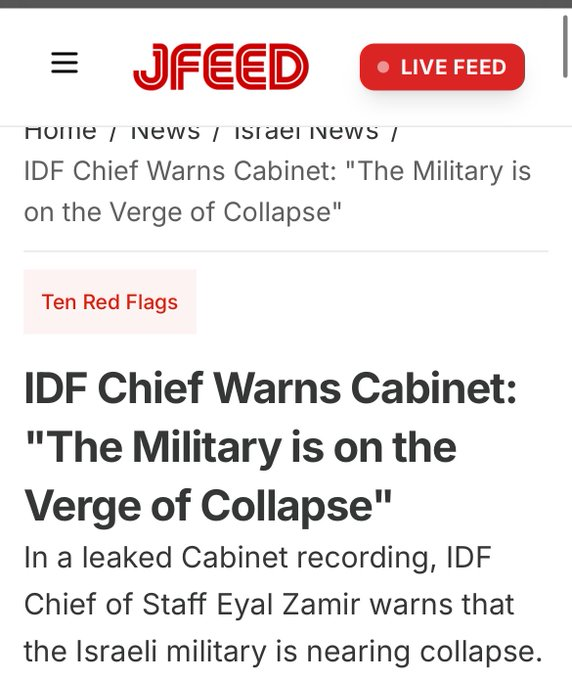
BREAKING. Multiple sources now reporting the IDF chief says Israeli military is on verge of collapse. If true, this is historic. Good riddance to the US-Israeli murderous empire. Welcome to a multipolar world of international law, human rights & diplomacy.

Dr. Jill Stein

@DrJillStein

BREAKING. Multiple sources now reporting the IDF chief says Israeli military is on verge of collapse. If true, this is historic. Good riddance to the US-Israeli murderous empire. Welcome to a multipolar world of international law, human rights & diplomacy.

Posted in Uncategorized | Leave a comment

The Daily Beast: The Sinister Truth About My Interview With Epstein. HEAR EPSTEIN’S VOICE

Premiered 19 hours ago The Daily Beast Podcast George Rush joins Joanna Coles to revisit the moment he began digging into Jeffrey Epstein after the financier’s Palm Beach sweetheart deal, uncovering testimony from Virginia Giuffre, allegations involving Ghislaine Maxwell, and mounting fears Epstein was still recruiting girls. Rush, the famed New York gossip columnist, describes how his reporting triggered pressure from the newspaper’s owner after Epstein intervened—before landing a rare phone interview in which Epstein blamed victims, minimized the charges, and tried to steer coverage toward their lawyer. With hindsight, Rush reflects on Epstein’s manipulation tactics, his push to keep Maxwell out of print, and the explosive tape that nearly sent the reporter to jail when attorneys fought to obtain it.

00:00 – Epstein’s Disregard For His Victims 03:47 – How Rush First Investigated Epstein 07:34 – Epstein Calls Owner To Kill Story 11:21 – First Audio: Epstein Tries To Charm Press 15:08 – Epstein Pushes Lawyer Conspiracy Theory 18:55 – Confronting Epstein On Guilty Plea 22:42 – Epstein Blames Victims In Interview 26:29 – “They Want To Get Paid Again” Clip 30:16 – Protecting Ghislaine Maxwell From Story 34:03 – Publisher Pressure And What Got Cut 37:50 – Why The Story Barely Made Waves 41:37 – Epstein Plays Victim Again On Tape 45:24 – Red Flags Rush Missed At The Time 49:11 – Looking Back At The Epstein Interview

Posted in Uncategorized | Leave a comment

Breaking Points: Professor Pape: Iran Is ‘VIETNAM ON STEROIDS

Mar 26, 2026

Breaking PointsKrystal and Saagar are joined by professor Pape on the latest on Iran.

Posted in Uncategorized | Leave a comment