The atmosphere at the SPIEF in St Petersburg: humanoid robots, novelties of the Russian auto industry, and numerous stands from representatives of more than 140 countries.
🇺🇸🇮🇱 Special Envoy Kushner is using economic incentives to expand the Abraham Accords, with Morocco and Syria in his sights.
– Kushner says he will create "economic packages" for countries that join – "We are looking at opportunities to invest in countries that have joined the… https://t.co/CbWuqrRtKd
So, Ivanka Trump is bragging about her new, off-grid island in the Mediterranean that her and Jared are developing into a resort. She’s even pretending to care about the environmental impact in her propaganda. What she isn’t saying is that the island, Sazan island, is in Albania, in the Adriatic Sea, not the Med. And Albania is one of the most corrupt states in Europe. The island is a 1,400-acre decommissioned Cold War weapons base with underground bunkers and tunnels, which was restricted until the Trump’s bought it to develop a monstrous $1.4 billion resort on the island, when the Albanian govt gave preliminary approval for development. So once they’ve finished bribing Albanian officials and de-mined the island, they’ll be able to host the ultra wealthy pedophile Epstein class again, under the Trump brand. In secret, with no accountability, and with bunkers they can use for their sick sexual fantasies and experiments on kids.
Ann Dooms, mathematician: ‘In the real world, human intuition remains irreplaceable’
She is one of the world’s experts in what she and others in her field call ‘digital mathematics’: a term of their own to distinguish it from classical signal processing or more conventional data analysis
Mathematician Ann Dooms in Madrid.Laura Moreno Iraola (ICMAT)
After two days in Madrid, Ann Dooms, 47, still hadn’t managed much sightseeing: only a quick visit to the Santiago Bernabéu stadium with her daughter. She was staying at the Residencia de Estudiantes, where she gave a talk at the invitation of the Institute of Mathematical Sciences and the Spanish National Research Council (CSIC). Public outreach is only one of the many tasks that occupy Dooms. She also leads the Mathematics and Data Science research group at the Free University of Brussels (VUB, by its Dutch initials), where she is a full professor, and chairs both the Belgian Defence Scientific Council and the Education Committee of the European Mathematical Society.
Across all these roles, one conviction appears again and again — something she repeats several times during the conversation: understanding, and making understandable, the ways in which mathematical patterns help us read the world. The teaching of mathematics is another of Dooms’s concerns, as she also chairs the Education Committee of the European Mathematical Society.
Her vocation began in high school when she saw a BBC program featuring Michael Barnsley, a pioneer of fractal geometry who became a multimillionaire after developing a revolutionary image‑compression technique based on fractals that Microsoft incorporated into its Encarta encyclopedia. After completing a PhD in noncommutative algebra, Dooms shifted her career back toward her childhood idol: she moved to an engineering faculty to develop algebraic watermarking techniques to authenticate digital images.
That move toward the applied end of the spectrum would make her one of the world’s leading experts in what she and her group call “digital mathematics”: a term coined at the Free University of Brussels — the alma mater of Ingrid Daubechies, a pioneer in the field and recipient of the Princess of Asturias Award and the BBVA Foundation Award — to distinguish this approach from classical signal processing or more conventional data analysis. It involves developing mathematical tools, largely from functional analysis, capable of extracting structure and meaning from different types of digital information.
Question. Your contributions in this field — in which you began working alongside Daubechies — include collaborations with major museums to analyze high‑resolution digital scans of masterpieces in order to characterize a painter’s style or detect hidden restorations. Can these be considered one of the early major successes of machine learning?
Answer.Yes. On a computer, an image is a numerical structure made up of pixels: we examine it through that structure, manipulate the numbers mathematically and translate the result into information a human can interpret. We were doing this in the 2000s, although we didn’t call it machine learning then, because it was still frowned upon to say we were making a machine learn.
Q. What information can these tools extract that could not be perceived otherwise?
A.We develop transforms that decompose images into different kinds of building blocks depending on the goal: simplify information to compress files; characterize with great detail the brushstrokes of a painting to mathematically distinguish one painter’s style from another’s; identify cracks in a work so they can be digitally removed... Recently, together with the Reproductive Medicine Center at UZ Brussel University Hospital, we are applying these ideas to select oocytes to be frozen for women undergoing cancer treatments who want to preserve their fertility.
Q. You also say this approach can improve artificial intelligence models.
A.I think right now we are exploiting the power of neural networks in a very naive way. If we can add mathematical structure to data processing, the results will be much better. The key is to look for the best representation for the problem you want to solve, transform the data into constructive building blocks, and only then apply machine learning. It is proven that neural networks can learn to do what wavelets [the mathematical transforms with which Daubechies revolutionized image processing from the 1980s] do; there is a theorem that guarantees any continuous task can be approximated by a neural network with a single hidden layer. But that means spending enormous computational resources to rediscover something we already know. Why not start from it directly?
Q.What else would we gain from that mathematical approach?
A.Reliability and transparency. The next generation of artificial intelligence models should not consist only of larger models, but of models that are better understood mathematically and more tightly linked to the structure of the problem they aim to solve.
Q. Have you been able to test it?
A. I’ve run some tests, but even with a high-performance computer, I have to wait 48 hours to run very small examples. Academia does not have the computational power of the large tech companies.We need to collaborate with them, and I think private capital will have to play a central role in research, as it did in the early days of computing.
Q. How is this ecosystem, dominated by big tech and their AI models, changing the way mathematics is done?
A.To me, they are an extraordinarily powerful tool.For example, you no longer need years to explore an abstract link: you can give the model certain rules and ask it to check whether an intuition you have might be true, or even to search for new properties on its own. Something similar happened with the arrival of the first computers: mathematicians working on the space race did calculations by hand, and suddenly that was automated and changed the whole way of working. But the problems didn’t disappear; a different kind of understanding was required to apply the new tools. The same happens with AI: you have to understand what is relevant and what is not. And when you work with real-world phenomena, where everything is enormously complex, human intuition remains irreplaceable. These networks have no sense of reality. Even if they process images or video, it is still not our world. We are three-dimensional beings working in a four-dimensional space. That will remain our advantage.
Q. What, then, happens to young researchers who are just starting out and have not yet developed that intuition?
A. It’s a question the whole community is asking. Just a few days ago, Timothy Gowers [Fields Medal, one of the world’s most respected mathematicians] wrote on his blog that ChatGPT 5.5 Pro had produced, in just over two hours and with almost no mathematical guidance from him, a result that, in his view, would have made “a perfectly reasonable chapter in a doctoral thesis in combinatorics,” and he concluded that we urgently need to rethink what a doctorate in mathematics is. It’s advancing our field a lot, but I think these models, for now, do things that generalize what already exists in the data. And of course there are theses that consist of that, which is not easy either: it involves a lot of reading, identifying relevant information, connecting ideas. But many other theses are something else. I have never given my PhD students tasks that are simply “connect the dots.”
Q. Beyond doctorates, what would you say is Europe’s main challenge in mathematics education?
A.It’s not exclusive to Europe. The difficulties in the United States and Canada are very similar. Rejection of mathematics is growing fast, and I think it has a lot to do with how it is taught in primary school: as a purely computational tool, never explaining why things work. Of course. there are questions — even among the most basic ones about the natural numbers, like why two times three is the same as three times two — that are too sophisticated to prove to children. But the problem is that currently nothing is explained. When you reach the formulas for area or circumference, they’re just presented as: this is the formula.
However, geometry is precisely the discipline where mathematical proof was born; there you can prove things, and in an accessible way. Then, suddenly in secondary school, formal and unintuitive proofs appear. That produces a very strange feeling in students: some things must be memorized, others must be proved rigorously. It’s never clear why. Hung-Hsi Wu, an American mathematician of Chinese origin, sums it up well: what we call school mathematics is a very young discipline, and in fact we still do not fully know how to teach it.
Q. Do you have any concrete proposals for improvement?
A. For me, the challenge is to convey, from the start, that mathematics is the only science in which you can be truly certain about something, and to show how that is so with very carefully chosen examples. But also to acknowledge the limits: natural numbers are among humanity’s oldest technologies, we know they work very well, but explaining why is extraordinarily difficult. The goal should be to teach children to look at the world structurally: identify what things behave similarly if you remove the details.
That requires drastic changes in what we teach, to whom and how, and a fundamental rule: never teach something that is incorrect, but choose the level of detail carefully. This is extremely costly. That is why my dream would be for European education ministers to launch an international project specifically for this: bring mathematicians together, jointly design the content and approach, and produce a curriculum that makes children think about the world. In Flanders, this idea provokes criticism because people say it undermines freedom of teaching. But that is not freedom. Mathematics is about truth.
Q. You hold another striking post: you chair the Scientific Council of Belgium Defence. How does a mathematician come to advise the military, and what is the extent of that advice?
A.We advise on research projects required by the Royal Academy for military training and we also work with research carried out by intelligence services. There are calls in which academics participate alongside the Academy and Defence. The results are sometimes secret; not everything can be published.
Q. Do you consider yourself a pacifist?
A.Yes, but I believe defence is important and one should not be naive. One of my role models is Alan Turing, who also worked for Defence, but not to attack — rather to save lives. That was also my mission when I joined the Council: not to produce weapons of war, but to contribute on security matters and, increasingly, on everything related to AI. How can we use AI to protect ourselves, but also how to defend against attacks using it, which is already happening. I can’t say much more.
Q. Do you think the mathematical community is handing over its responsibility in debates about the military uses of AI to lawyers and philosophers?
A.Yes, absolutely. Mathematics is the basis of these technologies, and mathematicians should be talking about them. But that is not common practice.
Sign up for our weekly newsletter to get more English-language news coverage from EL PAÍS USA Edition
Leaked documents provide a wealth of new details on Russian destabilization and influence campaigns against European countries — including last year’s Islamophobic “pig head” attack against French mosques, paint thrown on synagogues, efforts to influence the upcoming Armenian election — and much more. They point to the Social Design Agency, a sanctioned PR firm whose work in these areas is overseen by the Russian Presidential Administration.
David Ignatius is the internationally admired foreign affairs columnist and associate editor at The Washington Post. He joined the paper in 1986, later served as foreign editor, and has written his twice-weekly column since 1998. From 2000 to 2003, he was executive editor of the International Herald Tribune in Paris. Earlier in his career, he was a reporter for The Wall Street Journal, covering the State Department, the Justice Department, the CIA, and the Middle East. He is the author of twelve spy novels, including Body of Lies, which was adapted into a feature film starring Leonardo DiCaprio and Russell Crowe. Born into a family shaped by public service, educated at Harvard and King’s College, Cambridge, and based in Washington for much of his professional life, he has had a front-row seat to America’s actions around the world. He is frequently on a plane, traveling to observe events firsthand, meet personally with newsmakers, and gather insights from his extraordinary sources in the national security arena. He talks to the people who don’t talk to the press.
The Rundown: Chinese EV powerhouse BYD said it will pay for crash damage when drivers in China are using its God’s Eye 5.0 driver-assistance system, positioning itself as the first automaker to take financial responsibility for an autonomous-driving feature.
The details:
BYD will cover repairs, third-party property damage, and injuries if Urban Navigate on Autopilot is used legally and still triggers an at-fault crash.The company backs the pledge with a fleet of more than 3.15M ADAS-equipped vehicles, over 124M miles of God’s Eye driving data logged daily.When BYD rolled out a similar guarantee for its smart parking feature last year, usage jumped from 21% to 93%.Tesla, meanwhile, has repeatedly contested liability for Autopilot crashes, as Chinese EV makers gain ground on range, charging speed, and features.
Why it matters: BYD taking on crash liability marks a pivotal shift from marketing autonomy to seriously underwriting it, that too at an impressive scale of 3.15M vehicles. If the move pays off, it could reset consumer expectations and pressure rivals like Tesla, which still puts the onus of crash liability on the driver.
IMF, World Bank, others warn of risks for fuel security if Hormuz remains closed
02/06/2026
by Shipping Telegraph
The heads of the International Energy Agency (IEA), International Monetary Fund (IMF), World Bank Group and World Trade Organization (WTO) warned on Friday of the risks to fuel security during peak summer demand in the Northern Hemisphere if shipping oil flows through the Strait of Hormuz does not return to normal.
“Global oil inventories are being drawn down at a record pace in response to the major loss of supply through the Strait of Hormuz,” the heads of the four of the world’s top economic and energy bodies said in a joint statement.
“If shipping flows do not return to normal, continued rapid depletion of global oil inventories ahead of peak summer oil demand in the Northern Hemisphere would present increasing risks for fuel security, market conditions, and broader economic resilience.”
In Friday’s joint statement, they highlighted that the surge in energy and fertilizer prices due to the war was having a disproportionate effect on lower income countries.
Particular concern was expressed over the “substantial and highly asymmetric impacts” of the war in the Middle East on energy supplies, food security, and economic activity across countries and regions.
While they said the global economy has remained resilient so far, they warned that the effects of the conflict are disproportionately affecting the most vulnerable countries through higher fuel and fertilizer prices, increased uncertainty, and risks to jobs and livelihoods.
“Higher fertilizer prices are of particular concern as many countries enter the planting season,” they say.
They also highlighted the importance of closely monitoring fertilizer supply chains, energy and economic developments as well as policy responses.
Officials said they are tracking and analysing measures taken by governments to address the economic impact of the conflict, with a view to promoting transparency, sharing lessons, and identifying emerging risks.
The heads of the four bodies met on May 28 as part of the high-level coordination group established in April to maximize their institutions’ response to the energy, trade, and economic impacts of the war in the Middle East.
“We will remain in close contact as the situation evolves and continue coordinating our efforts to support the countries most affected and global economic stability,” the statement concludes.
As the AI industry looks beyond language models, Nvidia is betting big on the buzzy new technology powering physical AI: world models.
At Nvidia GTC Taipei at Computex, the company unveiled Cosmos 3, a new generalist world foundation model that it calls a “fully open omnimodel,” capable of reasoning and generation across text, video, images, ambient sound and action. This iteration of the Cosmos world model family builds on a previous generations by providing improved generalization capabilities, which is a major barrier to physical AI development and deployment.
“We wanted to build this Cosmo 3 model to help physical AI developers to build more generalizable physical AI models,” Ming-Yu Liu, Nvidia’s VP of Cosmos Labs,told The Deep View.
Cosmos 3 debuts a number of world model innovations, Liu said:
The model utilizes a new architecture called “mixture-of-transformers,” which combines the best aspects of two types of transformers: one for reasoning and one for generation. This enables it to understand object interactions, motion, and spatiotemporal relationships before generating video or action paths. Cosmos 3 also doesn’t treat just one kind of data as a first-class citizen, said Liu. Instead, being omnimodal, it reasons with and generates “image, video, sound, and action, together with text,” he said. Additionally, Cosmos 3 is trained on one of the largest multimodal datasets for physical AI, spanning 20 trillion tokens, 1 billion images and 400 million authentic and synthetic videos.
The model comes in several sizes: Super, the larger model for high-quality physics and accuracy, and Nano, for more efficient, quick generation needs, both of which are available now. Edge, which offers real-time inference for edge computing, will be available soon.
The models are also open-source, which Liu said offers developers more control and usability in physical AI development, a process that can be “challenging to do with API assets only.” That allows enterprises to run them locally, customize them for their needs, and better control data security.
Because the foundation models themselves are “just a starting point for physical AI developers,” the goal is to integrate these models into ecosystems to provide a foundation for solving critical problems, he said.
Cosmos 3 is just one step in the right direction in solving one of physical AI’s most pressing challenges. “We believe that the key problem to solve in physical AI is the generalization capability of the agent,” Liu said. “To be clear, [Cosmos] is not yet solving the problem, but I think this architecture provides a great foundation to solve what I think is the holy grail in robotics.”
With Cosmos, Nvidia is feeding the open model ecosystem, both for the benefit of the ecosystem and for its own benefit. Along with providing the foundation for developers to create what Liu calls robotics’ “holy grail”, any opportunity to feed a market that will inevitably demand more compute is an opportunity for Nvidia to make money in the end, as well as potentially make its own chips better through extreme hardware co-design. And while the benefits would extend back to Nvidia, a rising tide lifts all boats. As the industry broadly embraces the promise of physical AI, Nvidia’s sharing of its resources and innovation will help stimulate further innovation.


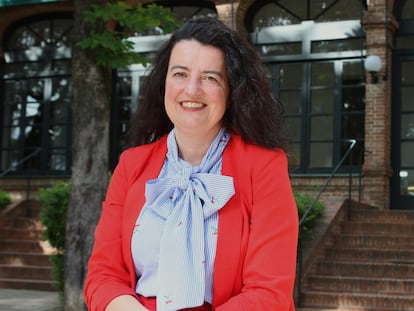


 Image source: BYD