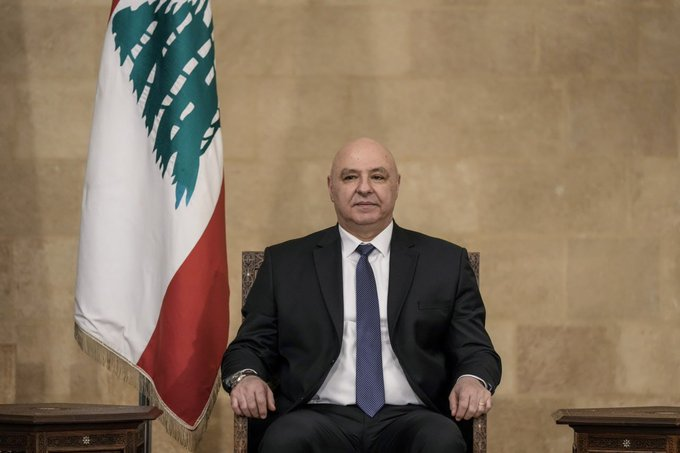
Statement by Lebanese President Joseph Aoun: “I followed with interest the announcement of the memorandum of understanding reached between the United States of America and the Islamic Republic of Iran, and its affirmation of a cessation of military operations and escalation in the region, including in Lebanon.
In this context, I appreciate the memorandum’s recognition of Lebanon’s unique circumstances and its acknowledgment that Lebanon’s stability and security are an integral part of any serious effort to establish stability in the region, especially after the sacrifices and heavy burdens borne by the Lebanese people during the past period.
The Lebanese people, particularly those living in areas that were subjected to attacks and destruction and who lost loved ones, livelihoods, and homes, now look forward to seeing these understandings translated into practical steps that put a definitive end to the cycle of violence and lay the foundation for a period of stability, security, recovery, and reconstruction.
I also extend my gratitude to all the countries and parties that contributed to the achievement of this memorandum, and to everyone who worked to ensure that Lebanon was included in efforts aimed at ending the escalation and halting military operations on various fronts, out of recognition of the extent of the suffering endured by the Lebanese people over the past months.
Lebanon hopes that this development will mark the beginning of a broader process that strengthens stability in the region, preserves the sovereignty of states and the rights of their peoples, and enables the Lebanese to focus on rebuilding what has been destroyed and restoring their normal lives within a safe and stable state.”
Open Dialogue is a Finnish-pioneered mental health approach focusing on immediate, network-based care, now being implemented across the UK. It emphasizes family involvement, transparent decision-making, and social network support over traditional, hospital-centric care. The approach aims to reduce hospitalizations, antipsychotic usage, and the duration of untreated psychosis (DUP) to roughly three weeks.
NELFT NHS Foundation Trust +3
Key Aspects of the Finnish Approach
Origin: Developed in the 1980s in Western Lapland, Finland, by Jaakko Seikkula and his team.
Core Principles: Immediate help (within 24 hours), social network perspective, and flexible, consistent support.
Dialogue Structure: Meetings involve the person in crisis, their family, friends, and clinicians together. No meetings happen without the patient, ensuring transparency.
Results: Studies show up to 86% of patients returned to work or full-time study within five years, with significantly fewer relapses.
NELFT NHS Foundation Trust +4
Implementation in the UK
Pilot Projects: Several NHS Trusts have piloted the model, notably in London (NELFT).
Training & Research:Open Dialogue UK provides training, with studies (like ODDESSI) investigating its effectiveness within the NHS.
Approach: It is seen as a distinct alternative to traditional UK mental health care, focusing on trauma-informed, person-centered, and rights-based care.
NELFT NHS Foundation Trust +3
Would you like more information on the training requirements for practitioners or details on the results of the NHS pilot studies?9 sites
NHS Open Dialogue | NELFT NHS Foundation TrustThe NHS Open Dialogue Project. NELFT is leading on a national multi-centre Open Dialogue pilot that seeks to transform the model o…NELFT NHS Foundation Trust
Open dialogue in the UK: qualitative study – PMC – NIHOpen dialogue is an approach to specialist mental healthcare that originated from the need-adapted approach in Western Lapland, Fi…National Institutes of Health (.gov)
Open Dialogue FinlandHospitalisation is avoided and its consequential stigma, preferring to meet in the homes of those seeking their services. They avo…Developing Open Dialogue
Show all
This is for informational purposes only. For medical advice or a diagnosis, consult a professional. AI responses may include mistakes.
The Nottingham attacks shocked Britain and raised urgent questions about mental health services, public safety and institutional accountability. [Subscribe to our Substack newsletter: https://channel4news.substack.com/sub…] In this special edition of The Fourcast, Jackie Long is joined by the families of those killed in the attacks, alongside mental health experts, campaigners and policymakers, to discuss the findings of the Nottingham Inquiry and what must change to prevent similar tragedies in the future.
Emma Webber, mother of Barnaby Webber; Dr Sanjoy Kumar, father of Grace O’Malley-Kumar; and James Coates, son of Ian Coates, reflect on their fight for answers and accountability. They are joined by former Care Minister Norman Lamb, Professor at the Institute of Psychiatry at King’s College London Dinesh Bhugra, and SANE Chief Executive Marjorie Wallace.
Can lessons finally be learned from Nottingham? Has enough changed since the attacks? And how do we balance compassionate mental health care with public safety? Nottingham Police said they would consider any recommendations made. Nottingham Health Trust did not respond to a request for comment. The CPS said they were ‘fully engaging with the public inquiry’.
During the inquiry, a representative from the University of Nottingham said that since Valdo Calocane had left the university, the university had “continued to refine and adapt its policies and processes, but any changes made have not been as a direct result of the attacks themselves.” The spokesperson added that: “The University does not take the view that any of the changes made would have had an impact on the devastating attacks which took place.”
The Department of Health said that “whilst there has been significant investment in mental health services over the past ten years, demand has risen and outpaced the services available”, and acknowledged “a significant and ongoing rise in demand means there remains a substantial treatment gap”. ——- Get more news at our site – https://www.channel4.com/news/ Subscribe to our Substack newsletter: https://channel4news.substack.com/sub…
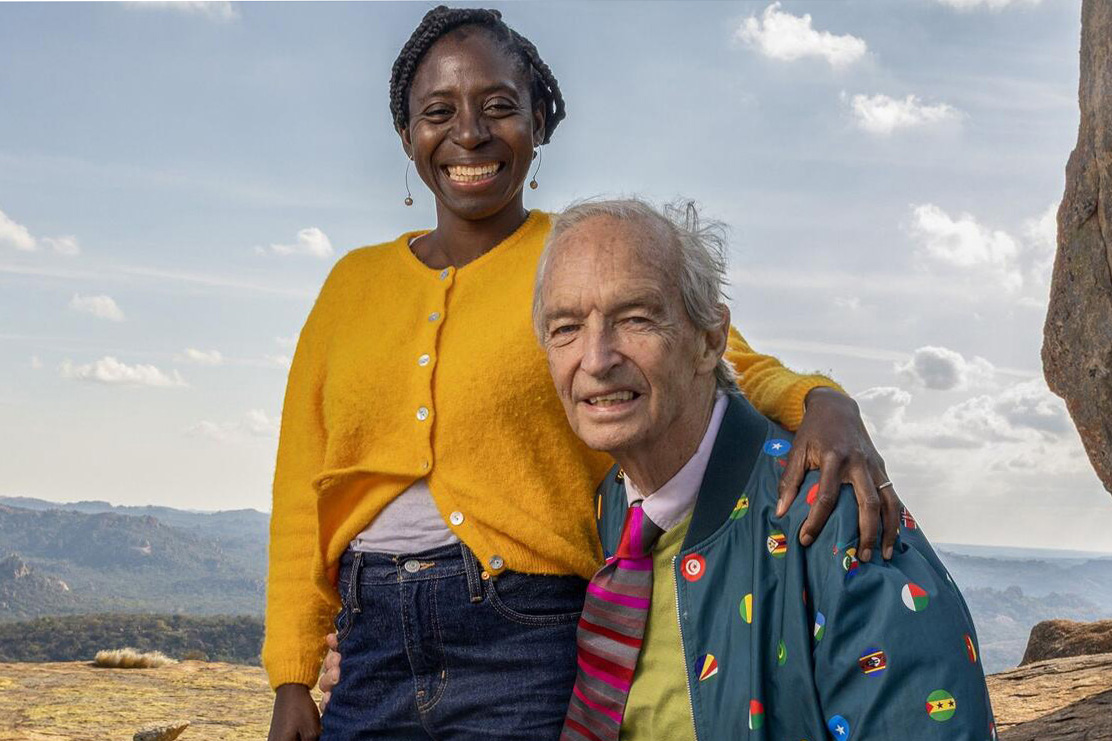
Former news anchor Jon Snow has revealed he is living with Alzheimer’s disease, the most common form of dementia
The reality of Snow’s life with the condition will feature in a powerful new documentary, ‘Jon Snow: A Last Big Story’, airing on Channel 4 on Saturday, 20 June.
Snow, 78, best known for presenting Channel 4 News between 1989-2021, was diagnosed with dementia, the UK’s biggest killer, in 2023.
Snow, who is supporting Alzheimer’s Society, has decided to open up about his diagnosis to raise awareness of the condition, which affects around a million people in the UK.
In an exclusive Daily Mail interview alongside his epidemiologist wife, Dr Precious Lunga, who has a PhD in neuroscience, Snow said ‘If I don’t speak out, who will?’
The article, part of Alzheimer’s Society’s Defeating Dementia campaign with the newspaper, reveals how following his retirement in 2021, Jon sank into a deep depression, became withdrawn and lost interest in things he once loved.
Precious said: ‘Friends kept asking me if Jon was alright and I would have to lie and say he’s fine, but I knew he wasn’t.’
Jon worried that friends were no longer contacting him: ‘Nobody ever rings,’ he said, ‘I’m forgotten.’ In reality, he had forgotten about the calls.
Jon Snow’s Alzheimer’s diagnosis
Despite being reluctant to see a doctor, insisting there was nothing wrong, a cognitive assessment and brain scan revealed that Jon had Alzheimer’s disease.
Snow still questions the diagnosis, saying: ‘I mean sometimes I doubt whether I’ve really got it. I don’t know if it’s widespread knowledge. I don’t feel disabled in any way,’ wondering if his behaviour is simply normal for his age.
Snow is not alone – it is a common misconception to question whether dementia is a normal part of ageing.
While people often forget things more as they get older, dementia is caused by diseases of the brain and its symptoms can include problems with planning and decision-making, language, and sometimes changes in mood or behaviour.
In the film, Snow says:
“At the beginning I wanted to hide it, there’s so much prejudice. Any sort of hint of mental decay, you’re sort of dead. There are moments when it pops up but it’s not an all day every day condition, and that’s what I cling onto.”
Snow’s diagnosis carried extra weight because his mother, Joan, had struggled with Alzheimer’s disease for a decade before dying in her eighties. He feared the same fate.
Reflecting on his mum’s diagnosis, Snow once said: ‘It is a horrible disease because she is still physically your mum. She sounds like her, but you can’t have a conversation with her.’
Staying involved while living with with dementia
Lunga believes people with dementia can still be valuable members of society.
‘Life doesn’t end with an Alzheimer’s diagnosis, but it changes dramatically,’ said Precious. ‘You can have Alzheimer’s and still be a valuable member of society but you need support to navigate it.’
In ‘Jon Snow: A Last Big Story’, viewers will see Snow coming out of retirement for one last investigation to uncover a mining disaster affecting local communities in Zambia, where he and Precious spend much of their time.
His news instinct remains strong, and he still wears a tie daily, but it’s clear his memory is fading.
Snow is seen at an appointment with his consultant, Professor Jonathan Rohrer, who explains that there is currently no cure for dementia, but there are treatments.
Snow was previously on a clinical trial and says he’s a ‘willing victim’ should there be others he could join.
Working with Alzheimer’s Society and Channel 4
Michelle Dyson CB, CEO of Alzheimer’s Society, said: “Jon’s decision to talk publicly about his dementia diagnosis is a real act of courage and his story will resonate with so many.
“His support for Alzheimer’s Society will help spark a national conversation about dementia that we so desperately need. Despite being the UK’s biggest killer, dementia is still not treated with the same urgency as other major health conditions like cancer.
“Alongside his wife Precious, Jon is shining a light on the need for faster, fairer access to diagnosis. An early diagnosis can unlock vital support, help families plan ahead and potentially open the door to participation in clinical trials.
“Yet too many people across the country are still waiting far too long for a diagnosis.
“‘”We look forward to working with Jon, whose long-standing commitment to speaking out against injustice will help ensure the harsh realities of dementia cannot be ignored by the UK Government and the NHS.
Illustration: Sarah Grillo/Axios. Stock: Getty Images
Planet Earth has roughly 180 currencies. But for a vast share of global transactions, people want to use just one: the United States dollar, Axios’ Neil Irwin writes.
Why it matters: This is a unique source of global power and responsibility. America’s role in the world over the next 250 years will be determined by its ability to maintain, and wisely steward, this role at the center of the global economy.
Yes, but: Other nations are increasingly chafing at the power the U.S. wields thanks to the dollar — and they’re seeking alternatives.
How it works: The dominance of the dollar in international trade and finance gives the U.S. the ability to exert its will far from our shores, without firing a gun.
This poweris evident when the U.S. fines European banks for doing business with Iran or cuts off Russian oil companies from the mainstream financial system.
It has also fueled global demand for Treasury debt that allows the U.S. to borrow vast sums, especially in crises.
This primacyis based on policy choices and structures built over decades — in some cases, centuries.
What we’re watching: Some of the underpinnings of U.S. dollar dominance are coming under question.
Sky-highU.S. fiscal deficits mean the world is being inundated with Treasury debt. The political independence of the Fed is in question. And many in the Trump administration see the costs of maintaining dollar dominance as a burden for Americans.
Perhapsmost importantly, the U.S. has used the threat of cutting off access to the dollar-based global financial system as an increasingly all-purpose weapon for economic warfare. That means major U.S. rivals (China, Russia) and frenemies (India, Brazil) are eager for dollar alternatives
. Reality check: So far, other leading powers seem to lack the willingness or ability to build alternatives.
More broadly, network effects are powerful things. Everybody uses dollars because everybody else uses dollars.
The bottom line: The role of the U.S. dollar in the world is secure for now, much as America’s rivals might not like the status quo. But global angst is simmering, and as the Dutch and British learned long ago, no dominant currency is forever.
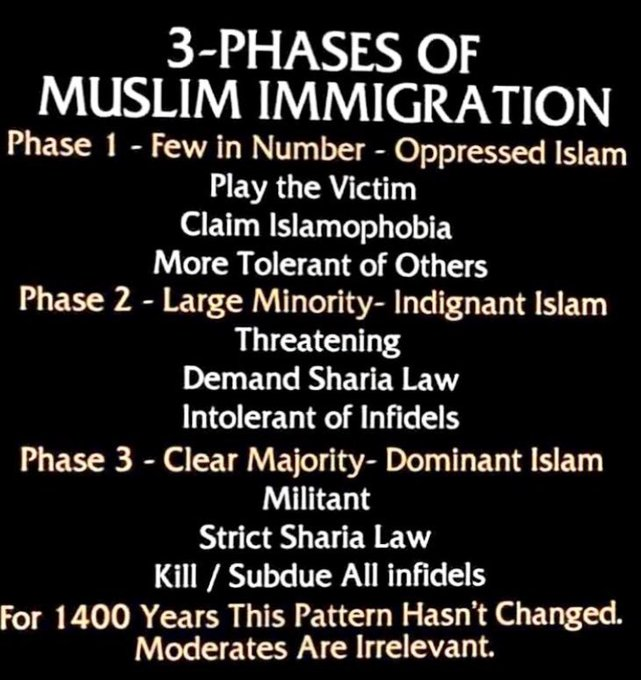
“Radical Islam doesn’t want just a small caliphate in Iraq or Syria. They see the United States as the greatest evil on Earth and seek to dominate the entire West. Radical Islam is revolutionary, it wants endless expansion, terrorism, assassinations, and total control. They hate America, Europe, Israel, and every Muslim nation that partners with us. Orlando, Pensacola, and domestic attacks prove it.
Radical Islam is a clear and imminent threat to the world.”




 NELFT NHS Foundation Trust +3
 NELFT NHS Foundation Trust +4
 NELFT NHS Foundation Trust +3
 NELFT NHS Foundation Trust
 National Institutes of Health (.gov)
 Developing Open Dialogue

 Why it matters: This is a unique source of global power and responsibility. America’s role in the world over the next 250 years will be determined by its ability to maintain, and wisely steward, this role at the center of the global economy.
 Yes, but: Other nations are increasingly chafing at the power the U.S. wields thanks to the dollar — and they’re seeking alternatives.
 How it works: The dominance of the dollar in international trade and finance gives the U.S. the ability to exert its will far from our shores, without firing a gun.
 This primacy is based on policy choices and structures built over decades — in some cases, centuries.
 What we’re watching: Some of the underpinnings of U.S. dollar dominance are coming under question.
 Reality check: So far, other leading powers seem to lack the willingness or ability to build alternatives.
 The bottom line: The role of the U.S. dollar in the world is secure for now, much as America’s rivals might not like the status quo. But global angst is simmering, and as the Dutch and British learned long ago, no dominant currency is forever.