

Open Search
Veteran news anchor Jon Snow reveals his Alzheimer’s diagnosis
An upcoming documentary in collaboration with Alzheimer’s Society follows the former broadcaster as he navigates life with dementia
by Stephen Hall June 10, 2026
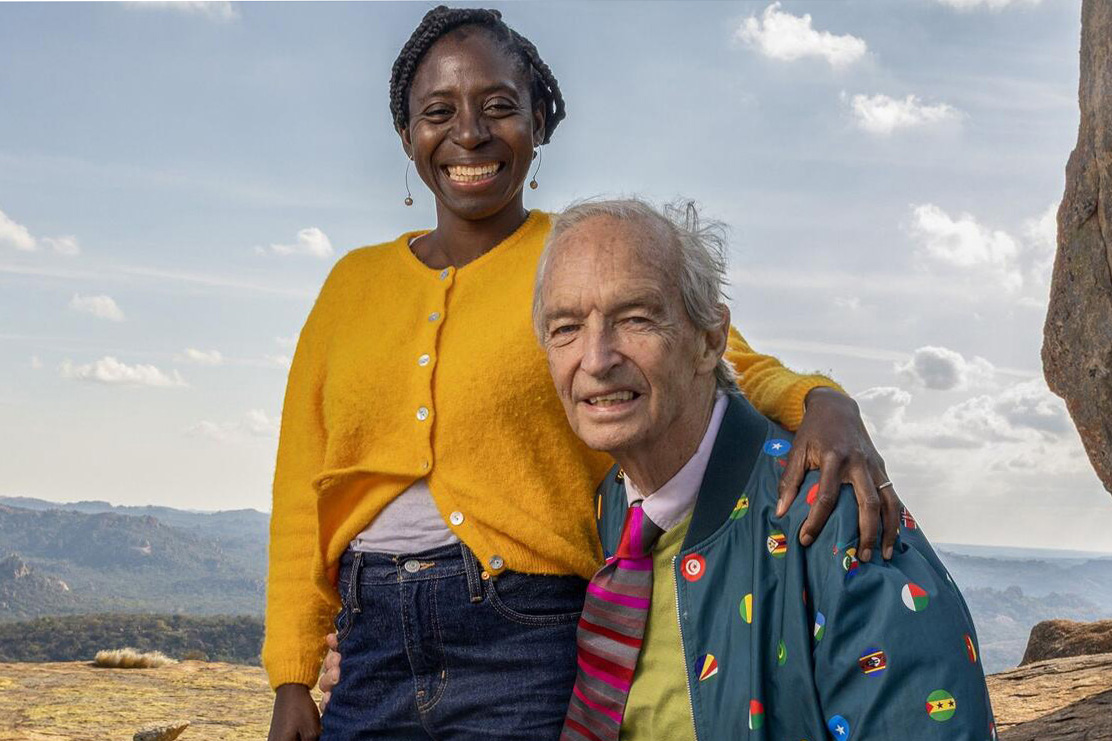
Former news anchor Jon Snow has revealed he is living with Alzheimer’s disease, the most common form of dementia
The reality of Snow’s life with the condition will feature in a powerful new documentary, ‘Jon Snow: A Last Big Story’, airing on Channel 4 on Saturday, 20 June.
Snow, 78, best known for presenting Channel 4 News between 1989-2021, was diagnosed with dementia, the UK’s biggest killer, in 2023.
Snow, who is supporting Alzheimer’s Society, has decided to open up about his diagnosis to raise awareness of the condition, which affects around a million people in the UK.
In an exclusive Daily Mail interview alongside his epidemiologist wife, Dr Precious Lunga, who has a PhD in neuroscience, Snow said ‘If I don’t speak out, who will?’
The article, part of Alzheimer’s Society’s Defeating Dementia campaign with the newspaper, reveals how following his retirement in 2021, Jon sank into a deep depression, became withdrawn and lost interest in things he once loved.
Precious said: ‘Friends kept asking me if Jon was alright and I would have to lie and say he’s fine, but I knew he wasn’t.’
Jon worried that friends were no longer contacting him: ‘Nobody ever rings,’ he said, ‘I’m forgotten.’ In reality, he had forgotten about the calls.
Jon Snow’s Alzheimer’s diagnosis
Despite being reluctant to see a doctor, insisting there was nothing wrong, a cognitive assessment and brain scan revealed that Jon had Alzheimer’s disease.
Snow still questions the diagnosis, saying: ‘I mean sometimes I doubt whether I’ve really got it. I don’t know if it’s widespread knowledge. I don’t feel disabled in any way,’ wondering if his behaviour is simply normal for his age.
Snow is not alone – it is a common misconception to question whether dementia is a normal part of ageing.
While people often forget things more as they get older, dementia is caused by diseases of the brain and its symptoms can include problems with planning and decision-making, language, and sometimes changes in mood or behaviour.
In the film, Snow says:
“At the beginning I wanted to hide it, there’s so much prejudice. Any sort of hint of mental decay, you’re sort of dead. There are moments when it pops up but it’s not an all day every day condition, and that’s what I cling onto.”
Snow’s diagnosis carried extra weight because his mother, Joan, had struggled with Alzheimer’s disease for a decade before dying in her eighties. He feared the same fate.
Reflecting on his mum’s diagnosis, Snow once said: ‘It is a horrible disease because she is still physically your mum. She sounds like her, but you can’t have a conversation with her.’
Staying involved while living with with dementia
Lunga believes people with dementia can still be valuable members of society.
‘Life doesn’t end with an Alzheimer’s diagnosis, but it changes dramatically,’ said Precious. ‘You can have Alzheimer’s and still be a valuable member of society but you need support to navigate it.’
In ‘Jon Snow: A Last Big Story’, viewers will see Snow coming out of retirement for one last investigation to uncover a mining disaster affecting local communities in Zambia, where he and Precious spend much of their time.
His news instinct remains strong, and he still wears a tie daily, but it’s clear his memory is fading.
Snow is seen at an appointment with his consultant, Professor Jonathan Rohrer, who explains that there is currently no cure for dementia, but there are treatments.
Snow was previously on a clinical trial and says he’s a ‘willing victim’ should there be others he could join.
Working with Alzheimer’s Society and Channel 4
Michelle Dyson CB, CEO of Alzheimer’s Society, said: “Jon’s decision to talk publicly about his dementia diagnosis is a real act of courage and his story will resonate with so many.
“His support for Alzheimer’s Society will help spark a national conversation about dementia that we so desperately need. Despite being the UK’s biggest killer, dementia is still not treated with the same urgency as other major health conditions like cancer.
“Alongside his wife Precious, Jon is shining a light on the need for faster, fairer access to diagnosis. An early diagnosis can unlock vital support, help families plan ahead and potentially open the door to participation in clinical trials.
“Yet too many people across the country are still waiting far too long for a diagnosis.
“‘”We look forward to working with Jon, whose long-standing commitment to speaking out against injustice will help ensure the harsh realities of dementia cannot be ignored by the UK Government and the NHS.
“I would encourage anyone needing help or information to call our Dementia Support Line on 0333 150 3456.”Alzheimer’s


