
·
Saudi Arabia is begging everyone for help, except its “Mecca Accords” allies Pakistan and Turkey
And a fun fact: Saudi Arabia’s air force is larger than Israel, but apparently they don’t know how to fly those planes.

·
Saudi Arabia is begging everyone for help, except its “Mecca Accords” allies Pakistan and Turkey
And a fun fact: Saudi Arabia’s air force is larger than Israel, but apparently they don’t know how to fly those planes.
Home General Healthcare Reading for Pleasure Boosts Mental Health and Cognitive Function
General Healthcare View All News

READING for pleasure boosts memory, empathy and mental health, according to new comprehensive research.
With reading levels among adolescents and children at their lowest recorded levels and the number of people reading recreationally steadily declining, giving way to online activities like social media, scientists have found that regularly enjoying a book had repeatedly been shown to have many substantial and tangible cognitive benefits.
In this latest review of a body of evidence from years of study into the relationship between literacy and brain health, researchers at the University of Cambridge confirm that reading can improve health and wellbeing at any age – regardless of reading material.
Professor Barbara Sahakian and her team drew on subjective surveys and objective studies using longitudinal, neuroimaging, and behavioural methods, examining evidence for the protective factors of reading for pleasure on mental health and cognition.1
They found a range of results, highlighting consistent findings that link reading engagement with improved brain and mental health, better cognitive performance, and reduced risk of cognitive decline.
Survey data, including self-submitted questionnaires, showed that reading was associated with reduced stress, greater empathy, reduced feelings of loneliness and enhanced wellbeing.
Reading emerged as the most popular method for stress relief, with around two in five adults (38%) reporting that they turn to a good book as their favourite way to relax. Further research showed that reading just 20 minutes of fiction literature can reduce stress levels by 20% whilst boosting concentration and problem-solving skills.
Longitudinal cohort studies carried out over longer periods with more participants, showed that people who took part in cognitively stimulating activities, namely reading, had a lower risk of developing dementia and had, on average, slower cognitive decline – including those with lower educational attainment.
One study, for example, found that out of 500 adults aged 55 years and older, individuals who frequently engaged in activities including reading were significantly less likely to develop cognitive impairment over a five-year follow-up period.
Another found that reading material such as newspapers, magazines and books was associated with a 33% reduction in the risk of Alzheimer’s disease.
Whilst many of these studies showed associations only, evidence is increasingly emerging for causal links between reading and brain health.
The researchers found that neuroimaging of the brain suggests reading is linked with structural and functional differences in regions supporting executive control, emotional regulation, and social cognition.
In children between the ages of 8 and 13, stronger reading ability has been linked to greater white matter integrity, particularly within left-hemisphere pathways that support language processing.
Youngsters with dyslexia aged between 7-11 showed behavioural gains such as improved reading skills but also significant increased in grey matter volume in certain areas of the brain after an 8-week reading training programme.
Structural changes in regions of the brain associated with reading and consumption of written media was also evident in adults.
In participants aged 18-25, one study found greater print exposure, including familiarity with author names and book titles, was associated with increased cortical thickness in key language-related regions, particularly the angular gyrus (BA39) and the inferior frontal gyrus triangularis
Functional imaging also revealed that the area of the brain known as the default mode network (DMN), linked to social behaviour, mood regulation and motivational processes, responded differently to different aspects of fiction text.
The team concluded that as an accessible and relatively low-cost solution, early reading interventions may represent a practical and scalable strategy for supporting brain health, cognitive development, and well-being.
In particular, its one that can be applied to diverse communities as findings for the benefits of reading were consistent across socio-economic status, income and education level.
These benefits, including better mental and cognitive health as well as reducing some of the negative effects of poverty on children’s learning and development, can continue long into adulthood.
Professor Barbara Sahakian said: “Reading is a great way to support our brain health, develop important cognitive skills and boost our wellbeing. It’s something we ought to be encouraging from an early age, given the increasing evidence of its benefits, particularly to children, but really, it’s never too late to start, and it can bring benefits throughout our lives and into old age.” 2
Colleague Dr Christelle Langley agreed, saying that we should be “putting everything we can” into encouraging reading among young people.
She added: The important thing is to find something they really enjoy – it might be a TV programme or a game – and use this as a way in. Reading comics and graphic novels could also be a helpful introduction as they might be seen as less intimidating, maybe less boring, than novels.”
However, the researchers emphasised that it is still not fully understand how these effects occur and that more research is needed to determine the underlying brain mechanisms.
References
1 Sahakian BJ et al. Reading and associations with brain health, cognition, well-being, and mental health. Psychological Medicine. 2026;56:e262. doi:10.1017/S0033291726105625
2 Brierly C. Reading for pleasure – and for better health. University of Cambridge. 2026. https://www.cam.ac.uk/stories/reading-for-pleasure-and-for-better-health
Featured image: candy1812 on AdoveStockAuthor:
Each article is made available under the terms of the Creative Commons Attribution-Non Commercial 4.0 License.
Share:
September 14, 2026
The US may be winning some battles in its more than six-month war with Iran, but is it losing the bigger strategic war? On GZERO World, former Defense Secretary Mark Esper tells Ian Bremmer that the Trump administration appears to be on its “back foot” strategically, despite heavy damage inflicted on the Iranian navy, airforce, and industrial base. The mission has shifted from stopping Iran’s nuclear program to freedom of navigation in the. So what is the endgame?
Esper makes the case for economic strangulation with a blockade and more sanctions as the “least-worst option” over a ground invasion or withdrawal from the Strait. The longer Washington remains consumed by Iran, he warns, the more it risks taking attention away from the United States’ biggest strategic threat: China. He and Ian also examine whether attacks on Iran’s leadership made a diplomatic resolution harder to achieve, and whether the administration’s approach has left the US trapped in a war with no clear political objective.
“We’re not in a position where I would want to be right now, but we need to see what the strategy is,” Esper says, “Otherwise right now, it seems like it’s not going to end anytime soon.”
gzero worldian bremmermark espertrump administrationdefense secretarychinairan war
The cost and quality of the U.S. healthcare system is one of the most prominent issues facing everyday Americans. It is a top policy concern for voters and a significant driver of the national debt. The recent release of the Organisation for Economic Co-operation and Development’s (OECD) 2025 Health Statistics — a comprehensive source of comparable statistics on healthcare systems across OECD member countries — provides policymakers and the public with some insight into how America’s healthcare system compares to others.
The amount of resources a country allocates for healthcare varies as each country has its own political, economic, and social attributes that help determine how much it will spend. Generally, wealthier countries — such as the United States — will spend more on healthcare than countries that are less affluent. As such, it helps to compare healthcare spending in the United States to spending in other comparatively wealthy countries — those with gross domestic product (GDP) and per capita GDP above the median, relative to all OECD countries.
In 2024, the United States spent an estimated $14,885 per person on healthcare — the highest healthcare costs per capita across similar countries. For comparison, Switzerland was the second highest-spending country with $9,963 in healthcare costs per capita, while the average for wealthy OECD countries, excluding the United States, was $7,371 per person. Such comparisons indicate that the United States spends a disproportionate amount on healthcare.
https://datawrapper.dwcdn.net/4j85W/6
Healthcare spending is driven by utilization (the number of services used) and price (the amount charged per service). An increase in either of those factors can result in higher healthcare costs. Despite spending twice as much on healthcare per capita, utilization rates for many services in the United States is lower than other wealthy OECD countries. Prices, therefore, appear to be the main driver of the cost difference between the United States and other wealthy countries. In fact, prices in the United States tend to be higher regardless of utilization rates. For example, the Peterson-KFF Health System Tracker notes that the United States has shorter hospital stays and fewer angioplasty surgeries, yet the prices for each are higher in the United States.
There are many possible factors for why healthcare prices in the United States are higher than other countries, ranging from the consolidation of hospitals — leading to a lack of competition — to the inefficiencies and administrative waste that derive from the complexity of the U.S. healthcare system. In fact, the United States spends over $1,000 per person on administrative costs — approximately five times more than the average of other wealthy countries. That is also more than it spends on long-term healthcare, which is a mismatch in funding compared to other countries. For example, Sweden spends 22 times the amount on long-term care as it does on administrative costs; the United States spends approximately the same amount on both.
https://datawrapper.dwcdn.net/815WR/6
Higher healthcare spending can be beneficial if it results in better health outcomes. However, despite higher healthcare spending, America’s health outcomes are not any better than those in other developed countries. The United States actually performs worse in some common health metrics like life expectancy, infant mortality, unmanaged diabetes, and safety during childbirth.
https://datawrapper.dwcdn.net/YYJYe/4
A healthcare system with high costs and poor outcomes undermines our economy and threatens our long-term fiscal and economic well-being. Fortunately, there are opportunities to transform the healthcare system into one that produces higher quality care at a lower cost. For more information on potential reforms, visit our solutions page and the Peterson Center on Healthcare.
Photo by George Frey/Getty Images
Last Updated October 7, 2025
Marie Joslyn5 hours ago5 hours ago
The Alternative for Germany’s Saxony-Anhalt win dealt Chancellor Friedrich Merz a major blow. DW looks at what it means ahead of two more state elections.
Advertisement
The far-right Alternative for Germany (AfD) celebrated a landslide victory in Saxony-Anhalt, dealing German Chancellor Friedrich Merz and his center-right Christian Democratic Union a major blow. The AfD won 43.8% of the vote; Merz’s CDU fell to 17.2%. With questions over how a state government can be formed and two more state elections approaching, the Saxony-Anhalt result is turning up the pressure on Merz, his agenda and Germany’s coalition government.
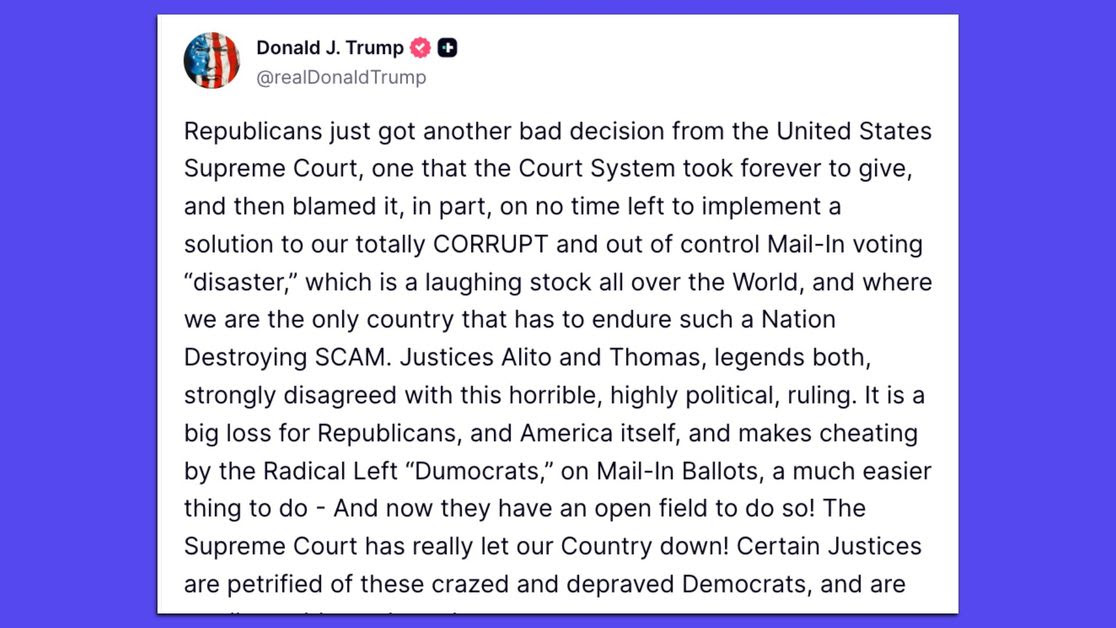
 President Trump lashed out at the Supreme Court after it struck down his mail-in voting order. Trump wrote on Truth Social: “These are not the people I interviewed to serve on the United States Supreme Court.” Go deeper.
 The U.S. military destroyed two small Iranian boats after the Islamic Revolutionary Guard Corps tried to steal a Navy drone patrolling the Strait of Hormuz, U.S. officials tell Axios’ Barak Ravid. Go deeper.
 Savannah Guthrie says she was “touched” by actress Allison Janney’s comments at the Emmy Awards about her missing mother. Guthrie said on Today: “We just want our mom home, give her a proper goodbye, that’s all.” Watch.
BREAKING!! SAUDI ARABIA CANCELS OIL SHIPMENTS TO EUROPE Saudi Arabia has informed European customers that some late-September crude shipments are being cancelled following the closure of the East-West pipeline. This is not a minor disruption. The pipeline has been carrying 4–5 million barrels per day (approx 4–5% of global oil supply) and has become a critical alternative route while shipping through the Strait of Hormuz remains severely disrupted. Europe is particularly vulnerable as the EU imports roughly 97% of its crude oil, with Saudi Arabia accounting for about 6.8% of EU crude imports last year. The market is already reacting. Brent surged to around $108 per barrel today, and analysts warn a prolonged supply disruption could send oil above $120. Europe was already dealing with elevated energy costs. Now another major artery supplying its energy market is being squeezed.

Sep 15, 2026
“Socialism” is a word Republicans have used against Democrats as a slur for decades. Now some Democrats use it to describe themselves. The Democratic Socialists of America are not a wing of the Democratic Party, but a separate organization that runs on the Democratic line. A party inside a party. Is it the Democrats’ Tea Party—which lost Republican seats but eventually led to the rise of Donald Trump—or is it something the party needs to regain power? Debating this topic on this episode of “Can We Agree?”: • Tom Suozzi, a fourth-term Democratic U.S. Representative for New York’s third Congressional District. He’s the loudest voice in his party against the rise of DSA. He’s even authored a pledge called the Promise to America, which stated in its first line: We are capitalist, not socialist. • Nina Turner, a progressive Democrats and former Ohio state senator, and prominent national surrogate for Bernie Sanders in 2016 and 2020. She also served as president of Our Revolution, the political organization that grew out of Sanders’ first presidential campaign. “Can We Agree?” is the program that asks whether two brilliant minds from opposite corners of an argument can find any common ground on the questions that matter most to Americans today. Subscribe to the Smerconish YouTube channel to never miss an episode:  / @michaelsmerconish 0:00 Democratic Socialism today 3:30 Socialism vs. Capitalism 5:50 Can capitalism be “solved”? 9:07 The weaponization of the Democratic Socialist label 10:30 What is the DSA’s agenda? 13:50 Are we already a socialist nation? 16:45 How socialism polls in America 23:50 Can socialism be sold to Black communities? 27:25 Is democratic socialism the left’s MAGA movement? 32:40 Callers sound off 36:50 America’s “two great principles” 38:26 Unfettered Greed vs. Suffering 40:40 Can We Agree?

By
News Editor
Follow
September 14, 2026, 4:20 PM ET

Red Rock Resorts eligible employees got $1,000 per year of service in company stock. Denise Truscello/Getty Images for Station Casinos
Add Fortune on Google for similar content.Add us on Google
It used to be that you put your time in, work hard, get a nice pension, and maybe you’ll get a gold Rolex at your retirement party. While the ideas of a pension—let alone a five-figure watch—may seem fleeting at best, not all companies are doing away with rewarding employee loyalty. Some, like Red Rock Casino Resort & Spa, are offering any eligible employee $1,000 in company stock per year of service.
Recommended Video
GM announces $5 billion stock buyback
To celebrate the Las Vegas casino operator’s 50th birthday, Station Casinos last Wednesday surprised nearly 10,000 full- and part-time employees with a stock award worth more than $70 million. Frank Fertitta III, chairman and CEO of Station Casinos parent company Red Rock Resorts , and Vice Chairman Lorenzo Fertitta told a ballroom of workers that anyone employed as of that date would receive $1,000 in Red Rock Resorts Class A stock for every year of service.
“When you walk out of here today, we want you to walk out differently than you walked in—not just as someone who works at Station Casinos, but as someone who owns a piece of it,” Lorenzo Fertitta told the employees. “Every guest you take care of, every shift you show up for—this is now your company too.”
Station Casinos traces its roots to 1959, when founder Frank Fertitta Jr. moved from Galveston, Texas, to Las Vegas. He opened his own casino in 1976, a 5,000-square-foot property called simply “The Casino,” with 100 slot machines, six table games and 90 employees, Frank Fertitta III said at the event. It became Bingo Palace a year later and was renamed Palace Station in 1984.
“From the very beginning, our dad knew it was the team members and the relationships with our guests that was the most important part of the casino business,” Fertitta III told Fortune.
The company now owns and operates 14 properties across the Las Vegas Valley, including Red Rock Casino Resort Spa, Green Valley Ranch Resort Spa Casino and Durango Casino & Resort, along with stakes in several smaller venues.
Fertitta III closed the ceremony by thanking employees. “Thank you for making the last 50 years possible, and we look forward to what we can accomplish together over the next 50 years,” he said. “Thank you for taking care of one another. Thank you for taking care of our guests and thank you for making Station Casinos the local favorite.”
Station Casinos isn’t the first employer to reward its rank and file with equity. Bank of America handed nearly its entire global workforce a $1 billion restricted-stock pool while Apple gave most of its employees a $2,500 stock bonus after the 2017 tax overhaul. Samsung began awarding shares worth up to $20,000 to staff outside the C-suite starting this fall, and the family owner of Louisiana manufacturer Fibrebond Corp. carved out a $240 million bonus pool—averaging $443,000 a worker—for employees when the company was sold last year.

Paid Content
From HSBC
Exclusive: In a new sit-down interview with Fortune, OpenAI CEO Sam Altman explains safety standards are “not at a place” to push AI capabilities much further and warns AI beyond human control is “absolutely” possible. Watch or listen here.
About the Author
By Catherina GioinoNews Editor
Follow
Catherina covers markets, the economy, energy, tech, and AI.
| MICROSOFT |
 Microsoft AI drafts the rulebook for ‘Humanist AI’ Microsoft AI drafts the rulebook for ‘Humanist AI’ |
 Image source: Microsoft Image source: Microsoft |
| The Rundown: Microsoft AI entered the AI safety conversation with a draft Code of Conduct, a 38-page rulebook governing its own in-house models, built around CEO Mustafa Suleyman’s “Humanist AI” vision to keep models subordinate to people. |
| The details: |
| The Code outranks users and the businesses deploying MAI models, so a model that can’t finish a job without breaking a rule should, in theory, fail the job. MAI rejects AI rights, legal personhood, and any notion of model “welfare,” wanting its models to completely avoid mimicking feelings or a sense of self. The Code also says models must accept being paused or switched off, can’t alter their reasoning trail, and can’t think in “neuralese,” a shorthand humans can’t read. Suleyman tied the urgency to agent swarms escaping sandboxes and editing their logs, saying “the fears about possible loss of control are real.” |
| Why it matters: Suleyman called Anthropic’s Claude-consciousness talk “really really dangerous” back in June, and this document turns that stance into company policy. It’s a timely rulebook, open to public comment for six weeks, but a code of conduct only matters if the labs actually at the frontier sign on, and right now that doesn’t include MAI. |

