View in browser PRESENTED BY OPENAI Axios AMBy Mike Allen · Mar 31, 2026Happy Tuesday! Smart Brevity™ count: 1,909 words … 7 mins. Thanks to Noah Bressner for orchestrating. Edited by Andrew Pantazi and Bill Kole.
Bulletin:Early this morning, the average U.S. price of a gallon of regular gas jumped past an average of $4 a gallon for the first time since 2022. It’s now $4.02 — over a dollar more than when the war began. Keep reading.
1 big thing: Era of unshackled warfare Photo illustration: Aïda Amer/Axios. Photo: Andrew Harnik/Getty Images
President Trump’s threat to bomb Iran’s water supply would constitute his most dramatic breach of the laws and norms designed to protect civilians in wartime, Axios’ Zachary Basu and Dave Lawler write.
Why it matters: The Iran war is the biggest test of what Trump’s contempt for “politically correct” war-fighting looks like in practice.
His administration has already signed off on Israeli assassinations of political leaders, threatened “no quarter” for enemy combatants, and initially rejected responsibility for a mass-casualty strike on an elementary school.
But the U.S. has been almost exclusively targeting Iran’s military and nuclear program up to now.
The threat to hit civilian infrastructure shows how intent Trump is on finding ways to increase the pressure on Tehran, even if that means flouting the generally accepted principles of warfare.
The big picture: Trump criticized the Geneva Conventions during his 2016 campaign, lamenting that soldiers were “afraid to fight.” He vowed to bring back waterboarding and “a hell of a lot worse.
“Defense Secretary Pete Hegseth, then a Fox News host, spent Trump’s first term lobbying privately and on air to secure pardons for soldiers convicted of war crimes.
Zoom in:With the Iran war now entering its second month, Trump threatened yesterday to “completely [obliterate]” Iran’s power plants, oil wells and “possibly all desalinization plants” if a deal isn’t reached soon.
Like other countries in the severely water-stressed region, Iran relies heavily on desalinated water. A senior U.S. official told Axios the idea was to use strikes to pressure Iran to negotiate: “The Iranians want this to stop, too. Don’t be mistaken. Their economy is broken. A couple of sorties, they will have no power. A couple of Israeli sorties, they will have no water. There is a lot to lose if there’s no accommodation. Everyone will have to give, but we can get there.
“The official cautioned that Trump has made no decision, and “he wants to make sure that things are proportionate in this war.”
Between the lines: International humanitarian law explicitly prohibits attacks on objects indispensable to civilian survival, including drinking water installations. Power plants, by contrast, can be deemed lawful targets if they serve a military purpose.
Trump stated his intent plainly, writing that the strikes would be “in retribution for our many soldiers” Iran has killed over the last 47 years.
Reprisals againstcivilians — also known as collective punishment — are explicitly prohibited under the Geneva Conventions.
Senior Contributor. Rachel Wells is a writer who covers leadership, AI, and upskilling.Follow Author
Mar 17, 2026, 01:43pm EDT
Montana, Louisiana, and Indiana are listed as the top locations where healthcare professionals are earning in excess of $300,000, new data reveals.
High-paying jobs are no longer limited to rigid nine-to-five schedules or offices.
While healthcare has traditionally been tied to in-person delivery, the rapid expansion and development of telehealth technology is reshaping the industry, and specific roles are becoming remote-first without sacrificing higher salaries.
In this article, you’ll discover:
Why the top three states hiring are the best for these high-paying healthcare remote roles
Live job postings for part-time remote work in this field
Typical starting salaries
The clinicians in several U.S. states who are earning more than $300,000 annually across multiple specialties (according to a new WalletHub study) include:
Psychiatrists: earn between $263,000 and $343,000
Physicians: earn around $317,000
Pediatricians: earn up to $364,000
Surgeons and anesthesiologists: can exceed $400,000
The study ranked these states as the top three for highest salary levels, job opportunities, and low burnout rates, as well as highest projected job openings by 2032:
Montana
Indiana
Louisiana
But while several of these roles remain hands-on and of course cannot be delivered remotely (such as surgeon and anethesiology roles), increasing numbers of roles in general healthcare and mental health are now being delivered from home.
The rise of telehealth technology means that physicians can conduct consultations, produce patients’ plans and treatment plans, and conduct many other responsibilities entirely virtually, which also provides greater accessibility to patients who otherwise would be unable to come into a clinic.
3 Remote Part-Time Jobs That Pay Up To $300,000+
Out of the roles listed above, the top three remote jobs are:
Psychiatrists
Physicians
Pediatricians
1. Part-Time Remote Psychiatrist
“The global telepsychiatry market is expected to grow at a CAGR (compound annual growth rate) of 18.28% from $15.335 billion in 2021 to $49.658 billion in 2028,” a recent in-depth report projected.
This indicates that demand for these roles is sharply rising. Additionally, Resume Genius just released a study that revealed psychiatrists rank number one for remote work, with the role paying an average of $300,000 according to the report.
So, I did some digging around and discovered current vacancies like:
Fully remote psychiatrist at UpLift, in Montana (pays up to $351,000/year)
2. Part-Time Remote Physician
Primary care physicians are also able to benefit from the part-time remote roles with eye-watering pro-rated salaries, where they’re able to manage chronic conditions and prescribe treatments virtually. For example:
Northeast Healthcare Recruitment is hiring for a Telehealth Physician – with multiple state licenses in at least three or more U.S. states including CA, TX, FL, NY, VA, NC, WA, OH, PA, and GA (pays up to $374,000/year)
3. Part-Time Remote Pediatrician
Remote pediatricians are able to provide critical care to patients who need it most, leveraging their expertise to provide assessments and urgent healthcare post-hospital.
For example:
Imagine Pediatrics is hiring for a Acute Care Pediatrician (Pediatric ER or Urgent Care). This role is fully remote but is not part-time, and Imagine Pediatrics has other similar remote roles (pays up to $250,000 in addition to annual bonus incentive, competitive company benefits package and eligibility to participate in an employee equity program).
Norton Healthcare is also hiring for a pediatrician role, with remote and part-time options available. (Salary is not explicitly stated.)
What You Need To Know
These part-time remote jobs often come with these requirements:
You’ll usually be working under a 1099 contract instead of on a full-time permanent employee basis
Because you’re working part-time, any stated salaries are paid pro rata based on hours worked, for example 10 hours a week for a virtual psychiatry and mental health therapy provider
You will still need to be licenced to work in the specific state you operate and provide services in, regardless of working remotely. The job advert will specify which states
Multi-state licencing increases your earning potential
Telehealth technology is transforming one of the most lucrative industries in the world and making it easier for patients to receive accessible care, while healthcare professionals enjoy flexible work schedules, a remote work set-up, and the ability to earn as much as $300,000+ while doing so.
As this becomes the new norm, you can expect to see more high-paying remote jobs within healthcare in the years ahead.
Iran has released another "Lego" Propaganda mini film taunting President Trump and inviting the US Military to "Come Closer" pic.twitter.com/9KsSrXrukU
Management, branding, marketing, history scholars trace all ways Apple changed industries, our relationship to tech — and to each other
On April Fool’s Day 1976, two college dropouts, Steve Wozniak and Steve Jobs, and a friend, Ronald G. Wayne, formed a company from the garage of Jobs’ parent’s house in Los Altos, a small city in Silicon Valley then in its infancy.
For the cheeky price of $666.66 (Wozniak liked repeating digits), buyers could get what they called the Apple-1, a “Woz”-engineered, personal computer consisting of a bare circuit board with an 8-bit microprocessor and 4K of RAM — monitor, keyboard, and power supply sold separately.
The Apple-1 was only capable of running elementary programs and games. Two hundred were made.
It may have seemed foolhardy then to push a product few Americans were even aware existed. But 50 years later, Apple is among the most popular and iconic consumer brands and, with a $3.8 trillion valuation, one of the world’s most successful companies.
In these edited reflections, Harvard analysts explain how Apple has transformed the personal computing, music, and communications industries. It has also revolutionized marketing and advertising, industrial and product design, and retail, and helped shift our relationship to tech — and, arguably, to one another.
Our experts include David B. Yoffie, Baker Foundation Professor, Max and Doris Starr Professor of International Business Administration, Emeritus; Marc Aidinoff, assistant professor of the history of science; and Jill Avery, senior lecturer of business administration and C. Roland Christensen Distinguished Management Educator.
Invented three industries
Yoffie:I would put Apple alongside of IBM, Ford, and General Electric — one of the most important American companies to emerge during its period of explosive growth because they impacted so much of American life and the way American business has operated.
When I think about Apple’s contribution, I start by thinking that they fundamentally invented three new industries, all of which have had a huge impact on mankind. The first one being the personal computer. Apple II was really the first real personal computer.
Second is what they did with the iPod, which was essentially a redesign of the entire music industry.
And the third is the iPhone, which has become the single most successful consumer electronic product in history of the world by almost any definition. It revolutionized personal communications.
So, at a very fundamental level, Apple has revolutionized the way in which we live our lives, in addition to becoming one of the most successful companies in the history of the world.
A user story
Aidinoff: As a historian of technology, I would flip that around to say they created the users for those things.
They taught people that they wanted and could use things in this way, that we could take a computer, which is a tool for doing advanced mathematics, and they taught us we can carry it around on our phone in our pockets, do music recommendations.
So, I think of that as a user story as much as a they-created-the-category story.
The secret sauce
Yoffie: This was part of Steve Jobs’ genius — his ability to figure out products that people wanted, even though they didn’t know they needed it.
It was not obvious at any point along the history of computers that you were going to have a graphical user interface and a mouse. It was not obvious to people that they wanted to keep all of their music on a small, single device.
Similarly with the iPhone, no one really believed that you could do this multitouch, internet-access device and make it so broadly functional until Steve was able to demonstrate the power of what it could deliver. That’s been their secret sauce.
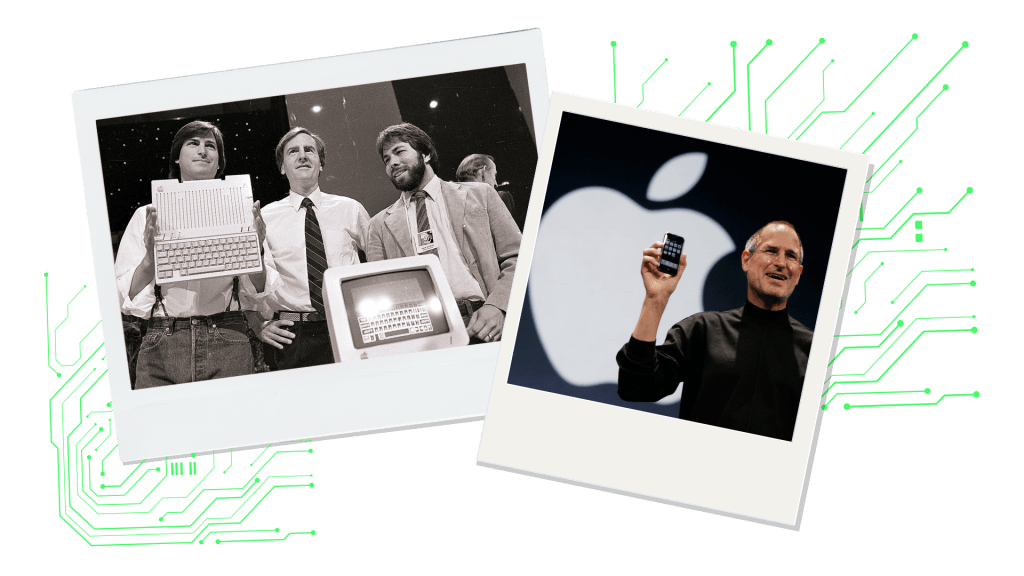
Steve Jobs (left), John Sculley, and Steve Wozniak unveil the new Apple IIc computer in San Francisco, April 24, 1984. Steve Jobs holds up the new iPhone during his keynote address at MacWorld Conference & Expo in San Francisco, Jan. 9, 2007.AP Photo/Sal Veder; AP Photo/Paul Sakuma
Changed what a computer is
Aidinoff: What Apple does is it fundamentally changes what a computer is. The idea that a computer is something that I’m going to carry around in my pocket with hundreds of thousands of times more computer than the Apollo Project, that’s something Apple does through a whole bunch of technical innovation along the way, but also through changing cultural expectations of what a computer would be, teaching users how to use computers in different ways.
There are distinct technological pieces that people will credit Apple for, things that are really exciting in terms of chip design or in terms of operationalizing the graphical user interface, but it’s the way they package it all together that matters.
Products as heroes
Avery: Apple is one of the pre-eminent examples of a company that does branding, brand storytelling, and marketing incredibly well.
They started with an underdog brand biography. They positioned themselves against everybody else, as the little guy, as the different guy, coming into the market to take on the behemoths that had ruled for a long time.
They talk about their products as heroes. They talk about the functionality and the usability of their products, but they’re not just selling functional value. They’re selling the emotional value of consumers interacting with their products. They’re selling what we call “ego-expressive” or “identity value” — that Apple products are for people who are different, who are more creative, who think differently.
What that means is when someone uses an Apple product, it makes them feel different than if they were using a PC or another brand’s products. It makes them feel more creative, different than others and able to think differently. Users believe the Apple story. They buy into it.
Sticking it to the Man
Aidinoff: There’s a historian at Stanford who tracks the way Apple, in particular, took leftist hippie counterculture and commercialized it and made a computer resonant with those cultural impulses and “Stick it to the Man” individualism.
It’s hard to overstate from our present how much computers were seen as calculating machines for the military. You literally had people in the ’60s bombing computer centers as an act of protest against The Man. And so, the idea that a computer would be a cool, fun thing to listen to Nirvana on — that’s really changing what it means.
Not like George Orwell’s ‘1984’
Avery: That Macintosh launch ad in 1984 goes down as one of the best ads ever shown on the Super Bowl, if not one of the best ads overall.
It crashed into the market, positioning Apple against the big guys, against the corporate mainstream, and against what was expected of professionals and showed people that there was a new choice, an innovative choice, a different choice. That was one of the big starting points for the brand’s trajectory.
The “Think Different” ad campaign featuring images of Gandhi and Einstein and other creative thinkers throughout history was another classic ad campaign that really cemented the image of the brand in people’s minds.
Trust the product
Aidinoff: Apple has taken privacy really seriously in the era of Facebook and where other companies are selling your data. They’ve decided it’s in their best interest to make you really trust the product. Who knows how that’ll change with their partnership with OpenAI — I’m quite worried it will.
But you think of the fights they had with Facebook about five years ago, where all the Apple ads were about “Unlike, Facebook, we’ll keep your data private.” That is another thing that really helps them in what could have been a turbulent time.
Look good, feel good
Avery: Steve Jobs never saw design as a gimmick. He saw aesthetics as an essential part of creating value.
In the product categories he was going into, the products all looked the same. They were boxy, they were black or gray, they just didn’t have a lot of aesthetic value.
He felt that a desktop computer, and eventually, a phone, was something that you were going to interact with all day long and so it was really important for it to have aesthetic value and to create an aesthetic connection.
He invested heavily in design. This is a brand that realized that function alone is not enough, but function plus aesthetic design can create an incredible connection with the consumer and an incredible sense of value for the product.
It’s been a key, central feature of the product from the beginning.
Not stores, communities
Avery: The Genius Bars were genius.
If you think about who Apple was trying to sell to in the early days, it was not corporate accounts. Corporate accounts were locked up by IBM, by Dell, and that type of selling relationship was moving online. Gateway computers was another brand doing a lot of online ordering. Apple was trying to sell to individuals, and individuals don’t have IT departments at their disposal.
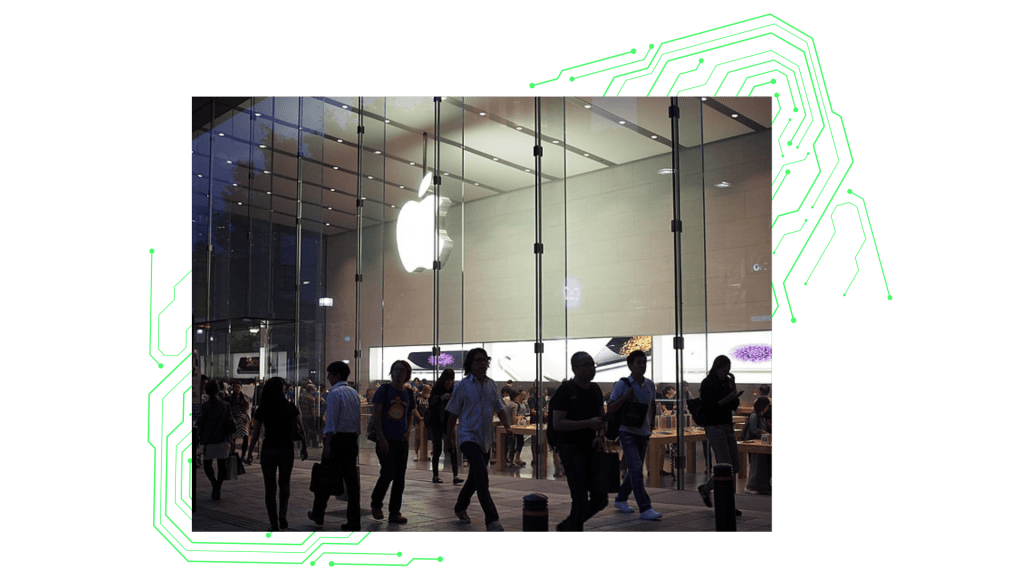
So, the fact that they established the Genius Bars and staffed them incredibly well allowed people to walk in and have their own IT department to help take away the friction of switching from a PC to a Mac or from non-Apple product to an Apple product.
The stores were visually beautiful spaces. They were more for display and aesthetics than for selling, particularly in the early days, and they created a community aspect to the stores themselves.
People would line up for three days before a new launch. That was all part of creating that brand value. The stores created event marketing and branding experiences for the brand, as well. The stores still feel like that.
Their own heroic comeback story
Yoffie: They almost went bankrupt midway through their journey.
In 1997, they were somewhere between three and six months away from bankruptcy, so it’s not as though it’s a picture of continuous success for its entire 50-year history, and they had to reinvent themselves between 1997 and 2007. That was really fundamental to their success.
In addition, it’s not just the products, but the complementary products and services that they built around their core products that have made them so successful.
So, it’s not just the iPhone; it’s the App Store. It’s not just having a phone in your pocket, but it’s the ability to connect it to your computer and to your AirPods and to the cloud and do it all in a seamless fashion. It’s been the ability to build out an extended set of complementary services and products that has made Apple such a powerful player.
A walled garden
Avery: The Apple ecosystem is the key to their business model — the hardware, the App Store, and everything else working together to create value for its customers, but also to extract value back to the company.
This is why Apple is so strict about app development and what gets included in the Apple store. Because it’s all building its ecosystem and keeping people in this walled garden of ecosystem. That’s a really important part of its monetization strategy.
Big challenges ahead
Yoffie: Cellphones are largely a replacement product. There aren’t that many people in the world buying new phones. What we’ve seen over, let’s say, the last 10 years, there’s been relatively little growth in its core business.
That’s a big challenge for Apple going forward. They’re trying to drive growth by creating services that complement the iPhone business, but it’s still fundamentally dependent on the iPhone.
The good news for Apple is that it does have only in the neighborhood of 20 percent to 22 percent world market share for cellular phones, so it does have an opportunity to take more share away from Android and from other products assuming they find a way to address markets around the world that are a little bit more price-sensitive than in the United States, Europe, and Japan.
But Apple needs to make some adjustments in order to do that.
Today in 1849, hundreds of starving men, women, and children set out on a harrowing overnight death march from Louisburgh, Co. Mayo, to Delphi Lodge, a hunting retreat nestled deep in the mountains. They had no choice.
Two government officials had arrived in Louisburgh to determine whether famine relief, an essential lifeline of grain, would continue for the destitute. Yet, without conducting an inspection, the officials departed for Delphi, ordering the desperate crowds to follow. Their names were Captain Primrose and Colonel Hogrove. The people were given a deadline. Present themselves at Delphi Lodge by seven o’clock the following morning, or be struck off the relief list entirely. A timed ultimatum, dressed up as procedure.
In the darkness, hundreds of emaciated people, described as “living skeletons”, struggled through the treacherous Doolough Valley. The brutal wind and rain showed no mercy. Some were found afterwards with grass still in their mouths, eaten in a final, desperate attempt to keep moving. By morning, at least 16 lay dead along the roadside, their bodies abandoned to the elements. Among them was a woman named Dalton, found lifeless with her son and daughter. Two unnamed men, who perished just a mile from Louisburgh, were left exposed for days, prey for dogs and ravens. Those who survived the march and reached Delphi Lodge were told the officials could not be disturbed. They were at lunch.
When the meeting eventually took place, the people were sent away with nothing. The whole affair might have been quietly buried in that mountain pass, forgotten like the dead, were it not for a letter published in the Mayo Constitution, signed only as “A Ratepayer.” The local relieving officer, Michael Carroll, was later dismissed. His books were not in order, which was offered as the official explanation for why no inspection ever took place at Louisburgh. Carroll lost his job. Primrose and Hogrove kept theirs.
The Doolough Tragedy became a searing symbol of government neglect and cruelty during the Great Famine. A memorial stone near the lake now stands as a solemn reminder, etched with the haunting words: “How can men feel themselves honoured by the humiliation of their fellow beings?” From 1988 onwards, the harrowing inhumanity has been remembered with an annual Famine Walk, retracing the desperate route of those who perished.
Figures such as Archbishop Desmond Tutu and Waylon Gary White Deer of the Choctaw Nation have walked in solidarity. Their nation donated to Irish Famine relief in 1847, having survived the Trail of Tears themselves just years before.
In 2013, Delphi Lodge, once the site of such inhuman indifference, finally acknowledged its past. For the first time, it welcomed the walk onto its 1,000-acre estate, stating: “By opening our gates to the Afri Famine Walk, Delphi Lodge is acknowledging our part in what happened in 1849, instead of ignoring it.” Today, a Famine Exhibition Centre in Louisburgh tells the full story. Support the DTM Book https://ko-fi.com/buchanandublintimemachine
Atheist, freethinker; exposing Islam layer by layer, to let infidels know more about Islam than Muslims allow them to. “Am Yisrael Chai”
It was Christmas Eve, 1969.
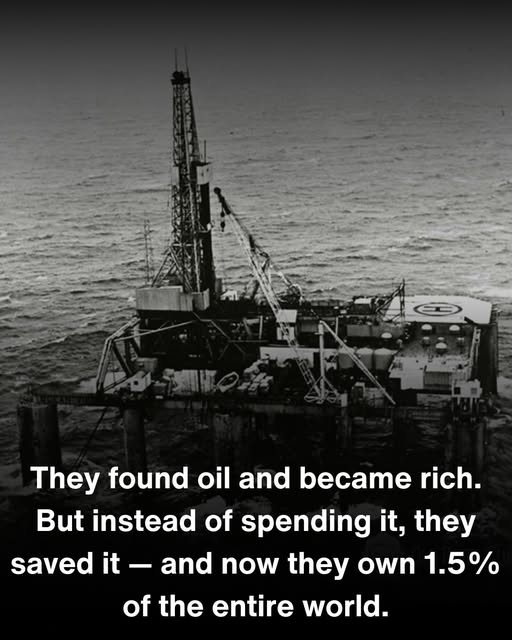
Deep beneath the North Sea, off the coast of Norway, drillers from an American oil company hit something extraordinary. The Ekofisk field — one of the largest offshore oil deposits ever discovered — had just been found. A small, quiet Scandinavian nation of fishermen and farmers was about to become unimaginably wealthy.
What happened next is either the greatest financial decision in history, or the most boring story ever told. Depending on how you look at it. Because Norway did almost nothing.
At least, that’s how it looked on the surface. They didn’t throw parties. They didn’t build palaces. They didn’t hand out checks. While oil money began pouring in, Norwegian politicians did something almost no government in history has been able to do: they resisted.
They watched what happened to Nigeria. To Venezuela. To Libya. Countries that struck oil and celebrated — and then, slowly, collapsed. Corruption. Inflation. Inequality. The “resource curse,” economists called it. Easy money that destroys the very fabric of a nation.
Norway decided to build a wall between the oil money and themselves.
In 1990, the Norwegian Parliament passed a law creating the Government Petroleum Fund — what the world now calls the Oil Fund. The rules were almost painfully simple: every krone of oil profit goes into the fund. It gets invested globally. The government can only spend a small percentage of the returns each year. The rest stays. Forever.
The first deposit came in 1996. A modest amount. Almost symbolic.
Then they did something even harder than creating the rule. They kept it.
Year after year, election after election, crisis after crisis — politicians who promised to raid the fund lost. Politicians who protected it won. For three decades, across governments of every political stripe, one principle held: this money belongs to Norwegians who haven’t been born yet.
The fund bought small stakes in thousands of companies around the world. Apple. Microsoft. Amazon. Real estate in Manhattan, London, Paris, Tokyo. It didn’t gamble. It didn’t chase hot trends. It simply bought a piece of the global economy — and waited.
The waiting paid off in ways no one predicted. Today, Norway’s Oil Fund holds nearly $2 trillion in assets. For a country of just 5.6 million people, that’s roughly $340,000 for every single citizen — man, woman, and child. No checks are written. The money belongs to future generations as much as the present one.
Here’s the part that stops people cold: more than half of that wealth didn’t come from oil at all. It came from investment returns. The fund now earns more from its global portfolio than Norway makes pumping oil out of the ground.
They turned a finite resource into infinite returns. And here is what Norway quietly did while the world wasn’t watching: they now own approximately 1.5% of every publicly traded company on Earth. Every time a major global business makes a profit — a tiny fraction finds its way back to Norway’s children.
The oil will run out someday. Geologists estimate 30 to 50 years, maybe more. It doesn’t matter. By then, the fund will be so large that its investment returns alone will fund Norwegian healthcare, education, and pensions — perhaps forever.
Norway didn’t discover more oil than anyone else. It wasn’t smarter geology or better technology. It was one thing: the courage to say no.
No to easy money. No to short-term thinking. No to the politicians who swore they’d only spend it “just this once.” No to a generation that could have lived richer — at the expense of every generation that followed. Most countries can’t do it. Most people can’t do it. We’re wired for now, not for later.
Norway looked at human nature — greedy, impatient, shortsighted — and built a system specifically designed to defeat it. In 1969, they found oil. In 1990, they built the fund. In 1996, they made the first deposit. Today, they own a piece of the world.
And the Norwegians who made that decision in 1990? Most of them are gone now. They never saw the trillion-dollar result. They built it for strangers — for grandchildren who wouldn’t be born for decades.

 Axios AM: Warfare’s new era

 Happy Tuesday! Smart Brevity™ count: 1,909 words … 7 mins. Thanks to Noah Bressner for orchestrating. Edited by Andrew Pantazi and Bill Kole.
 Photo illustration: Aïda Amer/Axios. Photo: Andrew Harnik/Getty Images


 Menu
Menu Search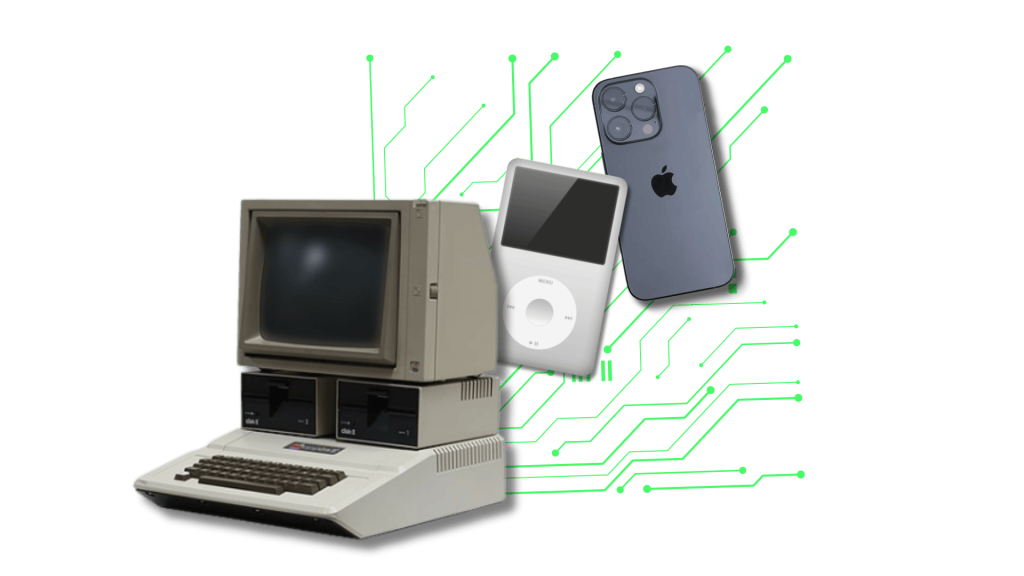
 canisgallicus