
A New Peptide Could Help Fight Alzheimer’s by Targeting Harmful Brain Plaques.
What if a tiny molecule could help stop one of the most troubling processes linked to Alzheimer’s disease?
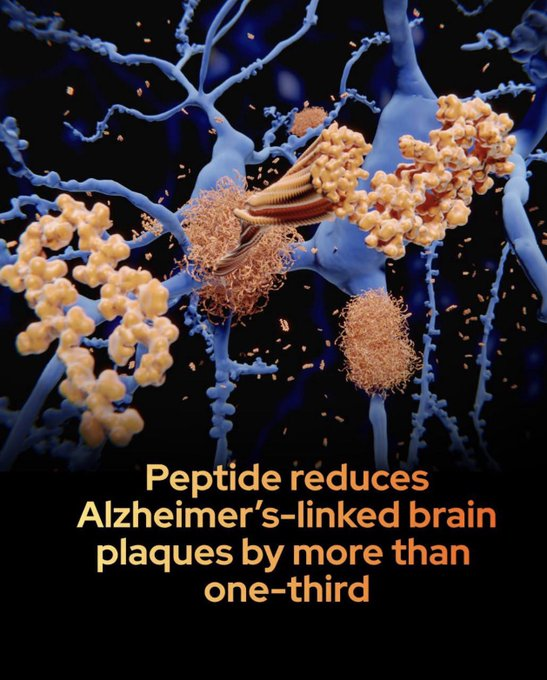
Scientists are exploring a promising new approach that targets the protein buildup found in the brains of people affected by this devastating condition. The focus is on amyloid-beta, a protein that can accumulate in the brain and form sticky deposits called plaques. These plaques are a key feature of Alzheimer’s disease and are associated with damage to brain cells and declining memory.
However, scientists are still investigating exactly how these plaques contribute to the disease and why some people develop symptoms while others do not. Researchers are now investigating engineered peptides, which are small chains of amino acids designed to interact with specific proteins. The goal is to interfere with the molecular processes that cause amyloid-beta to clump together, potentially reducing harmful protein buildup in the brain.
If this approach proves successful in further studies, it could help scientists develop more targeted treatments for Alzheimer’s disease. The biggest challenge is determining whether reducing these plaques can meaningfully preserve memory, slow cognitive decline, and improve patients’ quality of life. But there is an important distinction: a reduction in brain plaques does not automatically mean that memory loss can be reversed or that Alzheimer’s disease has been cured.
Researchers must establish how well the treatment works, how safe it is, and whether the benefits last over time. For millions of people living with Alzheimer’s, and for the families caring for them, research into new ways of targeting harmful proteins offers another reason to keep looking for better treatments. The ultimate goal is not simply to remove plaques from the brain. It is to protect the brain’s ability to function and help people retain their memories for as long as possible. Source: Kopylov, A. T., Kozin, S. A., & Archakov, A. I. (2026). Beyond Alzheimer’s story: How an engineered molecule gained an endogenous essence. PNAS Nexus.
·


