
Tinnitus answer may be found in our blood
By Mike McRae
October 07, 2026
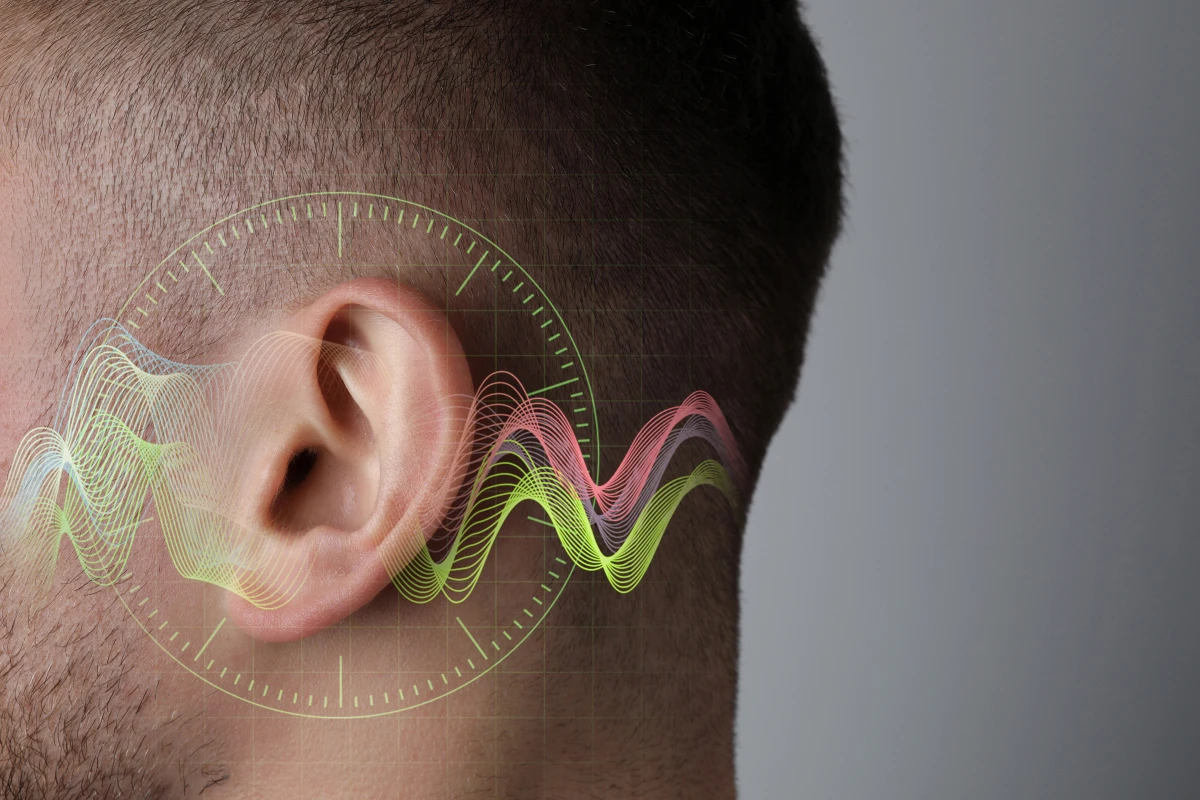
Biomarkers could make addressing tinnitus faster and easier
View 2 Images
For the 14% of us living with tinnitus, the persistent ringing inside our heads is impossible for anybody else to hear. Or measure. A new study suggests a blood test for an inner-ear protein could provide a sign of the condition that anybody can detect and then act on.
Researchers at the University of Connecticut found that people with chronic tinnitus had significantly higher blood levels of a protein called prestin than people without tinnitus.
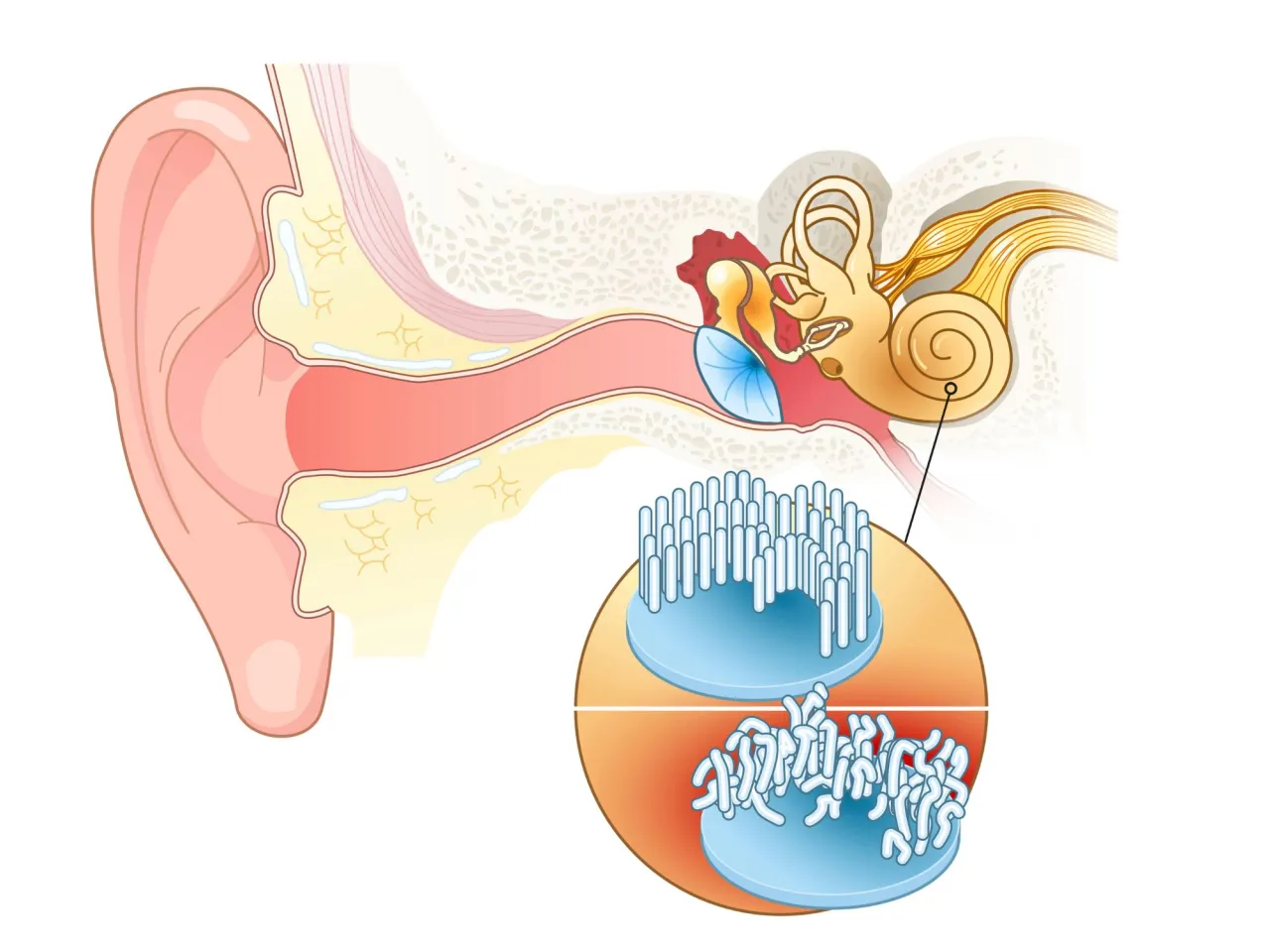
The finding adds to evidence that a dysfunctional cochlea – the snail-shaped structure in the inner ear – could play a role in at least some cases of tinnitus, and raises the potential of using prestin as a biomarker for the frustrating condition.
“Our work now says there is promise in using prestin as a biomarker for tinnitus. This is our first step to developing drugs to help manage tinnitus,” says University of Connecticut otologist, Kourosh Parham.
Prestin is a protein found in specialised hair cells that amplify sound vibrations within the cochlea, helping to fine-tune our hearing. These cells change length in response to sound, with prestin acting as a kind of molecular motor in their membranes.
Previous research has shown that prestin can enter the bloodstream and that blood levels can change in response to damage or stress affecting the inner ear. Parham and his colleagues wondered whether tinnitus might also be reflected in circulating prestin.
Their recently published study involved 82 people: 41 with chronic, bilateral, non-pulsatile tinnitus, and 41 controls without a history of the condition.
Participants underwent hearing tests and wore noise dosimeters for a week to measure their daily sound exposure before providing blood samples. The researchers measured prestin alongside three other proteins associated with the inner ear: otoferlin, connexin 26, and stereocilin.
Prestin was the only protein that clearly distinguished the tinnitus group from the controls.
Average blood prestin concentrations were tiny – a mere 330 picograms per milliliter higher in samples from people with tinnitus. Yet once the researchers accounted for differences in factors such as age, hearing ability, and daily noise exposure, the difference was significant enough to serve as an objective clue.
The researchers also found that prestin levels were higher among tinnitus participants whose hearing thresholds were similar to those of the control group, suggesting the result wasn’t simply a consequence of hearing loss.
Before you bug your doctor for a blood test, the method wasn’t accurate enough to be as reliable as we’d like for a diagnosis. Prestin levels also didn’t rise with the severity of people’s symptoms. Most participants had relatively mild tinnitus, with a typical symptom score in the mild range of 24 out of a top “catastrophic” score of 78 to 100.
There is also an important question concerning exactly where the prestin in the blood originates. While it is strongly associated with the inner ear, the protein isn’t exclusive to the organ and has also been detected in other tissues, including the heart.
The researchers say the findings therefore don’t prove that tinnitus originates in the cochlea. Tinnitus can involve both peripheral mechanisms in the ear and changes within the central auditory system, and the study could not distinguish between these possibilities.
Still, the results provide another piece of evidence linking outer hair cell function with tinnitus.
They also add to findings from an earlier study by the same group, which found elevated levels of a particular form of serum prestin in 49 people with chronic tinnitus compared with 40 controls. That study used a different technique to measure the protein.
Taken together, the researchers say the results provide proof of concept for prestin as a tinnitus biomarker.
“We now have proof-of-concept that an ear protein may play a central role in the development and management of tinnitus,” says Parham.
Larger studies will be needed to establish whether the test can reliably identify tinnitus, distinguish different forms of the condition, or eventually help doctors determine which treatments are most likely to work.
For a condition that doctors currently have to assess largely through what patients report hearing, however, even an imperfect biological signal could prove valuable.
This research was published in the journal Otolaryngology – Head and Neck Surgery
Source: UConn Health
We recommend
- MLL1 downregulation drives hair cell ferroptosis via mitochondrial and endoplasmic reticulum stress mechanisms through PERK–eIF2α–Atf4–Chop and PI3K/Akt–Lrp1 si…(opens in new tab)Chang Liu, Siyu Qiu, Wen Li, et al., Chinese Medical Journal, 2025
- Activation and inhibition of Notch signaling facilitate proliferative regeneration of sensory cells in adult mice(opens in new tab)Shan Zeng, Tao Jiang, Zheng‐Yi Chen, et al., Eye & ENT Research, 2025
- Hearing loss and pathological changes of cochlea in a mouse model carrying compound heterozygous variants in the Gjb2 non‐coding region(opens in new tab)Xinyu Shi, Xiaozhou Liu, Zhengdong Zhao, et al., Eye & ENT Research, 2025
- Investigating the mechanisms of capsicum in age‐related hearing loss: Based on network pharmacology(opens in new tab)Yan Wang, Xiao-Yu Song, Fengxin Yang, et al., Eye & ENT Research, 2025
- Differences in auditory mismatch negativity and global functional connectivity caused by interaural time differences(opens in new tab)Songjian Wang, Chunlin Li, Mengyue Wang, et al., Eye & ENT Research, 2025
- An Update on the Current Practice on the Management of Fungal Necrotizing Otitis Externa: A Systematic Analysis of the Literature(opens in new tab)Mohammed A. Elkrim Saad Mohammed, Syed Zohaib Maroof Hussain, Syed Salman Hashmi, et al., Eye & ENT Research, 2026


