
ScienceGlobal issues
Tuana Bildircin 09/20/2026 September 20, 2026
Scientists are turning nutrients from urine, poop, and sewage into fertilizers. This process could help make farming more circular and sustainable.
Every year, huge amounts of valuable nutrients are flushed down our toilets. Yet farmers depend on many of those same nutrients, including nitrogen, phosphorus, and potassium, to grow food.
At the same time, Europe continues to rely heavily on mineral fertilizers, even as fertilizer prices have risen sharply in recent years.
So why do we go to such lengths to produce and mine nutrients for food, only to flush some of them away afterward?
Recovering nutrients from urine, feces and sewage
Around the world, researchers are developing technologies to turn human waste into fertilizer.
In Sweden, researchers have developed toilets that separate urine from other waste at the source. The collected urine can then be stabilized and dried into a concentrated fertilizer product that is easier for farmers to transport and use.
Similar ideas are being tested elsewhere.
Human feces can also be turned into fertilizer. On an organic farm in Mexico, feces from dry toilets is mixed with materials such as straw and composted for several months. High temperatures during composting help destroy pathogens, leaving behind a soil-like fertilizer that can be used to grow vegetables.
At Germany’s Emscher Mündung wastewater treatment plant, the SUSKULT project is testing how nitrogen, phosphorus and potassium can be recovered from wastewater and turned into liquid fertilizer.
Around 1,000 liters (some 260 gallons) of wastewater flow through the plant every second. Researchers estimate that recovering just 10% of its nutrient potential could provide enough nutrients to grow around 3% of the tomatoes Germany consumes in a year.
Together, these projects show how human waste could help recycle valuable resources and support a more circular food system.Skip next section Explore more
Explore more

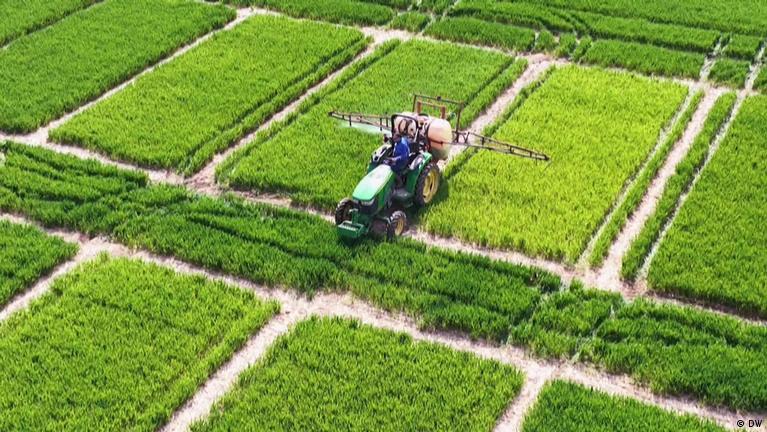
Using urine as a crop fertilizer
Nature and Environment05/27/2022May 27, 202203:24 minSkip next section Similar stories


