

US President Donald Trump. Photo Credit: POTUS, X
Trump Is Picking A Needless Fight Over The Falklands – Analysis
By Arab News
FacebookTwitterEmailFlipboardMastodonLinkedInShare
Video Muted
By Luke Coffey
Key Takeaways:
- The author says a new U.S.–UK rift is forming after President Trump said Washington is reviewing its Falklands stance, amid reports of U.S. pique over British help in the Iran war. Britain claims the islands; Argentina calls them occupied. About 3,600 residents want to stay British.
- The piece calls the “lack of help” charge hollow: U.S. use of Gibraltar, Cyprus, Diego Garcia and RAF Fairford, plus UK forces shielding Gulf states from Iranian missiles and drones. Churchill’s 1946 base-sharing idea is invoked as the special-relationship core.
- History is secondary to 2013: 92% turnout, 99.8% to remain British, observers present. Continuous UK rule since 1833 except 74 days in 1982. Author: a U.S. flip would anger a close ally, weaken South Atlantic deterrence, and ignore self-rule—the principle America was founded on. Leave the status quo.
Another crisis is brewing in the transatlantic relationship, this time between the US and the UK over the status of the Falkland Islands.
The Falklands are one of 14 British Overseas Territories and are located in the South Atlantic, about 500 km off the coast of South America. Britain has long claimed sovereignty over the islands, based on historical precedent and, more importantly, the fact that their roughly 3,600 inhabitants overwhelmingly want to remain British. Argentina, meanwhile, claims the islands as its own and regards Britain as an occupying power.
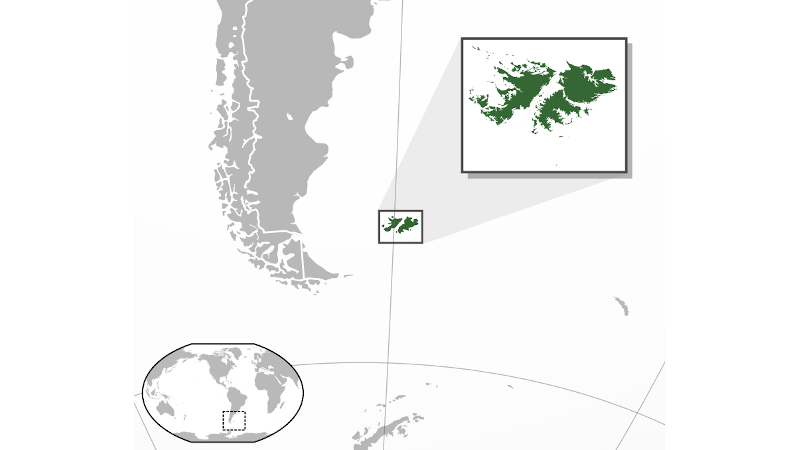
The US has traditionally sympathized with the British, even providing crucial support to the UK after Argentina invaded and occupied the islands for 74 days in 1982. President Donald Trump has now said that his administration is reviewing America’s position, following earlier reports about Washington’s frustration over Britain’s perceived lack of support during the war against Iran.
The timing is puzzling. There is already enough tension in the transatlantic community over the US interest in Greenland and the trade dispute with the EU. Injecting another unnecessary crisis into an already fraught relationship makes little sense, especially when the transatlantic community needs unity and cohesion.
More importantly, it is difficult to understand the claim that the UK has failed to provide meaningful assistance during US military operations against Iran.
Britain has allowed the US to use its bases and overseas territories in support of the recent Iran operations. For example, Gibraltar hosted a US nuclear submarine visit during the conflict. At the time it was thought that this was done to signal a message to Tehran. The US has also long used British bases in Cyprus for intelligence gathering. Most importantly, the US was allowed to use Diego Garcia in the Indian Ocean to conduct bombing runs into Iran.
The UK has also allowed the US to use RAF Fairford for operations connected to Iran. British forces have played an important role across the region defending countries including Saudi Arabia, Bahrain, the UAE, Qatar, and Jordan against Iranian missiles and drones.
The American use of British bases is particularly significant because military cooperation has been one of the foundations of the US-UK special relationship for generations. During his famous 1946 “Iron Curtain” speech in Fulton, Missouri, Winston Churchill described the close military links that should underpin the relationship between the two countries, including the use of each other’s military bases around the globe.
Therefore, it seems particularly hypocritical for the Trump administration to rely on British bases and overseas territories during its military operations against Iran, while simultaneously questioning British control over another overseas territory in the South Atlantic.
History also makes a compelling case for the British position.
The first recorded siting of the Falkland Islands was made by an English sailor in 1690. At the time, the islands were uninhabited, and there is no historical or archaeological evidence that an indigenous population had previously lived there.
Britain made its first formal claim to the islands in 1765 and maintained settlements there sporadically during the following decades. In 1833, a British force arrived and removed an Argentine military penal colony that established itself on one of the Falkland’s 776 islands. Even though the soldiers were expelled, civilians were allowed to remain — and most did.
The islands have been under continuous British administration since 1833, with the exception of 74 days in 1982 during the war.
But however interesting the historical claims might be, the history is secondary to the wishes of the people who actually live on the islands.
In 2013, Falkland islanders held a referendum on their status. Turnout was 92 percent, and 99.8 percent voted to remain a British Overseas Territory. Only three people voted against. The referendum was overseen by international observers, even from Latin America, and was considered free and fair.
What matters most is not the opinion in London, Washington or Buenos Aires, but the opinion in Stanley, the territory’s capital. For as long as the Falkland islanders want to remain British their wishes should be respected.
The Falkland Islands are also a very emotive political issue in the UK. Support for the islanders’ right to remain British stretches across almost the entire British political spectrum. Picking a fight with London over the islands would therefore needlessly create a crisis with one of America’s closest allies.
Even viewed narrowly through the lens of American interests, changing the US position makes little sense. There is also a straightforward strategic argument for maintaining the status quo. The Trump administration has proposed stability and security in the western hemisphere. British control over the islands does just that. With the British presence, there is no immediate threat of armed conflict due to the UK’s military presence on the islands deterring Argentine aggression. There is also no civil unrest or oppressed population there demanding political change. If Argentina gained control, this would not be the case.
The US was founded on the principle that people should have a say in how they are governed. Applying that principle to the Falkland Islands is a no-brainer. If the islanders want to remain British, Washington should respect their decision.
At a moment when the US needs dependable allies, picking an unnecessary fight with the UK over the Falklands would accomplish nothing. America should support the wishes of the islanders and recognize British control of the territory. This is the best way to maintain stability in the South Atlantic and the western hemisphere.
Now is not the time to create a problem where none exists.
- Luke Coffey is a senior fellow at the Hudson Institute. X: @LukeDCoffey

About Arab News
Arab News is Saudi Arabia’s first English-language newspaper. It was founded in 1975 by Hisham and Mohammed Ali Hafiz. Today, it is one of 29 publications produced by Saudi Research & Publishing Company (SRPC), a subsidiary of Saudi Research & Marketing Group (SRMG).
Get the Eurasia Review newsletter
Selected analysis, news, and opinion delivered by email.First name or full nameEmail By continuing, you accept the privacy policy
Like what you read?
Please consider supporting Eurasia Review. Thank you for your consideration!
Leave a Reply
Your email address will not be published. Required fields are marked *
Comment *
Name *
Email *
Website

Organized Crime Turns Legitimate Cargo Into Chemical Pipeline For Narcotics – Analysis
By Julieta Pelcastre Key Takeaways: Transnational criminal organizations are refining methods to conceal drugs within legitimate commercial cargo. The discovery

Mecca Accord And India’s Energy Security – Analysis

Why Australian Politics Is Shifting Right, Not Left – Analysis

Tough Times Ahead For Nepal In Wake Of Recent Disaster – Analysis
asde on Great Power Competition In The Caribbean And South Pacific Islands – AnalysisSeptember 5, 2026″After 45 years of relations with Taiwan, what does SVG have to show? St. Vincent and the Grenadines’ debt is…
 Patial RC on Indus Water Treaty: Talking Peace, Threatening War – OpEdSeptember 3, 2026Wonder what will happen if New Delhi applies to be part of the Mecca Joint Defense Agreement of August ,7…
Pete frank on Three Priorities For COP17 Land Degradation Talks – AnalysisAugust 26, 2026The call to shift from reactive drought response to proactive risk management is particularly important. But COP17 should also pay…
Jama Jawjawle on Three Men Who Shaped Modern Somalia And A Selective Memory Of Its Sultanates: Which Way Should Puntland Go? – AnalysisAugust 26, 2026I think we have left a great statesman Abdirashid Ali Sharmarke, the first prime minister and later the president of…
- Patial RC on The Indus Waters Treaty: India-Pakistan Tensions Persist – AnalysisAugust 26, 2026YES, Pakistan calls the water a “red line,” having made it red by Indian blood. India sees No strategic or…
Subscribe to Eurasia Review
Get selected analysis, news, and opinion by email. By continuing, you accept the privacy policy
Copyright Eurasia Review. (ISSN 2330-717X) All rights are reserved.Privacy Policy And Terms Of Use


