
Russia Now Using Fully AI-Controlled Drones to Kill Ukrainian Civilians, Powered by Nvidia Chips
Russia Now Using Fully AI-Controlled Drones to Kill Ukrainian Civilians, Powered by Nvidia Chips
“In a few years, we will be living in a ‘Terminator’ movie. It’s no joke. Machines are making decisions to strike.”
Published Aug 28, 2026 11:47 AM EDT
Add Futurism(opens in a new tab)More information
Sign up to see the future, today
Can’t-miss innovations from the bleeding edge of science and tech Email address Sign Up
In a joint statement earlier this week, United Nations chief António Guterres and Red Cross president Mirjana Spoljaric Egger sent out an urgent message.
“We are now dangerously close to crossing a moral red line: the autonomous targeting of humans by machines,” they said.
But while international humanitarian law strictly forbids targeting civilians and civilian infrastructure, Russia is reportedly already using AI-controlled drones to kill innocent people in Ukraine.
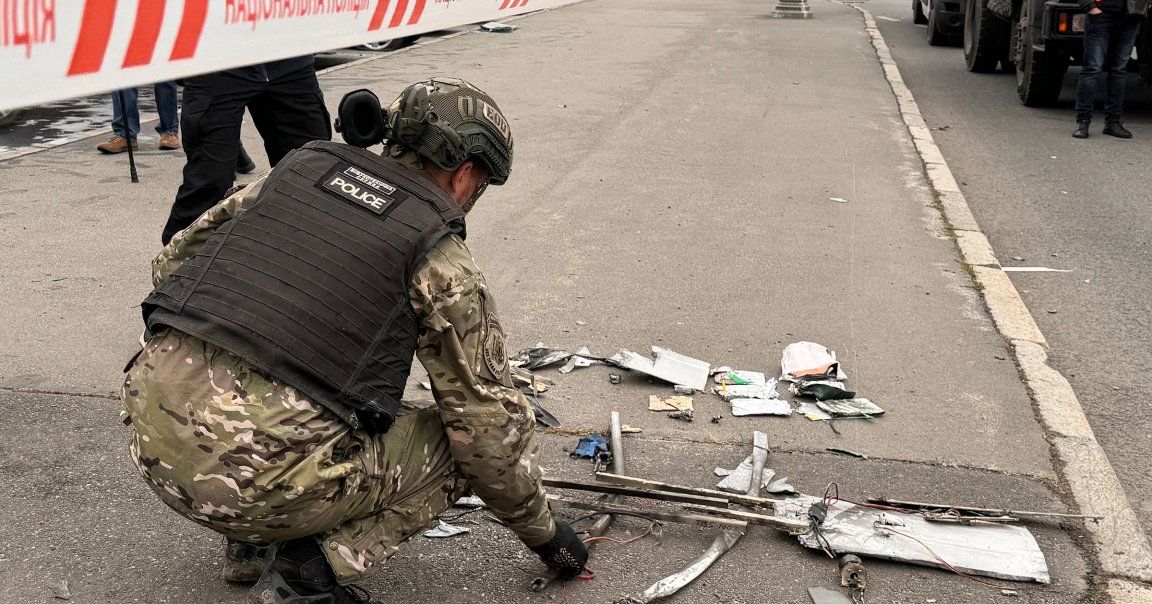
Ukrainian military commanders and forensics experts told the New York Times that fully autonomous Russian drones, piloted by an experimental AI system, are targeting civilians back on the ground in Zaporizhzhia, a city in southeastern Ukraine. One such drone was able to pick out its exact target — propane tanks near a gas station — and strike them.
The implications of autonomous machine-guided deadly weapons being used on the battlefield are dire.
“This is a risk for the whole world,” Zaporizhzhia air defenses commander Serhiy Minaiev told the NYT. “In a few years, we will be living in a ‘Terminator’ movie. It’s no joke. Machines are making decisions to strike.”
Forensic experts recovered onboard minicomputers, developed by AI chipmaker Nvidia, that allowed the drones to identify their own targets. The AI chip modules, known as Jetson Orin, are intended to be used by robotics students and for space computing applications.
The drones didn’t have any antennas and didn’t emit any radio frequencies, ruling out they were piloted from Russian soldiers remotely, the military officials said. While the NYT points out that the absence of an antenna doesn’t in itself prove the drones are entirely being steered by an AI, a more conventional auto-piloting system wouldn’t require an Nvidia AI chip.
The autonomous drones use AI-guided camera systems to recognize possible targets, a step up over existing “last mile” AI-assisted drones that use the tech to home in on targets pre-selected by remote human pilots.
The ethical implications of having these machine learning algorithm-targeting drones — or “killer robots” — target civilians without any human intervention at all are dire, a practice that has long been decried by international rights groups, including the UN and the Red Cross.
“States must show political courage and move beyond incremental discussions towards decisive action,” the two organizations said in their recent joint statement. “Innovation must serve humanity — not endanger it.”
More on killer drones: Russia May Have Used Terrifying AI-Powered “Suicide Drones” in Ukraine
Add Futurism as a preferred source on Google to see more of our reporting.

Victor Tangermann
Senior Editor
I’m a senior editor at Futurism, where I edit and write about NASA and the private space sector, as well as topics ranging from SETI and artificial intelligence to tech and medical policy.


