Did you know the IRA went on the rampage against moneylenders, and got accused of anti-Semitism by the Dublin Jewish community? In the summer of 1926, armed volunteers turned up at the doors of known “Usurers”. Usury is giving loans charging high or illegal interest rates. The IRA demanded these moneylenders hand over their ledgers and account books.
Fiona Plunkett was one of those IRA members convicted. She was jailed for her part in a raid on Edward Levi’s home, where three volunteers demanded he hand over his books at gunpoint. An Phoblacht characterised the campaign as a kind of moral crusade, confiscating the tools of financial exploitation. But this type of action wasnt actually dealing with the poverty and institutional problems behind it.
The reality was Dublin’s tenement poor had nowhere else to turn for credit, despite the fact these moneylenders charged interest that could bury a family for a decade over the price of a coat or a coffin. Thats what needed to be addressed, creating a fair and sustainable societal system for the emerging Free State. A large number of moneylenders in Dublin at the time were Jewish. The IRA denied it was anti-Semitic and insisted this was purely about protecting the poor from usury, regardless of who was doing the lending. Not everyone believed them.
In 1926 Ireland’s Jewish population was about 3,686 people, and the overwhelming majority lived in Dublin. This Jewish community was concentrated around Clanbrassil Street, Portobello and the neighnourhood was fondly known as “Little Jerusalem”. Most of these people were descendents of immigrants from Lithuania and Russia. Relatively prosperous families of Litvak origin became heavily involved in moneylending and pawnbroking. They gave rise to the colloquial Dublin term “Jewman”.
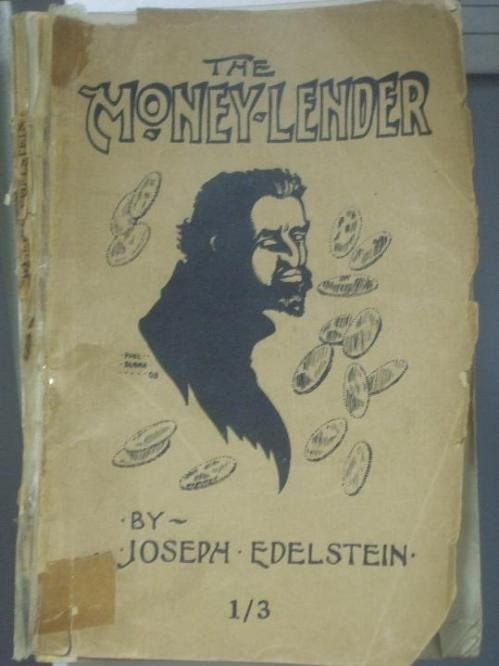
Irish Jewish author Joseph Edelsteins novel “The Moneylender”, published in 1908, is set in Dublin’s Portobello district. It’s about a Jewish immigrant who flees Russian pogroms and becomes a ruthless moneylender in Ireland to exact revenge on Gentile society for his family’s past suffering. The book sparked considerable backlash within Dublin’s Jewish community. Obviously Jewish people werent the only moneylenders operating in Dublin and likewise Jewish Dubliners worked and participated in every aspect of society in the city, including medical and retail and commercial businesses.
The Mushatt Brothers of Francis Street are a great example. They single handedly provided affordable medical and community care for generations, which we`ve previously visited in the DTM. And of course theres patriotic families like the Briscoes, especially Robert Briscoe who was a hero of the War of Independence and made history as the first Jewish Lord Mayor of Dublin in 1956.
The whole IRA anti-moneylending campaign just fizzled out a few weeks later, when priests and community liased between the targetted moneylenders and the Volunteers. Sadly the extortionate enslavement of extortionate usury continued to prey on working class Dubliners. For more on what people, predominantly desperate mammies, had to do to make ends meet and put food on the table, check out some other DTM trips, including loan sharks.