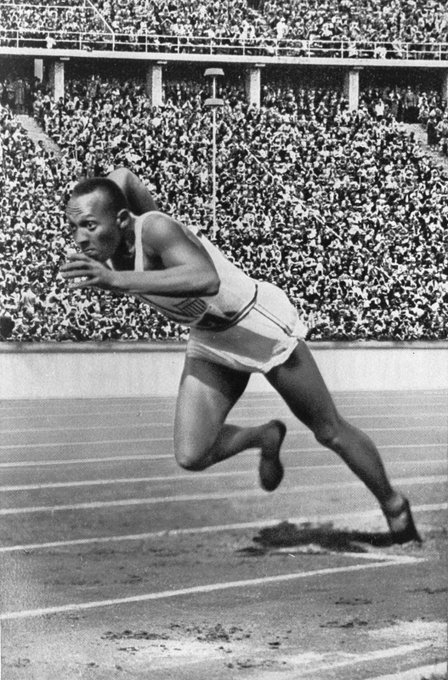
At the 1936 Summer Olympics in Berlin, Jesse Owens accomplished one of the greatest feats in sports history. Competing in front of Adolf Hitler and a Nazi regime intent on using the Games to promote theories of racial superiority, the 22-year-old African American track star shattered records and captured four gold medals, in the 100m, 200m, long jump, and 4x100m relay.
His triumphant performance made him an international icon overnight and delivered a resounding refutation to Nazi propaganda on the world stage. However, the hero’s welcome Owens deserved was cut short by the harsh realities of Jim Crow-era America. Upon returning home, he faced systemic racism and financial hardship instead of prosperity. President Franklin D. Roosevelt, eager to retain Southern white voters during an election year, famously never invited Owens to the White House or sent a congratulatory telegram.
Furthermore, when Owens tried to pursue commercial opportunities to capitalize on his success, the Amateur Athletic Union (AAU) stripped him of his amateur status for refusing to participate in an unpaid tour in Sweden. Denied the lucrative endorsement deals typically afforded to white champions, Owens found his competitive career abruptly ended.
To support his family, Owens had to take whatever employment was available, working as a gas station attendant, a playground janitor, and a dry-cleaning manager. He even resorted to running in stunt races against dogs, motorcycles, and racehorses for cash prizes to pay his bills. Responding to critics who called these exhibition races degrading for a world champion, Owens famously pointed out, “People said it was degrading for an Olympic champion to run against a horse, but what was I supposed to do? You can’t eat four gold medals.”
Owens eventually built a successful career as a public speaker and corporate representative, and in 1976, President Gerald Ford awarded him the Presidential Medal of Freedom, giving him the national honor he had been denied 40 years prior.
Despite his world-record performances on the track, one of the most overlooked aspects of Jesse Owens’ legacy is his quiet mentorship of young athletes and his role as a diplomatic envoy during the Cold War.
In the 1950s, the U.S. State Department appointed Owens as a “Goodwill Ambassador,” sending him to countries like India and the Philippines to conduct track clinics and promote American values abroad. Beneath his public stature, however, Owens was a devout family man who spent countless hours writing encouraging, detailed letters to young fans and aspiring athletes across the globe, often personally funding track equipment for promising kids from low-income neighborhoods who wrote to him asking for help. #archaeohistories