
World’s first hotel entirely staffed by robots to open in 2027
June 26, 2026
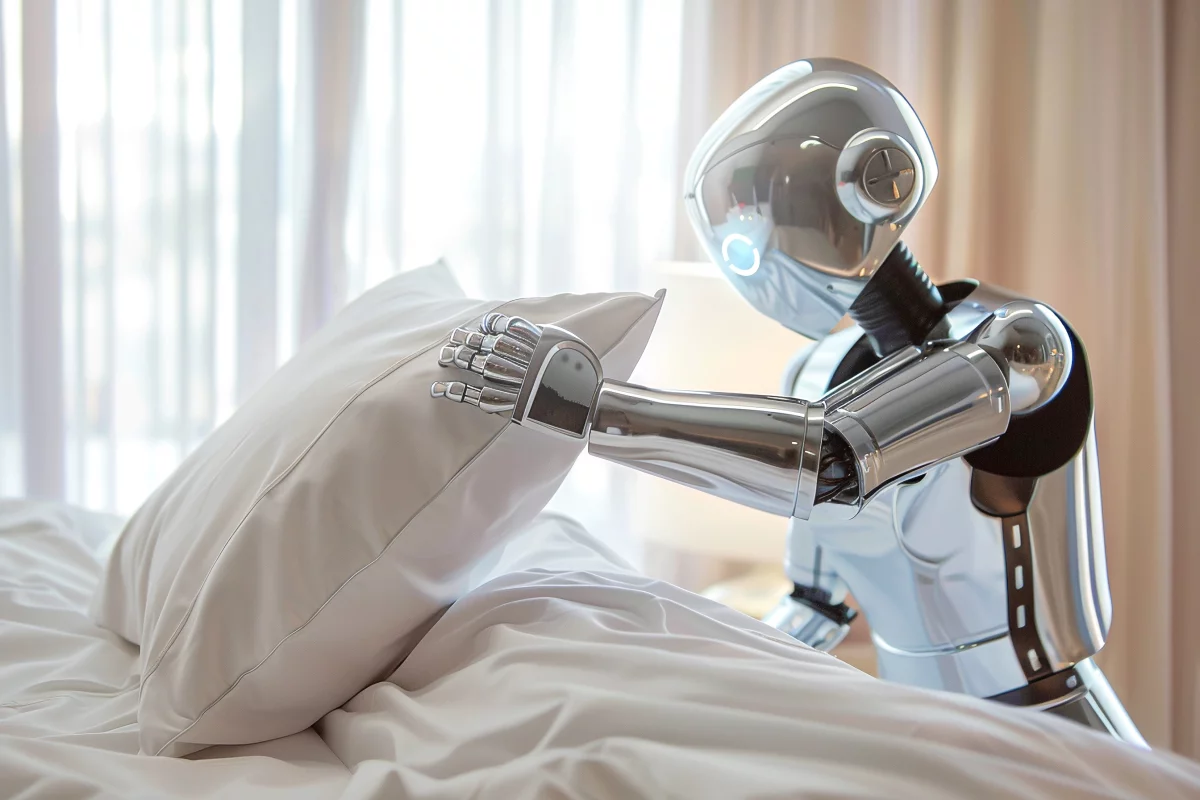
Robots will be tasked with running an entire hotel, with trials starting in a few months
View 3 ImagesView gallery – 3 images
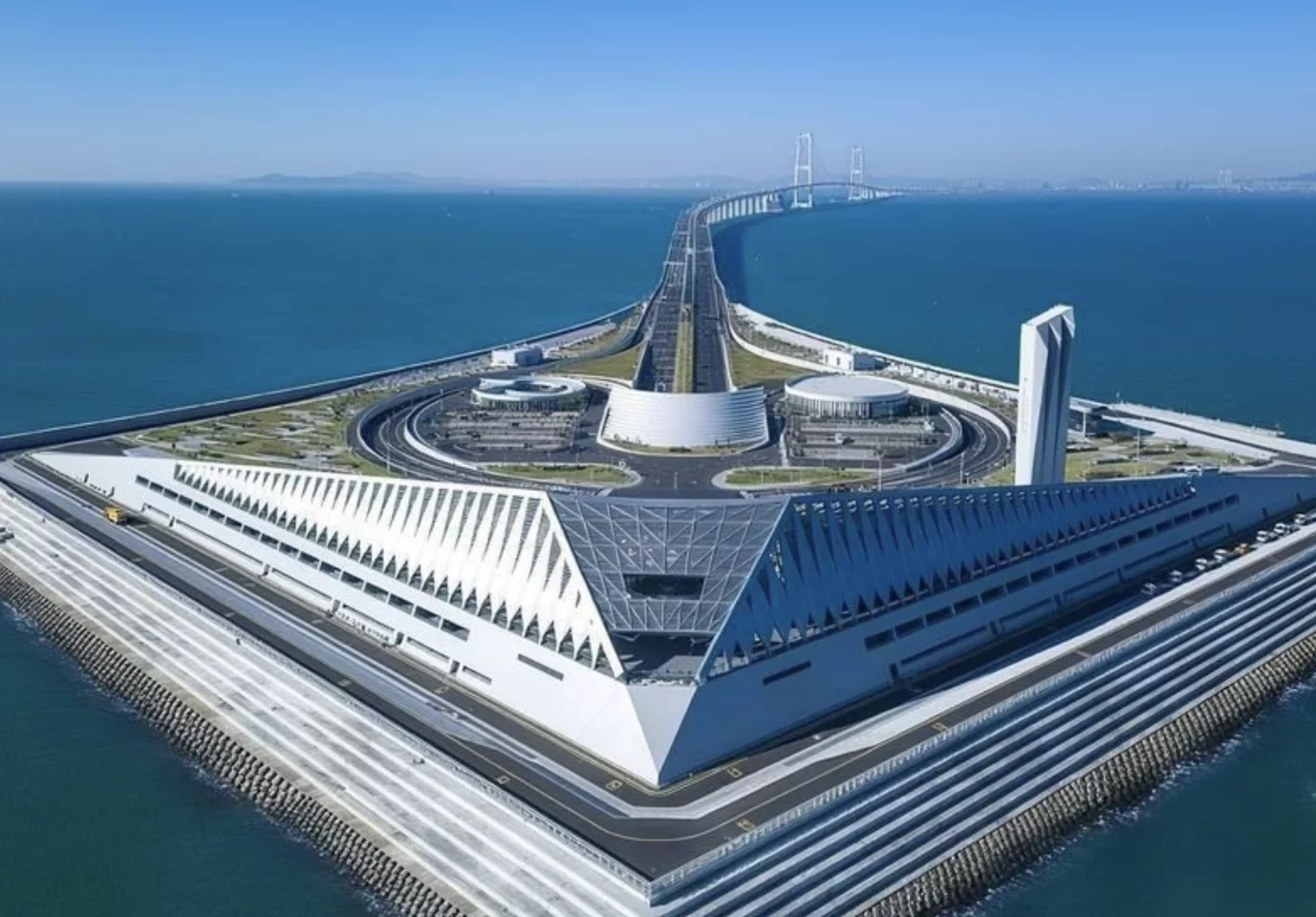
The first hotel run by robots will open its doors to the public next year. It comes as no surprise that it’s happening in China – on the artificial island built for the Shenzhen-Zhongshan Link, the cross-sea megaproject in the Pearl River Delta.
Pudu Robotics has announced the first “full-scenario robot-serviced hotel” on West Artificial Island that connects the ambitious bridge and tunnel crossing known as the Shenzhen-Zhongshan (ShenZhong) Link in Guangdong Province.
The hotel, officially set to open its doors in 2027, will see robots occupy every hospitality role, including reception, room service, cleaning, food preparation and guest support. Shenzhen’s Pudu Robotics has already deployed its machines to work in various retail, food-and-beverage and cleaning positions, but this new project will have them running the entire operation.
Pudu and Shenzhen Culture & Tourism Industry Development will work together to turn the West Artificial Island, which opened in December 2025, into a dedicated robotics and technology destination for visitors.
“This partnership represents an important step toward large-scale deployment of embodied intelligence in premium hospitality environments,” said Cong Guo, Co-founder and CTO of Pudu Robotics. “It also provides an opportunity to explore new service models where AI and robotics work together to deliver intelligent, end-to-end experiences in the real world.”
The hotel will be rolled out in stages, with the first trial scheduled to begin in late 2026, where a handful of guest rooms and robot-powered services will be in operation for the general public. These early visitors will get to experience robot-run welcoming and check-in services, plus autonomous in-room delivery.
Room-service delivery robots are commonplace in hotels across China’s large cities already, including the nearby technology hub of Shenzhen. And Shanghai’s Shangri-La Hongqiao Airport has recently put the humanoid XMAN-R1 to work on the front desk, with other robots handling room deliveries, luggage and cleaning.
However, the new island hotel isn’t just a smart space with robots assisting human staff throughout the premises. It’ll be designed to be a fully functional and interconnected robot “service ecosystem” run entirely by Pudu’s hardware and software. The company’s embodied intelligence foundation model, PuduFM 1.0, will work with PuduAgent to run the hotel’s “intelligent operations.”
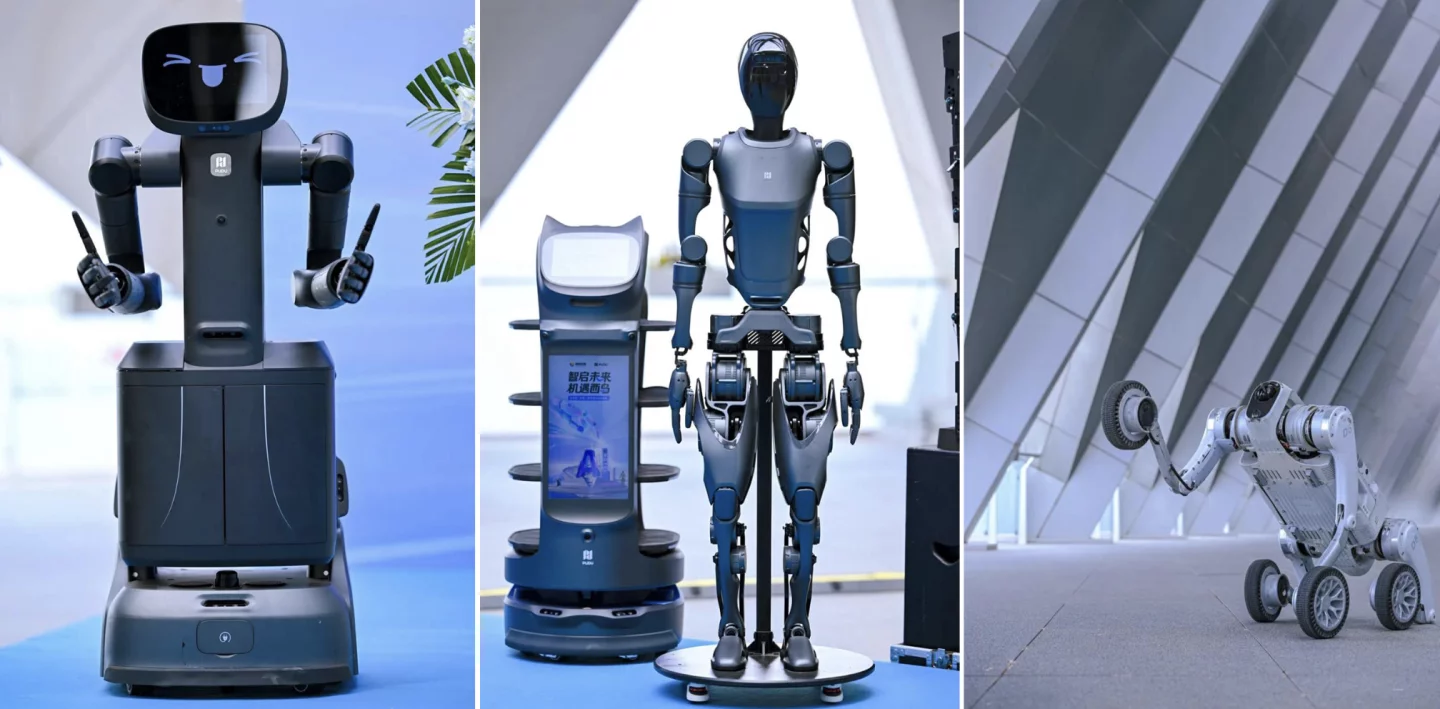
Among the staff, Pudu’s FlashBot will operate an intelligent vending system, where guests can order drink deliveries via smartphone, the PUDU T300 will transport luggage from the foyer to hotel rooms, and the PUDU CC1 Pro and PUDU MT1 cleaning bots will do the dirty work using AI waste-detection technology.
“This architecture enables robots with different physical forms and responsibilities to operate from a shared intelligence framework,” Pudu said in a statement. “Reception robots can understand gestures and social interactions, delivery robots can autonomously optimize routes, and cleaning robots can dynamically adapt to changing environments – all while leveraging the same core AI capabilities.”
At the hotel launch in Shenzhen, the company’s BellaBot Pro served coffee while KettyBot Pro delivered refreshments and snacks to those in attendance. This isn’t novel by the city’s standards, however; at the sprawling Shenzhen Talent Park by the bay, a permanent coffee shop is staffed by a robot barista, close to a hub where you can get food delivered by drone simply by ordering on your phone like UberEats.
In this sense, it’s no surprise that West Artificial Island will become the home of even more advanced autonomous service. The hotel project is just one of the developments planned for the island, with advanced robotics rolled out in stages across service and tourism over the next four years.
“This ‘full-scenario’ model means Pudu robots will be deeply involved in every part of hotel operations, with no service gaps and no human interruptions,” Guo told Chinese news agency Xinhua at the launch.
The hotel is planned to include 44 high-end rooms, a restaurant, gym and other spaces for guest use. They’ll be connected through a closed-loop smart service system ensuring that all aspects of service – from check-in to cleaning – will work together. Looking further ahead, plans are for the project to expand beyond the hotel to the island’s broader tourism and hospitality sector.
Source: Pudu RoboticsView gallery – 3 images
We recommend
- China’s space robotics for on-orbit servicing: the state of the artXueAi Li, National Science Review, 2023
- Tri-Co Robots for the future: an interview with Guang-Zhong YangTiefeng Li, National Science Review, 2022
- Preface to special topic on Tri-Co RobotsNational Science Review
- Recent Advances in Twisted and Coiled Artificial Muscles and Their ApplicationsJin Sun, SmartBot, 2025
- Climbing robots for manufacturingNational Science Review
- Bio-syncretic robots composed of biological and electromechanical systemsNational Science Review
Tags
AI and HumanoidsChinaArtificial IntelligenceHumanoidHotelTourismFutureAutomationAutonomous

Bronwyn has always loved words and animals, and she has the journalism and zoology degrees to prove it. After more than 20 years as a writer and editor, the former music journalist went back to university to build on her passion for wildlife and conservation with a Bachelor of Zoology, which unlocked two new loves: sharing animal facts at any opportunity and getting others excited about science. Particularly interested in neuroscience, genetics, animal behavior and evolutionary biology, Bronwyn has found a happy home at New Atlas, coming on board in February 2023.
Sign up for our FREE daily New Atlas newsletter!


