
Trending now
1
Current price of oil as of June 15, 2026
2
Current price of silver as of Monday, June 15, 2026
3
Iran emerges from war with its economy in free fall and inflation on some food items above 400%. If the regime doesn’t fix it, ‘there will be trouble’

By
Weekend Editor
June 15, 2026, 11:42 AM ET
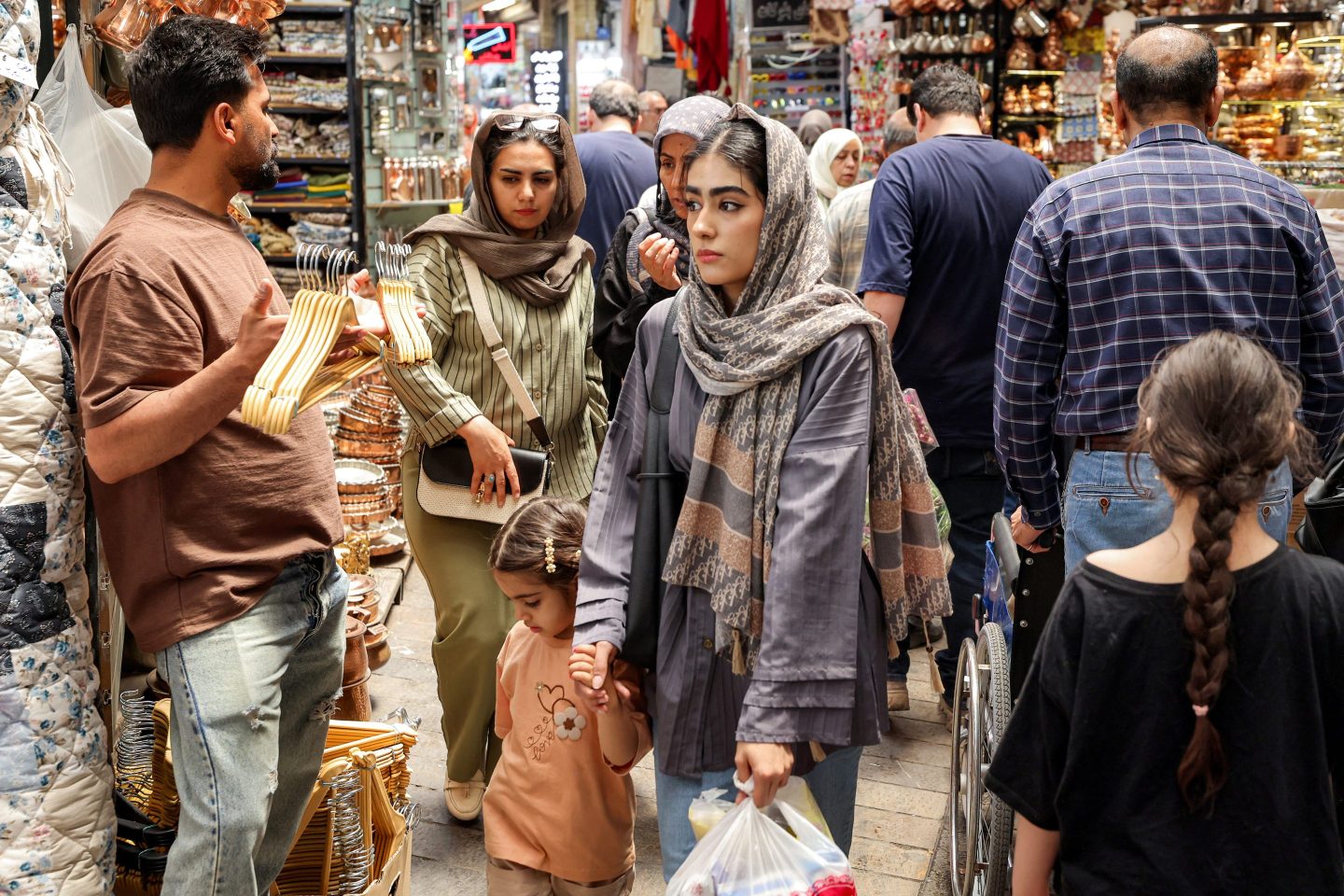
At the Tajrish Bazaar in Tehran, June 2, 2026.ATTA KENARE—AFP/Getty Images
The regime in Tehran is still standing after the U.S.-Israeli war on Iran, but its economy is collapsing and could spark more unrest among the population.
Recommended Video
US Polo Assn. CEO’s rule: No after-work emails, no weekend texts
Iran’s economy was already in shambles before the war began more than three months ago, with high inflation and a currency crash spurring mass protests in late December.
But the war has only made conditions worse. Unemployment and prices have soared, including for basic food items. The Iranian government’s own data showed that the price of cooking oil is up 430% compared with a year ago, with eggs up 345%, rice 287%, and milk 139%.
“We have all become poor,” a resident of Tehran told Radio Free Europe’s Radio Farda earlier this month. “Those of us who were once middle-class, or a little above it, are now financially destitute.”
He added that he has sold his furniture, appliances, carpets, and other household items to survive. On top of that, he’s unemployed and has resorted to making sandwiches to sell on the subway. Meanwhile, his phone bill and electricity bill have jumped fivefold.
Iran has estimated that the war inflicted $270 billion worth of damage, nearly equal to its GDP. The International Monetary Fund expects the economy to contract by 6.1% this year, and the United Nations warned 4.1 million more Iranians could drop below the international poverty line.
But the regime has also mismanaged the economy for decades and worsened its wartime crisis with policies like an internet blackout that put more people out of work.
In addition, the U.S. naval blockade cut off oil revenue for Iran, putting pressure on its foreign exchange reserves, which Capital Economics estimated in April were only enough for three months’ worth of imports at prewar levels.
Iran-based economist Javad Rahimpour told Radio Farda that people are draining their savings and economic discontent is very high.
“The conditions for protests may not currently exist,” he added. “But that should not lead us to think there is some kind of convergence between the state and the people.”
Paid Content
Primoris ramps up as energy demand surges
From Primoris
However, an Iranian government employee who has attended pro-regime rallies expressed more impatience with the country’s leadership.
He told the New York Times last week that he exhausts all his pay by the middle of the month and must buy groceries on credit—only to find that prices double when it’s time to settle the bill.
“Everybody is angry over the economy, and if the government doesn’t fix things, there will be trouble,” he said.
Former U.S. diplomat Dennis Ross, who has extensive experience in the Middle East, pointed out that Iran’s leaders must face up to their failures to provide for the people without being able to use the war as an excuse.
But the regime will attempt to rebuild its military and defense industrial base, diverting resources away from a civilian economy that’s already weighed down by water and electricity shortages, he wrote in a Washington Post op-ed last week.
“But even with aid, Tehran’s ability to manage its domestic woes will remain limited, and the internal pressures will build,” Ross predicted. “They may not lead to the collapse of the regime, but they could produce what Khamenei greatly feared: the emergence of an Iranian Gorbachev—a leader who wants to prioritize domestic development, reach out to the public, and end confrontation with the outside world as organizing principles.”
Subscribe to Fortune Gulf Brief. Every Tuesday, this new newsletter delivers clear-eyed, authoritative intelligence on the deals, decisions, policies, and power shifts shaping one of the world’s most consequential regions, written for the people who need to act on it. Sign up here.
About the Author
By Jason MaWeekend Editor
Jason Ma is the weekend editor at Fortune, where he covers markets, the economy


