
AI Overview
A Traumatic Brain Injury (TBI) can cause a specific, distressing phenomenon often described as the loss of the “mind’s eye,” medically known as
acquired aphantasia. This condition is defined by the inability to visualize imagery, recall memories in pictures, or mentally simulate scenes, objects, or faces.
Key Aspects of Loss of Mind’s Eye After TBI:
- Mechanism: TBI can damage the occipital lobe and the neural circuits involved in visual processing, memory, and spatial mapping.
- Symptoms: Beyond just losing the ability to “see” images in the mind, people with acquired aphantasia often experience difficulty with memory recall (visual memory loss) and in recognizing faces (prosopagnosia).
- Acquired vs. Congenital: While aphantasia can be lifelong (congenital), it can also be acquired, meaning it develops later in life following an injury, illness, or stroke.
- Relationship to Other Deficits: The loss of mental imagery is often accompanied by other visual processing issues, such as difficulties with spatial awareness, reading comprehension, and the ability to imagine or plan future actions.
Related Visual and Cognitive Issues:
The loss of the “mind’s eye” is frequently part of a broader set of symptoms known as post-trauma vision syndrome (PTVS), which affects up to 90% of TBI patients. This includes:

- nature
- nature briefing
- article
- NATURE BRIEFING
- 03 February 2026
Daily briefing: What people with no ‘mind’s eye’ can tell us about consciousness
How clearly you can picture mental images might influence your memory and creativity. Plus, cursive is making a comeback in schools and how to move the Global Plastics Treaty forward.
By
Hello Nature readers, would you like to get this Briefing in your inbox free every day? Sign up here.
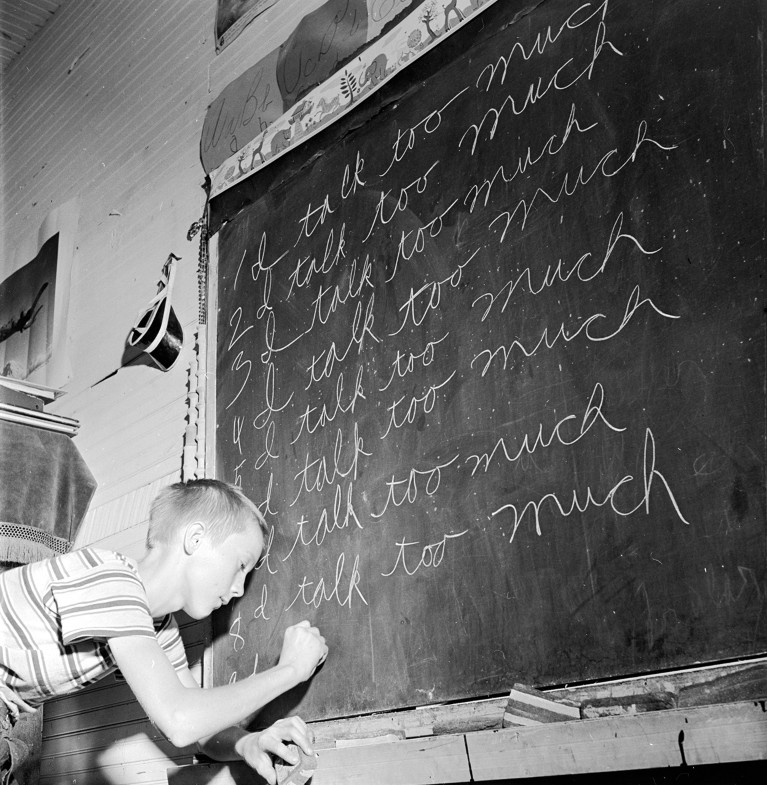
Cursive is making a comeback
Some schools that dropped the requirement to teach cursive — handwriting characterized by flowing, connected letters — to embrace digital learning are re-introducing penmanship into the classroom. Whether cursive has benefits over print handwriting is up for debate — some studies suggest that learning cursive equips children with better syntax skills. But there are also other, cultural reasons for keeping handwriting alive. “I feel that the next generation should be able to write a love letter or a poem by hand, or at least the grocery list, because it’s part of being human, really,” says neuroscientist Audrey van der Meer.
An update for the ‘bible of psychiatry’
The American Psychiatric Association has announced plans to update The Diagnostic and Statistical Manual of Psychiatric Disorders (DSM) — the textbook that lists symptoms for all known mental conditions and aims to steer health professionals towards a correct diagnosis. The updates aim to address longstanding criticisms of the current edition, such as the lack of acknowledgement of sociocultural or environmental drivers of mental illness. The new version could also focus on dimensionality: the idea that the diagnosis of psychiatric conditions should not be fixed in discrete categories, but instead operate along scales of shared symptoms.
Reference: Five papers in The American Journal of Psychiatry
The people whose ‘mind’s eye’ is blind
When asked to picture something in their minds, around 4% of people can only conjure a faint image, or might see nothing at all. This inability to form mental pictures is called aphantasia, a concept that was only formally described a decade ago. The discovery of aphantasia — alongside its opposite, hyperphantasia — has opened a new avenue for researchers to study how the conscious mind works, and how the strength of your ‘mind’s eye’ might influence your emotions, memory and creativity.
Take Nature’s quiz to assess how vividly you see mental imagery.
Video: this robot gives you a helping hand
This new six-fingered robot overcomes the limits of the dexterity of the human hand. Its symmetrical design means it can approach different tasks without having to twist to find the right angle. The robot’s flexible fingers also enable it to juggle multiple objects at the same time and, if needed, it can simply leave its arm behind — perfect for dangerous or hard-to-reach places.

 canisgallicus