
-
Archives
- September 2026
- August 2026
- July 2026
- June 2026
- May 2026
- April 2026
- March 2026
- February 2026
- January 2026
- December 2025
- November 2025
- October 2025
- September 2025
- August 2025
- July 2025
- June 2025
- May 2025
- April 2025
- March 2025
- February 2025
- January 2025
- December 2024
- November 2024
- October 2024
- September 2024
- August 2024
- July 2024
- June 2024
- May 2024
- April 2024
- March 2024
- February 2024
- January 2024
- December 2023
- November 2023
- October 2023
- September 2023
- August 2023
- July 2023
- June 2023
- May 2023
- April 2023
- March 2023
- February 2023
- January 2023
- December 2022
- November 2022
- October 2022
- September 2022
- August 2022
- July 2022
- June 2022
- May 2022
- April 2022
- March 2022
- February 2022
- January 2022
- September 2021
- August 2021
- July 2021
- June 2021
- May 2021
- April 2021
- February 2021
- January 2021
- December 2020
- November 2020
- October 2020
- September 2020
- August 2020
- July 2020
- June 2020
- May 2020
- April 2020
- March 2020
- February 2020
- January 2020
- December 2019
- November 2019
- October 2019
- September 2019
- August 2019
- July 2019
- June 2019
- May 2019
- April 2019
- March 2019
- February 2019
- January 2019
- December 2018
- November 2018
- October 2018
- September 2018
- July 2018
- June 2018
- May 2018
- April 2018
- March 2018
- February 2018
- January 2018
- December 2017
- November 2017
- October 2017
- September 2017
- August 2017
- July 2017
- June 2017
- May 2017
- April 2017
- March 2017
- February 2017
- January 2017
- December 2016
- November 2016
- October 2016
- September 2016
- August 2016
- July 2016
- June 2016
- May 2016
- April 2016
- March 2016
- February 2016
- January 2016
- December 2015
- November 2015
- October 2015
- September 2015
- August 2015
- July 2015
- June 2015
- March 2015
- January 2015
-
Meta
Mandami, New York’s Mayor : Netanyahu is a war criminal … clip
Posted in Uncategorized
Leave a comment
AL JAZEERA: Can Zimbabwe’s mineral ambitions benefit smaller
Can Zimbabwe’s mineral ambitions benefit smaller producers?
Zimbabwe wants to process more minerals at home, but smaller miners fear being left behind. Listen (7 mins)
Save
Click here to share on social media
Share
![Journalists walk past Prospect Lithium Zimbabwe's (PLZ) newly constructed lithium sulphate plant during a technical media tour in Goromonzi, Mashonaland East. The facility, one of Africa's largest three-line single-phase lithium sulphate plants, forms part of Zimbabwe's drive to promote local mineral beneficiation and value addition [Enos Denhere/Al Jazeera]](https://www.aljazeera.com/wp-content/uploads/2026/07/journalists1-1784698067.jpg?resize=770%2C513&quality=80)
By Enos Denhere
Published On 26 Jul 202626 Jul 2026
Harare, Zimbabwe – Zimbabwe wants to move beyond being a supplier of raw minerals and build industries that process and manufacture from its own resources. But as the government tightens restrictions on unprocessed mineral exports, smaller miners are asking whether they will share in that transformation or be left behind.
The government has restricted exports of unprocessed strategic minerals, including lithium, as part of a broader drive to increase domestic beneficiation. Authorities argue that Zimbabwe should capture more value from its mineral wealth instead of exporting raw materials and allowing other countries to profit from refining and manufacturing.
Recommended Stories
list of 4 itemslist 1 of 4
Who benefits from Zimbabwe’s lithium boom?
list 2 of 4
Zimbabwe’s climate migrants fear eviction as crackdown intensifies
list 3 of 4
Aid cuts and climate change drive deadly malaria surge in Zimbabwe
list 4 of 4
Hundreds of Nigerian schoolboys released, local governor says
end of list
The policy has attracted more than $1bn in investment into Zimbabwe’s lithium value chain, according to government officials and industry representatives. But smaller miners warn that the cost of building processing facilities, unreliable electricity supplies and limited access to finance could make it difficult for them to participate in the country’s industrial ambitions.
Speaking during a technical media tour of Prospect Lithium Zimbabwe (PLZ) in Goromonzi, Mashonaland East, on 17 July, Minister of Mines and Mining Development Polite Kambamura said Zimbabwe’s 2022 ban on exports of unbeneficiated lithium ore had encouraged companies to invest in domestic beneficiation.
“The construction of the first lithium sulphate plant in Africa is behind me, and this was done in Zimbabwe,” Kambamura said.
He said Zimbabwe’s ambitions extended beyond lithium sulphate and lithium carbonate production, with a long-term goal of developing industries capable of manufacturing lithium batteries and solar panels locally.
Prospect Lithium Zimbabwe, owned by China’s Zhejiang Huayou Cobalt, said its lithium carbonate plant was about 90 percent complete.
PLZ public relations officer Patience Mushore said Huayou’s investments had generated more than $1.1bn in foreign exchange for Zimbabwe while expanding the country’s lithium value chain.
Policy shift
Supporters of Zimbabwe’s export restrictions argue that the country can no longer remain a supplier of raw minerals while other nations capture greater profits through refining and manufacturing.
Public policy expert Tedious Ncube said Zimbabwe’s lithium sector demonstrated why the government had prioritised beneficiation.
![Mechanics work on a machine installed at Arcadia Lithium in Goromonzi, Zimbabwe [Tafadzwa Ufumeli/Getty Images]](https://www.aljazeera.com/wp-content/uploads/2026/07/getty_6a44c41b85-1782891547.jpg?w=770&resize=770%2C513&quality=80)
He pointed to investments at Arcadia Mine and Bikita Minerals as examples of companies expanding Zimbabwe’s lithium sector.
Sign up for Al Jazeera
Breaking News Alert
Get real-time breaking news alerts and stay up-to-date with the most important headlines from around the globe.Subscribe

By signing up, you agree to our Privacy Policy
protected by reCAPTCHA
Ncube said domestic processing could create skilled jobs, strengthen local suppliers and allow Zimbabwe to retain a greater share of the income generated from its mineral resources.
“The success of Zimbabwe’s lithium industry shows that the right policy can attract investment that builds industries, creates jobs and leaves a bigger share of mineral wealth in Zimbabwe,” he said.
Mining concerns
For smaller producers, the debate is not whether Zimbabwe should process its minerals locally, but whether they will have the infrastructure, finance, and market access needed to participate.
Shelton Lucas, business development director at Naivo Mining, said the company operates chrome, antimony and tungsten projects in Mashava, Ngezi and Kadoma but faces challenges accessing affordable processing options.
Lucas said smaller producers were struggling to access processing capacity, particularly in the chrome sector.
“For our raw chrome, we are now forced to sell to local Chinese smelters where they underpay us. For antimony, I have the resources to build the value-addition plant, but for chrome I cannot because the plant is very expensive,” he said.
He said he supported domestic processing but warned that smaller miners could be excluded if new requirements were introduced without support mechanisms.
Lucas proposed a toll-smelting system, where public institutions or industry bodies invest in shared processing facilities that miners can access at transparent rates while retaining ownership of their minerals.
“The challenge is not only building processing plants, but also ensuring smaller producers can access capacity on fair terms,” he said.
Without such measures, he warned that a small number of companies could end up controlling processing capacity and market access.
“If these companies also hold export rights, they could dictate prices to small-scale miners, creating what could become a predatory market that undermines the very people the mining sector is meant to empower,” he said.
Economic constraints
Economists say Zimbabwe’s processing ambitions will depend on whether the country can overcome longstanding challenges affecting mining and manufacturing.
United Kingdom-based Zimbabwean economist Chenayi Mutambasere told Al Jazeera that the policy faced obstacles including power shortages, expensive financing, weak transport infrastructure, foreign exchange constraints and limited access to processing technology.
“The ban should be more than a political slogan; it should be an industrial practical strategy,” she said.
![A worker oversees operations at Prospect Lithium Zimbabwe's (PLZ) three-line, single-phase lithium sulphate plant in Goromonzi, Mashonaland East. The facility is part of the company's investment in local mineral beneficiation and Zimbabwe's broader drive to move up the lithium value chain. [Enos Denhere/Al Jazeera]](https://www.aljazeera.com/wp-content/uploads/2026/07/worker1-1784698069.jpg?w=770&resize=770%2C513&quality=80)
Mutambasere said the government needed to support the policy with reliable electricity, investor incentives, skills development and clear implementation timelines.
She warned that restrictions introduced before the necessary support systems were in place could create unintended consequences.
“An abrupt ban where companies have invested in the sector may push the mining sector further underground, which could increase mineral leakage,” she said.
Government vision
Permanent Secretary in the Ministry of Information, Publicity and Broadcasting Services Nick Mangwana told Al Jazeera that the policy was intended to ensure Zimbabwe gains more from its finite mineral resources.
“The government is implementing this beneficiation policy in our minerals for the growth of our economy and to create a lasting legacy that will be witnessed by future generations,” Mangwana said.
He said the policy applied not only to lithium but also to other strategic minerals, including platinum group metals such as palladium, rhodium, ruthenium, iridium and osmium.
Zimbabwe’s push reflects a wider debate among resource-rich countries: whether restricting raw exports can build domestic industries without concentrating opportunities among a few large companies.
For smaller miners, the success of the strategy will depend not only on how much mineral processing takes place inside the country, but whether beneficiation creates broader participation or leaves only the biggest players able to compete.
Lucas said the goal should be to ensure that local processing expands opportunities across the mining sector rather than creating new barriers for smaller producers.
“Beneficiation should not become a barrier to participation. It should be an enabler of inclusive growth, industrial development and sustainable economic transformation,” Lucas said.
Posted in Uncategorized
Leave a comment
DW: Wildfires in Europe, people desperate but common sense prevails and ecosystems sidelined are urgently resurrected.
Paul Hirst07/25/2026July 25, 2026
Farmers in Spain’s Galicia region are turning to an old solution to combat the threat of wildfires. Goats, sheep and native cattle are being sent into the hills to eat the dense undergrowth that can fuel the fires.
Advertisement
In Spain‘s northwestern Galicia region, farmers are using native cattle to help prevent wildfires by grazing on dense vegetation that fuels fast-moving flames.
The initiative was introduced after a devastating 2017 wildfire and has become a cost-effective alternative to mechanical land clearing.
By eating gorse, brambles and scrub, the animals create natural firebreaks while preserving local ecosystems.
The project has also helped revive endangered native breeds and is gaining importance as climate change increases wildfire risks across the region.
Posted in Uncategorized
Leave a comment
Axios: Unions vs. AI
| Unions vs. AI |
 |
| Illustration: Brendan Lynch/Axios |
Union contracts are becoming one of the strongest guardrails American workers have against AI, Axios’ Josephine Walker reports. The NewsGuild currently has between 85 and 90 contracts with explicit AI provisions, NewsGuild-CWA President Jon Schleuss says. The NewsGuild currently has between 85 and 90 contracts with explicit AI provisions, NewsGuild-CWA President Jon Schleuss says. At Politico, unionized reporters forced management into arbitration after the newsroom introduced inaccurate AI reporting tools without the union’s permission. Management dismantled the tools. At Politico, unionized reporters forced management into arbitration after the newsroom introduced inaccurate AI reporting tools without the union’s permission. Management dismantled the tools. Entertainment union SAG-AFTRA negotiated protections that prohibit AI replicas from replacing actors without their consent. Entertainment union SAG-AFTRA negotiated protections that prohibit AI replicas from replacing actors without their consent. A union representing workers at ZeniMax, the Microsoft-owned video game company, won contract provisions requiring AI to support — not replace — workers. The agreement also requires management to notify the union and negotiate before deploying new AI tools. Read on. A union representing workers at ZeniMax, the Microsoft-owned video game company, won contract provisions requiring AI to support — not replace — workers. The agreement also requires management to notify the union and negotiate before deploying new AI tools. Read on. |
Posted in Uncategorized
Leave a comment
Axios: Trump pauses strikes
2.  Trump pauses strikes Trump pauses strikes |
 Patriotic bunting in honor of America’s 250th is seen from President Trump’s motorcade at Trump National Golf Club in Sterling, Va., yesterday. Photo: Jacquelyn Martin/APPresident Trump directed the U.S. military not to conduct new strikes in Iran on Friday, breaking a nearly two-week streak of daily attacks, Axios’ Barak Ravid reports. Patriotic bunting in honor of America’s 250th is seen from President Trump’s motorcade at Trump National Golf Club in Sterling, Va., yesterday. Photo: Jacquelyn Martin/APPresident Trump directed the U.S. military not to conduct new strikes in Iran on Friday, breaking a nearly two-week streak of daily attacks, Axios’ Barak Ravid reports.Why it matters: It’s unclear if Trump’s order on Friday was a one-off or the start of a lull after 13 days of U.S. attacks. Between the lines: Trump’s decision reflects that, short of a return to major combat operations, the current level of U.S. strikes has reached the limit of its effectiveness. If Trump orders a return to strikes, the U.S. military can mobilize on relatively short notice. The U.S. military is still preparing plans for a possible return to major combat operations, but Trump hasn’t ordered it to move in that direction, the sources said. How it happened: Every afternoon for the past two weeks, Trump has approved strike plans submitted by the military. They were conducted within hours. On Friday, Trump received a similar plan but didn’t give a green light. Instead, he directed the military not to conduct strikes, the sources said. Shortly after the Friday directive, Trump told reporters at the White House that he could continue or even escalate strikes, including “knocking out everything they have. “But he made clear that he thinks the “smarter strategy” is to “make a deal” with Iran. “We’re talking to [the Iranians] right now,” Trump said. “I think they’re getting more and more serious as the days go by. We’re locked and loaded and ready to go, but we’re talking to them. “That night, Trump said at the White House Correspondents’ Association dinner that he doesn’t think Iran is ready to make a deal at the moment, “but I’m willing to listen.”  Behind the scenes: The Israeli security cabinet and Israel Defense Forces expected another round of U.S. strikes Friday, and even prepared for a massive U.S. attack that could trigger retaliation against Israel, Israeli officials say. Behind the scenes: The Israeli security cabinet and Israel Defense Forces expected another round of U.S. strikes Friday, and even prepared for a massive U.S. attack that could trigger retaliation against Israel, Israeli officials say.The cabinet and military didn’t feel they had a full picture of what the U.S. would do, so they prepared for a major bombing offensive and remained on high alert. On Friday night, the Israelis were notified that Trump did not approve more strikes.Share this story. |
Posted in Uncategorized
Leave a comment
Clash Report: President Netanyahu on Fox News: Zohran Mamadami’s wife and family celebrated the October 7th massacre
https://twitter.com/clashreport/status/2081387945987019025/video/1
Netanyahu on Fox News:
Zohran Mamdani’s wife and family celebrated the October 7 massacre.
Posted in Uncategorized
Leave a comment
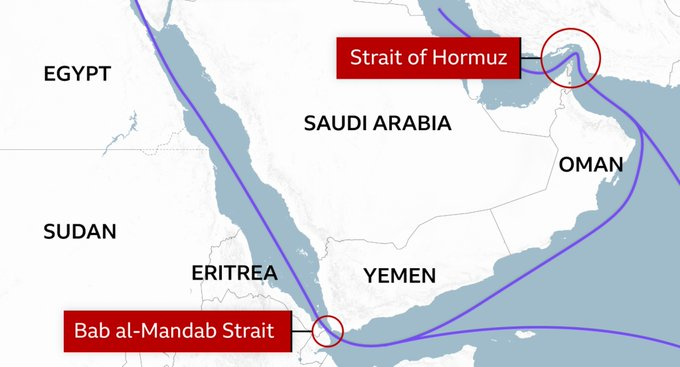
Iran Observer: BREAKING: Insurance companies have Stopped Insuring ships with connections to Saudi Arabia in the Red Sea due to the Houthi Threat
BREAKING: Insurance companies have Stopped Insuring ships with connections to Saudi Arabia in the Red Sea due to the Houthi Threat
Now all the Oil Producing Countries in the Middle East face Higher insurance costs
Oil Prices may go Up Soon
Posted in Uncategorized
Leave a comment

