
-
Archives
- April 2026
- March 2026
- February 2026
- January 2026
- December 2025
- November 2025
- October 2025
- September 2025
- August 2025
- July 2025
- June 2025
- May 2025
- April 2025
- March 2025
- February 2025
- January 2025
- December 2024
- November 2024
- October 2024
- September 2024
- August 2024
- July 2024
- June 2024
- May 2024
- April 2024
- March 2024
- February 2024
- January 2024
- December 2023
- November 2023
- October 2023
- September 2023
- August 2023
- July 2023
- June 2023
- May 2023
- April 2023
- March 2023
- February 2023
- January 2023
- December 2022
- November 2022
- October 2022
- September 2022
- August 2022
- July 2022
- June 2022
- May 2022
- April 2022
- March 2022
- February 2022
- January 2022
- September 2021
- August 2021
- July 2021
- June 2021
- May 2021
- April 2021
- February 2021
- January 2021
- December 2020
- November 2020
- October 2020
- September 2020
- August 2020
- July 2020
- June 2020
- May 2020
- April 2020
- March 2020
- February 2020
- January 2020
- December 2019
- November 2019
- October 2019
- September 2019
- August 2019
- July 2019
- June 2019
- May 2019
- April 2019
- March 2019
- February 2019
- January 2019
- December 2018
- November 2018
- October 2018
- September 2018
- July 2018
- June 2018
- May 2018
- April 2018
- March 2018
- February 2018
- January 2018
- December 2017
- November 2017
- October 2017
- September 2017
- August 2017
- July 2017
- June 2017
- May 2017
- April 2017
- March 2017
- February 2017
- January 2017
- December 2016
- November 2016
- October 2016
- September 2016
- August 2016
- July 2016
- June 2016
- May 2016
- April 2016
- March 2016
- February 2016
- January 2016
- December 2015
- November 2015
- October 2015
- September 2015
- August 2015
- July 2015
- June 2015
- May 2015
- March 2015
- January 2015
-
Meta
Extra.ie. To those who have the courage to watch the second part of the Prime Time Programme on RTE 1 tonight at 9.30 pm. Mentally ill people were promised when the Institutions which at one time had 20,000 residents, care in the community. Community based on last night’s programme is more about care or non provision of care in prisons. Too many suicides never spoken about. Shame on us to have allowed such a deterioration in the provision for people with mental illness, left to predators and abusers but then this too is the untold story.
The number of acutely mentally ill and actively psychotic people in prison now far exceeds the number of available medical cells in these facilities, figures released to RTÉ revealed.

In the last quarter of 2025, the number of people in prison waiting for admission to the new CMH, which opened in late 2022 at a cost of almost a quarter of a billion euros, was at its highest level since before the closure of the old hospital in Dundrum, Dublin, in 2022.
More than 340 psychiatric patients are currently being held across the prison system, and those 38 people mentally ill enough to require treatment in the new centre in Portrane are instead being kept in prisons around the country on a lengthy waiting list.
Families of those forced to rely on prisons for psychiatric care have come forward to speak out against the conditions in which they are kept.

Among those are the families of several psychiatric patients who died in Dublin’s Cloverhill Prison over a five-year period and who are demanding answers regarding the circumstances of their care and their deaths.
Figures show the rate of prisoners with acute mental illness in custody has increased dramatically in recent years. In the country’s dedicated remand centre, Cloverhill Prison, there is a medical landing with capacity for 27 people but in recent months there have been more than 55 actively psychotic people held in custody simultaneously.
This is ten times higher than it was a decade ago and has tripled in the last four years alone.

The in-reach psychiatric team in Cloverhill Prison is led by Professor Conor O’Neill, who told the RTÉ Investigates documentary: ‘Some of the most severe mental illnesses are conditions like schizophrenia and related conditions like disaffected disorder and bipolar disorder.
More: Trending
Tributes pour in following death of young Louth woman who appeared on Ireland AM
Tributes paid to ‘absolutely charming’ son of RTE chef Eunice Power
‘Good fall of snow’ confirmed for coming week
‘These are some of the worst mental health conditions you can have where people can hear and see things that aren’t real. It’s usually voices saying abusive or threatening things. Some of these people are severely mentally ill.
‘Some people have brain injuries and dementias and are unable to look after themselves. These are people that should be in hospital, not in prison.’
The HSE said it remains committed to ensuring that every person receives the right care, in the right place, at the right time.
A statement on behalf of Health Minister Jennifer Carroll MacNeill said: ‘While the Department of Health and the HSE fully appreciate the increasing demands on the prison service, it is important to stress that the NFMHS [National Forensic Mental Health Service] campus in Portrane is a specialist tertiary healthcare facility.
‘This facility is approved for the purposes of the Mental Health Act 2001 and the Criminal Law (Insanity) Act 2006 and every effort will continue to be made by the health sector to help address acknowledged waiting list pressures to access the NFMHS overall.
‘Minister Carroll MacNeill, Minister [Mary] Butler and officials in the Department of Health will continue to work collaboratively with the Minister for Justice and his department to further improve and develop the provision of specialist psychiatric care for people in prison and to build upon the very good joint progress both sectors have made over recent years.’
Irish prison overcrowding branded ‘severe’ in new documents
The HSE acknowledged ‘the issues that have been raised in relation to HSE mental health services and regret any impact this may have had on people and their families’.
It said that because prisons are neither ‘approved centres’ or ‘designated centres’ in law, in-reach prison clinicians cannot prescribe or initiate certain medications that require the legal protections.
As of yesterday, there were 5,742 prisoners in custody across the system, with 519 mattresses on the floor. A total of 35 prisoners were on date-to-date temporary release, 570 were on temporary release, and 1,227 were on trial or remand.
The total number of prisoners in the system was recorded as 6,519, compared with a national bed capacity of 4,726.
RTÉ Investigates: The Psychiatric Care Scandal is on RTÉ One at 9.35 pm tonight.

The Harvard Gazette: New AI tool predicts brain age, dementia risk, cancer survival
 Menu
Menu Search
New AI tool predicts brain age, dementia risk, cancer survival
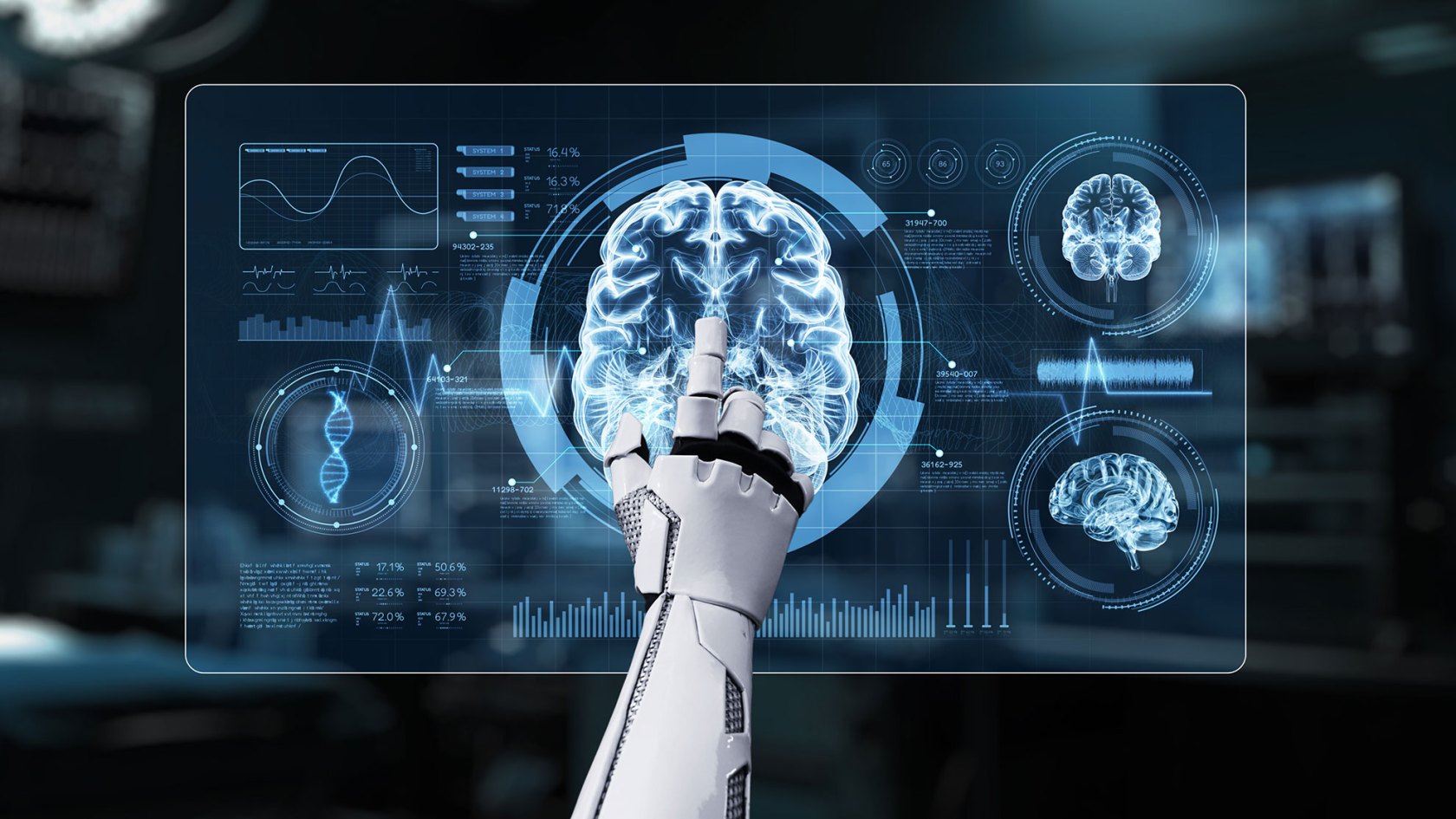
Mass General Brigham Communications
February 5, 2026 3 min read
Unlike other AI models, BrainIAC needs limited data to ID key neurological health indicators
A new AI foundation model has been developed that can accurately extract multiple disease risk signals from routine brain MRIs, including: estimating a person’s “brain age”; predicting dementia risk; detecting brain tumor mutations; and predicting survival from brain cancer, according to investigators from Harvard-affiliated Mass General Brigham.
The model, a brain imaging adaptive core called BrainIAC, was trained on nearly 49,000 brain MRI scans. The tool outperformed other, more task-specific AI models, and was especially efficient when limited training data were available.
Results are published in Nature Neuroscience.
According to researchers, despite recent advances in medical AI approaches, there is a lack of publicly available models that focus on broad, brain MRI analysis. Most conventional frameworks perform specific tasks and require extensive training with large, annotated datasets that can be hard to obtain. Furthermore, brain MRI images from different institutions can vary in appearance and based on their intended applications (such as in neurology versus oncology care), making it challenging for AI frameworks to learn similar information from them.
To address these limitations, BrainIAC uses a method called self-supervised learning to identify inherent features from unlabeled datasets, which can then be adapted to a range of applications. After pretraining the framework on multiple brain MRI imaging datasets, the researchers validated its performance on 48,965 diverse brain MRI scans across seven distinct tasks of varying clinical complexity.
Researchers found that BrainIAC could successfully generalize its learnings across healthy and abnormal images and subsequently apply them to both relatively straightforward tasks, such as classifying MRI scan types, and very challenging tasks, such as detecting brain tumor mutation types. The model also outperformed three more conventional, task-specific AI frameworks at these applications and others.
The authors note that BrainIAC was especially good at predicting outcomes when training data was scarce or task complexity was high, suggesting that the model could adapt well to real-world settings where annotated medical datasets are not always readily available. Further research is needed to test this framework on additional brain imaging methods and larger datasets.
“BrainIAC has the potential to accelerate biomarker discovery, enhance diagnostic tools, and speed the adoption of AI in clinical practice,” said corresponding author Benjamin Kann of the Artificial Intelligence in Medicine (AIM) Program at MGB and associate professor of radiation oncology at Harvard Medical School. “Integrating BrainIAC into imaging protocols could help clinicians better personalize and improve patient care.”
This study was supported in part by the National Institutes of Health/the National Cancer Institute and Botha-Chan Low Grade Glioma Consortium.
Share this article
Posted in Uncategorized
Tagged ai, artificial-intelligence, chatgpt, health, technology
Leave a comment
Axios: US Department of Energy … scientific discovery
Working with the US Department of Energy to unlock the next era of scientific discovery
18 Dec 2025

Anthropic and the US Department of Energy (DOE) are announcing a multi-year partnership as part of the Genesis Mission— the Department’s initiative to use AI to cement America’s leadership in science. Our partnership focuses on three domains—American energy dominance, the biological and life sciences, and scientific productivity—and has the potential to affect the work being done at all 17 of America’s national laboratories.
The Genesis Mission recognizes that we are at a critical moment: as global competition in AI intensifies, America must harness its unmatched scientific infrastructure—from supercomputers to decades of experimental data—and combine it with frontier AI capabilities to maintain scientific leadership. Anthropic seeks to play a key role in this effort.
“Anthropic was founded by scientists who believe AI can deliver transformative progress for research itself,” said Jared Kaplan, Anthropic’s Chief Science Officer. “The Genesis Mission is the sort of ambitious, rigorous program where that belief gets tested. We’re honored to help advance science that benefits everyone.”
Brian Peters, Anthropic’s Head of North America Government Affairs, attended the Genesis Mission launch event today at the White House. We are looking forward to contributing to the mission and continuing to collaborate with DOE.
The partnership
Anthropic seeks to provide DOE researchers access both to Claude and to a team of Anthropic engineers, who can develop purpose-built tools, including:
- AI “agents” (models that take actions) for DOE’s highest-priority challenges
- Model Context Protocol servers that connect Claude to scientific instruments and tools
- Claude Skills for specialized expertise on relevant scientific workflows
Claude can facilitate substantial advancements in:
- Energy dominance. Claude can help with a broad range of tasks—from speeding up permitting review processes that bottleneck America’s energy expansion to helping scientists conduct research at the frontier of nuclear technology and strengthening domestic energy security.
- Biological and life sciences. Claude can support the development of early-warning systems for future pandemics and biological threat detection, and be used to hasten the speed of drug discovery and development.
- Scientific productivity. Claude has the capacity to access fifty years of DOE research, and use this context to accelerate the research cycle in strategically important domains and provide well-informed research support in the form of new ideas to trial out, or patterns in older data that humans might have missed.
Our commitment to partner with the US Government
Scientific progress has always driven America’s prosperity and security. Anthropic aspires to expand existing arrangements with DOE to build the next chapter: using AI across America’s research institutions, with deep context on scientists’ work and active support from our engineers.
Potential future arrangements would represent the next stage of Anthropic and DOE’s multi-year partnership. Past projects with DOE include co-development of a nuclear risk classifier with the National Nuclear Security Administration and rolling out Claude at the Lawrence Livermore national laboratory. As we learn from the current work with DOE’s, we’ll be able to develop a model for how AI and human researchers can work together—and feed this back into the development of the AI tools they use.
Posted in Uncategorized
Tagged ai, artificial-intelligence, chatgpt, llm, technology
Leave a comment
Axios: Algorithms are controlling you feed. Here’s how to take it back
| 1 big thing: Control your reality |
 |
| Illustration: Sarah Grillo/Axios |
| This is the first in an Axios series on seizing control of your reality. The series will unfold in AM and Finish Line. Please watch our kickoff video here. |
Posted in Uncategorized
Leave a comment
In Japan’s schools… what can we learn?
Did you know? In some Japan’s schools, education isn’t just about knowledge — it’s about character. For the first three years of school, children in these specific institutes don’t take academic exams at all. Instead, the focus is on respect, empathy, and moral values. Students learn to clean their classrooms, serve lunch to their peers, and care for their environment. Teachers emphasize teamwork, discipline, and gratitude — qualities considered as vital as academic success.

Posted in Uncategorized
Leave a comment
Nigel Farage: People aren’t more productive working from home
Posted in Uncategorized
Leave a comment
Financial Markets in China : what about gold. This is a shrewd move
Posted in Uncategorized
Leave a comment
George Galloway talking to Shaun Attwood. Epstein Bread and Circuses but dig deeper
Posted in Uncategorized
Leave a comment
The Harvard Gazette: When you do the math, humans still rule
- Menu
- Search
When you do the math, humans still rule

Kermit Pattison
Harvard Staff Writer
February 7, 2026 5 min read
Harvard’s Lauren Williams, a MacArthur ‘genius,’ joins international effort to challenge notions of AI supremacy
Have reports of AI replacing mathematicians been greatly exaggerated?
Artificial intelligence has attained an impressive series of feats — solving problems from the International Math Olympiad, conducting encyclopedic surveys of academic literature, and even finding solutions to some longstanding research questions. Yet these systems largely remain unable to match top experts in the conceptual frontiers of research math.
Now a Harvard professor and other world-renowned mathematicians have launched a grand experiment to more clearly define the boundary between artificial and human intelligence. These scholars have challenged AI companies to crack a series of tough problems that the mathematicians themselves recently have solved but kept under wraps. The effort seeks to answer a key question: Where has AI achieved mastery and where does human intelligence still reign supreme?
“This is a tricky question to answer because the capabilities of AI are improving all the time,” said Lauren Williams, Dwight Parker Robinson Professor of Mathematics at Harvard, who recently won a genius grant from the MacArthur Foundation. “But, at least at the moment, AI is not so good at making a creative leap and solving problems far outside the kinds of problems that already have been solved.”
Williams is among a team of 11 mathematicians — including a Fields medalist and two MacArthur geniuses — who are organizing First Proof. The project seeks to create a more objective methodology for evaluating the ability of AI systems to solve research math questions.
Without a doubt, AI systems have made strides in mathematics. In 2024, a system created by Google DeepMind solved problems on the International Math Olympiad at a level on par with a silver medalist.
But not all efforts have been so successful. One recent analysis showed that large language models (LLMs) managed to solve a small fraction of research-level math problems, but were prone to logical errors, fundamental misconceptions, and hallucinations of existing results. Some researchers have concluded that AI tools currently are most useful for assisting with grunt work — such as literature reviews — but not solving big research problems autonomously.
The First Proof project was initiated by Mohammed Abouzaid, a professor of mathematics at Stanford University. He said many of the highly touted demonstrations of AI capabilities in math “did not really reflect my experience as a mathematician.”
Tech companies, he said, tend to focus on results that they can measure with automated, scalable systems. They often recast research questions into forms that can be answered by current technologies — but not necessarily the approaches research mathematicians would take. In addition, much of the research has been conducted by parties with vested interests.
So the team of mathematicians — from institutions including Harvard, Columbia, Duke, Yale, UC Berkeley, and the University of Texas at Austin — decided it was time for an independent evaluation. In December, they met in Berkeley to assemble research problems that they had recently solved but not yet published. Their 10 problems represent a diverse span of mathematics including number theory, algebraic combinatorics, spectral graph theory, symplectic topology, and numerical linear algebra.
The solutions — each no more than about five pages — have been encrypted and stored within a secure depository. The authors publicly unveiled the problems on Feb. 5 and will reveal the solutions on Feb. 13.
Experts will compare the proofs produced by mathematicians against those produced by AI (problems may be solved in more than one way). The organizers plan to issue another set of problems later this year.
In preliminary tests with GPT 5.2 Pro and Gemini 3.0 Deepthink, the authors reported that, “The best publicly available AI systems struggle to answer many of our questions.” Abouzaid said the AI models solved two of the 10 problems in preliminary tests. “We are already learning a lot by seeing which of our 10 questions it can answer,” he said.
In playing with AI tools, Williams found that they seemed superficially useful but became unreliable at deeper levels.
“Whenever I’ve asked AI a question about which I know very little, the answer generally appears helpful and informative,” she said. “But as I ask questions closer to my own expertise, I’ll start seeing mistakes. If I ask questions close to things I’m working on, it will sometimes hallucinate and start telling me, ‘Oh, the answer to that question is in this paper that I wrote’ — except it’s not a paper that I wrote. Sometimes it will invent references, and the only reason I know they’re not real is because they said I was the author — and I never wrote such a paper.”
Williams said AI sometimes distorted her query. Instead of answering her original question, it shifted to another question that could be answered from the existing literature.
“It can be quite good at mimicking things that have been done before, or putting together some known results to get to a statement that follows from them,” said Williams. “If it’s something algorithmic, it’s excellent.”
But those questions do not represent the forefront of the field.
Typically, research math involves three phases: coming up with a good question, developing a framework for attacking the problem, and solving it. The first two steps remain beyond the reach of AI, so the challenge aims to test only the final one — finding solutions to already-defined problems.
Another co-author, Martin Hairer, professor of pure mathematics at EPFL in Switzerland and Imperial College London and winner of the 2014 Fields Medal, said the group sought to “to push back a bit on the narrative that ‘math has been solved’ just because some LLM managed to solve a bunch of Math Olympiad problems.”
“As of now, this idea of mathematicians being replaced by AI is complete nonsense in my opinion,” said Hairer. “Maybe this will change in the future, but I find it hard to believe that the type of models we’re seeing at the moment will suddenly start producing genuinely new insights.”
Share this article
Posted in Uncategorized
Tagged ai, artificial-intelligence, mathematics, philosophy, technology
Leave a comment
 canisgallicus