Scientists Just Unveiled the Most Complete Map of the Monkey Cortex Yet by Shelly Fan … Singularity Hub

Scientists Just Unveiled the Most Complete Map of the Monkey Cortex Yet

ByShelly Fan

July 14, 2023

macaque brain map reveals orginizational secrets of the cortex

An international team led by Chinese scientists just built the most complete atlas of the macaque monkey cortex to date. The outermost layer of the brain, the cortex houses many of our treasured cognitive functions: the ability to reason, make decisions, and adapt to ever-changing environments on the fly.

Compared to other animals, primates—including humans—have a massively expanded cortex. Scientist have long thought this evolutionary quirk is what gives our brains the ability to manage complex computations.

But how?

The secret may be hidden in the cortex’s many cell types and how they organize. A key theme in biology is “structure determines function.” Like building a computer from scratch, each component and its placement and wiring can alter performance.

Cataloging the precise location of every cell in the monkey cortex could help decode—and perhaps digitally recreate—the rules that make the primate cortex a computational powerhouse.

The study, published in Cell, also tapped into a relatively new tool for brain mapping. Called Stereo-seq, the technology extracts genetic information—the transcriptome—from multiple cells at once, adding a new data layer to each cell’s position.

The team created a molecular fingerprint for each cell by recording the activity of roughly 500 genes. Then, thanks to a hefty dose of AI, they categorized nearly 1.5 million cells from 143 regions into distinct cell types and mapped their location in the cortex.

The project has already yielded some insights. Brain cells tend to act in cliques. Some types prefer the company of certain other cells, suggesting they form local neural networks. Neurons that either ramp up or dampen overall brain activity also have preferred spots, with their numbers changing between cortical regions and depth.

Also, when compared to a mouse brain atlas, the new map found several cell types specific to primates huddled together in one layer of the cortex.

“The cell composition of the brain and its spatial distribution are the basic issues of brain science, and its importance is similar to the DNA base sequence discovered by human genome sequencing,” said study author Dr. Chengyu Li at the Chinese Academy of Sciences. The macaque cerebral cortex is like ours, and this study offers the most complete map of its kind.

An Enigmatic Neural Cake

The cortex is an elaborate six-layered structure packed with different types of neurons and other brain cells.

Neurons are usually the star of the show: these electrically-activated cells connect into neural networks to process information. The two main types help balance the brain’s overall activity level. Glutamatergic cells are excitatory, ramping up the brain’s computation. GABAergic cells are inhibitory, lowering network activity.

Non-neural cells complete the picture. Some help protect the brain from infections. Others support neural metabolism and clean up molecular waste. They aren’t side characters: recent studies show they play a critical role in the shaping of neural networks in early development and for battling neurodegenerative disorders like Alzheimer’s.

The new study mainly focused on these brain cells.

Slicing and Dicing

The team analyzed brains from three adult male macaque monkeys. With over six billion cells, their brains are evolutionarily close to ours.

To start, the team carefully sliced the brain from front to back with several expert cuts. One, roughly the thickness of printer paper, was used to sequence each cell’s genetic profile.

Other slices, adjacent to the thicker blocks to maintain spatial integrity, were even thinner. To half of these, the team added a glow-in-the-dark dye that grabs onto proteins dotting the outside of the neurons. This step makes it easy to spot distinct anatomical locations in the cortex.

The second batch of ultra-thin slices had their genetic data extracted by way of the new Stereo-seq tool. Think of this step working like a digital camera, but instead of capturing pixels, it captures gene expression data from each cell in the form of messenger RNA (mRNA). The resulting “transcriptome” is a snapshot of all active genes for any cell at any moment.

The goal here is to image each cell’s transcriptome while maintaining information about each cell’s physical location. Like a camera sensor, the process starts with a silicon chip roughly the size of two stamps. The newly designed chip has a far wider field of view than previous iterations—like a phone on panoramic mode—making it easier to scan larger brain regions.

Dotted on each chip are 2D arrays of DNA nanoballs to grab onto mRNA. Cell membranes were stained with dyes to help the team match a transcriptome fingerprint to its host.

Using multiple AI algorithms, the team mashed all these datasets into the world’s first three-dimensional, single-cell atlas of the macaque cortex. Each cell type is detailed in the map, along with a three-level taxonomy that illustrates how cells differ through the cortex.

For example, a type of excitatory neuron in layers two and three in the cortex expresses a “master regulator” gene for stress signaling in the brain. All three of the brain’s main cells—glutamate, GABA, and non-neuron cells—correlate with the cortex’s structural hierarchy, with some more abundant across its regions and depths.

A Resource for Evolution

The cortex expanded tremendously in primates and is often viewed as the seat of higher cognition. In another analysis, the team compared the monkey brain map to existing mouse and human atlases to dig up new cell types specific to primates.

The test pinpointed a group of excitatory cells in the fourth layer of the primate cortex that are absent in mice. The cells were highly concentrated in the front of the brain—an area supporting higher cognition—with genes previously linked to language, brain development, and autism.

The team made the resource free to anyone. It provides a cornucopia of data for tackling the age-old question of how structure leads to intelligence—and when, why, and how our brains stutter in neurological diseases. Dr. Xun Xu said the results may also “promote breakthroughs in the field of brain science, such as in brain-inspired intelligence and brain-computer interfaces.”

All of the dataset is open source. Play with it here.

Image Credit: Macaque Spatial Transcriptomics Atlas / BGI

Share

FacebookTwitterReddItEmailCopy URL

Shelly Fanhttps://neurofantastic.com/

Shelly Xuelai Fan is a neuroscientist-turned-science writer. She completed her PhD in neuroscience at the University of British Columbia, where she developed novel treatments for neurodegeneration. While studying biological brains, she became fascinated with AI and all things biotech. Following graduation, she moved to UCSF to study blood-based factors that rejuvenate aged brains. She is the co-founder of Vantastic Media, a media venture that explores science stories through text and video, and runs the award-winning blog NeuroFantastic.com. Her first book, “Will AI Replace Us?” (Thames & Hudson) was published in 2019.


Posted in Uncategorized | Leave a comment

How the Digital Workplace Broke Our Brains? See title/authors below. (Time to be honest what did COVID-19 teach us? Does remote work entrapment really get the collaboration that creates a successful business model? Surely people need to work as a team or do we want our GAA players competing via computer games with only the select audience of elites who know how to work the computer catered for….? Time for a rethink before AI kicks in.)

Calvin Newport and Derek Thompson discuss why the ability to perform deep, focused work is becoming rare at exactly the same time it is becoming most valuable in our economy

By Derek Thompson Jul 5, 2023, 2:36pm EDT

Share this story

Farewell To Mandatory Facemasks In The Workplace


Calvin Newport is a computer science professor at Georgetown University and the author of, among other books, Deep Work and A World Without Email. At the heart of so much of Newport’s work is this incredibly rich mystery: Why hasn’t the internet produced more geniuses? One possibility is that the productivity tools ironically inhibit our productivity. The average white-collar worker in marketing, advertising, finance, and media now spends up to 60 percent of the workweek engaged in electronic communication. In a recent survey, Microsoft found that video meetings had taken up so much of the day that a significant share of its workforce was logging online between 9 and 10 p.m. to finish their actual non-email, non-meeting work. In response to this relentless need to loop back and back and back, Newport came up with what he called the Deep Work Hypothesis: He said to learn hard things quickly, you must focus intensely without distraction. But the ability to perform this kind of deep, focused work is becoming rare at exactly the same time it is becoming most valuable in our economy. In this conversation, we talk about deep work and shallow work, how our productivity tools make us less productive, and how to actually get things done.

If you have questions, observations, or ideas for future episodes, email us at PlainEnglish@Spotify.com. You can find us on TikTok at http://www.tiktok.com/@plainenglish_


In the following excerpt, Calvin Newport walks Derek through his own tools for productivity and explains the breakdown of the digital workplace.

Derek Thompson: Before we get to your diagnosis of the state of the digital workplace, I want to know a little bit about how a productivity expert structures their workday. So you are a professor, which I imagine includes teaching responsibilities and research and administrative duties. You are, as you said, a New Yorker writer. You’re a book writer. You’re a husband, you’re a father. I know it might seem like I’m kind of putting the cart before the horse here by asking you to disclose the medicine before we discuss the disease of our harried minds. But what is notable about your workday, the way you work, that most listeners who do, let’s call it laptop work, like you, might find your strategy distinctive?

Calvin Newport: I’ll preface the description of what I do with just the explanation. So what is the connection with what I just said, which is I write about technology, its impact on our world and productivity? It’s because one of the biggest impacts of technology in our world in the last, let’s say decade and a half, has actually been the way that new technologies in the workplace and new technologies in our personal life distract us, exhaust us, and keep us away from being able to do work that we love. I’m a computer scientist. Why do I talk about productivity? Because when you study technology and its impact, you can’t get away from the way technology seems to pull on our attention, the way technology seems to try to destabilize our ability to do good work. So that’s what led me to the productivity world.

So then, what do I do? Well, I’m a big believer in what I call multi-scale planning, which at its core is all about having some intention and control about where your time goes. So what it’s rejecting is the reactive approach, which right now has become the default but has become more of a default in the last 15 years than it ever was before because distracting technologies push us into a mode of reactivity. What’s in my inbox? What’s on my Slack? What’s on my phone? What can I do in the moment? What message can I send? What thing can I respond to? I reject that. And the way I try to reject that is through multi-scale planning.

So you start at, let’s say, the scale of a semester, or the scale of a quarter, if you’re not in an academic context, and say, “OK, I want a plan. What am I doing this summer?” Or “I want to plan. What are the big things I’m working on for this fall?” You then use that strategic plan, quarterly plan, semester plan, whatever you want to call it. You look at that at the next scale, which is weekly. So at the beginning of every week, you say, “OK, let me look at that big-picture plan, use that to help inform a plan I’m going to make for the week ahead.” And now you’re actually looking at your concrete calendar. What is scheduled? “Tuesday is busy. Oh, I’m teaching, I’ve got these meetings. Thursday’s pretty open before noon, so that might be a good day to catch up on whatever it happens to be.” If you’re looking at your concrete calendar, you create a plan for the week. So I’ll actually usually type this out, plain text file, nothing fancy.

Then you use your weekly plan when you get to the scale of the day, and you make a plan for each day where you now consult that weekly plan. And when you’re planning at the scale of the day, I like to do what I call time blocking. I actually look at the available hours during my workday, and I block them off. “OK, this hour I’m working on this. This specific half hour I’m doing that. All right, for this two-hour stretch here, I’m going to work on this project.” So it’s actually giving every minute of your day a job as opposed to going into your day and saying, “What should I work on next? Who needs me? I’m a little bit exhausted, so let me load up the inbox real quick,” or something like this.

So at all scales, we’re talking from semester down to weekly down to daily, each scale informs the next. And the whole idea behind all of this is, I am trying to give my time a mission. I’m trying to look at my time and say, “What’s the best thing to do with this? What’s the best way to make use of this?” It’s active instead of reactive. And that’s really the backbone of how I approach and try to balance all this different work.

Thompson: That’s so interesting, this concept of fractionally scheduling your time. And when you were mentioning the idea that the laptop and the phone screen can trigger this sense of reactivity, that really struck a chord with me. There have been so many times where I’ll sit down and I think I know what I want to accomplish at my desk on that morning, but then email is shouting and Twitter is shouting and LinkedIn is shouting and Slack is shouting. And then of course, I should probably check the news, and maybe I should listen to that podcast. And oh, that article or that tweet launched a tab, which launched a tab, which launched a tab. That reactivity of the internet, to use some of your language, essentially schedules our time for us.

And you’re saying, if you preschedule your time before you reach the computer, you can ward off, you can foreclose the possibility of being scheduled by these screaming devices. I think the best way to begin to talk about your diagnosis of why the digital workplace has broken is to draw up a term from your book A World Without Email. And that term is the hyperactive hive-mind workflow. Tell us what that term is referring to. What is the hyperactive hive-mind workflow?

Newport: Yeah, this is what’s critical about what we were just talking about. In 1992, if you said, “I’m just going to show up at my office, and I will let the day unfold as it unfolds,” you would actually probably be OK. I mean, there were some distractions, you might spend some more time at the coffee carafe than you might want to. But ultimately, you’d think, “I don’t have much to do here sitting on my desk. All right, let me pull something out, let me work on it.” It’s really more of a contemporary issue that now we have all these different sources pulling at our attention, that if you just approach your day saying, “What do I want to work on next?” you can actually lose your whole day. And the hyperactive hive mind is why.

So that’s my name. I’m putting a name on something that was before not named. But it is implicitly the way we have decided, in laptop work, to use your term, to collaborate and coordinate our efforts. And the hyperactive hive mind says, we have these low-friction digital communication tools. So at first it was email, then we get Slack and Teams, but it’s all the same idea, low-friction digital communication tools. Let’s just work things out on the fly. So if I need something from someone, I’ll just shoot them a message. We’ll go back and forth: “Hey, what time is this meeting?” “Do you know about this?” “Hey, what’s going on with this client that just called?” We’ll figure things out with back-and-forth unscheduling ad hoc message. And that’s called the hyperactive hive mind, that’s the name I gave to it.

Now, it’s a very natural mode of collaboration if you’re in a small group of people. It’s how a small group of people in the same physical location would coordinate themselves. I would just talk to you, you would talk to me, we’d go back and forth ad hoc. Digital communication like email or Slack made it possible to scale that up to lots of people, to whole organizations, the people who are spread out over many different locations.

And my argument is that this implicit decision we made to switch to the hyperactive hive mind is at the core of many woes in modern knowledge work. Having to maintain all of these ongoing back-and-forth conversations requires that we have to keep monitoring these communication channels. I do not have the ability to say, “Let me wait until 3 o’clock to check my inbox for the first time” if there are 12 conversations going on. And some of these conversations might have to have four or five back-and-forths to reach a decision, and that decision has to be reached today. And so I have to keep monitoring my inbox to see when your next message comes in. Because I’ve got to volley that back over the proverbial net pretty quickly because we have to get this back-and-forth four or five times to reach a decision by close of business.

This excerpt was edited for clarity. Listen to the rest of the episode here and follow the Plain English feed on Spotify.

Host: Derek Thompson
Guest: Calvin Newport
Producer: Devon Manze

Posted in Uncategorized | Leave a comment

Thanks to Shane O’Mara Trinity College Dublin, Substack. Highly recommend Huberman Lab. Dr. Matthew MacDougall, Neurolink & Technologies to Enhance Brains…

Listen: YouTube | Apple Podcasts | Spotify

In this episode, my guest is Matthew MacDougall, MD, the head neurosurgeon at Neuralink. Dr. MacDougall trained at the University of California, San Diego and Stanford University School of Medicine and is a world expert in brain stimulation, repair and augmentation. He explains Neuralink’s mission and projects to develop and use neural implant technologies and robotics to 1) restore normal movement to paralyzed patients and those with neurodegeneration-based movement disorders (e.g., Parkinson’s, Huntington’s Disease) and to repair malfunctions of deep brain circuitry (e.g., those involved in addiction). He also discusses Neuralink’s efforts to create novel brain-machine interfaces (BMI) that enhance human learning, cognition and communication as a means to accelerate human progress. Dr. MacDougall also explains other uses of bio-integrated machines in daily life; for instance, he implanted himself with a radio chip into his hand that allows him to open specific doors, collect and store data and communicate with machines and other objects in unique ways. Listeners will learn about brain health and function through the lens of neurosurgery, neurotechnology, clinical medicine and Neuralink’s bold and unique mission. Anyone interested in how the brain works and can be made to work better ought to derive value from this discussion.

Dr. Matthew MacDougall

Neuralink

Timestamps

  • 00:00:00 Dr. Matthew MacDougall
  • 00:04:05 Sponsors: HVMN, Levels, Thesis
  • 00:07:38 Brain Function & Injury; Brain Tumor Treatment
  • 00:13:52 Frontal Lobe Filter; Sleep Deprivation
  • 00:19:00 Neuroplasticity, Pharmacology & Machines
  • 00:22:10 Neuralink, Neural Implants & Injury, Robotics & Surgery
  • 00:31:05 Sponsor: AG1 (Athletic Greens)
  • 00:32:20 Neocortex vs. Deep Brain
  • 00:36:45 Decoding Brain Signals
  • 00:42:08 “Confidence Test” & Electrical Stimulation; RFID Implants
  • 00:51:33 Bluetooth Headphones & Electromagnetic Fields; Heat
  • 00:57:43 Brain Augmentation & Paralysis
  • 01:00:51 Sponsor: InsideTracker
  • 01:02:09 Brain Implants & Peripheral Devices
  • 01:12:44 Brain Machine Interface (BMI), Neurofeedback; Video Games
  • 01:22:13 Improving Animal Experimentation, Pigs
  • 01:33:18 Skull & Injury, Traumatic Brain Injury (TBI)
  • 01:39:14 Brain Health, Alcohol
  • 01:43:34 Neuroplasticity, Brain Lesions & Redundancy
  • 01:47:32 Car Accidents & Driver Alertness
  • 01:50:00 Future Possibilities in Brain Augmentation & BMI; Neuralink
  • 01:58:56 Zero-Cost Support, YouTube Feedback, Spotify & Apple Reviews, Sponsors, Momentous, Social Media, Neural Network Newsletter

Join the Neural Network Newsletter

Enter your email and get the latest in neuroscience, health, and science-related tools from Dr. Andrew Huberman. Delivered to your inbox monthly.

Posted in Uncategorized | Leave a comment

Roman law: Justinian’s law. Clarity is exceptional. Good benchmark for understanding what the “Presumption of Innocence” means…

‘Justinian’s law is more resonant than ever. It is our first and last line of defence.’
@Jacob_Rees_Mogg says the ‘presumption of innocence is fundamental to our justice system’, as speculation regarding a BBC presenter scandal remains rife.
https://twitter.com/i/status/1678485585596645376

Posted in Uncategorized | Leave a comment

Attention Deficit Disorder … Separation Anxiety Disorder … Depression … There are people who can cope … but then there are others who need a professional diagnosis.

https://www.webmd.com/add-adhd/childhood-adhd/conners-rating-scale

Posted in Uncategorized | Leave a comment

The ‘Dopamine Detox’ Is Having a Moment. Time magazine. (Canisgallicus … this is a most interesting article. However for people like me who are bipolar especially where the depressions are severe, we may have already arrived at this theory and use these methods to stave off even worse depression and disengagement with life or worse hospital or suicide).

The ‘Dopamine Detox’ Is Having a Moment

Tetra Images—Getty Images

By Haley Weiss

June 2, 2023 11:36 AM EDT

Are you bored by being alone with your thoughts? Does the thought of cooking a meal, brushing your teeth, or taking a walk without a podcast, TV show, or music playing send you into a cold sweat? If so—according to a trend circulating on social media—you’re a great candidate for something called a “dopamine detox.”

It involves identifying behaviors that you turn to too frequently for a quick boost—mainly things like social media, gaming, and watching TV—then taking a break from them for a few days to a week. The goal is to recalibrate your brain’s reward pathways.

Though some evidence suggests that taking a break from certain unhealthy behaviors can prove transformative, most research focuses on clinical addictions, not the daily temptations we all face. That hasn’t stopped content creators from overstating the science to promise unmatched happiness, productivity, academic success, and lots of money from a digital detox—all unrealistic claims. It’s just a temporary break, and while that can be nice, it won’t change your life. Real change takes more active work.


More from TIME


But if you keep your expectations in check, you may find that a digital detox is a useful tool for self-reflection.

Dopamine’s role in the brain

A “dopamine detox” focuses on that particular brain chemical because it’s sensitive to stimuli like social media. Temporarily depriving yourself of such triggers should theoretically recalibrate your brain’s stores of dopamine and therefore make your pleasure centers more balanced, the claims go.

Of course, brain chemistry is more complicated than that. Dopamine is just one neurochemical that contributes to happiness, and unplugging for a few days won’t rewire your mind. But it might help you recognize the triggers you’re leaning on, says Dr. Anna Lembke, a psychiatry professor at the Stanford University School of Medicine and author of the book Dopamine Nation: Finding Balance in the Age of Indulgence. “When we’re consuming digital media,” she says—like TV shows, TikTok, podcasts, and music—“it releases a lot of dopamine in a specific part of the brain called the reward pathway.” When dopamine is sent hurtling down this pathway, it sets off a good feeling in the brain. Any rewarding stimulus—a piece of candy, a “like” on a post, or the start to your favorite song—can give you this little hit.

This pathway works best when it gets to hum at a natural level and spike at different points throughout the day, like at mealtimes. But most of the content on our phones, says Lembke, is designed to activate the reward pathway as strongly as possible, meaning that frequent use theoretically releases a “firehose of dopamine stimulation.”

Our understanding of how the brain responds to ceaseless stimulation from our gadgets comes primarily from research on drug addiction, which commandeers the same reward pathways. “In order to compensate,” says Lembke, “our brain starts to downregulate our own dopamine production and transmission, to bring it back to baseline.” A dopamine deficit, which can result from the extremes of all forms of addiction, can lead to feelings of depression and anxiety. “Now we need to keep engaging in these behaviors—ingesting digital media—not to feel good and happy, but just to feel normal,” explains Lembke. That’s where a detox can be helpful.

Can a “dopamine detox” really reset your reward pathways?

“Detox” is a misleading term in this context. The word describes the removal of something harmful and unnatural, but dopamine, made in the brain, is neither of those things—nor is it being removed. The practice is also sometimes called a dopamine “fast,” and while the goal is to starve that dopamine-specific reward pathway of constant activation, the chemical is still present and active throughout the brain.

What’s actually being cut out during this practice is whatever stimulus a person is hoping to feel less dependent on. A more apt (but less catchy) name for the routine might be “dopamine recalibration.” Really, it’s a commitment to breaking bad habits.

Attempting this recalibration isn’t just for people who feel like compulsive media use is taking over their lives, says Lembke. “I love that the younger generation is exploring digital detox and trying to experiment with how they feel when they’re not constantly engaged with our digital devices,” she says. “It’s only by stopping for a period of time that we can really see how this technology is impacting our mental health.”

Read More: How to Get Healthier Dopamine Highs

The most effective “dopamine detox” will be a personalized one, says Lembke. Cutting down on the tech you use most often is an obvious place to start, but dopamine hits can come from lots of places. Lembke, for instance, says that the most powerful break she’s ever taken was from reading romance novels. Even though they weren’t on a screen, the compulsive way she’d churn through their predictable plot points indicated to her that the hobby had hijacked her reward system. Even after four weeks—which is generally long enough to change a habit —she still craved the books. After taking inventory of her habits, she says, she “was finally able to trace it to listening to pop music, because almost all pop music is love songs. So I stopped listening to pop music, and that really helped me stop craving romance novels, which helped heal my brain to the point where now I can listen to all kinds of music and not crave reading.”

If there’s a habit or device that you feel has too strong a hold over you (maybe, for instance, going to the bathroom without your phone makes you feel antsy), it might be a good target for this approach.

What to expect during a “fast”

Aside from scientific studies about drug addiction, there’s not clear research on what happens when you quit your brain’s favorite reward cold turkey. When it comes to how the brain interacts with social media, “all we really have is our clinical experience,” says Lembke.

“When we’re working with patients who have actually become pathologically addicted to digital media, they usually feel pretty bad for 10 to 14 days” when they first cut it out, she says. After that, she says, patients begin to be able to focus again, to slow down and enjoy activities that may have seemed boring before, like taking a quiet walk or cooking a meal. Gradually, because it’s not being used, the association between the problem behavior and the dopamine reward becomes weaker, making it easier for people to resume using their devices in a less problematic way.

A lot of the self-help content circulating about dopamine detoxes leans into what we know from clinical treatment of true behavioral addiction, but we know less about how more minor behavioral tweaks—like cutting down on social media for a week—affects the dopamine reward pathway. For people without an addiction, a stimulus fast doesn’t need to be methodological; there’s no real right or wrong length of time to try it. What’s more important is paying close attention to how you feel while doing it, which may help you notice automatic behaviors that may not have registered before, like Lembke’s pop-song habit.

Even a temporary step back can teach us a lot. “We’re constantly reacting to external stimuli, which means that we’re not really giving our brains a chance to form a continuous thought or staying quiet long enough to have spontaneous thoughts,” says Lembke.

More Must-Reads From TIME


Contact us at letters@time.com.

Posted in Uncategorized | Leave a comment

Millennials and Gen X are leading the ChatGPT growth explosion in the United States: report: Fast Company. (Personal comment by canisgallicus). People with disabilities who for years have augmented their abilities through computer, youtube, social media, emails, etc encourage young people to engage and with speed too. Imagine me and Twitter. All that data which can be accessed and trends found. We are heading towards a time that people will no longer be able to gain answers from data but it will be computers. The smartphone is here and the narrative is plain to see … go to the A&E with pain in your elbow & the doctor explains what has happened to you by showing you his battered smartphone and you smile and admit to already having consulted Dr Google and came up with the same conclusion (after 7 hours) as the medical team.

Millennials and Gen X are leading the ChatGPT growth explosion in the United States: report

Insider Intelligence has released its first forecast on generative AI. The growth projections are staggering.

BY MICHAEL GROTHAUS

1 MINUTE READ

The usage of generative AI apps like ChatGPT in the United States is exploding in growth this year

That’s according to a new report by Insider Intelligence, which is forecasting the growth of the technology for the first time. Specifically, the report states that usage of generative AI apps in the United States will increase a whopping 894.4% to 77.8 million users in 2023, up from 7.8 million users in 2022.

playIcon

Next: Come on, Barbie, let’s go party . . . with every brand

and the house includes a huge pool, ocean views,

https://imasdk.googleapis.com/js/core/bridge3.579.0_en_gb.html#goog_1197

Unsurprisingly, the report finds that most of that growth will come from the usage of just one generative AI app: OpenAI’s ChatGPT. In 2023, ChatGPT usage is expected to climb 882% to 61.5 million U.S. users, which is up from 6.3 million U.S. users in 2022.

ChatGPT will also hit other major milestones during 2023, including boasting usage by over 20% of all internet users and 79% of users of all generative AI apps. By 2024, over one out of every four internet users in the United States is expected to be using ChatGPT—that’s over 77 million of them.

But in 2025, ChatGPT is expected to lose ground, according to the report. While ChatGPT is expected to surge to 87.9 million U.S. users in 2025, its market share of all generative AI users is expected to drop to 75.2%. This is because by then generative AI usage will be commonplace in America and there will be many other options to choose from besides ChatGPT.

Insider Intelligence expects overall generative AI usage in the United States to surge to 116.9 million users in 2025—more than a third of the U.S. population. This surge is expected to happen due to the increasing prevalence of generative AI tool use in the workplace.

And interestingly, for 2023 at least, it’s not Gen Z workers who will fuel this surge. Instead, millennial users of generative AI tools will make up the biggest cohort of users in 2023, taking a 21.4% user share. Younger Gen Xers make up the next largest cohort at 19.3% of users. And Gen Z takes third place at 14% of users.

This millennial and Gen X-led surge could be due to the fact that members of those generations are already in the workplace, especially among companies that will be using ChatGPT in their workflow, while many members of Gen Z have yet to enter the professional workforce.PluggedIn Newsletter logo

Sign up for our weekly tech digest.

This site is protected by reCAPTCHA and the Google Privacy Policy and Terms of Service apply.

SIGN UPPrivacy Policy

ABOUT THE AUTHOR

Michael Grothaus is a novelist and author. His new novel, the speculative fiction ‘BEAUTIFUL SHINING PEOPLE’, is out now

 More

ADVERTISEMENT

Black women deserve spaces designed for and by Black co

Posted in Uncategorized | Leave a comment

Five ways AI could improve the world: ‘We can cure all diseases, stabilise our climate, halt poverty’. The Guardian

Artificial intelligence (AI)

Five ways AI could improve the world: ‘We can cure all diseases, stabilise our climate, halt poverty’

It is not yet clear how the power and possibilities of AI will play out. Here are the best-case scenarios for how it might help us develop new drugs, give up dull jobs and live long, healthy lives

  • Coming on Friday: Five ways AI might destroy the world
Steve Rose

Interviews by Steve Rose

@steverose7

Thu 6 Jul 2023 05.00 BST

Recent advances such as Open AI’s GPT-4 chatbot have awakened the world to how sophisticated artificial intelligence has become and how rapidly the field is advancing. Could this powerful new technology help save the world? We asked five leading AI researchers to lay out their best-case scenarios.

‘More intelligence will lead to better everything’

In 1999, I predicted that computers would pass the Turing test [and be indistinguishable from human beings] by 2029. Stanford university found that alarming, and organised an international conference – experts came from all over the world. They mostly agreed that it would happen, but not in 30 years – in 100 years. This poll has been taken every year since 1999. My guess has remained 2029, and the consensus view of AI experts is now also 2029.

A laboratory technician conducts AI-based cervical cancer screening in Wuhan, China.
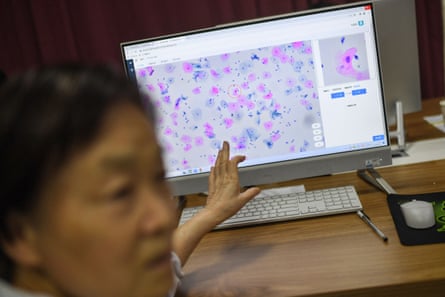
‘Everything’s going to improve’ … a laboratory technician conducts AI-based cervical cancer screening in Wuhan, China. Photograph: AFP/Getty Images

Everything’s going to improve. We will be able to cure cancer and heart disease, and so on, using simulated biology – and extend our lives. The average life expectancy was 30 in 1800; it was 48 in 1900; it’s now pushing 80. I predict that we’ll reach “longevity escape velocity” by 2029. Now, as you go forward a year, you’re using up a year of your longevity, but you’re actually getting back about three or four months from scientific progress. So, actually, you haven’t lost a year; you’ve lost eight or nine months. By 2029, you’ll get back that entire year from scientific progress. As we go past 2029, you’ll actually get back more than a year.

Most movies about AI have an “us versus them” mentality, but that’s really not the case. This is not an alien invasion of intelligent machines; it’s the result of our own efforts to make our infrastructure and our way of life more intelligent. It’s part of human endeavour. We merge with our machines. Ultimately, they will extend who we are. Our mobile phone, for example, makes us more intelligent and able to communicate with each other. It’s really part of us already. It might not be literally connected to you, but nobody leaves home without one. It’s like half your brain.

https://cf52d55f7bbb3526f13b41917295bb71.safeframe.googlesyndication.com/safeframe/1-0-40/html/container.html

If the wrong people take control of AI, that could be bad for the rest of us, so we really need to keep pace with that, which we are doing. But we already have things that have nothing to do with AI, such as atomic weapons, that could destroy everyone. So it’s not really making life more dangerous. And, it can actually give us some tools to prevent people from harming us.

The rate of change will be difficult for some people. The railways changed the US, but it took decades; this is changing it in months. If we were in 1900 and I went through all the different ways people made money, and I said: ‘All of these will be obsolete in 100 years,’ people would go: ‘Oh, my God! There’s gonna be no jobs.’ But in fact, we have more jobs today – in areas that were really only invented in the last few decades. That will continue.

We’ve made great progress but there are still people who are desperate. More intelligence will lead to better everything. We will have the possibility of everybody having a very good life.
Ray Kurzweil, computer scientist, inventor, author and futurist

‘We can use AI tools right now to help fight climate change’

Everyone wants a silver bullet to solve climate change; unfortunately there isn’t one. But there are lots of ways AI can help fight climate change. While there is no single big thing that AI will do, there are many medium-sized things.

The Amazon Rainforest in northern Brazil.The Amazon Rainforest appears to have been colored solid with a green crayon in the western portion of this true-color image of northern Brazil captured by the Moderate Resolution Imaging Spectroradiometer (MODIS) on July 1, 2002.
A spectroradiometer image of the Amazon rainforest in northern Brazil … AI can pick out where deforestation is taking place. Photograph: Stocktrek Images/Getty Images

The first role AI can play in climate action is distilling raw data into useful information – taking big datasets, which would take too much time for a human to process, and pulling information out in real time to guide policy or private-sector action. For example, taking satellite imagery and picking out where deforestation is happening, how biodiversity is changing, where coastal communities are at risk from flooding. These kinds of tools are already starting to be used by organisations around the world, from the UN to insurance companies, and we’re working to scale them up and improve them.

The second role is optimisation of complicated systems – such as the heating and cooling system in a building, where there are many controls that an algorithm can operate efficiently. Smart thermostats have become mainstream in our homes, and now we’re starting to see that for skyscrapers and factories. Many companies are improving energy efficiency, and there is a lot of progress still to be made, especially in industries such as steel and cement, which are often resistant to adopting new technologies.

The next theme is forecasting. AI can’t predict something big-picture like what’s going to happen to the economy – but forecasts make sense for narrow problems with lots of data, such as what the power demand is going to be at a particular time, or what power is going to be available based on the sun and the wind, forecasting how a storm is going to move, or the productivity of crops based upon the weather.

Thinking of AI as a futuristic tool that will lead to immeasurable good or harm is a distraction from the ways we are using it now

The fourth theme is in speeding up scientific simulations, such as in climate and weather modelling. We have really good climate models, but sometimes they can take months to run, even on supercomputers, and that is an obstacle. We understand climate change very well but that doesn’t mean we know exactly what is going to happen at each point. So, having faster climate models can aid local and regional responses.

AI in climate action isn’t about what computers can do in the far future – we can’t trust some speculative future technology to rescue us. Climate change is already killing people, and many more people are going to die even in a best-case scenario, but we get to decide now just how bad it gets. Action taken decades from now is much less valuable than action taken soon. Thinking of AI as a futuristic tool that will lead to immeasurable good or harm is a distraction from the ways we can and are using AI tools right now, and what we can do to align them with what’s best for society.
David Rolnick, assistant professor and Canada CIFAR AI Chair, McGill University School of Computer Science, Montreal

An attendee controls an AI-powered prosthetic hand during 2021 World Artificial Intelligence conference in Shanghai.
An attendee controls an AI-powered prosthetic hand during 2021 World Artificial Intelligence conference in Shanghai. Photograph: VCG/Visual China Group/Getty Images

‘There is going to be an amazing revolution in healthcare’

https://cf52d55f7bbb3526f13b41917295bb71.safeframe.googlesyndication.com/safeframe/1-0-40/html/container.html

There is a rapid transformation in the pharmaceutical industry and university research, where they’re shifting to the use of AI to help discover new molecules and new drugs that would have fewer side-effects, and that would help us cure diseases that currently we don’t know how to cure, including cancer, potentially.

One reason AI can be useful here is that the body is very complicated. Even a single cell is extremely complicated: you have 20,000 genes, and they all interact with each other. Biotechnology has progressed to the point where we can measure all the genes’ activity in a single cell at once. While we collect huge quantities of data, the quantity of data is so large that humans are unable to read it. But because machines can, they are able to build models of how your cells work, and how they could be changing under different circumstances that cause disease. So, you can see what happens if you make an intervention; if you introduce a pollutant or a drug, what will be the effect?

Posted in Uncategorized | Leave a comment

Assisted suicide: Germany weighs autonomy and ethics. DW

Assisted suicide: Germany weighs autonomy and ethics

Lisa Hänel | Rina Goldenberg

07/04/2023July 4, 2023

Accompanied suicide ― a form of assisted suicide ― has been exempt from punishment in Germany since 2020. The Bundestag is working on a law covering the practice. Will the country become a pioneer in end-of-life choice?

https://p.dw.com/p/4TOc9

A glass vase holding a single white flower
Image: Gudrun Krebs/Pahnter Media/picture alliance

ADVERTISEMENT

https://9a1778a7ba99bb30f214fd3900cc3d48.safeframe.googlesyndication.com/safeframe/1-0-40/html/container.html

Should individual autonomy include the choice to die? In 2020, Germany’s Federal Constitutional Court determined: Yes, autonomy is the overriding concern. Every person can decide for themselves.

Any person helping an individual who has chosen to end their life cannot be penalized for doing so. The condition, however, is that the person who ends their life makes that decision freely and carries full responsibility.

Previously, section 271 of the criminal code —  introduced after much debate in 2015 — made assisted suicide almost impossible in Germany, as it stipulated that anyone who aided someone to take their own life could be jailed for up to three years. That law was intended to stop assisted suicide associations, which gather money from their members.

But since the 2020 judgement, such associations have been operating with impunity in Germany, offering accompanied suicide or arranging medical assistance.

Assisted suicide debate in Germany

02:09

Now, the Bundestag — Germany’s federal parliament — is launching a new attempt at regulation. Two draft laws are being put forward for parliamentary debate this week.

One of the drafts proposes that assisted suicide be fundamentally punishable by law but allows for possible exceptions. These include that the person who wants to die is an adult, has been examined at least twice by a specialist in psychiatry and completes a counselling interview several weeks before making a decision.

The other draft proposes to enshrine the right to self-determined death in law. Under this plan, there would be no criminal regulation for assisted suicide. People wanting to die should receive access to lethal drugs if they had previously sought counseling. In extreme cases, when there is an existential state of suffering with persistent symptoms ― a doctor should be allowed to prescribe the medication even without prior counseling.

Assisted suicide in other countries

Assisted suicide refers to the procedure when someone who is willing to die is provided a fatal drug and administers it to themselves.

Actively administering a fatal drug to another person, however, is and remains illegal. Such assistance in dying, sometimes referred to as voluntary euthanasia, remains prohibited in Germany, where the concept is seen to hark back to the time of the Nazi regime, where thousands of disabled people were killed in a program of mass murder by involuntary euthanasia.

In Netherlands and Luxembourg, for example, it is allowed to administer fatal drugs to a patient upon request. And recently, Portugal’s parliament approved assisted suicide.

The debate on how to regulate assisted suicide is a phenomenon in the industrialized countries of Europe, North America, and Australia, Lukas Radbruch, one of the leading palliative care doctors in Germany, told DW.

“These are the countries where the laws are changing because autonomy is the dominant value. Other countries have more collective decision making. Families are much more strongly involved,” and in these places, assisted suicide is much rarer, he explained.

The right to die: Autonomy until death

Lea Koch, who asked to use a pseudonym to protect her identity, is in her early seventies. She is a suicide companion. Hardly anyone in her circle of friends and family knows about her volunteer work.

Three years ago, a woman who was paraplegic asked Koch whether she was willing to accompany her to her death. She agreed, and the time that followed also changed Lea Koch’s own life. When the woman died, her last words were “Thank you, thank you, thank you.”

With every person Koch attends to, she asks herself whether she is doing the right thing. She will not reveal how many people she has accompanied in their deaths, but an eternal candle burns on her terrace in remembrance of them.

“So far, I have always experienced the assisted suicides as very peaceful,” Koch told DW, “because these decisions have been very well-considered.”

https://9a1778a7ba99bb30f214fd3900cc3d48.safeframe.googlesyndication.com/safeframe/1-0-40/html/container.html

Assisted suicide associations play a delicate role

There are several assisted suicide associations in Germany. Some of them are transparent about how many people they help to die. The “Verein Sterbehilfe” (assisted suicide association) took part in the deaths of 139 people last year. The German Society for Dying with Dignity (DGHS) conducted 229 accompanied suicides. The vast majority were people with severe physical illnesses.

The DGHS says it proceeds very carefully. Multiple conversations with lawyers and doctors are involved to make absolutely sure that the person wants to die of their own free will.

Since the judgement of the Federal Constitutional Court, they have received a lot of positive feedback from members and their relatives. 

“Many say that it is for themselves, for the families, a great relief that things can come to an end in the way that they want them to, without the feeling that they are stepping outside the law or the need to travel to Switzerland for the procedure. We are already hearing a lot of thankfulness for this,” Wega Wetzel from the DGHS told DW.

Fundamental ethical questions

However, some palliative care specialists and ethicists think that it is not a good sign that the same people counseling patients on their end-of-life choices are also the ones carrying out or mediating assisted suicide.

“The problem with consultations at assisted suicide organizations is that people are more likely to be advised on how to do it, not whether to do it,” Radbruch said.

For philosopher and medical ethicist Jean-Pierre Wils, all practical questions also raise very fundamental ethical questions: For example, the ruling of the Federal Constitutional Court does not specify any criteria for the wish to die. Theoretically, physically healthy people could avail themselves of assisted suicide; even age is also no barrier. Does it suffice when a person, as the court calls it, has “had enough of life?” In fact, the Verein Sterbehilfe states that in 2022, three people without any illness had an assisted suicide.

A person’s individual autonomy is the central criterion, Wega Wetzel from the DHGS maintains: “If the right to self-determination is highly valued throughout life, that should also be the case at the end of life.”

Editor’s note: If you are suffering from serious emotional strain or suicidal thoughts, do not hesitate to seek professional help. You can find information on where to find such help, no matter where you live in the world, at this website: https://www.befrienders.org/

This article was originally published in German.

While you’re here: Every Tuesday, DW editors round up what is happening in German politics and society. You can sign up here for the weekly email newsletter Berlin Briefing.

Posted in Uncategorized | Leave a comment

Are human beings rational or irrational at the core? Enter Sigmund Freud, his daughter, Anna, his nephew Edward Bernays, covering decades of influence in US history of psychology, psychoanalysis and marketing consumerism and so much more. You need time but it informs. Further episodes included after the first “The Century of Self”

Posted in Uncategorized | Leave a comment