The countries that straddle our tormented world are woefully unprepared to counter and prevent five Omnicides already underway or looming menacingly on the horizon. This is increasingly true with the yearly passage of neglected opportunities. The gap between our mounting knowledge and its application to these global threats is widening.
1. The Climate Crisis, better called Climate Violence, producing record storms, wildfires, droughts, sea-level rises, floods and unprecedented heat waves, is omnicidal. The year 2023 was the hottest in recorded history. Millions of lives are already being lost, with even more people suffering from climate-related illnesses and injuries. In addition, property destruction is rampant. The consequential effects of natural disasters are mounting in terms of damaged agriculture, soil erosion, habitat destruction (leading to species extinction) and the regional spread of insect-borne diseases such as Malaria.
Promised investments for mitigation and prevention made at the international “climate change” conventions have not been fulfilled. Renewable solar energy is growing, to be sure. However, the pace of proven responses required by the accelerating global warming is at abysmally low levels.
2. Viral and bacterial pandemics are looming larger by the decade. Faster transport carriers of infections often zoonotically transmitted, poor collaborations such as between China and the U.S., and increasing human-driven mutations from e.g., reckless over-use of antibiotics are exacerbating these problems. The proliferation of laboratories with inadequate safeguards for their “gain of function” and viruses and bacteria breaching containment all are raising alarming scenarios by scientists from many disciplines.
The Covid-19 pandemic has taken approximately 15 million lives between 2020 to 2021, according to the World Health Organization. Specialists are saying it is not a question of “if,” but a question of “when” future pandemics will occur.
3. The omnicidal perils of nuclear, chemical and biological weapons are not being confronted with the requisite international arms control treaties. Indeed, the existing treaties between the U.S. and Russia are being rescinded or suspended and the remaining ones are in danger of not being renewed and updated. The use of these weapons and their delivery capabilities is becoming decentralized, with fast-innovating drones and smart bombs.
Our Congress has no countervailing forces in motion, no serious hearings, no champions confronting the necessities of applying knowledge to action and compelling an empire-building White House to work to mobilize allies and non-allies alike around the world to negotiate peace treaties which are in everyone’s perceived self-interest. (Remember the treaties between the former Soviet Union and the U.S.)
4. “Artificial Intelligence” or “A.I.” is viewed by leading scientists and technologists as the ultimate tool capable of advancing an out-of-control doomsday future. Machines replicating themselves and turning on their creators is no longer science fiction. A coherent warning came from computer expert Bill Joy in his seminal article published by Wired Magazine on April 1, 2000, titled “Why the Future Doesn’t Need Us” He included in his triad of plausible horrors, A.I., Biotechnology and Nanotechnology and how they are interwoven with one another.
Without any regulation to speak of, these technologies are being driven by commercial/corporate short-term profit priorities, with heavy government subsidies and contracts. The citizenry’s input is not part of the equation.
In 2014, heavyweights in science and technology, led by Stephen Hawking, released a letter to the world warning of robots that could take control of their operations and replicate their algorithms resulting in direct control of human beings, autonomous weapons and other seizures of decisions from the human species. It was a one or two-day story in the mass media followed by a global shrug and back to business as usual. Congress and the Parliaments are unprepared and have done little to develop the enforceable legislation necessary to thwart this relentless self-inflicted momentum to omnicide.
5. Then comes the foundational omnicide stemming from a wave of elected dictators enabled by an excluded, deteriorating civil society. Political and corporate power is increasingly concentrated in the hands of the few at the expense of the many. In most countries, the political economy has converged into an ever-maturing Corporate State which President Franklin D. Roosevelt warned about in a 1938 message to Congress:
“The first truth is that the liberty of a democracy is not safe if the people tolerate the growth of private power to a point where it becomes stronger than their democratic state itself. That, in its essence, is Fascism—ownership of government by an individual, by a group, or by any other controlling private power.”
Kleptocratic regimes come in various styles, depending on the nation’s stage of development, and operate by stealing from the future to enrich and entrench themselves in the present. Both in so-called developed and developing countries, they are displacing any semblance of modestly functioning democracies able, with the primacy of civil values and the rule of law, to foresee and forestall these approaching omnicides.
Where is the hope? Where it always has been, in societies with deliberative democratic practices and traditions of civic engagement that lean toward governments of, by and for the people. Just one percent of the people resolving to commit and connect can start reversing these ominous drifts toward the cliffs.
As Thomas Jefferson said, “I know no safe depository of the ultimate powers of the society but the people themselves; and if we think them not enlightened enough to exercise their control with a wholesome discretion, the remedy is not to take it from them, but to inform their discretion by education…”
Ralph Nader is a politician, activist and the author of Only the Super-Rich Can Save Us!, a novel. In his career as consumer advocate he founded many organizations including the Center for Study of Responsive Law, the Public Interest Research Group (PIRG), the Center for Auto Safety, Public Citizen, Clean Water Action Project, the Disability Rights Center, the Pension Rights Center, the Project for Corporate Responsibility and The Multinational Monitor (a monthly magazine).
My Hypersensitivity Is Real: Why Highly Sensitive People Have ADHD
“Toughen up!” “Don’t be so sensitive.” “I can’t believe that bothers you!” If you are highly sensitive to physical and/or emotional stimuli, you may have hypersensitivity — a condition common among adults with ADHD.
Hypersensitivity — also known as being a “highly sensitive person” (HSP) — is not a disorder. It is an attribute common in people with ADHD. Symptoms of hypersensitivity include being highly sensitive to physical (via sound, sigh, touch, or smell) and or emotional stimuli and the tendency to be easily overwhelmed by too much information.
What’s more, highly sensitive people are more likely to suffer from asthma, eczema, and allergies. “It’s good in some situations and not in others,” says psychologist and psychotherapist Elaine N. Aron, Ph.D., author of The Highly Sensitive Person. She believes knowing that you have hypersensitivity is important. As with ADHD, being aware of it makes you realize that you’re not alone.
What Are the Signs and Symptoms of Hypersensitivity?
After I told my younger sister, Melissa, about my ADHD diagnosis, we reminisced about our childhood. “If there were family arguments, we would think it was something little, but, for you, it was huge,” said Melissa. “Something that I considered a minor spat, you felt was monumental and earth-shattering.” It wasn’t until I was 48 that I recognized what caused me to be a drama queen: I was born with ADHD and hypersensitivity.
I first learned about the genetic nature of hypersensitivity by reading Scattered(#Commissions Earned), by Gabor Maté, M.D., a physician and psychotherapist. “People with ADHD are hypersensitive,” says Maté. “That is not a fault, it is how they were born. It is their inborn temperament.” When I read Aron’s The Highly Sensitive Person(#CommissionsEarned), I finally recognized this sensitivity in myself. According to Aron, 15 to 20 percent of the population is born with a high level of sensitivity.
“When you know that you are highly sensitive, it reframes your life,” says Aron. Knowing that you have this trait will enable you to make better decisions. “Sensitive people have to live differently in order to be comfortable.”
Clinicians working with people with ADHD view hypersensitivity, both physical and/or emotional, as a common comorbid condition. “[People with ADHD] often are hypersensitive in one of the sensory domains: sound, touch, or smell,” says Ned Hallowell, M.D., author of Driven to Distraction(#Commissions Earned). “My daughter with ADHD will only wear cotton, she won’t wear wool.”
I discovered that my longtime habit of fidgeting with my hair was due to hypersensitivity. I dislike the feel of hair strands tickling my face and neck, so I bunch it up in a knot. Before long, it feels like someone is driving her knuckles into my skull, just where I’ve knotted my hair. So down it comes. Then back up. And so on, throughout the day.
Other sensitivities include sounds and visual stimuli — flashing lights and moving objects. Studies suggest that those with ADHD also suffer more from asthma, eczema, and allergies — conditions of hypersensitivity — than those without ADHD.
What Is an Example of Hypersensitivity?
Prior to discovering my hypersensitivity, I perceived my overly emotional responses as a character flaw. My mom would say, “Why can’t you get on an even keel?” As a child, I didn’t have an answer. This added to my already-low self-esteem.
“Recognizing their high sensitivity can help people stop feeling bad about themselves,” says Aron.
A friend, Denise, diagnosed with ADHD at age eight, had a similar childhood to mine. “My parents would say, ‘You need to toughen up. Don’t be so sensitive. Don’t be so influenced by what others think about you,’” says Denise. “I still find, as an adult, that if I’m fighting with peers, I immediately take their words and gestures to heart. I’m too quick to accept the nasty things they may be saying about me.”
Denise is sensitive to environmental noise. “I need to get into a forest or a quiet place every once in awhile to calm myself down. I am also overwhelmed by the constant flow of information we are bombarded with these days.”
Psychologist and ADHD coach Michele Novotni, Ph.D., says she sees higher levels of physical sensitivities and emotional reactivity in her ADHD clients than in the general population. She told me about a client whose manager made an unkind, unfair remark at work. A person without ADHD may have let the words bounce off of him, but her client, who has a high level of sensitivity, ended up in tears.
Novotni suggests that it is the tendency of people with ADHD to feel overwhelmed that leads to their hypersensitive reactions. This, in turn, contributes to their difficulty in coping emotionally. Take the routine of going to work in the morning, for example. Most people get out the door without forgetting anything, ready with a game plan for the day. Someone with ADHD, who can’t sort tasks and prioritize, feels tired and overwhelmed by the time they get to work.
“Some of my clients tell me that socializing is work,” says Novotni. “So if you think about the things that most people do for recreation as being work, you probably won’t have the resiliency to cope with other things that come down the pike.”
Why People With ADHD Often Have Hypersensitivity
“Just as we have trouble filtering what goes out,” says Hallowell, who has ADHD himself, “we have trouble filtering what comes in. I can’t back this up with research, but in my clinical experience, and in my own life, it seems that we tend to let things get to us. We take on the experiences of others very quickly, like the insect on the leaf that takes on the color of the leaf.”
Maté explains that, if individuals with ADHD are born with a high level of sensitivity, it takes less stimulation for them to feel more overwhelmed, especially in distracting environments and dynamic conversations. Plus, the more sensitive we are, the more likely we’ll feel pain. “Emotional pain and physical pain are experienced in the same part of the brain,” he says.
Many of us have discovered positive things about living with ADHD, and a high level of sensitivity may also be used to our advantage. But like ADHD, hypersensitivity must be managed and controlled to let the positive aspects — creativity, empathy, and depth of perception — shine through. I’ve learned to do this, and so can you.
How to Treat Hypersensitivity
How do I cope successfully with my hypersensitivity? By following these simple strategies:
Honor your sensitivity. Don’t make yourself do things that are difficult. As much as possible, choose situations that suit your temperament. Highly sensitive people need more time than others to process the events of the day. Before you overload yourself by going out in the evening, take a few minutes to consider if you can handle more stimulation or you’ve met your limit for the day.
Step back. Allow yourself your emotional reaction to a situation, but consider that there may be other interpretations. Pause for reflection and take some deep breaths to calm down. Analyze the situation and re-evaluate it.
Block it out. To avoid sensory overload and anxiety, always have earplugs and a headset with you to block out noise.
Tone it down. If crowds and noise are problems, find venues that are quieter and less populated — a smaller grocery store instead of a major chain, for example, or a small doctor’s office located in a home instead of a large group practice at a hospital.
Reduce extraneous stimulation. Say ‘no’ nicely to things that have overwhelmed you in the past, that you don’t have to do or just don’t want to do. Identify your limits and implement them when you’re overwhelmed.
Make sure you’ve had enough sleep: Rest or take a nap before facing a situation that will be highly stimulating or after an intense one to regroup.
Use relaxation methods: Meditate, pray, or do some yoga to strengthen your ability to cope with day-to-day challenges by practicing feeling calm and learning how to recreate this sensation.
SUPPORT ADDITUDE Thank you for reading ADDitude. To support our mission of providing ADHD education and support, please consider subscribing. Your readership and support help make our content and outreach possible. Thank you.
#CommissionsEarned As an Amazon Associate, ADDitude earns a commission from qualifying purchases made by ADDitude readers on the affiliate links we share. However, all products linked in the ADDitude Store have been independently selected by our editors and/or recommended by our readers. Prices are accurate and items in stock as of time of publication
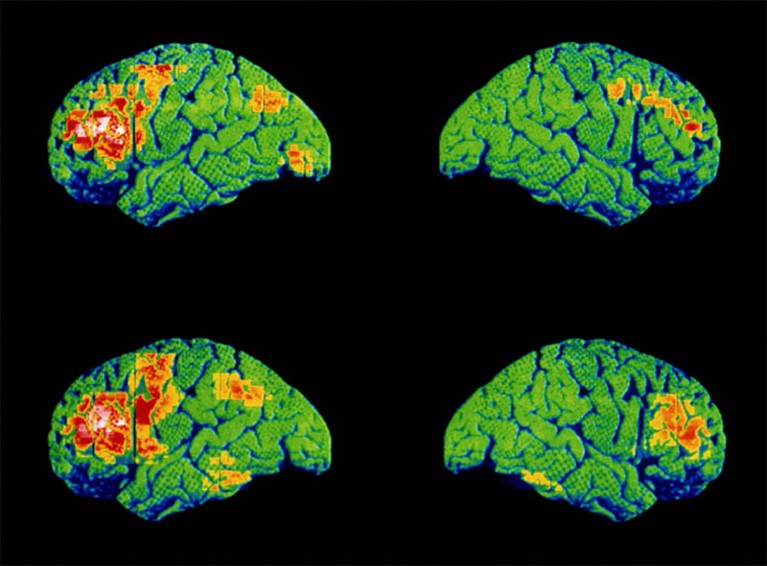
Scans showing brain activity during speech for a person with schizophrenia (bottom) and one without (top).Credit: Wellcome Centre Human Neuroimaging/Science Photo Library
Computer algorithms that are designed to help doctors treat people with schizophrenia do not adapt well to fresh, unseen data, a study has found.
Such tools — which use artificial intelligence (AI) to spot patterns in large data sets and predict how individuals will respond to a particular treatment — are central to precision medicine, in which health-care professionals try to tailor treatment to each person. In work published on 11 January in Science1, researchers showed that AI models can predict treatment outcomes with high accuracy for people in a sample that they were trained on. But their performance drops to little better than chance when applied to subsets of the initial sample, or to different data sets.
To be effective, prediction models need to be consistently accurate across different cases, with minimal bias or random outcomes.
“It’s a huge problem that people have not woken up to,” says study co-author Adam Chekroud, a psychiatrist at Yale University in New Haven, Connecticut. “This study basically gives the proof that algorithms need to be tested on multiple samples.”
Algorithm accuracy
The researchers assessed an algorithm that is commonly used in psychiatric-prediction models. They used data from five clinical trials of antipsychotic drugs, involving 1,513 participants across North America, Asia, Europe and Africa, who had been diagnosed with schizophrenia. The trials, which were carried out between 2004 and 2009, measured participants’ symptoms before and four weeks after taking one of three antipsychotic drugs (or compared the effects of different doses of the same drug).
The team trained the algorithm to predict improvements in symptoms over four weeks of antipsychotic treatment. First, the researchers tested the algorithm’s accuracy in the trials in which it had been developed — comparing its predictions with the actual outcomes recorded in the trials — and found that the accuracy was high.
Then they used several approaches to evaluate how well the model generalizes to new data. The researchers trained it on a subset of data from one clinical trial and then applied it to another subset from the same trial. They also trained the algorithm on all the data from one trial — or a group of trials — and then measured its performance on a separate trial.
The model performed poorly in these tests, generating seemingly almost random predictions when applied to a data set that it had not been trained on. The team repeated the experiment using a different prediction algorithm, but got similar results.
Better testing
The study’s authors say that their findings highlight how clinical prediction models should be tested rigorously on large data sets to ensure that they are reliable. A systematic review2 of 308 clinical-prediction models for psychiatric outcomes found that only about 20% of models underwent validation on samples other than the ones on which they were developed.
“We should think about it much more like drug development,” says Chekroud. Many drugs show promise in early clinical trials, but falter in the later stages, he explains. “We do have to be really disciplined about how we build these algorithms and how we test them. We can’t just do it once and think it’s real.”
Postdoctoral positions in Quantum NanophotonicsWe are looking for highly motivated and skilled postdoctoral researchers in integrated photonics and quantum device engineering.Gothenburg, SwedenChalmers University of Technology
PhD positions in Quantum NanophotonicsWe are looking for highly motivated and skilled PhD students in integrated photonics and quantum device engineering.Gothenburg, SwedenChalmers University of Technology
An essential round-up of science news, opinion and analysis, delivered to your inbox every weekday.Email addressYes! Sign me up to receive the daily Nature Briefing email. I agree my information will be processed in accordance with the Nature and Springer Nature Limited Privacy Policy.Sign up
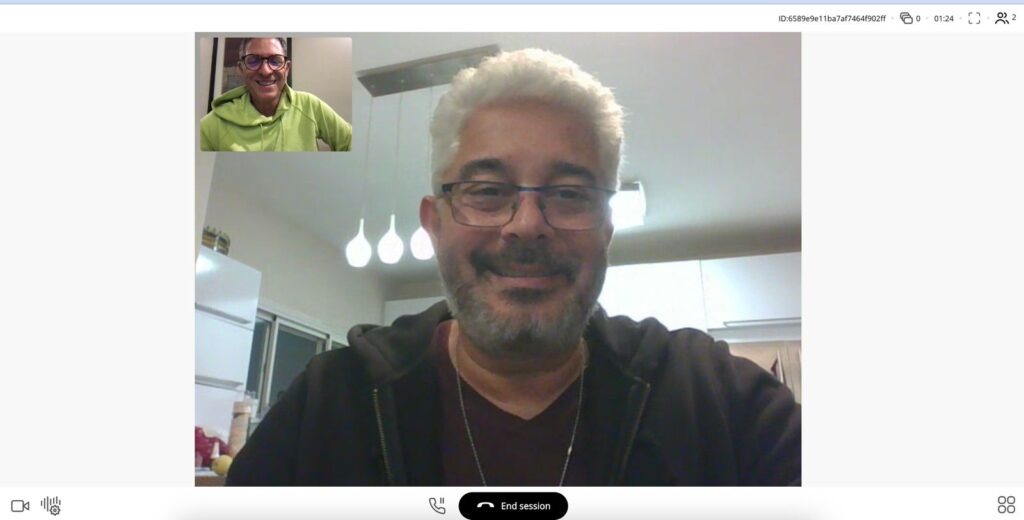
The Ezra Live video call platform is available on desktop and mobile devices (Depositphotos)
Many Israelis have been struggling with their mental health since October 7, when the Hamas terror group sent thousands of rockets into Israel from Gaza and embarked on a rampage of murder, rape and mutilation that triggered a months-long war.
Israel’s state and non-governmental mental health organizations are cognizant of the issue, and campaigns and programs for mental health awareness have been prominently featured in the media.
One of those non-governmental projects is Ezra Live, a digital platform created post-October 7, which connects people wishing to talk by video or audio to someone wishing to listen.
The Ezra Live platform allows callers to speak to volunteers face to face or solely by audio (Courtesy)
The past three months have been a massive challenge for Israelis. Hamas has kept up the rocket fire on the civilian population, which is still coming to terms with the attack on the Jewish holiday of Simchat Torah that left 1,200 people dead, thousands wounded and hundreds more taken hostage in Gaza.
Hundreds of thousands of Israeli reservist soldiers have also been called to service under emergency Order 8, many to fight inside Gaza where their families at home cannot contact them for long periods at a time.
And the toll on the emotional well being of the population is marked. A recent study by Israeli and American researchers found that the number of adults in the country – both Jewish and Arab – suffering from PTSD almost doubled following the attack to 29.8 percent. It also found that 42.7 percent of Israelis were experiencing generalized anxiety disorder (GAD) and 44.8 percent were suffering from depression.
In comparison, 7.5 percent of New Yorkers experienced symptoms of PTSD following the September 11, 2001 attacks on the World Trade Center.
Many houses on Kibbutz Be’eri were burned down by rampaging Hamas terrorists on October 7 (Courtesy Yoav Keren, CC BY-SA 4.0)
Ezra Live is the brainchild of Israeli entrepreneur Yuval Moed, CEO of the Tel Aviv and Michigan-based Eazyshow company that created an AI-integrated video chat platform for the financial sector.
After the terrible events of October 7, he realized that the video chat capabilities could be used to help alleviate some of the symptoms of the trauma experienced by Israelis.
Moed tells NoCamels that his first instinct on October 7 was to try to help in the best way he could. Indeed, Ezra is the Hebrew word for “help.”
Through talking to experts in the field of emotional support, he understood that sometimes people undergoing trauma simply need someone to listen – and that his own company, with its basis in human engagement, could be jury-rigged to become a solution.
“We came up with a bunch of guys in the industry who understand [engagement] and said let’s try to take the infrastructure, the video engagement infrastructure that we have and create a solution where we could help people with their emotional needs,” he says.
Moed and his group of high-tech experts then created the Ezra Live website, where those seeking solace simply click a button labeled “Yes, I wanna talk” and are connected to a volunteer waiting to listen and offer comfort.
“What happened on October 7 generated a huge trauma that I don’t think has been experienced within our country and the Western world since the Holocaust,” Moed says. “Such atrocities.”
With its row of glossy chambers connected by squiggly tubing, the AI-powered setup looks more like a futuristic brewery than a chemistry lab.
Yet when given a prompt by its human operator—”make aspirin”—the system leaps into action like a well-oiled team of chemists. One AI takes the command and scours the web to optimize a “recipe” for the medicine. Another AI translates the results into code, and a third directs robotic arms to carry out the experiment.
The system, called Coscientist, is the latest in a push to automate chemistry with large language models. The type of algorithm behind the popular ChatGPT, large language models have taken the world by storm with their ability to understand language, audio, and image inputs, while doling out useful—if not always accurate—responses.
AI is already making a splash in the lab. From modeling protein structures—the solution to a half-decade-long conundrum—to hunting patterns in genetic data and “hallucinating” new chemical drugs such as antibiotics, the technology is set to transform science.
Coscientist is one of the first of its kind. Developed by Dr. Gabe Gomes and colleagues at Carnegie Mellon University, it autonomously learns recipes for chemical reactions and designs lab procedures to make them in just a few minutes.
As a proof of concept, the end-to-end system pulled off a complex chemical reaction that won the 2010 Nobel Prize in chemistry for its critical role in drug development.
“This is the first time that a non-organic intelligence planned, designed, and executed this complex reaction that was invented by humans,”said Gomes.
A quirk of the system is its modularity. By splitting up chemistry tasks, Coscientist behaves like a team of chemists working in tandem to find a solution, speeding up the entire drug discovery process.
Coscientist brings “the vision of self-driving laboratories a step closer to reality,” wrote Ana Laura Dias and Dr. Tiago Rodrigues at the University of Lisbon, who were not involved in the work.
Breaking Bad
Chemistry is a lot like perfecting a recipe.
It starts with a goal: Make a chemical with the least waste. Just as cooks surf the web for recipe ideas, chemists dig into published literature and design a protocol.
It’s a tedious process. Challenged with synthesizing a new chemical, chemists spend hours searching databases of similar molecules and reactions. They need multiple rounds of research, experimentation, and revision before they get the desired molecule with minimal waste.
“Chemists, therefore, long aspired to develop automated systems to facilitate their work,” wrote Dias and Rodrigues.
One major step is injecting different types of chemicals at the exact amounts and perfect times into multiple “chambers” so separate reactions can take place. Normally, this is done by hand, but now affordable robots can easily be programmed to set up new chemical interactions. They’re not perfect, however. Most can only perform one reaction.
“These limitations have frustrated the dream” for autonomous robot chemists, wrote Dias and Rodrigues.
Here’s where OpenAI’s GPT-4, the algorithm behind ChatGPT, comes in.
Hello, Chemical World
Comparing a range of large language models, such as GPT-4, Claude, and Falcon, the team found Coscientist could generate detailed “recipes” for making the chemicals at high yields. The new study is a three-step process, stringing multiple fine-tuned instances of GPT-4 into an automated chemist.
The first is the AI librarian, which learns from a variety of online sources. When the team tracked its preferences, they found the AI spent the most time visiting literature from top chemical journals. This insight is valuable. Often described as a “black box,” large language models don’t always explain how they calculate their results. Coscientist, on the other hand, lays out its reasoning like a chemist writing notes in a lab book, so its work is easier to reproduce.
The second AI in Coscientist “reads” user manuals for robotic arms that dispense chemical reactants—like reading a pamphlet on how to work a new lawnmower, the AI consumes the knowledge to “understand” its instructions.
Finally, the third AI operates a robotic arm to synthesize chemicals. It also has a built-in “professor mode,” which analyzes which reactions work—and which don’t—to feed back into the system for further fine-tuning.
A Nobel Effort
In an initial test, Coscientist acted as a sort of bartender.
Loaded with multiple colored liquids, the AI controlled the robotic arm to carefully spray each color into a line inside a 96-well grid. This is like trying to make multi-colored ice cubes in an ice tray without spilling. It mostly worked. With a simple command “draw a blue diagonal,” Coscientist was able to follow the instructions (with a bit of human help).
Ramping up the difficulty, the team next challenged the system to synthesize seven blockbuster drugs, including common pain-relievers such as aspirin, acetaminophen—the active ingredient in Tylenol—and ibuprofen.
Coscientist calculated how much of each ingredient was needed for each robotic arm and mixed them at optimal speed. The AI struggled the first time around, but with practice, it learned when the robotic arms overheated or when chemicals boiled over. Eventually, like a seasoned cook, the AI homed in on a perfect recipe for the desired product.
The team also asked Coscientist to optimize a range of chemical reactions to increase yield—a notoriously difficult chemistry challenge. With just 10 examples, the system performed better than an established machine learning method. Coscientist struggled when its GPT components didn’t have enough examples, but it quickly learned. After every iteration, it acquired “knowledge” and adapted its strategy for planning the next step over time.
For now, Coscientist is a bit like a new chemistry student. It can read and analyze current publications, generate ideas, and test them. But it also sometimes spews out nonsense, a downfall plaguing most large language models. It’s therefore necessary for chemists to use their intuition and check the results. Real-world chemical problems are also far morecomplex than those tackled in the study, especially in the realm of biology.
With more development, the team envisions Coscientist as a helper. It can quickly test a range of chemical recipes, and chemists can get a good night’s sleep as the robotic system churns away.
“We can have something that can be running autonomously, trying to discover new phenomena, new reactions, new ideas,” said Gomes.
If it works for the head of one of America’s hottest and most cutting-edge tech companies, maybe the good old-fashioned to-do list will work for you, too.
As head of much-buzzed about AI startup OpenAI (and chief protagonist in its recent leadership drama), Sam Altman clearly has access to the hottest, most advanced tech tools in the world. Which does he use to manage his own workflow? Sorry for the anti-climax, but the answer is good old-fashioned paper to-do lists.
“I highly recommend using lists,” Altman wrote on his blog a few years back (the post contains a ton of other info on Altman’s routine if you’re interested), adding:
“I make lists of what I want to accomplish each year, each month, and each day. Lists are very focusing, and they help me with multitasking because I don’t have to keep as much in my head. If I’m not in the mood for some particular task, I can always find something else I’m excited to do. I prefer lists written down on paper.”
This simple pen-and-paper approach to productivity contrasts with more elaborate systems preferred by the likes of Bill Gates, Barack Obama, and Shopify’s Tobias Lutke, which involve multiple “buckets,” color coding, and recurring review processes. But both Altman and other experts in psychology and productivity offer compelling reasons why it may be the best choice for many other busy entrepreneurs.
The scientific case for the old-fashioned paper to-do list
Altman explains that he prefers paper lists because of how easy and accessible they are. “It’s easy to add and remove tasks. I can access them during meetings without feeling rude,” he notes. They also help him determine and remember what’s most important in what must be an incredibly hectic schedule. “I re-transcribe lists frequently, which forces me to think about everything on the list and gives me an opportunity to add and remove items,” he adds.
In many of these beliefs, Altman has the backing of experts. Multiple studies have shown that when taking any kind of notes, we remember more of what we write if we use pen and paper rather than a laptop. Various productivity gurus also assert that breaking big projects into list-size tidbits can help immunize against procrastination. It’s a lot less overwhelming to see “call so-and-so about data availability” than “finish sales projections.”
Altman also isn’t alone in insisting that checking items off a physical list can provide a big bump of satisfaction and energy. Top venture capitalist Marc Andreessen, for instance, has written about his love for his “done list.” It’s just what it sounds like — a written list of the day’s accomplishments. Each time you add an item to the list, “you get that little rush of endorphins that the mouse gets every time he presses the button in his cage and gets a food pellet,” he says. A good old-fashioned to-do list can provide the same kick of motivation.
There are even benefits of pen-and-paper to-do lists that Altman doesn’t mention. Psychologists have discovered that our brains naturally remind us again and again of uncompleted tasks. This is called the Zeigarnik effect, and it’s why your undone chores haunt your days and disappear from your brain as soon as they’re completed. It probably explains why Altman’s lists make him feel he doesn’t “keep as much in my head.” (It’s also why something called the one-minute rule can be such a sanity saver.)
Even if, like me, you sometimes write and then lose or forget about them, to-do lists are still doing something important for your productivity. Writing down the task is a kind of minor completion that quiets the Zeigarnik effect, eliminating nagging worries about things you need to do so you can actually concentrate on getting some of them done.
If it’s good enough for Sam Altman …
All of which boils down to a very simple takeaway. If you have a complex or high-tech productivity system that’s working well for you, congrats! Keep at it. But if you’re in the market for a better way to manage your tasks this year, maybe give the plain paper to-do list another look. If it’s good enough for the CEO of one of America’s most cutting-edge tech companies, it’s probably good enough for a great many entrepreneurs.
JAN 8, 2024The opinions expressed here by Inc.com columnists are their own, not those of Inc.com.
A refreshed look at leadership from the desk of CEO and chief content officer Stephanie Mehta
In 2007, Steve Jobs presented the iPhone to the public. Several months later, the day the phones went on sale, the Guardian published an article headlined “iPhone set to struggle”.
But despite their sudden ubiquity, there’s still a lot we don’t know about how our smartphones are affecting us. Are they alienating people from each other, or helping them to connect with others? Do they affect children differently than adults? And how do we step away from our phones if our whole lives are on them?
There isn’t a broad consensus as of yet; different studies draw different conclusions. To attempt to capture the current state of the discussion surrounding smartphones, we spoke to five experts. Interviews have been edited and condensed for clarity.
Meet the experts
Why are so many people worried about their phone use?
Anna Lembke: Because many people feel themselves caught in the vortex of compulsive overuse. Some people even hate their phones, but still struggle to reduce use. In 2021, US adults spent on average eight hours with digital media each day. A growing body of evidence shows that the more time a person spends consuming digital media each day, the more likely they are to struggle with depression and anxiety. We see clinically that when depressed and anxious patients spend less time online, mood and anxiety improve without our having done any other intervention.
Gloria Mark: Yes. We know empirically that people’s attention spans have shortened over the last 20 years. We also know anecdotally, from what people report, that they’re more distracted.
Amy Orben: It’s a very human trait to worry about new technologies: people were concerned about the printing press corrupting society. So that’s a major part of it. But also the technologies are different now, they’re more personalized. I think the concern about phones as a singular entity are overblown. Phones are tools. And like all other technologies, their impact really depends on who uses them and how. There are valuable concerns about specific types of phone use, and specific ways technologies are designed that I think we should discuss as a society.
Laurence Steinberg: I think people worry when they feel they can’t control their use, especially if they’ve tried to stop or cut back and failed, or if they believe their use is interfering with other aspects of life.
Zoetanya Sujon: Every new technology, when it comes out – from the landline phone to the television – brings to the surface concerns about what is real, what is mediated, what is performative? In that sense, people are right to be concerned, because they have lots of uncertainty ahead. The smartphone is also one of the most intimate technologies. It’s in our pockets. We put it on our faces, it’s close to our bodies. It also has such a wide nexus of uses – work, social, private, very private. When someone’s looking at their phone, you don’t know what they’re doing. But there are also a lot of things that are very pro-social, beneficial and positive. So yes, people are right to worry, but they’re also right to think about things that are more positive.
How does smartphone use affect children and teens differently than adults?
Lembke: Children’s brains are going through a rapid process of development where the circuits they use least are pruned [cut back] and the circuits they use most often made more efficient through a process called myelination. Hence, childhood and adolescence is a critical time of building neural circuits that will provide the scaffolding for the adult brain.
If children are spending all their time online, they will have a complex and elaborated neural scaffolding for that but not for other important activities, like learning delayed gratification, frustration tolerance, in-person socialization, mind-body connection, etc. Also, adolescents are exquisitely sensitive to social cues and so are more likely to be influenced by the social contagion effect of the internet.
Mark: Children have developing minds, and there’s a part of the mind that’s called executive function, and this doesn’t really mature until children become teenagers. It’s a really important part of the brain because it helps us filter out distractions. But for kids, this part of the brain isn’t developed completely, so they don’t have as great an ability to control distractions as people who are older.
Kids also develop habitual behaviors. With using their phones, once they have these habits developed, they’re really hard to break. If, instead of spending their time playing outside with other kids, they develop a habit of spending time on your phone, they lose a proprioceptive sense of behavior – an understanding of their body moving through space. It’s important for kids to get outside, run around, play and develop coordination, but being on their phones and computers doesn’t give them the chance to develop that.
Orben: A key part of these “moral panics” [surrounding new technologies] is that, historically, they’re often about people who are not power holders in society. Largely women and kids. But I do think there are reasons why we might be more concerned about young people. They are the canaries in the coalmine. They use technologies early, and they often adopt them the fastest. So by studying them, we might be able to predict what will happen in other groups. They’re also in a period of development where their brains are still developing their social skills. And if you’re a teenager, that’s an inherently social time where you really care about what other people think, and where the social parts of the online world can have a heightened impact.
Steinberg: The literature on teenagers is inconclusive, and few studies have the ability to determine causality. Some studies find very small correlations between social media use and mental health problems, but most research can’t distinguish between cause and effect, and there are studies that show that kids who are depressed tend to use social media more than non-depressed kids, so that depression is “causing” the social media use, rather than the reverse. Very few studies have adequate controls for confounding variables.
Sujon: There’s huge debate here. There’s probably as much evidence about the harmful effects of media, including smartphones, as there is about the positive effects. One of the big concerns is that children are still developing, and have less capacity to navigate things like advertising, and the wild and startling worlds that phones give access to.
What do we know about how phones affect our day-to-day social interactions?
Lembke: Social media invites comparisons between ourselves and other people, leaving many of us feeling that we can never measure up to the illusory standards of achievement, beauty or happiness that are portrayed online. This is turn can contribute to learned helplessness, depression and anxiety. The AI algorithms that track us push to more extreme content which can contribute to polarization and consumption of more extreme content, neither of which is good for fostering civil discourse or for emotional and mental wellbeing.
Social media can maintain relationships, but it’s not going to enable people to develop meaningful, deep relationship
Dr Gloria Mark
Mark: It’s decreasing the amount of social interaction people have with each other. People, in my view, are losing the ability to develop deep relationships with other people, because where is their attention? It’s on social media. And social media can maintain relationships, but it’s not going to enable people to develop meaningful, deep relationships.
Orben: We shouldn’t be surprised that many things can have both a positive and a negative impact. For example, a group that people are very interested in is LGBTQ+ teenagers, because they often say that being online is a crucial part of their wellbeing because it allows them to connect with similar people and explore their identity. But they’re also a group that are much more bullied online and can have much more negative experiences. It’s a complex space, and we need to acknowledge that.
Steinberg: With respect to teenagers, the research suggests that if teens use social media mainly to stay in touch with friends whom they also see face to face on a regular basis, it isn’t problematic. But when using phones replaces face-to-face interaction, it can be. So it’s the absence of face-to-face interaction, not the presence of phone use, that’s the problem.
Sujon: It’s very contradictory. You get things in the media like “phubbing”, when people are snubbing [ignoring] other people to be on their phones. But there are ways in which it’s pro-social. People can create beautiful things with photos, film and videos. YouTube, for example, is one of the important streaming services where people can be creative and find community. That’s really powerful. I would say that phones are absolutely not a luxury. If you don’t have one, you’re excluded from many important social, professional and everyday institutions. If you need to make a hospital appointment on a mobile website, you will be physically at risk if you can’t do that.
Should smartphone use be more regulated?
Lembke: Yes. This is a communal problem. All branches of societies, from individuals to families to schools to corporations to governments, need to come together to help solve this problem, especially when it comes to exposing children to harmful use. Schools should top-down ban smartphones from schools, not just the classroom but from use at any point during school hours so that kids will be freer to learn and to socialize. If there are safety concerns, the child can have a dumb phone that has calling capacity for emergencies. We need to build an infrastructure inside of medicine to help those who become addicted to the internet, from pornography to sports betting to video games to social media.
Mark: I am a big proponent of Right to Disconnect laws. France has one, Ontario, Canada, has a policy, and Ireland has a policy. I will say, there was a study done in France to look at how well the law worked, and they found it to be a mixed bag. Employees liked it, but the employers didn’t. So, employers didn’t always follow it, and it wasn’t necessarily enforced. That tells me there really needs to be a cultural change along with policies and laws.
Orben: When we design public infrastructure, we consider the design, and we have regulations in place and decision-making processes that are inherently public. The issue with technology is that we’re dealing with private – but kind of public – infrastructure, where those decisions are made behind closed doors by people who have different motivations, including profit. Just because I acknowledge the complexities of impact doesn’t mean that I don’t believe we should do better in ensuring that our public infrastructure around how we interact online is safe, environmentally appropriate.
Steinberg: I think parents should regulate their kids’ use. I don’t think the evidence is strong enough or conclusive enough to warrant government intervention, though. I also think that social media companies should provide guidance and advice for parents and teenagers on healthy versus unhealthy use.
Sujon: This is tricky. You look at schools and even some universities saying ‘no phones’, and I think, in the environment we live in, that’s a little bit dangerous. If someone needs to talk to a family member, and they can’t, or they’ll be punished, I don’t think that’s necessarily healthy. Where we need regulation is around content providers and streaming services. Between YouTube’s recommendation systems, which often feed negative content to keep people there and in this state of excitement, and things like TikTok, it’s really difficult to regulate content that’s age-appropriate for kids, teens and adults. Those platforms need to be more regulated, and that will have an impact on how and where smartphones are used, because they are conduits towards those systems.
How do we get people to step back from their smartphones when it can feel like one’s entire life – social, professional, personal – is on there?
Lembke: It’s very hard. Encourage teens to come together in friendship circles and together take a break from their phones for four weeks. Doing it together makes it easier: less Fomo, more support. Many people who take a break from their phones for that period of time feel so much better, they are determined to use them differently, and less. By making a detailed plan of what that will look like, they often succeed.
Mark: There are things that individuals can do, but managers and organizations really need to step up and play a role. We need to see a change in culture. Managers need to communicate to teams that it’s not permissible to send electronic communications after work hours. There needs to be a collective solution.
Orben: The addiction metaphor is often quite difficult to work with, because our phones aren’t like heroin. We have to use them. And they don’t have that severe brain impact. Phones are more like food. We all need to eat, but the way our food system is set up isn’t great. It has ways in which it’s designed and shaped by corporations, and even though we’re all experiencing the same ecosystem, different people experience it in different ways. Similarly with phones, it’s about our motivations, and it’s about reflection and what works for us and what doesn’t.
Steinberg: It’s very hard because the devices serve multiple purposes. One suggestion many experts make is to not use these devices after one retires for the evening or when having meals with others. But I think that to be effective, parents need to do this as well as teens.
Sujon: It’s a complicated question, because it’s not just about smartphone use, it’s about what are you doing in your life and where your focus is. It’s about stepping back and making sure that there’s a balance across the needs you have in your life, whether those are social, creative or professional. Also, these technologies are designed to be sticky. So [overuse] is not just a personal failing, it’s not because you, or I, or our children, are incapable of regulating ourselves. They’re designed to pull us in.
Twenge: Groups have to get together to change the norms. That’s already happened to an extent. People recognize that 24/7 accessibility is not a good way to live.Gen Z fully recognizes mental health and wellness, and are at the forefront of that issue, and I think this is one of the things we’re going to start hearing more about.
How would you describe your own relationship to your phone?
In 2021, US adults spent on average eight hours with digital media each day
Anna Lembke
Lembke: I didn’t have a smartphone until about five years ago when I was required by the hospital to get one in order to prescribe medications. I was one of the only people I knew not to have a phone. In the first two decades or so of this century, I didn’t build my life around my phone, so today, I remain independent of it. I carry it with me for work, but it is turned off in my bag most of the time. I don’t give out the number. I use it when I travel for rideshare. That’s about it.
Mark: I don’t use my smartphone as much as other people. I have a colleague who’s younger than I am, and I told him that when I walk into another room, I don’t carry my phone with me. And he was shocked. I use my phone when I go running every day, and I use my phone to listen to audiobooks.
Orben: It’s a core part of my life. I went into this research area because I was part of the first generation to use social media. In my school years, it shaped me like any other part of my life did. It’s been crucial to my career. It’s also been stressful and harmful in other ways. I have mixed emotions. I think something needs to change, but also I wouldn’t want to go back to a life where I can’t FaceTime my grandma.
Steinberg: I’ve stopped using social media (I used Twitter when I was promoting a book, but that was the only use, and I’ve stopped because it wasn’t effective). I use it mainly to do email for work and the occasional text with family members. But because so much of my work is done through these media, I spend a lot of time using my phone. I will admit that my email use has become compulsive at times, mainly because I love the feeling of having an empty inbox and I don’t want to miss any email from the Nobel committee.
Sujon: I am absolutely one of those people who probably overuses it. I use it for work. I joke with my kids that I’m the mamarazzi – it’s my job to take pictures and document family life. I enjoy that. I don’t share very much information on social media. So I use my phone quite intensively, but I keep that separate from my public profiles. I also put measures in place where I try to take small, regular breaks, as well as during family time and social interactions.
What do you think the most important thing is that people need to understand about smartphones?
Lembke: Smartphones are powerful tools and potent drugs. Using them as a tool is smart. As a drug, not so much.
Mark: That it’s not a replacement for human, in-person contact.
Orben: They’re not a monolith. They are very complex technologies that combine a lot of different activities, a lot of different apps and designs. And if we talk about it as one thing, we’re inherently going to get it wrong.
Steinberg: They are tools, and they can be put to good use and bad use. I also think that what we are seeing is a pretty familiar story: whenever kids start using a new technology or form of entertainment, adults point the finger at it as the root of all things evil. It happened with dime-store novels, radio, comic books, television, rock’n’ roll, hip-hop, the internet, and so forth. Each time, critics of the technology or medium would say “this time is different”. And each time, it turned out that people were worrying with little cause for concern. So stay tuned.
Sujon: Smartphones are part of a much greater media ecosystem. They’re the interface to that media system, so it’s hard to separate the two. Being aware of that is really important.