Bulletin of the Atomic Scientists: How demagogues destroy democracy: a step-by-step global guide

The huge granite head from a statue of Lenin is removed by workers in the former East Berlin in 1991. Image courtesy of Hansi Kraus / AP Photos. Copyright 1991 AP, used with permission.

How demagogues destroy democracy: a step-by-step global guide

By John Keane | September 5, 2024

It’s a sign of our troubled times that when asked about the health of their democracies, millions of citizens curse politicians, complain about poor government performance, and express fears that their democracies are fast sliding towards a cliff’s edge (Alliance of Democracies 2024). Across the globe, they say that they’re especially worried about matters such as inequality, social polarization, political disorder, and the rise of extremist leaders. They make special mention of events such as the January 6 meltdown moment in the United States, when armed and angry protesters, hellbent on overturning an election result, stormed a legislature, cheered on by a demagogue president and his buddies.

They also mention crunch points of the kind that gripped Brazil two years later, when supporters of Jair Bolsonaro—refusing to concede his election defeat and calling for military intervention— stormed a presidential palace, destroyed art works, hurled broken furniture through shattered windows, ransacked Supreme Court rooms, and, just for the hell of it, switched on sprinkler systems to flood parts of Brazil’s Congress building.

These citizen anxieties about mob-rule moments are well-founded. They remind us of the great fragility of democracy—above all, that while building a democracy is a tough task that can take at least a lifetime, its destruction, or “democide,” is much easier and can happen faster (Keane 2009). Indeed, it has happened many times in the history of democracy. Democide always outpaces demogenesis, but the destruction of democracy’s spirit and substance typically never happens in a trice. This is the troubling truth of the demagogue-inspired insurrections we’ve seen in the United States, Brazil, and other countries in recent years: They’re not “sudden death” moments but single acts in a much lengthier traveling circus of political vanities, blustering fun, social decay, and lust for revenge—set against a backdrop of hunger for power, wealth, and fame.

Democide at the hands of demagogues has a long ancestry stretching back to ancient Greece, where strongmen playing the role of “mis-leaders of the people” (Finley 1962) were commonplace. This occurred despite efforts to prevent their rise using measures such as voting them into exile (ostrakismos), public reviews of their fitness for office (dokimasia), and legal moves (graphe paranomon) against demagogues who carelessly advocated policies that contravened existing laws.

From the time of the French Revolution, demagoguery also plagued the age of electoral democracy (think all the way back to men-on-horseback figures such as Juan Manuel de Rosas in Argentina in the late 1820s, through to the fiery, folksy “Kingfish” Huey Long in the United States of the 1930s). Latter-day demagogues—most of them aggressively macho men (think of Trump’s misogynist antics and Boris Johnson’s “boys will be boys” WhatsApp messages and tropes about the “fickleness” of women)—are again everywhere on the rise (Roose 2020).

Democracy’s auto-immune disease

How and why is this happening, across vast geographic distance—and why now? What things do demagogue wannabes have in common?

First, it’s important at the outset to understand that demagogues are neither God-given nor proof that hero-worship is a “natural” feature of the human condition, as the Scottish thinker and writer Thomas Carlyle famously argued two centuries ago (Carlyle 1841).

Demagogues are in fact an auto-immune disease of democracy, as German sociologist Max Scheler first pointed out over a century ago (Scheler 1912; Keane 2009; 2022). Put simply, demagoguery isn’t just symptomatic of the failure of democratic institutions to respond effectively to anti-democratic challenges such as rising social inequality, dashed expectations, and the dark money poisoning of elections. Demagogues inflame and self-destructively damage the cells, tissues, and organs of democratic institutions. Demagoguery resembles a cancer within the body politic known as democracy.

Or, to mix metaphors somewhat, demagoguery is like rheumatoid arthritis in that it takes advantage of the body’s immune mechanisms—freedom of public assembly, open communications, free elections, and multi-party competition—to overload those mechanisms with swarm attacks that paralyze these immune mechanisms and disease the whole body politic.

To a medical practitioner, of course, the comparisons to bioscience may be just rhetorical. But the key point is clear: Because democracies pride themselves on guarantees of “one person, one vote” and promises of dignity and well-being for all, they ask for trouble when they allow political inequalities, social injustices, and citizen grievances to take root and multiply. These failures of democracy breed feelings among citizens that are known as ressentiment (defined by 19th-century German philosopher Friedrich Nietzsche as a feeling of envious hostility toward the perceived source of one’s frustrations). They grow jealous and angry, nostalgic for an imagined great past—often including the lost possessions of empire—and hopeful for what they see as a return to greatness in the future. This disappointment and bitterness, mixed with envy and hope, are serious pathologies of democracy. They are the night soil—the untreated politico-fecal excreta—in which demagogues are hatched.

Demagogues on the trail have a nose for ressentiment. Sniffing widespread public disaffection, they take charge of a political party or coalition that claims to have a hotline to the disgruntled. Cashed up, brimming with narcissistic self-belief, and making good use of public rights of assembly and media freedoms, they set their sights on winning a forthcoming election. They issue reassuring-sounding claims of moderation. Building verbal bridgeheads to opponents, subtly pushing the boundaries of the sayable, “interlocking with the enemy” and making oneself look “harmless” (Kubitschek, 2017) are priorities. There are promises of responsible government, and moments when butter wouldn’t melt in their mouth. But as the hard campaigning gets underway, there’s lots of rough talk in the name of “the people.”

Some demagogues even claim that they are the physical, material embodiment of  “the will of the people”—perhaps most glaringly displayed in 2014, when India’s Narendra Modi said his victory was blessed by the Hindu god Lord Krishna. Gross simplifications, fearmongering, falsehoods, easy laughs, and insults by vulgar epithet are repeated in speech after speech of the typical demagogue (Roberts-Miller 2005; 2017). Nobody knows whether the demagogue believes the things he or she says. There are, meanwhile, promises to drain the political “swamp” and vows to destroy the corrupt established political caste (or la casta, as it is phrased in a pet saying of Argentina’s aggressive, flamboyant, right-wing populist president Javier Milei).

Demagogues call upon “the people” to put an end to their miseries. Demagogues urge them to vote, and to vote the right way, and even to do extraordinary things like “bring down the regime”—the keywords of the 2011 Tunisian revolution cleverly recycled by demagogue power grabber Kais Saied during his 2019 election campaign speeches (Sadiki and Saleh 2023).

Next step: With rival politicians generally unpopular and opposition parties struggling to keep up, the Leader, by now practiced in the dark arts of popular seduction, attracts a substantial following. The demagogue acts like a god on earth, a metahuman capable of raining down well-being and ill-being, arbitrarily, with impunity.

The demagogue’s rhetoric of “the people” is designed to mobilize sections of the populace to confirm who they are: The People. Demagoguery is demolatry (the worship of people rather than gods). Demagoguery is ventriloquism. Millions of disgruntled voters find the demagogue’s promises attractive. Excitement mounts as election day nears. With the help of heaps of money, determination aplenty, a decent turnout, and a measure of good luck, it’s official: The demagogue snatches victory.

There’s loud praise and loathing on social media, endless talk show talk, wild rumors, and gossip galore, and joy in the streets. The Great Redeemer demagogue is delighted. Victory in the name of the People is sweet. The demagogue says it’s a great triumph of democracy. After all, what could be more democratic than an election victory over business and government oligarchs, middle-of-the-road cartel parties, and corrupt politicians who cheat and dissemble in favour of the powerful and wealthy? Isn’t democracy a way of life founded on the authority of “the People”? Surely the mobilization of hope, the insistence that things can be different, and that all citizens should expect better confirm the levelling spirit of democracy?

Dirty tricks

Now comes the moment when the transition away from power-sharing democracy gets underway. Winning office tempts the demagogue and advisors to move quickly, to outflank and politically crush their opponents. Every political trick in the book is played. Nothing’s business as usual. The bellowing and bragging continue. There are threats and bribes in backroom meetings, dinner deals with business oligarchs, court victories, state-of-the-art dog whistling, troll factories and message bombing, calculated silence, and threats of brute force.

Thomas Cole painting showing death of Rome
In 1836, Thomas Cole—better-known for his lush, romantic Hudson River School images—did a series of five oil paintings that show the birth and death of a civilization. Called “The Course of Empire,” its highlight is the image called “Destruction” shown here, which depicts the sack and ruin of the city. The massive original painting can be seen at the New York Historical Society, which notes: “The artist’s distinctly pessimistic vision differed from that of many of his peers; in the early years of the United States’ history, its future was considered limitless.” Public domain image.

The demagogue cuddles up to media magnates: multi-billionaires like the US-based Rupert Murdoch, India’s Gautam Adani, and the Philippine’s wealthy magnate Manuel Villar. Independent media platforms and journalists (Modi calls them “presstitutes”) are special targets. Teleprompted speeches and rigged press conferences become commonplace spectacles, as Mexico’s president Andrés Manuel López Obrador showed in his daily early morning live television press conferences (mañanera), in which he harangued opponents he called “fifis,” “neoliberals,” and “puppets,” peddled “otros datos” (“other facts”), and expounded far-fetched praise of Mexico as “a beautiful and safe country.” Efforts are made to neuter, politicize, and effectively kidnap public service bureaucracies, independent regulatory bodies, local governments, and other power-monitoring watchdog institutions. Independent courts and uppity parliaments are also prized targets. (In Turkey, President Erdogan regularly denounces judges as members of the “juristocracy” while  El Salvador’s Nayib Bukele calls them “genocidal.” [Esperanza Casullo and Brown Araúz, 2023]). “Winner takes everything” is the name of the game.

The government led by the big-mouthed Grand Redeemer craves concentrated political power. It cares little for the complexity of the world (Müller 2016) or the niceties of public accountability. Unchecked ambition is the thing. The Great Redeemer prefers decrees. The point is to suck life from power-sharing democracy and the give-and-take compromises that are committed to the principle of fair treatment. Gripped by an inner urge to destroy checks, balances, and mechanisms for publicly scrutinizing and restraining power, the demagogue begins to show his or her true colors.

It’s a myth that election to office slakes their thirst for power. In Alberto Fujimori’s Peru, democracia plena (as he called it) meant hostility to what he considered the excessive, idle talk of the political class and its established media. Declaring an end to oligarchy, government secrecy and silence, the demagogue openly contradicted himself by bribing and browbeating legislators, judges, bureaucrats, and corporate executives (Conaghan 2005).

Boris Johnson dreamed of transforming the Westminster parliament into a poodle of executive power, in the name of a fictional so-called “British people.” Kenya’s Uhuru Kenyatta railed against courts run by what he termed “thugs” paid by “foreigners and other fools” who rule “against the sovereign and supreme voice of the People.” Mexico’s López Obrador ordered the rewriting of school textbooks, disbanded the federal police, harassed the National Electoral Institute and the Supreme Court, and strengthened the hand of the army. In Hungary, the government of Viktor Orbán has collared mainstream media, the judiciary, and the police and continues to breathe fire down the necks of the universities and civil society organizations.

Donald Trump was no different. His stormy four-year presidency was locked in a permanent war with the federal bureaucracy, so-called “fake news” media, the judiciary and intelligence services, and even the Boy Scouts of America. He hankered after trust in family ties and demanded loyalty from his followers, egged on by talk of the need to “bring everything crashing down” in the words of Trump enabler Steve Bannon. He accomplished this through deep budget cuts, the centralization of federal decision-making, and refusals to fill empty leadership positions. Trump fancied himself as a lollapalooza leader, a guide, a god, a redeemer who never, ever loses battles. He stood, and will stand yet again, for government by nepotism: not procedural rules that ensure fair play, but personal channels—self-styled machismo against foes at home and abroad.

Warnings

Innocent bystanders at first find the dynamics of demagoguery puzzling because the ruination of democracy is done in the name of democracy. But there comes a point when sirens are sounded: As high-level games of thrones are played out and power-grabbing gathers pace, opponents of the demagogue grow alarmed. They realize that despite all the populist bluster, the demagogue is in reality a saboteur of democracy—that the government of “the people” is driven by an inner urge to ditch and destroy the institutions and tools that monitor those in power. These “monitory democracy” checks and balances are vital for keeping an eye on power and publicly restraining its abuse by governments and corporations alike (Keane 2009; 2022). They ask a vital question: What is lost when a democracy loses its way, its spirit and substance drained of life? Few journalists and pundits show much interest in responding; those who warn that democracy is dying get limited media coverage or are forcibly silenced.

Image courtesy of Gerd Altmann/Pixabay

As protests fester, it isn’t long before the demagogue and the government of “the People” begin cracking down hard on opponents. Politics becomes charged with fighting phrases and the dark energy of violence. Trump’s urging of audiences to get tough with hecklers—“punch ’em in the face,” “carry ’em out on a stretcher”—and his advice to police officers “not to be too nice” when handling suspects was no exception, no idiosyncrasy. Backed by police kitted out in army gear, helped by kettling, rubber bullets, water cannon, and whiffs of tear gas, restrictions on public assembly and media censorship are enforced. There are arrests, court convictions, and jailings.

But it’s important to understand that rule by demagogues is not based solely on repression. Demagogues have a penchant for seduction. They treat the whole world as a stage on which they play the role of heroic central characters in blustering performances designed to win over the hearts and heads of their audiences.

There’s flattery, loud laughter, foul language, bawdy jokes, and outrageous things said as the big boss Leader carries on whipping up talk of “democracy” and “the People.” The demagogue peddles passion and prejudice, bigotry and ignorance. Demagogues brag that they are turning everything around and carry on building a pork-barrel spoils system to reward friends and punish enemies.

By this stage of the circus extravaganza, politics is no longer a give-and-take bargaining conducted in a spirit of fair-minded compromise. It degenerates into spectacles, scapegoating, dirty tricks, and permanent campaigning by a government led by a demagogue messiah. Ruling by lies and cheating (Sajó 2021) spreads, but the Grand Redeemer promises “the People” improvements in their daily lives (Krauze 2013). There is much talk of solutions to the headaches and heartbreaks of unemployment, inflation, unaffordable housing, and poor healthcare—but much of that is only talk.

Quid pro quo politics

Since winning and retaining the hearts of loyal followers is a priority, quid pro quo politics thrives, in which everything is done in exchange for something and favors are handed out to favorites. Rich friends are richly rewarded.

Ancient Greek democrats used a (now obsolete) verb, dēmokrateo, to describe how demagogues ruling in the name of the people typically teamed up with rich and powerful aristocrats to snuff out democracy.

That’s exactly what happens in our age of demagogues.

In Hungary, the Orbán government has cultivated a nouveau riche stratum of poligarchs who enjoy tax exemptions, business opportunities, and luxury living (Magyar 2016). Trump’s 2016 campaign talk of “draining swamps” in the end filled them with millionaires and billionaires.

There are, meanwhile, generous offerings of material gifts to “the People.” In the month prior to the 2022 Hungarian elections, Viktor Orbán’s government reportedly spent around 3 percent of the country’s GDP on payments to targeted voters, including big bonuses to 70,000 members of the army and police, tax refunds to nearly 2 million employees, and an extra month’s benefits to 2.5 million pensioners.

Meanwhile, in India, Modi has turned voting citizens into government beneficiaries (labharthis). In a country where 80 percent of the population is either rural or poor, his governments have actually spent less on education, health care, job creation schemes, and other long-term social investments—but won re-election in June, 2024, with the help of prime minister-branded deliveries of sacks of free rice and wheat, the setting-up of millions of personal bank accounts, “direct benefit transfers” of money, and promises of toilets and piped drinking water in every home.

Remaking the people

What comes next? The demagogue’s ruling party, helped by cunning media tactics and non-stop talk of a corrupt and untrustworthy opposition, prepares for the next election. The point is reached where ballots are used to ruin democracy just as effectively as bullets. Elections become more than elections. “Elective despotism” (as Thomas Jefferson termed it) is on the agenda. Elections resemble rowdy plebiscites, public rituals, carnivals of political seduction, or celebrations of the mighty power of the state, endorsed by the votes of millions of loyal followers.

As the transition away from democracy in the name of democracy gathers pace, something more startling happens. In the hands of the ruling party and its despot leader, the razzamatazz about “the People” has a more sinister effect: It aims to redefine who “the People” are. Desperate to tighten their grip on state power, with eyes on another election in the not-too-distant future, the demagogue and the governing party hands bread and roses to loyal followers and undecided waverers. But it also hits hard against its targeted so-called “enemies.” The government spreads uncivil language, picks political fights with its opponents, tightens border controls and builds barbed-wire fences against foreigners and so-called “foreign influences.” It cheats and lies with impunity; the blarney and blather aim to persuade millions of followers that they’re living the lie together, and that lies are an instrument of resistance to their misfortunes (Sadurski 2022). Talk of conspiracies, scapegoating, boastful exaggerations, clownery, and bullshit continue to be spread by media organs loyal to the demagogue.
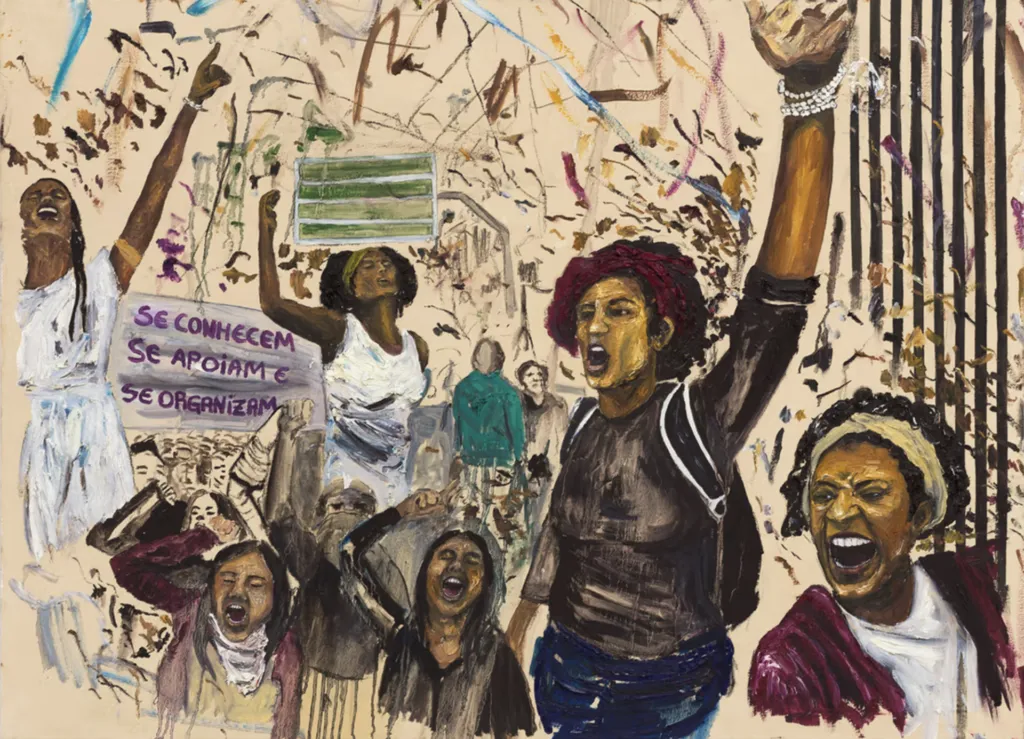
In Brazil, the art community rose up in resistance after a progressive Rio de Janeiro city councilor was assassinated. Image courtesy of Camila Soato/Zipper Galeria

The signature campaign tactic is stirring up trouble about who counts as “the People.” A new kind of demogenesis takes hold. Peddling fears of enemies within, the government moves to ostracise people deemed not to belong to the “real people” (Donald J. Trump). Past demagogues railed against monarchs, aristocrats, railroad magnates, bankers, and Chinese immigrants. Today’s demagogues target Muslims and their so-called “terrorism” and disloyalty to an imaginary “Hindu nation” (Modi). Elsewhere they spit at liberals, ethnic minorities, and environmental activists. “Poles of a worse sort” (Kaczyński), “Moroccans” (the Netherland’s Geert Wilders), people who are not “real Hungarians” (Orbán) and “proponents of anti-Semitism” (Benjamin Netanyahu) are warned. So are dark-skinned people arriving on boats, same-sex parents, dissident intellectuals, and other opponents of Italianità (Giorgia Meloni). The Great Redeemer repeats, and repeats again, that the government enjoys the backing of an authentically “sovereign People.” That’s why winning the next election means creating a new “people”—a homogenized people who (it’s said) are the true foundation of a true democracy ruled by a true leader whose strength comes from the true “People.” It is as if elections are turned upside down. It’s an Alice in Wonderland dynamic: The government votes in the people.

Despotism

The endgame: Past experience confirms that demagoguery is neither necessary nor inevitable. Demagogues can indeed be stopped in their tracks: dumped by party rivals, forced into exile by a coup d’état, jailed or assassinated. Demagogues can also be outflanked by long-lasting democratic reforms, as happened in the United States during the Progressive era, which countered “The Chinese Must Go!” and other outbursts of populist bigotry and citizen grumbling with inclusive reforms such as a directly elected Senate (1913), the full enfranchisement of women (1920), municipal socialism, new laws covering income tax and corporate regulation, and the eight-hour working day for all wage earners in the country (Hofstadter 1955).

In our troubled times, what is arguably needed to counter demagoguery is not only more citizen involvement in public life—what has been termed “deliberative democracy”—but more robust ways of blocking predatory power, building sharp-toothed watchdog networks and institutions capable of rolling back unaccountable corporate and state power, protecting life on our planet, and generally fostering the spirit of greater social equality among citizens who value free and fair elections, welcome media diversity, and feel utterly comfortable in the company of different others who are not treated as “enemies” but as partners, strangers, competitors, citizens, and friends.

But if few or none of these reforms happen, demagoguery is bound to triumph. Democide in the name of democracy becomes the new reality. The butterfly of open, power-sharing democracy becomes the caterpillar of a weird new kind of government-controlled political system in which most people feel they have little or no influence over the big decisions shaping their lives. A corrupted form of counterfeit democracy triumphs. Business fortunes are made. The rich become super-rich. Elections are regularly held and talk of “the People” is constant. But democracy now resembles a fancy mask worn by wealthy political predators. Contemporary cases otherwise as different as Modi’s India, Vučić’s Serbia, and Maduro’s Venezuela show just how quickly this can happen—it takes no more than a decade—and why the resulting dummy democracy isn’t old-fashioned tyranny or military dictatorship or describable as a single-ruler horror show the ancients called autocracy. It mustn’t be confused with 20th-century forms of fear-ridden fascism and Soviet totalitarianism. It’s more than the triumph of heavy-handed “authoritarianism” (Keane 2020).

The endgame is a strangely new kind of despotism: a corrupted state ruled by a demagogue, backed by government and corporate oligarchs with the help of pliant journalists and docile judges, a top-down form of government secured by the combined force of the fist and the voluntary servitude of millions of sometimes grumbling but ultimately loyal subjectsprepared to lend their votes to a Leader who promises them future material benefits in exchange for their obedience as a fictional “people.” A phantom democracy.

References

Alliance of Democracies. 2024. Democracy Perception Index. Copenhagen. Available at https://www.allianceofdemocracies.org/wp-content/uploads/2024/05/DPI-2024.pdf

Carlyle, T. 1841. On Heroes, Hero-Worship, and the Heroic in History. London. E-book available via Project Gutenberg at: https://www.gutenberg.org/files/1091/1091-h/1091-h.htm

Casullo, M., and Brown, H. 2023. Populism in Central America: The Missing Piece to Understand a Global Phenomenon. (Published as El populismo en América Latina. La pieza que falta para comprender un fenómeno global.) Buenos Aires.

Conaghan, C. 2005. Fujimori’s Peru: Deception in the Public Sphere. Pittsburgh: University of Pittsburgh Press.

Finley, M. 1962. “Athenian Demagogues.” April. Past and Present. Volume 21. pp. 3-24. Oxford: Oxford University Press

Hofstadter, R. 1955. The Age of Reform From Bryan to F. D. R. New York: Knopf.

Keane, J. 2009. The Life and Death of Democracy. London and New York.

Keane, J. 2022. The Shortest History of Democracy. London, Melbourne, New York.

Krauze, E. 2013. Redeemers: Ideas and Power in Latin America. New York: Harper Perennial

Kubitschek, Götz. 2017. “Selbstverharmlosung”, Sezession 76 (February), pp. 26-28. Available at https://sezession.de/wp-content/uploads/2018/10/Sez76-Selbstverharmlosung.pdf

Magyar, B. 2016. Post-Communist Mafia State: The Case of Hungary. Budapest: Central European University Press.

Müller, J-W. 2016. What Is Populism? Philadelphia: University of Pennsylvania Press

Roberts-Miller, P. 2005. “Democracy, Demagoguery, and Critical Rhetoric.” Fall. Rhetoric & Public Affairs. Volume 8, Number 3. pp. 459–476 Michigan State University Press

Roberts-Miller, P. 2017. Demagoguery and Democracy. June 13. Austin: The Experiment.

Roose, J. M. 2020. The New Demagogues: Religion, Masculinity and the Populist Epoch. Milton. http://www.taylorfrancis.com/books/e/9780429431197

Sadurski, W. 2022. A Pandemic of Populists. Cambridge: Cambridge University Press. https://doi.org/10.1017/9781009224543

Sadiki, L., and Saleh, L. 2023. “The Fight for Democratization in Kais Saied’s Tunisia: A Battle of Populisms?” January 30. Rethinking Populism. https://rethinkingpopulism.net/the-fight-for-democratization-in-kais-saieds-tunisia-a-battle-of-populisms/

Sajó, A. 2021. Ruling by Cheating. Cambridge Studies in Constitutional Law. Cambridge: Cambridge University Press

Scheler, M. 1912. Üeber Ressentiment und Moralisches Werturteil. Leipzig, Germany.

Together, we make the world safer.

The Bulletin elevates expert voices above the noise. But as an independent nonprofit organization, our operations depend on the support of readers like you. Help us continue to deliver quality journalism that holds leaders accountable. Your support of our work at any level is important. In return, we promise our coverage will be understandable, influential, vigilant, solution-oriented, and fair-minded. Together we can make a difference.

Make your gift now

Keywords: Elections, demagoguery, democracy, despotism, polarization, ressentiment
Topics: Special Topics

Posted in Uncategorized | Tagged , , , , | Leave a comment

The Free Press: Yasmine Mohammed. I Was Forced to Marry. In Iraq, Nine-Year-Old Girls Could Share My Fate.

Because I lived in Canada, I could escape my abusive husband. But thousands of wives across the world are trapped, writes Yasmine Mohammed for The Free Press.
Yasmine Mohammed (bottom) was forced into marriage as a teenager. Her mother chose a husband who abused her. (All photos courtesy of the author)

I Was Forced to Marry. In Iraq, Nine-Year-Old Girls Could Share My Fate.

Because I lived in Canada, I could escape my abusive husband. But thousands of wives across the world are trapped.

By Yasmine Mohammed

September 11, 2024

Recently, Iraq took a concrete step toward a heinous objective: to allow men to marry nine-year-old girls.

Is the world up in arms about this barbarity? Hardly.

Few in the West even realize that child marriage is already prevalent in Iraq. Though Iraqi law currently prohibits individuals under the age of 18 to wed, children as young as 15 can get married with the consent of both a judge and a guardian. And yet religious leaders often flout this law by conducting “unregistered” wedding ceremonies.

Last year, the United Nations found that in 22 percent of Iraq’s unregistered marriages, the bride is under age 14. And despite the law, 28 percent of Iraqi girls are married before reaching adulthood.

Feminist groups have been campaigning for the government to do more to protect girls from underage marriage for years—but the government appears to be running in the opposite direction. Last month, in Iraq’s parliament, religious conservatives proposed an amendment to family legislation. Currently, the state has the final say in family matters; if this legislation passes, couples would be able to give religious leaders complete authority over their affairs—to dictate whether a wife may divorce, for instance, or whether parents may marry off their nine-year-old daughter to a man three times her age.

The draft legislation passed its first reading.

It’s worth mentioning here that marital rape is not recognized as a criminal offense in Iraqi law. Allowing minors to marry effectively legalizes child rape.

Religious clerics would object to this characterization. According to Islamic scripture, the prophet Muhammad married Aisha when she was six years old, and consummated the marriage when she was nine. If the holiest man—the greatest role model ever to have lived—did something, the clerics might say, then how can it be wrong? 

I was forced into marriage as a teenager, a nineteen-year-old. My mother chose a husband who abused me. Fortunately, I was in Canada, so it was possible—though difficult—for me to escape. But once you have heard my story, please pause to imagine what it would be like to suffer the same fate if you were a nine-year-old girl in Iraq.

I was born in Vancouver to an Egyptian mother and Palestinian father. My parents divorced, and when I was six years old, my mother married an Egyptian man who already had a wife. In Islam, a man can have up to four wives.

My stepfather entered our lives and deemed everything haram—religiously forbidden. Riding a bike? Haram. Listening to music? Haram. Celebrating birthdays? Haram. Swimming lessons? Haram. Playing with non-Muslim friends? Haram.

My childhood was a nonstop cacophony of haram, haram, haram. 

When I reached that important age of nine, my head was wrapped in a hijab, and I was sent to an Islamic school in Vancouver, where I was taught to keep my eyes low and my voice lower: to be a submissive girl.

When I failed, I was punished. If I accidentally missed prayer, or failed to memorize the Quran correctly, I was whipped—on the soles of my feet, so that my wounds weren’t visible to the world. Sometimes, the pain was so bad it was hard for me to walk.

One day, when my stepfather saw that I had spelled my name with a J—Jasmine, not Yasmine—he accused me of trying to be more “Western.” For this crime, the retribution was particularly harsh: I was hung upside down by my ankles.

I hated every single second of my childhood. My mom was under a spell, I thought, and I yearned for it to break; I wanted to go back to life the way it was before she married that man.

When I turned 13, there was a ray of hope. I was allowed to go to a public school, because there was no Islamic high school in my area of Vancouver. There, I confided in one of my teachers that my home was abusive. He alerted law enforcement, and an investigation ensued, but the judge eventually ruled that it was not appropriate for him to protect me from my abusive family—because corporal punishment was simply part of our culture.

If I had been a blonde, blue-eyed child with a German family, or an American one, I might have been protected. But because it was an Egyptian man who was subjecting me to unspeakable acts of violence, the abuse was apparently acceptable to the Canadian state. I had to endure it.

Yasmine’s school portrait. She was able to get student loans, go to university, and support herself and the daughter she had with her arranged husband.

In the years since, I have spoken to hundreds of women who have had similar experiences across the West—who have been let down by law enforcement because of cultural relativism, the progressive ideal that we shouldn’t hold other cultures to our own standards, even when those standards are the law. 

There’s my friend Sadia Khan, for instance, who grew up in the UK with Pakistani parents. (Her father was born in the UK; her mother, in Pakistan.) When she was 15, her parents found out she had a boyfriend, and beat her for it. When social services got involved, they sent a translator—even though Sadia’s father is a native English speaker. The aim was to be “inclusive.” But the translator told her parents, in Urdu, that if they wanted to protect their daughter, they should send her to Pakistan to get married before she turned 16, when she would gain more rights in the UK.

After my own experience of being failed by Western authorities, my family called me a traitor. They taunted me. I had gone running to the accursed nonbelievers, and for naught. They didn’t care about me. 

The experience diminished me. I stopped fighting. And at nineteen, I was coerced into marrying a terrorist, a member of al-Qaeda named Essam Marzouk, who is currently imprisoned in Egypt. My mother felt that he was “strong enough to control me.” Finally, she could offload her troublesome teen to a man who would keep her in line and keep her quiet.

And it worked. I was buried, head to toe, in a black niqab. Thick black socks, gloves, and abayas—long, robe-like garments—were all delivered from Saudi Arabia. Every inch of me was shrouded; I was cut off from humanity entirely. My mind and soul began to slowly rot. 

Meanwhile, my husband began to beat me for my insubordination. Only a whore would have the curtains open so that any man passing by could see her without a hijab! We lived on the seventeenth floor of a Vancouver apartment building. Do lecherous Western men have wings?

I was reminded that Allah had given men the divine right to beat their wives, and to rape them. A wife is property. Her consent is irrelevant.

When I learned I was pregnant with this man’s child, my emotions were mixed. But the second my daughter was born, I felt certain for the first time in years: I knew I had to protect her, and this primal instinct gave me courage I had previously lacked. Her father—with my own mother’s help—was planning to take my baby to Egypt so that female genital mutilation could be performed on her. I was planning our escape.

Yasmine (left) as a child. When she turned nine she was sent to an Islamic school in Vancouver. “I was taught to keep my eyes low and my voice lower: to be a submissive girl,” writes Yasmine.

The series of events that got me out of my husband’s house and into a cheap, illegal basement apartment was complicated. (The whole story is in my memoir, Unveiled.) But suffice it to say that I was able to get student loans, go to university, and eventually support myself and my daughter. 

I wanted nothing more than to be an example to her, to be a strong woman she could look up to. I wanted every memory of my being covered in black cloth, essentially enslaved, to be completely eradicated from her mind.

I succeeded, and not a day goes by when I am not grateful. Over the years, I’ve heard so many stories of honor killings. There was the Iranian man who beheaded his 17-year-old wife, who he had married when she was just 12. There was the Afghan woman who sought asylum in Australia with her family, only for her family to coerce her into marrying a man who would murder her two months later.

Every time I hear one of these stories, I think: That could have been me. It could have been my daughter.

When I see how many women are suffering, as I suffered, it reminds me how important it is to speak openly about my ordeal. In response, I have endured vicious criticism. Over the years, Islamic extremists have filled my inboxes with violent threats, accusations that I am a “Western puppet.”

This is the most damning insult of all in the Islamic world. It is the kind of accusation leveled at the brave women in Iran who have staged protests against hijab laws. Or at the courageous people who, last month, took to the streets of Baghdad and Basra to protest the proposed changes to Iraq’s family law. Or indeed at those who object to recent developments in Afghanistan.

Last month, Taliban leaders introduced new “vice laws” that force women to veil themselves completely in public—and prohibit them from singing, reciting, or reading outside the home. When a UN report criticized this erosion of women’s rights, Taliban spokesperson Zabihullah Mujahid claimed that the organization was assessing Afghanistan “through a Western lens.”

You have a “Western agenda.”

You see through a “Western lens.”

These accusations are shields, effectively used by theocratic leaders to deflect attention from their abuse of women and girls. But they’re also phrases that have been used time and time again by the progressive left in the West. 

When I have told my story, I have been called “self-hating,” a “race traitor,” an “Islamophobe.” A friend from high school, who was raised Catholic but has since spoken out against the Catholic Church, asked me when my book came out: Don’t you think you’re being hateful, because you have so much anger about your upbringing?

I asked him why the same could not be said about him.

With this question, he saw the flaw in the knee-jerk reaction of Western progressives to defend minority cultures. 

Why does the West not defiantly express solidarity with the women of Iraq, of Afghanistan, of any nation that stands by while women are abused by religious extremists? Too often, we are throttled by cultural relativism.

But the fear of being seen as culturally insensitive, or Islamophobic, can have catastrophic consequences. In northern England, in the ’90s, local authorities overlooked the sexual abuse of hundreds of girls by a ring of British Pakistani men; a report later found that “young people in Rotherham believed at that time that the Police dared not act against Asian youths for fear of allegations of racism.”

Meanwhile in Canada, when I was 13, a judge decided not to save me from an abusive home, because, well, every culture is different, isn’t it?

But as women’s voices are quite literally banished from public life in parts of the Middle East, I believe that, in the West, we must speak up for them. The efforts in Iraq to legalize child rape should remind everyone that there are countries across the world where girls are forced into marriages with men who believe they have a God-given right to beat their wives.

You’re not a “Western puppet” if you draw a bright moral line here. You’re not Islamophobic if you refuse to explain away these crimes as cultural differences and call them what they are: abuse.

Yasmine Mohammed is a human rights activist, author, podcaster, and university instructor. She is the founder of Free Hearts Free Minds. Follow her on X @YasMohammedxx.

To support The Free Press, subscribe today:

Posted in Uncategorized | Tagged , , , , | Leave a comment

Why everyone needs to stop joking that they’re “a little bit OCD”. New Scientist. Personal comment: Obsession from childhood with twiddling my hair often both sides causing great angst from parents who never stopped telling to “STOP”

Why everyone needs to stop joking that they’re “a little bit OCD”

Far from being a behavioural quirk, obsessive-compulsive disorder is a debilitating condition with complex causes that we’re just beginning to understand. We should treat it as such, and stop with the misguided quips

11 September 2024

New Scientist. Science news and long reads from expert journalists, covering developments in science, technology, health and the environment on the website and the magazine.
Annie Spratt/Unsplash

We have probably all heard someone say they are “a little bit OCD”, perhaps jokily or as a matter of pride, in reference to their meticulous rearrangement of their bookshelves or habit of spending rather too long cleaning their bathroom.

Most of us have a rough idea of what obsessive-compulsive disorder is, but it tends to be viewed as a behavioural quirk. In fact, this condition – characterised by intrusive thoughts and compulsive actions that you can’t stop – is debilitating for the 1 to 3 per cent of the global population it affects.

In this light, quips about being “a little bit OCD” risk trivialising a condition that can be every bit as serious as schizophrenia or depression. The misuse of the term might reflect our ignorance about OCD. But as we explore in “A fresh understanding of OCD is opening routes to new treatments“, we are now discovering more about how it manifests in the brain – with implications for how we think about the condition.

It is true that a degree of obsessiveness and compulsive behaviour is present in all of us. We go back to check that we locked the front door, and we can’t stop our mind wandering to a looming stressful event. In fact, many OCD symptoms seem to represent distortions of useful behaviours. But imagine if the intrusive thoughts and urges to take action didn’t stop? That is what characterises OCD.

We are learning that OCD is a complex condition, with the immune system playing a part

Thanks to decades of research into the underlying mechanisms behind the condition, we now know that entire brain networks are affected, with significant imbalances in the neurotransmitters that drive the transmission of signals around them. We are also learning that it is a more complex condition than we thought, with the immune system and perhaps even microbes in the gut playing a part.

These insights into the drivers of OCD in the body and brain are opening the way to new treatments, which are sorely needed for those who don’t respond to the current first-line therapies. What is abundantly clear, however, is that OCD is a profoundly distressing condition that we are just beginning to get to grips with. It is past time we stopped with the quips.

Topics:

Learn the language of maths that explains our world

Sponsored Content

Learn the language of maths that explains our world

Mathematicians don’t just spend their time imagining weirder and weirder imaginary multidimensional quantum universes. Mathematics is at the heart of so much of our everyday lives and researchers…

Sponsored by New Scientist Events

Advertisement

https://79eba136cc4d23df20dada3e7a5f32bf.safeframe.googlesyndication.com/safeframe/1-0-40/html/container.html

More from New Scientist

Posted in Uncategorized | Tagged , , , , | Leave a comment

GZERO IAN Bremmer: China’s bid for space. “Who’s winning the US-China space Race? Personal comment: If you are on X, the feed will keep you abreast of this change and spearheaded by Elon Musk and his friend former President Trump. If you want to step back in time and watch a film about segregating and being an intellectual genius at calculation but being Black at Langley, NASA I highly recommend Hidden Lives

Posted in Uncategorized | Leave a comment

Psychology Today: Pamela B. Rutledge Ph.D., M.B.A. Why Writing by Hand Is Better for Your Brain. Personal comment: as a person TBI and memory problems, early on I tried to enhance memory and engagement by watching TV programmes and taking notes. Then I would re-read them and I learned to accept it helped but then memory was erased. For people with early onset dementia, it probably would help taking the notes and re-reading them and then accept if you can or cannot remember. It keeps you engaged with life and living. We must all be alert to the importance of cognitive reserve and 30 years on … I have found note taking vital


 Verified by Psychology Today

Pamela B. Rutledge Ph.D., M.B.A.

Pamela B. Rutledge Ph.D., M.B.A.

Positively Media

Cognition

Why Writing by Hand Is Better for Your Brain

Enhancing brain connectivity and supporting emotional health.

Posted March 7, 2024 |  Reviewed by Jessica Schrader

Key points

  • Writing by hand instead of typing deepens content processing and supports emotional health.
  • Regularly practicing handwriting may improve brain structure and function.
  • While slower than digital, writing by hand daily may help fight cognitive decline.

Since her retirement, an old family friend has begun visually journaling her travels. She isn’t an “artist,” but that doesn’t diminish her joy in capturing her experiences or the authenticity and appeal of her sketches and musings. It was inspiring and I tucked it away as a good idea for later.

When I saw the recent Van der Weel and Van der Meer (2024) study about handwriting and cognitive activation, I thought about my friend, the passage of time, and aging and realized that it was time to hunt up all my retro media (pens, pencils, watercolors, bound journals, and sketchpads) and shift some activities from keyboard to paper as an investment in brain health.

Handwriting for Brain Health

While it seems most relevant to boomers and Gen X, we should all take note of the study by Van der Weel and Van der Meer (2024), too, who found writing by hand (rather than tapping away on your keyboard) increases brain connectivity. It may be time to consider deleting some of those list-making and journal apps from your phone and return to paper and notebooks. Healthy media use of any kind is, after all, about balance.

I realized that I write very little by hand but if doing so activates the whole brain, then it may join the list of activities, like doing crossword puzzles and learning a new language, that help stave off cognitive decline. Adding a few pictures alongside your musings (aka visual journaling) would combine the cognitive activity of handwriting with the extensive benefits of art therapy, such as improved cognitive performance and movement; enhanced self-identity and meaning in life; reduced loneliness and depression; and opportunities for socializing (Galassi et al., 2022). Win-win.

There’s lots of empirical evidence that writing has psychological benefits. Writing helps people process life’s emotional ups and downs through sense-making—the greater the cognitive effort to find meaning (Ullrich & Lutgendorf, 2002), the greater appreciation of the benefits and improved mood. Meaning and positive emotions are central to well-being.

However, I had never considered the physical act of handwriting as a brain health/healthy aging activity. The greater brain activity from handwriting compared to typing is thought to explain why handwritten notes are linked to increased learning among students (Van der Weel & Van der Meer, 2024).

Learning and memory are both cognitive functions. Learning describes how we gain new skills and knowledge. Memory is how we store and retrieve what we learn. Aging messes with both and can hamper new learning as well as the retrieval of what you just learned (Salthouse, 2012). However, social, physical, and cognitively challenging activities have been shown to diminish the negative effects of aging on cognitive function and increase cognitive reserve (Amanollahi et al., 2021).

Cognitive Activities Enhance Brain Structure

Wilson et al. (2013) reported that evidence from neuroimaging indicates that cognitive activity like handwriting can enhance brain structure and function and may enhance cognitive reserves. Many studies tested these hypotheses on students’ academic performance, but I’m more interested in the ability to use media (and yes, pen and paper still count as media) for healthy aging. So, add handwriting to your list.

Computers make it easy to forego handwriting in favor of speed, the convenience of finding what you wrote again, and the ability to edit without rewriting. But as I reflect, I no longer write out checks, sign documents, or make grocery store lists by hand. With the rare exceptions of thank-you notes and condolence cards, almost all my correspondence is digital, not manual. I’m also aware of the difference in mindfulness required to compose a note on paper when you can’t hit the delete button every time you write the wrong word.

I’ve never been one to keep a journal, but I now wonder if the exclusive use of computers and the lack of handwriting practice is doing my brain a disservice by decreasing the activity of cortico-subcortical components of the writing network (Longcamp et al., 2016). My reliance on computers has certainly not done any favors for the legibility of my handwriting.

Like many things, shifting behaviors requires conscious intention, attention, and effort, but it may be time to actively integrate handwriting into some each day. It’s OK to start small. And no one says you have to throw out your computer. As each year passes, I am more interested in what I can gain in quality, not what I lose in quantity and lack of efficiency.

Facebook/LinkedIn image: Vergani Fotografia/Shutterstock

References

Amanollahi, M., Amanollahi, S., Anjomshoa, A., & Dolatshahi, M. (2021). Mitigating the negative impacts of aging on cognitive function; modifiable factors associated with increasing cognitive reserve. European Journal of Neuroscience, 53(9), 3109-3124.https://doi.org/https://doi.org/10.1111/ejn.15183

Galassi, F., Merizzi, A., D’Amen, B., & Santini, S. (2022). Creativity and art therapies to promote healthy aging: A scoping review. Front Psychol, 13, 906191. https://doi.org/10.3389/fpsyg.2022.906191

Longcamp, M., Richards, T. L., Velay, J. L., & Berninger, V. W. (2016). Neuroanatomy of handwriting and related reading and writing skills in adults and children with and without learning disabilities: French-american connections. Pratiques, 171-172. https://doi.org/10.4000/pratiques.3175

Salthouse, T. (2012). Consequences of age-related cognitive declines. Annu Rev Psychol, 63, 201-226. https://doi.org/10.1146/annurev-psych-120710-100328

Ullrich, P. M., & Lutgendorf, S. K. (2002). Journaling about stressful events: Effects of cognitive processing and emotional expression. Annals of Behavioral Medicine, 24(3), 244-250. https://doi.org/10.1207/S15324796ABM2403_10

Van der Weel, F. R., & Van der Meer, A. L. H. (2024). Handwriting but not typewriting leads to widespread brain connectivity: A high-density EEG study with implications for the classroom [Original Research]. Frontiers in Psychology, 14. https://doi.org/10.3389/fpsyg.2023.1219945

Wilson, R. S., Boyle, P. A., Yu, L., Barnes, L. L., Schneider, J. A., & Bennett, D. A. (2013). Life-span cognitive activity, neuropathologic burden, and cognitive aging. Neurology, 81(4), 314-321. https://doi.org/10.1212/WNL.0b013e31829c5e8aMorereferences

About the Author

Pamela B. Rutledge Ph.D., M.B.A.

Pamela Rutledge, Ph.D., M.B.A., is the Director of the Media Psychology Research Center and a professor of media psychology at Fielding Graduate University.

Online:

 Dr. Pamela Rutledge webs

Posted in Uncategorized | Tagged , , , , | Leave a comment

Eurasia Review: Study Reveals Harrowing Experiences Of Misdiagnosis Of Borderline Personality Disorder In Autistic Adults

    Alone To Be Alone Archetypes Expression Burnout Depression Depressed Stress PTSD

    Study Reveals Harrowing Experiences Of Misdiagnosis Of Borderline Personality Disorder In Autistic Adults

       0 Comments

    By Eurasia Review

    Conducted through interpretive phenomenological analysis, the study involved one-to-one, semi-structured interviews with 10 participants. Each participant recounted unnoticed autistic traits from childhood and described the pervasive impact of a BPD misdiagnosis. The study highlights the challenges of distinguishing between autism and BPD, especially among autistic women, who often face misdiagnosis.

    In recent years, a growing number of studies have investigated the connections between autism and BPD, revealing significant overlaps and challenges in distinguishing between these two conditions. Notably, many autistic individuals, particularly women, report being misdiagnosed with BPD.

    Key findings:

    Stigma and diagnostic overshadowing

    Participants felt that BPD was a misdiagnosis that introduced significant stigma and diagnostic overshadowing, leading to harmful experiences. The BPD diagnosis often resulted in healthcare professionals neglecting their true condition and imposing treatments that were not only unhelpful but detrimental.

    Harmful treatments and masking

    Treatments for BPD, such as promoting ‘masking’ of behaviours, were found to be harmful. Masking, or hiding true autistic traits, has been linked to increased suicide risk among autistic individuals. Participants experienced a sense of powerlessness, unable to challenge the BPD diagnosis despite feeling it was inaccurate.

    The transformative impact of correct diagnosis

    Receiving an autism diagnosis was described as “life-changing,” offering deep validation and allowing participants to embrace their true selves. The autism diagnosis shifted the focus from trying to change who they are to accepting and supporting their differences, significantly improving their mental health and wellbeing.

    Barriers to autism diagnosis

    Participants faced substantial barriers in accessing autism assessments after being diagnosed with BPD, delaying appropriate support and prolonging their struggles.

    Comparing stigma

    While autism carries societal stigma, it is markedly different from the severe stigma associated with BPD. Autism stigma often questions competence, whereas BPD stigma implies individuals are broken and potentially harmful.

    Dr Bruce Tamilson, the lead author of the study and a Psychiatry MSc student who currently works as a consultant Neuropsychiatrist and Liaison Psychiatrist in London, added: “This research is pivotal in understanding the issue of misdiagnosis and its profound impact on autistic individuals. By sharing these stories, the study aims to humanise and improve mental health services, fostering a more inclusive and understanding healthcare system. The participants’ experiences serve as a powerful call to action for clinicians and researchers alike, emphasising the need for accurate diagnoses and appropriate support for all individuals.”

    Dr Sebastian Shaw, Principal Investigator and Lecturer in Medical Education at BSMS, said: “This study underscores the necessity of improved autism training for healthcare professionals and recommends considering automatic autism screenings for adults diagnosed with BPD. It highlights that misdiagnosis is preventable with proper training and screening, leading to more accurate diagnoses and better support for individuals.”

    Dr Jessica Eccles, Reader in Brain-Body Medicine and Neurodevelopmental Psychiatrist said: “This study shows how important it is that we realise that autism is every mental health clinician’s business and will hopefully lead to further much needed research at the intersect between neurodevelopmental and mental health conditions.”

    The researchers have also called for further studies to explore the generalisability of these findings and to understand the perspectives of clinicians working in this area. This study amplifies the voices of autistic individuals, promoting positive changes in mental health services and preventing future misdiagnoses.

    Posted in Uncategorized | Tagged , , , , | Leave a comment

    Harvard Public Health: Kids’ anxiety is on the rise. This book aims to help. Comment: met woman who worked in Children section Hodges and Figgis. Delighted to learn children are back reading. BookTok as distinct from TikTok has created a return to book reading. Bibliotherapy is about people with mental illness and the power of the book to help towards recovery. We can learn something new everyday

    A girl holds sits outside and reads "My Magic Mind Kids: No Worries"

     Book

    Kids’ anxiety is on the rise. This book aims to help.

    My Magic Mind is designed to be read five minutes at a time, along with a short journal entry.

    Harvard Public Health Magazine

    Kids’ anxiety is on the rise. This book aims to help.

    Share This

    Filed Under

    Mental Health

     Republish

    Written by

    Nicole Rura

    Clara Rura

    Published

    September 10, 2024

    Read Time

    4 min

    During play dates and soccer practice, conversation among parents sometimes turns to our kids’ stress, anxiety, and resilience. To many of us, it feels like our children are still experiencing the mental health effects of the pandemic’s isolation and its deep undercurrent of fear and uncertainty.

    Research supports our concerns. The most recent National Survey of Children’s Health found anxiety in children increased to 9.2 percent, a 29 percent jump compared to the previous survey.

    My nine-year-old daughter, Clara, doesn’t seem to dwell on her worries much—yet—but I thought that learning to identify and handle anxiety would be valuable life skills, especially as she approaches middle school.

    To help her, I found My Magic Mind Kids: No Worries, which came out in paperback in January, and the accompanying My Magic Mind Journal, both by Gayle Vernon. The book is designed to be read in five-minute pieces, along with a daily four- or five-question journal entry. After she’d been using them for several weeks, Clara shared her thoughts about the book and journal with me.

    Nicole Rura: What did you like the most about the book and journal?

    Clara Rura: One of the best things about the journal is the weekly review, [with prompts like] “The best part about my week was…” or “Something from this week that I can improve on is…”  I wish the weekly reviews were more often, like twice a week. The journal also has weekly subjects that you learn about more in depth, which made me think more about how to change habits to reach goals.

    Sign up for Harvard Public Health

    Exploring what works, what doesn’t, and why.

    Delivered to your inbox weekly.

    • Email addressBy clicking “Subscribe,” you agree to receive email communications from Harvard Public Health.
    • PhoneThis field is for validation purposes and should be left unchanged.

    Nicole: Any other thoughts on the journal?

    Clara: The introduction was very good. It was set up to kind of get you into the journal and practice using it. However, I didn’t like when it asked me to figure out how much time I spent on something like sleep or reading. I don’t keep track of those, so that was hard.

    Nicole: What did you think about the book?

    Clara: This is a very good book, especially for somebody that is having trouble with worry. It described what worry is and how to deal with worry. It also talked about how you can deal with something that is causing worry, like forgetting homework at home. Tell your teacher. Don’t just worry a lot and not tell anybody.

    Sometimes I felt like the book was kind of getting nosy and too much into to my business. I didn’t like that.

    Nicole: Do you feel like the book and journal helped you?

    Clara: Not really, because I don’t worry that much. Like, I have small worries, not big, gigantic worries, so it didn’t feel like I have the same type of worry that they’re focused on.

    The book did have some good ways to calm yourself down if you’re worried, like count to 10, box breathing, or figure eight breathing. I don’t really like breathing when I’m worried. I like to do something to occupy me, like sometimes drawing or reading will help me. Those were also some of the suggestions.

    More from HPH

     Book

    How to calm The Anxious Generation

     Feature

    The mental health needs of Black and Hispanic girls often go unmet. This group wraps them in support

     Ideas

    As more youth struggle with behavior, clinicians are partnering with lawyers to help

    Nicole: How did the book and journal change how you think about your emotions and yourself?

    Clara: I liked the part about thinking about your emotions as your body’s alarm system. If you’re worried, something’s not right. The book says that you can think about a worry as smoke or fire. So I can figure out if it’s smoke (something that’s bad but not really that bad) or a fire (something that really is bad) that is triggering the alarm. Once you figure out what’s triggering the alarm, then the question is, what are you going to do about the fire, if it is a fire. If it’s just smoke, you can tell yourself that and try to let that worry go.

    There’s also a part about stretch zones and how pushing yourself a little bit can make worries less of a problem. Like if you’re scared of spiders, you could stretch and look at a picture of a spider, so you’re still safe and can go back to your comfort zone. Holding a spider right away might be too far outside of your safe stretch zone.

    Nicole: Who do you think this book would be good for?

    Clara: The book says it’s designed for eight- to 12-year-olds. I think this book is really designed for like six to 10 years.

    Photo: Clara Rura reads My Magic Mind Kids. Photo by Nicole Rura.

    Contributors

    NR

    Nicole Rura

    Nicole Rura is senior communications officer at Harvard University Public Affairs and Communications.

    CR

    Clara Rura

    Clara Rura is a nine-year-old student in Cambridge, Massachusetts.

    Posted in Uncategorized | Leave a comment

    Eurasia Review (MISES)The Folly Of Criminalizing ‘Hate’ – OpEd

      anger hate hand flower gender hate fist

      The Folly Of Criminalizing ‘Hate’ – OpEd

         0 Comments

      By MISES

      By Wanjiru Njoya

      Many people were shocked when over 1,000 protesters were arrested in the UK and jailed for various offenses including “violent disorder” and stirring up racial hatred. Most shocking were the cases of those arrested for posting social media comments on the riots, despite not being present at the scene and there being no evidence that anybody who joined in the riots had read any of their comments.

      In societies which uphold the value of individual liberty, the only purpose of the criminal law should be to restrain and punish those who commit acts of aggression against other people or their property. The criminal law should not be used to prevent people from “hating” others or to force them to “love” each other. In announcing yet another raft of laws “to expand the list of charges eligible to be prosecuted as hate crimes,” New York Governor Kathy Hochul said that “During these challenging times, we will continue to show up for each other. We are making it clear: love will always have the last word in New York.” To that end, she introduced “legislation to significantly expand eligibility for hate crime prosecution.”

      Attempts to promote love between different racial or religious groups in society, for example, by charging people with stirring up “hate” when they protest against immigration, misunderstands the role of the criminal law. Threats to public order entail violating the person or property of others—as happens in a violent riot—not merely the exhibition of “hate” towards others. Yet increasingly, public order offenses are linked to hate speech or hate crimes.

      Laws prohibiting hate speech and hate crimes typically define “hate” as hostility based on race, sex, gender, sexual orientation, or religion. Often, hostility is understood simply as words that offend others. For example, in the UK, the Communications Act 2003 prohibits sending “a message or other matter that is grossly offensive or of an indecent, obscene or menacing character.” The Online Safety Act 2023 targets illegal content online including both “inciting violence” and the publication of “racially or religiously aggravated public order offenses.” Conduct online includes writing posts or publishing blogs or articles on websites.

      Given that inciting violence is already a crime—“conduct, words, or other means that urge or naturally lead others to riot, violence, or insurrection”—there seems to be no discernible purpose in adding the concept of “hate” to such crimes. To give an example, writing “burn down the store” on social media might be seen as inciting violence, but writing “burn down the Muslim store” in the same circumstances would be categorized as a hate crime. Arson (actually burning down the store) is a crime, but based on the racial or religious identity of the store owner arson is deemed to be a “worse” crime—a hate crime—even though the harm in both cases and the loss suffered by store owners who are victims of arson does not vary based purely on their race or religion.

      Therefore, no “hateful conduct” laws are needed to further “criminalize” what is already a crime. The conclusion is inescapable that the only goal of these types of “hate” laws is to create a special category of crime based entirely on the identity of the victim. Identity politics is now part of criminal law. “Hate” based on race or religion is now a priority in criminal law enforcement with resources increasingly diverted towards it. For example, New York has devoted a budget of $60 million to “fight hate.”

      Events in the UK over the past week chillingly illustrate the consequences of an identity-based approach to law enforcement. In the ongoing police purge of rioters, those who wrote “hate speech” posts on social media platforms were charged with “inciting racial hatred” and sentenced to prison terms of up to two to three years. Far from fighting against “hate,” this is likely only to further fuel resentment and racial antagonism.

      Free speech and the first amendment

      The U.S. has so far avoided going down this socially destructive path, like the UK has, owing to the first amendment of the U.S. Constitution. The importance of the first amendment in thwarting attempts to outlaw “hate speech” can be seen in New York’s Assembly Bill A7865A (2021-2022), which provides that humiliating or vilifying anyone on social media based on their identity is hateful conduct and, therefore, illegal. The bill requires social media networks to report “hateful conduct on their platform,” and defines hateful conduct as “the use of a social media network to vilify, humiliate, or incite violence against a group or a class of persons on the basis of race, color, religion, ethnicity, national origin, disability, sex, sexual orientation, gender identity or gender expression.” This attempt to regulate “hateful conduct” is a clear restriction of free speech, and it was predictably opposed by free speech groups on grounds that it violates the first amendment.

      In linking criminal law to the protection of property rights, Murray Rothbard argues that “incitement” is an element of free speech. Under the principle of free will, no one should claim that the reason he committed arson (a crime against the property of another) was that he read a post on social media saying “burn down the store.” The arsonist would be responsible for his own crime. He may have read the post but the choice to go out and commit the crime was his own. Rothbard explains:

      Should it be illegal, we may next inquire, to “incite to riot”’? Suppose that Green exhorts a crowd: “Go! Burn! Loot! Kill!” and the mob proceeds to do just that, with Green having nothing further to do with these criminal activities. Since every man is free to adopt or not adopt any course of action he wishes, we cannot say that in some way Green determined the members of the mob to their criminal activities; we cannot make him, because of his exhortation, at all responsible for their crimes. “Inciting to riot,” therefore, is a pure exercise of a man’s right to speak without being thereby implicated in crime.

      Rothbard adds that much would, of course, depend on the context: “there is a world of difference between the head of a criminal gang and a soap-box orator during a riot.” One of the British people in jail for social media posts wrote on Facebook that “Every man and his dog should smash the f—k out of Britannia hotel,” which was a hotel well known for housing immigrants. The writer of the post—a 28-year-old with no notable following—was not himself present at the riots, nor was there any reason to think those present at the riots had read his post or intended to follow his exhortation. In that sense, he seems to have been nothing more than a “soap-box orator” offering commentary on the riots from the safety and comfort of his armchair. Yet he was charged with “threatening, abusive or insulting words or behavior intending thereby to stir up racial hatred” and jailed for 20 months. That social media commentary is now treated in this way as a reason to jail people for “racial hatred” represents a grave threat to individual liberty, and illustrates the folly of criminalizing “hate.”

      • About the author: Dr. Wanjiru Njoya is a Scholar-in-Residence for the Mises Institute. She is the author of Economic Freedom and Social Justice (Palgrave Macmillan, 2021), Redressing Historical Injustice (Palgrave Macmillan, 2023, with David Gordon) and “A Critique of Equality Legislation in Liberal Market Economies” (Journal of Libertarian Studies, 2021).
      • Source: This article was published by the Mises Institute

      FacebookTwitterEmailFlipboardMastodonLinkedInShare

      MISES

      The Mises Institute, founded in 1982, teaches the scholarship of Austrian economics, freedom, and peace. The liberal intellectual tradition of Ludwig von Mises (1881-1973) and Murray N. Rothbard (1926-1995) guides us. Accordingly, the Mises Institute seeks a profound and radical shift in the intellectual climate: away from statism and toward a private property order. The Mises Institute encourages critical historical research, and stands against political correctness.

      Posted in Uncategorized | Tagged , , , , | Leave a comment

      Neuroscience New.com. AI Determines How the Brain Predicts and Processes Thoughts. Comment: Fascinating for me with TBI impact on processing; brocas; aphantasia, bipolar; anxiety, etc, check canisgallicus.com

      Neuroscience News Logo

      AI Determines How the Brain Predicts and Processes Thoughts

      FeaturedNeuroscience

      September 10, 2024

      Summary: A new study using artificial intelligence has provided novel insights into how the brain predicts future events and processes information. Researchers discovered that the brain’s spontaneous activity, even without external stimuli, plays a critical role in how we think and feel.

      By analyzing local field potentials (LFPs), they uncovered how the brain remains active in anticipating possible scenarios, even in a resting state. These findings could lead to better diagnostic tools and treatments for neurological diseases.

      Key Facts:

      • AI helped uncover how the brain predicts events even without stimuli.
      • Local field potentials (LFPs) are key in brain activity during resting states.
      • This research may improve diagnosis and treatment of brain diseases.

      Source: FAU

      In a pioneering study, the two scientists Dr. Patrick Krauss and Dr. Achim Schilling from the Cognitive Computational Neuroscience Group at Friedrich-Alexander-Universität Erlangen-Nürnberg (FAU) have now used artificial intelligence to gain major insights into how our brains work that may substantially change our understanding of human thought processes and emotions.

      What comes next in a sentence? What will I see next? How does the environment change when I do this and what happens to my body when I do that?

      This shows a woman's face.
      These AI-based methods can also be used in conjunction with normal EEG or MEG measurements, where electrodes are attached to the surface of the skull to measure brain activity. Credit: Neuroscience News

      The human brain is continuously occupied at all levels of complexity and abstraction with predicting what will happen next. Known as predictive coding, this is considered one of the main tasks of the human super organ, making adaptive behavior possible and allowing us to find our bearings in our surroundings.

      Dr. Patrick Krauss and Dr. Achim Schilling from the Cognitive Computational Neuroscience Group at the Chair of Computer Science 5 Pattern Recognition at FAU have succeeded in underlining this widely held hypothesis and contributing new findings in their recent study.

      Collaboration with Epilepsy Center at Uniklinikum Erlangen

      The two physicists and neuroscientists analyzed the spontaneous activity of the human brain using auto-encoders, an advanced form of artificial intelligence that allows patterns and connections to be perceived in the complex quantities of data provided by our brain that would have been unachievable using more traditional methods.

      This was made possible thanks to their collaboration with researchers from the Epilepsy Center at Uniklinikum Erlangen (speaker: Prof. Dr. med. Hajo Hamer). Epilepsy patients in the Center receive electrodes implanted into their brains before the surgical removal of epileptogenic foci.

      Using the particularly rare and therefore especially valuable data received as a result, the researchers made a discovery that led to groundbreaking results: Certain spontaneous activities in our brain known as local field potential events (LFPs) were able to give decisive indicators regarding how our brains work.

      These spontaneous signals seem to play an important role in how our brains process information even in the absence of external stimuli.

      New avenues for research

      “In our study, we realized that our brains are constantly progressing through active states defined by these LFPs. It is as if our brains are constantly playing through various options for what might happen next even if we are not doing or perceiving anything in particular and not receiving any external stimuli at that moment in time,” stresses Dr. Patrick Krauss.

      “We have also discovered that the form of these LFPs can determine the direction of information flux within the brain. This could give us important insights into how thoughts and feelings are processed in our minds,” adds Dr. Achim Schilling.

      Findings that not only open new avenues for research but may also lead to better methods for diagnosis and treatment for brain disease. These AI-based methods can also be used in conjunction with normal EEG or MEG measurements, where electrodes are attached to the surface of the skull to measure brain activity.

      “Knowledge of what our brains usually do while we are at rest can be put to good use for diagnostic purposes. If we can gain an ever better understanding of how our brains work and process information, that will allow us to develop more specific methods of diagnosis and treatment for neurological diseases,” emphasizes Dr. Achim Schilling.

      “If, for example, the brain enters a state that does not correlate with the external stimuli, that may be an indication of pathological changes.”

      Increased reciprocity between technology and brain research

      Whilst AI is being used as a tool, the results of the study from the two FAU researchers may also help to further develop AI. The long-term aim: AI inspired by neuroscience that is capable of continuously making predictions, even if it is not currently processing any input.

      “This may be particularly useful in AI systems incorporated into vehicles, for example, especially when bearing safety in mind,” explains Dr. Achim Schilling.

      Dr. Patrick Krauss continues, “Even if there is not much traffic and the car is only driving straight ahead on the highway, it would be beneficial for the AI to be considering in the background which traffic incidents could occur to which it may potentially have to react.”

      The study from Dr. Patrick Krauss and Dr. Achim Schilling therefore shows that the synergetic connection between AI and brain research is capable of expanding the boundaries of what is known about cognitive processes and brain function, eventually leading to innovative new approaches in medical diagnosis and therapy.

      The increasing fusion of technology and brain research also indicates how decisive interdisciplinary approaches are for decoding the complex systems found in nature.

      https://dd8c916bc9e357a69ce923ee767fd14f.safeframe.googlesyndication.com/safeframe/1-0-40/html/container.html

      With their discoveries, the FAU researchers are approaching nothing less than a better understanding of the perhaps most complex of all systems: the human brain.

      About this AI and human cognition research news

      Author: Sarah Armbrust
      Source: FAU
      Contact: Sarah Armbrust – FAU
      Image: The image is credited to Neuroscience News

      Original Research: Open access.
      “Deep learning based decoding of single local field potential events” by Patrick Krauss et al. NeuroImage


      Abstract

      Deep learning based decoding of single local field potential events

      How is information processed in the cerebral cortex? In most cases, recorded brain activity is averaged over many (stimulus) repetitions, which erases the fine-structure of the neural signal.

      However, the brain is obviously a single-trial processor. Thus, we here demonstrate that an unsupervised machine learning approach can be used to extract meaningful information from electro-physiological recordings on a single-trial basis.

      https://dd8c916bc9e357a69ce923ee767fd14f.safeframe.googlesyndication.com/safeframe/1-0-40/html/container.html

      We use an auto-encoder network to reduce the dimensions of single local field potential (LFP) events to create interpretable clusters of different neural activity patterns.

      Strikingly, certain LFP shapes correspond to latency differences in different recording channels. Hence, LFP shapes can be used to determine the direction of information flux in the cerebral cortex.

      Furthermore, after clustering, we decoded the cluster centroids to reverse-engineer the underlying prototypical LFP event shapes. To evaluate our approach, we applied it to both extra-cellular neural recordings in rodents, and intra-cranial EEG recordings in humans.

      Finally, we find that single channel LFP event shapes during spontaneous activity sample from the realm of possible stimulus evoked event shapes. A finding which so far has only been demonstrated for multi-channel population coding.

      Join our Newsletter

       I agree to have my personal information transferred to AWeber for Neuroscience Newsletter ( more information )

      Sign up to receive our recent neuroscience headlines and summaries sent to your email once a day, totally free.

      We hate spam and only use your email to contact you about newsletters. You can cancel your subscription any time.

      https://dd8c916bc9e357a69ce923ee767fd14f.safeframe.googlesyndication.com/safeframe/1-0-40/html/container.html

      Tags

      AIArtificial Intelligencebrain researchcognitionDeep LearningFAUinformation processingMachine LearningneurobiologyNeuroscience

      Posted in Uncategorized | Tagged , , , , | Leave a comment

      Apple; Ireland; Margrete Vestager, European Union Decision. The Question is will Apple pay the funds to Ireland and how can they spent once they arrive? From the Spectator Magazine

      (https://x.com/spectator/status/1833529990543237231?t=QnQ0DRUMHFdYl8Sxc14grQ&s=03) 

      Posted in Uncategorized | Leave a comment