The entrance examination for the Chinese Academy of Arts in Hangzhou, where almost 100,000 people are competing for 1,500 places. The talent is remarkable, but to get a place, it needs to be exceptional.
Who is Jay Bhattacharya, Trump’s anti-lockdown pick to head the NIH?
Bhattacharya would lead the National Institutes of Health, the primary agency in the US for public health research.
Jay Bhattacharya speaks during a roundtable discussion with members of the House Freedom Caucus on the COVID-19 pandemic at The Heritage Foundation on Thursday, November 10, 2022 [Tom Williams/CQ-Roll Call, Inc via Getty Images]
US President-elect Donald Trump has nominated Dr Jay Bhattacharya, who opposed COVID-19 lockdowns, to run the National Institutes of Health (NIH), the primary agency in the United States responsible for public health research.
Bhattacharya is known for his criticism of the Biden administration’s handling of the COVID pandemic after it took power in January 2021.
Bhattacharya is a physician, a professor of health policy at Stanford University and a research associate at the National Bureau of Economic Research at Stanford.
According to his resume, Bhattacharya completed his medical degree from Stanford in 1997 and received his doctorate in the economics of healthcare in 2000 from the Stanford University Department of Economics.
In 2020 when the worldwide COVID-19 pandemic took hold, Bhattacharya advocated against complete lockdowns, arguing that they have detrimental impacts on physical and mental health. He co-authored an open letter, the Great Barrington Declaration, detailing this. While his take on lockdowns drew criticism back then and continues to be criticised now, some of his critics are reassessing their views.
One of these former critics is Dr Francis Collins, a former NIH director who called Bhattacharya and his co-authors “fringe epidemiologists” in 2020. However, in December 2023, Collins told New York-based nonprofit Braver Angels that back in 2020, he and his colleagues were “narrowly focused” on saving lives.
Sign up for Al Jazeera
Americas Coverage Newsletter
US politics, Canada’s multiculturalism, South America’s geopolitical rise—we bring you the stories that matter.Subscribe
Although he did not directly mention Bhattacharya or the declaration, he stated: “You attach infinite value to stopping the disease and saving a life. You attach zero value to whether this actually totally disrupts people’s lives, ruins the economy and has many kids kept out of school in a way that they never might quite recover from.”
Experts say that this was precisely what Bhattacharya was talking about. Dr Laith Jamal Abu-Raddad, a professor of infectious disease epidemiology at Weill Cornell Medicine in Qatar, told Al Jazeera: “Regarding COVID-19 specifically, health policymakers erred on the side of caution, given the limited and evolving understanding of the virus.
“In retrospect, some restrictions or their intensity were unnecessary, as argued by Jay and colleagues.”
In 2022, independent journalist Bari Weiss cited an investigation based on internal company documents from the social media platform X (known as Twitter at the time), that showed that Bhattacharya’s account was one of several that had been “secretly” blacklisted. This occurred before Elon Musk acquired the platform.
When Musk acquired X in 2022, he invited Bhattacharya to talk about how his voice had been restricted by the platform.
Bhattacharya was also a plaintiff in a Supreme Court case which alleged that President Joe Biden’s administration was improperly suppressing conservative views on social media regarding topics including COVID-19. In June this year, however, the court sided with the Biden administration.
Bhattacharya’s nomination as NIH head will have to be approved by the Senate.
American conservative activist and commentator Avik Roy and Jay Bhattacharya speak during the 2023 Forbes Healthcare Summit at Jazz at Lincoln Center on December 5, 2023, in New York City [Taylor Hill/Getty Images]
What does the NIH do?
The NIH oversees medical and public health research in the US. The body comprises 27 research institutes, each with their own research mandate and area of focus.
The annual budget of the NIH totals nearly $48bn, according to its website, and it employs nearly 18,000 people.
The NIH is overseen by the Department of Health and Human Services (HHS). This means, if both are appointed, Bhattacharya will work in tandem with Robert F Kennedy Jr, who Trump nominated to lead the HHS on November 14.
Kennedy’s appointment raised some eyebrows from both parties due to his controversial positions on some health issues including vaccines and COVID-19, during which Kennedy also opposed lockdowns.
“Together, Jay and RFK Jr will restore the NIH to a Gold Standard of Medical Research as they examine the underlying causes of, and solutions to, America’s biggest health challenges, including our Crisis of Chronic Illness and Disease,” Trump wrote on his social media platform, Truth Social.
Kennedy posted on X on Tuesday: “Dr Jay Bhattacharya is the ideal leader to restore NIH as the international template for gold-standard science and evidence-based medicine.”
What was Bhattacharya’s stance on COVID-19 lockdowns?
On October 4, 2020, Bhattacharya co-authored an open letter called the Great Barrington Declaration with Dr Martin Kulldorff, a then-professor of medicine at Harvard University, and Dr Sunetra Gupta, epidemiologist and professor at Oxford University.
The letter proposed an approach to COVID-19 called “Focused Protection” and rejected the prevailing COVID-19 policies.
The letter stated: “Current lockdown policies are producing devastating effects on short and long-term public health.”
The particular areas of health that the letter highlighted as being of concern due to lockdowns included:
Lower childhood vaccination rates.
Deteriorating cardiovascular disease outcomes.
Fewer cancer screenings.
Deteriorating mental health.
The letter argued that the impact on these areas of health would result in “greater excess mortality in years to come”. It added that the working class and younger members of society would be most affected by this. “Keeping students out of school is a grave injustice,” the authors stated.
The statement pointed out that it was older people who were more vulnerable to COVID-19. “For children, COVID-19 is less dangerous than many other harms, including influenza.”
Abu-Raddad told Al Jazeera that the question of whether focused protection is a more viable approach to a pandemic than a full lockdown was complicated as it depends on how severe the infection is and how it affects different age groups. “This also depends on what each society deems an acceptable balance between minimising morbidity and mortality and maintaining economic and social functionality.”
The declaration suggested that instead of imposing a complete lockdown for COVID-19, those who were not as vulnerable to the virus should immediately resume their regular routines and that herd immunity would be acquired.
“A greater reliance on data from regions outside the United States and Europe would have helped refine restrictions, particularly in areas with younger populations and lower proportions of elderly individuals,” Abu-Raddad said. “To his credit, Jay recognised and valued such data at the time, advocating for a more tailored approach to restrictions.”
The declaration has since been co-signed by 43 more medical practitioners and health scientists in the US, United Kingdom, Sweden, Germany, New Zealand, India, Canada and Israel.
Conversely, a few days after the declaration was published in 2020, 80 medical experts published the John Snow Memorandum, named after one of the founders of modern epidemiology. That memorandum claimed that the declaration co-authored by Bhattacharya would endanger Americans with underlying conditions.
On farms in Denmark that grow crops like hay for animal feed, the government will soon pay farmers to turn some of their land into forests instead. In other areas, farm fields will revert to peatlands. In total, around 10% of the country will be restored to nature.
It’s one part of a plan to help steeply cut the country’s emissions from farming. Separately, a new tax on cows means that farmers also won’t produce as much meat and milk. And some farm subsidies will be redirected to help farmers use less nitrogen fertilizer.
The plan goes farther than any other country has so far to tackle emissions from the food chain, which is responsible for around a quarter of the world’s total carbon footprint. “This seems to be the first serious plan anyone has agreed to with real money and real teeth to reduce agricultural emissions,” says Tim Searchinger, a senior research scholar at Princeton and senior fellow and technical director for agriculture, forestry, and ecosystems at the nonprofit World Resources Institute.
Denmark has an ambitious goal to cut emissions 70% by 2030, compared to 1990 levels, and there’s strong political will to hit the target. “With Danish politics, when you make political agreements, parties tend to stick to them even across elections,” says Torsten Hasforth, chief economist at Concito, a Copenhagen-based green think tank. “There’s an ability to have some consistency and do some long-term planning. We’ve been taking one sector at a time and seeing how we can ensure that sector delivers enough to realize the goal of 70%.”
Subscribe to the Compass newsletter.Fast Company’s trending stories delivered to you daily
Agriculture is especially challenging, he says, in part because solutions for farms haven’t gotten as much attention in the past and are less developed.For something like energy, there are obvious (and affordable) answers. Denmark has already embraced wind power, solar, and newer tech like the world’s largest heat pump. In Copenhagen, most people bike to work; a new tax on flights out of the country is designed to encourage more people to take the train for short trips and help shift domestic flights to sustainable aviation fuel. The country has done enough in other areas for climate that agriculture is responsible for a growing chunk of its overall carbon footprint.
“Agriculture is going to be 50%, 75% of the emissions in Denmark,” says Searchinger. “And it’s only about 1% of the GDP. Denmark is like Iowa plus San Francisco, plus a gigantic drug company and a gigantic shipping company. Basically, all this other stuff really generates all the economic output.”
The ag industry worked with environmental groups and the government to come to an agreement that could meet climate goals. The tax on livestock, which applies only to emissions above a certain level, helps encourage farmers to reduce emissions and produce meat and dairy more efficiently.
The price of products like milk will rise. While it’s possible that more milk could be imported from elsewhere, Hasforth argues that because Danish consumers prefer local milk, they’ll consume less, and potentially choose other alternatives like plant-based dairy.“Because the tax will affect carbon-intensive foods more, consumers can decide to look elsewhere for foods that are less heavily taxed,” he says. Milk that’s imported comes from countries nearby that also have climate targets, like Germany, and may eventually also have stricter laws regulating emissions from farming.
A large chunk of farmland in Denmark is used to grow crops to feed livestock, not people. Requiring a portion of the land to be returned to nature is also intended to help incentivize less animal farming, because importing cattle feed is more expensive. (Denmark has 2.6 million hectacres of farmland, which means about 15% will shift back to nature.) Restored peatlands and forests—most of which were deforested centuries or even millennia ago—can also help capture more carbon. Less farmland in operation also means less fertilizer, another major emissions source.
There’s still a risk that Denmark could end up importing more food—like soybeans grown in Brazil—and that could have a negative impact elsewhere. Searchinger argues the country should add more policies to tackle that. Still, he says, it’s a strong plan. It avoids controversial solutions like regenerative agriculture that may not store carbon long-term. “This is about getting more carbon in the landscape in ways that are real,” he says.
Summary: A new study reveals how interneurons, brain cells that regulate the firing of other neurons, act as traffic controllers in the hippocampus, a region critical for learning and memory. Researchers found that activating a single interneuron triggered synchronized brain cell activity during rest, potentially aiding memory formation.
This discovery highlights how interneurons influence brain rhythms and suggests their dysfunction may contribute to disorders like epilepsy, autism, and schizophrenia. These findings could lead to targeted therapies for neurological conditions linked to abnormal brain rhythms.
Key Facts:
Activating a single interneuron triggers synchronized brain cell activity.
Interneurons regulate brain rhythms critical for learning and memory.
Findings could inform treatments for epilepsy, autism, and schizophrenia.
Source: Durham University
A study led by Dr. Marco Bocchio in the Durham University Department of Psychology reveals how specific brain cells called interneurons can act as our in-built traffic controllers.
The findings are published in the journal PLOS Biology.
The research opens up potential future treatments for neurological disorders by understanding how these brain cells communicate. Until now, it was unclear how individual interneurons contribute to larger patterns of brain activity.
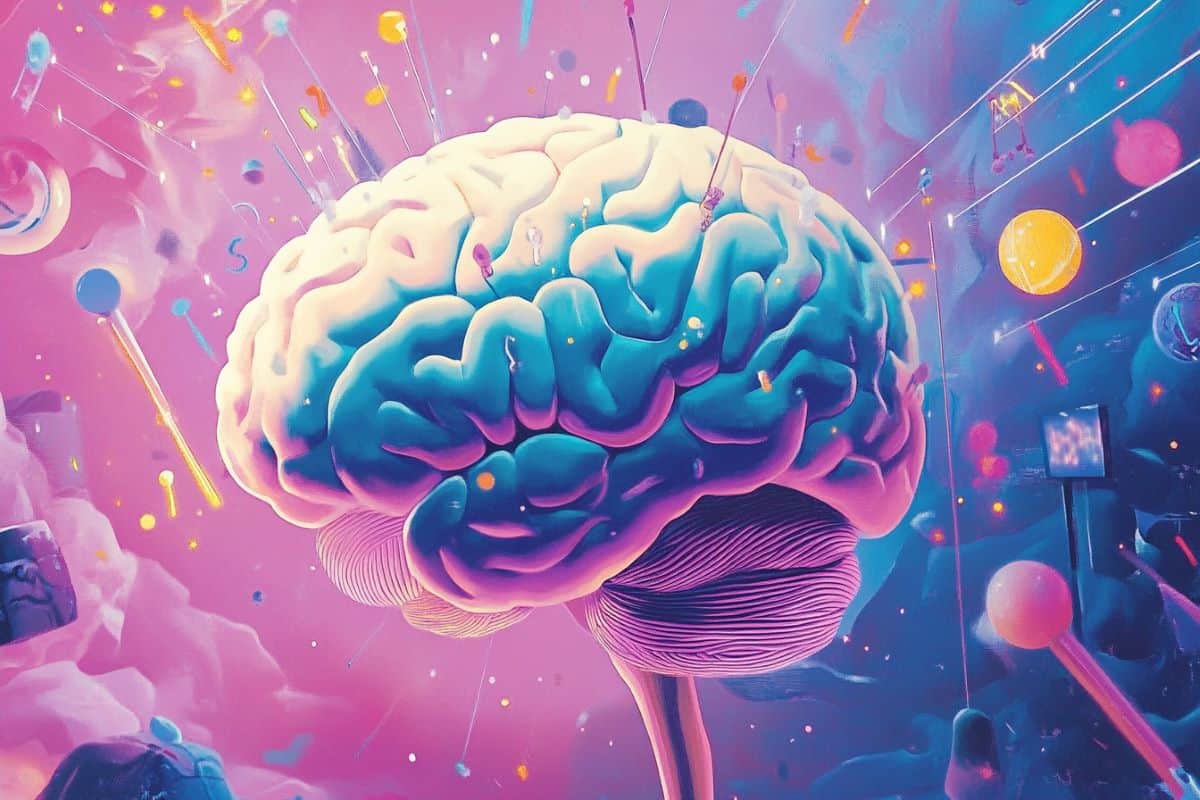
During quiet, restful periods, they found that activating a single interneuron triggered a coordinated response across other brain cells—a short burst of synchronized brain activity. Credit: Neuroscience News
Interneurons work a bit like the brain’s traffic controllers where they regulate the firing of other brain cells, acting like a sophisticated brake system.
This control is critical because when interneurons behave differently, it can contribute to neurological conditions like epilepsy, autism, and schizophrenia.
The team studied interneurons in mice and looked at a brain region crucial for learning and memory within the hippocampus. They used advanced brain imaging and light-activated cell techniques.
During quiet, restful periods, they found that activating a single interneuron triggered a coordinated response across other brain cells—a short burst of synchronized brain activity. This happened without disturbing the existing organization of the brain cells.
Activating a single interneuron weakened the brain’s “stop” signals which then allowed groups of brain cells to fire together. These synchronized brain cell activities might help with forming new memories or processing past experiences.
This discovery offers valuable insights into how our brain is organized and suggests that targeting interneurons could one day help treat disorders linked to pathological brain rhythms.
About this learning and memory research news
Author: Marco Bocchio Source: Durham University Contact: Marco Bocchio – Durham University Image: The image is credited to Neuroscience News
Functional networks of inhibitory neurons orchestrate synchrony in the hippocampus
Inhibitory interneurons are pivotal components of cortical circuits. Beyond providing inhibition, they have been proposed to coordinate the firing of excitatory neurons within cell assemblies.
While the roles of specific interneuron subtypes have been extensively studied, their influence on pyramidal cell synchrony in vivo remains elusive.
Employing an all-optical approach in mice, we simultaneously recorded hippocampal interneurons and pyramidal cells and probed the network influence of individual interneurons using optogenetics.
We demonstrate that CA1 interneurons form a functionally interconnected network that promotes synchrony through disinhibition during awake immobility, while preserving endogenous cell assemblies.
Our network model underscores the importance of both cell assemblies and dense, unspecific interneuron connectivity in explaining our experimental findings, suggesting that interneurons may operate not only via division of labor but also through concerted activity.