Eurasia Review follow it: Ralph Nader: Trump/Musk Dictatorship Is Galvanizing The American People’s Resistance – OpEd

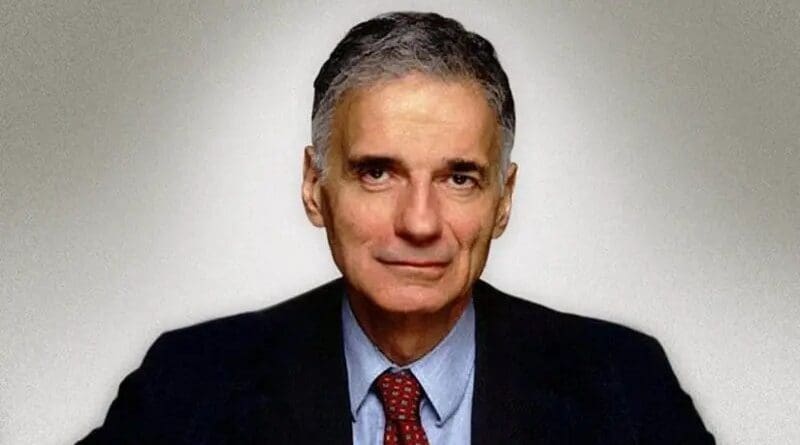
Ralph Nader

Ralph Nader

Ralph Nader: Trump/Musk Dictatorship Is Galvanizing The American People’s Resistance – OpEd

   0 Comments

By Ralph Nader

Madmen Trump and Musk are moving with warp speed to illegally and dictatorially wreck America and enrich themselves in the process. Forget the use of the terms “autocracy” and “constitutional crisis.” This is a savage dictatorship, getting worse by the day. Trump is attacking the courts, ignoring Congress run by a cowardly GOP, pushing to cut off critical assistance for tens of millions of Americans, devastating health, safety, food (Meals on Wheels), education (Head Start), and Medicaid insurance protections.

The rabid, ravaging, unstable Musk and his Chief Musketeer Trump are shutting down whole agencies, like the Consumer Financial Protection Bureau (CFPB) and the Agency for International Development (only Congress can do this). The CFPB is the federal cop enforcing laws against corporate crooks stealing your money in myriad ways, and returning many billions of dollars back to you.

As for shuttering illegally the U.S. Agency for International Development, consider what is happening in these direly poor countries, as reported in the New York Times: “Funds from the world’s richest nation once flowed from the largest global aid agency to an intricate network of small, medium and large organizations that delivered aid: H.I.V. medication for more than 20 million people; nutrition supplements for starving children; support for refugees, orphaned children and women battered by violence.” (“Chaos and Confusion Reign as U.S. Cuts Off Aid to Millions Globally” by Apoorva Mandavilli, February 12, 2025).  Trump is also cutting monitoring for the emergence of deadly epidemics such as Ebola, drug-resistant Tuberculosis, Malaria and other lethal viruses and bacteria, which could come to the U.S. like COVID-19 did.

The cost of all these vital protections is less than one percent of the federal budget.  These safeguards have been supported by both Republican and Democratic Presidents – until Trump’s brutal reign of terror.

Children, women (maternal health assistance) and men are dying now in places like Africa. Americans are just starting to suffer with the unlawful cutoff of funds (only Congress can do this) and the firing of thousands of dedicated civil servants ministering to their fellow Americans in need.

U.S.A.I.D. is the humanitarian face of America, and Republicans like Marco Rubio once called it necessary for our country’s national security.

American businesses are starting to feel Musk’s poisonous tusks. Just with closing A.I.D., this South African racist ordered the sign on its headquarters taken down. 100,000 positions have been cut overseas, an estimated 52,000 Americans in 42 states have lost their jobs. Agricultural food supplies ready for export are starting to rot in warehouses and ports, according to the Times.

The Trump/Musk machetes are swinging wildly striking beyond bullying the poor, defenseless, and powerless, and also upending the business community. Much of our government is contracted out to millions of businesses – small and large. Their contracts are being ripped up by this lying, corrupt President who many business leaders helped elect last November.

However, voters electing Trump didn’t mean that they elected a fascist dictator betraying his campaign boasts and “Day One”promises with the first flurry of executive orders or dictates violating our Constitution, statutes, and international laws.

There is a systemic cunning behind the wild rioting that Trump and Musk are causing. First, their actions are not about efficiency. Here is their broad scheme. First fire the cops, the law enforcers against corporate violators of worker, consumer, environmental, and small investor protections. Many federal agencies have current investigations into Musk’s companies (SEC, NHTSA, EPA, FAA, etc.).

Second, establish a kleptocracy to enrich both Musk and Trump personally. (See the February 13, 2025, New York Times article by Eric Lipton titled “Under Trump Shake-Up, Benefits for Musk Empire”).

Third, smash programs assisting people, while protecting huge waste, fraud, and abuse from corporate crime harming taxpayers (e.g., fraud on Medicare/Medicaid) and vast outlays of corporate welfare – giveaways, subsidies, bailouts, and endless tax escapes by big business. After all, Trump and Musk are both corporatists.

The military/industrial complex’s unauditable Pentagon budget is untouchable. Far from squeezing the enormous waste, redundancy, and corporate fraud, Trump gives every sign of supporting an additional $150 billion, which should go for domestic necessities, to this years’ Defense Department’s swollen taxpayer appropriations. After all, Trump and Musk are militarists.

What of the resistance, presently mounting, but still outrun and over-run by the Trumpster gangsters? Americans don’t like to be told to shut up; they don’t like to have things rightfully theirs taken from their families; they don’t like to be fired en masse without cause; they don’t like government contracts for vital services being arbitrarily broken. They also don’t like their government being overthrown by fascistic gangsters.

Street demonstrations are spreading from Washington to California, from Oregon to Florida. Government employees and their unions are filing lawsuits in federal courts. Half of the country’s state Attorneys General are filing numerous court challenges. The mainstream media, under direct attack by Trump, and being frivolously sued by Trump, is still reporting and investigating.

The campuses will start rumbling as Trump/Musk cuts to medical research and other aids to education corrode these institutions. Retired military personnel are voicing their objections to the devastation of the kind of America and the freedom they fought to defend. (See veteransforpeace.org.) Veteran benefits are on draft-dodger Trump’s cutting table.

The American Bar Association (ABA) has finally spoken out. On February 11, 2025, the ABA assailed the disregard of the judiciary and threats to judges by Trump/Musk/Vance, which “threaten the very foundation of our constitutional system.” The ABA calls for every lawyer and legal organization to speak with one voice and to condemn the efforts of any administration that suggests its actions are beyond the reach of judicial review.”

Soon the business community, unable to tolerate the chaos, inflation, instability, and recklessness of Trump’s regime’s contracting violations, will speak out as economic indices fall, including stock markets.

It will take a few weeks or months, with heightened inflation, for this disruptive pipeline to reach critical mass as it will everywhere including the Red States where Trump supporters are concentrated. As one example, one of Biden’s enacted laws “is projected to pour hundreds of billions of dollars into low-carbon energy technologies.” Most of these benefits are in Republican-voting communities in Red States “where they are creating a once-in-a-generation manufacturing boom.” (The New York Times).

Recall, Trump’s “drill, baby, drill” mantra of climate violence was linked with downgrading efficient solar energy and shutting down wind power projects under construction, along with the EPA’s work.

Once Trump’s voters and his business base start turning against him, with wide media coverage and dropping polls, the stage will be set for surging demands for his resignation and impeachment that starts with “impossible,” then “possible,” then “probable,” then conviction.  If the GOP sees either its political skin at risk in 2026 versus Trump’s destructive, daily delusions and dangerous daily damage, politicians will put their political fortunes first.

That is what Congressional Republicans did when they told Nixon to resign in 1974 over the Watergate scandal – a peapod by comparison with Trump’s wholesale subversions of our government to one man rule who has said “With Article II, I can do whatever I want as President.”

Call the White House switchboard 202-456-1414 and tell Trump to stop the destruction of America and go back to Mar-a-Lago.

FacebookTwitterEmailFlipboardMastodonLinkedInShare

Ralph Nader

Ralph Nader is a politician, activist and the author of Only the Super-Rich Can Save Us!, a novel. In his career as consumer advocate he founded many organizations including the Center for Study of Responsive Law, the Public Interest Research Group (PIRG), the Center for Auto Safety, Public Citizen, Clean Water Action Project, the Disability Rights Center, the Pension Rights Center, the Project for Corporate Responsibility and The Multinational Monitor (a monthly magazine).

Posted in Uncategorized | Tagged , , , , | Leave a comment

Tribute to pioneering cognitive neuroscientist Professor Eleanor Maguire. Comment so sad to read about the passing of Professor Eleanor Maguire. Ironically, when I had breast cancer 2017/18 and was writing a book about same and the impact of TBI, amnesia, loss of olfactory sense of smell, et al, I came across her work and it provided so many answers at the time, I wrote to her and she kindly replied with other links too. Below is the tribute from UCL. Quote: This is core to loss due to TBI in my case: “Eleanor substantiated her “Scene Construction Theory” with numerous studies that showed how the hippocampus constantly constructs spatially coherent scenes, automatically synthesising and anticipating representations of the world beyond what was immediately presented to the sensorium (the part of the brain that processes sensory information).This, she proposed, was what enables us to re-experience the past (memory) and imagine future events and places which is – of course – essential for navigation.

UCL NewsHomeUCL logo

Tribute to pioneering cognitive neuroscientist Professor Eleanor Maguire

15 January 2025

UCL colleagues and alumni have paid tribute to the award-winning researcher, Professor Eleanor Maguire, whose groundbreaking studies into spatial awareness and memory, led to a deeper understanding of how the brain works and had a profound impact on the field of neuroscience.

Professor Eleanor Maguire

Professor Eleanor Maguire, who sadly died on 4th January, was a cognitive neuroscientist at UCL Queen Square Institute of Neurology, which is where over the course of three decades, she devoted herself to advancing an understanding of the neural basis of memory and navigation.

Eleanor’s work significantly deepened our knowledge of how the human brain forms, represents, and recollects memories, as well as how these processes fail in neurological disorders.

She was a Principal Investigator in the Wellcome Centre for Human Neuroimaging. Eleanor was renowned for her pioneering use of cutting-edge neuroimaging and neuropsychological techniques, and celebrated for the ingenuity and ecological validity of her experimental contributions. She showed an unwavering commitment to steering neuroscience toward the study of naturalistic human brain function.

Eleanor was born on 27th March 1970 in Dublin, Ireland, to Anne and Paddy Maguire. She had a close relationship to her brother, Declan Maguire (1965-2019), and adored her two nephews.

By all accounts, including her own, Eleanor was a studious young woman, with a thirst for learning. Her academic journey included a BA in Psychology from University College Dublin (1990), an MSc in Clinical and Experimental Neuropsychology from the University of Wales, Swansea (1991), and a PhD from University College Dublin (1994).

Eleanor’s research focused on the hippocampus – the part of the brain responsible for forming new memories, spatial navigation and emotional responses. And, through her research, she provided a unified account of how the hippocampus supports a range of cognitive functions—including episodic memory, imagining the future, spatial navigation, dreaming and mind wandering.

A key idea, that formed a unifying linkage of these domains, was the notion of scene processing. Eleanor substantiated her “Scene Construction Theory” with numerous studies that showed how the hippocampus constantly constructs spatially coherent scenes, automatically synthesising and anticipating representations of the world beyond what was immediately presented to the sensorium (the part of the brain that processes sensory information).

This, she proposed, was what enables us to re-experience the past (memory) and imagine future events and places which is – of course – essential for navigation.

A notable aspect of Eleanor’s work, as also the case for key pioneers in the field, was that many of her major discoveries emerged from her meticulous studies of patients with damage to both sides of their hippocampus.

Here she showed that these patients’ imaginations were fragmented and lacked a cohesive representation of their surroundings. This led her to the idea that loss of spatial coherence offered a mechanistic explanation for the phenomenon of amnesia, and at the same time was fundamental to the construction of everyday memory.

Eleanor’s discoveries have had a huge public impact, not least her landmark study of London taxi drivers. Using brain imaging, she showed that the hippocampus of London cabbies physically changes when acquiring and deploying “The knowledge” – an internalised representation of streets, routes, and landmarks that fall within a six-mile radius of central London. This discovery remains one of the most compelling examples of the brain’s ability to adapt and change throughout life.

The fame that Eleanor acquired from this discovery alone meant that her colleagues have had the enduring pleasure of witnessing groups of A-level students visiting UCL who, on discovering ‘Maguire’ worked at UCL, were reduced to a frenzy of excitement and subsequent awe once she walked into the room.

Professor of Cognitive Neuroscience at UCL, Cathy Price, who worked closely with Eleanor, said: “Her taxi driver study, widely regarded as a stroke of creative genius, exemplifies her trailblazing discoveries and inspirational research. Famously, though a world authority on navigation she was notoriously poor at negotiating even familiar environments.

“Eleanor was a force of nature and had a towering work ethic. Her immense clarity of thought allowed her to distil complex ideas with unparalleled clarity. As a mentor, she had an exceptional ability to articulate the key messages derived from complex research, inspiring others to think clearly and creatively. Eleanor’s team motto was: ‘We want to plant seeds, not prune hedges.’ And that’s exactly what she did.”

Over the course of her career, Eleanor received numerous awards, including the Ig Nobel Prize for Medicine, the Cognitive Neuroscience Society Young Investigator Award, the Royal Society Rosalind Franklin Award, the Feldberg Foundation Prize, and the Dargut and Milena Kemali International Prize. She was a Fellow of the British Academy (FBA), the Academy of Medical Sciences (FMedSci), and the Royal Society (FRS), and an Honorary Member of the Royal Irish Academy (MRIA).

Sir Demis Hassabis, co-founder of AI research laboratory Google Deepmind, was supervised by Eleanor during his time at UCL. Writing on a tribute page, he said: “It still doesn’t seem real or fair that Eleanor has been taken away from us far too soon, and still in her prime with so many plans unfinished. My time spent in Eleanor’s lab alongside Dharsh, Hugo, Katya et al were some of the most formative, productive, and just plain fun years of my career. It’s where I really learnt to do deep rigorous research, and how it differed from the engineering disciplines I was used to.

“On one recent visit to the hospital we were fondly reminiscing of those halcyon days at the FIL in its golden age, and the intense but good humoured debates we used to have at lab meetings – she was always super supportive of creative (and even downright outlandish!) ideas, as long as they were big ones! Eleanor will be greatly missed by all who knew her, but she will always be a towering figure in the field of hippocampus and memory research, and her legacy will live on through the pioneering work she did and the many people she inspired.”

In her personal life, Eleanor was a lifelong supporter of Crystal Palace Football Club, chosen at a young age because of how pretty she imagined the Crystal Palace would be. She was also a loyal supporter of Irish Rugby.

Eleanor died on 4th January 2025, aged 54, after a two-year battle with cancer, which she faced with remarkable determination, bravery, and grace. Her courage throughout this challenging time exemplified the qualities that made her such an extraordinary person, admired by students, colleagues and the wider scientific community.

Professor Martina Callaghan (UCL Queen Square Institute of Neurology), who worked alongside Eleanor, said: “Eleanor leaves a lasting legacy of scientific discovery and knowledge. She will be profoundly missed by all who have had the privilege of knowing her.”

Links

Image

Posted in Uncategorized | Tagged , , , , | Leave a comment

New Atlas: Use it or lose it: The human brain will be reshaped by AI. Comment: As a person with TBI, short-term memory problems, amnesia, spatial impact proved to be a real problem for me. I found an explanation thanks to this woman Professor Eleanor Maguire (Taxi drivers in London). See details below

Eleanor Maguire, Memory Expert Who Studied London Cabbies, Dies at 54.

“In 2000, the cognitive neuroscientist Eleanor Maguire published the study that would bring her worldwide fame. It showed that a brain region called the posterior hippocampus was larger in London taxi drivers who had acquired the Knowledge – a mental map of the British capital complete with streets, routes and landmarks – than in people who lacked those navigational skills. The longer the cabbie’s career, the bigger the posterior hippocampus.”

AI & Humanoids

Use it or lose it: The human brain will be reshaped by AI

By Loz Blain

February 17, 2025

AIs allow us to outsource the act of thinking... That doesn't bode well for the future of the human brain

AIs allow us to outsource the act of thinking… That doesn’t bode well for the future of the human brain

Technology can physically change our brains as it becomes an integral part of daily life – but every time we outsource a function, we risk letting our ability atrophy away. What happens when that ability is critical thinking itself?

As a tail-end Gen-Xer, I’ve had the remarkable experience of going from handwritten rolodex entries and curly-cord rotary phones through to today’s cloudborne contact lists, which instantly let you contact people in any of a dozen ways within seconds, whatever sort of phone or device you’re holding.

More Stories

My generation’s ability to remember phone numbers is a bit of a coccyx – the vestigial remainder of a structure no longer required. And there are plenty of those in the age of the smartphone.

The prime example is probably navigation. Reading a map, integrating it into your spatial mental plan of an area, remembering key landmarks, highway numbers and street names as navigation points, and then thinking creatively to find ways around traffic jams and blockages is a pain in the butt, especially when your phone can do it all on the fly, taking traffic, speed cameras and current roadworks all into account to optimize the plan on the fly.

But if you don’t use it, you lose it; the brain can be like a muscle in that regard. Outsourcing your spatial abilities to Apple or Google has real consequences – studies have now shown in an “emphatic” manner that increased GPS use correlates to a steeper decline in spatial memory. And spatial memory appears to be so important to cognition that another research project was able to predict which suburbs are more likely to have a higher proportion of Alzheimer’s patients to nearly 84% accuracy just by ranking how navigationally “complex” the area was.

The “use it or lose it” idea becomes particularly scary in 2025 when we look at generative Large Language Model (LLM) AIs like ChatGPT, Gemini, Llama, Grok, Deepseek, and hundreds of others that are improving and proliferating at astonishing rates.

Among a thousand other uses, these AIs more or less allow you to start outsourcing thinking itself. The concept of cognitive offloading, pushed to an absurd – but suddenly logical – extreme.

They’ve only been widely used for a couple of years at this point, during which they’ve exhibited an explosive rate of improvement, but many people already find LLMs an indispensable part of daily life. They’re the ultimate low-cost or no-cost assistant, making encyclopedic (if unreliable) knowledge available in a usable format, at speeds well beyond human thought.

AI adoption rates are off the charts; according to some estimates, humanity is jumping on the AI bandwagon considerably faster than it got on board with the internet itself.

But what are the brain effects we can expect as the global population continues to outsource more and more of its cognitive function? Does AI accelerate humanity towards Idiocracy faster than Mike Judge could’ve imagined?

A team of Microsoft researchers have made an attempt to get some early information onto the table and answer these kinds of questions. Specifically, the study attempted to assess the effect of generative AIs on critical thinking.

Without long-term data at hand, or objective metrics to go by, the team surveyed a group of 319 “knowledge workers,” who were asked to self-assess their mental processes over a total of 936 tasks. Participants were asked when they engaged critical thinking during these tasks, how they enacted it, whether generative AI affected the effort of critical thinking, and to what extent. They were also asked to rate their confidence in their own ability to do these tasks, and their confidence in the AI’s ability.

The results were unsurprising; the more the participants believed in the AI’s capability, the less critical thinking they reported.

Interestingly, the more the participants trusted their own expertise, the more critical thinking they reported – but the nature of the critical thinking itself changed. People weren’t solving problems themselves as much as checking the accuracy of the AI’s work, and “aligning the outputs with specific needs and quality standards.”

Does this point us toward a future as a species of supervisors over the coming decades? I doubt it; supervision itself strikes me as the sort of thing that’ll soon be easy enough to automate at scale. And that’s the new problem here; cognitive offloading was supposed to get our minds off the small stuff so we can engage with the bigger stuff. But I suspect AIs won’t find our “bigger stuff” much more challenging than our smaller stuff.

Humanity becomes a God of the Gaps, and those gaps are already shrinking fast.

Perhaps WALL-E got it wrong; it’s not the deterioration of our bodies we need to watch out for as the age of automation dawns, but the deterioration of our brains. There’s no hover chair for that – but at least there’s TikTok?

https://efa0439bcdaa17c6c55cf01c237469c6.safeframe.googlesyndication.com/safeframe/1-0-41/html/container.html

Let’s give the last word to DeepSeek R1 today – that seems appropriate, and frankly I’m not sure I’ve got any printable words to follow this. “I am what happens,” writes the Chinese AI, “when you try to carve God from the wood of your own hunger.”

Source: Microsoft Research

We recommend

Powered by

Tags

AI & HumanoidsMicrosoftLLM (Large Language Model)Artificial IntelligenceBrain

4 comments

Loz Blain

Loz Blain

Loz leads the New Atlas team as Editorial Director, after nearly two decades as one of our most versatile writers. He’s also proven himself as a photographer, videographer, presenter, producer and podcast engineer. A graduate in Psychology, former business analyst and touring musician, he’s covered just about everything for New Atlas, concentrating lately on clean energy, AI, humanoid robotics, next-gen aircraft, and the odd bit of music, motorcycles and automotive.

Most

Posted in Uncategorized | Tagged , , , , | Leave a comment

Douglas Murray’s talk that left 4,000 people speechless at ARC | The Truth about our Decline

Feb 18, 2025

In this stunning speech at ARC 2025, Douglas murray called for an ‘Age of Reconstruction’ in Western Nations, fuelled by a conviction that our civilisations are the greatest the world has seen. __ Reserve your 1st edition copy of our new book, The Best of Our Inheritance. Pre-Order open until March 14, 2025: https://www.arcforum.com/store/p/the-…

With the return of the ARC Conference this February, we are launching our first book — a work that encapsulates the values and ideas that shape ARC’s mission. The Best of Our Inheritance brings together fifteen of the sharpest minds of our time to make a bold case for remembering the values of our civilisation. From Barry Straussʼ account of the Classical Tradition, Ayaan Hirsi Aliʼs personal reflections on the values of the West and its Christian roots to Nigel Biggarʼs chapter on human dignity and Joseph Laconte’s call to the artists, reading this book will give you a tangible vision for civilisational renewal. __ Douglas Murray is a bestselling author and journalist. His books include The Strange Death of Europe, The War on the West, and his forthcoming book (April) On Democracies and Death Cults. He has been an Associate Editor at The Spectator magazine since 2012 and contributes regularly to many publications and news channels.

Posted in Uncategorized | Leave a comment

DogeDesigner: “The other AIs being produced are not maximally truth-seeking; they tend to be trained to be politically correct. We need an AI that loves humanity, and that’s why I created xAI.” Comment: AI needs guardrails urgently but there is a slippering slope guided by Woke ideology and being politically correct which must not occur

Posted in Uncategorized | Leave a comment

Eurasia Review follow it: In Syria, The Barbarians Aren’t At The Gate, They’re In Power With Western Support – OpEd

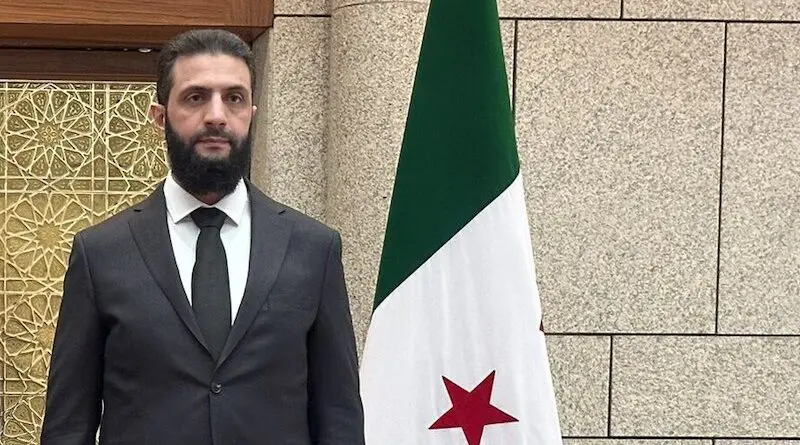
Syria's Ahmed Al-Sharaa, also known as Abu Mohammad al-Julani. Photo Credit: Mfa.gov.ua, Wikimedia Commons

Syria’s Ahmed Al-Sharaa, also known as Abu Mohammad al-Julani. Photo Credit: Mfa.gov.ua, Wikimedia Commons

In Syria, The Barbarians Aren’t At The Gate, They’re In Power With Western Support – OpEd

   0 Comments

By Finian Cunningham

Atrocities are being committed every day in Syria by the new rulers, according to Irish writer and peace activist Declan Hayes.

However, the Western corporate-run media are ignoring or censoring the horrific reality because the Western governments backed the regime-change operation.

He says that Syria – a cradle of civilization – is now being ruled by barbarians with the tacit support of Western governments and media.

The population is living under a reign of terror because the new rulers are terrorists affiliated with Islamic State who espouse an extremist version of Islam that does not tolerate other religions or versions of Islam.

Declan Hayes visited Syria as a peace activist and humanitarian many times during the decade-long war in that country. He witnessed the aftermath of atrocities carried out by insurgent groups in Latakia, Kassab, and Maaloula, among other places.

These mercenary groups were proxy forces financed and armed by the United States and its Western allies in a covert war for regime change against the former Syrian government.

The reasons for the regime-change operation were geopolitical due to the West’s support for Israel and antagonism towards Russia and Iran, as well as control of oil and gas resources.

Hayes maintains close contact with religious leaders and other community figures in Syria, especially among the Alawite, Christian and Shia Muslim communities. He says that the appalling violence and killings that were carried out by the Western-backed terror proxies during the decade-long war are continuing to be inflicted today.

Homes and villages are raided daily by armed supporters of Syria’s new ruling regime led by the de facto president, Ahmed al Sharaa, also known as Mohammad al Jolani, who is the leader of the Hayat Tahrir al-Sham (HTS) militia.

HTS was formerly an affiliate of Islamic State and other Al Qaeda-linked terror networks. HTS seized power two months ago in Damascus after former President Bashar al-Assad fled the country with his family. Assad is living in exile in Russia.

The collapse of his government surprised the world but in many ways, it shouldn’t have been a surprise because Syria was worn down and destroyed by a 10-year war sponsored by the U.S., European powers, Israel and the Gulf Arab kingdoms.

The country was also devastated by crippling Western economic sanctions. Assad’s allies, Russia and Iran, could not prevent the collapse and takeover by the Western terrorist proxies.

Syria is facing an extremely dangerous future where the new regime is exacting brutal retribution against minorities and communities perceived as being loyal to Assad.

What makes the situation all the more grim is that the United States and European Union governments and their media are propping up the new regime, whitewashing its violations and its terrorist links, or simply ignoring the daily atrocities being inflicted.

However, Declan Hayes contends that the new rulers of Syria do not have a firm control over the country where resistance to the reign of terror is growing.

FacebookTwitterEmailFlipboardMastodonLinkedInShare

Finian Cunningham

Finian Cunningham has written extensively on international affairs, with articles published in several languages. He is a Master’s graduate in Agricultural Chemistry and worked as a scientific editor for the Royal Society of Chemistry, Cambridge, England, before pursuing a career in newspaper journalism.

Posted in Uncategorized | Tagged , | Leave a comment

Psychology Today: Make Something Out of Your Mental Health Challenges. Lessons From Lincoln and Darwin.

Michael Alcee Ph.D.

Michael Alcee Ph.D.

Live Life Creatively

Creativity

Make Something Out of Your Mental Health Challenges

Lessons From Lincoln and Darwin.

Updated February 12, 2025 |  Reviewed by Kaja Perina

Key points

  • Lincoln and Darwin are great exemplars of leaning into the hidden strengths of your mental health struggles.
  • The art of healing one’s mental health struggles can help both the person and society too.
Charles Darwin

Charles Darwin

Source: Julia Margaret Cameron, Public domain, via Wikimedia Commons

Separated by an ocean–of geography and privilege– two expansively intelligent and openhearted men were born on this day in 1809. The prism of history filters out the brightest colors of their extraordinary accomplishments, yet the subtler hues–their under-recognized contributions to mental health–are worth celebrating too.

Abraham Lincoln and Charles Darwin discovered the hidden upsides of their depression and obsessive-compulsive disorder respectively and showcased entirely new angles on mental health. Despite the American’s placement on suicide watch for his melancholy and the obsessional doubts that led the Englishman to take twenty years to publish his magnum opus, both were spurred on by their respective afflictions. Both remind us that, even today, mental health is a complex and personal art with the power to transform the collective.

Lincoln stared directly into the ‘I’ of grief and invited others to do the same not merely by dressing the wounds of the Civil War but by speaking straight to the heart. Unlike many public figures of his time, he didn’t shy away from talking openly about melancholy in his speeches or in the exquisitely sensitive condolence letters he delivered to fellow sufferers. As a person and leader, Lincoln modelled what is most effective in psychotherapy: inviting and befriending the seemingly broken and conflicted sides that threaten the fragile union of self.

Like many OCD sufferers, Darwin was regularly stalked by death. He obsessed about his children inheriting his weak constitution and compulsively closed his eyes to make all these thoughts go away. He regularly sought reassurance from others and his imagination ran wild with doubt. Even in the notebook where he sketched a tree of life to illustrate his emerging theory of evolution, Darwin scrawled, “I think.”

Like Lincoln, who drew on his enormous empathy, Darwin used his generous heart—a research-backed characteristic of OCD–to search for what keeps the course of natural history ticking. Despite his obsessional fears and the untimely deaths of his mother in childhood and his beloved ten-year old daughter in his adulthood, he persevered for an explanation of how life marches on.

Both men leaned into the nature and nurture of their mental health conditions. They capitalized on the hidden powers of curiosity, empathy, and resourcefulness found within the unique temperament of depression and OCD. At the same time, instead of despairing at the many losses they suffered, they leaned into the upsides of their support systems to find a creative way to keep going.

Lincoln’s purpose was sharpened by the long list of his own losses–brother, mother, sister, fiancee, sons, and closest friends–and channeled theses alongside his profound empathy and introspection. He tapped into the “‘mystic chords of memory that summoned the better angels of our nature” and productively used his dark nights of the soul to minister to a nation.

Darwin felt “the world’s pain so acutely, and so persistently,” as biographer Janet Browne writes, he viewed extending one’s heart in compassion to others as “one of the noblest” moral achievements. Dacher Keltner writes that “survival of the kindest,” rather than survival of the fittest is a better catchphrase for him. Moved upon hearing this parallel to the Buddha’s teachings, the Dalai Lama declared: “I will now call myself a Darwinian.”

Even by today’s high standards of mental health awareness shown in ‘fight the stigma’ campaigns, therapist influencers, and the wide openness to counseling across the generations, both men of the nineteenth century went even further. They didn’t just show nuance and innovation in the political and scientific arenas, they lived a life that showcased how all of us with shining afflictions can be more fully ourselves. And maybe the best side-effect yet, we can also change the world.

About the Author

Michael Alcee Ph.D.

Michael Alcee, Ph.D., is a clinical psychologist, TEDx speaker, and author who specializes in using his background in music, literature, and the arts to showcase the transformative power of psychotherapy.

Online:

 The Upside of OCD , Facebook, Instagram, LinkedIn, Twitter

Posted in Uncategorized | Leave a comment

DOGE … contribution to “Humanity”

DogeDesigner

@cb_doge

Subscribe

Elon Musk is doing good for people in many ways.

DOGE is saving taxpayers’ dollars & exposing corruption.

Neuralink is finding cures for paralysis & blindness.

Tesla is accelerating world’s transition to sustainable energy.

SpaceX is working on making humanity multiplanetary.

·

74K Views

Posted in Uncategorized | Leave a comment

AI SCHOOLS ARE HERE—AND THEY’RE CHANGING EDUCATION. Mario Nawfa

AI SCHOOLS ARE HERE—AND THEY’RE CHANGING EDUCATION

Unbound Academy, an AI-driven virtual school, is launching in Arizona, offering personalized, adaptive learning without traditional teachers. Instead, AI tailors lessons in real-time, tracking student progress and emotional cues to optimize learning speed. Unbound claims its model leads to 2.4x faster mastery than traditional classrooms, giving students customized education at their own pace. A small team of human “guides” provides support when needed. Could AI be the key to fixing outdated, one-size-fits-all education? Source: ZDNet

Image

Posted in Uncategorized | Leave a comment

New Atlas: Alzheimer’s biomarkers now visible up to a decade ahead of symptoms. Comment: We all have a “cognitive reserve” and we need to add to our knowledge base, throughout our lives.

Alzheimer’s & Dementia

Alzheimer’s biomarkers now visible up to a decade ahead of symptoms

By Abhimanyu Ghoshal

February 15, 2025

Tau proteins can malfunction and disrupt the microtubules that help transport nutrients and information through brain cells, causing Alzheimer's Disease

Tau proteins can malfunction and disrupt the microtubules that help transport nutrients and information through brain cells, causing Alzheimer’s Disease

geralt / Pixabay

View 1 Images

Researchers at the University of Pittsburgh have devised a biomarker test that can spot small amounts of clumping tau protein in the brain and cerebrospinal fluid, which lead to Alzheimer’s disease.

https://b4eb0c22a32e105212b9a45f99c29c6e.safeframe.googlesyndication.com/safeframe/1-0-41/html/container.html

Catching these clumps early while still in minute quantities can enable effective intervention. This test can help detect the tangled proteins years in advance of them appearing prominently in brain scans – as much as up to a decade.

That’s heartening because Alzheimer’s disease not only has devastating impact on patients’ lives long term, but is also currently incurable. It begins to show up as forgetfulness, and progresses to confusion and disorientation, delusions, hallucinations, and trouble sleeping. As the condition worsens, patients may experience difficulty eating, moving around, incontinence, loss of speech, and significant memory loss.

“Early detection is key to more successful therapies for Alzheimer’s disease since trials show that patients with little-to-no quantifiable insoluble tau tangles are more likely to benefit from new treatments than those with a significant degree of tau brain deposits,” explained Thomas Karikari, senior author of the paper published in Nature this week.

https://b4eb0c22a32e105212b9a45f99c29c6e.safeframe.googlesyndication.com/safeframe/1-0-41/html/container.html

Here’s a quick bit of context on what’s happening in and around the brain. Humans have some 86 billion nerve cells, and they’re connected by what are called synapses. These synapses are supported by ‘rail tracks’ that enable the flow of essential nutrients and information, and they’re called microtubules.

Tau proteins (abbreviated from tubulin associated unit) stabilize these microtubules, and help keep the brain healthy. These proteins can malfunction, clump together and create tangles – preventing the microtubules from functioning properly.

As more tangles form, they spread through the brain in a predictable pattern, starting in regions involved in memory and gradually affecting areas responsible for other cognitive functions. That’s one of several changes in the brain that causes Alzheimer’s disease.

Here’s where this new biomarker test comes in. The researchers have found an important section of the tau protein that causes it to form harmful tangles in the brain. This section is made up of 111 building blocks (amino acids). Within this section, they discovered two specific spots that, when modified, can tell doctors if tau proteins are starting to clump together. This is important because if doctors can detect these changes early enough, they might be able to treat the problem before it gets worse.

The two specific spots they found (called p-tau-262 and p-tau-356) work like early warning signals, letting doctors know that tau proteins are beginning to malfunction. This could help identify Alzheimer’s disease sooner, when treatments might be more effective.

This test joins a bunch of notable Alzheimer’s-related breakthroughs we’ve learned about over the last year or so. For starters, five subtypes of the disease were identified, opening the doors to more targeted treatment. We also saw, for the first time, a high-resolution timeline of images of the condition’s progress at the cellular level that helped better understand this condition.

Plus, researchers found that limiting a particular enzyme can protect against the effects of the disease. Another team invented a molecule that can boost electrical oscillations in the brain, improving memory and cognition in mice that were modified to have Alzheimer’s.

The next few years should reveal several new avenues to treat the disease more effectively – and that could go a long way towards improving the lives of 78 million people estimated to develop various dementias, including Alzheimer’s, worldwide by 2030.

Source: University of Pittsburgh

We recommend

Posted in Uncategorized | Leave a comment