Dr. Phil examines the disturbing case of Lindsay Clancy, the Massachusetts mother charged with killing her three young children, and the critical question at the center of the case: Were warning signs of a severe postpartum mental health crisis missed? He breaks down postpartum psychosis, how it differs from postpartum depression and the “baby blues,” and the potentially dangerous symptoms including hallucinations, delusions, extreme insomnia, disorganized thinking, and loss of contact with reality. As the defense prepares to argue that postpartum psychosis and multiple psychiatric medications contributed to the tragedy, prosecutors are expected to point to Clancy’s alleged planning and coordination as evidence she understood her actions. His analysis focuses on the larger question beyond the courtroom: When a new mother shows escalating red flags, who is responsible for recognizing the danger and acting before it is too late?
Sponsored by Preserve Gold: Get up to $20,000 in FREE Gold & Silver with a qualified purchase. Text ASKPHIL to 50505 or visit https://DrPhilgold.com Sponsored by Chapter: Don’t wait! If you’re on Medicare or will be soon, reach out to Chapter: Call: (352)-845-0659 or go to https://askchapter.org to learn about your Medicare options and get help finding ways to save money. Experience a side of Dr. Phil McGraw you may have been missing as he provides critical information on some of the most important issues we face today. McGraw delves into the minds of the most exciting and accomplished people. From celebrities to ordinary people in extraordinary circumstances, to the world’s leading experts, every guest and topic is provocative, informative, and relevant. http://drphilpodcast.com Dr. Phil McGraw, one of the most well-known and trusted mental health professionals in the world, is the host of daytime TV’s top-rated program, Dr. Phil. This trailblazing and award-winning platform continues to provide the most comprehensive forum on mental health issues in the history of television. Dr. McGraw’s unique ability to take complicated and technical information and make it accessible and understandable to the general public has distinguished him both among viewers and within his profession. Follow for more Dr. Phil & The Dr. Phil Podcast: Dr. Phil Show – / @drphil Podcast – https://www.drphilpodcast.com/ YT – / @drphilpodcast Spotify – https://open.spotify.com/show/45Ek7SE… Apple Podcasts – https://search.itunes.apple.com/WebOb…
For free and unbiased Medicare help, dial 507-478-7579 to speak with my trusted partner, Chapter, or go to https://askchapter.org/smerconishPaid Partnership
Thirty-five years ago, Pulitzer Prize-winning investigative journalists Donald Barlett and James Steele published America: What Went Wrong?, a landmark investigation into the hollowing out of the American middle class. Now James Steele joins Michael Smerconish to revisit their warnings — and says the fundamental problems haven’t gone away. From disappearing pensions and factory closures to Wall Street, tax policy, corporate influence and the growing concentration of wealth, Steele explains how decisions made decades ago continue to shape the American economy today. Was the decline of the middle class inevitable? Could it have been stopped? And after 35 years, what can actually be done about it?
BostonIrish History: The Brig St. John Wreck off Cohasset – October 7, 1849
At the height of Ireland’s Great Famine, the brig St. John (≈200 tons, Irish-owned by Henry Comerford of Galway and Ballykeale House, Kilfenora) sailed from Galway Harbor on or about 6–7 September 1849, bound for Boston. She carried famine refugees—mainly from North Clare (Ennistymon/Lahinch area) and Connemara—plus crew. Passenger and crew totals vary across accounts (roughly 100–143 total souls; some sources note possible unmanifested passengers). Captain Martin Oliver of Bohermore, Galway, commanded a crew of about 9–16. https://artifacts.grokusercontent.com/third-party-image
youtube.com The crossing was relatively good. On the evening of 6 October the vessel passed Cape Cod Light. In the early hours of Sunday, 7 October, a sudden, violent nor’easter struck. The ship was driven south along the Massachusetts coast. Anchors were dropped near the (then unlit) iron Minot’s Light, but the chains snapped. Masts were cut away in a final effort to lighten her. Around 7 a.m. the St. John was driven onto Grampus Ledge (the Grampuses), a group of low-lying rocks about 1½ miles west of Minot’s Light, roughly 1–2½ miles offshore from Cohasset. Enormous waves smashed the vessel repeatedly against the rocks. Her hull broke open within about an hour; those below decks drowned almost immediately. Spectators on shore watched helplessly as people were swept into the surf. The jolly boat was swamped when panicked passengers jumped in; the longboat eventually reached shore carrying Captain Oliver, First Mate Henry Comerford (or Cummerford/Crawford), most of the remaining crew, and one passenger. A few others reached land clinging to wreckage.
Casualties and survivors
In 1914 (dedicated 30 May; sometimes listed as 1915), the Ancient Order of Hibernians and Ladies Auxiliary of Massachusetts erected an impressive ≈18–20-foot granite Celtic Cross on the highest point of Cohasset Central Cemetery, overlooking the bay. It marks the resting place of about 45 of the victims (the common grave itself is nearby but not directly under the cross; a bench also commemorates them). The inscription reads in part:
“This Cross was erected and dedicated May 30, 1914, by the A.O.H. and L.A.A.O.H. of Massachusetts to mark the final resting place of about forty-five Irish emigrants from a total company of ninety-nine who lost their lives on Grampus Ledge, off Cohasset, October 7, 1849, in the wreck of the Brig St. John from Galway, Ireland. R.I.P.”https://artifacts.grokusercontent.com/third-party-image
The Cohasset Maritime Museum (in a historic 18th-century chandlery) holds a scale model of the brig, artifacts, and related exhibits. A possible anchor from the wreck was recently recovered and is under study by the Cohasset Historical Society. https://artifacts.grokusercontent.com/third-party-image
cohassetanchor.com Annual commemorations continue, typically including a memorial Mass at St. Anthony of Padua Parish, a speaking program, and a wreath-laying at the Celtic Cross (sponsored by groups such as the Ancient Order of Hibernians, Charitable Irish Society, Éire Society of Boston, and Ireland’s Emigrant Support Programme). The event remains one of the most poignant reminders of the “coffin ships” of the Famine era—lives lost within sight of the land that was to be their new home.(Sources condensed from contemporary newspaper reports, Robert Fraser’s account in Savor of Salt, Clare Libraries Local Studies, Cohasset Central Cemetery records, Thoreau’s writings, IrishCentral, and local historical society materials.)
24 web pages
Explore Henry David Thoreau’s account
Thoughts
Henry David Thoreau’s account of the Brig St. John wreck forms the opening chapter (“The Shipwreck”) of his posthumously published book Cape Cod (1865). It draws on his visit to the site on Tuesday, October 9, 1849—just two days after the disaster—with his friend, the poet William Ellery Channing. The chapter first appeared in Putnam’s Magazine in June 1855.Thoreau had left Concord intending to see more of the ocean. In Boston they found the Provincetown steamer delayed by the same violent storm. Spotting a handbill reading “Death! 145 lives lost at Cohasset,” they diverted to Cohasset by train. Many fellow passengers were Irish people heading to identify bodies, console survivors, or attend the afternoon funeral. Upon arrival, nearly everyone headed to the beach about a mile away; locals from the surrounding countryside flocked there as well.
newenglandhistoricalsociety.com
The Scene on the Shore
Thoreau describes Cohasset’s rocky coast (from Nantasket to Scituate) as the rockiest in Massachusetts, with hard sienitic rocks laid bare by the waves. The sea was still breaking violently. He noted a large, freshly dug hole “like a cellar” in the graveyard and met farm wagons and hay-riggings loaded with three large, rough deal (pine) boxes each—coffins—heading toward the meeting-house.On a green hillside a few rods from the water lay 18 or 20 of these boxes, surrounded by a crowd. About 27 or 28 bodies had been recovered so far (he later learned far more remained unrecovered). Some people nailed lids shut; others carted boxes away; still others lifted the still-loose lids and peered under the white sheets covering the remains. Each body retained whatever rags still clung to it.Thoreau’s vivid, unsparing description is among the most memorable passages:
“I saw many marble feet and matted heads as the cloths were raised, and one livid, swollen, and mangled body of a drowned girl—who probably had intended to go out to service in some American family—to which some rags still adhered, with a string, half concealed by the flesh, about its swollen neck; the coiled-up wreck of a human hulk, gashed by the rocks or fishes, so that the bone and muscle were exposed, but quite bloodless—merely red and white—with wide-open and staring eyes, yet lustreless, dead-lights; or like the cabin windows of a stranded vessel, filled with sand.”
Some boxes held two or more children, or a parent and child; lids were sometimes marked in red chalk with names such as “Bridget such-a-one, and sister’s child.” Bits of sails and clothing littered the ground. He records no outward signs of grief—only a “sober dispatch of business which was affecting.” One man searched for a particular body; carpenters called to each other about which box held a certain child.
genius.com A sailor pointed out Grampus Rock (about a mile offshore), where a portion of the vessel still stuck up, held by chain-cables and anchors. “Not a quarter” of the drowned had been recovered; most, he said, lay beneath that fragment.
Wreckage and Local Life
Further along, Thoreau found fragments mixed with sand, seaweed, and feathers in one cove (initially mistaken for an ancient wreck). Rubbish lay several feet deep, including bonnets and jackets. In the midst of the searchers, men with carts collected seaweed for manure, carefully separating clothing fragments, seemingly unperturbed by the possibility of finding more bodies. “Drown who might, they did not forget that this weed was a valuable manure. This shipwreck had not produced a visible vibration in the fabric of society.”He saw clothing on rocks (a man’s clothes, a woman’s scarf, gown, straw bonnet), the brig’s caboose, and a broken mast. In another rocky cove, behind 20-foot rocks, lay a large section of one side of the vessel—about 40 feet long by 14 feet wide—still hanging together. The power of the waves astonished him: the largest timbers and iron braces were broken “superfluously.” He concluded that no material could withstand such force; even an iron vessel would crack like an eggshell. Some wood was so rotten he could nearly thrust his umbrella through it. The St. John’s flag lay spread on a rock to dry, held by stones at the corners.About a mile south rose the masts of the British brig the St. John had tried to follow; it had slipped its cables and reached the safety of Cohasset Harbor. Lifeboat men in oil-cloth had aided that vessel, mistaking the St. John’s longboat (which they passed) for containing all survivors.
Philosophical Reflections
Thoreau found the overall scene less impressive than expected. A single body in a lonely place would have affected him more. He sympathized more with the winds and waves—“as if to toss and mangle these poor human bodies was the order of the day. If this was the law of Nature, why waste any time in awe or pity?”Yet he also observed that the shore’s beauty was temporarily “wrecked” for lonely walkers until they could see how such disasters enhanced it with a “rarer and sublimer beauty still.” Shore residents would watch for days and nights for the sea to give up its dead; their imaginations would stand in for distant mourners. His most famous reflection reframes the tragedy:
“Why care for these dead bodies? They really have no friends but the worms or fishes. Their owners were coming to the New World, as Columbus and the Pilgrims did,—they were within a mile of its shores; but, before they could reach it, they emigrated to a newer world than ever Columbus dreamed of… I saw their empty hulks that came to land; but they themselves, meanwhile, were cast upon some shore yet further west, toward which we are all tending, and which we shall reach at last, it may be through storm and darkness, as they did. No doubt, we have reason to thank God that they have not been ‘shipwrecked into life again.’”
The mariner who reaches the safest port in Heaven may seem shipwrecked to friends on earth who prefer Boston Harbor. Spirits float etherially; a skillful pilot and fair gales meet them while the old hulk tosses in the surf.
Significance
Thoreau’s account mixes stark journalistic detail, natural observation, and Transcendental philosophy. It opens Cape Cod by confronting readers immediately with the ocean’s power and indifference, setting the tone for the book’s blend of travel narrative, natural history, history, and meditation. He notes the handbill’s inflated figure of 145 (contemporary and later sources settle near 99 lost, with ~20–22 survivors and ~45 bodies recovered).His writing captures both the human cost of the Famine-era “coffin ships” and a detached, almost cosmic perspective that sees death as part of a larger natural and spiritual order. The full chapter is freely available on public-domain sites such as Wikisource. It remains one of the most powerful contemporary eyewitness records of the St. John tragedy.
34 web pages
Thoughts
Expanded Account of the Brig St. John Wreck (October 7, 1849)
Including Dr. Catherine Shannon’s recorded lecture, Thoreau’s eyewitness description, and the detailed casualty lists. The brig St. John (≈200 tons), owned by Galway merchant Henry Comerford and captained by Martin Oliver, sailed from Galway on or about September 5–7, 1849, bound for Boston. She stopped briefly in Connemara (Letterfrack/Lettermullen area) to take on additional passengers and fresh water. The voyage was largely uneventful until the evening of October 6, when she passed Cape Cod Light. Passengers celebrated what they believed was their final night at sea with candles, songs, and dance; the captain issued grog. A sudden, fierce nor’easter struck in the early hours of Sunday, October 7. Anchors dragged near the then-unlit Minot’s Light; masts were cut away in a desperate attempt to lighten the vessel. Around 7 a.m. she was driven onto Grampus Ledge (the Grampuses), roughly 1–1½ miles offshore from Cohasset. The hull broke open within about an hour under mountainous waves. Those below decks (many women and children) drowned almost immediately; people on the crowded decks were swept into the surf. The jolly boat was swamped when panicked passengers jumped in. The longboat eventually reached shore carrying the captain, first mate, most of the remaining crew, and one passenger. Local rescuers from Cohasset launched boats but could do little in the conditions; some survivors clung to wreckage and were pulled ashore at places such as Sandy Cove.
youtube.com Dr. Catherine B. Shannon (Professor Emerita of History at Westfield State University, specialist in Irish and Anglo-Irish history, and author of The Wreck of the Brig St. John and Its Commemoration: 1849–2014) has given detailed public lectures on the tragedy. One widely available recording is her ≈65-minute talk “Brig St. John: Tragic Cohasset Shipwreck,” filmed at Scituate’s Harbor Community Building and posted by Scituate Community Television (YouTube: https://youtu.be/q5WaCKfrKY8, September 2019). In it she covers the famine context in Clare and Galway (“ground zero” of the worst 1849 conditions), the ship’s background and ownership, the stop in Connemara that may have delayed arrival past the storm, the sequence of the wreck, individual survivor stories (including Betsy Higgins), Thoreau’s visit, the passenger lists, and the long history of commemorations (Celtic Cross 1914, later anniversaries, and ongoing AOH events). She emphasizes both the human cost and the resilience of survivors and the Cohasset community’s response.
youtube.com To return to Henry David Thoreau and Ellery Channing who arrived on Tuesday, October 9, after seeing a Boston handbill reading “Death! 145 lives lost at Cohasset.” In the opening chapter of Cape Cod (1865; earlier in Putnam’s Magazine, 1855), Thoreau gives one of the most vivid contemporary descriptions. He found 18–20 rough deal boxes on a green hillside near the water, with 27 or 28 bodies recovered so far (many more never found). Undertakers nailed lids while others peered under white sheets. He wrote of “many marble feet and matted heads,” and of one “livid, swollen, and mangled body of a drowned girl… gashed by the rocks or fishes… with wide-open and staring eyes, yet lustreless.” Some boxes held a parent and child or multiple children, marked in red chalk (e.g., “Bridget such-a-one, and sister’s child”). Wagons carried coffins toward the meeting-house; a large hole “like a cellar” had been dug in the graveyard. He walked the shore amid wreckage several feet deep, saw a large section of the hull (≈40 × 14 ft), and noted locals calmly collecting seaweed for manure even as they separated clothing from it. His reflections turn philosophical: the bodies’ owners “were coming to the New World, as Columbus and the Pilgrims did… but, before they could reach it, they emigrated to a newer world than ever Columbus dreamed of.”About 45 bodies were recovered and buried in a common trench grave in Cohasset Central Cemetery (Father John T. Roddan of Quincy officiated the Catholic rites). The rest were never found. An 18–20-foot granite Celtic Cross was dedicated May 30, 1914, by the Ancient Order of Hibernians and Ladies Auxiliary of Massachusetts on the highest point of the cemetery.
Detailed List of Survivors and Drowned(Compiled from contemporary reports, Clare County Library Local Studies, and related sources; spellings and place names contain many period errors and variants—e.g., Ennistymon appears as Inistivan/Innistivan/Issistivan, Kilfenora as Kilnare/Killanara, etc. Totals vary slightly across sources; the memorial records ≈99 lost.) Crew saved (9) Captain Oliver; Henry Cummerford (1st Mate); sailors Henry O’Hern, Michael Kennelly, William Larkin, Isaac Cummerford, Thomas Walker, James Flathery, Andrew Frost.Crew lost (7 sailors + 2 apprentice boys) Antonio McDonough, William Thompson, Michael Conners, William Angiers, Edward Kennelly, and 2 unnamed apprentice boys.Passengers saved (11, with ages) Austin Kearin – 20; Betsy Higgins – 21; Michael Fitzpatrick – 26; Barbara Kennelly – 20; Michael Redding – 24; Mary or Honor Burke – 27 (lost 3 children); Catherine Flannagan – 20; Mary Kane – 24; Michael Gibbon – 26; Mary Slattery – 20; Hanora Cullen – 28 (lost 3 children). (Note: Some accounts also mention a rescued infant girl found in a mattress by John Lothrop and later adopted in Norwell, plus a possible young stowaway.)Cabin passengers lost (5) Of Kilnare, Co. Clare: Mary Flannigan, Nancy Hannagan, Margaret Hannagan. Of Inistivan, Co. Clare: Bridget Quinn, Eliza O’Brien.Steerage passengers lost (listed as ≈90; names and origins as recorded) Of Inistivan, Co. Clare: Ann Slattery, Bridget Slattery, Hugh Madigan, Margaret Keenan. Of Kunnanmar, Co. Galway: Bridget Connelly; Patrick Sweeney, wife, and 9 children. Of Galway: Patrick Corman, Miles Sweeney, Thomas Burke, Eliza Burke, Mary McDermott, Joyce McDermott & child, Catharine Fitzpartick, Bridget Burke, Peggy Purkey. Of Lalinien, Co. Clare: Michael Hannagan. Of Killanara, Co. Clare: Patrick Lahiff, John Lahiff, Thomas Riley, Bridget Maddigan. Of Innistivan, Co. Clare: Hugh Glynn. Of Galway: John Belton, Mary Dolan, Thomas Fahey, Bridget Fahey, Martha Fahey, Honora Donnelly, Honora Mullen, sisters Catherine Henniff and … Henniff, Mary Cahill, Patrick Noonan, Mary Landsky, Meggy Mullen & sister’s child, John Butler. Of Roan, Co. Clare: Bridget McMahan, Patrick McMahan, Catherine McMahan, Mary Nalon, Mary Frowley & child. Of Innes, Co. Clare: Mary Freeman & child; Mr. Egan, wife & daughter. Of Dyant, Co. Clare: Martin Sexton, Jeremiah Murphy, James Moran. Of Issistivan, Co. Clare: Margaret Keenan, Miss Brooks. Of Anch, Co. Clare: Daniel Byrnes, Michael Griffen, Catherine Burnes, Peggy Molloy, Ellen Hassett. Of Kilmary: Patrick McGrath, James McGrath, Winny Galvin, Mary Galvin, Margaret Kane, Mary McNamara. Of Clare: Honora Lahiff or Rohan, John Lahiff or Rohan, Mary Curtis, Honora Mulkenan, Mary Mulkenan, Margaret Mulkenan.(The lists contain duplications, incomplete names, and phonetic spellings typical of hastily compiled contemporary reports. Modern researchers, including Shannon, note that exact totals remain slightly uncertain because of possible unmanifested passengers.)Mary Kane (one of the survivors) stayed in Cohasset, married Charles Cole and later James St. John, and has descendants still in the area. Annual commemorations (Mass, talks, wreath-laying at the Celtic Cross) continue, often featuring Dr. Shannon’s scholarship and the ongoing work of the Ancient Order of Hibernians, Charitable Irish Society, and local historical groups.
President Trump. Photo illustration: Sarah Grillo/Axios. Photo: Alex Grimm/Getty Images
President Trump is reaching deeper into individual markets to try to bring down consumer prices.
Why it matters: The administration is under mounting pressure to deliver relief as affordability becomes a bigger political liability ahead of the midterms, Axios’ Courtenay Brown writes. The moves:
Beef: Trump said yesterday that he will temporarily waive tariffs on up to 300,000 metric tons of additional beef imports for 90 days, a period that would last through the midterms.
Borrowing costs: The administration has tried to push down longer-term rates through Treasury debt purchases and moves to lower mortgage rates. This week’s initial relief was short-lived.
Gas: Trump has pushed energy companies to cut pump prices as the Iran war sent oil prices soaring.
Retail: The White House has pressed major retailers to cut prices, touting recent reductions by Walmart and others.
The other side: Prescription drugs are a bright spot, with prices dropping at the quickest rate in six decades due to a mix of Trump- and Biden-era policies, as well as market forces.
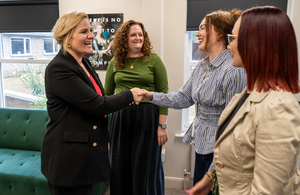
GO.UK Victims and survivors of rape and sexual abuse to be supported
Rape Crisis England & Wales awarded £8.7m government funding to provide round-the-clock confidential support for survivors and victims of sexual violence From:Ministry of Justice and Alex Davies-Jones MP Published: 21 August 2026
Rape Crisis England & Wales awarded £8.7m government funding
Service to provide round-the-clock specialist and confidential support for survivors and victims of sexual violence
Part of Government’s commitment to halve violence against women and girls and ensure swifter justice for victims
Victims-survivors of rape and sexual abuse will get 24/7 support through a free, trauma-informed, confidential helpline thanks to new Government funding.
The Ministry of Justice has announced it has awarded £8.7 million to Rape Crisis England & Wales to continue their vital around-the-clock Rape and Sexual Abuse Support Line.
Free to use, the helpline offers confidential emotional and listening support to all victims and survivors of rape and sexual abuse aged 16 and over.
Since it launched in 2022, the service has supported survivors through more than 200,000 calls and 75,000 webchats.
This funding reflects the Government’s commitment to tackle these horrendous crimes and support victims.
Minister Victims and Violence Against Women and Girls, Alex Davies-Jones said:
I’ve heard far too many devastating stories from traumatised survivors of rape and sexual assault who felt lost or unsure where to turn for support.
I want to say to everyone affected by one of these horrendous crimes, the Rape Crisis helpline team is always there – to listen to you, believe you and answer your questions.
We’re honoured to be able to continue to support their invaluable work and I’d like to thank everyone in the team for their dedication to supporting survivors.
Ciara Bergman, Rape Crisis England & Wales CEO said:
I’m delighted that Rape Crisis England & Wales will continue to provide the national 24/7 Rape and Sexual Abuse Support Line, delivering confidential, free and specialist support for thousands of survivors throughout England and Wales.
The service’s success, and the volume of survivors we’ve already provided with high-quality, trusted support, are testament to the dedication and expertise of the Rape Crisis movement. Our partners, support line staff and volunteers work tirelessly to ensure that whenever the time is right, no matter who they are or when it happened, someone will be there to listen, believe and support them.
Helpline specialists can also help direct victim-survivors towards long-term support services, whether they have told anyone about the crime or not. The new funding will support Rape Crisis to develop the service further, including by introducing British Sign Language Interpretation and providing dedicated support for survivors with different needs.
The Prime Minister and Lord Chancellor have also barred rape, certain child sex and other grooming offences from upcoming changes to prison sentences, protecting the public from these dangerous criminals.
The changes mean rape and certain child sexual offences will be added to the exclusions that are already in place for 18,000 offenders, including those who have been found by a court to be the most dangerous or anyone serving a life sentence.
The Government is also injecting more than half a billion pounds into vital support services to help victims and witnesses through the justice process. This will see a £550 million investment over the next three years into specialist services that offer practical and emotional support to victims and witnesses, such as counselling and advice on attending court.
Further information
Rape Crisis England &Wales’s 24/7 Rape and Sexual Abuse Support Line is for anyone aged 16 and over in England and Wales who has been affected by rape, child sexual abuse, sexual assault, sexual harassment, or any other form of sexual violence – at any point in their life. You can contact the service at any time, day or night, all year round, on 0808 500 2222.
The new grant funding will run from 1 October 2026 – 30 September 2029.
350,000 Palestinian patients need medicines in Gaza, while the quantities entering the besieged enclave are insufficient, says Mohammad Abu Afash, the director of the Palestinian Medical Relief Society.
Tehran says America’s new sanctions on Iran strip other countries of their sovereignty by deciding who they can trade with.
Tehran says America’s new sanctions on Iran strip other countries of their sovereignty by deciding who they can trade with.
Foreign Ministry spokesman Esmaeil Baghaei: “It is an assertion of extraterritorial sovereignty over every independent Member State of the United Nations.”
The accusation follows Trump’s announcement of an “Economic D-Day” against Iran, threatening severe consequences for foreign banks, companies, airports and governments that provide Tehran an economic “lifeline.”
Mark Zuckerberg and his Wife Priscilla Chan have Purchased Strancally Castle Ireland. The Meta CEO and Facebook founder reportedly acquired the roughly 440-acre property, located north of Youghal along the River Blackwater, in a multi-million-euro transaction estimated at €20–30 million. The sale from previous owners Michael and Giancarla Alen-Buckley was completed several weeks ago for an undisclosed amount.
The Alen-Buckley family, who lived there for 25 years and restored the castle, said they were leaving fondly and were pleased that Zuckerberg and his family plan to continue investing in the property and grounds sustainably as their home. They wished the new owners happiness there.
A spokesman for Zuckerberg confirmed the purchase, stating that he and his family are excited to care for the historic home and look forward to spending time in Ireland, where Meta has its international headquarters. The main residence is a three-bay, three-storey-over-basement Gothic-style house dating from the 1800s. The estate sits on the site of the former Desmond castle remains and was previously owned by the Billensteiner family. Meta has maintained its European headquarters in Dublin since 2009.

 / @drphil Podcast – https://www.drphilpodcast.com/ YT –
  Midterms vs. markets
 Beef: Trump said yesterday that he will
  Borrowing costs: The administration has tried to push down longer-term rates through Treasury debt purchases and moves to lower mortgage rates. This week’s initial relief was
  Retail: The White House has pressed major retailers to cut prices, touting