In the White House, a 73-year-old legal statute is being used to defend the Trump administration’s crackdown. The Immigration and Nationality Act of 1952 was passed amid anti-communist fears during the early Cold War. That period of history is the focus of the new book “Red Scare: Blacklists, McCarthyism, and the Making of Modern America.” Author and reporter Clay Risen joins the show to discuss past political hysteria and what it can tell us about the present.
Elon Musk, the world’s richest man, made his fortune-breaking industries—space, cars, social media—and is now trying to break the government… in the name of fixing it. But what happens when Silicon Valley’s ‘move fast and break things’ ethos collides with the machinery of federal bureaucracy? On the GZERO World Podcast, Ian Bremmer sits down with WIRED Global Editorial Director Katie Drummond to unpack the implications of Musk’s deepening role in the Trump administration and what’s really behind his push into politics. In a few short weeks, Musk’s Department of Government Efficiency has dramatically reshaped the government, slashing budgets, eliminating thousands of jobs, and centralizing vast amounts of government data, all in the name of efficiency. Is this a necessary shake-up or a dangerous consolidation of power? Drummond and Bremmer dig into the political motives behind DOGE, President Trump’s close relationship with Musk, and how the tech billionaire’s far-right leanings could shape the future of US policy. Can Elon’s vision of innovation bring efficiency to Washington, or will it just inject more chaos into the system?
A new study has found that antidepressant resistance is more common than was thought: 48% of people with depression have tried at least two medications without effect, while 37% have tried four or more. It suggests the need for an urgent rethink of the current approach to treating depression.
Depression is a debilitating condition that pervades all aspects of a person’s life. But when antidepressants, the first-line treatment for depression, don’t effectively relieve the symptoms of the condition, then an additional layer of hopelessness gets added to the mix.
A recent study led by the University of Birmingham in the UK has highlighted just how common the issue of treatment resistance is in people with depression. And the findings are, frankly, concerning.
“This paper highlights how widespread treatment-resistance depression is among those who are diagnosed with depression,” said Kiranpreet Gill, a PhD candidate from the University’s School of Psychology and the study’s lead and corresponding author. “With nearly half of all patients not responding to multiple drug options, we need better treatment options to be able to support patients for whom first-line antidepressant medications don’t make a difference.
“Furthermore, the experiences of patients who took part in this study shows that more awareness and options for treating depression when first-line antidepressant medications don’t work well is urgently needed.”
People with treatment-resistant depression were more likely to have co-existing mental health conditions
The present study is the first to adopt a mixed-methods approach to understanding the prevalence of treatment resistance in people with depression. This means that both quantitative (numbers, statistics, measurable data) and qualitative (interviews, surveys) research methods were used to provide a fuller, more well-rounded overview of the issue.
Electronic health records maintained by the UK National Health Service (NHS) were used to identify current adult patients with a diagnosis of major depressive disorder (MDD). Current patients were chosen so that the researchers could better understand the ongoing treatment challenges in this population. The Maudsley Prescribing Guidelines, or MPG, were used to classify people with treatment-resistant depression (TRD).The MPG is a set of evidence-based guidelines used by healthcare professionals, particularly in psychiatry, to support the safe and effective prescribing of medications for mental health conditions. TRD was defined as “failure to respond to at least two antidepressants prescribed at a therapeutic dose for 4-6 weeks within the current depressive episode, without treatment progressing to a third antidepressant and/or an augmenting agent (e.g. lithium) following two failed trials.” If patients met this definition, they were classified as having TRD. If not, they were classified as having MDD.
Of the 5,136 patients diagnosed with MDD, nearly half (47.92%) met the criteria for TRD, with the remaining 52.08% classified as having MDD. According to the definition of TRD adopted by the researchers, that means that 47.92% had trialed at least two antidepressants without effect. Somewhat concerning was the finding that 36.93% had unsuccessfully trialed four or more antidepressant treatments.
Although both groups experienced single episodes of MDD, people with TRD exhibited a significantly higher prevalence of recurrent depression than those with MDD: 31.76% vs 26.62%. People with TRD who died were, on average, about five years younger at the time of death than those with MDD. Compared to those with MDD, people with TRD had significantly higher rates of substance use (20.85% vs 18.17%), anxiety disorders (30.80% vs 24.50%), personality disorders (16.54% vs 11.18%), self-harm (2.70% vs 0.90%), and psychosis (15.03% vs 8.30%).
“There is an irony that the experience of struggling to treat depression is in itself a risk factor for a worsening sense of ‘hopelessness’ as one patient described it,” Gill said. “This should be a clarion call to recognize that treatment-resistant depression needs to be factored into clinical decision making and the ongoing support that patients are offered.”
In addition to the effect of TRD on other mental health conditions, compared to those with MDD, individuals with TRD had a higher prevalence of physical health concerns, including smoking-related diagnoses, cardiovascular, respiratory, and gastrointestinal disease, as well as higher rates of both type 1 and type 2 diabetes.
The researchers suggest the antidepressant-focused approach to treating depression needs to be rethought
The study’s qualitative data came from interviews with clinicians and people with TRD. One patient stated, “I’ve taken that many antidepressants that my synapses are just frazzled.” And a clinician commented, “I have seen patients who have been on like every single antidepressant under the sun. And when you go back and look at the records … they might have had some sort of response, but then it wasn’t titrated up.” Both patients and clinicians acknowledged that the ‘one-size-fits-all’ approach that relied heavily on medication was inadequate.
The study has limitations.Because it was based on data from electronic health records that focused on psychiatric ICD-10 codes, physical health conditions may have been underreported.Additionally, self-harm incidents are often recorded as free-text notes rather than ICD-10 codes, making them harder to capture.So, the self-harm figures reported in the study may underestimate the issue. However, it also had strengths, including its mixed-methods approach and the fact that its findings were based on a large, diverse dataset.
“This study is important as the data demonstrates people with TRD are at a higher risk of a range of poorer outcomes, and that we need better-defined care pathways for helping this population, and are in urgent need of developing and testing new treatments for this group,” said study co-author Professor Steven Marwaha, a consultant psychiatrist at Birmingham and Solihull Mental Health NHS Foundation.
Warren Buffett: America is on the Verge of ‘Economic War’ (RARE New Interview)
Mar 27, 2025
The US stock market has fallen into correction territory and Warren Buffett is warning that this could just be the beginning. Buffett broke his silence and had harsh words for what lies ahead for the economy and stock market. For the first time in years, Buffett gave a publicly available interview. He used this interview to give a warning about the potentially devastating impacts of tariffs and how this could lead to full out economic war. Take a listen to what Buffett had to say. For a word that has gotten thrown around so much, very few people actually really know what tariffs are and how they function.So just how exactly do tariffs work? Well, a tariff is simply a tax applied to a country’s imports. Imports being things brought into a country that were manufactured elsewhere. To demonstrate how this works in action, let’s use the United States and Mexico as the trading partners and the example of a car. The US auto industry is an extremely competitive industry. Auto manufacturers have average profit margins of just 3-5% over the long term. Put another way, for every 100 dollars in sales an auto company has, only 3 to 5 dollars of that turns into profit. A big driver of this is that the industry is notoriously price competitive. Understandably, consumers want the best possible vehicle at the lowest possible price. As a result, a significant part of the auto supply chain is outside the United States. This dynamic has led the auto industry to be front and center in the tariff discussion
Trump’s America has started to challenge and redefine academic freedom, and Yale Professor Jason Stanley is sounding the alarm. He is the author of “Erasing History: How Fascists Rewrite the Past to Control the Future.” Stanley joins the show to discuss how new teaching guidelines are stoking a culture of fear, and why he’s taking drastic measures as a result. Originally aired on March 26, 2025
Summary: A large study of over 14,000 Norwegian veterans reveals that taking a life in combat doesn’t automatically damage a soldier’s mental health—context matters. Veterans from Afghanistan, where combat was expected and rules of engagement were clear, showed no long-term psychological harm from killing.
In contrast, Lebanon peacekeeping veterans who had killed were more likely to experience depression, PTSD, and reduced quality of life. The study suggests that alignment between mission expectations, group norms, and the act of killing plays a crucial role in determining psychological outcomes.
Key Facts:
Context is Crucial: Killing in combat only impacted mental health negatively when mission expectations didn’t justify it.
Afghanistan vs Lebanon: Afghan veterans showed no psychological harm from killing; Lebanon veterans did.
Group Norms Matter: Soldiers who felt aligned with their group’s rules of engagement experienced fewer negative effects.
Source: NTNU
Taking a person’s life is not automatically harmful to a soldier’s mental well-being if the circumstances justified it, according to a study of more than 14,600 soldiers.
“Killing another person does not in itself seem to be something that goes against human nature, and it doesn’t necessarily harm the mental health of the person who does it,” said Andreas Espetvedt Nordstrand, a Norwegian clinical psychologist.
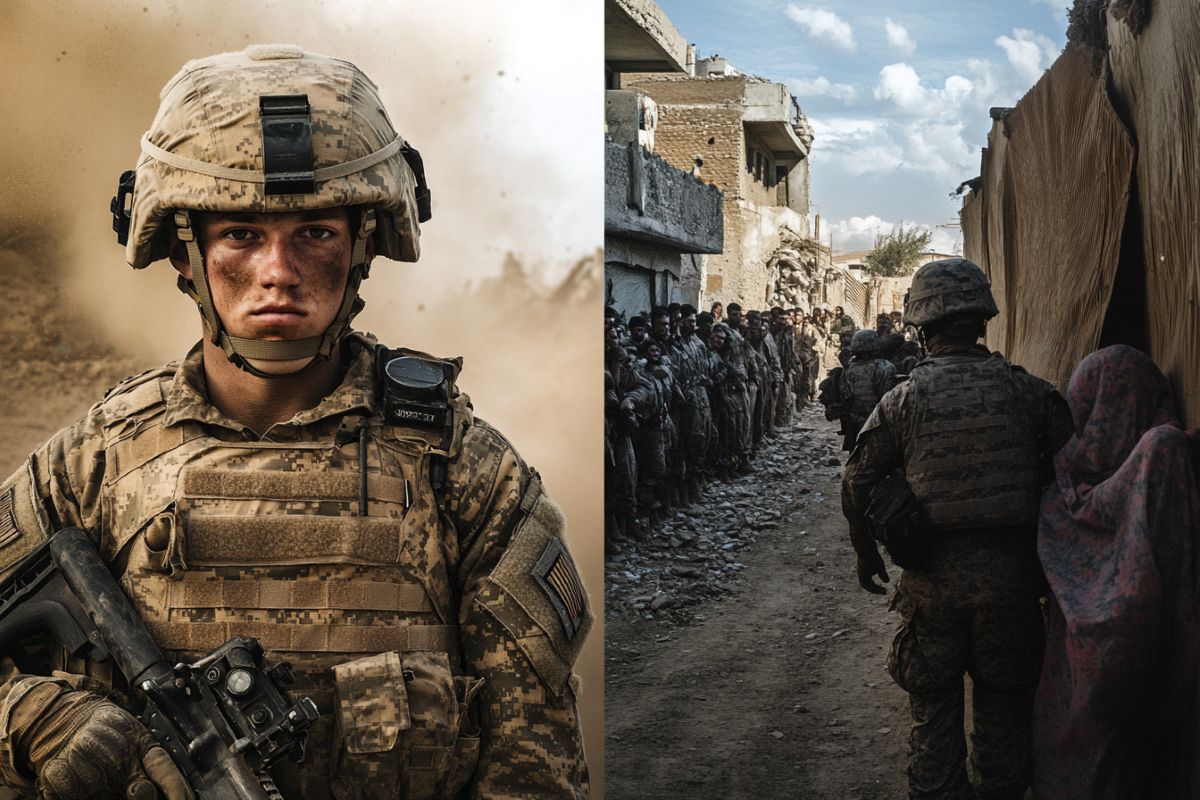
The researchers then investigated how the experiences during service had subsequently affected the soldiers’ mental health. Credit: Neuroscience News
Commander Nordstrand is the head of research and development at the Institute of Military Psychiatry, Norwegian Armed Forces – Joint Medical Services. In addition, he is an associate professor at the Norwegian University of Science and Technology (NTNU’s) Department of Psychology.
The results of a new study directly contradict previous theories that taking a person’s life is automatically detrimental to mental health. However, everything depends on the circumstances in which it takes place.
Studied all Lebanon and Afghanistan veterans
Nordstrand investigated the mental health of Norwegian veterans after they had completed their military service. He conducted this study with Professor Leif Edward Ottesen Kennair from the same department at NTNU and several other researchers.
These include war veteran Ronny Kristoffersen, who was himself shot in Afghanistan, and former chief psychiatrist of the Norwegian Armed Forces – now known from the Norwegian TV programme Kompani Lauritzen – Jon Reichelt. It is a comprehensive study.
“We studied every Norwegian Armed Forces veteran who had served in Lebanon and Afghanistan, and identified those who have killed in combat,” said Nordstrand.
The study included 10,605 Lebanon veterans and 4053 Afghanistan veterans, although only a small minority had killed someone. The researchers then investigated how the experiences during service had subsequently affected the soldiers’ mental health.
“We looked at PTSD, depression, insomnia, anxiety, alcohol consumption and quality of life,” Nordstrand said.
The results are striking – the difference between veterans from Lebanon and Afghanistan is huge.
The Lebanon veterans suffered more mental health problems
“Taking a life in combat was a key factor among the veterans who had served in Lebanon. The veterans who had killed someone in combat were more likely to experience mental health problems, increased alcohol consumption and reduced quality of life later on,” said Nordstrand.
But that was not the case for the veterans who had served in Afghanistan.
“For the Afghanistan veterans, taking a life had no subsequent impact on their mental well-being. We did not identify a trend in any of the variables we investigated,” said Nordstrand.
The researchers checked all the analyses to establish whether other exposure to trauma could explain the findings. The difference between the two veteran populations is striking.
Nordstrand believes the findings reveal something fundamental about human nature.
“There is a widespread belief in society that taking the life of another person goes against human nature, and that this will easily create what psychotraumatology refers to as ‘moral injuries’,” he said.
But that doesn’t appear to be the case.
“Our findings indicate that whether taking a life subsequently has a negative impact on mental health and quality of life is highly context-dependent,” emphasized Nordstrand.
Completely different situations for soldiers in Lebanon and Afghanistan
Lebanon and Afghanistan were very different missions, which may account for some of the difference.
In Lebanon, the soldiers’ mission was largely to calm tensions and ensure that peace was maintained. There was a risk of combat, but it was nowhere near as dangerous as in Afghanistan.
In Afghanistan, soldiers were much more likely to encounter combat situations with more aggressive opponents.
“Participating in a peacekeeping operation seems to make soldiers much more vulnerable to the aftermath of killing another person than soldiers involved in combat missions,” Nordstrand said.
The expectations of the soldiers and their missions were very different.
“We believe this supports the view that it is primarily violations of group norms and mission guidelines that make actions like killing harmful,” he said.
If the mission entails a high risk of the enemy acting aggressively, there is more leeway and acceptance for taking a life.
The groups are more similar with regard to other traumatic experiences, such as being in life-threatening situations or witnessing something traumatic.
Clear missions that establish norms
“We believe the findings show that we must be acutely aware of the rules of engagement, expectations, and the mission guidelines we set when sending soldiers on armed missions,” he said.
And it doesn’t just apply to soldiers. The same is probably true for other areas where the government has a role in violence, such as the police.
“These factors collectively create group norms among the soldiers – norms that determine what they perceive as right or wrong. It is these group norms that are either violated or upheld if they find themselves in a situation where they have to kill,” explained Nordstrand.
If soldiers know and experience that it is acceptable to kill when the situation demands it, such experiences rarely become a problem. They are not left with a feeling of having done something wrong.
At the same time, killing someone is very far removed from what most people in Norway experience, so soldiers are often particularly careful to ensure that the action occurred within the established group norms.
“The differences between the two groups of veterans in our study enable us to identify what creates protection against and the risk of negative consequences of taking a person’s life. The common factor here is the context in which it occurs. This applies to preparations, both physical and mental, and how society and networks engage with individuals who have killed when they eventually return to Norwegian society.”
Five years of research
Nordstrand started this project back in 2020, and although the data quickly provided clear answers, it still took five years for the article to be published.
“This is a sensitive topic, and the findings may be perceived as somewhat taboo. In civilized, humanistic societies, people often dislike the idea that taking a person’s life can be entirely unproblematic for soldiers, as long as it happens within the rules of war,” he said.
“We therefore took our time and ensured that we had solid evidence for the findings of the study and the interpretations of the results. I had several different statisticians thoroughly verify the findings.”
Determined by mindset
Professor Leif Edward Ottesen Kennair joined the team to incorporate perspectives from anthropology and evolutionary psychology.
“Traditionally, there has been an argument that war is unnatural, that killing is wrong, and that we expect people to be harmed by it, regardless. I have been sceptical of this line of thought,” Kennair said.
He believes the results of the study confirm that the internal group norms, or ‘rules of engagement’, determine the long-term effects.
“The mindset with which soldiers approach a mission determines whether they expect, are prepared for and interpret the intense aspects of the role. If they are in war mode and fully aware of it, they will deal with it completely differently. They experience events and actions differently than if they are unprepared or have a peace mentality,” explained Kennair.
The well-known war veteran Ronny Kristoffersen contributed as a co-author and brought his personal combat experiences into the reflections on the findings.
Important to address
“I think it is important to bring evidence-based perspectives on this taboo subject into the public debate,” said Nordstrand.
Nordstrand said this is especially important during today’s turbulent times, when many nations are increasing their military capabilities and there seems to be a greater risk of involvement in armed conflicts.
“Soldiers kill, and being able to do that is actually a key part of their job. The findings are a clear call to take both political and collective responsibility when sending soldiers on dangerous missions, ensuring that they do not feel as though they have done something that goes against the norms of the society they are part of,” Nordstrand said.
About this mental health research news
Author: Nancy Bazilchuk Source: NTNU Contact: Nancy Bazilchuk – NTNU Image: The image is credited to Neuroscience News
Killing in Combat as a Potentially Morally Injurious Event: The Diverging Psychological Impact of Killing on Peacekeepers and Combat-Oriented Troops
The impact of killing in combat (KIC) on veterans’ long-term psychological health is multifaceted and influenced by deployment contexts.
This study compared two samples of Norwegian veterans from combat-oriented (Afghanistan 2001–2011, N = 4,053) and peacekeeping (Lebanon 1978–1998, N = 10,605) missions to examine how personal threats, witnessing death/injury, and KIC uniquely predicted long-term mental health, alcohol use, and quality of life (QoL).
In the combat-oriented sample, personal threats and witnessing death/injury predicted negative outcomes, while KIC did not.
Among peacekeepers, personal threats, witnessing death/injury, and KIC independently predicted posttraumatic stress disorder (PTSD), depression, anxiety, alcohol use, insomnia, and lower QoL.
These findings reveal diverging effects of KIC on veterans from combat-oriented and peacekeeping missions, respectively, suggesting that the impact of potentially morally injurious events like KIC is shaped by mission-specific contextual factors.
Join our Newsletter
I agree to have my personal information transferred to AWeber for Neuroscience Newsletter ( more information )
Sign up to receive our recent neuroscience headlines and summaries sent to your email once a day, totally free.
We hate spam and only use your email to contact you about newsletters. You can cancel your subscription any time.