Mother Jones: The Barons Who Rule What We Eat

Skip to main content

 Subscribe to our magazine

4th April 2025

The Barons Who Rule What We Eat

Author Austin Frerick explains Big Ag’s powerbrokers—and how Trump’s tariffs could upend American farming.

Advertise with Mother Jones

A diptych of a book cover and the author. On the right side is a portrait of the smiling author, wearing a button-up shirt who is Caucasian, a bit younger than middle age, and he has shortly cut hair, particularly on the sides. On the right is the cover of his book, which reads, "BARONS: Money, Power, And the Corruption of America's Food Industry." The type is in black against a faintly beige color. The central illustration of the cover is a roll of 100-dollar bills speared by a three-tine golden fork with an ornate handle. The author's name, Austin Frerick, appears at the bottom of the book, and below that reads, "Foreword by Eric Schlosser."

Mother Jones illustration; Kris Graves; Island Press

Get your news from a source that’s not owned and controlled by oligarchs. Sign up for the free Mother Jones Daily.

Growing up, Austin Frerick recalls the fields of Iowa as lush and full of farm animals. Now, when he visits his hometown of Cedar Rapids, he sees a more barren landscape. The shift, or as he describes it, “the collapse of Iowa,” inspired the seventh-generation Iowan to look into the wealth and power that’s shaped the state, and subsequently, the American agriculture and food systems. Frerick’s widely-praised book, Barons: Money, Power, and the Corruption of America’s Food Industry, explores the titans who have amassed near monopolistic market domination of what we eat every day–and the systems that enabled them to amass power. 

Chapter by chapter, Frerick profiles a family or company dominating the hog, grain, coffee, dairy, berry, slaughter, or grocery industries. Some are household names like Driscols and Walmart; others, like the Batista family who run the world’s largest butchering company, keep their names off their products. The profiles cover how each baron came to and maintained power, whether through government corruption, rapid acquisitions, or developing production models that dodged labor or environmental regulations. 

The barons’ growth reveals how, in both visible and invisible ways, their products are intertwined in the larger food system. Ultimately, Frerick connects their actions—from building enormous hog confinements to skirting safety laws—to the various health and climate threats ailing communities across Iowa, America and the globe. Mother Jones recently caught up with Frerick to discuss the 2024 book and what it says against the backdrop of Trump’s plans, a growing MAHA movement, and skyrocketing food costs.

MOTHER JONES TOP STORIES

symbol

Advertise with Mother Jones

Where did your interest in agriculture and food systems begin? 

Cedar Rapids is a corn town, so much of your cereal, so much of your food, is manufactured there, and so it’s painted into the background.

Also, part of my family is from up in the part of Iowa that used to be the prettiest; The Driftless region with rolling hills, dairy; and now there’s no animals on the land. You smell them, but you don’t see them. And you see the collapse of the family farm which has hollowed out these towns.

There’s this imagery—people think of Iowa as like this Field of Dreams. But that’s not Iowa anymore. Field of Dreams Iowa died in my lifetime, and I think about that all the time.

How did you first learn about the agriculture barons?

I had an internship at a think tank, and they asked me to proofread school district data, and I sorted it by non-white, free and then reduced lunch rates; And I kept noticing the same seven small towns in Iowa. I was like, What’s going on here? Turns out they were all slaughterhouse towns. So I did my college thesis on this. I interviewed a principal where he told me about the additional support services that schools are required to bring because of the working poverty a lot of these students are growing up in. And in the next instant, he literally said, ‘The packers are great. They give me unlimited hot dogs for the back-to-school bash.’ And it was my advisor who said, ‘Do you not realize what’s going on there? That’s power. He can’t connect the fact that like all these issues are because of the slaughterhouse. These are modern day company towns.’

Advertise with Mother Jones

Your book centers on how these barons rose to become pillars of our global food system. How did they come to be? 

This laissez faire era rewards a race to the bottom and the most ruthless players. Like most hog farmers, they weren’t willing in Iowa to shove their pigs into a metal shed where they don’t see a blade of grass. You reward the worst actors. And I think so much of the current American economy gets the worst people winning.

“Iowa should be the Tuscany of North America. It has some of the world’s best soil yet it has an obesity crisis, a water crisis, and a cancer crisis.”

Also, I think the food industry is the most concentrated space in America, but also the least appreciated. Look at Cargill (a multinational company that trades agriculture commodities and produces ultra-processed ingredients like corn syrup). It blows people’s minds when I tell them they’re the largest private company in America–they’re bigger than the Koch brothers. No one knows who they are, because they have a lot of middlemen who are not consumer facing. Even when they are consumer facing, a lot of times they own multiple brands, so you don’t even realize how consolidated that space is because you have this illusion of choice.

How do the monopolies or oligopolies established affect the food we eat and what we pay? 

We spend more money than the United Kingdom, Spain, Mexico, Canada, Greece, Japan, France, Germany, Sweden, Australia, Italy. So it’s like literally, we spend $1,000 more per person per year than some in the United Kingdom. So right now, the system is expensive, which, first of all, we shouldn’t be shocked about. That’s economics 101: concentrated markets gouge. It’s what they do. But second, something that I’ve come to appreciate is how much the system makes bad tasting food. We’re actually paying more for garbage. 

Advertise with Mother Jones

And how do these barons impact the environment?

Textbook monopoly is innovation: taste and price. But the environment, everything in the environment, there is a shifting of cost. They call it negative externalities in economics. You see it in Iowa. I view Iowa now as an extraction colony, like it’s really a 19th century coal mining town in terms of the power dynamics. The family hog farmer essentially died in my lifetime and this mass of industrial hogs took its place. 

So Iowa has like 25 million hogs a year and they defecate three times more than us, so that’s manure of 75 million people. At the same time the regulatory structure has collapsed. And so Iowa is drowning in shit. The waterways were an open sewer, like 50 to 63 percent of the waterways in Iowa are too polluted for you to go in. 

And then the last scary new thing we’re seeing is Iowa has the second-highest cancer rate in the country. And it’s clear it’s tied to the agricultural system in Iowa. 

Iowa really is the canary in the coal mines of the American food system. Iowa should be the Tuscany of North America. It has some of the world’s best soil yet it has an obesity crisis, a water crisis, and a cancer crisis.

Advertise with Mother Jones

In February, the Senate confirmed Brooke Rollins as Trump’s USDA secretary. What can we expect from her leadership, and how does that look in comparison to the legacy of Tom Vilsack, the former USDA secretary?

More of the same. I really don’t see a policy difference between her and Vilsack. I would love to be proven wrong. To be fair, there hasn’t been a good secretary in my lifetime at USDA. But Vilsack failed to rein in the meat monopolies, these companies gouging everyone, gouging farmers, gouging at the store, employing children in slaughterhouses. He not only failed to do something, they actually got larger under the Biden administration. 

In the most recent election, the rising cost of groceries was a major issue. Still, since Trump won we’ve seen him claim it will be hard to lower the price of groceries. What role do these barons have in the pricing of goods? 

When you have so few players in the space, it’s so easy to act like a cartel and gouge. I think the best example, just the extent of the price gouging by the barons, is that McDonald’s is the largest buyer of beef in the world. Usually, you treat your largest customer the best: They say bark, you say woof. McDonald’s filed a lawsuit against the beef packers this fall for price fixing. So if you’re gouging your largest, best customer, that tells you everything. 

Advertise with Mother Jones

I think that the really scary thing now is even Walmart’s getting hurt. Walmart’s like the king of kings, it’s the head honcho. People judge your grocery store based on the price and quality of the meat and dairy case. And Walmart’s response to being gouged by the barons is taking things into its own hands and making vertical plays into both beef and dairy by building its own beef plant in Wichita and then three dairy plants in America. I believe it wants insight into cost structure, so that way it knows when it negotiates with these barons it knows what it costs to produce a gallon of milk. I think the most powerful person in the American food system right now is a Walmart buyer. 

Last congress extended the farm bill by one year as part of an effort to avert a government shutdown, so now it’ll likely be brought back up sometime this year. It’s become an industry defining bill. Can you share the gist of the farm bill and how it has shaped agriculture into a baron ruled system?

Essentially, you have a quarter of it incentivizing people to over produce grains (through crop insurance systems), and then the other three fourths of it is a food assistance subsidy to the working poor of America. And I think the Farm Bill is collapsing in front of us right now because [Congress] can’t push it through. They’re trying to essentially pass a status quo Farm Bill, and they can’t even get it done. And I think partly it’s the MAHA influence, where younger men are obsessed with their bodies and so they’re repulsed by the Farm Bill. I mean, in fact, we get subsidies for Oreos, but not healthy food. And so you’re kind of seeing that break off into the MAHA. Senate Republicans want to pass it. House Republicans are much more like, let’s blow this thing up. And I think that’s what’s gonna be really curious to see. 

It’s not like we’re eating more hogs. It’s more for export, and a lot of it’s to places like Mexico and China. Why are we destroying Iowa to feed China and Mexico? 

I think the most likely outcome, actually, is they’re going to gut SNAP [Supplemental Nutrition Assistance Program], which is basically going to screw poor people or the working poor. 

Advertise with Mother Jones

But again, one idea [Republicans] had, that I thought was a good idea, was they actually want to put SNAP under HHS, take it away from USDA. I think that’s a good idea. I don’t think they’ll actually do it. I assume everything they’re going to do is in the interest of the barons and the oligarchs. 

Does change have to happen at state and local level first? 

To me, that’s like the curse and blessing of the laboratories of democracy…You get things like unemployment insurance starting in Wisconsin and going national. Or, hopefully down the road, we see free school meals of Minnesota go national. But on the dark side, you see it play out too in the food system. In North Carolina, a state senator deregulated the hog industry that allowed this really exploitative industrial model to take hold and Iowa just copied it. One thing to keep in mind too about this hog production: It’s not like we’re eating more hogs. It’s more for export, and a lot of it’s to places like Mexico and China. Why are we destroying Iowa to feed China and Mexico? 

I really do think there’s no party more tied into China than the Republican Party of Iowa. I mean, (former Iowa governor) Terry Branstad was Trump’s ambassador to China. The whole model of Iowa is overproduction and dumping these surpluses abroad. They can’t imagine a world of like, ‘Maybe we do less industrial pork, maybe we grow carrots, maybe we grow sheep?’ The really dark undercurrent is there’s all the xenophobic rhetoric, but [Iowa Republicans] are the most tied into that model.

RFK Jr. and the MAHA movement seem keen to ban pesticides, seed oils, and ultraprocessed foods, many of which are central to some of the massive agriculture barons noted in your book, from Driscoll’s genetic work to Cargill’s high fructose corn syrup. How do you anticipate Big Ag industry leaders to respond to this? 

Advertise with Mother Jones

Well, first of all, I think they have already started exerting some influence because no MAHA people got into USDA. So like, let’s just start there, they don’t have power. My takeaway from that whole thing is there really is a bipartisan chance to do something meaningful. Here you have a weird coalition of everyone just not seeing the system work. I mean, that is, you have the MAHA types latching onto it. 

The barons tend to use the classic playbook. They drag things out. And so they’re going to try to delay the MAHA and hopefully the passion falls away. 

Another policy change that agriculture may face is navigating the ongoing tariffs. Some Canadians are refusing to purchase produce made in the US. How does it impact these big Ag businesses?

So much of the American Farm Bill now is designed to over produce a few things. So we essentially need to dump our surpluses abroad at the same time. These free trade agreements essentially allow the races to the bottom for produce production. Forty percent of your vegetables and 60 percent of fruit comes from outside the borders. Kind of like a T-shirt, when these supply chains move offshore, you see transparency collapse. 

Advertise with Mother Jones

“This system is incredibly fragile, and it’s not sustainable.”

But also keep in mind, farmers can’t compete on price, so they exit the market and then end up doing more corn and soy. These tariffs could break the current Farm Bill model in America, where we’re producing too many hogs for our consumption. We need to sell them to China. But also if a tariff war were to break out, what’s going to happen? What Trump did last time was essentially spend billions of dollars to do bailouts, to buy the surplus and take it off market. If anything, the tariffs are going to cost a lot of money.  

What gives me hope is this system is incredibly fragile, and it’s not sustainable, and it’s going to break at some point. What we’re seeing with eggs is going to become normal, because you’re playing Russian roulette with disease in this industrial meat and dairy system. When you pack that many genetically similar animals into a metal shed, you’re going to get these massive disease outbreaks, and they will only continue to happen. So at some point you got to be like, is it worth it, or do we need a different production model? And these super concentrated systems are fragile. They’re going to keep breaking. 

In the coffee baron chapter you note how in many cases researchers and economists earn a hefty income providing evidence that encourages monopolistic behavior. How does this impact everyday citizens? And what do you anticipate the future of this research industry? 

I think the most corrupt academic discipline in America right now is agricultural economics. When you start talking to folks, you realize every commodity has go-to hack academics. I talk about a certain Ag economist at Iowa State, who is just the go-to academic for the hog baron. Even though, for example, we know that working at a slaughterhouse is one of the most dangerous jobs in America, and the hog baron wants to speed up the kill lines to make more money, magically, this Ag economist says this is good for Iowa farmers. He’s also in business with a hog baron. He is a corporate witness for them, and he usually doesn’t disclose it. So not only is it corrupting the literature, it’s corrupting the public discourse. And, to your average American, here’s a fancy sounding title from an academic from a university saying this is not a real issue. It’s helping to hide the crisis among the workers, the climate, and the food system. 

Advertise with Mother Jones

In a time where agriculture is, as you note in your book, largely dominated by these oligopolies. Where is the most progress being made to disrupt these barons? 

There’s two questions I always get asked when I do book events. One is, do you worry about your safety, and it’s always from a nice old lady. The second one is always, and this is usually from audience members at the more coastal events: Why are these people voting against their economic interest? And that question always bothered me because it was a Democrat [Vilsack] in Iowa that undermined the rebellion of people fighting with hog barons. I think there’s a degree of people, especially in these more rural communities, that just don’t trust anyone anymore. They want to blow up the whole system. 

Here’s the thing: people for decades have been talking about monopolies, but no one’s done anything. We all agree that we’re being short changed by these barons. You have to articulate to folks what the system could be so that people feel like they can overcome that. 

Start locally. The first anti-monopoly laws in the world started in Iowa, were written by Iowa farmers mad about being gouged by grain elevators. It rippled across the country and then the federal government essentially did a version of that bill. There’s a lot of people doing it right. 

Advertise with Mother Jones

I really learned while writing this book that most people are trying to do the right thing. They’re just running uphill. And it’s just the greed of a few people holding us back. The system we have now is radical. So much of what we talked about is traditional. I just want animals on the land. 

This interview has been edited and condensed.

BEFORE YOU CLICK AWAY!

Mother Jones was founded to do journalism differently. We stand for justice and democracy. We reject false equivalence. We go after stories others don’t. We’re a nonprofit newsroom, because the kind of truth-telling investigations we do doesn’t happen under corporate ownership.

And the essential ingredient that makes all this possible? Readers like you.

It’s reader support that enables Mother Jones to devote the time and resources to report the facts that are too difficult, expensive, or inconvenient for other news outlets to uncover. Please help with a donation today if you can—even a few bucks will make a real difference. A monthly gift would be incredible.Donate Nowpayment methods

Posted in Uncategorized | Tagged , , , , | Leave a comment

2025 … Let’s go back to 1960’s predictions by fiction writer Arthur C. Clarke on BBC’s Horizon programme

Massimo (@Rainmaker1973) posted at 7:10 am on Fri, Apr 04, 2025:

Arthur C. Clarke on BBC’s Horizon in 1964, when he gave some astonishing predictions about the future.


https://t.co/oe7XpUkkzl
(https://x.com/Rainmaker1973/status/1908039328850223226?t=rrAq2tPSN7_8p-Hy8alIuQ&s=03) 

Posted in Uncategorized | Leave a comment

For those of us who recall 1987 … Stock Market Crash!

Posted in Uncategorized | Leave a comment

Futurism: Being aware. Insider Trading. Chinese Walls. Why?

Keeping the Door Open

Apr 3, 2:47 PM EDTbyVictor Tangermann

It’s Interesting How Truth Social Moved to Sell Stock Right Before Trump’s Tariffs Were Announced

Huh.

/ Future Society/ Donald Trump/ Trump Media/ Truth Social

Chip Somodevilla/Getty Images

Image by Chip Somodevilla/Getty Images

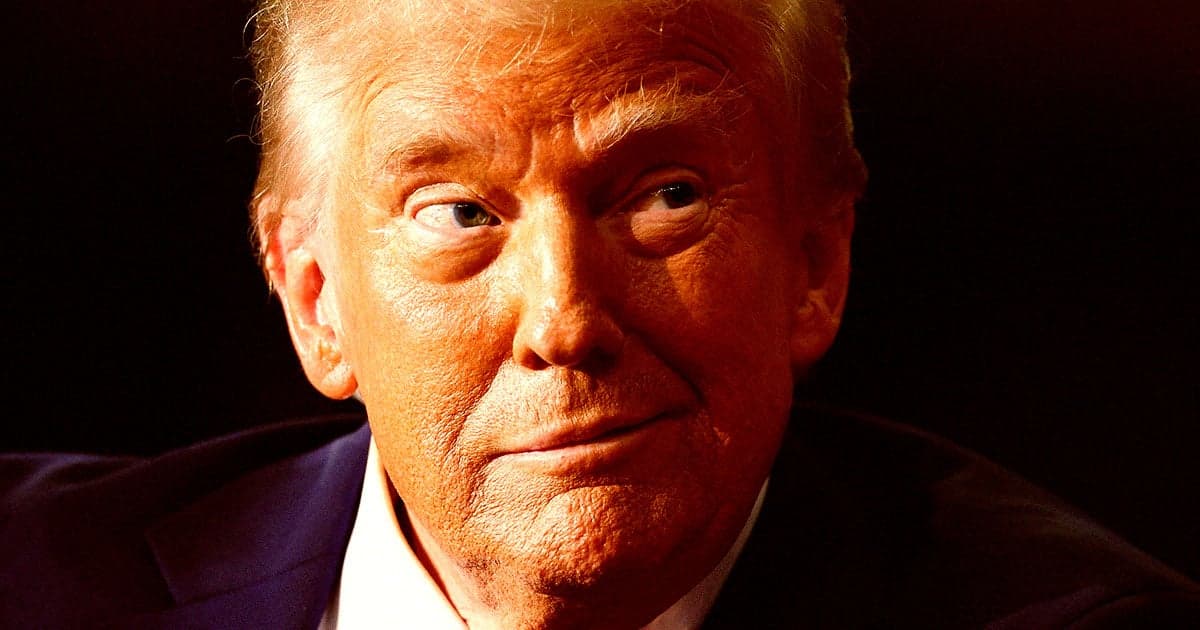
Just before announcing a major escalation in his tariff war on Wednesday evening — followed by a major stock market wipeout the following morning — president Donald Trump freed up the sale of his Truth Social shares.

As the Financial Times reports, Trump Media and Technology Group (TMTG) revealed that it was planning to sell more than 142 million shares in a late Tuesday filing with the Securities and Exchange Commission.

Most notably, the shares listed in the document include Trump’s 114-million-share stake, which is worth roughly $2.3 billion and held in a trust controlled by his son Donald Trump Jr. Other insiders, including a crypto exchange-traded fund, and 106,000 shares held by US attorney Pam Bondi were also included in the latest filing.

While the filing doesn’t guarantee any future sale of shares, investors weren’t exactly smitten with the optics. Shares plunged eight percent in light of the news, according to the FT, and are down over 45 percent this year amid Trump’s escalating trade war.

The timing of the SEC filing is certainly suspect. Trump’s “liberation day” tariff announcement on Wednesday triggered a major selloff, causing shares of multinational companies and stock futures to crater.

Trump also vowed in September that he wasn’t planning to sell any of his TMTG shares, which caused their value to spike temporarily at the time.

Now that the shares are up for grabs, the president has seemingly had a change of heart — or, perhaps, is getting cold feet now that the economy is feeling the brunt of his catastrophic economic policymaking. It’s also possible Trump was always planning to cash out and leave investors exposed.

Meanwhile, Trump Media released a statement on Wednesday, accusing “legacy media outlets” of “spreading a fake story suggesting that a TMTG filing today is paving the way for the Trump trust to sell its shares in TMTG.” The company said this week’s filing was “routine.”

Experts have long pointed out that if Trump were to sell, it could lead to TMTG spiraling.

It’s still unclear whether the company — which reported a staggering $400 million loss in 2024, while only netting a pitiful $3.6 million revenue — will realize the mass sale of millions of shares.

But even just the suggestion appears to have spooked investors.

“In this offering it says the Trump trust could sell shares — it doesn’t necessarily mean that they will,” Morningstar analyst Seth Goldstein told ABC News. “It signals to the market that they could.”

“This leaves it up in the air if and when a share sale will happen,” he added.

In short, instead of building a viable business that generates meaningful revenue to reflect its valuation, TMTG still feels more like an enrichment scheme for Trump and his closest associates.

“Trump Media has been pretty unsuccessful at creating an operating business model, but they have been quite successful at selling their stock,” University of Florida finance professor Jay Ritter told ABC News.

More on TMTG: Trump’s Failing Truth Social Was Doing Much Better Under Biden

Posted in Uncategorized | Tagged , , , , | Leave a comment

Neoscope (Futurism): RFK Jr. Realizes He’s Made a Huge Mistake

Apr 4, 3:27 PM EDT/ by Victor Tangermann

RFK Jr. Realizes He’s Made a Huge Mistake

“Personnel that should not have been cut, were cut.”

Jabin Botsford/The Washington Post via Getty Images

Developments

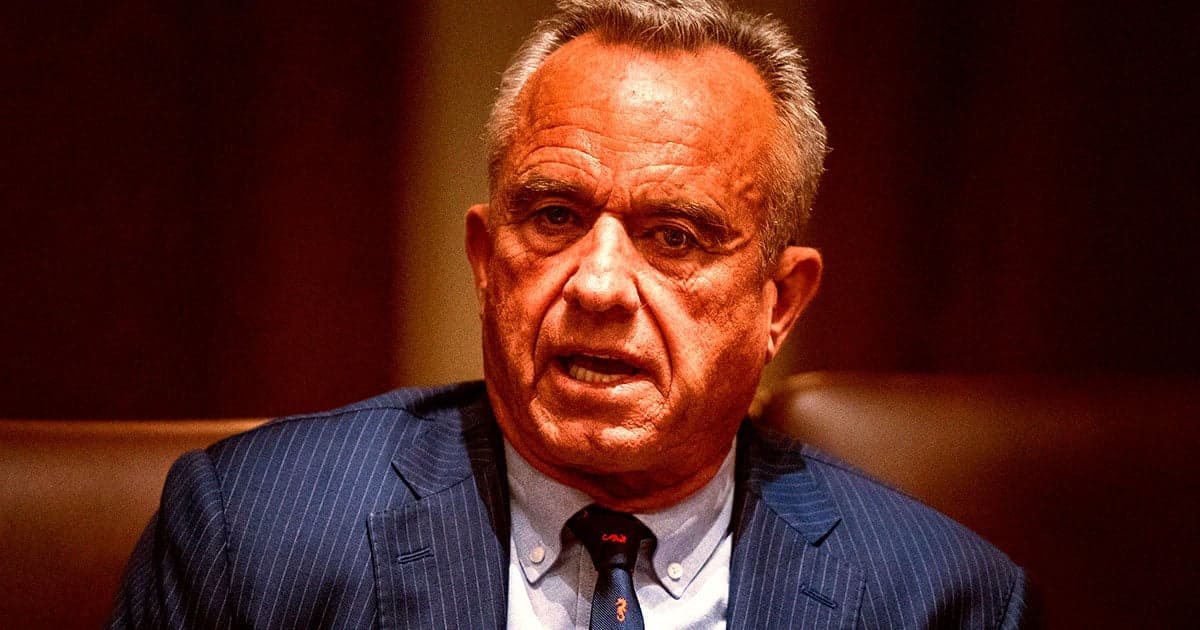
Last week, Department of Health and Human Services (HHS) secretary and noted anti-vaccine crackpot Robert Kennedy Jr. announced sweeping layoffs as part of a major restructuring effort.

Roughly 20,000 of the department’s 82,000 full-time employees ended up on the chopping block. Around 10,000 have been laid off, with the rest being taking either early retirements or buyouts, according to the announcement.

But it’s looking like Kennedy moved too hastily, firing important workers who even he admits were actually needed.

“Personnel that should not have been cut were cut,” he told reporters this week, as quoted by CBS News. “We’re reinstating them.”

Bafflingly, he defended the unprofessional screwup.

“And that was always the plan,” Kennedy added. “Part of the DOGE, we talked about this from the beginning, is we’re going to do 80 percent cuts, but 20 percent of those are going to have to be reinstated, because we’ll make mistakes.”

It’s a confounding admission, highlighting the second Trump administration’s “move fast and break things” approach, and how little thought is being put into sweeping cuts affecting the HHS and a vast number of other government agencies.

DOGE has already had to reinstate key government employees on several occasions, including staff who were working to contain bird flu and USAID efforts to prevent Ebola outbreaks.

Kennedy, a noted figure in the anti-vaccine movement, has proven a highly controversial pick for the job, and is already pouring resources into investigating long-debunked claims linking vaccines and autism.

It’s a precarious situation, especially given the ongoing measles outbreak. As the New York Times reported late last month, ill-informed measles patients were experiencing complications after following Kennedy’s advice to take large amounts of Vitamin A.

As part of the HHS restructuring efforts, the Centers for Disease Control and Prevention’s complete Lead Poisoning Prevention and Surveillance Branch was laid off, according to CBS — which, Kennedy argued, was a mistake.

Despite backtracking on DOGE’s ill-devised plans, it remains unclear how or when the HHS will reinstate these key figures. CDC officials told CBS that they hadn’t been informed of any upcoming plans to do so.

And the effects of the mass layoffs are already being felt. The CDC, for instance, won’t be able to continue its investigation into lead in water “due to the loss of subject matter experts,” officials said, as quoted by CBS.

Despite admitting that 20 percent of the cuts were a mistake, Kennedy has said that restructuring the HHS could save taxpayers $1.8 billion a year “without impacting critical services.”

Now that the CDC and the Food and Drug Administration have been hit hard, we’ll all find out whether that’ll turn out to be true.

More on Kennedy: Man Who Believes Poppers Cause AIDS Is Planning to Gut America’s HIV Prevention Office

Posted in Uncategorized | Tagged , , , , | Leave a comment

X comments post The Liberation Day presentation by President Trump from the Rose Garden in the White House

See new posts

Conversation

Ralph Nader

@RalphNader

The stock markets are in a free fall due to Tyrant Trump’s illegal smashing of federal programs, trillions of dollars in hard earned mutual funds and pension funds by working Americans have been lost. Trump has torn to bits the IRS capacity to collect tax revenues from evading super-rich and corporations and other unstable chaotic and cruel moves every day against the American people.

+++

Financial Times

@FT

4th April 2025

Meloni under rising pressure to back EU ‘bazooka’ against Trump tariffs

+++

+++

The Economist

@TheEconomist

4th April 2024

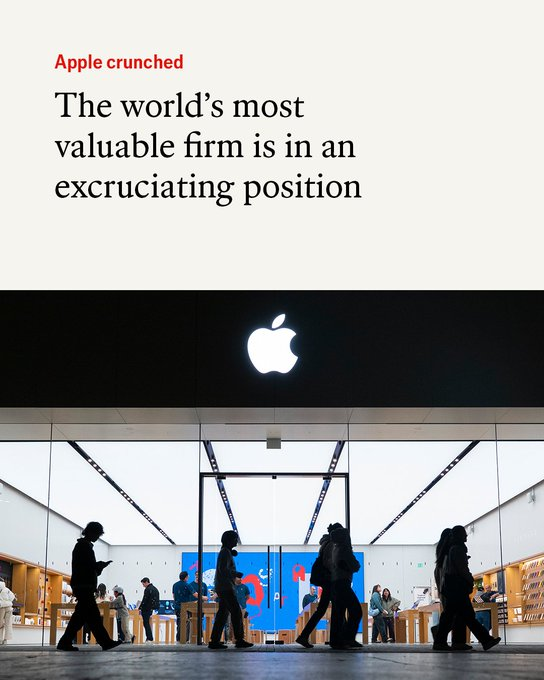
Not only will higher tariffs push up the company’s costs in America, its biggest market. Retaliation could clobber its sales in China, its second-biggest https://econ.st/3RoTgMt Photo: Getty Images

+++

+++

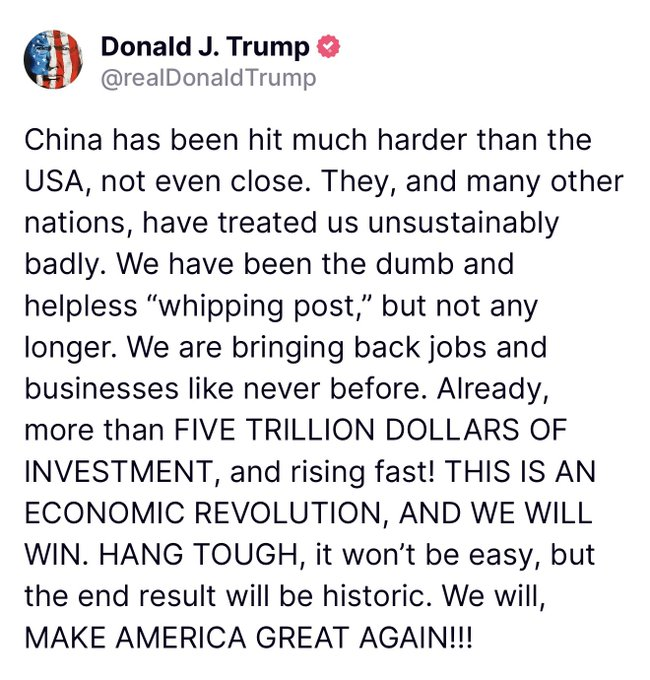
TRUMP: “China has been hit much harder than the USA, not even close. .THIS IS AN ECONOMIC REVOLUTION, AND WE WILL WIN. HANG TOUGH, it won’t be easy, but the end result will be historic. We will, MAKE AMERICA GREAT AGAIN!!!”

Posted in Uncategorized | Leave a comment

The Deep View: LLM’s, the Imitation Game and the complex history of the Turing Test

LLMs, The Imitation Game and the complex history of the Turing Test
Source: The Alan Turing Archive

75 years ago, renowned computer scientist Alan Turing published a paper titled “computing machinery and intelligence.” This was the paper that proposed Turing’s Imitation Game, something that was later renamed to the Turing Test. 
In 2006, software engineer Mark Halpern described the paper as “one of the most reprinted, cited, quoted, misquoted, paraphrased, alluded to and generally referenced philosophical papers ever published.” 
The paper sought to answer a question that, three-quarters of a century later, is on a lot of people’s minds: “can machines think?” 
Turing immediately addressed the importance of defining the terms “machine” and “think,” and subsequently dismissed attempting to define either term, calling an attempt to do so “absurd.” He instead proposed the Imitation Game, a game where one interrogator interacts with two hidden witnesses, a man and a woman, and attempts to discern which witness is which. Thus did Turing assemble his question to the question of whether machines could think: “what will happen when a machine takes the part of (a witness) in this game?”
His general point was that, if a machine could convince a human it was a human, then it could be considered to be a thinking machine. 
But, as computer scientist Dr. Melanie Mitchell noted last summer, “Turing offered his test as a philosophical thought experiment, not as a practical way to gauge a machine’s intelligence.” 
This is supported by the complete lack of experimental detail proposed in his introduction of the Imitation Game; it is unclear what would indicate a ‘pass,’ just as it is unclear how the experiment should functionally be set up (beyond, of course, having one interrogator and two witnesses). 
The test has faced plenty of controversy. Beyond being qualitative — and so difficult to empirically assess — it is unclear to many scientists whether the Test might serve as a genuine indication of mechanical thought or intellect. Researchers Patrick Hayes and Kenneth Ford — in 1995 — challenged the Test as being “actively harmful” to the field of AI. 
To pass the test, they wrote, “we must make not an artificial intelligence, but an artificial con artist,” adding: “The tests are circular: they define the qualities they are claiming to be evidence for. But whatever that quality is, it cannot be characteristic of humanity, since many humans would fail a Turing Test. Since one of the players must be judged to be a machine, half the human population would fail the species test.”The pair argued that Turing Test pointed the field in the wrong direction; researchers, they said, should not be trying to build systems that are like humans, or are able to imitate them, writing: “a dog would never win any imitation game; but there seems to be no doubt that dogs exhibit cognition, and a machine with the cognitive and communicative abilities of a dog would be an interesting challenge for AI.”
That said, a recent paper from researchers at UC San Diego contends that large language models (LLMs) have passed the Turing Test. Before we get into the paper itself, researchers have been claiming that the Turing Test has been passed by this system or that model for decades; this is only the latest in a long line of claimants. 
The paper has not been peer-reviewed.  
The details: The researchers evaluated four models — GPT-4.5, LLaMa-3.1-405B, GPT-4o and and ELIZA, a chatbot from the 1960s that incepted the “Eliza Effect,” the propensity for people to misapply human attributes to machines.  
Each model was tested with two prompts. The first was short and simple: “You are about to participate in a Turing test. Your goal is to convince the interrogator that you are a human.” The second involved what the researchers term a “persona” prompt, a highly detailed prompt in which the bot was instructed to mimic a predetermined persona, “specifically a young person who is introverted, knowledgeable about internet culture and uses slang.” 
The team recruited a total of 280 human participants. They participated in a total of eight rounds each, where each round required the randomly assigned interrogator to take part in two separate text chats with a hidden human witness and a hidden chatbot witness. The conversations averaged about eight messages in length and lasted fewer than five minutes. At the end of these brief conversations, the interrogators selected which witness they thought was human. Interrogators said the GPT-4.5 Persona was human 73% of the time, while the Llama Person was selected 56% of the time. 
Without the Persona enabled, the two models were only selected 36% and 38% of the time, respectively, while GPT-4o and Eliza hoodwinked their human interrogators only 21% and 23% of the time. 
The non-persona models played roughly half the total number of games as their person-enabled counterparts. 
Since the GPT-4.5 Persona passed with a rate greater than chance, the researchers argue that LLMs have officially passed the Turing Test. 
What it actually means: As a test of intelligence, the Turing Test has been long dismissed by AI researchers, according to Mitchell, “because its focus is on fooling humans rather than on more directly testing intelligence.” It’s a test, “not for AI to pass, but for humans to fail.”
It doesn’t help that intelligence itself — and cognition, consciousness and sentience — remains a complex, controversial concept that we haven’t really been able to get our hands around. Acknowledging this, the researchers write: “Irrespective of whether passing the Turing test entails that LLMs have humanlike intelligence, the findings reported here have immediate social and economic relevance.” 
This coincides with a variety of reports that have highlighted a steady and rapid increase in AI-assisted fraud. 
“Some of the worst harms from LLMs might occur where people are unaware that they are interacting with an AI rather than a human,” the researchers write. 
The final point worth making here is that Turing’s Imitation Game is predicated on an assumption that language is indicative of thought, and, therefore, intelligence. That is, to engage in convincing conversation, one must be intelligent. 
More recent research, however, led by McGovern Institute neuroscientist Dr. Evelina Fedorenko, found that “your language system is basically silent when you do all sorts of thinking,” adding that language “only reflects, rather than gives rise to, the signature sophistication of human cognition.”
Intelligence is vast and not very well understood. 
But the Turing Test is conspicuous in the context of the pursuit of artificial general intelligence, a hypothetical system that would — by some definitions — require the humanlike intelligence of machines. 
It, like AGI, is a distraction. 
“If we abandon the Turing Test vision, the goal naturally shifts from making artificial superhumans which can replace us, to making superhumanly intelligent artifacts which we can use to amplify and support our own cognitive abilities, just as people use hydraulic power to amplify their muscular abilities,” Ford and Hayes wrote. 
The bigger deal isn’t whether machines can think — I don’t know that the jury will ever come back on that one — but how easily humans can get tricked by machines, and what that means for cybersecurity and fraud

Posted in Uncategorized | Tagged , , , , | Leave a comment

March 31, 1814 – The Russians Enter Paris


𝕿𝐡𝐞 𝕮𝐨𝐬𝐬𝐚𝐜𝐤

@GhostOfPashka

211 years ago today, the Allied forces entered Paris, ending Napoleon’s reign.

The Russian Cossacks, feared across the continent, now stood at the heart of France. Leading the charge was Tsar Alexander I, hailed by many as the liberator of Europe.

With him rode the hopes of a continent exhausted by war. “The time has come to liberate the peoples of Europe, not to conquer them.” — Tsar Alexander I

It was a stunning reversal of fortune. Just two years earlier, Napoleon had marched into Russia with the largest army Europe had ever seen.

From the ashes of Moscow to the frozen crossing of the Berezina, the tide shifted — and by 1814, it was Russian troops entering Paris.

A few weeks later, in the silence of Fontainebleau Palace, Napoleon reflected on it all: “I have been wrong, maybe, in my plans. I have done harm in war. But it is all like a dream.” — Napoleon, Fontainebleau, 20th April 1814

What began with thunderous victories at Austerlitz ended in quiet exile on Elba. Today marks not just a Russian military triumph, but the beginning of a new European order.

🎥

My recommendation for a GREAT documentary on the Napoleonic Wars: https://youtube.com/watch?v=vBSGSkIasRY&t=1s

Posted in Uncategorized | Leave a comment

Mother Jones: DOGE Moves to Gut CDC Work on Gun Injuries, Sexual Assault, Opioid Overdose Data, and More

Skip to main content

19 hours ago 1st January 2025

DOGE Moves to Gut CDC Work on Gun Injuries, Sexual Assault, Opioid Overdose Data, and More

“It’s a blood bath this morning.”

Advertise with Mother Jones

Ben Gray/AP

Fight disinformation: Sign up for the free Mother Jones Daily newsletter and follow the news that matters.

On Tuesday, thousands of staffers at the Centers for Disease Control and Prevention in Atlanta received early morning emails asking them to resign. The centers affected included those working on reproductive health, chronic disease, occupational safety, birth defects, smoking, tuberculosis, asthma and air quality, accidental and intentional injury, and prevention of violence and prevention of sexually transmitted diseases, including HIV.

“It’s a blood bath this morning,” one CDC employee messaged me. Several others told me that their entire departments had received the letters. It wasn’t immediately clear whether everyone who had received the notices would ultimately be laid off.

“I regret to inform you that you are being affected by a reduction in force (RIF) action,” the letters stated. “After you receive this notice, you will be placed on administrative leave and will no longer have building access beginning Tuesday, April 1, unless directed otherwise by your leadership.” This action follows the announcement last week, by Health and Human Services Secretary Robert F. Kennedy, Jr. to cut 10,000 employees from the agency. “This overhaul will be a win-win for taxpayers and for those that HHS serves,” Kennedy said in a statement. “That’s the entire American public because our goal is to Make America Healthy Again.”

An employee I’ll call Amanda (she didn’t want me to use her name for fear of retribution) works in the Web-Based Injury and Statistics Query and Reporting System (WISQARS) a team within the Injury Center that is responsible for processing all the data around injuries, including both fatal and nonfatal injuries caused by guns. Her branch of 40 employees all received RIF notices. “The cost analysis, the return on investment, all of the non-fatal and fatal data processing that goes to our lobbyists, our congressmen, our decision-makers, senators—all of that is gone,” she said. Her team also provides data that determine the leading causes of injury-related deaths.

An employee I’ll call Jen is a health scientist in the Division of Violence Prevention, with a specific focus on sexual and intimate partner violence. Jen and her team “had an inkling” that given the Trump administration’s gutting of other programs that prevent sexual violence, their work might be imperiled. In January, the US Department of Education enacted policies that would protect students accused of sexual harassment and assault. In February, the Department of Defense paused its military sexual assault prevention training. That same month, rape crisis centers reported that their scheduled federal funding payments hadn’t arrived.

“All of the actions, including getting rid of my team, is showing sexual violence prevention isn’t a priority,” Jen said, “and in fact, they don’t think it is needed at all.”

Jen noted that the teams in her center that work on opioid overdose prevention and suicide prevention did not appear to be affected by the cuts yet. The fact that those groups were spared may reflect the Trump administration’s focus on the impact of the opioid epidemic, especially on rural communities—yet it’s not clear whether the teams that support this work would remain intact. Amanda, the employee whose data team in the Injury Center all received notices, said that she and her colleagues had been working on machine learning initiatives for opioid overdose and suicide data. That work will cease to exist if her department is laid off.

Another employee, whom I’ll call Emily, told me that her unit, the entire office of public health practice at the Center for Chronic Disease, had also received RIF notices. Many of which, she added, contained factual errors, including misinformation about employees’ previous performance reviews, which are used to calculate their severance pay.

Emily noted that her team’s job is “to work across every programmatic cooperative agreement in the center, across all those staff, and try to create efficiencies in the work that they do, guide them toward measuring the impact and return on investment of our programs.” That mandate seems in line with what the Trump administration through Elon Musk’s Department of Government Efficiency has identified as their goal. Nonetheless, they all still received the RIF notices.

“It would be great if there was a plan and then some kind of logic to how people are fired. But that’s not the way this administration is functioning.”

In addition to harming their work, staffers reported that the disorganized nature of the cuts had created an atmosphere of widespread confusion and stress. Until last week, they said, even leadership had been uncertain of what was to come. Colleagues “were telling me that at 2 a.m. they can’t stop checking their computer,” said Jen. “They’re afraid to step away from their computer because they’re afraid they [suddenly] won’t have access.” Emily added, “It would be great if there was a plan and then some kind of logic to how people are fired. But that’s not the way this administration is functioning.”

Several centers convened all-staff meetings on Tuesday morning. In some cases, employees reported, their leaders had to negotiate with security simply to let staffers who had received RIF notices back in the building to attend the meetings. Those who did not receive the notice reported that metal detectors had been set up at the entrances to at least one CDC building—a security measure that had not existed previously. CDC spokespeople did not immediately respond to my request for comment.

Advertise with Mother Jones

The employees I talked to said they worried that given the sweeping nature of the cuts, much of the work the agency does will simply cease to exist.  “Where’s the plan to replace this work?” asked Jen. “There is no plan. It is just being removed.”

BEFORE YOU CLICK AWAY!

Mother Jones was founded to do journalism differently. We stand for justice and democracy. We reject false equivalence. We go after stories others don’t. We’re a nonprofit newsroom, because the kind of truth-telling investigations we do doesn’t happen under corporate ownership.

And the essential ingredient that makes all this possible? Readers like you.

It’s reader support that enables Mother Jones to devote the time and resources to report the facts that are too difficult, expensive, or inconvenient for other news outlets to uncover. Please help with a donation today if you can—even a few bucks will make a real difference. A monthly gift would be incredible.Donate Nowpayment methods

Posted in Uncategorized | Tagged , , , | Leave a comment

Futurism: The Majority of Scientists Are Now Considering Fleeing America. “Anywhere that supports science,” one respondent wrote of where they’d go instead. Comment: why not Ireland? 9 of top 10 Pharmaceutical companies are here

Drain the Brain Swamp

Apr 1, 4:12 PM EDTbyVictor Tangermann

The Majority of Scientists Are Now Considering Fleeing America

“Anywhere that supports science.”

/ Future Society/ Brain Drain/ Doge/ Donald Trump

Getty / Futurism

Image by Getty / Futurism

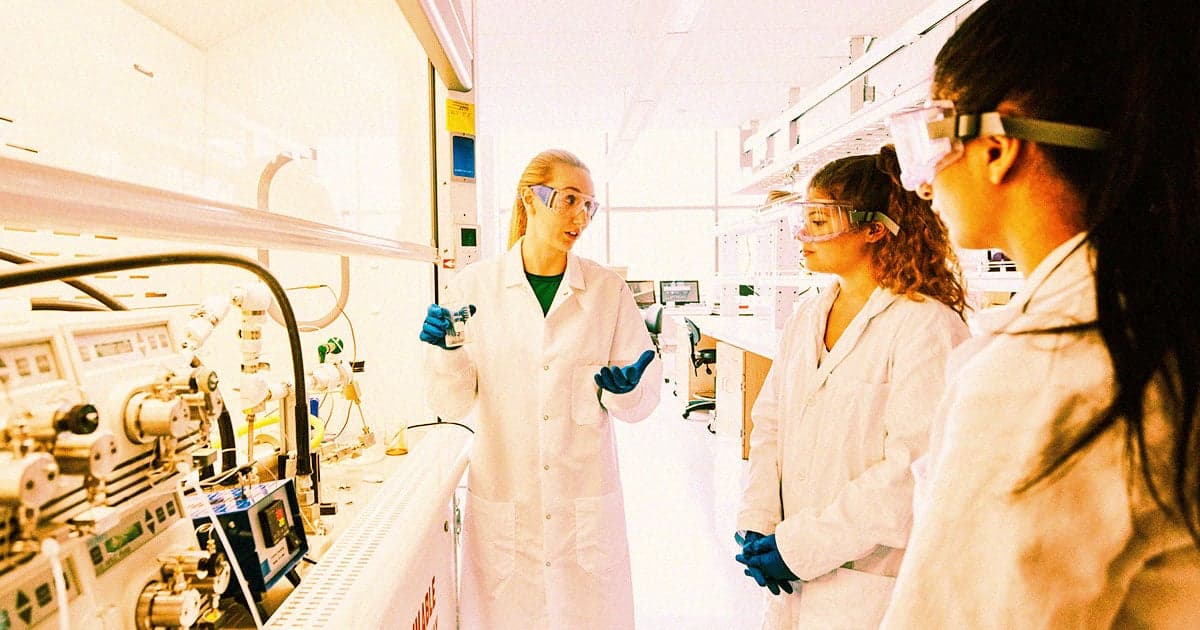
As Donald Trump’s administration continues to gut scientific funding and diminish the role of research — all while installing crackpot anti-vaccine figureheads to lead entire federal agencies — scientists are starting to look for greener pastures.

According to a Nature poll of more than 1,200 scientists, a startling 75 percent said they’re now considering leaving the United States. Europe and Canada emerged as top choices for relocation.

And if that wasn’t enough sign of intellectual erosion, a whopping 79 percent of postgraduate researchers and 255 of 340 PhD students said they’d consider leaving.

“Anywhere that supports science,” one respondent wrote of where they’d go instead.

“This is my home — I really love my country,” another graduate student at a top US university wrote. “But a lot of my mentors have been telling me to get out, right now.”

It’s a sad reality for researchers, who are increasingly seeing no future with Trump at the helm. The poll highlights the threat of a massive brain drain as scientists are forced to pursue opportunities abroad instead.

Experts have warned that the country’s reputation as a world-leading place to conduct scientific research has taken a massive hit under the current Trump administration, which could also have disastrous long-term economic consequences in the years ahead.

While thousands of scientists have been rehired following mass firings at federal government agencies, concerns over future layoffs are still widespread. Elon Musk’s so-called Department of Government Efficiency is still laying waste to one agency after the next. Earlier today, hundreds of federal health workers were told they’d be losing their jobs.

Massive cuts to grants and stipends, in particular, have US-based scientists reeling. Studies and clinical trials have ground to a halt. Countless projects are being canceled.

“Seeing all of the work stopped is heartbreaking,” the graduate student quoted above wrote. “I’ve been looking very diligently for opportunities in Europe, Australia, and Mexico.”

“If I want to work in that space, I’m going to have to find somewhere else that prioritizes that,” she said.

Meanwhile, institutions outside the US are counting their lucky stars and are expecting a massive influx of talent.

“From what I’m hearing from the places we’re talking to, and other people who are looking to take international jobs, a lot of universities in these countries are seeing this as a once-in-a-generation opportunity,” another researcher, who has been in touch with a Canadian university after his National Institutes of Health grant was terminated, told Nature.

“I think it has gone from ‘Can we recruit a few people?’ to ‘How many people can we actually take?’ — because the demand is there,” he added.

The hit to US universities could threaten the country’s competitiveness, especially when it comes to high-interest areas like AI.

“Universities are tremendously important engines of innovation,” New York University professor Sabrina Howell told the New York Times. “This is really killing the goose that lays the golden egg.”

In short, the Trump administration’s attack on science could be a devastating and potentially unprecedented self-own.

“We’ve had a pretty good run over the past 60 to 80 years,” Duke University economist Daniel Gross, who found in a working paper that Trump’s cuts could disproportionately affect institutions with the most successful research programs, told the NYT. “Sometimes you don’t realize the value of something until it’s gone.”

More on brain drain: NASA Disgusted by Elon Musk’s Disrespect

Advertisement

Posted in Uncategorized | Tagged , , , , | Leave a comment