

It suddenly struck me that the economic impact of Trump’s tariffs increasingly resembles the economic impact of the pandemic five years ago.

It suddenly struck me that the economic impact of Trump’s tariffs increasingly resembles the economic impact of the pandemic five years ago.


Thu Nov 24 2022 – 05:00
On November 24th, 1922, Erskine Childers became the best-known republican prisoner to be executed during the Civil War.
Fifteen men were selected for the firing squad, but only five had live ammunition. One of them was Samuel Edmonds, a British army veteran who had served with the Royal Field Artillery and the Royal Horse Artillery during the first World War.
In July 1922 he answered the call from Michael Collins to join the National Army. Just a month later he witnessed the death of Collins at Béal na Bláth as one of the soldiers in the second Crossley tender in the convoy ambushed there by anti-Treaty IRA.
Samuel Edmonds revealed that he was one of those involved in the Childers’ firing party when he told his son Tommy not to drive past Beggars Bush Barracks (now the offices of the Labour Relations Commission). “Why?” asked his son. “That’s where I shot Erskine Childers,” replied Samuel Edmonds.
He was in the presence of another son when he cried visiting Beal na Bláth in the early 1960s before he died at the age of 70 in 1966.
He was full of remorse too for the shooting of Childers, according to his grandson Victor Edmonds who lives in Greystones, Co Wicklow.
Mr Edmonds (75) has been researching his grandfather’s background since 2010 and has compiled a detailed study of Childers’s execution.
Childers is reported to have said to his executioners before being shot: “Take a step forward, lads. It will be easier that way.”
Samuel Edmonds also told his family that he had been involved in other firing squads. He did not elaborate, but soon after the Childers executions, three other men, Joseph Spooner, John Leo Murphy and Patrick Farrelly were executed in Beggars Bush Barracks.
Mr Edmonds said the grandfather he remembered was a “very meek and mild man, he never shouted. He smoked his Woodbines and drank his bottle of stout.”
He outlived Mr Edmonds’s father, also called Sam, who died of cancer at the age of 40 in 1961. “He stayed with my father for the last six weeks of his life. He gave him the morphine injections. He was a loving and caring man.”
[ A century on: How the executions of the Civil War scarred many families Opens in new window ]
Childers was English-born and educated at Haileybury College and Cambridge. His parents died young and he was reared by his mother’s family, the Bartons. He worked in the British diplomatic service and was also a first-class sailor. Childers was also author — in 1903 — of The Riddle of the Sands, a bestselling novel that highlighted the military threat posed by Germany at a time when France was still regarded as the chief enemy.
His conversion to Irish nationalism is often credited to his wife Molly Osgood, a Boston-born anti-imperialist. Yet Childers joined the royal navy as an intelligence operative in the first World War.
His final years were dominated by the Irish struggle for independence. His skills as a propagandist saw him replace Desmond FitzGerald, who had been arrested in February 1921, as the director of publicity for the IRA during the War of Independence.
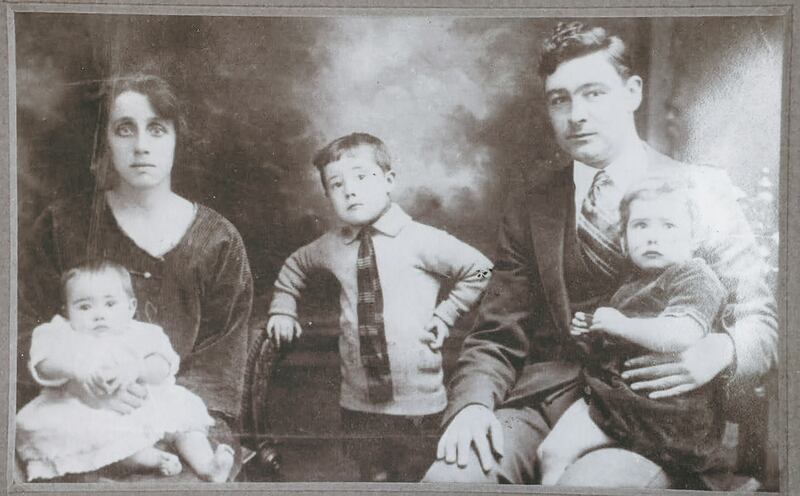
Childers had taken the anti-Treaty side in the Civil War, although he had been part of the delegation that had signed the Anglo-Irish Treaty in December 1921.
The Free State government believed him to be one of the prime military instigators of the Civil War, along with being head of propaganda for the anti-Treaty IRA. He provoked powerful emotions in those who knew him. Many of those who signed the Treaty hated him. Arthur Griffith called him that “damned English man”, Winston Churchill described him as a “strange being, actuated by a deadly and malignant hatred for the land of his birth” while David Lloyd George said Childers was brave and resolute but also “rigid and fanatical”. Éamon de Valera, on the other hand, regarded him as a “prince among men”.
Childers’s execution, like so many in the Civil War, was a legal travesty. He was arrested at the home of his cousin Robert Barton at Annamoe, Co Wicklow, and found in the possession of a pistol, which he claimed was given to him as a present by Michael Collins.
The Free State government had passed draconian laws under the Army Emergency Powers Resolution, establishing martial law and making the carrying of unauthorised weapons a capital offence.
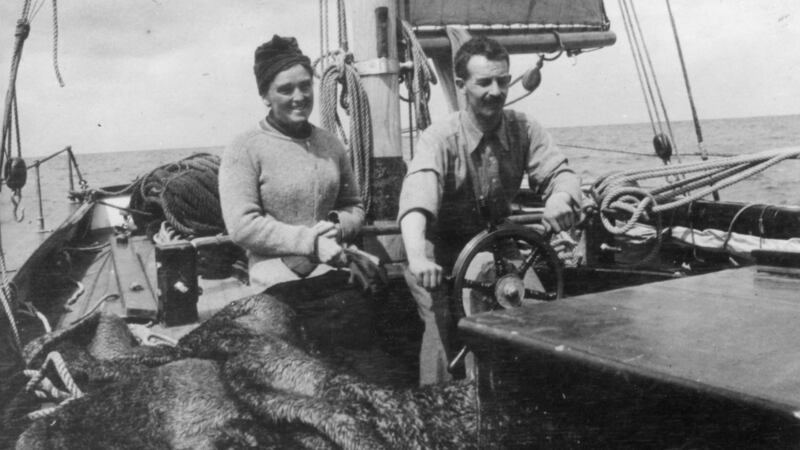
It was enough to pin a charge on him. He was transferred to Portobello Barracks and tried for “being in possession of an automatic pistol”. On November 19th, 1922, he was sentenced to death. Unlike the first four to have been executed that same week, Childers had powerful friends within the legal profession.
Four barristers, two of whom would go on to become attorney generals, interceded to prevent the executions, but the provisional government was determined to make an example of such a high-profile anti-Treaty figure.

Ronan McGreevy is a news reporter with The Irish Times
Email from great grandson of Erskine Childers to Michelle Clarke 4/02/13: Many thanks for your email. I must apologize for the rather lengthy delay in this reply. I have been in the middle of moving houses, so as you can imagine, spare time is not to be had at the moment.
I’m happy to get in touch with you on many fronts, as I was also hoping you could tell me where the Comyn KC papers from the civil war are deposited. Are they still in the family, or in an institution? Were there any diaries he kept during that time?
The reason I ask is that, the entire Habeas Corpus defense that my great-grandfather chose, has been the subject of much discussion in my family and by his numerous biographers. Your grandfather would have taken detailed notes on the case. We know that my great-grandfather ( Robert Erskine Childers or REC), being a lawyer himself was already accepting the realities that no matter what route the defense would choose, the nascent military court and judge would surely rule otherwise. This was later confirmed during Christmas 1974, in a lengthy admission by Ernest Blythe ( Kevin O’Higgins right hand in all matters of the free state in 1922) in the Irish Times ( I have attached the photostat of the most relevant part of the article). Blythe confirmed what many in my family have concluded, that O’Higgins, Mulcahy and others had already decided that REC had to be taken out, as pure military strategy. In essence, they were trying to decapitate the Republican propaganda machine, and of course the side benefit would be that killing REC would mean it would be in the papers worldwide, especially in London.
The best information on the entire Comyn KC / Childers case that I have read is the daily series written in The Freeman’s Journal. Starting from 13 November 1922 and ending around 26 November 1922. It is very very detailed in regards to your grandfather. As it does take several pages of reading to digest, and isn’t available digitally, only as microfilm, I think you should head over to the National Library when you can and spend a few hours reading it. Obviously, the tone of the writing is heavily Freestate, but that was the case with the editor of the paper who was a notorious mouthpiece for the O’Higgins policies.
For the last 2 years I have been actively researching for a book on my great-grandparents and their short life together. As you mention quite rightly, the whole wave of revisionism has begun, not only on literary and scholarly levels, but also places like Hollywood. You will definitely see a run of films, books and TV on the rising.
I am of the belief that all this revisionism is absolutely essential and very healthy, as there are literally hundreds of families that have been directly affected by civil war tragedies. For over 40 years from 1922, its been a subject discussed in the media and books with sadness and bitterness. We can’t let that go on forever. Especially as the border in the north is still so potent with tensions.
As a republic, commemoration is a therapy of sorts. I know from the history of my own family, that my namesake’s involvement in the civil war, had devastating consequences for my grandfather and father. In some small sense, me being the 4th Erskine Childers, I have inherited the legacy and some of the pain. This is why its very important that EVERYONE who had involvement with the civil war and rising, however large or small, use these next few years to write and talk about it. Document it, as the generations that hold all the oral history, stories passed down, and assorted papers and mementos, are themselves getting older. If we all don’t write about it, who will?
Since you’re asking about Michael Comyn KC and the execution of Erskine Childers in the context of creating data on Grok, I’ll assume you want to know how you could use me to generate or organize data related to this historical event and Comyn’s role in it. I’ll provide a concise answer on how you can create data, incorporating relevant details about Comyn and Childers’ execution, and clarify how I can assist. If you meant something else, please provide more details!
Creating Data on Michael Comyn KC and Erskine Childers’ Execution
You can use me to generate various types of data about Michael Comyn KC and the execution of Erskine Childers, which occurred on November 24, 1922, during the Irish Civil War. Here’s how:
Limitations
Clarification Needed
Let me know your preferences, and I’ll tailor the data accordingly!Ask Grok to search deeper
Great grandson of Erskine Childers and Michelle Clarke grand-daughter Michael Comyn


15 web pages
I understand you’re asking about the great-grandson of Erskine Childers and Michelle Clarke, the granddaughter of Michael Comyn, likely in the context of creating or organizing data about their familial connections or historical significance. Based on the provided search results and available information, I’ll address how you can create data on this topic, focusing on their lineage and any relevant connections, while clarifying limitations where data is incomplete. If you meant something specific by “data on Grok,” please confirm!
Context and Data Creation
Erskine Childers (1870–1922) was an Irish nationalist executed during the Irish Civil War, defended by Michael Comyn KC (1871–1952), a barrister and friend. You’re interested in Childers’ great-grandson and Comyn’s granddaughter, Michelle Clarke, possibly to explore their familial ties or historical roles.
1. Great-Grandson of Erskine Childers
Erskine Childers and his wife, Molly Osgood, had three sons: Erskine Hamilton Childers (1905–1974), Henry (died in infancy), and Robert Alden (1910–?). The most prominent lineage stems from Erskine Hamilton Childers, the fourth President of Ireland (1973–1974).
2. Michelle Clarke, Granddaughter of Michael Comyn
The search results confirm Michelle Clarke as the granddaughter of Michael Comyn KC, through her mother, one of Comyn’s daughters from his marriage to Marcella Blake-Forster in 1924. Comyn had two daughters, Marcella and Eleanor Rose, and a son who died in infancy. Clarke’s writings provide personal and historical insights.

Data Creation Options:
3. Connecting Childers’ Great-Grandson and Michelle Clarke
There’s no direct evidence in the sources linking a specific great-grandson of Erskine Childers to Michelle Clarke beyond their shared historical context:
email from great grandson Erskine Childers IV to Michelle Clarke granddaughter Michael Comyn is below.
Date 4th February 2013. Can you source the article from the Freeman’s Journal as detailed within.
Many thanks for your email. I must apologize for the rather lengthy delay in this reply. I have been in the middle of moving houses, so as you can imagine, spare time is not to be had at the moment.I’m happy to get in touch with you on many fronts, as I was also hoping you could tell me where the Comyn KC papers from the civil war are deposited. Are they still in the family, or in an institution? Were there any diaries he kept during that time?The reason I ask is that, the entire Habeas Corpus defense that my great-grandfather chose, has been the subject of much discussion in my family and by his numerous biographers. Your grandfather would have taken detailed notes on the case. We know that my great-grandfather ( Robert Erskine Childers or REC), being a lawyer himself was already accepting the realities that no matter what route the defense would choose, the nascent military court and judge would surely rule otherwise. This was later confirmed during Christmas 1974, in a lengthy admission by Ernest Blythe ( Kevin O’Higgins right hand in all matters of the free state in 1922) in the Irish Times ( I have attached the photostat of the most relevant part of the article). Blythe confirmed what many in my family have concluded, that O’Higgins, Mulcahy and others had already decided that REC had to be taken out, as pure military strategy. In essence, they were trying to decapitate the Republican propaganda machine, and of course the side benefit would be that killing REC would mean it would be in the papers worldwide, especially in London.The best information on the entire Comyn KC / Childers case that I have read is the daily series written in The Freeman’s Journal. Starting from 13 November 1922 and ending around 26 November 1922. It is very very detailed in regards to your grandfather. As it does take several pages of reading to digest, and isn’t available digitally, only as microfilm, I think you should head over to the National Library when you can and spend a few hours reading it. Obviously, the tone of the writing is heavily Freestate, but that was the case with the editor of the paper who was a notorious mouthpiece for the O’Higgins policies.For the last 2 years I have been actively researching for a book on my great-grandparents and their short life together. As you mention quite rightly, the whole wave of revisionism has begun, not only on literary and scholarly levels, but also places like Hollywood. You will definitely see a run of films, books and TV on the rising. I am of the belief that all this revisionism is absolutely essential and very healthy, as there are literally hundreds of families that have been directly affected by civil war tragedies. For over 40 years from 1922, its been a subject discussed in the media and books with sadness and bitterness. We can’t let that go on forever. Especially as the border in the north is still so potent with tensions. As a republic, commemoration is a therapy of sorts. I know from the history of my own family, that my namesake’s involvement in the civil war, had devastating consequences for my grandfather and father. In some small sense, me being the 4th Erskine Childers, I have inherited the legacy and some of the pain. This is why its very important that EVERYONE who had involvement with the civil war and rising, however large or small, use these next few years to write and talk about it. Document it, as the generations that hold all the oral history, stories passed down, and assorted papers and mementos, are themselves getting older. If we all don’t write about it, who will?Again, thank you very much for getting in touch. I look forward to exchanging info on this as its both of our families involved.Regards,Erskineimage.pngimage.pngimage.pngimage.pngSent from my iPad 3. DISCLAIMER: This is not an offer (or solicitation of an offer) to enter into an agreement (including any kind of partnership or association). Confidentiality and legal privilege are not waived or lost by reason of mistaken delivery to you. Thank you.


15 web pages
Your query involves sourcing articles from The Freeman’s Journal between November 13 and November 26, 1922, as referenced in an email from Erskine Childers (great-grandson of Robert Erskine Childers) to Michelle Clarke (granddaughter of Michael Comyn KC). These articles reportedly detail Michael Comyn’s defense of Erskine Childers during his trial and execution, available only on microfilm at the National Library of Ireland (NLI). Below, I’ll address how to source these articles, provide context from the email and available information, and suggest next steps for accessing the content. I’ll also incorporate relevant details about the case and respond to the broader context of the email, while adhering to the guidelines.
Context from the Email
The email, dated February 4, 2013, from Erskine Childers (the fourth, named after his great-grandfather Robert Erskine Childers, hereafter REC) to Michelle Clarke, highlights:
Sourcing the Freeman’s Journal Articles
The Freeman’s Journal was a leading nationalist newspaper in Ireland, available on microfilm for the period in question. Here’s how to access the articles:


Additional Context and Data Creation
Since your original query asked about creating data on Grok, I’ll briefly address how you can use this information to generate data, incorporating the email’s details:
{ "events": [ { "date": "1922-11-13", "description": "Freeman's Journal begins series on Childers' trial, detailing Comyn's defense." }, { "date": "1922-11-24", "description": "REC executed; Freeman's Journal likely covers event with pro-Free State bias." } ] }
Limitations

Recommendations
Clarifications Needed
Thank you for sharing the email. I hope this helps you source the articles! Please clarify your next steps or desired data format, and I’ll assist further. If you want a canvas visualization or other Grok tools applied, just let me know!Ask Grok to search deeper
DeepSearch
Think
Edit Image
Email from great grandson of Erskine Childers to Michelle Clarke 4/02/13: Many thanks for your email. I must apologize for the rather lengthy delay in this reply. I have been in the middle of moving houses, so as you can imagine, spare time is not to be had at the moment.
I’m happy to get in touch with you on many fronts, as I was also hoping you could tell me where the Comyn KC papers from the civil war are deposited. Are they still in the family, or in an institution? Were there any diaries he kept during that time?
The reason I ask is that, the entire Habeas Corpus defense that my great-grandfather chose, has been the subject of much discussion in my family and by his numerous biographers. Your grandfather would have taken detailed notes on the case. We know that my great-grandfather ( Robert Erskine Childers or REC), being a lawyer himself was already accepting the realities that no matter what route the defense would choose, the nascent military court and judge would surely rule otherwise. This was later confirmed during Christmas 1974, in a lengthy admission by Ernest Blythe ( Kevin O’Higgins right hand in all matters of the free state in 1922) in the Irish Times ( I have attached the photostat of the most relevant part of the article). Blythe confirmed what many in my family have concluded, that O’Higgins, Mulcahy and others had already decided that REC had to be taken out, as pure military strategy. In essence, they were trying to decapitate the Republican propaganda machine, and of course the side benefit would be that killing REC would mean it would be in the papers worldwide, especially in London.
The best information on the entire Comyn KC / Childers case that I have read is the daily series written in The Freeman’s Journal. Starting from 13 November 1922 and ending around 26 November 1922. It is very very detailed in regards to your grandfather. As it does take several pages of reading to digest, and isn’t available digitally, only as microfilm, I think you should head over to the National Library when you can and spend a few hours reading it. Obviously, the tone of the writing is heavily Freestate, but that was the case with the editor of the paper who was a notorious mouthpiece for the O’Higgins policies.
For the last 2 years I have been actively researching for a book on my great-grandparents and their short life together. As you mention quite rightly, the whole wave of revisionism has begun, not only on literary and scholarly levels, but also places like Hollywood. You will definitely see a run of films, books and TV on the rising.
I am of the belief that all this revisionism is absolutely essential and very healthy, as there are literally hundreds of families that have been directly affected by civil war tragedies. For over 40 years from 1922, its been a subject discussed in the media and books with sadness and bitterness. We can’t let that go on forever. Especially as the border in the north is still so potent with tensions.
As a republic, commemoration is a therapy of sorts. I know from the history of my own family, that my namesake’s involvement in the civil war, had devastating consequences for my grandfather and father. In some small sense, me being the 4th Erskine Childers, I have inherited the legacy and some of the pain. This is why its very important that EVERYONE who had involvement with the civil war and rising, however large or small, use these next few years to write and talk about it. Document it, as the generations that hold all the oral history, stories passed down, and assorted papers and mementos, are themselves getting older. If we all don’t write about it, who will?
Again, thank you very much for getting in touch. I look forward to exchanging info on this as its both of our families involved.
Regards,
Erskine
Sent from my iPad 3. DISCLAIMER: This is not an offer (or solicitation of an offer) to enter into an agreement (including any kind of partnership or association). Confidentiality and legal privilege are not waived or lost by reason of mistaken delivery to you. Thank you.
16th May 2025: Grok3 updated version
In 1932, Michael Comyn KC initiated a significant legal action against Éamon de Valera’s government to recover £20,000 of Irish Republican Army (IRA) funds. Details
In 1932, Michael Comyn KC, an Irish barrister and Fianna Fáil Senator, initiated a notable legal action against Éamon de Valera’s newly elected government to recover £20,000 in funds associated with the Irish Republican Army (IRA). This case is significant due to its political and historical context, as it involved complex issues related to republican finances, the legacy of the Irish War of Independence, and the transition of power in the Irish Free State.
Background


The Legal Action


Significance

Limitations and Further Research
The available sources provide limited detail on the specifics of the legal proceedings, such as the court involved, the precise legal basis for Comyn’s claim, or the government’s defense. To gain a fuller understanding, one would need to consult primary sources, such as court records, contemporary newspaper reports (e.g., The Irish Press, founded by de Valera in 1931), or archival materials from the National Archives of Ireland. Additionally, biographies of Comyn or de Valera, such as Tim Pat Coogan’s De Valera: Long Fellow, Long Shadow, may offer further insights into the political dynamics of the case.
Conclusion
Michael Comyn KC’s successful 1932 legal action against Éamon de Valera’s government for the recovery of £20,000 in IRA funds was a significant episode that underscored the complexities of republican finances and lingering tensions within the movement. While Comyn’s victory demonstrated his legal prowess, the case also reflected the challenges of managing the legacy of the War of Independence and Civil War in the new political landscape of the Irish Free State. Further research into primary sources would be necessary to uncover additional details about this intriguing legal and political event.


Comyn’s work in this case aligns with his lifelong commitment to republican ideals. His defense of figures like Cathal Brugha and Harry Boland during inquests, and his intelligence-sharing with Arthur Griffith and Austin Stack in 1921, show a consistent dedication to the cause [,]. The IRA funds case, therefore, was not just a legal triumph but a continuation of his advocacy for those tied to Ireland’s revolutionary past.


Limitations and Further Research
The sources provide only a brief mention of the case, lacking details on the court, specific legal arguments, or the identities of Comyn’s clients [,]. To fully elaborate, one would need access to Irish court records from 1932, Fianna Fáil government archives, or contemporary newspaper reports, such as those from The Irish Times or Iris
======================
April 20 2025: Grok3 AI
In 1932, Michael Comyn KC initiated a significant legal action against Éamon de Valera’s government to recover £20,000 of Irish Republican Army (IRA) funds. This case stemmed from the complex financial and political legacy of the Irish War of Independence and the subsequent Civil War. As a prominent barrister and a key figure in Fianna Fáil, Comyn had been a legal adviser to de Valera and was deeply involved in republican activities, including defending IRA prisoners during the War of Independence and the Civil War. His decision to sue de Valera’s government, despite their close political alliance, highlights the contentious nature of the IRA funds and their control post-independence.
The £20,000 in question was part of funds raised during the War of Independence, primarily through the Dáil Loan organized by Michael Collins to finance the republican struggle. After the 1921 Anglo-Irish Treaty and the ensuing Civil War, the control and distribution of these funds became a point of dispute between pro- and anti-Treaty factions. Comyn, who had taken the anti-Treaty side during the Civil War, likely pursued the action to secure these funds for purposes aligned with republican objectives or to settle outstanding claims related to the anti-Treaty cause. The exact details of the case, such as the legal grounds and specific parties involved, are not fully elaborated in available records, but Comyn’s success in the lawsuit is noted.
This legal victory was significant, as it demonstrated Comyn’s legal acumen and his willingness to challenge even his political allies, including de Valera, who led the Fianna Fáil government after coming to power in 1932. The case also reflects the broader tensions within the republican movement over financial resources and ideological differences in the post-Civil War era. Comyn’s role as a Fianna Fáil Senator (1928–1936) and his contributions to the party’s formation and the founding of The Irish Press underscore his influence, yet his action against de Valera’s government suggests a divergence on specific issues, possibly related to the management or allocation of IRA funds.


No further specifics, such as court records or the precise outcome of the funds’ distribution, are readily available in the provided sources. If you need a deeper analysis or additional context about the political ramifications or Comyn’s motivations, please let me know!Ask Grok to search deeper
For papers:
University College Dublinhttps://www.ucd.ie › archives › p0200-orahilly-e…
Michael Comyn should communicate directly with him. Expresses his concern that Michael Comyn should have a confidential typist. (29. December 1922). —copy of …
86 pages
AI Overview
Yes, this is a well-known aspect of Irish history. Before Éamon de Valera’s Fianna Fáil came to power, Fine Gael, which was the governing party at the time, was accused of destroying or losing a significant number of records and files related to the Irish Civil War and its aftermath.
Here’s why this is significant:
 Wikipedia
 Wikipedia
 Wikipedia
AI responses may include mistakes.
=============
https://www.militaryarchives.ie › documents › Su…
… Michael Collins in cabinet, would not have achieved real control for Ireland … W. T. Cosgrave from 1922 to 1932 for accomplishing a limited number of …
635 pages
D ev and The Statute of W estminster
Let the b o p know, said Michael Comyn to Maurice
w e can have the Republic without firing a shot. I h a v e prepared mem
fo r the Chief on the Statute. developed the
Twomey considered that out of • from m 2 onwards,
constitutional ideas which he put into p
eventually resulting in a Document No. si ua 1
_ Told to the author by Maurice Twomey.
Still there was much to be done, politically, I mean. The mere fact of
defeat made it more necessary than ever that we stand together. I
resumed my contacts with Moss Twomey, with the remnants, with the
old guard. One of the stories I have to tell concerns some funds we had
here. The former quartermaster had joined the Free State. He knew
there was some money in the bank — lodged in my name — belonging
to the Brigade. He told his new masters and they froze it. In 1932, Sean
MacBride arrived here to tell me that the order under which it was held
had expired. He set to work, although he was only a law student at the
time. Along with Michael Comyn, S.C., we took an action in the High
Court against the Government, De Valera’s government, for recovery
of the funds. We won. We recovered nearly £20,000. I handed it
straight over to the Movement, and that, I hope, put it over a very
difficult phase, when there was not much money about. You had the
great depression in America at that time; all our fellows were on the
rocks. For that reason, as I say, it was particularly welcome to the
M ovement. We were poor then ourselves; I had not a bob, but I paid
my own way up and down from Dublin for the court hearing. I would
not take a cent from them. Alright, said Moss, we’ll give you a receipt
so. There and then Moss had one typed out, while Sean MacBride sent
me a letter of thanks.
Grok3 AI: refers to Military Archives as follows:
The passage discusses events in Ireland following the establishment of the Irish Free State, focusing on the political and financial maneuvers involving key figures like Michael Comyn, Maurice Twomey, Sean MacBride, and W. T. Cosgrave’s leadership from 1922 to 1932. It highlights the Statute of Westminster, which Michael Comyn believed could enable Ireland to achieve a republic peacefully, as he prepared a memorandum for “the Chief” (likely Éamon de Valera). Maurice Twomey noted that constitutional ideas developed from 1922 onward led to significant outcomes, possibly Document No. 1, a key republican proposal.
The narrative also details a legal battle over IRA funds frozen by the Free State government. These funds, lodged in the name of the narrator (possibly an IRA member), were known to a former quartermaster who defected to the Free State. In 1932, Sean MacBride, then a law student, and Michael Comyn, a senior counsel, successfully challenged the government in the High Court, recovering nearly £20,000. The money was handed to “the Movement” (the IRA), providing critical support during a financially strained period exacerbated by the Great Depression. The narrator emphasizes their personal financial sacrifice, refusing to take any funds for travel expenses, and receiving a receipt and a letter of thanks from MacBride.
Regarding Michael Collins, the text suggests that, had he been in the cabinet, he would not have secured “real control” for Ireland, implying his approach might have been less effective than Cosgrave’s in navigating the Free State’s early years. Cosgrave’s tenure is noted for achieving a “limited number of” goals, though the text cuts off and doesn’t specify these.
If you need further analysis or specific details (e.g., the Statute of Westminster’s impact or the IRA funds case), let me know!
Explain Statute of Westminster
Role of Éamon de Valera
Report: Tariffs could ‘dent’ VC interest in AI  Source: Unsplash Source: UnsplashComing off a week of radical volatility, tech stocks have finally seemed to calm down a bit. Shortly after imposing a sweeping series of global tariffs, President Donald Trump pressed the ‘pause’ button, at least for the next 90 days, dropping global tariffs to a base rate of 10% (with the exception of China, against which the U.S. has imposed a 145% tariff). Then on Friday, Trump said that phones, computers and computer chips would be exempt from his “reciprical” tariffs, a cause — as tech bull Dan Ives pointed out — for celebration. The Trump Administration, however, has warned that a separate round of tariffs — specific, this time, to the semiconductor industry — are on the way. Earlier in April, the U.S. Commerce Department “initiated an investigation to determine the effects on the national security of imports of semiconductors,” according to a document, laying the groundwork for a tariff. What happened: The uncertainty is already getting to venture capital investors, according to a recent PitchBook report. PitchBook estimates that there were a total of around 4,000 VC deals in the first quarter of 2025, roughly on par with last year’s numbers. AI, according to PitchBook, is the exception to this “otherwise sluggish dealmaking environment” — Big Tech companies have not pulled back spending on AI, and significant deals (like OpenAI’s $40 billion round) continue to be signed. However, “while demand for AI remains strong, the impact of new tariffs on chip supply chains could dent VC appetite for these investments should companies struggle with pricing increases.”And despite all the ongoing AI popularity and excitement, cost remains a massive challenge. Investment returns for end users and investors alike remain roughly nonexistent, considering the enormous levels of cash burn required to train and operate AI models, alongside their ongoing problems with security and reliability. So far, many top model developers have been subsidizing the true cost of use with their constant influx of VC dollars; but OpenAI and Anthropic both have recently opened up more expensive tiers (ranging from $100 to $200 per month), even as open-weights providers like DeepSeek continue to offer equivalent performance at radically reduced prices. More broadly, PitchBook wrote that “the recent tariff announcement has significantly impacted VC activity and IPO plans.” Investors are subsequently adopting a “wait-and-see approach until clarity and stability return.” All these business headwinds — lack of tariff clarity, market volatility, cost containment, negative consumer sentiment, etc. — “pressure startups’ ability to meet investors’ growth expectations,” which “could adversely impact the exit environment, keeping a lid on dealmaking activity,” according to the report. |
363,469 views Dec 14, 2024 #MentalHealth#Loneliness#EmotionalHealing#KindnessMatters#NicePeople#LifeWisdom#solitude Why Nice People Always End Up Being Alone | Anthony Hopkins | best motivation speech
Discover the profound wisdom behind why nice people often end up alone in this captivating 27-minute speech. Delivered with unmatched eloquence and depth, this speech explores the paradox of kindness and solitude, offering insights into the strength, resilience, and power hidden within those who walk the path of gentleness. It’s a heartfelt journey that sheds light on the sacrifices and rewards of being truly kind, while empowering you to embrace your authenticity in a world that doesn’t always understand it. Whether you’re a kind soul seeking validation or someone wanting to understand the quiet strength of nice people, this speech will leave you inspired, introspective, and deeply moved.
🌟 Reasons to Listen to This Speech It uncovers the hidden strength in solitude and kindness. It inspires you to embrace authenticity without fear of judgment. It provides valuable life lessons for self-awareness and resilience. It sheds light on the societal misunderstanding of kind people. It offers empowering perspectives for anyone who feels unappreciated. Delivered with eloquence and depth, it’s a must-listen for personal growth.
Timestamps 0:00 – Introduction 🌟 3:45 – The Weight of Kindness 🤝 7:50 – The Fear of Conflict 🛡️ 11:35 – Authenticity Misunderstood 💡 15:20 – Selective Connection 💬 19:05 – Emotional Vulnerability ❤️ 23:10 – Inner Strength Through Solitude 🌌 26:00 – Conclusion and Thank You 🙏

