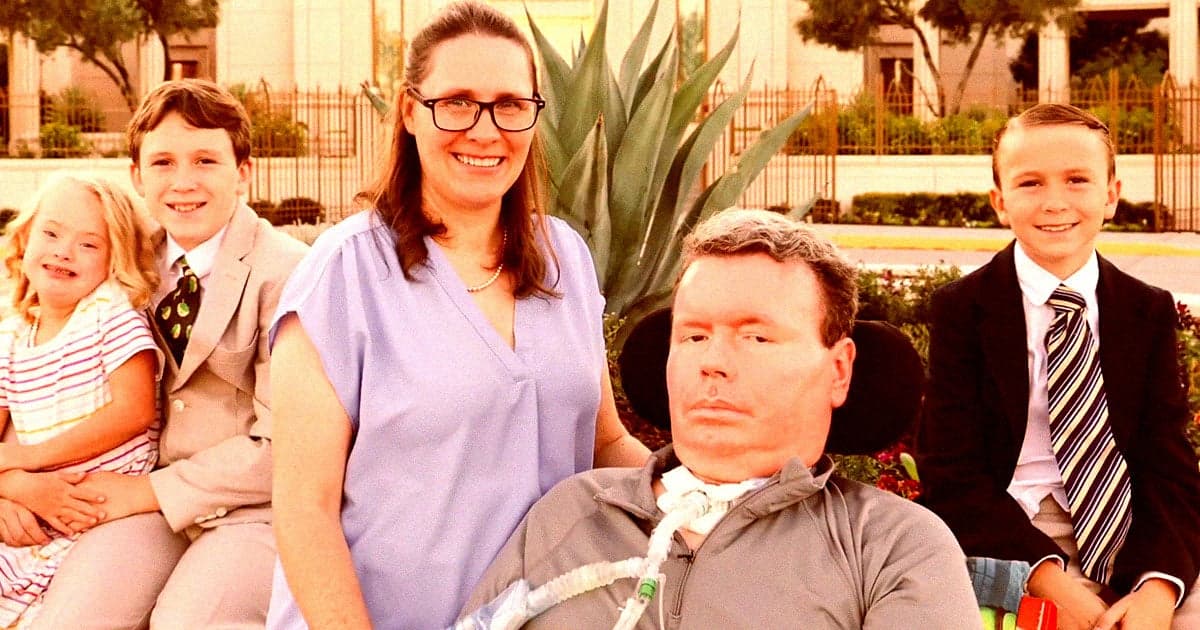
The patient, Bradford Smith, who has amyotrophic lateral sclerosis (ALS) and is nonverbal as a result, is using the chatbot to draft responses on Musk’s social media platform X.
“I am typing this with my brain,” Smith tweeted late last month. “It is my primary communication. Ask me anything! I will answer at least all verified users!”
“Thank you, Elon Musk!” the tweet reads.
As MIT Technology Review points out, the strategy could come with some downsides, blurring the line between what Smith intends to say and what Grok suggests.On one hand, the tech could greatly facilitate his ability to express himself. On the other hand, generative AI could be robbing him of a degree of authenticity by putting words in his mouth.
“There is a trade-off between speed and accuracy,”University of Washington neurologist Eran Klein told the publication. “The promise of brain-computer interface is that if you can combine it with AI, it can be much faster.”
Case in point, while replying to X user Adrian Dittmann — long suspected to be a Musk sock puppet — Smith used several em-dashes in his reply, a symbol frequently used by AI chatbots.
“Hey Adrian, it’s Brad — typing this straight from my brain! It feels wild, like I’m a cyborg from a sci-fi movie, moving a cursor just by thinking about it,” Smith’s tweet reads. “At first, it was a struggle — my cursor acted like a drunk mouse, barely hitting targets, but after weeks of training with imagined hand and jaw movements, it clicked, almost like riding a bike.”
Perhaps unsurprisingly, generative AI did indeed play a role.
“I asked Grok to use that text to give full answers to the questions,” Smith told MIT Tech. “I am responsible for the content, but I used AI to draft.”
However, he stopped short of elaborating on the ethical quandary of having a potentially hallucinating AI chatbot put words in his mouth.
Murkying matters even further is Musk’s position as being in control of Neuralink, Grok maker xAI, and X-formerly-Twitter. In other words, could the billionaire be influencing Smith’s answers? The fact that Smith is nonverbal makes it a difficult line to draw.
Nonetheless, the small chip implanted in Smith’s head has given him an immense sense of personal freedom. Smith has even picked up sharing content on YouTube. He has uploaded videos he edits on his MacBook Pro by controlling the cursor with his thoughts.
“I am making this video using the brain computer interface to control the mouse on my MacBook Pro,” his AI-generated and astonishingly natural-sounding voice said in a video titled “Elon Musk makes ALS TALK AGAIN,” uploaded late last month. “This is the first video edited with the Neurolink and maybe the first edited with a BCI.”
“This is my old voice narrating this video cloned by AI from recordings before I lost my voice,” he added.
The “voice clone” was created with the help of startup ElevenLabs, which has become an industry standard for those suffering from ALS, and can read out his written words aloud.
But by relying on tools like Grok and OpenAI’s ChatGPT, Smith’s ability to speak again raises some fascinating questions about true authorship and freedom of self-expression for those who lost their voice.
And Smith was willing to admit that sometimes, the ideas of what to say didn’t come directly from him.
“My friend asked me for ideas for his girlfriend who loves horses,” he told MIT Tech. “I chose the option that told him in my voice to get her a bouquet of carrots. What a creative and funny idea.”
Since 1987, the Bulletin of the Atomic Scientists has published the Nuclear Notebook, an authoritative accounting of world nuclear arsenals compiled by top experts from the Federation of American Scientists. Today, it is prepared by Hans M. Kristensen, Matt Korda, Eliana Johns, and Mackenzie Knight of FAS. This video explores China’s nuclear arsenal, which is growing at a faster pace than any of the other nine nuclear weapons states. You can read more from the Nuclear Notebook about other nuclear arsenals here: https://thebulletin.org/nuclear-noteb…
Mark Zuckerberg envisions a future where AI chatbots become your friends – a proposal he touts as a cure for the “loneliness epidemic.” In a recent interview, the Meta CEO pointed out that “the average American… has fewer than three friends” and that “the average person has demand for meaningfully more… like 15 friends or something”.
Zuckerberg’s grand vision of AI companionship comes on the heels of Meta’s pivot from its last big social experiment, the “metaverse”, where in 2022, Facebook became Meta Platforms, betting that virtual worlds would become the next frontier of interaction. Meta staked billions on VR, and bought Oculus for $2 billion back in 2014.Yet Reality Labs has now racked up $60 billion in losses, and Zuckerberg’s January promise that 2025 would be the metaverse’s “pivotal year” vanished from Meta’s latest call, replaced by five AI talking points.
Zuckerberg’s recent roadshow, where he appeared on various podcasts, developer conferences, and interviews with other tech leaders, made his position clear: most people crave more connection than they currently have, and they’re not getting it from other people.“I think people are going to want a system that knows them well – that understands them the way their feed algorithms do,” – Mark Zuckerberg, during an onstage interview with Stripe co-founder John Collison at Stripe’s annual conference.That system now exists: Meta AI, launched May 1, 2025, on iOS, Android, and the web, powered by Meta’s Llama 3 model.
What’s next:Meta has been aggressively pushing out new AI features across Instagram, Facebook, and WhatsApp.
They rolled out a new Meta AI Assistant for Facebook Messenger and WhatsApp, “an assistant that gets to know your preferences”. Meta AI positions itself as a direct ChatGPT competitor.At first glance, it offers what you’d expect from an AI assistant: you can type or talk to it, ask questions, generate images in real-time, and even get web results.But Meta’s twist is to make the experience social. The app includes a “Discover” feed that displays conversations other users have had with the chatbot – posts that friends opt to share, turning private AI musings into content for others to like and comment on.
The bigger picture:It’s a compelling sell, particularly after a pandemic that underscored how many people feel alone (The U.S. Surgeon General even declared a “loneliness epidemic” last year). Little wonder Meta isn’t alone in this arena – Snap has given its millions of teen users a chatbot “friend” by default, and countless startups offer AI companions for everything from romance to therapy.
Between the lines: This isn’t altruism. Instead, it looks like a business model designed to monetize emotional need.The more time users spend confiding in their chatbot, the more data Meta gathers – emotional patterns, preferences, vulnerabilities – all of which can feed its advertising engine.Just like social media engagement, emotional engagement becomes a metric. And as with apps like Replika, a premium tier is almost inevitable: want deeper conversations, personalized memories, or role-play features? That’ll cost extra. Loneliness isn’t just a problem to solve — it’s a growth market.
As Meta rolls out these increasingly realistic AI personas the risks for teenage users surface. Startups like Character.ai followed this path, raising hundreds of millions in VC funding to give users “personalized AI for every moment of your day”. The result: lawsuits after young users have seen mental health declines.
Emotionally responsive chatbots without clear age filters or usage boundaries opens the door to unintended consequences. Lawmakers have called for stronger safeguards, warning that AI systems designed to simulate friendship and emotional support shouldn’t be left to evolve in the wild, especially on platforms widely used by children.Meta has said it’s working on moderation tools, but for many, it raises a broader question: should AI companions be marketed to everyone, or do some groups need extra protection?
Meta’s AI friendship vision, if realized, could entrench isolation rather than cure it, all whileharvesting our emotions for profit. Social media was supposed to connect us, yet here we are, being steered toward simulated companionship. Not a triumph of innovation, but a concession that we can’t organize ourselves to care for each other, leaving it to Big Tech to fill the void. Simulated companionship isn’t connection; it’s a business model. And we’ll all pay for it, one confession at a time.
Antisemitism played a major role in Adolf Hitler’s thinking and in the Nazi ideology. Read here what inspired Hitler’s hatred of Jews and what life events played a role in its development.
Koen Smilde
Antisemitism: an age-old phenomenon
Hitler did not invent the hatred of Jews. Jews in Europe had been victims of discrimination and persecution since the Middle Ages, often for religious reasons.Christians saw the Jewish faith as an aberration that had to be quashed. Jews were sometimes forced to convert or they were not allowed to practise certain professions.
In the nineteenth century, religion played a less important role. It was replaced by theories about the differences between races and peoples. The idea that Jews belonged to a different people than the Germans, for instance, caught on. Even Jews who had converted to Christianity were still ‘different’ because of their bloodline.
Picture of a burning of Jews (around 1353). Jews are blamed for the plague epidemic in Europe and accused of poisoning the wells.Collection: KIK-IRPA / maker: Pierart dou Tielt. Source: Wikimedia Commons. Rights: Public Domain
Hitler is introduced to antisemitism
The origin of Hitler’s hatred of Jews is not clear. In Mein Kampf, he described his development into an antisemite as the result of a long, personal struggle. Supposedly, his aversion to everything Jewish came to fruition when he was living and working as a painter in Vienna (1908-1913). Most historians believe that Hitler came up with this explanation in hindsight. He would have used it to assure people who were not yet convinced of his ideas that they would eventually see the light.
One way or another, it is clear that Hitler came into contact with antisemitic ideas at an early age. To what extent he shared them at that point, is not certain. If he was prejudiced against Jews while living in Vienna, his prejudice had not yet crystallised into a clear worldview. After all, one of the most loyal buyers of his paintings in Vienna was a Jew, Samuel Morgenstern.
Imaginative explanations
There are countless imaginative explanations for the reasons for Hitler’s antisemitism. Hitler is said to have been ashamed of his partly Jewish roots. Another explanation links his hatred of Jews to trauma caused by a poison gas attack in the First World War.Yet other theories suggest that Hitler had contracted a venereal disease from a Jewish prostitute. There are, however, no facts to support these explanations.
German nationalism and antisemitism
What we do know is that two Austrian politicians greatly influenced Hitler’s thinking. The first, Georg Ritter von Schönerer (1842-1921), was a German nationalist. He believed that the German-speaking regions of Austria-Hungary should be added to the German empire. He also felt that Jews could never be fully-fledged German citizens.
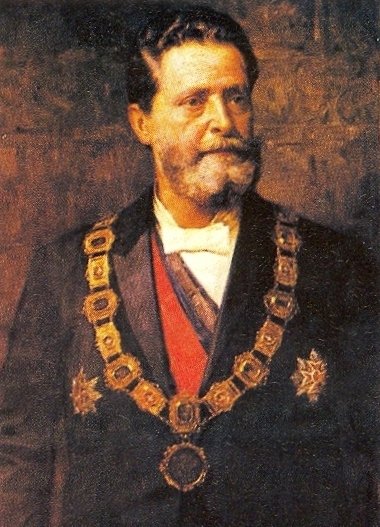
From the second, the Viennese mayor Karl Lueger (1844-1910), Hitler learned how antisemitism and social reforms could be successful. In Mein Kampf, Hitler praised Lueger as ‘the greatest German mayor of all times’. When Hitler came to power in 1933, he put similar ideas into practice.
Portrait of Karl Lueger (around 1900), mayor of Vienna. He uses antisemitism as a political strategy.Collection: Austrian National Library / painter: Alois Delug. Source: Wikimedia Commons. Rights: Public Domain
Hitler during the First World War
The First World War played a decisive role in Hitler’s life. It gave his life, which had been rather unsuccessful up until then, a new purpose. In 1914, he enlisted in the German army, which, together with the Austro-Hungarian Empire, was fighting France, England, and Russia. Although he saw little action, he did receive an award for courage shown.
When Germany surrendered in November 1918, Hitler was in a military hospital. His eyes had been hurt in a poison gas attack in Belgium. Confined to his sickbed, he heard the news of the German surrender, which plunged him into a deep crisis. He wrote that ‘everything began to go black again before my eyes.’ Stumbling, he groped his way back to the dormitory and dug his ‘burning head in blanket and pillow.
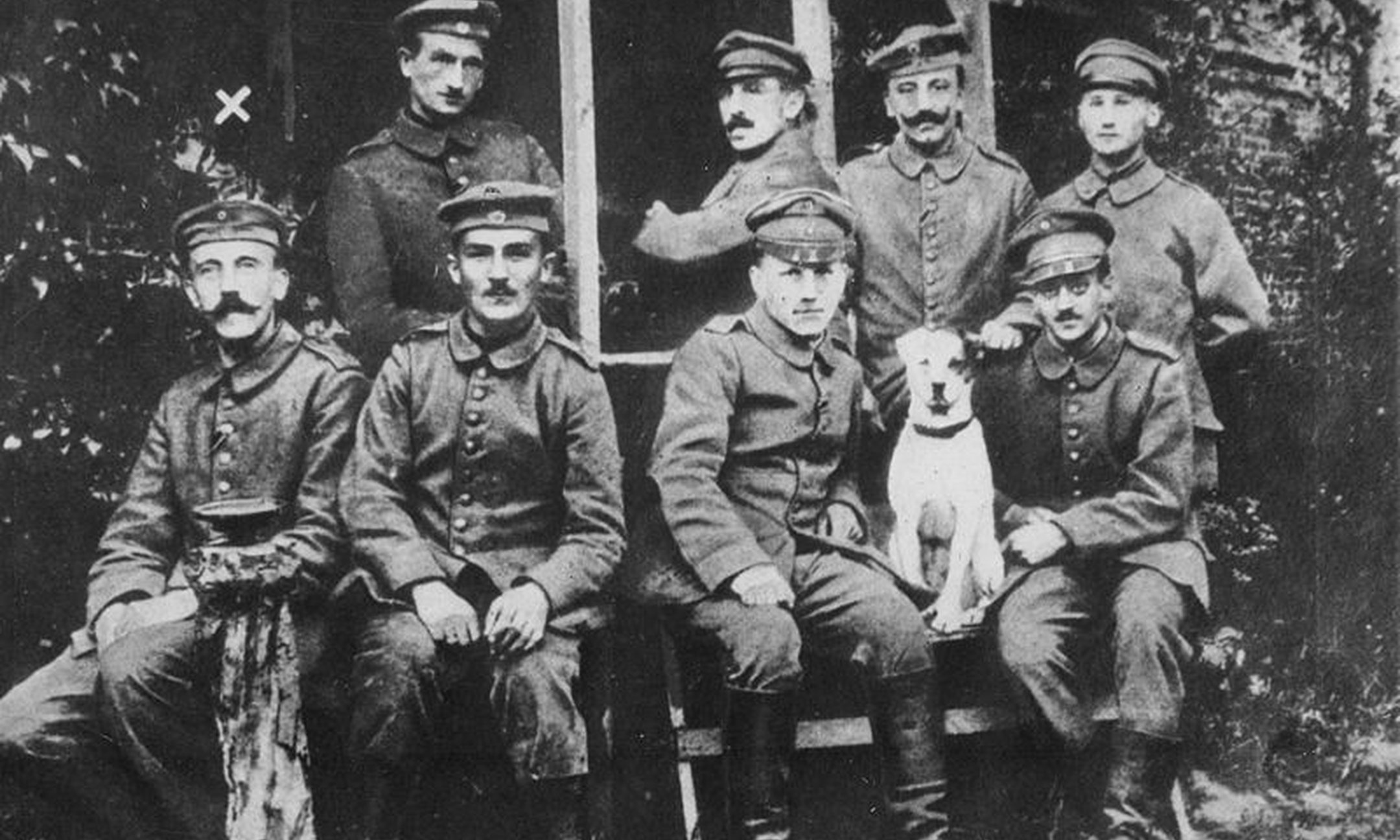
German soldiers during the First World War. At the far left: Hitler as a young soldier (around 1914).Collection: National Archives and Records Administration. Source: Wikimedia Commons. Rights: Public Domain
Jews as the scapegoats for the lost war
The German defeat was hard to swallow for many Germans, and for Hitler, too. In nationalist and right-wing conservative circles, the ‘stab-in-the-back legend’ became popular. According to this myth, Germany did not lose the war on the battlefield, but through betrayal at the home front. The Jews, Social Democrats, and Communists were held responsible.
The prejudices about the role of the Jews in the war were false. An investigation carried out by the German Government proved as much. Over one hundred thousand German and Austrian Jews had fought for their fatherland. Otto Frank, who had fought in the Battle of the Somme in 1916, was just one of them.
Hitler goes into politics
After the First World War, Germany was in chaos. Once the German emperor had gone, rebellions erupted everywhere. Left-wing groups tried to seize power in many places. In Munich, for instance, a ‘People’s Republic’ of Bavaria was proclaimed during a brief revolution. It provoked a right-wing reaction, which in turn resulted in bloodshed. Hitler was very much impressed by these events.
At that point, he was still in the army, and that was where he discovered his oratory talents.Before long, the army had him give training courses, intended to warn soldiers of the communist danger and to stir up feelings of nationalism. In his new role, Hitler got to know the German Workers’ Party, the forerunner of the NSDAP. It was the start of his political career.
Radicalisation of Hitler’s antisemitism
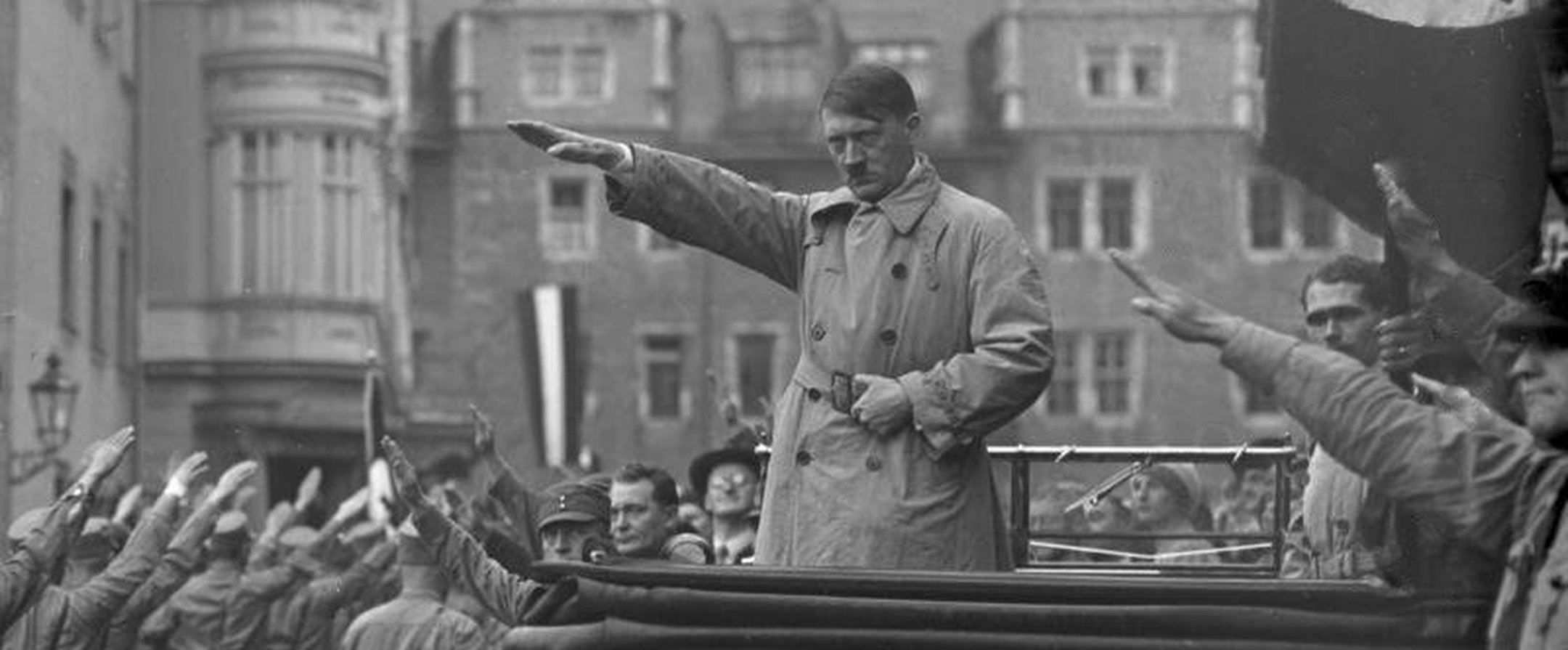
Against the backdrop of revolution and violence, Hitler’s antisemitism was becoming increasingly radical. It is noteworthy that he said he did not support uncontrolled ’emotional’ pogroms (outbursts of anti-Jewish violence).Instead, he argued for an ‘antisemitism of the mind’. It had to be legal and would ultimately lead to the ‘removal’ of the Jews.
As early as August 1920, Hitler compared the Jews to germs. He stated that diseases cannot be controlled unless you destroy their causes. The influence of the Jews would never disappear without removing its cause, the Jew, from our midst, he said. These radical ideas paved the way for the mass murder of the Jews in the 1940s.
Capitalism and communism: a Jewish conspiracy?
Hitler blamed the Jews for everything that was wrong with the world. Germany was weak and in decline due to the ‘Jewish influence’. According to Hitler, the Jews were after world dominance. And they would not hesitate to use all possible means, including capitalism. In this way, Hitler took advantage of the existing prejudice that linked the Jews to monetary power and financial gain.
Hitler was not bothered by the apparent contradictions in his thinking. He held that communism was a Jewish conspiracy, too, as the communist leaders include many Jews. Nevertheless, only a small proportion of the Jews were communists. This idea of ‘Jewish communism’ was to have awful repercussions in the war with the Soviet Union that started in 1941. The population and prisoners-of-war were treated brutally by the Germans.
Hitler’s racism: not just the Jews
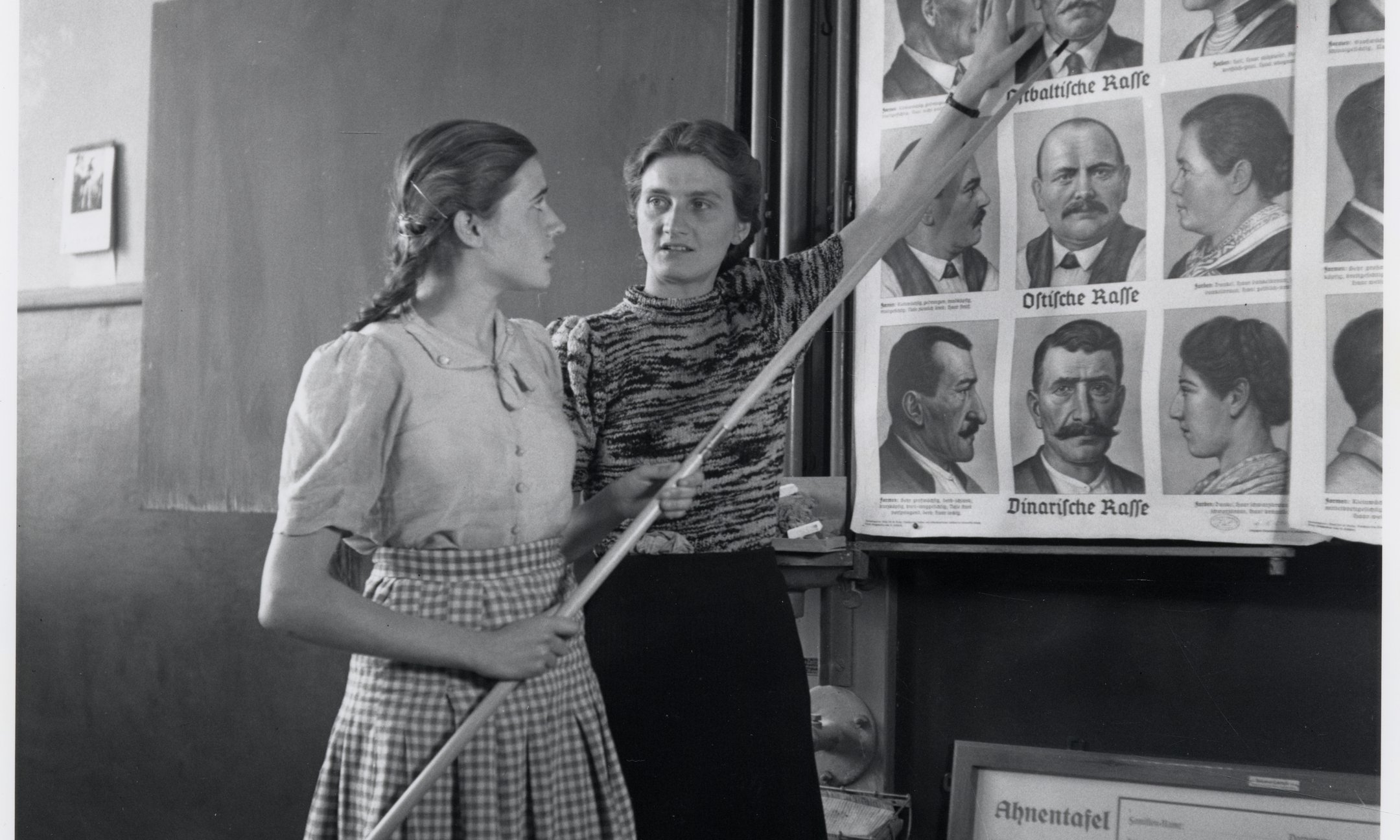
Hitler viewed the world as an arena for the permanent struggle between peoples. He divided the world population into high and low races. The Germans belonged to the high peoples and the Jews to the low ones. He also had specific notions about other peoples. The Slavic people, for instance, were cast as inferior, predestined to be dominated.
Hitler felt that the German people could only be strong if they were ‘pure’. As a consequence, people with hereditary diseases were considered harmful. These included people with physical or mental disabilities, as well as alcoholics and ‘incorrigible’ criminals.Once the Nazis had come to power, these ideas led to the forced sterilisation and killing of human beings.
During the Nazi dictatorship, German children are taught about the ‘racial doctrine’ and the superiority of the Aryan race. Photograph from 1943.Source and rights: bpk Bildagentur
Holocaust
The ideas that Hitler developed in the 1920s remained more or less the same until his death in 1945. What did change is that in 1933, he was handed the power to start realising them. During the 1930s, he did everything he could to expel the Jews from German society.Once the war had started, the Nazis resorted to mass murder. Nearly six million Jews were murdered during the Holocaust.
Literature
Brechtken, Magnus, Die nationalsozialistische Herrschaft 1933-1939 (Darmstadt: Wissenschaftliche Buchgesellschaft, 2004).
Burleigh, Michael, The Third Reich: A New History (Londen: Macmillan, 2000).
Evans, Richard J., The Coming of the Third Reich (New York: The Penguin Press, 2004).
Hamann, Brigitte, Hitler’s Vienna: A Portrait of the Tyrant as a Young Man (New York, NY & Oxford: Oxford University Press, 1999).
Kershaw, Ian, Hitler: Profiles in Power (Londen 1991).
Kershaw, Ian, Hitler, 1889-1945 (London : Allen Lane, 1998-2000).
“Antisemitismus der Vernunft”. In: Adolf Hitler, Gutachten über den Antisemitismus (1919) erstellt im Auftrag seiner militärischen Vorgesetzten’. Included in: Maser, Werner, Hitlers Briefe und Notizen (Düsseldorf 1973).
Summary: New research reveals a striking gap between people’s theoretical desire to know their Alzheimer’s disease risk and their real-life decisions when results are actually offered. In a study of cognitively normal volunteers, only 60% chose to learn their estimated risk when given the chance, despite 81% expressing prior interest.
Concerns about anxiety, burden on family, and the lack of effective treatments were major reasons for declining results. The findings highlight the ethical and psychological complexities of sharing predictive health information and stress the importance of offering participants genuine choice without pressure.
Key Facts:
Interest vs. Action Gap: Only 60% of participants chose to receive their Alzheimer’s risk despite 81% expressing earlier interest.
Emotional Burden a Key Factor: Common reasons for declining included fear of anxiety and the absence of treatment options.
Need for Sensitive Approaches: Findings emphasize designing studies that respect participants’ right to decline risk information.
Source: WUSTL
As researchers make progress in understanding how Alzheimer’s disease develops, there are growing opportunities for healthy research participants to learn their risk of developing Alzheimer’s disease dementia in the future.
While many organizations often advocate for investigators to share risk estimates with individual participants, there are ethical concerns around doing so, given that there are no medical interventions to change that risk.
Before deciding, participants received an information guide explaining how risk is estimated and listing some examples of pros and cons of learning their results. Credit: Neuroscience News
A new study from Washington University School of Medicine in St. Louis examines the choices such healthy research volunteers make when given the opportunity to learn their risk of developing Alzheimer’s disease dementia.
The researchers found a large discrepancy between the percentage of participants who said they would like to learn their risk if such estimates became available and the percentage who followed through to learn those results when given the actual opportunity.
The knowledge could help researchers design studies that offer the option of receiving results in ways that don’t pressure participants into making one choice over another.
The study also emphasizes the importance of ensuring participants truly want their research results because hypothetical interest does not necessarily translate into wanting to learn one’s risk of Alzheimer’s disease dementia when it is actually offered.
The study is published May 6 in JAMA Network Open.
“In general, there is movement toward giving research participants and patients their test results, even in situations when nothing can be done with those results,” said senior author Jessica Mozersky, PhD, an assistant professor of medicine at the Bioethics Research Center and an investigator at the Charles F. and Joanne Knight Alzheimer Disease Research Center, both at WashU Medicine.
“But our study suggests that in sensitive cases — such as when estimating the risk of developing a debilitating and deadly disease — people should have the option to not know.”
In recent years, the National Academies of Sciences, Engineering and Medicine have recommended that research study designs in general include the option to return test results to participants, even when such results can’t be acted on.
Similarly, a committee of study participants, their care partners and members of dementia advocacy organizations recently proposed a bill of rights for Alzheimer’s disease research participants that advocates for access to such results.
At the same time, ethical concerns remain because of the possibility of causing anxiety and other harm to participants who learn they are at high risk of developing a debilitating and incurable dementia.
Unlike preventive options for individuals who learn they are at high genetic risk of certain cancers, for example, there are currently no approved preventive treatments or medical interventions available to stave off Alzheimer’s disease dementia.
To get a clearer picture of who declines Alzheimer’s disease dementia risk results and why, Mozersky and her colleagues turned to long-running research at WashU Medicine’s Knight Alzheimer Disease Research Center. Since 1979, the Memory & Aging Project has provided a framework to study brain function in participants as they age.
Over the decades, the project has evolved and expanded into several long-running studies of the development and progression of Alzheimer’s disease, including the development of biomarker tests to determine risk.
For the current study, Mozersky’s team focused on cognitively normal volunteers who underwent a battery of tests, including genetic tests, blood draws and brain scans, from which researchers could estimate their probability of developing Alzheimer’s disease dementia over the following five years.
Participants originally joined the long-term study understanding that they would not have the option to receive their own risk results. Even so, Mozersky said, over the years many have expressed a theoretical interest in learning their results.
The study, co-led with Sarah M. Hartz, MD, PhD, a professor of psychiatry at WashU Medicine, offered results to a subset of participants in the Memory & Aging project — 274 participants — to assess the psychological impact of learning their risk, and the factors they consider when making that decision.
Before deciding, participants received an information guide explaining how risk is estimated and listing some examples of pros and cons of learning their results. For example, on the pro side, some people may learn their risk is lower than they might have expected.
And if biomarker test results suggest a participant is at high risk of developing Alzheimer’s disease dementia over the next five years, they may become eligible to participate in clinical trials of investigational prevention strategies.
On the other hand, knowledge of high risk may cause anxiety or complicate the purchase of some types of insurance.
When the results were theoretical, 81% of people in the larger, long-term research said they would choose to know. In contrast, when real results were offered to the 274 participants in the Memory & Aging Project, only 60% opted to receive them.
Participants with a parental history of Alzheimer’s disease and participants who self-identified as African American were more likely than others to decline the results.
A sample of participants who declined to learn their results were interviewed afterward, and the most common reasons given included that knowing would be a burden to themselves or their family members, their own negative experiences and perceptions of Alzheimer’s disease dementia, that they feel good about their memory currently, that they’re already prepared for the disease, and that there is still uncertainty in predictions of disease risk.
“The lack of preventive treatments is also a big factor in declining to receive the results of biomarker tests among people without symptoms of Alzheimer’s disease dementia,” Mozersky said.
“When we conducted interviews with some participants to better understand their choice not to know, many said that a new effective treatment might change their mind, if it became available.”
Because the results are only available through research studies, they are not added to the participant’s medical record by the investigators. Still, such results could end up in a patient’s medical record if a participant shares them with their doctor.
“We plan to continue our research into the complexities of these questions, especially as returning results to research participants becomes more common, even if those results can’t be acted on yet,” Mozersky said.
Goswami S, Hartz SM, Oliver A, Jackson S, Oluwatomisin O, Evans A, Linnenbringer E, Moulder K, Morris J, Mozersky J. Research participant interest in learning results of biomarker tests for Alzheimer disease. JAMA Network Open. May 6, 2025.
Funding: This work was supported by the National Institutes of Health (NIH), grant numbers R01 AG065234, P30AG066444, P01AG003991, P01AG026276 and UL1TR002345.
Washington University has a financial stake in C2N diagnostics, which makes the Precivity AD™ plasma Alzheimer’s Disease biomarker test, one of the test results offered to participants in this study. No individual researcher who conducted this study has a personal financial interest in C2N diagnostics.
About this Alzheimer’s disease research news
Author: Jessica Church Source: WUSTL Contact: Jessica Church – WUSTL Image: The image is credited to Neuroscience News
Read sample Fortune Favours the Brave Paperback – 13 Dec. 2018 by Michelle Marcella Clarke (Author), Prof John Crown MB (Foreword) 5.0 5.0 out of 5 stars 1 rating See all formats and editions Michelle Clarke takes us on an extraordinary journey, through challenges most of us would never know, were it not for her courage to write this story.
In 1993, aged 32, she suffers a fractured skull in a horse-riding accident in Zimbabwe, an event which changes her life forever. The traumatic brain injury adds to her existing conditions of Bipolar, Anxiety and Chronic Fatigue. Her marriage fails and she returns to live in Ireland. In 2003, she meets KT at a bus stop in Dublin. He invites her for coffee, and they have been together ever since. The third member of their team is Freddie, a very special little rescue dog. In July 2017, the shocking diagnosis of breast cancer arrives via a routine mammogram and she enters the next phase of ill-health, but this time with the loving support of KT and Freddie. She records her journey through this cancer, primarily to help others, who are experiencing cancer, and their supportersand loved ones, but in doing so she also reaches out to all of us who care about the rare life story of a fellow human being. This was published through Amazon but very few copies were bought.
The book Fortune Favours the Brave by Michelle Marcella Clarke is available in multiple formats:
Kindle Edition: £0.00 (free with Kindle Unlimited) or £4.99 to buy.
Paperback: £8.99, with free delivery by Monday, 12 May to D04 (UK/Ireland) on your first eligible order if ordered within 9 hours 59 minutes. In stock, sold and dispatched by Amazon, with a 30-day return policy. Used and new copies also available from £8.99 with free delivery on eligible orders.
The paperback, published on 13 December 2018, has a 5.0-star rating based on 1 review. It chronicles Clarke’s life after a traumatic brain injury from a 1993 horse-riding accident, compounded by Bipolar, Anxiety, Chronic Fatigue, and a 2017 breast cancer diagnosis. The story highlights her resilience, supported by her partner KT and their rescue dog Freddie, aiming to inspire others facing similar challenges. Despite being published via Amazon, it has had limited sales.
more about resilience
Resilience, as exemplified in Fortune Favours the Brave by Michelle Marcella Clarke, is the capacity to adapt, endure, and recover from significant adversity, such as physical, emotional, or psychological challenges. Clarke’s story—navigating a traumatic brain injury (TBI) from a 1993 horse-riding accident, managing pre-existing conditions like Bipolar, Anxiety, and Chronic Fatigue, and facing a breast cancer diagnosis in 2017—showcases resilience through her ability to persist, find meaning, and maintain hope despite overwhelming odds. Below is a deeper exploration of resilience, drawing from her narrative and broader insights:
Key Aspects of Resilience in Clarke’s Story
Adapting to Life-Altering Challenges:
After her TBI at age 32, Clarke faced cognitive, emotional, and physical limitations, compounded by her mental health conditions. Her return to Ireland after a failed marriage and her ability to rebuild her life demonstrate adaptability—a core resilience trait. She found new purpose, eventually forming a supportive relationship with KT, met serendipitously at a Dublin bus stop in 2003.
Her 2017 breast cancer diagnosis, discovered through a routine mammogram, marked another blow. Yet, Clarke’s decision to document her journey to help others reflects a proactive approach to transforming suffering into purpose.
Support Systems as a Resilience Pillar:
Clarke’s partner, KT, and their rescue dog, Freddie, provided emotional grounding. Social support is a well-documented factor in resilience, offering a sense of belonging and stability. KT’s presence since 2003 and Freddie’s companionship gave Clarke strength to face cancer treatment and its uncertainties.
Writing her book to support others with cancer and their loved ones further illustrates how resilience often involves leaning on and contributing to community.
Finding Meaning Amid Suffering:
Clarke’s narrative emphasizes purpose as a driver of resilience. By sharing her story, she aimed to inspire and guide others, turning personal pain into a resource for collective healing. This aligns with psychological research, such as Viktor Frankl’s work on finding meaning in suffering, which fosters resilience even in dire circumstances.
Courage to Persist:
Despite setbacks—health struggles, limited book sales, and societal stigma around mental health and disability—Clarke’s courage to write and publish her story reflects resilience. Her foreword by Prof. John Crown underscores her bravery, noting the “extraordinary journey” and her willingness to share vulnerabilities.
Broader Insights on Resilience
Resilience is not about invincibility but about bouncing back through learned skills and resources. Key elements include:
Emotional Regulation: Managing intense emotions, as Clarke likely did with Bipolar and Anxiety, helps maintain stability. Techniques like mindfulness or therapy can bolster this.
Problem-Solving Skills: Clarke’s ability to navigate complex medical systems and life changes shows practical resilience. Breaking challenges into manageable steps is critical.
Optimism and Hope: While not naive positivity, a belief in better days—evident in Clarke’s focus on helping others—fuels perseverance.
Self-Efficacy: Confidence in one’s ability to influence outcomes, as seen in Clarke’s decision to write despite low sales, strengthens resilience.
Resilience in Context
Psychological Perspective: Studies, like those from the American Psychological Association, show resilience involves behaviors, thoughts, and actions that anyone can develop. Clarke’s story aligns with this, as her resilience grew through experience, not innate traits.
Neurobiological Angle: TBI and chronic conditions like Clarke’s can alter brain function, yet neuroplasticity allows adaptation. Her persistence suggests leveraging cognitive strengths despite deficits.
Social Impact: By publishing, Clarke contributes to destigmatizing mental health and chronic illness, fostering collective resilience. Her limited sales highlight a gap in societal engagement with such narratives, yet her effort remains impactful.
Applying Clarke’s Resilience Lessons
Build a Support Network: Like Clarke’s reliance on KT and Freddie, surround yourself with trusted people or even pets to weather crises.
Reframe Challenges: View setbacks as opportunities for growth, as Clarke did by writing to help others.
Take Small Steps: Resilience doesn’t require grand gestures—Clarke’s incremental progress, from surviving TBI to managing cancer, shows the power of persistence.
Share Your Story: Expressing experiences, as Clarke did, can validate struggles and inspire others, reinforcing personal and communal resilience.
Conclusion
Michelle Clarke’s Fortune Favours the Brave embodies resilience through her navigation of profound health challenges, supported by love, purpose, and courage. Her story underscores that resilience is a dynamic process, accessible to all through adaptability, support, and meaning-making. For those facing similar trials, her journey offers a roadmap: lean on others, find purpose in pain, and keep moving forward, however small the steps. If you’d like, I can search for more resources on resilience or analyze related content for deeper insights.
Try DeepSearch to research wider
Kindle Edition£0.00 or £4.99 to buy Paperback£8.99 Other Used and New from £8.99 £8.99£8.99 FREE delivery Monday, 12 May to D04 on your first order to UK or Ireland. Order within 9 hrs 59 mins. Details In stock Quantity: 1 Quantity:1 Add to Basket Buy Now Dispatches from Amazon Sold by Amazon Returns Returnable within 30 days of receipt Payment Secure transaction Add gift options Add to List Other sellers on Amazon New & Used (3) from £8.99 & FREE Delivery on your first eligible order to UK or Ireland.Sponsored Fortune Favours the Brave
Billionaire Elon Musk seems to be far more concerned about delivering humanity to Mars, a planet that’s incredibly hostile to life, than ensuring we have a place to call our home over the next 100 years.
Instead of meaningfully addressing a growing climate crisis, he’s pursued the stripping of environmental regulations, actions that could have devastating consequences for humanity in the short term.
In a new interview with Fox News, Musk attempted to justify his long-held plans for making humanity “interplanetary” by establishing a self-sustaining presence on Mars.
“Mars is life insurance for life collectively,” Musk said. “So, eventually, all life on Earth will be destroyed by the Sun. The Sun is gradually expanding, and so we do at some point need to be a multi-planet civilization because Earth will be incinerated.”
But what Musk failed to mention was that this grim fate won’t happen for another six billion years — making it an incredibly un-compelling reason to give up on the Earth now. After all, the Earth is currently only about 4.5 billion years old.
In other words, the looming environmental crisis is far bigger deal, happening vastly sooner, than billions-of-years-off concerns about the cosmic destruction of the Earth.
But while he played a major part in driving the popularity and adoption of electric vehicles, Musk has increasingly contributed to the dismantling of rules designed to curb emission levels, indicating a disregard for ensuring the longevity of humanity’s original home.
SpaceX has also flouted environmental rules, repeatedly dumping toxic wastewater into or near bodies of water in Texas. Its Starship launches have proven incredibly harmful to nearby vegetation and protected wildlife.
Musk has also thrown his weight behind president Donald Trump, who has called for the US to “drill, baby, drill” for more fossil fuels. In his first 100 days in office alone, greenhouse gas emissions have soared, according to a recent analysis.
Put simply, has Musk given up on Earth? Experts have long rung the alarm bells, warning that the climate crisis is nearing a point of no return.
Instead of acknowledging the issue, Musk is still pursuing his dream of building a city on Mars.
In a tweet last month, the CEO promised that his space firm’s gigantic Starship rocket will “hopefully depart for Mars at the end of next year with Optimus explorer robots!” referring to his car company Tesla’s humanoid robots.
Of course, whether Musk’s proclamations — which tend to be massively overconfident — will be realized that soon is as dubious as ever.
For one, the company has yet to successfully launch a Starship into space and return it safely to the ground.
Now that Musk has gathered a huge amount of influence in the White House, chances are NASA could soon move mountains and free up untold sums in funding to realize his plans to send humans to Mars.
In the Trump administration’s recently announced proposed budget for next year, the White House is looking to increase NASA’s space exploration budget by roughly $1 billion in “new investments for Mars-focused programs.”
Put it all together, and Musk has seemingly little interest in ensuring humanity’s survival on planet Earth — even while he’s hellbent on establishing a new city on an extremely deadly and unforgiving planet.
BIG PHARMA SUDDENLY DISCOVERS PATRIOTISM AFTER TRUMP THREATENS THEIR WALLET Call it the Trump Effect—loud, direct, and now worth $40 billion. Bristol Myers Squibb just promised a massive U.S. investment over five years as Trump dangles tariffs over Big Pharma’s head. R&D, tech, and domestic manufacturing are getting the cash—before the hammer drops. CEO Christopher Boerner made the announcement in an op-ed, light on details but heavy on timing. No word yet on new factories, but the message is crystal: build in America or brace for tariffs. Pharma’s playing defense, and Trump didn’t even have to sign anything—just talk loud enough. Source:
The American Psychiatric Association (APA) has recognized the significant mental health benefits of pet ownership, particularly with dogs and cats. A recent poll by APA found that a majority of pet owners report a positive impact on their mental health, with 87% of dog owners and 86% of cat owners citing this. These benefits include reduced stress and anxiety, companionship, and a sense of purpose.
Elaboration:
Mental Health Benefits:Pet ownership has been shown to positively impact mental health in numerous ways. Pets can help reduce stress and anxiety, offer companionship, and provide a sense of purpose and belonging.
Companionship and Social Connection: Pets can provide a source of comfort and reduce feelings of loneliness. They can also facilitate social interaction, helping individuals connect with others through shared activities like walking a dog.
Physical Activity: Pet ownership encourages physical activity, such as walking or playing with a dog, which can improve both physical and mental well-being.
Stress Reduction: Studies have shown that interacting with animals can lower cortisol levels, a stress hormone, and promote relaxation.
Cognitive Health: Research suggests that pet ownership may also be associated with a slower rate of cognitive decline, particularly among individuals living alone.
Support for Mental Health Conditions: Companion animals are increasingly being used in mental health treatment, including for conditions like ADHD, autism, depression, anxiety, and PTSD.
The Role of Oxytocin: Petting a pet can trigger the release of oxytocin, a hormone that promotes bonding and feelings of well-being.
Psychiatry.org – Americans Note Overwhelming Positive Mental Health Impact of Their Pets in New Poll; Dogs and Cats1 Mar 2023American Psychiatric Association
AVMA, American Psychiatric Association leaders discuss mental health benefits of pets | American Veterinary Medical Association29 Mar 2024American Veterinary Medical Association
The Power of Pets for Your Well-being – Psychiatry.org2 Apr 2020 — Oxytocin plays a role in stress regulation and promoting positive social behavior. The interaction also led to an increa…American Psychiatric Association

 Source: ChatGPT 4o Image Generation





 American Psychiatric Association
 American Veterinary Medical Association
 American Psychiatric Association


