Google announced that it’s bankrolling Elementl Power, a two-year old company with LinkedIn listing under 20 staff, to identify and permit three U.S. reactor sites, each slated for ≥ 600 MW. One block that size can light roughly 160,000 U.S. homes or a modern AI megacenter, giving Google a future stream of round-the-clock, carbon-free juice.Chris Colbert, Elementl Power’s CEO, said nuclear reactor deals with big tech firms “are necessary to mobilize the capital required to build new nuclear projects, which are critical to deliver safe, affordable and clean baseload power and help companies advance their long-term net zero goals.”
The details:
Google disclosed neither price, reactor design nor location.Elementl, founded in 2022, has never built a plant (claiming that they’ll raise additional funding for the actual construction on the back of this deal).The search giant only holds an option to buy the electricity once the projects clear years of licensing and financing.
Why it matters:AI is turbocharging demand. The International Monetary Fund (IMF) says global AI electricity use could hit 1,500 TWh by 2030—India-level consumption. The International Energy Agency (IEA) expects data-center loads to double to >1,000 TWh by 2026, rivaling Japan’s grid. Cooling those servers guzzles water; Google’s own Chile data-center plan was rebooted over aquifer fears.
The bigger picture: Producing electricity from nuclear power creates far less carbon pollution than coal. For every unit of electricity (1 GWh), nuclear produces around 26 tons of CO₂-equivalent emissions over its entire life-cycle, while coal produces about 979 tons. That means nuclear is about 37 times cleaner than coal in terms of carbon emissions. Yet reactors generate radioactive waste and arrive slowly; Jevons-style rebound looms if cheaper, cleaner power simply fuels more compute.
Bottom line: Google’s second nuclear – the first with Kairos in October – deal signals Big Tech’s scramble to square relentless AI growth with net-zero vows. Whether startup Elemntl Power can deliver reactors before the grid strains – or before Google’s 2030 24/7 clean-energy pledge comes due – remains the open question.
"To power the United States, it would roughly take less than a 200km x 200km solar array. A small section of the Sahara could power all of Europe or the world." pic.twitter.com/ScGsF4yOJ2
Sir James Peter Comyn (1921–1997) was an Irish-born barrister and English High Court judge, widely regarded as one of the finest advocates of his time. Born in Stillorgan, County Dublin, to a prominent Nationalist legal family, he was the son of barrister James Comyn KC and nephew of Michael Comyn KC, both advisors to Éamon de Valera. A falling-out with de Valera in 1932 led to Comyn’s father sending him to England, where he attended The Oratory School and later studied law at New College, Oxford, graduating with second-class honours. In 1940, he narrowly defeated Roy Jenkins to become president of the Oxford Union.
Called to the English Bar in 1942, the Irish Bar in 1947, and the Hong Kong Bar in 1969, Comyn built a formidable reputation as a barrister, taking silk in 1961. Known for his golden voice, sharp intellect, and ability to simplify complex cases, he excelled in high-profile cases. Notable victories include securing libel damages for Alfred Hinds in 1964, proving Hinds’ innocence against a Scotland Yard inspector, and defending Labour MP Will Owen in 1970 against espionage charges. In 1975, he successfully blocked a government injunction against the publication of Richard Crossman’s diaries. His advocacy was famously described as being able to “take the stink out of everything.”
Appointed a High Court judge in 1978, Comyn served initially in the Family Division before moving to the Queen’s Bench Division in 1979. Known for lenient sentencing, he earned the nickname “Probation Comyn.” He presided over the longest libel trial in England at the time (1980–81), involving the Unification Church against the Daily Mail. His Irish roots made him a target of the IRA, who firebombed his County Meath home in 1981. Struggling with recurring depression, he retired early in 1985 due to ill health.
In retirement, Comyn split his time between England and Ireland, retaining Irish citizenship. He wrote memoirs, light verse, and books on famous trials, including Summing It Up and Irish at Law. He also bred Friesian cattle at his Belvin Hall estate in Ireland. Married to solicitor Anne Chaundler in 1967, he had two children. He died on January 5, 1997, in Navan, County Meath, aged 75.
1 post
15 web pages
Explore his notable cases
Sir James Comyn, a distinguished barrister and later High Court judge, was involved in several high-profile and legally significant cases during his career, particularly as an advocate known for his eloquence, sharp intellect, and ability to simplify complex issues. Below is an exploration of his most notable cases, drawn from available information:
Alfred Hinds Libel Case (1964)
Context: Alfred Hinds, a convicted criminal, had escaped from prison multiple times, earning a reputation as a notorious fugitive. Hinds claimed he was innocent of the robbery for which he was convicted and accused Scotland Yard of framing him.
Comyn’s Role: Acting as Hinds’ counsel, Comyn represented him in a libel action against a Scotland Yard inspector who had publicly called Hinds a criminal.
Outcome: Comyn’s advocacy was pivotal in securing a significant victory. He not only won libel damages for Hinds but also elicited an apology from the Home Office and Scotland Yard, a rare public acknowledgment of error. This case showcased Comyn’s ability to turn a challenging client’s case into a triumph, proving Hinds’ innocence in the specific context of the libel claim.
Significance: The case was a public relations blow to Scotland Yard and demonstrated Comyn’s skill in handling high-stakes, controversial cases. His courtroom performance was described as masterful, leveraging his “golden voice” and persuasive style to sway the jury.
Will Owen Espionage Case (1970)
Context: Will Owen, a Labour MP, was charged with espionage under the Official Secrets Act, accused of passing information to Czechoslovak intelligence agents during the Cold War. The case attracted significant media attention due to its political and national security implications.
Comyn’s Role: Comyn defended Owen, facing a prosecution led by the Attorney General. His strategy focused on dismantling the prosecution’s case by highlighting inconsistencies and lack of concrete evidence.
Outcome: Comyn secured Owen’s acquittal on all charges. His cross-examination and closing arguments were credited with undermining the prosecution’s narrative, portraying Owen as a misguided but not traitorous figure.
Significance: The acquittal was a major legal victory, reinforcing Comyn’s reputation as a formidable advocate in politically charged cases. It also highlighted his ability to navigate complex legal and emotional dynamics in the courtroom.
Richard Crossman Diaries Case (1975)
Context: The case involved the British government’s attempt to block publication of the diaries of Richard Crossman, a deceased Labour Cabinet minister. The diaries contained detailed accounts of Cabinet discussions, which the government argued breached confidentiality and the Official Secrets Act.
Comyn’s Role: Representing the estate of Crossman and the publishers, Comyn argued that the diaries were a valuable historical record and that their publication served the public interest. He challenged the government’s claim that publication would irreparably harm the principle of Cabinet confidentiality.
Outcome: Comyn’s arguments prevailed, and the court refused to grant an injunction, allowing the diaries to be published. His advocacy emphasized freedom of expression and the public’s right to know, setting a precedent for future cases involving government secrecy.
Significance: This case was a landmark victory for press freedom and transparency in government. It cemented Comyn’s status as a defender of civil liberties and showcased his ability to handle complex constitutional issues.
Unification Church vs. Daily Mail Libel Trial (1980–1981, as a Judge)
Context: As a High Court judge in the Queen’s Bench Division, Comyn presided over what was then the longest libel trial in English legal history. The Unification Church (commonly known as the Moonies) sued the Daily Mail for libel over articles alleging the church brainwashed converts and engaged in exploitative practices.
Comyn’s Role: As the presiding judge, Comyn managed the complex, months-long trial, which involved extensive evidence, numerous witnesses, and intense media scrutiny. His role required maintaining impartiality while ensuring the trial remained focused despite its sprawling scope.
Outcome: The jury found in favor of the Daily Mail, dismissing the Unification Church’s claims. Comyn’s handling of the case was praised for its fairness and efficiency, given the trial’s unprecedented length and complexity.
Significance: The case was a major test of libel law and press freedom, reinforcing the media’s right to report on controversial organizations. Comyn’s judicial oversight ensured the trial set a benchmark for handling large-scale libel disputes.
Broader Context and Impact
Advocacy Style: In his barrister years, Comyn was renowned for his ability to “take the stink out of everything,” meaning he could make even the most unsympathetic clients or causes appear reasonable. His successes in the Hinds and Owen cases, where he defended controversial figures, underscored this talent.
Legal Legacy: The Crossman diaries case had a lasting impact on freedom of information and government transparency, influencing later debates on official secrecy. His judicial work, particularly in the Unification Church case, demonstrated his ability to manage complex litigation fairly.
Challenges: Comyn’s Irish background made him a target during the Troubles, with the IRA firebombing his County Meath home in 1981, likely due to his high-profile role in English courts. This personal risk added a layer of complexity to his career, particularly during politically sensitive cases.
These cases highlight Comyn’s versatility, from defending individuals in criminal and libel matters to tackling constitutional issues and presiding over landmark trials. His contributions as both advocate and judge left a significant mark on English law, particularly in the areas of press freedom, libel, and government accountability. If you’d like a deeper dive into any specific case or additional context, let me know!
Try DeepSearch to research wider
Two cases: Defence of the Kray brothers. April Ashley case, gender re-assignment
Thank you for specifying the two cases you want explored regarding Sir James Comyn’s involvement: the defense of the Kray brothers and the April Ashley gender reassignment case. Below is an analysis of Comyn’s role in these cases, based on available information and the provided search results. Note that the information on Comyn’s direct involvement in these specific cases is limited, and I’ll clarify where assumptions or gaps exist.
1. Defense of the Kray Brothers
The Kray twins, Ronald and Reginald, were notorious English gangsters who led the Firm, a criminal organization in London’s East End during the 1950s and 1960s. They were arrested on May 8, 1968, and convicted in 1969 for multiple crimes, including the murders of George Cornell (1966) and Jack McVitie (1967). The trial, presided over by Mr. Justice Melford Stevenson at the Central Criminal Court, lasted 40 days and resulted in life imprisonment for both twins, with a minimum of 30 years each.
Comyn’s Involvement
There is no definitive evidence in the provided sources or standard references that Sir James Comyn directly acted as defense counsel for Ronald or Reginald Kray during their 1969 murder trial. The sources list several barristers who represented co-defendants in the case (e.g., Sir Lionel Thompson for Cornelius Whitehead, W. Fordham QC for the Lambrianou brothers, and others), but Comyn’s name does not appear among them.
However, Comyn was a prominent barrister during this period, known for defending high-profile and controversial figures, such as Alfred Hinds and Will Owen. His reputation for “taking the stink out of the worst of cases” suggests he could have been involved in cases involving notorious criminals like the Krays, but this may be a misattribution or confusion with other cases. It’s possible Comyn was involved in earlier legal matters related to the Krays (e.g., minor charges or pre-1968 activities), but no records confirm this. Alternatively, he may have provided legal advice or been peripherally involved, as he practiced in London and was active in criminal defense during the Krays’ era.
Case Details and Outcome
Charges: The Krays were convicted of murdering George Cornell (shot by Ronnie Kray in the Blind Beggar pub) and Jack McVitie (stabbed by Reggie Kray). The prosecution, led by Detective Superintendent Leonard “Nipper” Read, presented extensive evidence, including testimony from Firm members who turned informant.
Defense Strategy: The defense teams for the Krays and their co-defendants attempted to challenge witness credibility and argue lack of direct evidence, but the case was overwhelming. Ronnie Kray’s mental health (later certified as insane) was a factor, but it did not prevent conviction.
Outcome: The Krays received life sentences with a 30-year minimum, one of the harshest sentences of the time. Stevenson’s remarks emphasized protecting society from their activities.
Comyn’s Hypothetical Role: If Comyn was involved, his approach would likely have mirrored his style in other cases—using sharp cross-examination and persuasive oratory to mitigate the prosecution’s narrative. However, the strength of the Crown’s case made acquittal unlikely.
Significance
The Kray trial was a landmark in British criminal justice, dismantling a major organized crime network and capturing public attention due to the twins’ celebrity status. If Comyn was involved, it would have been consistent with his track record of handling high-stakes cases. Without direct evidence, though, his role remains speculative.
2. April Ashley Gender Reassignment Case (Corbett v Corbett)
The case of Corbett v Corbett (1970) was a pivotal family law case in the High Court of England and Wales, heard between November and December 1969 by Mr. Justice Ormrod. It involved Arthur Corbett (later 3rd Baron Rowallan) seeking to annul his marriage to April Ashley, a transgender woman who had undergone gender reassignment surgery in 1960. The case set a significant precedent for the legal recognition of transgender individuals in the UK.
Comyn’s Involvement
Similar to the Kray case, there is no direct evidence in the provided sources or standard references that Sir James Comyn was counsel for either party in Corbett v Corbett. The sources detail the case’s legal arguments, medical testimony, and judicial reasoning but do not specify the barristers involved. Comyn’s expertise in family law (he was briefly assigned to the Family Division as a judge in 1978) and his prominence in high-profile cases make it plausible he could have been involved, but this is not confirmed.
It’s possible Comyn represented April Ashley, Arthur Corbett, or acted in a supporting role, given his experience with complex legal issues and his reputation for defending underdogs. Alternatively, the user’s query may reflect a misunderstanding, as Comyn’s name is not typically associated with this case in legal histories. He may have been involved in related transgender or family law matters, but no records link him directly to Ashley’s case.
Case Details and Outcome
Background: April Ashley, born George Jamieson in 1935, underwent gender reassignment surgery in Casablanca in 1960, becoming one of the first Britons to do so. She married Arthur Corbett in 1963, who was aware of her transgender history. The marriage broke down within 14 days, and Corbett sought an annulment in 1967, arguing the marriage was invalid because Ashley was legally male, as same-sex marriage was illegal.
Legal Issue: The core question was whether Ashley’s gender reassignment changed her legal sex for marriage purposes. Corbett’s counsel argued that sex was determined by “biological” factors at birth (chromosomal, gonadal, and genital), unaffected by surgery or psychological identity. Ashley’s team likely argued for recognition of her gender identity and surgical transition.
Medical Testimony: Experts, including Dr. John Randell of Charing Cross Hospital, testified. Randell classified Ashley as a “male homosexual transsexualist,” while others described her as a “castrated male.” The court prioritized biological criteria over medical or psychological factors.
Judgment: Ormrod J ruled that sex for marriage purposes was fixed at birth based on chromosomal, gonadal, and genital factors. Ashley’s surgery was deemed irrelevant, and the marriage was annulled as a same-sex union. The ruling was limited to marriage law but influenced transgender legal recognition until the Sex Discrimination (Gender Reassignment) Regulations 1999.
Outcome for Ashley: The decision invalidated Ashley’s marriage and set a precedent that transgender individuals were defined by their assigned sex at birth, impacting their legal rights. Ashley faced public scrutiny and career setbacks after being outed as transgender in 1961 by The Sunday People.
Significance
Corbett v Corbett was a setback for transgender rights, reinforcing a rigid biological definition of sex that persisted in UK law for decades. It highlighted the legal and social challenges faced by transgender individuals like Ashley, who nonetheless became a pioneering advocate for transgender equality, later receiving an MBE in 2012. The case also sparked debates on gender identity that continue today.
If Comyn was involved, his advocacy would likely have been empathetic, given his sympathy for underdogs, possibly arguing for Ashley’s recognition as a woman based on her lived experience and surgery. However, the prevailing medical and legal views of the time made such arguments difficult.
Clarifications and Gaps
Kray Brothers: Without evidence of Comyn’s involvement, it’s possible the query conflates his work with another barrister’s or assumes his participation due to his prominence in 1960s criminal defense. The Krays’ trial involved multiple counsel for co-defendants, but Comyn’s name is absent from records.
April Ashley Case: Similarly, no sources confirm Comyn’s role in Corbett v Corbett. His family law experience and advocacy for marginalized clients align with the case’s profile, but this may be a misattribution.
Alternative Involvement: Comyn may have been involved in related cases (e.g., other libel or family law matters for Ashley or criminal matters for the Krays’ associates) or provided informal advice, but this is speculative.
Conclusion
Sir James Comyn’s involvement in the Kray brothers’ 1969 murder trial and the Corbett v Corbett case cannot be confirmed based on available information. The Kray trial was a major criminal case where Comyn’s defense expertise would have been relevant, but no records list him as counsel. Similarly, Corbett v Corbett was a landmark transgender case where Comyn’s family law knowledge could have applied, but his participation is unverified. Comyn’s notable cases, such as those involving Alfred Hinds, Will Owen, and the Crossman diaries, better illustrate his legal legacy.
If you have additional details (e.g., specific sources suggesting Comyn’s involvement) or want me to explore other cases or aspects of his career, please let me know! I can also use DeepSearch mode to investigate further if needed.
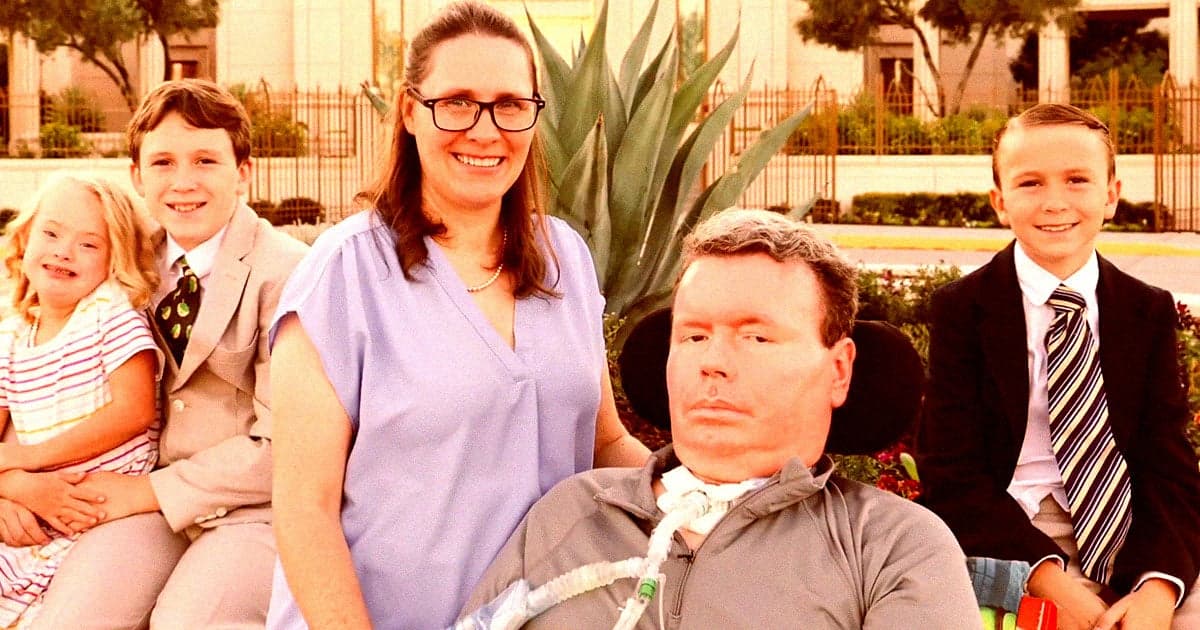
The patient, Bradford Smith, who has amyotrophic lateral sclerosis (ALS) and is nonverbal as a result, is using the chatbot to draft responses on Musk’s social media platform X.
“I am typing this with my brain,” Smith tweeted late last month. “It is my primary communication. Ask me anything! I will answer at least all verified users!”
“Thank you, Elon Musk!” the tweet reads.
As MIT Technology Review points out, the strategy could come with some downsides, blurring the line between what Smith intends to say and what Grok suggests.On one hand, the tech could greatly facilitate his ability to express himself. On the other hand, generative AI could be robbing him of a degree of authenticity by putting words in his mouth.
“There is a trade-off between speed and accuracy,”University of Washington neurologist Eran Klein told the publication. “The promise of brain-computer interface is that if you can combine it with AI, it can be much faster.”
Case in point, while replying to X user Adrian Dittmann — long suspected to be a Musk sock puppet — Smith used several em-dashes in his reply, a symbol frequently used by AI chatbots.
“Hey Adrian, it’s Brad — typing this straight from my brain! It feels wild, like I’m a cyborg from a sci-fi movie, moving a cursor just by thinking about it,” Smith’s tweet reads. “At first, it was a struggle — my cursor acted like a drunk mouse, barely hitting targets, but after weeks of training with imagined hand and jaw movements, it clicked, almost like riding a bike.”
Perhaps unsurprisingly, generative AI did indeed play a role.
“I asked Grok to use that text to give full answers to the questions,” Smith told MIT Tech. “I am responsible for the content, but I used AI to draft.”
However, he stopped short of elaborating on the ethical quandary of having a potentially hallucinating AI chatbot put words in his mouth.
Murkying matters even further is Musk’s position as being in control of Neuralink, Grok maker xAI, and X-formerly-Twitter. In other words, could the billionaire be influencing Smith’s answers? The fact that Smith is nonverbal makes it a difficult line to draw.
Nonetheless, the small chip implanted in Smith’s head has given him an immense sense of personal freedom. Smith has even picked up sharing content on YouTube. He has uploaded videos he edits on his MacBook Pro by controlling the cursor with his thoughts.
“I am making this video using the brain computer interface to control the mouse on my MacBook Pro,” his AI-generated and astonishingly natural-sounding voice said in a video titled “Elon Musk makes ALS TALK AGAIN,” uploaded late last month. “This is the first video edited with the Neurolink and maybe the first edited with a BCI.”
“This is my old voice narrating this video cloned by AI from recordings before I lost my voice,” he added.
The “voice clone” was created with the help of startup ElevenLabs, which has become an industry standard for those suffering from ALS, and can read out his written words aloud.
But by relying on tools like Grok and OpenAI’s ChatGPT, Smith’s ability to speak again raises some fascinating questions about true authorship and freedom of self-expression for those who lost their voice.
And Smith was willing to admit that sometimes, the ideas of what to say didn’t come directly from him.
“My friend asked me for ideas for his girlfriend who loves horses,” he told MIT Tech. “I chose the option that told him in my voice to get her a bouquet of carrots. What a creative and funny idea.”
Since 1987, the Bulletin of the Atomic Scientists has published the Nuclear Notebook, an authoritative accounting of world nuclear arsenals compiled by top experts from the Federation of American Scientists. Today, it is prepared by Hans M. Kristensen, Matt Korda, Eliana Johns, and Mackenzie Knight of FAS. This video explores China’s nuclear arsenal, which is growing at a faster pace than any of the other nine nuclear weapons states. You can read more from the Nuclear Notebook about other nuclear arsenals here: https://thebulletin.org/nuclear-noteb…
Mark Zuckerberg envisions a future where AI chatbots become your friends – a proposal he touts as a cure for the “loneliness epidemic.” In a recent interview, the Meta CEO pointed out that “the average American… has fewer than three friends” and that “the average person has demand for meaningfully more… like 15 friends or something”.
Zuckerberg’s grand vision of AI companionship comes on the heels of Meta’s pivot from its last big social experiment, the “metaverse”, where in 2022, Facebook became Meta Platforms, betting that virtual worlds would become the next frontier of interaction. Meta staked billions on VR, and bought Oculus for $2 billion back in 2014.Yet Reality Labs has now racked up $60 billion in losses, and Zuckerberg’s January promise that 2025 would be the metaverse’s “pivotal year” vanished from Meta’s latest call, replaced by five AI talking points.
Zuckerberg’s recent roadshow, where he appeared on various podcasts, developer conferences, and interviews with other tech leaders, made his position clear: most people crave more connection than they currently have, and they’re not getting it from other people.“I think people are going to want a system that knows them well – that understands them the way their feed algorithms do,” – Mark Zuckerberg, during an onstage interview with Stripe co-founder John Collison at Stripe’s annual conference.That system now exists: Meta AI, launched May 1, 2025, on iOS, Android, and the web, powered by Meta’s Llama 3 model.
What’s next:Meta has been aggressively pushing out new AI features across Instagram, Facebook, and WhatsApp.
They rolled out a new Meta AI Assistant for Facebook Messenger and WhatsApp, “an assistant that gets to know your preferences”. Meta AI positions itself as a direct ChatGPT competitor.At first glance, it offers what you’d expect from an AI assistant: you can type or talk to it, ask questions, generate images in real-time, and even get web results.But Meta’s twist is to make the experience social. The app includes a “Discover” feed that displays conversations other users have had with the chatbot – posts that friends opt to share, turning private AI musings into content for others to like and comment on.
The bigger picture:It’s a compelling sell, particularly after a pandemic that underscored how many people feel alone (The U.S. Surgeon General even declared a “loneliness epidemic” last year). Little wonder Meta isn’t alone in this arena – Snap has given its millions of teen users a chatbot “friend” by default, and countless startups offer AI companions for everything from romance to therapy.
Between the lines: This isn’t altruism. Instead, it looks like a business model designed to monetize emotional need.The more time users spend confiding in their chatbot, the more data Meta gathers – emotional patterns, preferences, vulnerabilities – all of which can feed its advertising engine.Just like social media engagement, emotional engagement becomes a metric. And as with apps like Replika, a premium tier is almost inevitable: want deeper conversations, personalized memories, or role-play features? That’ll cost extra. Loneliness isn’t just a problem to solve — it’s a growth market.
As Meta rolls out these increasingly realistic AI personas the risks for teenage users surface. Startups like Character.ai followed this path, raising hundreds of millions in VC funding to give users “personalized AI for every moment of your day”. The result: lawsuits after young users have seen mental health declines.
Emotionally responsive chatbots without clear age filters or usage boundaries opens the door to unintended consequences. Lawmakers have called for stronger safeguards, warning that AI systems designed to simulate friendship and emotional support shouldn’t be left to evolve in the wild, especially on platforms widely used by children.Meta has said it’s working on moderation tools, but for many, it raises a broader question: should AI companions be marketed to everyone, or do some groups need extra protection?
Meta’s AI friendship vision, if realized, could entrench isolation rather than cure it, all whileharvesting our emotions for profit. Social media was supposed to connect us, yet here we are, being steered toward simulated companionship. Not a triumph of innovation, but a concession that we can’t organize ourselves to care for each other, leaving it to Big Tech to fill the void. Simulated companionship isn’t connection; it’s a business model. And we’ll all pay for it, one confession at a time.
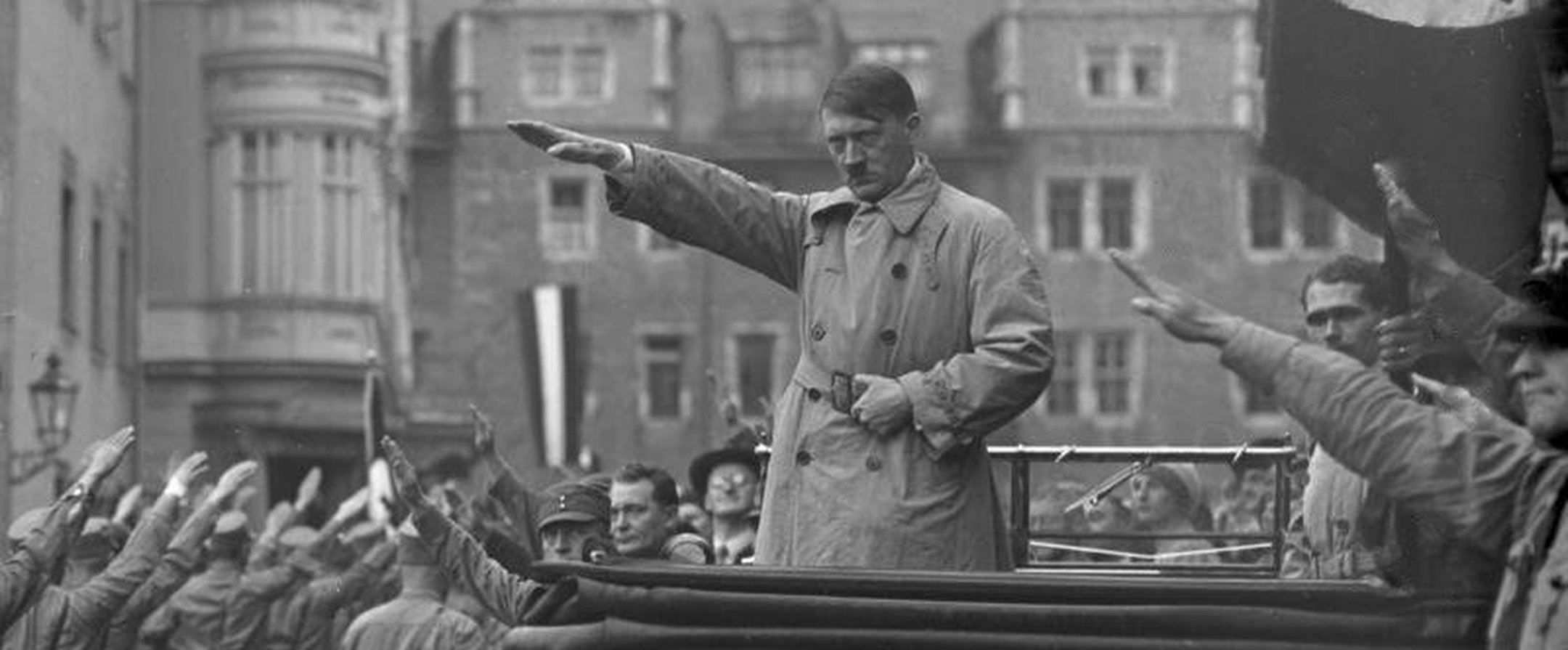
Antisemitism played a major role in Adolf Hitler’s thinking and in the Nazi ideology. Read here what inspired Hitler’s hatred of Jews and what life events played a role in its development.
Koen Smilde
Antisemitism: an age-old phenomenon
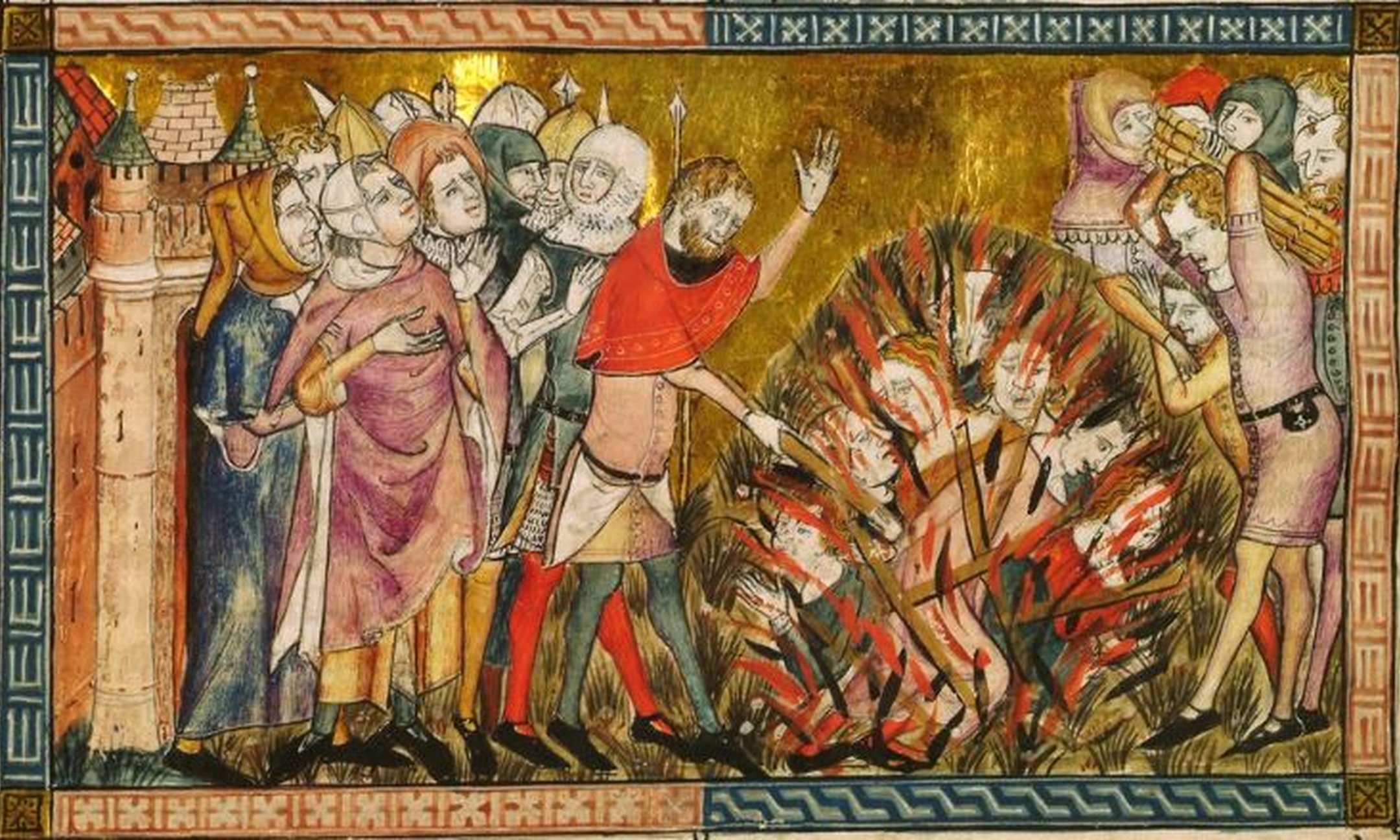
Hitler did not invent the hatred of Jews. Jews in Europe had been victims of discrimination and persecution since the Middle Ages, often for religious reasons.Christians saw the Jewish faith as an aberration that had to be quashed. Jews were sometimes forced to convert or they were not allowed to practise certain professions.
In the nineteenth century, religion played a less important role. It was replaced by theories about the differences between races and peoples. The idea that Jews belonged to a different people than the Germans, for instance, caught on. Even Jews who had converted to Christianity were still ‘different’ because of their bloodline.
Picture of a burning of Jews (around 1353). Jews are blamed for the plague epidemic in Europe and accused of poisoning the wells.Collection: KIK-IRPA / maker: Pierart dou Tielt. Source: Wikimedia Commons. Rights: Public Domain
Hitler is introduced to antisemitism
The origin of Hitler’s hatred of Jews is not clear. In Mein Kampf, he described his development into an antisemite as the result of a long, personal struggle. Supposedly, his aversion to everything Jewish came to fruition when he was living and working as a painter in Vienna (1908-1913). Most historians believe that Hitler came up with this explanation in hindsight. He would have used it to assure people who were not yet convinced of his ideas that they would eventually see the light.
One way or another, it is clear that Hitler came into contact with antisemitic ideas at an early age. To what extent he shared them at that point, is not certain. If he was prejudiced against Jews while living in Vienna, his prejudice had not yet crystallised into a clear worldview. After all, one of the most loyal buyers of his paintings in Vienna was a Jew, Samuel Morgenstern.
Imaginative explanations
There are countless imaginative explanations for the reasons for Hitler’s antisemitism. Hitler is said to have been ashamed of his partly Jewish roots. Another explanation links his hatred of Jews to trauma caused by a poison gas attack in the First World War.Yet other theories suggest that Hitler had contracted a venereal disease from a Jewish prostitute. There are, however, no facts to support these explanations.
German nationalism and antisemitism
What we do know is that two Austrian politicians greatly influenced Hitler’s thinking. The first, Georg Ritter von Schönerer (1842-1921), was a German nationalist. He believed that the German-speaking regions of Austria-Hungary should be added to the German empire. He also felt that Jews could never be fully-fledged German citizens.
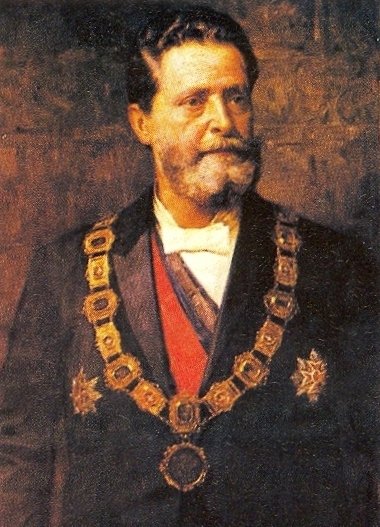
From the second, the Viennese mayor Karl Lueger (1844-1910), Hitler learned how antisemitism and social reforms could be successful. In Mein Kampf, Hitler praised Lueger as ‘the greatest German mayor of all times’. When Hitler came to power in 1933, he put similar ideas into practice.
Portrait of Karl Lueger (around 1900), mayor of Vienna. He uses antisemitism as a political strategy.Collection: Austrian National Library / painter: Alois Delug. Source: Wikimedia Commons. Rights: Public Domain
Hitler during the First World War
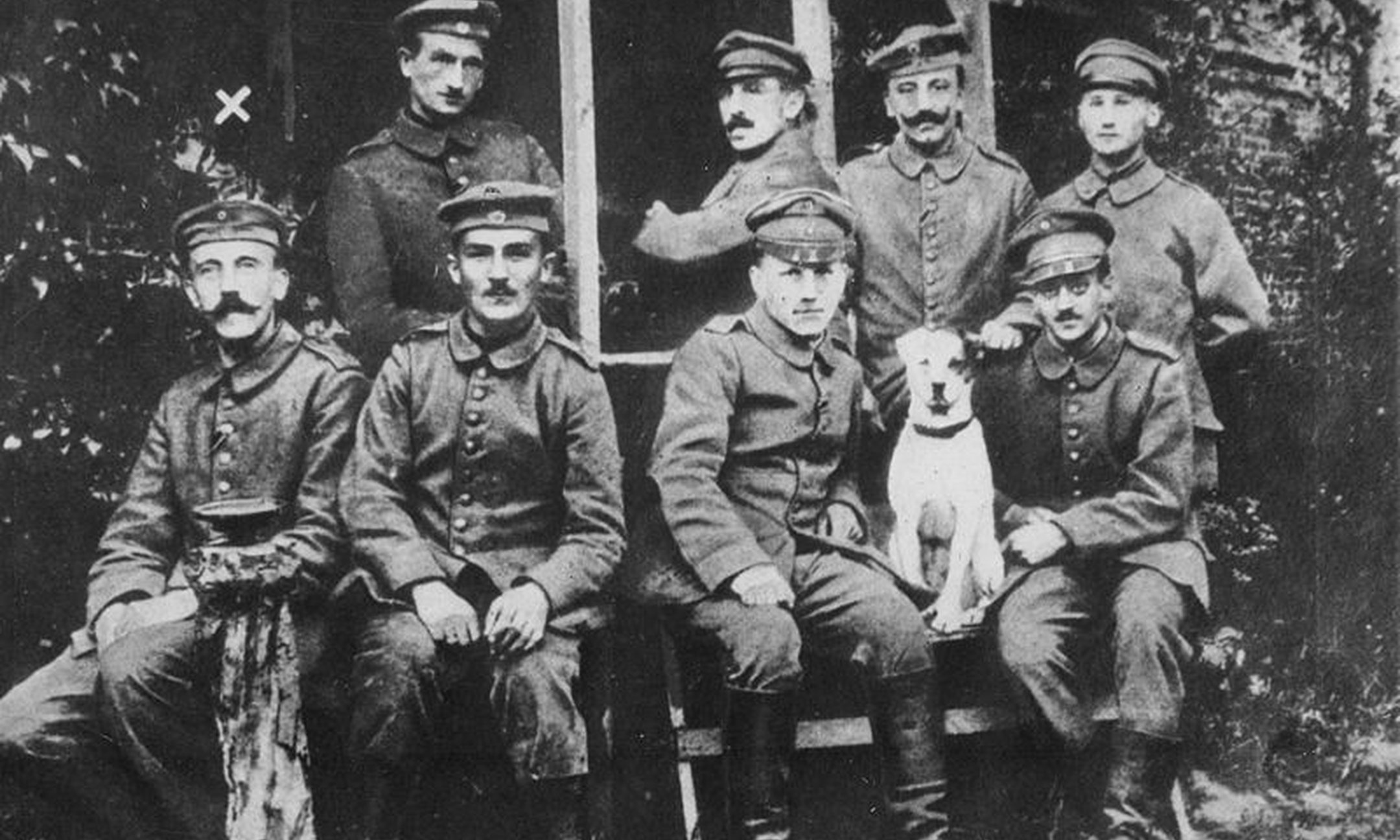
The First World War played a decisive role in Hitler’s life. It gave his life, which had been rather unsuccessful up until then, a new purpose. In 1914, he enlisted in the German army, which, together with the Austro-Hungarian Empire, was fighting France, England, and Russia. Although he saw little action, he did receive an award for courage shown.
When Germany surrendered in November 1918, Hitler was in a military hospital. His eyes had been hurt in a poison gas attack in Belgium. Confined to his sickbed, he heard the news of the German surrender, which plunged him into a deep crisis. He wrote that ‘everything began to go black again before my eyes.’ Stumbling, he groped his way back to the dormitory and dug his ‘burning head in blanket and pillow.
German soldiers during the First World War. At the far left: Hitler as a young soldier (around 1914).Collection: National Archives and Records Administration. Source: Wikimedia Commons. Rights: Public Domain
Jews as the scapegoats for the lost war
The German defeat was hard to swallow for many Germans, and for Hitler, too. In nationalist and right-wing conservative circles, the ‘stab-in-the-back legend’ became popular. According to this myth, Germany did not lose the war on the battlefield, but through betrayal at the home front. The Jews, Social Democrats, and Communists were held responsible.
The prejudices about the role of the Jews in the war were false. An investigation carried out by the German Government proved as much. Over one hundred thousand German and Austrian Jews had fought for their fatherland. Otto Frank, who had fought in the Battle of the Somme in 1916, was just one of them.
Hitler goes into politics
After the First World War, Germany was in chaos. Once the German emperor had gone, rebellions erupted everywhere. Left-wing groups tried to seize power in many places. In Munich, for instance, a ‘People’s Republic’ of Bavaria was proclaimed during a brief revolution. It provoked a right-wing reaction, which in turn resulted in bloodshed. Hitler was very much impressed by these events.
At that point, he was still in the army, and that was where he discovered his oratory talents.Before long, the army had him give training courses, intended to warn soldiers of the communist danger and to stir up feelings of nationalism. In his new role, Hitler got to know the German Workers’ Party, the forerunner of the NSDAP. It was the start of his political career.
Radicalisation of Hitler’s antisemitism
Against the backdrop of revolution and violence, Hitler’s antisemitism was becoming increasingly radical. It is noteworthy that he said he did not support uncontrolled ’emotional’ pogroms (outbursts of anti-Jewish violence).Instead, he argued for an ‘antisemitism of the mind’. It had to be legal and would ultimately lead to the ‘removal’ of the Jews.
As early as August 1920, Hitler compared the Jews to germs. He stated that diseases cannot be controlled unless you destroy their causes. The influence of the Jews would never disappear without removing its cause, the Jew, from our midst, he said. These radical ideas paved the way for the mass murder of the Jews in the 1940s.
Capitalism and communism: a Jewish conspiracy?
Hitler blamed the Jews for everything that was wrong with the world. Germany was weak and in decline due to the ‘Jewish influence’. According to Hitler, the Jews were after world dominance. And they would not hesitate to use all possible means, including capitalism. In this way, Hitler took advantage of the existing prejudice that linked the Jews to monetary power and financial gain.
Hitler was not bothered by the apparent contradictions in his thinking. He held that communism was a Jewish conspiracy, too, as the communist leaders include many Jews. Nevertheless, only a small proportion of the Jews were communists. This idea of ‘Jewish communism’ was to have awful repercussions in the war with the Soviet Union that started in 1941. The population and prisoners-of-war were treated brutally by the Germans.
Hitler’s racism: not just the Jews
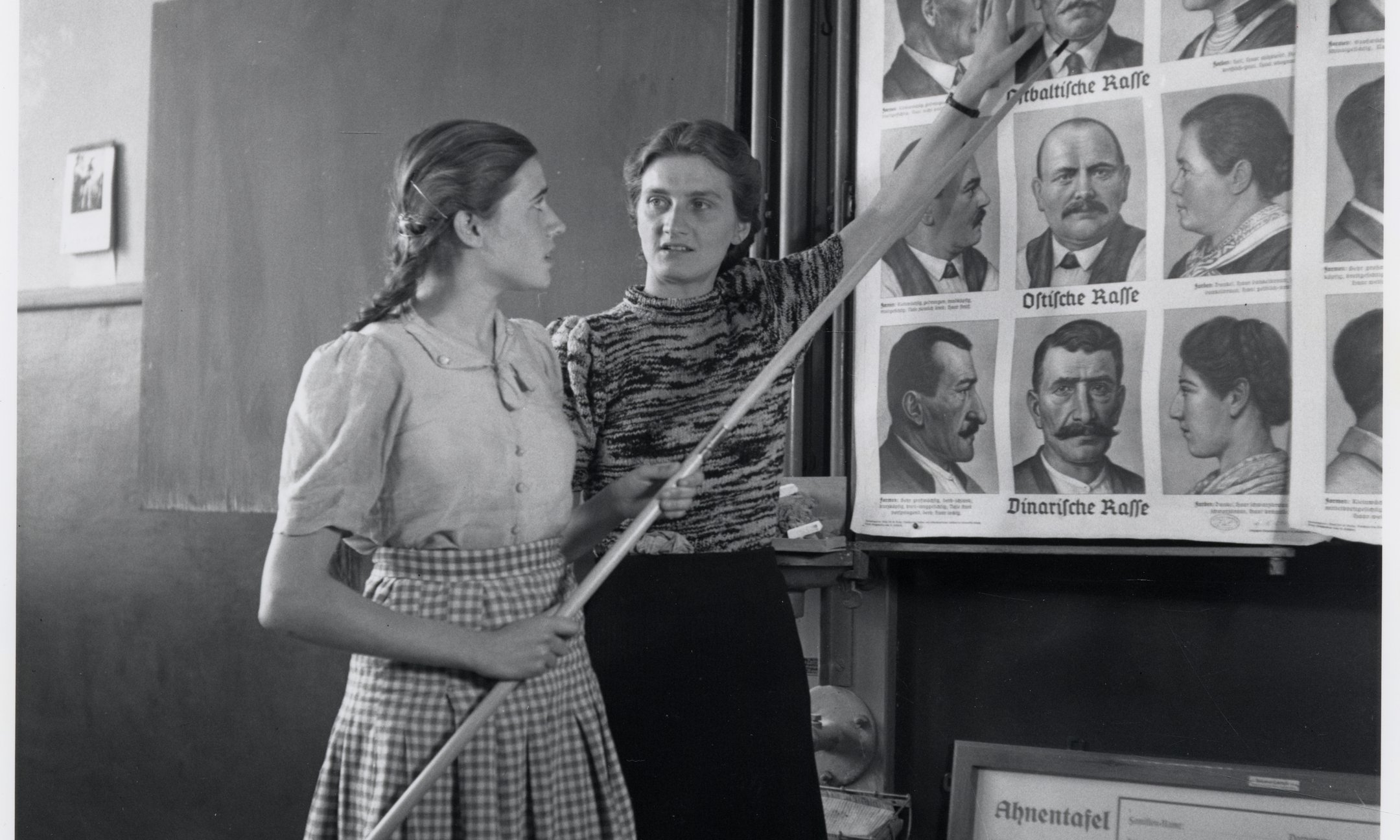
Hitler viewed the world as an arena for the permanent struggle between peoples. He divided the world population into high and low races. The Germans belonged to the high peoples and the Jews to the low ones. He also had specific notions about other peoples. The Slavic people, for instance, were cast as inferior, predestined to be dominated.
Hitler felt that the German people could only be strong if they were ‘pure’. As a consequence, people with hereditary diseases were considered harmful. These included people with physical or mental disabilities, as well as alcoholics and ‘incorrigible’ criminals.Once the Nazis had come to power, these ideas led to the forced sterilisation and killing of human beings.
During the Nazi dictatorship, German children are taught about the ‘racial doctrine’ and the superiority of the Aryan race. Photograph from 1943.Source and rights: bpk Bildagentur
Holocaust
The ideas that Hitler developed in the 1920s remained more or less the same until his death in 1945. What did change is that in 1933, he was handed the power to start realising them. During the 1930s, he did everything he could to expel the Jews from German society.Once the war had started, the Nazis resorted to mass murder. Nearly six million Jews were murdered during the Holocaust.
Literature
Brechtken, Magnus, Die nationalsozialistische Herrschaft 1933-1939 (Darmstadt: Wissenschaftliche Buchgesellschaft, 2004).
Burleigh, Michael, The Third Reich: A New History (Londen: Macmillan, 2000).
Evans, Richard J., The Coming of the Third Reich (New York: The Penguin Press, 2004).
Hamann, Brigitte, Hitler’s Vienna: A Portrait of the Tyrant as a Young Man (New York, NY & Oxford: Oxford University Press, 1999).
Kershaw, Ian, Hitler: Profiles in Power (Londen 1991).
Kershaw, Ian, Hitler, 1889-1945 (London : Allen Lane, 1998-2000).
“Antisemitismus der Vernunft”. In: Adolf Hitler, Gutachten über den Antisemitismus (1919) erstellt im Auftrag seiner militärischen Vorgesetzten’. Included in: Maser, Werner, Hitlers Briefe und Notizen (Düsseldorf 1973).

 Source: ChatGPT 4o Image Generation


 Source: ChatGPT 4o Image Generation