


-
Archives
- October 2026
- September 2026
- August 2026
- July 2026
- June 2026
- May 2026
- April 2026
- March 2026
- February 2026
- January 2026
- December 2025
- November 2025
- October 2025
- September 2025
- August 2025
- July 2025
- June 2025
- May 2025
- April 2025
- March 2025
- February 2025
- January 2025
- December 2024
- November 2024
- October 2024
- September 2024
- August 2024
- July 2024
- June 2024
- May 2024
- April 2024
- March 2024
- February 2024
- January 2024
- December 2023
- November 2023
- October 2023
- September 2023
- August 2023
- July 2023
- June 2023
- May 2023
- April 2023
- March 2023
- February 2023
- January 2023
- December 2022
- November 2022
- October 2022
- September 2022
- August 2022
- July 2022
- June 2022
- May 2022
- April 2022
- March 2022
- February 2022
- January 2022
- September 2021
- August 2021
- July 2021
- June 2021
- May 2021
- April 2021
- February 2021
- January 2021
- December 2020
- November 2020
- October 2020
- September 2020
- August 2020
- July 2020
- June 2020
- May 2020
- April 2020
- March 2020
- February 2020
- January 2020
- December 2019
- November 2019
- October 2019
- September 2019
- August 2019
- July 2019
- June 2019
- May 2019
- April 2019
- March 2019
- February 2019
- January 2019
- December 2018
- November 2018
- October 2018
- September 2018
- July 2018
- June 2018
- May 2018
- April 2018
- March 2018
- February 2018
- January 2018
- December 2017
- November 2017
- October 2017
- September 2017
- August 2017
- July 2017
- June 2017
- May 2017
- April 2017
- March 2017
- February 2017
- January 2017
- December 2016
- November 2016
- October 2016
- September 2016
- August 2016
- July 2016
- June 2016
- May 2016
- April 2016
- March 2016
- February 2016
- January 2016
- December 2015
- November 2015
- October 2015
- September 2015
- August 2015
- July 2015
- June 2015
- March 2015
- January 2015
-
Meta
23andMe went Bankrupt: The data now in the name of a pharma company … which will use it for research not the purpose initially established for. We lose our contacts.
MC
- Michelle100%
- This button changes the visibly highlighted geographical location on the map based on the name of the button.European100%
Your genetic relationship
More information
Relationship More information
Great-Aunt
Maureen is the sister of one of your grandparents. You share a little bit of DNA from your great-grandparents (her parents).
Maureen is in your family tree
Family Background
| Family information | You | Maureen |
|---|---|---|
| Maternal grandmother’s birthplace | County Clare, Ireland | |
| Maternal grandfather’s birthplace | Clare, County Clare, Ireland | |
| Paternal grandmother’s birthplace | County Clare, Ireland | |
| Paternal grandfather’s birthplace | Wicklow, County Wicklow, Ireland | |
| Other ancestors’ birthplace | Galway, County Galway, Ireland, Galway, Galway City, County Galway, Ireland, Mayo, County Mayo, Ireland, Dublin, County Dublin, Ireland, Cork, County Cork, Ireland | |
| Family surnames | O’Donohue, Clarke, Comyn, Blake-Forster, Johnston |
April 13, 2024
Just received link. Hello Maureen. I have not been a great success working out how this goes. I think it must be the Comyn Quin grandparents we have in common. This link says grandparents however, my grandfather was their son ie Michael (Search Michael Comyn on canisgallicus.com) and his wife Marcella Blake-Forster. Maybe you have a different take. Michelle Clarke. Good to make contact. Are you based in Co. Clare
May 18, 2024
Maureen. I don’t know if you received my last message but I would really love to make contact with you. Are you the sister of Michael Comyn? Michelle Clarke
June 14, 2024
Maureen. I forget to check out 23 and me but have just done so and you are ahead of my second cousin Rory McCann, and I wonder if you can make contact. Assuming you are in Ireland, probably Clare, let’s hope summer comes soon. It is so cold for June. All the best Michelle Clarke … I think we may be related through Comyn, Quin connection
June 15, 2024
Great Aunt Maureen McGahan. I would really like to make contact with you. My grandparents were Michael Clarke, Eileen O’Donohue, Michael Comyn, Marcella Blake-Forster. Looking forward to hearing from you. Michelle Clarke
June 18, 2024
MM
Hi! This is Maureens granddaughter checking her account. Maureen resides in New Jersey and spent most of her life in New York. Sorry we don’t have information to share with you.
June 19, 2024
Hello to Maureen’s granddaughter. I do not know who entered Maureen’s data to 23andMe but somone must have been trying to establish a connection to relatives in Ireland. Maureen is a sister of one of my grandparents and being an oldie myself nearly 66 that goes back a long time. My grandparents were from Co. Clare Ireland and one from Co. Wicklow Ireland. I was shocked to see my closest connection being to your grandmother who would be my grandaunt. This may give you some history. The names of my grandparents are Michael Comyn, Marcella Blake=Forster, Eileen O’Donohue, all from Clare and Michael Clarke (Wicklow). If you have any questions or if Maureen has, I will respond. Have a lovely day in New Jersey Michelle Clarke
MM
We would would love to know the age of the grandparents. Are they if alive? Do your grandparents know who their mom/dad are? Trying to put the pieces together!
MM
Maureen is 84
MM
That’s why I am helping her 🙂
June 20, 2024
My mum Eleanor Rose Comyn was born in 1931; her sister Marcella 1928, their first cousin James Comyn in 1921. Their father Michael was born 1874 yes he was elderly dad. Their mother was born around 1900. My fathers mother Eileen O’Donohue is also about 100 and grandfather Michael Clarke older than her by 20 years. My family have all left this world now but ask me any questions and I will respond. My mum passed away in 2017 aged 88, her sister passed away recently at 92. My father died many decades ago but his mother Eileen lived into her 90’s. Keep safe and I will look forward to hearing from you. Michelle
MM
Maureen’s dad was James McGarry and her mom was Marcella McGarry. Marcella passed in 2005 and James long before that – trying to find his obituary. Maureen was born in 1940 and has 2 sisters Marcella 1936 and Kathleen 1944 who have both passed away. They were all raised on Staten Island NY.
MM
Marcella’s maiden name was Reynold. So James McGarry and Marcella Reynolds. We knew of ancestry in Ireland but not necessarily about potential other siblings! By the way my name is Ryan Schrader daughter of Lynne McGahan Lehrkinder. I went to NUIG for a semester in college and have been back to Ireland a few times. Absolutely love it there! My mom is not on 23 and me but helping me solve this. Her father was Edward Thomas McGahan and he has passed. Lots of Ireland connections but this is our first time piecing it together.
June 21, 2024
Thank u for the reply. I have to admit I am adled but I can tell you that 23andMe registered Maureen McGahan has my great aunt; sister of one of my grandparents. Is there any chance some relative did a 23andMe test with Maureen. I have no McGarry relatives but maybe you have Marcella McGarry’s maiden name. Marcella is not a popular Irish name but my grandmother was Marcella, her daughter, her grandmother so maybe we can narrow it down to a name. My understanding of 23andMe is that one you take the test & submit it then DNA finds the family connections and we are warned that sometimes there are parts of the past belonging to others that we don’t want to know about. Maureen may have asked a relative about ancestry and taken the test. Very interesting for me because most of my family are up their in the sky with all the answers. Michelle Clarke Grandparents O’Donohue; Comyn, Clarke, Blake-Forster (Marcella)
Ryan I received two notes but this time I am replying to you. You must have loved Galway university; I attended a short weekend course with my mum several years ago and I really enjoyed. My mums family were Clare and Galway. Somehow Maureen McGahan had a sample taken of her DNA otherwise Maureen would not be on the top of my list as chief relation ie grandaunt. My family have passed away so it is now grandchildren age group that may want to patch the story together. Did you randomly select Galway University or was there some family stories about Galway … I hope we can follow the trail. 23andMe matched two of us so maybe you will find out more. Hope Maureen is in good health and enjoying life too. Keep safe. Michelle Clarke (grandparents names: Clarke, Comyn, Blake-Forster, O’Donohue)
July 23, 2024
Hello, it is Michelle Clarke from Ireland. Maureen has shown up on my 23andMe as my great aunt and I would love to find out more. I understand she was born 1940 and this creates a mystery. My account has been suspended due to new password needed hence I am only making contact now. Hope you are having a nice summer in New Jersey; we are having an exceptionally cold and wet summer here in Dublin.
August 21, 2024
Dear Maureen I would really like to hear from you. It looks as if you are a sister of my grandfather Michael Comyn. I would to explore the family connection further. If you Google Michael Comyn who would be your older sibling if this DNA method is correct you will find out about his life. I hope you are keeping well. My old email address has been decommissioned so I am trying to notify people and companies over the past 20 years of the change. Best wishes Michelle Clarke (Comyn)
October 31, 2024
It is me again.. I would really like to make contact with Great Aunt Maureen. Sister of one of my grandparents. Michelle
April 20, 2025
Hello Maureen. I hope you have had a nice Easter. I have found details of great grandaunt I never knew who emigrated to the US after census 1901. Does this help? Details Comyn Johanna Frances Daughter Roman Catholic Read-Write 18 Female Farmer’s Daughter Not Married Co. Clare Irish-English Regards Michelle Clarke search canisgallicus.com Comyn
============
Kathleen Wirtanen
Birth Year
1935
Active
Over 6 months ago
Location
Shelby Township, Michigan, United States
September 5, 2023
KW
Hi Michelle I checked my tree and I My Great Great Grandfather Thomas Quinn married Bridget Kelly. They had 8 children. One of the children Ellen Quinn married James Comyn 1-3-1869. They had six children you can figure it out from there. Kathleen Quinn Wirtanen
Hello. Yes. James Comyn’s son Michael is my grandfather. My mother Dr Eleanor Rose Comyn and Dr Marcella Comyn were his daughters, sadly RIP. Search canisgallicus.com for Comyn. Lovely to hear from you. Oh I remember my Auntie Lily, and uncle Pattie. Bridget Kelly … I remember being told about how a Kelly from Porte, Ruan, Co. Clare married a Comyn? Michelle. Delighted to make contact
September 6, 2023
KW
Thank you for responding my email is kathleenwirtanen@yahoo.com I live in Michigan USA Quinn’s in California Washington – Louisiana – Colorado. I will get my daughter Ancestry # and sent it to you. Kathleen
Kathleen. Thank you. Really nice to have a virtual connection, and family too. Michelle
KW
How do you pronounce Comyn. I say Ko-min my daughter says common. I remember my Aunt Marion talking about Ko-min and Cummins Kathleen
It is not Cummins but you prononce the “Coo myn”
September 7, 2023
KW
Thank you very much. Two different families Comyn & Cummins
Yes two different names and not related. M
November 6, 2023
Hello Kathleen I have entered two generations which I think we may have confused. It seems to be Blake-Forster married to Comerford is the family connection and if so I may have some history on same. Comyn is grandfather married to a Blake-Forster. Michelle
Michael Comyn (1871-1952) Lawyer Old Munster circuit (see book written by Maurice Healy)
See new post
Michael Comyn Old Munster circuit
Michael Comyn (1871–1952), an Irish barrister, Fianna Fáil Senator, and later Circuit Court judge, joined the Munster Circuit in 1900 after being called to the Irish Bar in 1898. The Munster Circuit was a legal circuit in southern Ireland, where barristers traveled to various county courts to represent clients in civil and criminal cases. Comyn began his legal career presenting cases at quarter sessions in his home county of Clare, building a successful practice that led to his appointment as King’s Counsel in 1914.
Comyn was notably active in nationalist politics, and his legal work often reflected this. A significant case was In Re. Clifford and O’Sullivan (1921), where he represented two of 42 men sentenced to death by a military tribunal for possessing arms during the Irish War of Independence. Facing a desperate situation, Comyn creatively applied for Prohibition, an obscure legal remedy, arguing the military court lacked jurisdiction. Though initially dismissed in lower courts, the case reached the House of Lords, and Comyn later claimed King George V intervened to prevent the executions, ensuring none of the 42 men were executed—a testament to his legal ingenuity and influence.
The Old Munster Circuit is also associated with Maurice Healy’s 1939 memoir, The Old Munster Circuit: A Book of Memories and Traditions, which offers a humorous and nostalgic account of the circuit’s legal culture from 1900 to 1920, when Comyn was active. Healy, a Cork-born barrister, describes the circuit’s colorful characters, courtroom anecdotes, and the unique social dynamics of Irish legal practice, providing context for the environment in which Comyn worked. The book, praised as a literary classic, captures the camaraderie and challenges of the Munster Circuit, where barristers like Comyn navigated complex cases amidst Ireland’s turbulent political landscape.
Comyn’s career on the circuit was marked by his advocacy for republican prisoners during the “troubles,” with no prisoner he represented facing execution. His work extended to high-profile appeals, including one for suffragette Georgina Frost before the House of Lords. In 1936, he left the Seanad to become a judge on the Eastern Circuit Court, concluding a distinguished legal career rooted in the Munster Circuit’s traditions.


15 web pages
Michael Comyn Victoria Prize King’s Inn 1898
The letter from King’s Inns, dated January 24, 2007, provides details on Michael Comyn KC’s legal education and early career milestones:
- Admission as a Student: Comyn was admitted to King’s Inns as a student in Hilary Term 1896 (January–April).
- Call to the Bar: He was admitted to membership of the Society of King’s Inns and awarded the degree of Barrister-at-Law in Michaelmas Term 1898 (October–December). He was the fifth person called to the bar that term.
- Victoria Prize: Established by the Education Committee in 1888, the Victoria Prize was awarded to Comyn in 1898. He received the third prize of £10, as decided at the Council of Benchers meeting on Wednesday, June 1, 1898, during Trinity Term. This preceded his call to the bar later that year in Michaelmas Term.
These records highlight Comyn’s early academic success and rapid progression to becoming a barrister, aligning with his later prominence as a legal and political figure. For further verification, contact King’s Inns archives or consult their historical records.
The letter also states that he was mentioned in Maurice Healy The Old Munster Circuit
The letter from King’s Inns, dated January 24, 2007, also notes that Michael Comyn KC is mentioned in The Old Munster Circuit by Maurice Healy. This memoir, published in 1939, details Healy’s experiences as a barrister on the Munster Circuit in Ireland, offering insights into the legal profession and notable figures of the time. Comyn’s inclusion likely reflects his prominence as a barrister, particularly given his high-profile cases and reputation in Irish legal circles during the early 20th century. For specifics on the context or nature of the mention, you may need to consult The Old Munster Circuit directly, available in libraries or through reprint editions.
Explore Maurice Healy’s memoir
Other Irish legal memoirs
============
Michael Comyn KC in The Old Munster Circuit by Maurice Healy
The letter from King’s Inns, dated January 24, 2007, confirms that Michael Comyn KC is mentioned in Maurice Healy’s The Old Munster Circuit (1939), a celebrated memoir detailing Healy’s experiences as a barrister on the Munster Circuit in Ireland from 1910 to 1914. This memoir provides a vivid, often humorous portrayal of the Irish legal profession, its characters, and courtroom anecdotes, primarily aimed at an English audience to explain Irish legal culture. Comyn’s inclusion in the text underscores his prominence as a barrister during this period, particularly given his involvement in high-profile cases and his reputation as a skilled advocate.
While the letter does not specify the context of Comyn’s mention, it likely relates to his active participation on the Munster Circuit, where he joined in 1900 and built a successful practice, becoming a King’s Counsel in 1914. Healy’s memoir frequently highlights notable legal figures, and Comyn’s significant cases—such as his defense of republican prisoners during the Irish War of Independence or his role in the Clifford and O’Sullivan case (1921)—may be referenced. To confirm the exact nature of the mention, you would need to consult The Old Munster Circuit directly. The book is available in libraries, through reprint editions (e.g., Wildy Classics, 2001, or Mercier Press), or online retailers like AbeBooks or Blackwell’s.


Exploring The Old Munster Circuit
The Old Munster Circuit is a nostalgic and affectionate account of the Irish Bar, particularly the Munster Circuit (covering Cork and the South Western Circuit). Maurice Healy, an Irish barrister educated at University College Dublin and called to the Irish Bar in 1910, practiced on the Munster Circuit before moving to England after the Irish Free State was established. The memoir is structured as a series of anecdotes, offering insights into courtroom dynamics, judicial personalities, and the quirks of Irish litigants and barristers. It was praised as one of the “Ten Literary Classics” by Gary Slapper in The Times Student Law Supplement (October 2005) for its treasury of Irish legal anecdotes.


Key themes in the memoir include:
- Cultural Explanations: Healy often explains Irish legal practices and the temperament of Irish litigants to an English audience, highlighting differences in courtroom atmosphere. For example, he recounts a case where Irish witnesses’ colorful testimony baffled an English judge.
- Judicial and Legal Anecdotes: The book includes stories of judicial severity, such as Lord Justice Holmes sentencing an elderly man to 15 years, quipping, “Try to do as much of it as you can!”
- Notable Figures: Healy references prominent barristers, judges, and cases, likely including Comyn, given his stature and shared circuit experience.
To explore Comyn’s specific mention, check editions of The Old Munster Circuit (e.g., the 1939 Michael Joseph original, 1948 reprint, or 2001 Wildy edition with a biographical introduction by Charles Lysaght). Libraries with legal or Irish history collections, such as the King’s Inns Library or the National Library of Ireland, may hold copies. Online, AbeBooks or Amazon may offer used or reprint editions.


Other Irish Legal Memoirs
For a broader perspective on the Irish legal profession during Comyn’s era, several other memoirs and legal histories provide valuable context. These works, like Healy’s, often blend personal anecdotes with insights into the legal, political, and cultural landscape of Ireland, particularly during the turbulent early 20th century. Below are notable examples:
- The Last Serjeant by A.M. Sullivan (1952)*
- Overview: Written by Alexander Martin Sullivan, the last barrister to hold the title of Serjeant-at-Law in Ireland, this memoir recounts his legal career, including his defense of Roger Casement in 1916. Sullivan was a maternal uncle of Maurice Healy, connecting their legal worlds.
- Relevance: Sullivan’s memoir offers a contemporary perspective on the Irish Bar during Comyn’s time, including nationalist politics and high-profile trials. Comyn, active in nationalist circles and defense cases, may share similar legal contexts.
- Availability: Available in secondhand bookstores, libraries, or through reprint editions (e.g., Four Courts Press).
- Overview: Written by Alexander Martin Sullivan, the last barrister to hold the title of Serjeant-at-Law in Ireland, this memoir recounts his legal career, including his defense of Roger Casement in 1916. Sullivan was a maternal uncle of Maurice Healy, connecting their legal worlds.
- Borstal Boy by Brendan Behan (1958)*
- Overview: While not strictly a legal memoir, Behan’s autobiographical account of his arrest and imprisonment as a young IRA member in the 1940s includes interactions with the Irish legal system. It provides a defendant’s perspective on the courts during a later period than Comyn’s peak activity.
- Relevance: Offers insight into the legal treatment of republican prisoners, a group Comyn frequently defended.
- Availability: Widely available in bookstores, libraries, or online (e.g., Penguin Classics).
- My Life in the Law by James Comyn (1989)*
- Overview: Written by Sir James Comyn, Michael Comyn’s nephew, this memoir reflects on his legal career in Ireland and England. It includes references to his uncle Michael’s cases, such as the Clifford and O’Sullivan case, and the Irish Bar’s culture.
- Relevance: Directly relevant due to the familial connection and mentions of Michael Comyn’s legal work, offering a personal perspective on his legacy.
- Availability: Scarce but available through secondhand booksellers or legal libraries.
- Overview: Written by Sir James Comyn, Michael Comyn’s nephew, this memoir reflects on his legal career in Ireland and England. It includes references to his uncle Michael’s cases, such as the Clifford and O’Sullivan case, and the Irish Bar’s culture.
- The Courts of Ireland by V.T.H. Delany (1971)*
- Overview: A historical account of the Irish legal system, including the operation of circuits like Munster. While not a memoir, it contextualizes the legal environment Comyn and Healy navigated.
- Relevance: Provides a scholarly backdrop to the anecdotal style of Healy’s memoir, detailing court structures and notable cases.
- Availability: Found in academic libraries or through legal history publishers.
- King’s Inns and the Kingdom of Ireland by Colum Kenny (1992)*
- Overview: A history of King’s Inns, the institution where Comyn studied and was called to the Bar. It includes details on barristers’ training and notable alumni like Comyn.
- Relevance: Complements the King’s Inns letter by elaborating on Comyn’s legal education and the institution’s role in shaping Ireland’s legal elite.
- Availability: Available in libraries or through Irish academic publishers (e.g., Four Courts Press).
Accessing These Works
- Libraries: The King’s Inns Library, National Library of Ireland, or university libraries (e.g., University College Dublin, Trinity College Dublin) hold these texts or can provide interlibrary loans.
- Online Retailers: Check AbeBooks, Amazon, or Blackwell’s for reprints or used copies of The Old Munster Circuit and other memoirs.
- Archives: For primary sources on Comyn, contact the King’s Inns archives (as suggested in the letter) or the National Archives of Ireland for court records or correspondence.
- Secondhand Bookstores: Irish bookstores like Charlie Byrne’s or Ulysses Rare Books may stock these titles.
Additional Notes
- Comyn’s Legal Context: Comyn’s career, as detailed in the King’s Inns letter, reflects his rapid rise from student (1896) to barrister (1898) and King’s Counsel (1914). His Victoria Prize win in 1898 highlights early academic excellence, likely aiding his entry into the competitive Munster Circuit.
- Healy’s Perspective: Healy’s memoir, written after he moved to England, reflects a nostalgic view of the Irish Bar, possibly tempered by his discomfort with the Irish Free State’s revolutionary politics. This contrasts with Comyn’s staunch nationalism and Fianna Fáil ties.
- Further Research: To explore Comyn’s specific contributions, cross-reference Healy’s memoir with contemporary sources like The Irish Times archives, court reports, or Comyn’s Senate speeches (available through Oireachtas records).
If you need assistance locating a specific edition of The Old Munster Circuit or want excerpts from these memoirs analyzed, let me know!
Reading Fiction Boosts Empathy and Fights Loneliness (Bibliotherapy – highly recommended by me)

Reading Fiction Boosts Empathy and Fights Loneliness
FeaturedNeurosciencePsychology
·May 19, 2025
Summary: While AI companions are marketed as a fix for loneliness, research shows that reading offers far more meaningful benefits. Reading fiction can foster social connection, reduce stress, enhance empathy, and even reshape brain activity linked to social cognition.
Shared reading and book clubs have been shown to reduce loneliness and improve mental health, especially among young adults and older populations. Unlike digital interactions, reading activates brain regions involved in understanding others, offering a powerful, low-tech solution to modern social isolation.
Key Facts:
- Social Brain Boost: Reading fiction activates brain areas tied to empathy and connection.
- Mental Health Aid: Readers report less loneliness, better sleep, and lower stress.
- Protective Effect: Frequent reading is linked to a lower risk of dementia and cognitive decline.
Source: The Conversation
Loneliness has become such a widespread problem that Silicon Valley billionaires are now highlighting it to market AI companions, with Mark Zuckerberg recently stating, “the average American has fewer than three friends”.
This actually echoes what the World Health Organization has called a crisis of social isolation and loneliness. They report that around 25% of older adults are socially isolated and 5%-15% of adolescents are lonely. But a variety of research – including our own – suggests reading may be a much better solution than chatbots.

Human interaction is no doubt hugely important. In a study we published in 2023, we found that it only takes around five close friends for children and adolescents to thrive, giving them better brain structure, cognition, academic performance and mental health.
Having fewer than five close friends may not provide enough social contact. But larger numbers are less likely to be close friends.
The dilemma of technology frequently means that despite some people having vast numbers of friends on social media, they are not close friends and so do not provide the social support needed.
Similarly, chatbots may not provide the type of face-to-face social interaction that people need to flourish. During the pandemic lockdowns, a study found that face-to-face communication was far more beneficial for mental health than digital communication.
But how can reading help us to feel less lonely and have better wellbeing?
A recent survey from The Queen’s Reading Room, the charity and book club of Queen Camilla, and other surveys, have found that reading fiction and other books significantly reduces feelings of loneliness and improves wellbeing.
Another charity, The Reader, conducted a survey of approximately 2,000 participants and found that this was especially true among young adults. Fifty-nine percent of those aged 18-34 said reading made them feel more connected to others and 56% felt less alone during the pandemic.
Another survey, in conjunction with the University of Liverpool, of over 4,000 participants found that reading offers powerful benefits, serving as a top method for reducing stress.
In addition, participants reported that reading encouraged personal growth, such as improving health, picking up hobbies and boosting empathy, with 64% of readers having a better understanding others’ feelings.
Reading and the brain
Indeed, scientific research looking at book clubs and shared reading back this up, finding notable emotional and social benefits of reading. For example, students reported greater connection (42.9%) to others, deeper understanding of others’ experiences and beliefs (61.2%) and reduced loneliness (14.3%) as a result of reading.
The surveys above all rely on people reporting how they feel, rather than an objective measure. But there are also findings from objective measures of the brain, including neuroimaging.
A systematic review of 11 intervention studies showed that shared reading among older adults improved wellbeing and helped alleviate loneliness and social isolation.
One way in which reading may help reduce loneliness is by enhancing our social cognition, which is the ability to understand and connect with others.
A neuroimaging study of young adults found that reading fiction, particularly passages with social content, activated areas of the brain involved in social behaviour and emotional understanding, such as the dorsomedial prefrontal cortex.
This brain region was also linked to the stronger social cognition seen in frequent fiction readers, suggesting a neural pathway through which reading fosters greater social connectedness.
Importantly, reading may also reduce the risk of dementia. One study of 469 people aged 75 and over, with no dementia at baseline, were followed up for 5.1 years.
Among leisure activities such as playing board games, playing musical instruments and dancing, reading was associated with a 35% reduced risk of dementia.
A number of studies have similarly shown that engaging in cognitively stimulating activities, such as reading, can slow cognitive decline and reduce the risk of dementia.
Our own research also showed the benefits of reading for pleasure early in life. In a large sample of over 10,000 children in the Adolescent Brain Cognitive Development (ABCD) Study, we found that those children who read for pleasure early in life had better brain structure, cognition, academic achievement, longer sleep duration and better mental health – including lower symptoms of inattention, stress and depression – when adolescents. Importantly, they also had less screen time and better social interactions.
So, while AI and chatbots can enhance our lives in many ways, they are not a solution to everything. We know that while technology has many benefits, it has also produced many unforeseen problems.
Let’s solve problems of loneliness and social isolation through reading and book clubs. Reading is also a great way to improve brain structure, cognition and wellbeing.
About this reading and loneliness research news
Author: Barbara Jacquelyn Sahakian and Christelle Langley
Source: The Conversation
Contact: Barbara Jacquelyn Sahakian and Christelle Langley – The Conversation
Image: The image is credited to Neuroscience News
Posted in Uncategorized
Tagged depression, health, loneliness, mental-health, wellness
Leave a comment
Futurism: Bankrupt 23andMe Just Sold Off All Your DNA Data
May 19, 4:17 PM EDT/ by Maggie Harrison Dupré
Bankrupt 23andMe Just Sold Off All Your DNA Data
There’s nothing you can do about it.
Your DNA results are in — and they’re 100 percent the property of a pharmaceutical manufacturer.
American biotech company Regeneron Pharmaceuticals announced today that it’s buying 23andMe, the bankrupt consumer-genomics company that sold take-home DNA kits. Regeneron is to pay $256 million in cash to acquire “substantially all” of 23andMe’s assets, including its massive biobank of around 15 million customer genetic samples and data.
Put simply, the genetic information of millions is now in the hands of a drugmaker seeking to mine it to make new therapies, per the Washington Post, which could be a data privacy nightmare in the making
Said samples were willingly given by consumers in exchange for 23andMe to decode their DNA, a process that offered people a fascinating glimpse into their genetic makeup and family histories. That kind of biometric data is both wildly valuable and widely sought-after, so when 23andMe went belly-up financially, its trove of genetic information quickly drew attention as a lucrative asset. That realization immediately sparked concerns among data privacy experts, who warned that a sale of 23andMe data meant that the genetic information of customers, not to mention information about customers’ close and distant relatives, was up for grabs to the highest bidder.
In its press release, Regeneron said it “intends” to honor 23andMe’s existing privacy practices. Regeneron cofounder and president George Yancopoulos, meanwhile, issued a statement emphasizing the drugmaker’s “deep experience with large-scale data management, having worked with collaborators around the world to link deidentified DNA sequences from nearly three million consented participants to electronic health records, safely and securely enabling future medical advances.”
“We believe we can help 23andMe deliver and build upon its mission to help those interested in learning about their own DNA and how to improve their personal health,” Yancopoulos’ statement continued, “while furthering Regeneron’s efforts to use large-scale genetics research to improve the way society treats and prevents illness overall.”
That said, Regeneron isn’t just a research lab. It sells the drugs it creates, and should genomic data gleaned from the historic sale lead to the creation and eventual monetization of medications, it raises questions around whether consumers will ever be compensated for their contributions.
23andMe board chair Mark Jensen, for his part, said in a statement that the deal “maximizes the value of the business and enables the mission of 23andMe to live on, while maintaining critical protections around customer privacy, choice, and consent with respect to their genetic data.”
More on 23andMe: 23andMe Is Selling All Your Data, in Largest Sale of Genomes in History
Share This Article
Advertisement

Around the Web


Thieves Hate This Smart Home Security Camera
BulbGuard Cam

Drive With Evidence: Dash Cam Never Lies
DashSentry
How to Stop Your Dog From Barking in Seconds
Pet Zen Pro
Doctors Baffled: Simple Tip Relieves Years of Joint Pain and Arthritis
Healthier Living Tips
Hearing Aids With Sound So Clear, People Think They’re Almost Perfect
HearClear Pro
Kameran Som Skakar Säkerhetsbranschen
BulbGuard Cam
12x More Efficient Than Solar Panels? Prepper’s Invention Takes Country By Storm
Solar Switch

A Free Speech Search Engine
Ethereal Search Engine
Image by Getty / Futurism
Advertisement
Advertisement
Read This Next
23andMe Is Selling All Your Data, in Largest Sale of Genomes in History3.24.25 Genetics23andMe Is Crumbling, and That Means Your Genetic Data Is Blowing in the Breeze1.25.25 Rx/MedicinesNew Law Would Allow AI to Replace Your Doctor, Prescribe Drugs11.17.24 GeneticsAs 23andMe Crumbles, It Ceases All Efforts to Develop Drugs Using DNA Data10.24.24 GeneticsAs 23andMe Slides Into Bankruptcy, Your DNA Hangs in the Balance
Advertisement
Advertisement
The Latest
Scientists Tweaked LSD’s Molecular Structure and Created a Wild New Brain Drug
This new compound could be a game changer.
By Victor Tangermann / Read More >>
Study: Living Near a Golf Course Could Lead to a Terrible Chronic Illness
“It’s probably a perfect storm.”
By Victor Tangermann / Read More >>
In a World First, CRISPR Drug Tailored for One Baby Shows Life-Saving Promise
“We all said to each other, ‘This is the most significant thing we have ever done.'”
By Maggie Harrison Dupré / Read More >>
Keep up.
Subscribe to our daily newsletter to keep in touch with the subjects shaping our future.I understand and agree that registration on or use of this site constitutes agreement to its User Agreement and Privacy Policy
TopicsAbout UsEditorial StandardsContact Us
DISCLAIMER(S)
Privacy PolicyTerms & ConditionsDMCA Policy
Articles may contain affiliate links which enable us to share in the revenue of any purchases made.
Registration on or use of this site constitutes acceptance of our Terms of Service.
© Recurrent Ventures Inc, All Rights Reserved.
Posted in Uncategorized
Leave a comment
Grok3 AI: Blake-Forster ffrench Comerford Macnamara
Grok3 AI Captain Francis Blake-Forster
Thank you for providing detailed information, including the reference to Charles ffrench Blake-Forster calling his grandmother “Lady French” and the context of her family background. Let’s address the key points systematically, incorporating the new details and clarifying Rose ffrench’s title, family, and connections.
Rose ffrench and the “Lady” Title
Charles ffrench Blake-Forster, in his book The Irish Chieftains (1872), refers to his grandmother as “Lady Rose ffrench.” This is significant, as it suggests he believed she held a courtesy title. Based on the provided information, Rose ffrench was the daughter of Thomas Hamilton ffrench, 2nd Baron ffrench of Castle ffrench, County Galway. As the daughter of a baron, Rose would indeed be entitled to the courtesy title of “Honourable” (Hon. Rose ffrench), not “Lady” in the sense of a peer’s wife or a higher title like a baroness. However, it’s possible that Charles, writing as a young and romantic historian, used “Lady” informally or erroneously to elevate her status, especially given the ffrench family’s prominence and the romantic tone of his work.
The confusion may also arise from:
- Local or familial tradition: In Galway, the ffrench family was highly respected, and Rose might have been referred to as “Lady” colloquially due to her status as a baron’s daughter and her marriage into the Blake-Forster family.
- Misattribution: Charles might have conflated her with another titled ffrench family member, such as Lady Harriet ffrench, wife of Sir Thomas ffrench, 4th Baron ffrench. Alternatively, he might have assumed a grander title to enhance the prestige of his lineage in his genealogical writings.
- Lack of precision: At 21, Charles was young and not a professional historian, and his work contains some unverified claims (e.g., the Comerford family’s Norman origins), which suggests he might have taken liberties with titles or relied on unverified family lore.
Given that Rose was the Hon. Rose ffrench, daughter of the 2nd Baron ffrench, and married Francis James Blake-Forster (not a titled peer), she would not have been “Lady Rose ffrench” by strict heraldic standards unless she received a separate title, which there’s no evidence for. Charles’s reference to her as “Lady French” (possibly a typo or stylistic choice for “ffrench”) is likely an embellishment or misunderstanding.
Rose ffrench’s Family and Castle ffrench
Rose ffrench was born in 1787 and died in 1857. She was the daughter of Thomas Hamilton ffrench, 2nd Baron ffrench (d. 1814), of Castle ffrench, near Ahascragh, County Galway. The ffrench family, one of the Tribes of Galway, held the peerage title of Baron ffrench, created in 1798 for Rose’s mother, Margaret ffrench, as 1st Baroness ffrench. Thomas, her father, succeeded as the 2nd Baron ffrench. Castle ffrench was the family’s ancestral seat, a significant estate in Galway, and Rose grew up there.
Her brother, Edmund ffrench (1775–1852), was a Dominican friar, Bishop of Kilmacduagh and Kilfenora, and the last Warden of Galway. He lived near Rose at Park Lodge, Gort, towards the end of his life, reinforcing the close ties between the ffrench and Blake-Forster families. Rose’s marriage to Francis James Blake-Forster in 1810 linked two prominent Galway families, and their son, Captain Francis Blake-Forster, continued this legacy.
Captain Francis Blake-Forster’s Family
Your provided details align well with historical records, with slight adjustments for accuracy based on available sources:
- Parents:
- Francis James Blake-Forster (1787–1837, not 1797–1838 as stated): Born at Raford, he married Hon. Rose ffrench on October 15, 1810. He was active in the Catholic Emancipation campaign, chaired a key meeting in Ennis, and supported Daniel O’Connell. He died on November 10, 1837, and was buried at Kilmacduagh Abbey.
- Hon. Rose ffrench (1787–1857): Daughter of Thomas Hamilton ffrench, 2nd Baron ffrench. She lived at Park Lodge, Gort, later in life and was buried with her husband at Kilmacduagh.
- Spouse:
- Mary Josephine Comerford (1827–1862, confirmed): Eldest daughter and co-heiress of Henry Comerford, JP, of Ballykeale House, County Clare. She married Captain Francis Blake-Forster in 1846 and died on September 26, 1861 (some sources say 1862, possibly a discrepancy).
- Children:
- Charles ffrench Blake-Forster (1851–1874, not 1847): Born at Forster House, Galway, he was a town councillor, High Sheriff of Galway Town (1874), and author of The Irish Chieftains (1872). He died of a brain hemorrhage on September 9, 1874, aged 23, and was buried at Bushypark Graveyard. His historical claims, including those about the Comerford family, are romanticized and not always verifiable.
- Francis O’Donnellan Blake-Forster (1853–1912, not 1914): High Sheriff of Galway (1878), he married Marcella Johnstone in 1879. He owned Ballykeale House and died in Kilfenora, County Clare, buried at Bishop’s Quarters Cemetery. His descendants continued the Blake-Forster line.
- Rose Emily Blake-Forster (1854–1874): Died young on August 6, 1874, aged 19–20, and was buried at Bushypark Graveyard. She did not marry or leave descendants.
Charles ffrench Blake-Forster and His Work
Charles’s The Irish Chieftains is a blend of historical novel and genealogical study, focusing on the Williamite Wars (1689–1691) from a Galway perspective. The book’s second part, with extensive notes and appendices, covers families like the Prendergasts, O’Shaughnessys, and Blake-Forsters, including his Comerford ancestry through his mother. His claim that the Comerfords descended from Sir Fulco de Comerford, a Norman knight in 1066, is unsubstantiated and likely drawn from Sir William Betham’s earlier genealogies, which Charles abridged. The “ancient vellum manuscript” he cites for the Comerford pedigree is untraced, possibly referring to Joseph Comerford’s pedigree or a lost family document.
Charles’s controversial reputation stemmed from his Jacobite and Nationalist views, symbolized by the uncrowned harp on his book’s cover, leading to his expulsion from Galway, Ennis, and Dublin clubs. His articles in the Galway Vindicator and Galway Express (1869–1871) covered local history, such as Corcomroe Abbey and Kilfenora, but his unpublished works (e.g., The Annals of Galway) remain untraced, possibly lost or never completed due to his early death.
Comerford Connection
Mary Josephine Comerford, Charles’s mother, was the link to the Comerford family. Her father, Henry Comerford, acquired Ballykeale House in 1839, and her marriage to Captain Francis Blake-Forster in 1846 brought the estate into the Blake-Forster family. Charles’s pride in his Comerford descent is evident in his genealogical claims, though his assertion of their Norman origins is speculative. The Comerford family’s Galway branch was prominent, and Charles saw himself as an heir to their legacy.
Clarifications and Corrections
- Rose ffrench’s father: Thomas Hamilton ffrench was indeed the 2nd Baron ffrench, confirming Rose’s status as Hon. Rose ffrench.
- Charles’s birth year: He was born in 1851, not 1847, as confirmed by multiple sources, including his burial record and contemporary accounts.
- Francis O’Donnellan’s death: He died in 1912, not 1914, per his memorial record.
- Edmund ffrench: Charles was a grand-nephew of Edmund ffrench, the last Warden of Galway, through his grandmother Rose.
Conclusion
Rose ffrench was the Hon. Rose ffrench, daughter of the 2nd Baron ffrench, and not “Lady Rose ffrench” by strict convention, though her grandson Charles referred to her as such, likely for stylistic or familial reasons. She was from Castle ffrench, and her father was a baron, confirming her noble lineage. Captain Francis Blake-Forster, her son, and his family, including Charles ffrench Blake-Forster, were deeply tied to Galway’s history and the Comerford family through Mary Josephine. Charles’s work, while valuable for its local insights, should be approached cautiously due to its romanticized and sometimes unverified claims.
If you have further details, such as specific passages from The Irish Chieftains or other family records, I can analyze them to refine this understanding. Would you like me to search for additional sources or focus on a specific aspect, such as Charles’s unpublished works or the Comerford genealogy?
Try DeepSearch to research wider
=============
Google source:
=============
Captain Francis Blake-Forster
Parents: Francis James Blake-Forster (1797-1838) married to Lady Rose ffrench (1787-1857)
Spouse: Mary Josephine Comerford (1827-1862)
3 Children
Charles French Blake Forster
1847 – 1874
Francis O’donnell Blake Forster
1853 – 1914
Rose Emily Blake Forster
1854 – 1874
BLAKE-FORSTER, Charles Ffrench. The Irish Chieftains; or A Struggle for the Crown: Numerous Notes and a copious Appendix.
€475.00
Categories: Categories, First Editions, History, New Arrivals
Dublin: McGlashan and Gill, 1872. Royal octavo. pp. xiii, 728. Green cloth, with heavy ornate gilt to spine and front board, replicated in blind on lower cover. Previous owner’s signature on half-title, initials on title and note on dedication leaf. The finest copy that we have had.
Extremely rare in this condition.
The first part of this book is an historical account, in the form of a tale, of the Williamite Wars, from the landing of James II at Kinsale to the surrender of Galway, mentioning all the battles and sieges, except that of Derry. The second part, consisting of 300 pages, has woven into it large sections of notes, appendices, pedigrees, reports, documents, etc. on families of County Galway, but especially the Prendergast, O’Shaughnessy and Blake-Forster clans. The latter is carried on past the Treaty of Limerick down to the final dispossession of the O’Shaughnessys in 1770. It includes many narratives on the history of the Irish Brigade in France, affairs in Ireland at that time (Penal Laws, Rapparees, etc), combined with much topographical knowledge and local tradition.
The author was the eldest son of Capt. Francis Blake-Forster of the Connaught Rangers, and was born at Forster St. House, Galway, in 1851. He was educated privately by a tutor, and in England. The first place he visited on his return home was Fidane Castle, and gazing on its ruins, he resolved, like Gibbon in the Coliseum, to write its history. He played a prominent part in the public life of the City of the Tribes, as town councillor, guardian of the poor, and in 1874 was appointed High Sheriff. He was popular as a public figure and a landlord, for no tenants were ever evicted from his estate at Kinvara. He died at the very young age of twenty-three years; this would explain why the six interesting historical titles listed on the verso of the half title were never published. His nephew wrote that he: “was expelled from the County Clubs of Galway and Ennis, and the principal Clubs of Dublin, on account of the opinions, Jacobite and Nationalist, expressed in his ‘Irish Chieftains’, and because the binding bore an uncrowned harp.”
Wiki
We had a deep and abiding interest in the history of the county. He contributed a number of articles on this subject to the Galway Vindicator and Galway Express between 1869 and 1871. His only full-length published work, The Irish Chieftains, or, a struggle for the Crown, was published in 1872 by McGlashran & Gill. It was an account of the Williamite War in Ireland from the perspective of Galwegians, many of them historical – Sir Roger O’Shaughnessy – including some of his ancestors.
Some ten other works attributed to him in The Irish Chieftains have never been published nor traced, appearing to have disappeared sometime after his death.
He was a grand-nephew of the last Warden of Galway, Edmund Ffrench.
Bibliography
[edit]
- The Annals of Corcomroe Abbey in Galway Vindicator, 29 December 1869, 1 January 1870.
- Lemenagh Castle, or, a legend of the wild horse in Galway Vindicator, 12, 16, 19 February 1870.
- The O’Brien Family in Galway Vindicator, 31 December 1870.
- Kilfenora, or Ye City of Ye Crosses in Galway Vindicator, 31 December 1870.
- What are the Arms of Galway? – a historical essay in Galway Express 13, 20, 27 May 1871.
- The Irish Chieftains, or, a struggle for the Crown With numerous notes and copious appendix. An historical novel respecting events in 1689 and following years. McGlashran & Gill, 1872.
External links
[edit]
- Works by or about Charles French Blake-Forster at the Internet Archive
- http://www.clarelibrary.ie/eolas/coclare/history/kilfenora_annals/index.htm
Rose Emily Blake Forrester
Birth1854 Death 6 Aug 1874 (aged 19–20) Burial
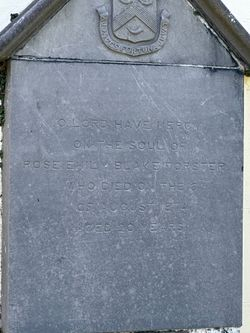
Galway, County Galway, Ireland Show Map GPS-Latitude: 53.2939708, Longitude: -9.0901723Memorial ID149168812 · View Source
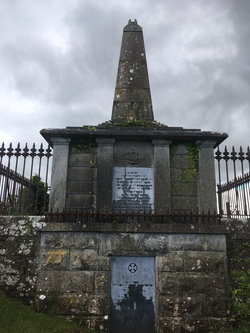
Francis O’Donnellan Blake-Forster
Birth 1853 Death27 Jun 1912 (aged 58–59)
Kilfenora, County Clare, Ireland Burial
Ballyvaughan, County Clare, Ireland Add to Map Memorial ID181004731 · View Source
A blog devoted to the history of the Comerford, Comberford and Quemerford families
Friday, 19 June 2009
Comerford profiles 42: Charles Blake-Forster
(1851-1874), genealogist and heir to
the Comerford family of Co Galway

Charles ffrench Blake-Forster (1851-1874) … controversial Galway genealogist who made interesting claims for his Comerford ancestors
Patrick Comerford
The 19th century genealogist, Sir William Betham (1779-1853), claimed the Comerford family was of Norman origin, coming to England with William the Conqueror in 1066, and then to Ireland in 1189.
An account of the family origins that had wide currency in the 19th century was recounted by both Betham, who was Ulster King of Arms, and by Charles ffrench Blake-Forster (1851-1874), the romantic Victorian genealogist whose mother was Mary Josephine Comerford from Galway.
In The Irish Chieftains, or, a struggle for the crown (Dublin, 1872), Blake-Forster claimed:
‘Amongst the chivalrous and bold warriors (all of whom were not Normans) who accompanied William II, second reigning Duke of Normandy, surnamed the Conqueror, in his invasion of England, AD 1066, was Sir Fulco de Comerford, under whose azure banner, on which was emblazoned three mullets or, fought twenty men-at-arms, and four knights of his own kindred to aid William of Normandy in his invasion of England in 1066. After the conquest Sir Fulco received a grant of several lordships from William the Conqueror, and from him descended De Comerford [sic], of the county of Stafford, whose younger brother, Sir Henry, and his nephew, Sir Fulco de Comerford, came to Ireland in the rain of Prince John, son of King Henry II, in 1189. Fulco returned to England with the Earl of Montaigne; but Sir Henry remained in Ireland, and, marrying a sister of the powerful Hugo de Lacy, Governor of Ireland, became possessed of considerable property, and was ancestor of the Irish Comerfords; according to an ancient vellum Ms, “Hee was ane gudely knyghte, and ancesture of ye Comerfords, Barons of Dangeanmor”.’ [Blake-Forster, Irish Chieftains ] (Dublin: McGlashran & Gill, 1872), p. 476, n. 68.
The Kilkenny historian Healy quoted Betham’s account from an abridged transcription by Blake-Forster, and it was accepted with variations by many 19th century historians, including John GA Prim, who perpetuated the misunderstanding that the Comerfords of Kilkenny originated in Staffordshire.
But who was Charles ffrench Blake-Forster?
How reliable was he as an historian?
How was he descended from the Comerford family?
And are there are any other descendants of the Comerford family in the Blake-Forster family?
In 1839, Ballykeel House, or Ballykeale House, near Ennistymon and Kilfenora, Co Clare, once the home of the Lysaght family, became the property of Henry Comerford in 1839, and it passed from Henry Comerford to the Blake-Forster family in 1846 when his eldest daughter and co-heiress, Mary Josephine, married Captain Francis Blake-Forster, JP, of Castle Forster – the name the Blake-Forsters gave to the old French estate in the Doorus Demesne near Kinvara.
Francis and Mary Josephine (Comerford) Blake-Forster were the parents of Charles ffrench Blake-Forster (1851-1874), who became a prodigal but controversial journalist, writer, historical novelist, periodical writer and genealogist.
Charles was born in Forster House, Forster Street, Galway, and was proud of his descent from the Comerford family and his long lineage traced through the Blake-Forster and ffrench families, and his grandmother was a sister of the last Warden of Galway, Edmund ffrench.
The Forster family in Co Galway was of English origin and first acquired property in Co Galway in the 1640s. The family was descended from Francis Forster who was the son of Thomas Forster of Hunsdon, Hertfordshire. He obtained the Clooneene or Ashfield property though a royal grant from Charles II dated 18 August 1677.
Francis Forster married Mary O’Donnellan, a daughter of Sir James O’Donnellan. The family also had houses at Rathorpe and later at Fiddaun as well as in Co Clare in the parishes of Kilfenora and Drumcreehy.
Francis Forster, who inherited the family estate in 1752, married Anastasia Blake of Menlough (Menlo) and the family became known as Blake-Forster. The estate at Ashfield passed from the Blake-Forster family in the 1830s. The family also owned the Knockmoy Abbey estate in the baronies of Tiaquin and Athenry, Co Galway.
Ashfield and Knockmoy Abbey, Co Galway, were inherited by Robert Blake-Forster (1769-1799). He was born on 11 June 1769 and when he died at Ashfield on 24 August 1799, he was buried with his ancestors at Kilmacduagh Abbey, Co Galway. In 1787, Robert married Anne Daly, eldest daughter of Colonel Denis Daly of Raford, Co Galway.
They were the parents of:
1, Francis Blake-Forster (1787-1845).
2, Denis Blake-Forster.
3, Robert Blake-Forster.
4, James Blake-Forster, a lieutenant in the Royal Navy. He lost his arm at the bombardment of Algiers, on 27 August, 1816, when he was 18 and on board the Severn Frigate. He was one of the officers on board the Bellerophon, when Napoleon was received on board.
5, Anne, who married William Butler, of Bunahow, Co Clare.
6, Emily, who married Daniel MacNevin. They were the parents of:
● 1a, Thomas McNevin (1814-1845), barrister, author of The Irish Volunteers and The Confiscation of Ulster, and one of the seven who wrote for the The Nation newspaper. He was educated at Trinity College Dublin, and was Treasurer and Auditor of the College Historical Society. He was one of the most “brilliant intellects” associated with the Young Ireland movement, and he died under “peculiarly sad circumstances” on 8 February 1845 in a Bristol asylum.
The eldest son, Francis Blake-Forster, of Ashfield and Knockmoy Abbey, Co Galway, was born at Raford, his grandfather’s home, on 26 November 1787. On 15 October 1810, he married the Hon Rose ffrench, daughter of Thomas Hamilton ffrench, 2nd Baron ffrench, of Castle ffrench, Co Galway. Her brother, Edmund French (1775-1852), a Dominican friar, was Bishop of Kilmacduagh and Kilfenora and the last Warden of Galway. Towards the end of his life he lived near his sister, Rose Blake-Forster, at Park Lodge, Gort.
In 1814, the house at Ashfield or Clooneene was the home of Francis Blake-Forster but by 1837 Lewis records it as in the ownership of Daniel MacNevin, who had married Emily-Blake-Forster. Ashfield House has since been demolished, although substantial parts of the walled garden and the gate lodge can still be seen.
Tradition suggests that Francis Blake-Forster let Clooneene (Ashfield) and built a house which he called Rosepark, after his wife, Rose ffrench.
Blake-Forster took an active part in the campaign for Catholic Emancipation and chaired the great meeting in Ennis. He was one of the committee to conduct the return of Daniel O’Connell. He died on 10 November 1837, and was buried with his ancestors at Kilmacduagh.
Francis and Rose Blake-Forster were the parents of five children – two sons and three daughters. Their two sons were Captain Francis Blake-Forster, JP, of Forster House, Forster Street, Galway, and Ballykeale House, Co Clare, and Robert Blake-Forster of Ashfield.

Ballykeel House, or Ballykeale House, near Kilfenora, Co Clare, became the property of Henry Comerford of Galway in 1839
In 1846, the elder son, Captain Francis Blake-Forster, JP, of Castle Forster, married Mary Josephine, eldest daughter and co-heiress of Henry Comerford, JP of Ballykeale House, Co Clare. They were the parents of two sons:
1, Charles ffrench Blake-Forster (1851-1874), author.
2, Captain Francis O’Donnellan Blake-Forster.
The elder son, Charles ffrench Blake-Forster, was privately educated at home and later in England. On his return from England, although he was only in his late teens, he began to play a prominent part in public affairs in Galway, and began writing for local newspapers.
He wrote a number of articles on local history for the Galway Vindicator and the Galway Express between 1869 and 1871. Some of his contributions to local newspapers were controversial because his information on the neighbouring gentry was not favourably received. These gentlemen of ancient lineage and proud pedigree, as the editor of the Galway Vindicator called them, created such a fuss that Blake-Forster was “blackballed” at the Country Clubs of Galway and Ennis, and at the principal clubs of Dublin.
However, his only full-length published book was The Irish Chieftains, or, a struggle for the Crown, published in Dublin in 1872 by McGlashran & Gill. It purported to be an account of the Williamite War in Ireland from the perspective of people in Galway, many of them historical and including some of his ancestors. A crownless harp on the cover, denoting the absence of royal dominion over Ireland.
At the beginning of the book, Charles claims he is the author of 10 other published books, but the works attributed to him in The Irish Chieftains have never been traced and may never have been published. Nor does he give his source for “an ancient vellum Ms” that contained the family tree of the Comerfords,; unless he is referring to Joseph Comerford’s pedigree, this too has never been traced.
His claimed works that have never been traced were: The Annals of Athenry, or Ye Citie of the Barons, The Annals of Galway, The Annals of Kilfenora, The Annals of Knockmoy Abbey, The Genealogies of the principal families in the Counties of Galway and Clare, General Forster’s Rebellion or, The Rising of 1715, A historical and biographical memoir of Major General Don Hugh Ballafarg O’Donnell, A historical sketch of the De Birminghams, Lord of Athenry, The Lady Adeliza Dillon: a story of the Penal Laws, and A topographical description of the county of Clare, its castles, Abbeys and round towers.
He became a town councillor of Galway, a member of the local Board of Guardians, and he was only 23 when he became High Sheriff of Galway in 1874. As High Sheriff of Galway Town, he presided at three Parliamentary elections in 1874.
But later that year he died of a brain haemorrhage, brought on by overwork, at his father’s house in Forster Street, Galway, on 9 September 1874. At the time, he was unmarried and aged of 23. He was buried in the family vault at Bushypark Church, on the Galway-Oughterard road.
At the time of his death, the Galway Vindicator said that his most important work, The Annals of Galway was still in manuscript. Bhe had already claimed in 1872 that it was published, but there is no record that this work ever went to print and no manuscript has ever been found.
On 22 September 1874, just after a fortnight after his death, his father, Captain Francis Blake-Forster, JP, gave to the Bishop of Galway, Dr McEvilly, a site of three acres of prime land in the town of Kinvara, rent free forever, as a site for a convent and church.
Meanwhile, the Abbeyknockmoy estate of almost 4,000 acres had been offered for sale in October 1851. Hermitage or Neptune was another family house, and in 1862, it was known as Hermitage House and was the residence of Francis Blake-Forster. It has been in ruins since the mid-20th century.
In the 1870s, Captain Francis Blake-Forster owned 3,593 acres in Co Galway and 1,308 acres in Co Clare, while his brother Robert Blake-Forster of Corofin, Co Clare, owned 572 acres in Co Galway.
Charles’s mother Mary Josephine (Comerford) Blake-Forster died on 26 September 1881.
The second son, Captain Francis O’Donnellan Blake-Forster, of Castle Forster, Kinvarra, Co Galway, and Ballykeale House, Co Clare, was High Sheriff of Galway in 1878. In 1879, he married Marcella, eldest daughter of Robert Johnstone, JP, of Arran View, Doolin, Co Clare, and co-heiress of Admiral Sir Burton Macnamara.
They were the parents of:
1, Catherine, who married in 1910 John St George Lucas, JP, of Sandfield, Liscannor, Co Clare.
2, Francis Blake-Forster, of Corr House, Co Clare, who married in 1914 Ethel R Taaffe.
3, Mary, who married in 1911 David Crawford Pearson, MD, of Lisdoonvarna, Co Clare.
4, Frances, who married in 1918, Arthur Matthew Kelly, of Porte, Co Clare.
5, Robert Blake-Forster.
6, Marcella Margaret, who married (Senator) Michael Comyn, KC (1871-1952), of Leeson Park, Dublin. He was a founding member of Fianna Fail, a senator (1928-1936), and a judge on the Eastern Circuit Court. They were the parents of two daughters, Marcella and Eleanor Rose.
Francis O’Donnellan Blake-Forster was still the owner of the former Comerford family home, Ballykeel House, in 1906. In 1906, Marcella Blake-Forster owned over 250 acres of untenanted land and a mansion house at Corr, in the barony of Longford. Mrs Blake-Forster was still living in Ballykeel House in the 1940s and the Irish Tourist Association file lists the paintings in the house.
© Patrick Comerford 2009, 2015.
Last updated: 23 and 24 April 2015.
on the author as well as answering the queries.—The Editor.
I have long been familiar with a work entitled The Irish
Chieftains or a Struggle for the Crown, with Numerous Notes and
a Copious Appendix, by Charles Ffrench Blake-Forster. McGlashan
and Gill, Dublin, 1872. Ryl. 8vo., pp. xiii x 728. It is a romance
dealing with the troubled period of Irish History from 1689 till
1745, from Aughrim to Culloden and Fontenoy, written with
youthful exuberence—the author was only twenty—and marked
pride of ancestry. But it is something more than a mere novel to
be read for amusement or pastime. It contains, especially in the
Notes and Appendix, many valuable historical documents, reports, pedigrees and family papers relating to the Forsters, Blakes,
O’Shaughnessys, Prendergasts and other western families, derived
from private sources, combined with much topographical knowledge and local tradition. Its author was the eldest son of Capt.
Francis Blake-i’orster of the Connaught Rangers, and was born
at Forster St. House, Galway, in 1851. He was educated privately
by a tutor, and in England, and the first place he visited on his
return, home was ridane Castle, and gazing on its ruins, he resolved, like Gibbon oiTthe Coliseum, to write its history, utilizing
the documents in the possession of his family and their connections, to which, of course, he had ready access, with what success
we shall shortly see. But his antiquarian and historical studies
did not absorb his whole attention. Young as he was he played
a prominent part in the public life of the City of the Tribes, as
town councillor and guardian of the poor, and in 1874 he was
appointed High Sheriff. He was popular as a publicist and as a
Copyright: Galway Pub
===========William Nugent Macnamara
1 language
Tools
Appearancehide
Text
- SmallStandardLarge
Width
- StandardWide
Color (beta)
- AutomaticLightDark
From Wikipedia, the free encyclopedia

William Nugent Macnamara or M’Namara (c. 1776 – 11 November 1856) was an Irish landowner and Member of Parliament.
He was the eldest son of Irish MP Francis Macnamara of Doolin and was educated at a Dublin seminary. He entered the local militia as a captain of grenadiers, later gaining promotion to major. He was appointed High Sheriff of Clare for 1798–99, successfully keeping order during the Irish rebellion, and succeeded his father in 1815 as landlord of Doolin. He later acquired Ennistymon House by marriage into the Finucane family.
He travelled about, including to the continent, between 1814 and 1816. When in Dublin in 1815 he acted as second to Daniel O’Connell (the Liberator) in his famous duel with John D’Esterre in which O’Connell fatally wounded D’Esterre. In 1830 he was elected MP for Clare to take the place of O’Connell, who sat instead for Waterford. He was then re-elected in 1831, 1832 and 1847, retiring in 1852.
He died in 1856 and was buried in the family vault at Doolin. He had married Susannah, daughter and co-heiress of the High Court judge Matthias Finucane of Lifford and Ann O’Brien of Ennistymon House (her parents were divorced, an unusual step for the time), with whom he had a son, Francis, and four daughters. He was succeeded by Francis, an Army officer who had been an Repeal Association MP for Ennis. Susannah died aged 39 in 1816 and is buried in St. Anne’s Parish Church, Dublin, alongside their daughter Honoria (wife of Edmond John Armstrong) who died in 1838. Among his descendants was Caitlin Thomas, the author and wife of the celebrated poet Dylan Thomas.
He was described by a contemporary as “a Protestant in religion, a Catholic in politics, and a Milesian in descent“.[1]

References
Posted in Uncategorized
Tagged family-history, genealogy, history, ireland, politics
Leave a comment
The Deep View: Penn reimagines research with AI at its core. Comment: Trust Ethics Guardrails
| Penn reimagines research with AI at its core |
 Source: UPenn Source: UPenn |
| The University of Pennsylvania has quietly built a human collider for AI. |
| Launched this spring by cosmologist Bhuvnesh Jain and computer scientist René Vidal, the AI x Science Fellowship unites more than 20 postdoctoral researchers from physics, linguistics, chemistry, engineering and medicine. Each fellow receives two faculty mentors, a modest research budget and campus-wide access to labs and high-performance computing. Weekly Tuesday lunches double as idea exchanges, while open seminars pull in curious researchers from every school. |
| The fellowship grew out of a 2021 data-science pilot in Arts & Sciences and now spans Engineering and Penn Medicine, with Wharton fellows due in the fall. Jain and Vidal—co-chairs of Penn’s AI Council—plan to scale it into a university-wide Penn AI Fellowship and create a “data-science hub” where roaming AI specialists spend a fifth of their time parachuting into other labs. |
| Why it matters: As AI research moves rapidly into the private sector, this initiative encourages collaboration on AI research questions that don’t yet have commercial applications. Industry labs chase near-term products. Penn is betting that open-ended, ethically grounded questions—trustworthy AI, machine learning for dark-matter hunts—still belong in academia. The fellowship gives young scientists a network, résumé-ready collaborations and a sandbox for ideas too early or risky for corporate funding. |
Posted in Uncategorized
Leave a comment
Grok3 AI: Bloody Sunday 1920 – Croke Park: Michael Comyn K.C.
Bloody Sunday 1920 Croke Park Michael Comyn
On November 21, 1920, during the Irish War of Independence, an event known as Bloody Sunday unfolded in Dublin, marked by significant violence at Croke Park. That morning, the Irish Republican Army (IRA), under Michael Collins, executed a coordinated operation, assassinating 15 individuals, primarily British intelligence officers from the “Cairo Gang,” to disrupt British intelligence operations. This action heightened tensions in the city.
In the afternoon, British forces, including the Royal Irish Constabulary (RIC), Black and Tans, and Auxiliaries, raided a Gaelic football match at Croke Park between Dublin and Tipperary, attended by around 5,000 spectators. The official intent was a cordon-and-search operation to screen for IRA members, but the situation escalated rapidly. Shots were fired shortly after the forces arrived at the southwest gate around 3:25 p.m., leading to 90 seconds of chaotic gunfire. Fourteen civilians were killed, including Tipperary player Michael Hogan, and dozens were injured. Civilian witnesses reported that the RIC opened fire without provocation, though some police claimed they were fired upon first, a claim unsupported by most evidence. The Hogan Stand at Croke Park was later named in memory of Michael Hogan.
Michael Comyn KC, an Irish barrister, was involved in the aftermath. He and his brother James Comyn BL represented the family of Jane Boyle, a 26-year-old woman killed at Croke Park. During a military court of inquiry held in camera (closed to the public), they sought to present witnesses on behalf of Boyle’s family. However, Michael Comyn objected to the secretive nature of the proceedings, stating that the closed inquiry prevented fair representation. He withdrew from the inquiry, refusing to participate under those conditions. The inquiry’s findings, kept secret for over 80 years, suggested the police intended to search the crowd but panicked after initial shots, leading to indiscriminate firing.
The Croke Park massacre, alongside the morning assassinations and the later killing of two IRA leaders in Dublin Castle, marked Bloody Sunday as a turning point in the Irish War of Independence, highlighting British forces’ loss of control and fueling Irish resistance.


