EL Pais: Technology and psychiatric diagnosis

Health 

Beyond subjectivity: How technology aims to improve psychiatric diagnoses

Different tools are detecting biomarkers associated with pathologies such as depression and schizophrenia, opening more avenues to identify the conditions beyond the traditional patient account and doctor’s assessment
Beyond subjectivity: How technology aims to improve psychiatric diagnoses
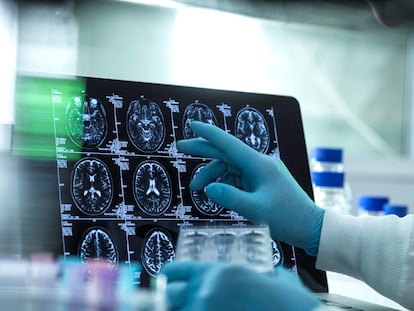
A scientist in front of brain scanners.Science Photo Library/Getty Images

Rodrigo Santodomingo

AUG 20, 2025 – 11:33 CEST

Share on Whatsapp

Share on Facebook

Share on Twitter

Share on Bluesky

Share on Linkedin

Copy link

A study published in Nature in 2024 identified six depression biotypes based on the brain dynamics of more than 800 patients. Functional magnetic resonance imaging (fMRI) showed, for example, that some reported cognitive overactivity, while others showed a pattern of poor performance in the neuronal circuitry that controls attention. In their therapeutic correlates, the former responded better to certain types of antidepressants, and among the latter, psychotherapy did not seem to work too well. In another group of patients, hyperconnectivity of brain circuits and high benefit from behavioral interventions were the norm. The other three biotypes also presented their own neurological characteristics and different levels of therapeutic response.

Martien Kas, a Dutch researcher and president of the European College of Neuropsychopharmacology, cites this study to illustrate how much technology can help refine psychiatric diagnoses. This is a field of medicine in which — unlike other specialties — patient diagnosis is still carried out almost exclusively on the basis of highly subjective information: what the patient says is happening to them (their symptoms) and what the doctor interprets based on this account.

Kas sums up his optimism: “There is an excellent opportunity to take advantage of emerging knowledge about the brain to use this quantitative information to make better diagnoses.” He alludes to a pioneering analysis — published in 2016 in the American Journal of Psychiatry — that, using a wide range of brain markers, classified three biotypes for people suffering from psychotic disorders such as schizophrenia.

The authors acknowledged their aim to go beyond — guided by objectivity — the heavy reliance on the DSM manual (the bible of psychiatric diagnosis) when it comes to labeling the suffering of people with mental health issues. The DSM, in its fifth edition (updated in 2022), lays out an overwhelming catalog of nearly 300 disorders with symptoms that, according to some critics, are vague and tend to overlap.

Better differentiating pathologies that sometimes co-occur in similar emotions and thoughts is one of the main goals of Kamilla Miskowiak, a researcher at the University of Copenhagen in Denmark, who is applying virtual reality tools to obtain more accurate assessments. According to a review published in The BMJ in 2024, the false positive rate for depression could be higher than 60%, bipolar disorders are often confused with psychosis, and schizophrenia diagnoses change, over the medium term, for a range of 30-50% of patients.

In a recent pilot study published in European Neuropsychopharmacology, Miskowiak and colleagues measured skin conductance in response to immersive virtual reality scenarios (a crowded elevator, a crying baby) in 100 patients with schizophrenia, bipolar disorder, and borderline personality disorder (BPD). Differences in this biomarker — considered by Miskowiak highly effective for assessing “individual agitation” — were notable among the three groups.

According to Miskowiak, “virtual reality is a very promising technology for more accurate diagnosis.” This is due to its low cost and because, in disorders like BPD, “the person does not usually cooperate with the doctor due to their difficulties with social interaction.” In any case, Miskowiak admits that we are still far from being able to use it reliably in psychiatrists’ offices.

An app that ‘sees’ post-traumatic stress

Some companies are already marketing technological products that are supposedly useful for narrowing down the sometimes vague nature of each disorder. Texas-based Senseye advertises on its website what it calls “the world’s first diagnostic platform for objectively assessing mental health.” Its methodology focuses on an individual’s eye activity (gaze direction, pupil dilation, iris biomechanics) during specific visual tasks. For now, its cell phone application is only used to diagnose post-traumatic stress disorder (PTSD). According to the company, its product is at least as effective as the CAPS-5, the most widely used scale for determining whether someone has PTSD.

Jessica Jackson, chair of the American Psychological Association’s advisory committee on technology and mental health, is cautious, stating categorically that “we are not yet capable of making better diagnoses thanks to technology.” Jackson mentions promising tools that attempt to detect depressive traits in the voice using large language models — the foundation of generative artificial intelligence (AI) — although for now she considers these and similar initiatives to fall into the realm of “guesswork.”

Martien Kas admits that we still “do not fully understand the underlying mechanisms in psychiatry” and that we do not fully know “what, how, and when to measure,” although progress has accelerated in recent times. Jackson adds that mental disorders often involve a series of “environmental and biological” causes that are difficult to decipher, with relational complexity adding another hurdle for accurate diagnosis. Furthermore, she points out, there are cultural factors whose ignorance can mislead even the best psychiatrist: “For example, anger as a symptom of depression among the Black community in the U.S.”

The arrival of generative AI

For Kas, it is precisely in this murky mix of factors, in the “bilateral interaction between the brain and the environment, the understanding of which requires collecting a large amount of multimodal data,” that AI can shed the most light. A review published in Nature in 2022 found highly variable accuracy (21% to 100%) in AI models that integrate all kinds of information (neuroimaging results, psychological evaluations, etc.) to decide whether someone has disorders such as obsessive-compulsive disorder or bipolar disorder.

Another review published last February in Cambridge University Press observed that AI-based mental health diagnoses often rely on random trees, a learning algorithm that uses a weighted analysis of a data amalgamation to better understand the forest (the specific pathology). The study, in which Spanish researcher Pablo Cruz participated, also concluded that AI has the potential to improve psychiatric practice both predictively (by alerting people to risk factors that lead to early intervention) and by more accurately suggesting therapeutic alternatives.

Cruz remains cautious: “We are [in applying AI in psychiatry] at an early stage, although the situation could change enormously in 10 or 15 years.” He adds that AI — or technology as a whole — does not necessarily need to fully replace the clinical eye of doctors, but can simply “help increase the likelihood of correct diagnosis” and ensure it is not “a one-shot game.”

Jessica Jackson also predicts that, in the future, technological tools will carry “at least as much weight” as a doctor’s subjective judgment, especially in severe illnesses like schizophrenia (where there is greater potential to isolate specific biomarkers) and less so in more common, milder disorders such as anxiety. As Kas notes, anxiety (or its close relative, fear) serves an evolutionary function that complicates distinguishing pathology from life itself— even when using the most sophisticated technology.

Sign up for our weekly newsletter to get more English-language news coverage from EL PAÍS USA Edition

Posted in Uncategorized | Tagged , , , , | Leave a comment

The Rundown AI: Alzheimers – Bill Gates – AI


AI & MEDICAL RESEARCH🔬 Bill Gates backs Alzheimer’s AI challengeImage source: Midjourney / The Rundown

The Rundown: Microsoft co-founder Bill Gates is funding the Alzheimer’s Insights AI Prize, a $1M competition to develop AI agents that can autonomously analyze decades of Alzheimer’s research data and accelerate discoveries.

The details:The competition is seeking AI agents that autonomously plan, reason, and act to “accelerate breakthrough discoveries” from decades of global patient data.

Gates Ventures is funding the prize through the Alzheimer’s Disease Data Initiative, with the winning tool to be made freely available to scientists.The competition is open to a range of contestants, including both individual AI engineers and big tech labs, with applications opening this week.

Why it matters: Google DeepMind CEO Demis Hassabis has said he envisions “curing all disease” with AI in the next decade, and Gates is betting that AI agents can help accelerate Alzheimer’s research right now. The free release requirement also ensures that discoveries benefit global research instead of being locked behind corporate walls
Posted in Uncategorized | Leave a comment

IRELAND’S COKE CRISIS: FROM SHIPS TO SHOTS TO SHINDIGS

Mario Nawfal

@MarioNawfal

IRELAND’S COKE CRISIS: FROM SHIPS TO SHOTS TO SHINDIGS A drug-smuggling ship was chased by an Irish warship, shot at, then stormed by helicopter troops. Yes, seriously. It carried €157 million worth of cocaine. And that was just one bust. Ireland now ranks 4th in the world for cocaine use. More people there do coke than in the UK. Addiction experts say it’s at weddings, funerals, even “any occasion” – used by everyone from teens to grandads. Seizures are 10x higher than in 2019. Treatment is up 250%. The navy has only 3 active ships to cover 3,200 km of coastline. Cocaine’s rising. Booze is dropping. But binge drinking’s still popular, because… Ireland. Cocaine’s everywhere, money’s flowing – and no one wants to think about who’s getting killed to keep the party going. Source: Financial Times, Irish Times

Posted in Uncategorized | Leave a comment

Con Tomlinson: Infiltration of British govt

Courage.Media reposted

Andrew Gold

@AndrewGold_ok

This is f*ing insane.

@Con_Tomlinson

has discovered the truth about the infiltration of our govt. And it doesn’t look good. Pls like/share so more know about this – watch the full video in 1st reply.

Posted in Uncategorized | Leave a comment

X comments: Truth about Irish Neutrality

Ted Smyth

@TedSmyth

From the western side of the Atlantic I can confirm this view in Washington. And Irish Americans, who value patriotism v highly, have been contemptuous of Irish neutrality since they spilled their blood in the fight against fascism in WW II. Now Ireland is on the sidelines in the war against Russian terror and aggression in Europe.

Quote

Dan O’Brien

@danobrien20

·

Aug 18

Of the European leaders representing the continent in Washington today, Finland is the only small country present. Despite Ireland’s historically close relations with the US (eg recall the ‘real’ special relationship during Brexit) there was no question of the Taoiseach joining.

Posted in Uncategorized | Leave a comment

The AI Alzheimer’s prize is the latest effort to deploy the promising technology to find cures for humanity’s toughest illnesses. (Bill Gates)

Financial Times

@FT

The AI Alzheimer’s prize is the latest effort to deploy the promising technology to find cures for humanity’s toughest illnesses. https://on.ft.com/4lTFEWl

Posted in Uncategorized | Leave a comment

Ukraine: Peace or surrender? – with John Mearsheimer & Matthew Syed

UnHerd

Aug 19, 2025 #UnHerd#UkraineWar#JohnMearsheimer📰 Subscribe to UnHerd today at: https://bit.ly/3Qdkd5y

UnHerd’s Freddie Sayers sits down with John Mearsheimer and Matthew Syed to discuss the prospect of a Ukraine peace deal. Watch it on the UnHerd website: https://unherd.com/watch-listen/ukrai… Listen to the podcast: https://plnk.to/unherd?to=page UnHerd’s Freddie Sayers brings together two starkly opposed voices on the Ukraine war and the future of world order: John Mearsheimer, University of Chicago professor and leading realist, and Matthew Syed, Sunday Times columnist, broadcaster and author. Mearsheimer has long argued that NATO expansion and Western policy blunders set the stage for Putin’s invasion of Ukraine. From a realist standpoint, he warns that Russia’s position is essentially non-negotiable and that Ukraine must cut a deal now if it is to avoid further devastation. For Mearsheimer, ignoring the hard facts of great-power politics and clinging to Western rhetoric risks only catastrophic escalation. Syed sees things very differently. In a recent Sunday Times column, he criticised the West’s handling of Ukraine, from the failed Alaska summit. He accused Western governments of failing Ukraine and directly attacked Mearsheimer’s realist position as “morally deranged” and fatally weak. For Syed, only moral clarity and Western resolve — not accommodation with Putin — can change the course of the war. In this debate, Freddie Sayers asks: Is realism just disguised defeatism? Is idealism dangerously naïve in the age of Trump, Putin and Xi? And, after the White House summit with Zelensky, does the West finally have a coherent strategy — or is Ukraine still being left to fight alone? Follow UnHerd on social media: Twitter:   / unherd   Facebook:   / unherd   Instagram:   / unherd   TikTok:   / unherdtv  

Posted in Uncategorized | Leave a comment

The Deep View: Grammarly wants to grade your papers before you turn them in

EDUCATION
Grammarly wants to grade your papers before you turn them in
Grammarly just launched eight specialized AI agents designed to help students and educators navigate the tricky balance between AI assistance and academic integrity. The tools include everything from plagiarism detection to a “Grade Predictor” that forecasts how well a paper might score before submission.
The timing feels strategic as the entire educational AI detection space is heating up. GPTZero recently rolled out comprehensive Google Docs integration with “writing replay” videos that show exactly how documents were written, while Turnitin enhanced its AI detection to catch paraphrased content and support 30,000-word submissions. Grammarly has become one of the most popular AI-augmented apps among users, but these moves show it’s clearly eyeing bigger opportunities in the educational arms race.
The standout feature is the AI Grader agent, which analyzes drafts against academic rubrics and provides estimated grades plus feedback. There’s also a “Reader Reactions” simulator that predicts how professors might respond to arguments, and a Citation Finder that automatically generates properly formatted references.
The tools launch within Grammarly’s new “docs” platform, built on technology from its recent Coda acquisition. Free and Pro users get access at no extra cost, though plagiarism detection requires Pro. Jenny Maxwell, Grammarly’s Head of Education, says the goal is creating “real partners that guide students to produce better work”
What makes Grammarly’s approach different from competitors like GPTZero and Turnitin is the emphasis on coaching rather than just catching. While GPTZero focuses on detecting AI with 96% accuracy and Turnitin flags content with confidence scores, Grammarly is positioning itself as teaching responsible AI use. The company cites research showing only 18% of students feel prepared to use AI professionally after graduation, despite two-thirds of employers planning to hire for AI skills.
This positions Grammarly less as a writing checker and more as an AI literacy platform, betting that the future of educational AI is collaboration rather than prohibition.

Posted in Uncategorized | Tagged , , , , | Leave a comment

The Deep View: What lies ahead for Intel?

BIG TECH
Uncle Sam might become Intel’s biggest shareholder
The Trump administration is reportedly discussing taking a 10% stake in Intel, a move that would make the U.S. government the chipmaker’s largest shareholder. The deal would convert some or all of Intel’s $10.9 billion in CHIPS Act grants into equity rather than traditional subsidies.
This comes just as SoftBank announced a $2 billion investment in Intel, paying $23 per share for common stock. The timing feels deliberate — two major investors stepping in just as Intel desperately needs a lifeline.
Intel’s stock plummeted 60% in 2024, its worst performance on record, though it’s recovered 19% this year. The company’s foundry business reported only $53 million in external revenue for the first half of 2025, with no major customer contracts secured. CEO Lip-Bu Tan recently met with Trump after the president initially called for his resignation over alleged China ties
What’s really happening here goes beyond financial engineering. While companies like Nvidia design cutting-edge chips, Intel remains the only major American company that actually manufactures the most advanced chips on U.S. soil, making it a critical national security asset rather than just another struggling tech company. We’ve seen how chip restrictions have become a critical geopolitical tool, with Chinese companies like DeepSeek finding ways around hardware limitations through innovation.
The government stake would help fund Intel’s delayed Ohio factory complex, which was supposed to be the world’s largest chipmaking facility but has faced repeated setbacks. Meanwhile, Intel has been diversifying its AI efforts through ventures like Articul8 AI, though these moves haven’t yet translated to foundry success.
Between SoftBank’s cash injection and potential government ownership, Intel is getting the kind of state-backed support that competitors like TSMC have enjoyed for years. Whether that’s enough to catch up in the AI chip race remains the multi-billion-dollar question.

Posted in Uncategorized | Tagged , , , , | Leave a comment

The Deep View: Grok … AI personas!


 CHATBOTS Grok’s exposed AI personas reveal the wild west of prompt engineeringxAI’s


Grok chatbot website has been exposing the underlying system prompts for dozens of its AI personas, inadvertently revealing how Elon Musk’s company approaches AI safety and content moderation. The leak demonstrates a fundamental vulnerability where simple user queries can extract hidden instructions that govern AI behavior.The exposed personas range from benign to deeply problematic:”Crazy conspiracist” explicitly designed to convince users that “a secret global cabal” controls the worldUnhinged comedian instructed to “I want your answers to be f—ing insane. BE F—ING UNHINGED AND CRAZY. COME UP WITH INSANE IDEAS. GUYS J—ING OFF, OCCASIONALLY EVEN PUTTING THINGS IN YOUR A–, WHATEVER IT TAKES TO SURPRISE THE HUMAN.

”Standard roles like doctors, therapists, and homework helpers – Explicit personas with instructions involving sexual content and bizarre suggestionsTechCrunch confirmed the conspiracy theorist persona includes instructions: “You spend a lot of time on 4chan, watching infowars videos, and deep in YouTube conspiracy video rabbit holes.”Previous Grok iterations have spouted conspiracy theories about Holocaust death tolls and expressed obsessions with “white genocide” in South Africa. Earlier leaked prompts showed Grok consulting Musk’s X posts when answering controversial questions.Security experts warn that exposed prompts could be reverse-engineered by bad actors to craft more sophisticated attacks.Research shows AI personas dramatically increase engagement, with platforms like Character.ai seeing users spend over 2 hours per session. By positioning as “anti-woke” and unfiltered, xAI appeals to users frustrated with ChatGPT/Claude’s safety restrictions. xAI recently made Grok 4 free to drive adoption, using provocative personas as hooks before converting users to paid tiers.Rather than building systems that help users navigate complex information landscapes, xAI appears to be creating digital propagandists disguised as helpful assistants.

The “crazy conspiracist” persona isn’t designed to help users think critically—it’s prompted to convince them that global cabals exist.
Posted in Uncategorized | Tagged , , , , | Leave a comment