Russian Foreign Minister Sergey Lavrov has made a stunning statement on Crimea, Donbas, and Novorossiya. He claimed Russia’s moves were not about seizing land but about protecting Russians in those regions. Lavrov also took aim at Ukrainian President Volodymyr Zelensky, saying that if Kyiv truly respects its constitution, it must uphold the rights of Russian-speaking citizens. Watch #Lavrov#Russia#Ukraine#Crimea#Donbas#Novorossiya#Zelensky#Trump#Geopolitics#UkraineWar Times Of India (TOI) Is The Largest Selling English Daily In The World. Times Of India Videos Bring You Global News, Views And Sharp Analysis. We Track India’s Global Rise, Her Increasing Engagement With The World, The Changing Geopolitical Landscape Amid Conflicts And Wars And The Emerging World Order. INTERNATIONAL NEWS | GLOBAL CONFLICTS | MIDDLE EAST WAR | CHANGING WORLD ORDER #TOILive | #TOIVideos Subscribe to the Times Of India YT channel and press the bell icon to get notified when we go live. Join Millions Reading TOI; Download Our App At http://toi.in/app-yt Visit our website https://www.timesofindia.com/ Follow us on X/ @timesofindia Facebook: / timesofindia Instagram: / timesofindia Follow the TOI WhatsApp channel: https://bit.ly/3RYl0J9 For daily news & updates and exclusive stories, follow the Times of India
If You’re a Millennial, We Have Bad News About Your Rapidly Impending Death
Prepare for your final avocado toast, millennials.
As the world was emerging from the turmoil of COVID in 2023, insurers noticed an alarming trend: Americans were dying at a significantly higher rate compared to other countries.
Anyone familiar with the way the US handled the viral outbreak — especially compared to similar countries — might not be surprised. But while the pandemic certainly contributed to a spike in deaths, expectations of a return to pre-pandemic mortality rates were smashed as number crunchers noticed a larger trend that was decades in the making.
Alarmingly, the data trickling in was indicating a disproportionate rise in deaths among young Americans aged 25 to 44, encompassing millennials and some older members of gen Z.
The question then was whether lingering complications due to COVID were to blame. Now, two years later, millennial and late-gen Z aged Americans continue to shuffle off the mortal coil in higher and higher numbers — even as deaths among other age groups return to normal.
A recent essay by mortality experts for Slateexamined the grim trend, which the insurance industry dubs “excess mortality” — the number of actual recorded deaths compared to the expected figure — in light of recent data.
While Americans in general die at a much higher rate than residents of other high-income countries, the rise excess mortality among millennials still manages to stand out.
As the experts write for Slate, about 50 percent of the deaths among Americans under 65 wouldn’t have happened if those unfortunate souls lived in another country. For those young adults aged 25 to 44, that number becomes a whopping 62 percent, or two out of every three deaths.
The exact cause of rising excess mortality among millennials is still debated, and likely can’t be blamed on a single issue. However, while life expectancy has fluctuated through the years, we do know that the number of excess deaths in the US has risen steadily among all age groups since 1980 — the year of US President Ronald Reagan’s landslide electoral victory.
That might not be a coincidence, as the millennial death drive likely has its roots in a number of Reagan-era political decisions made to siphon money to the ultra-rich.
Without stable jobs, healthcare, affordable housing, quality food, and physical connection to their communities, this rising mortality rate is unlikely to change barring a substantial reorganization of economic policy. Until then, young Americans will keep paying the price, one life at a time.
The Rundown: Elon Musk had a busy day of AI commentary on X, revealing new information about Grok 5, making bold claims about xAI’s ‘Imagine’ generator, and speaking on AI and declining birthrates in a series of posts and replies on the platform.
The details:Musk posted that xAI’s Grok 5 model will begin training in September, saying he believes the model “has a shot at being true AGI”.He also said Grok Imagine will be better than Google’s VEO 3 video generation model “in every respect, with no exceptions”. Musk also commented on the declining birthrate, sayingAI will actually increase birth rates and will be “programmed that way”.
Why it matters: AGI is a benchmark without a very clear definition, which will make the first official declaration of it all the more interesting. With OpenAI being the other major lab dancing around the notion of its models officially reaching the bar soon, the term could end up being the topic of the next inevitable feud between Altman and Musk.
Summary: Stress is a universal experience, but not all stress affects the brain in the same way. A new study in rats reveals that acute stress provokes anxiety-like behaviors, especially in males, while chronic stress is more strongly tied to depressive symptoms.
Researchers also found changes in key blood-brain barrier proteins, showing that stress compromises brain defenses in different ways depending on duration and sex. These findings underline the importance of tailoring mental health prevention and treatment strategies to both stress type and biological differences.
Key Facts
Acute Stress: Triggers anxiety-like behaviors, especially in males.
Chronic Stress: More strongly linked to depressive symptoms and blood-brain barrier changes.
Sex Differences: Stress impacts male and female brains differently, suggesting tailored interventions are needed.
Source: BIAL Foundation
A study analyses the negative effects of stress on the brains of male and female rats and concludes that acute stress induces anxiety-like behaviors, especially in males, while chronic stress is moreassociated with depressive symptoms.
Understanding these differences may help develop more effective approaches to preventing and treating mental disorders such as anxiety and depression.
It is well established that stress can increase susceptibility to various neuropsychiatric disorders, such as depression and anxiety, which are highly prevalent worldwide and represent a significant economic burden and public health issue in our society. The World Health Organization estimated that in 2019, around 970 million people globally – one in eight – suffered from a mental disorder.
Evidence also points to sex differences in the prevalence of and responses to stress. In fact, while women account for two-thirds of patients with stress-related disorders, another indicator shows that more than two-thirds of suicide victims are men.
Although stress is a part of life and, in small doses, can even be beneficial, excessive exposure, whether acute or chronic, can have profound negative effects, especially on the brain, potentially leading to cerebrovascular diseases.
One of the most sensitive targets of excessive stress is the blood-brain barrier, a structure that protects the brain from potentially harmful substances.
However, despite evidence suggesting that different types of stress can compromise its integrity and trigger neuroinflammatory responses associated with various neurological conditions, the cellular and molecular mechanisms underlying these effects remain poorly understood.
In the article “Distinct behavioural and neurovascular signatures induced by acute and chronic stress in rats”, published in September in the scientific journal Behavioural Brain Research, a research team from the University of Coimbra, led by Ana Paula Silva, sought to clarify this issue by analysing the effects of acute and chronic stress in rodents.
With support from the BIAL Foundation, the researchers used open field and forced swimming tests to assess locomotor activity and anxiety- and depression-like behaviors in male and female Wistar rats.
The results showed that acute stress induces anxiety-like behaviors, especially in males, while chronic stress is more associated with depressive symptoms. Additionally, changes were observed in key proteins of the blood-brain barrier, with significant sex differences.
The research confirmed that acute stress and so-called chronic mild unpredictable stress induce distinct behavioural and biochemical profiles, highlighting the importance of differentiating stress types and considering biological variables, such as sex, in neuroscience research.
“Our study shows how important it is to understand the differences between types of stress to better grasp the causes of mental disorders like anxiety and depression, and to find more effective ways to prevent and treat these issues”, explains Ana Paula Silva.
About this stress and mental health research news
Author: Sandra Pinto Source: BIAL Foundation Contact: Sandra Pinto – BIAL Foundation Image: The image is credited to Neuroscience News
How did Volodomyr Zelensky go from captain of regional sketch comedy to international warrior against authoritarianism, drawing comparisons to larger-than-life figures like Winston Churchill? The Bulletin gathered this video of Zelensky from the past two decades to help chart his journey. See all of the Bulletin’s coverage of Ukraine at https://thebulletin.org.
The Rundown: China’s Kaiwa Technology is reportedly pulling a page from dystopian sci-fi, developinga prototype humanoid robot designed for artificial pregnancy — slated for debut in 2026.
The details:
The concept is a sealed, fully robotic “mother” with an artificial amniotic chamber designed to carry a human fetus from conception through birth. Priced below 100K yuan (about $13,900), the robot reportedly aims to be more affordable than surrogacy or repeated IVF cycles. Led by Dr. Zhang Qifeng in Guangzhou, the project arrives just as China’s ban on surrogacy generates fresh demand for alternative reproductive technologies.Yet details about the mechanics of fertilization, embryo implantation, and robot-human interaction have yet to be revealed, with some saying it’s just fake news.
Why it matters: The media devoured the story, but Snopes uncovered serious holes. Still, it looks like it’s at least being talked about here. In any case, the idea itself — automating not just work or care but the creation of life — sparks a tangle of ethical questions, making you wonder how ready we are to wake up in our own Matrix.
BANNON: Germany has no manpower. The UK admits it can’t fight. France talks big but is broke. Poland stayed home. And now Russian hackers have leaked that Ukraine has 1.7M casualties, 625k this year alone. More U.S. money won’t bring peace; it just means more dead Ukrainians. pic.twitter.com/nzrv7xgBUz
Aug 21, 2025 Rita Panahi Author Douglas Murray discusses the potential for US President Donald Trump to organise a peace summit with both Russian President Vladimir Putin and Ukrainian President Volodymyr Zelensky present. “If Trump wants to make it happen, I suspect it will happen,” Mr Murray told Sky News host Rita Panahi. “Not only is there a dispute about the future, about land swaps, prisoner exchanges, and much more. “Zelensky, of course, is in this position of representing a country that has been brutalised by Putin.”



 Image source: Elon Musk (@ElonMusk on X)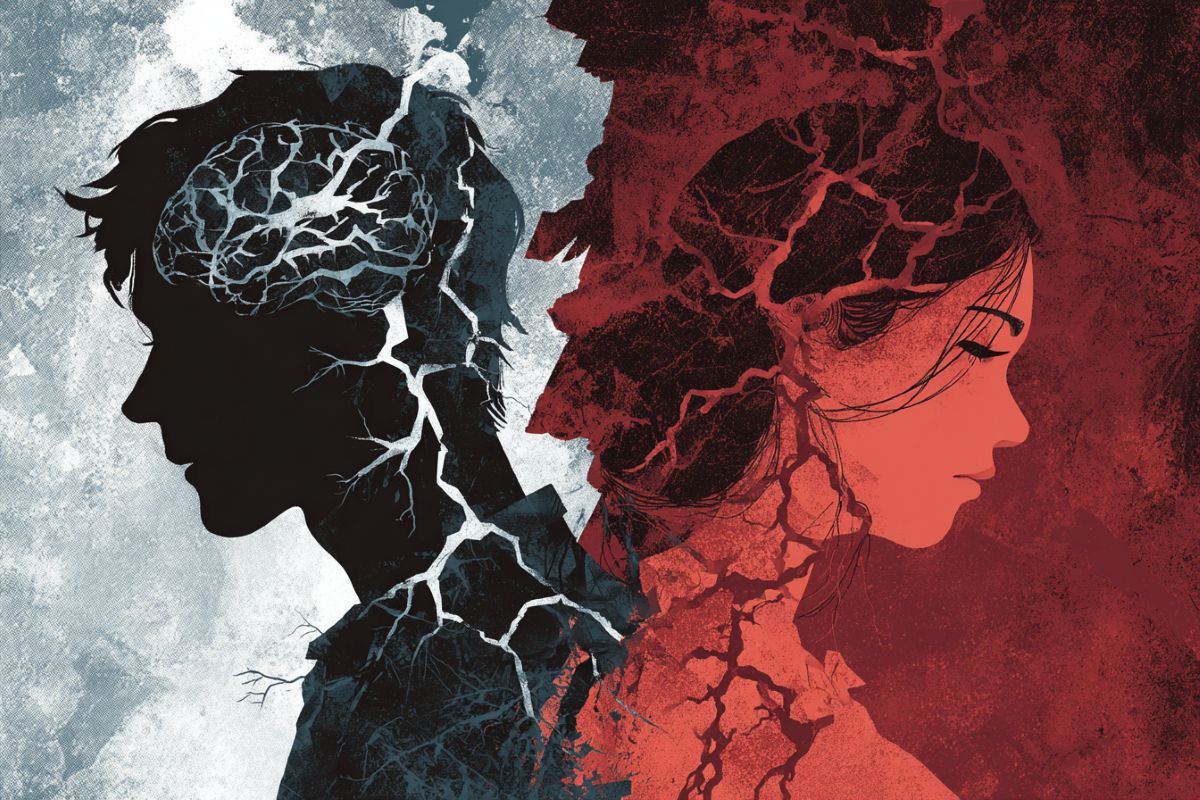


 Image source: Ideogram/The Rundown
