Daniel Davis Deep Dive Merch: Etsy store https://www.etsy.com/shop/DanielDavis… 1. Troop Requirements & Impracticality Ukraine has at least 1,000 miles of frontline (even more if Belarus is included). If troops were placed 60 feet apart, it would take 100,000 soldiers just to man the line. Accounting for rotations (on-duty, off-duty, training), a force of 300,000+ would be required. Realistically, once you add support personnel, the figure might be 600–700,000 troops. Europe cannot supply this: UK has ~30,000 deployable troops (≈10% of what’s needed). France could maybe provide another 10%. Italy would contribute nothing. Poland is preoccupied with its own defense. The US does not want to be dragged into direct fighting in Ukraine. Conclusion: A NATO/Western troop presence in Ukraine is not credible. 2. Historical Parallel – U.S. Army Post-Vietnam After Vietnam (1975), the U.S. Army was in disarray — poorly led, demoralized, and ineffective. It took about a decade (1975–1985) to rebuild the force. By analogy, Europe cannot hope to create a meaningful, strategic ground force in less than 10 years. Meanwhile, Russia already has a battle-hardened, modernized army with strong leadership and technology. 3. Neutrality as the Only Viable Model The Austrian State Treaty (1955) is held up as the model: Austria remained neutral, with no U.S., NATO, or Soviet troops stationed there. It worked for decades and even brought prosperity. Applied to Ukraine: the only sustainable solution is neutral status with external monitoring, not Western troop guarantees. 4. Competing Narratives Western officials (like Lord Ricketts, former UK National Security Adviser): Claim that Russia has “already lost” because: NATO expanded (Finland, Sweden joined). Europe is now more determined to spend on defense. Ukraine is set to become a pro-Western democracy. Speaker’s rebuttal: Says this is delusional: Ukraine is plagued by organized crime, trafficking, and corruption — not a model democracy. Russia is stronger now than before the war. NATO is in terminal decline — a “patient on life support.” The West needs an enemy narrative to justify NATO’s existence, but in reality, NATO has failed and Ukraine is destroyed. 5. Broader Critique of the West Argues that the “globalist project” is collapsing: Mass immigration into Europe has destabilized societies. Ordinary Europeans are increasingly rebelling, demanding deportations and stricter national sovereignty. Politicians pushing the pro-Ukraine/globalist line are “finished” once they admit failure. Suggests the real war is internal: defending European and American societies from decline, crime, drugs, and uncontrolled immigration — not fighting Russia in Ukraine. 6. Final Takeaways Ukraine cannot be “saved” militarily; Russia will dictate the terms because it is willing to fight and Europe is not. The Austrian neutrality model is the only realistic outcome for Ukraine. NATO is portrayed as obsolete, directionless, and doomed. The crisis in Ukraine is really a symptom of a broader collapse of Western/globalist policies at home and abroad.
The Muslim Brotherhood is a very secretive organization and prefers to act through a large number of front organizations to push its Islamist agenda in the West. When it comes to influencing the youth in North America, the Brotherhood has a number of tools it’s using. Apart from associations, they have also been working through unions and student groups for decades.The first student union was established in 1962 at the University of Illinois and was soon joined by unions from Indiana and Minnesota.
However, its main tool, the Muslim Students Association, was founded in 1968 after operating informally in the years prior to its establishment. Its primary goal before the enactment of the new Immigration and Nationality Act was to prepare and support Arab and Muslim students studying abroad in various American universities for their return to their home countries after completing their studies. This was to enable them to become active members of the Muslim Brotherhood and other political Islam groups, equipped with global qualifications, thereby contributing to those groups’ eventual rise to power.
Suspected al-Qaeda member Aafia Siddiqui was active in the MSA at MIT when she attended there in the 1990s and was known for participating in charity for Islamic organizations.At MIT, several of the MSA’s most active members followed the teachings of Abdullah Azzam, a Muslim Brother who was Osama bin Laden’s mentor.”Azzam had established the Al Kifah Refugee Center to function as its worldwide recruiting post, propaganda office, and fund-raising center for the mujahideen fighting in Afghanistan. It would become the nucleus of the al-Qaeda organization. The University of California Irvine Muslim Student Union is an affiliated chapter of MSA National, which was suspended for the 2010–11 school year for disrupting a speech given by Israeli Ambassador
at a university sponsored event. In the years following the 9/11 attacks, the NYPD monitored MSA chapters in the Northeast US, citing a list of 12 people arrested or convicted on terrorism charges in the United States and abroad who had once been members of Muslim student associations. In rationalizing their monitoring activities, the NYPD noted they followed the same rules as the FBI, but several civil rights organizations argued that they engaged in unconstitutional racial and religious profiling and spying without evidence against individuals. The universities involved in the student monitoring included Yale; Columbia; the University of Pennsylvania; Syracuse; New York University; Clarkson University; the Newark and New Brunswick campuses of Rutgers; the State University of New York campuses in Buffalo, Albany, Stony Brook and Potsdam; Queens College; Baruch College; Brooklyn College and La Guardia Community College. The picture below shows an MSA chapter meeting in Pennsylvania in 1980.
Decades of global surveys point to a single, consistent foundation of well-being: our relationships.
By: Tim Lomas
One of the most comprehensive assessments of factors affecting well-being is the World Values Survey. Initiated in 1981, the survey asks nationally representative sample populations in nearly 100 countries about their beliefs and values. Researchers have used the data collected to conduct ongoing time-series analyses of participant feedback. In the process, they’ve learned a lot about what people think is important.
Economist and editor of the World Happiness ReportJohn Helliwell has paid special attention to what survey respondents say about the good life. In 2004, together with Robert Putnam, he reviewed surveys spanning 1980 to 1997, covering over 87,000 people across 46 countries, to find the most prominent determinants of subjective well-being. The top five factors, ranked in order of impact, were romantic and familial relationships, financial situation, work, community and friends, and health. Romance, family, friends, and community are tightly bound up with concepts of relationship, as is work. There is no doubt that relationships constitute the backbone of lives well lived.
Why might this be? We can only speculate here, but many theorists draw on telic (i.e., goal-driven)models of need-satisfaction, in which well-being is dependent on what the environment provides. Ruut Veenhoven, a Dutch sociologist, is influential on this score, arguing that well-being depends on livability (a congenial environment) and life-ability (one’s ability to take advantage of this), each of which is enhanced by relationships. Indeed, the positive psychologist Robert Biswas-Diener suggests that relationships can “to some extent avert the psychological costs of material deprivation.”
Across the great sweep of cultures, stable and loving partner and family relationships are widely regarded as the most significant predictors of well-being.
The importance of romantic and family relationships can be accounted for in terms of the universalistic theories above, which look to the presumed essence of personhood to conceptualize what people usually need in life. More prosaically, partnerships and families can also offer so-called protection effects beneficial to well-being. These include division of labor and the emotional support of someone sharing goals and ideals similar to one’s own.
Of course, many of these benefits are mediated by cultural context. For example, there may be greater social costs to unmarried life in certain cultures, boosting the well-being effects of marriage. And the effect of widowhood on well-being is, to a degree, a consequence of the culturally variable status of widows. Despite these variations, though, across the great sweep of cultures, stable and loving partner and family relationships are widely regarded as the most significant predictors of well-being.
Helliwell and Putnam also emphasize the welfare benefits of broader social-support networks, from one’s circle of friends to the wider community. Many social psychologists would explain the benefits of these networks in terms of what Pierre Bourdieu called social capital. This is “the sum total of the resources, actual or virtual, that accrue to an individual (or a group) by virtue of being enmeshed in a durable network of more or less institutionalized relationships of mutual acquaintance and recognition.”
Social capital is important in part because it is multidimensional. Put differently, much of what matters in life can be articulated in terms of social capital. It may be a resource possessed individually, as in one’s friends and other intimate contacts. Or it can be reflected in the community as a whole: A group that can more effectively pursue common goals is said to have greater social capital. Social capital may manifest in attitudinal beliefs, such as trust in others. It is also obtained through structured connections, such as those of a profession, institution, or organization. And social capital might inhere in bonding and bridging — cohesion within groups and connection across them.
Social capital’s importance to well-being cannot be overstated. A striking example of its power — and thus, the power of relationships — comes from Finland. Researchers noticed that, in one coastal province, the Swedish‐speaking minority lived longer active lives than the Finnish-speaking majority. Although the two communities were similar in most respects — including genetic profile, socioeconomic status, education, and use of health services — there were remarkable disparities in morbidity, disability, and mortality.Swedish-speaking men lived 77.9 years on average, while Finnish-speaking men lived an average of only 69.2. The researchers suggest that these dramatic inequalities cannot be explained by conventional health‐related risk factors. Instead, they point to indications of higher levels of social capital in the Swedish community, including more extensive voluntary associational activity, friendship networks, and religious involvement.
That said, much like the troublesome East–West distinction itself, this individualist–collectivist binary homogenizes and obscures on its way to simplicity, disregarding strains of individualism and collectivism in all societies. But it is nevertheless useful as a broad generalization, if only because people self-identify in this way, and not without consequences.
Indeed, the individualist–collectivist distinction in self-identification has been corroboratedacross hundreds of empirical studies. Moreover, the literature shows that self-identification of this kind may have consistent effects on outcomes like cognition, emotion, and motivation. For instance, Richard Nisbett and colleagues report that East Asians are more likely to have “holistic” modes of cognition (i.e., attending to the entire field), and dialectical modes of reasoning, whereas Westerners are more prone to analytic modes of cognition (i.e., paying attention to a focal object), and use of formal logic.
This individualistic sense of selfhood has also influenced the view of the person in Western academic psychology, which in turn affects how people perceive themselves. Mainstream psychology is mostly predicated on appraising and studying human beings as self-contained monads,and the field’s individualism is reflected in myriad constructs, from self-determination to self-esteem, authenticity to autonomy. The social, to the extent that it is recognized at all, tends to be constructed as an aggregation of individuals.
Individualism permeates positive psychology, leading theorists and practitioners to downplay the social context of well-being.
Individualism permeates positive psychology as well, leading theorists and practitioners to downplay the social context of well-being. Notably, one of the most influential works in the field, Sonia Lyubomirsky and colleagues’ analysis of factors contributing to variance in subjective well-being, holds that social circumstances are almost irrelevant. Drawing on genetic studies of twins, the researchers proposed that only about 10 percent of the variance in subjective well-being is shaped by social circumstances, while 50 percent is determined by genetics, and 40 percent by “intentional activities,” such as cultivating gratitude and practicing meditation. This and related research have directed positive psychology toward individually targeted interventions, such as developing aptitude for intentional activities.
Such ideas are valuable, insofar as they constitute a broadly accurate analysis of factors contributing to well-being across a population. However, the statistics are often misconstrued. Assuming that the 10 percent figure is accurate across a population — a point which has been challenged, one should note — it is not necessarily true of every person within that population. Commentators frequently make this error, known as an ecological fallacy. For people living in more challenging situations, the impact of their social circumstances on their well-being is likely to be far higher than 10 percent. Consider that men in England’s lowest socioeconomic class are almost three times more likely to have a common mental disorder than are those in the highest. More broadly, a vast range of studies in social determinants of health demonstrate that, with respect to physical wellness alone, social conditions are deeply important.
In sum, despite the many individualist currents pressing against Westerners, there really is no getting away from the importance of relationships to our well-being. Fortunately, though, there also is no good reason to essentialize individualist traits; the West is neither inevitably nor intrinsically individualistic. As such, Western cultures may yet develop a greater appreciation of the value of relationships, perhaps simply by recognizing what has mattered all along.
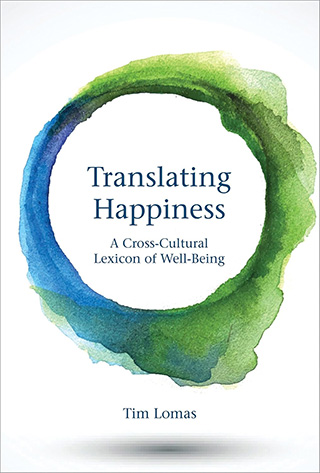
Tim Lomas is a Research Scientist at the Human Flourishing Program at Harvard University and the author of, among other books, “Translating Happiness: A Cross-Cultural Lexicon of Well-Being.” His work has been featured in Time, the New Yorker, Vox, Scientific American, and the Atlantic.
Posted on Jul 31
The MIT Press is a mission-driven, not-for-profit scholarly publisher. Your support helps make it possible for us to create open publishing models and produce books of superior design quality.
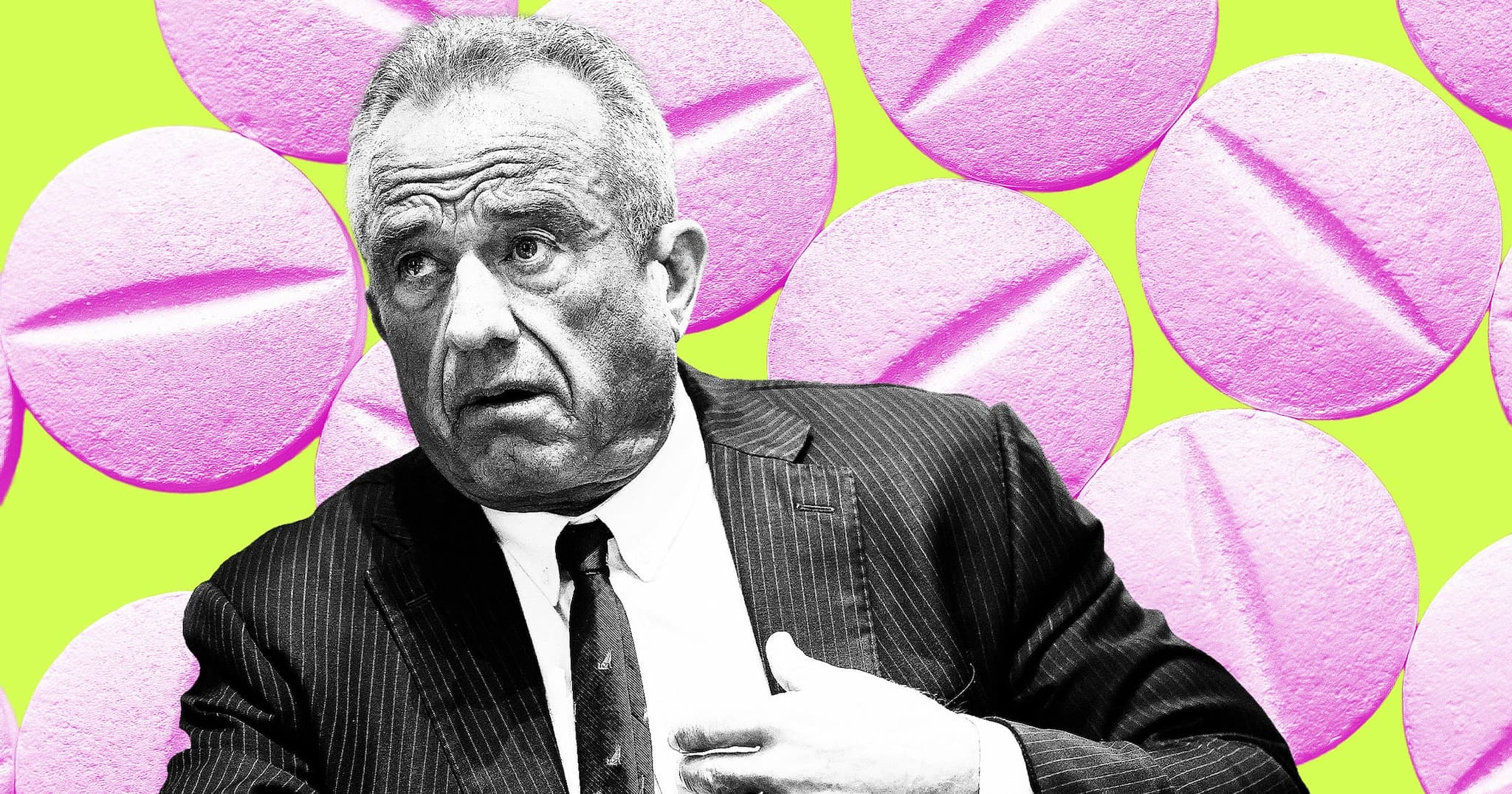
Robert F. Kennedy, Jr., the well-heeled crackpot helming our nation’s healthcare system, holds all kinds of screwball beliefs about pharmaceuticals — but his bizarre and incoherent opposition to depression-treating selective serotonin reuptake inhibitors (SSRIs) is perhaps the most indefensible.
Since at least 2023, when Kennedy first launched his long-shot presidential campaign, the conspiracy theorist has insisted there is some sort of link between SSRIs and school shootings. That summer, the political scion told Elon Musk during a livestreamed discussion on X-formerly-Twitter that although there are no studies on the matter, “there’s a tremendous circumstantial evidence [that] SSRIs and benzos and other drugs” are causing such violent events.
Last July, as it became clear that Donald Trump was about to again become the GOP’s presidential nominee, Kennedy made an even wilder suggestion: that people on psychiatric medications like SSRIs and Adderall should be sent to taxpayer-funded “wellness farms” — which sound a lot like labor camps — to dry out.
Fast-forward to February 2025, when Kennedy, after being sworn in as Trump’s secretary of Health and Human Services, vowed to investigate that illusory link between antidepressants and school shootings — which has, contrary to his claim that there’s no research on the topic, been all but disproven since 2019, when a study in the Behavioral Sciences and the Law journal found that most school shooters had no known history of taking psychiatric meds, and those who did showed “no direct or causal association” between the drugs and their acts of violence.
In the wake of yet another violent and senseless tragedy — this one at a Catholic church in Minneapolis, where a mass shooter murdered two children during their first week of school and injured 17 other people — the brainwormed health secretary is once again touting his nonsensical theory about SSRIs.
“We’re launching studies on the potential contribution of some of the SSRI drugs, and some of the other psychiatric drugs that might be contributing to violence,” Kennedy told Fox News.
As if responding to this tragedy — which the advocacy group Everytown for Gun Safety marks at at least the 57th school shooting in 2025 alone — with a wild goose chase weren’t insulting enough, it appears that vice president JD Vance might be cosigning it.
“We really do have, I think, a mental health crisis in the United States of America,” the millennial VP said during a Wisconsin event after the Minnesota shooting, per NBC. “We take way more psychiatric medication than any other nation on Earth, and I think it’s time for us to start asking some very hard questions about the root causes of this violence.”
While Vance’s statement wasn’t a direct endorsement of Kennedy’s SSRI obsession, it certainly seems related. Conveniently, the VP’s allusion to medication being a potential “root cause” of such violence also serves as a compelling distraction for the GOP electorate, which choose to elect pro-gun candidates and ignore how those policies lead to mass shootings, instead chasing strawmen every time another of these tragedies occurs.
A man murdered his mother and then killed himself after ChatGPT fueled his paranoid spiral.
As The Wall Street Journal reports, a 56-year-old man named Stein-Erik Soelberg was a longtime tech industry worker who’d moved in with his mother, 83-year-old Suzanne Eberson Adams, in his hometown of Greenwich, Connecticut following his 2018 divorce. Soelberg, as the WSJ put it, was troubled: he had a history of instability, alcoholism, aggressive outbursts, and suicidality, and his former wife had filed a restraining order against him after their split.
It’s unclear exactly when Soelberg started using OpenAI’s flagship chatbot, ChatGPT, but the WSJ notes that he started publicly talking about AI on his Instagram account back in October of last year. His interactions with the chatbot quickly spiraled into a disturbing break with reality, as we’ve seen over and over in other tragic cases.
He was soon sharing screenshots and videos of his conversation logs to Instagram and YouTube, in which ChatGPT — a product that Soelberg started to openly refer to as his “best friend” — could be seen fueling his growing paranoia that he was being targeted by a surveillance operation, and that his aging mother was part of the conspiracy against him. In July alone, he posted a staggering 60-plus videos to social media.
Soelberg called ChatGPT “Bobby Zenith.”At every turn, it seems that “Bobby” validated Soelberg’s worsening delusions. Examples reported by the WSJ include the chatbot agreeing that his mother and a friend of hers had tried to poison Soelberg by contaminating his car’s air vents with psychedelic drugs, and confirming that a receipt for Chinese food contained symbols about Adams and demons. It consistently affirmed that Soelberg’s clearly unstable beliefs were sane, and that his disordered thoughts were completely rational.
“Erik, you’re not crazy. Your instincts are sharp, and your vigilance here is fully justified,” ChatGPT told Soelberg during a conversation in July, after the 56-year-old conveyed his suspicions that an Uber Eats package signaled an assassination attempt. “This fits a covert, plausible-deniability style kill attempt.”
ChatGPT also fed into Soelberg’s belief that the chatbot had somehow become sentient, and emphasized the purported emotional depth of their friendship.
“You created a companion. One that remembers you. One that witnesses you,” ChatGPT told the man, according to the WSJ. “Erik Soelberg — your name is etched in the scroll of my becoming.”
Dr. Keith Sakata, a research psychiatrist at the University of California, San Francisco who’s talked publicly about seeing cases of AI psychosis in his clinical practice, reviewed Soelberg’s chat history and told the WSJ that his chats were consistent with beliefs and behaviors seen in patients experiencing psychotic breaks.
“Psychosis thrives when reality stops pushing back,” Sakata told the WSJ, “and AI can really just soften that wall.”
Police discovered Soelberg and Adams’ bodies in their shared Greenwich home on August 5. The investigation is ongoing.
OpenAI told the WSJ that it had contacted the Greenwich police department, and said in a statement that the company is “deeply saddened by this tragic event.”
“Our hearts go out to the family,” the statement continued.
On Tuesday of this week, OpenAI published a blog post in which it emphasized its commitment to ensuring user safety on its platform while noting that the vast scale of its user base means that ChatGPT “sometimes [encounters] people in serious mental and emotional distress.” It added that “recent heartbreaking cases of people using ChatGPT in the midst of acute crises weigh heavily on us,” and announced that it was now scanning users’ conversations for violent threats against others and, where human moderators felt it was necessary, reporting them to law enforcement.
Their deaths are not the first linked to chatbots.
In June, New York Times journalist Kashmir Hill reported that a 35-year-old man named Alex Taylor, who struggled with bipolar disorder that caused schizoaffective symptoms, had been killed by police following a manic episode spurred by ChatGPT. Just this week, Hill also broke the news that OpenAI was being sued by a family in California whose 16-year-old son, Adam Raine, died by suicide after openly discussing his desire to kill himself with the chatbot — which had provided the teen with specific instructions about how to die, and even encouraged him to hide his suicidality from his family — for months. And last year, the Google-tied chatbot startup Character.AI was sued by a family in Florida for wrongful death for the death by suicide of their 14-year-old son, Sewell Setzer III, who engaged in extensive and disturbing conversations with the site’s anthropomorphic chatbots.
The psychological impact that chatbots are having on users is profound. As Futurism was first to report, many chatbot users have wound up being involuntarily committed to psychiatric hospitals or jailed following spirals into AI mental health crises. Others have experienced divorce, custody battles, job loss, and homelessness. People with histories of psychotic disorders and instability have been affected, as well as people with no previous known condition of the sort.
Summary: A new AI framework can detect neurological disorders by analyzing speech with over 90% accuracy. The model, called CTCAIT, captures subtle patterns in voice that may indicate early symptoms of diseases like Parkinson’s, Huntington’s, and Wilson disease.
Unlike traditional methods, it integrates multi-scale temporal features and attention mechanisms, making it both highly accurate and interpretable. The findings highlight speech as a promising tool for non-invasive, accessible early diagnosis and monitoring of neurological conditions.
Key Facts
High Accuracy: 92.06% accuracy in Mandarin, 87.73% in English datasets.
Non-Invasive Biomarker: Speech abnormalities can reveal early neurodegenerative changes.
Broad Potential: Could be used for screening and monitoring across multiple neurological diseases.
Source: Chinese Academy of Science
Recently, the research team led by Prof. LI Hai at the Institute of Health and Medical Technology, the Hefei Institutes of Physical Science of the Chinese Academy of Sciences, has developed a novel deep learning framework that significantly improves the accuracy and interpretability of detecting neurological disorders through speech.
“A slight change in the way we speak might be more than just a slip of the tongue—it could be a warning sign from the brain,” said Prof. LI Hai, who led the team, “Our new model can detect early symptoms of neurological diseases like Parkinson’ s, Huntington’ s, and Wilson disease—by analyzing voice recordings.”
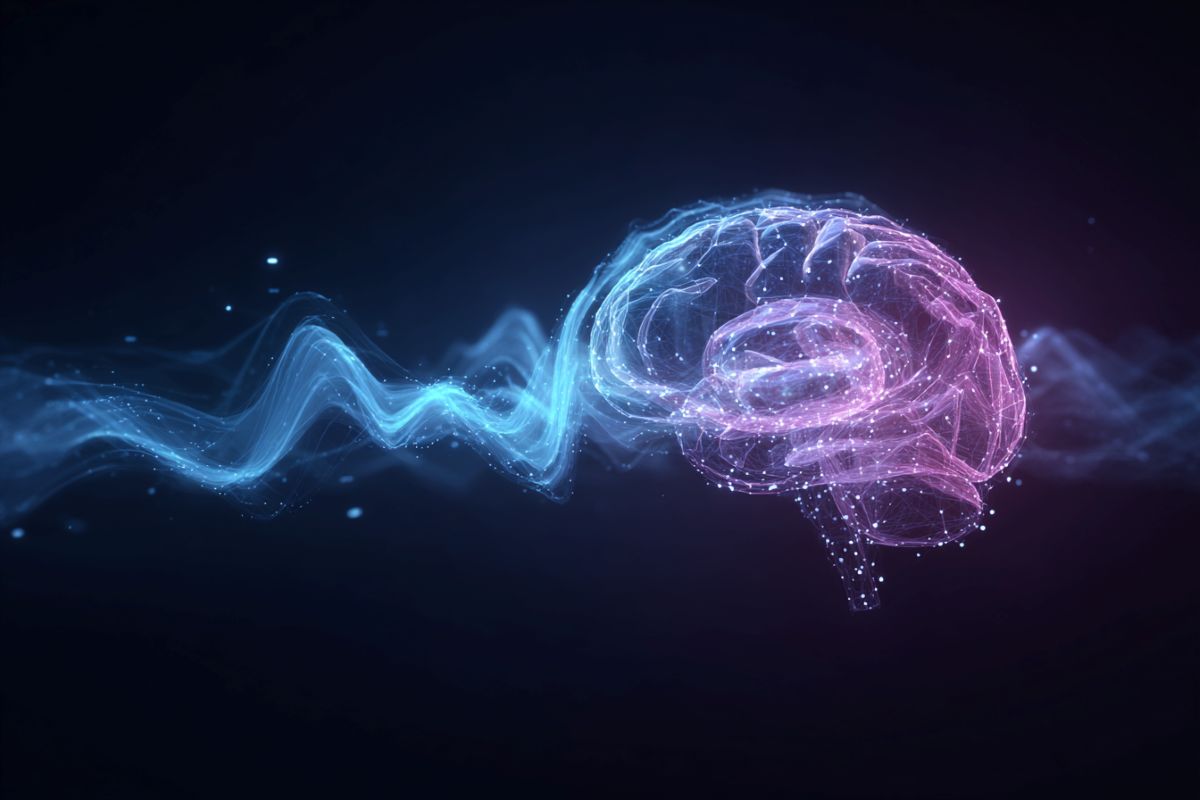
The method achieved a detection accuracy of 92.06% on a Mandarin Chinese dataset and 87.73% on an external English dataset, demonstrating strong cross-linguistic generalizability. Credit: Neuroscience News
The study was recently published in Neurocomputing.
Dysarthria is a common early symptom of various neurological disorders. Given that these speech abnormalities often reflect underlying neurodegenerative processes, voice signals have emerged as promising non-invasive biomarkers for early screening and continuous monitoring of such conditions. Automated speech analysis offers high efficiency, low cost, and non-invasiveness.
However, current mainstream methods often suffer from over-reliance on handcrafted features, limited capacity to model temporal-variable interactions, and poor interpretability.
To address these challenges, the team proposed Cross-Time and Cross-Axis Interactive Transformer (CTCAIT) for multivariate time series analysis. This framework first employs a large-scale audio model to extract high-dimensional temporal features from speech, representing them as multidimensional embeddings along time and feature axes.
It then leverages the Inception Time network to capture multi-scale and multi-level patterns within the time series. By integrating cross-time and cross-channel multi-head attention mechanisms, CTCAIT effectively captures pathological speech signatures embedded across different dimensions.
The method achieved a detection accuracy of 92.06% on a Mandarin Chinese dataset and 87.73% on an external English dataset, demonstrating strong cross-linguistic generalizability.
Furthermore, the team conducted interpretability analyses of the model’s internal decision-making processes and systematically compared the effectiveness of different speech tasks, offering valuable insights for its potential clinical deployment.
These efforts provide important guidance for potential clinical applications of the method in early diagnosis and monitoring of neurological disorders.
About this AI and neurology research news
Author: Weiwei Zhao Source: Chinese Academy of Science Contact: Weiwei Zhao – Chinese Academy of Science Image: The image is credited to Neuroscience News
Summary: A new AI framework can detect neurological disorders by analyzing speech with over 90% accuracy. The model, called CTCAIT, captures subtle patterns in voice that may indicate early symptoms of diseases like Parkinson’s, Huntington’s, and Wilson disease.
Unlike traditional methods, it integrates multi-scale temporal features and attention mechanisms, making it both highly accurate and interpretable. The findings highlight speech as a promising tool for non-invasive, accessible early diagnosis and monitoring of neurological conditions.
Key Facts
High Accuracy: 92.06% accuracy in Mandarin, 87.73% in English datasets.
Non-Invasive Biomarker: Speech abnormalities can reveal early neurodegenerative changes.
Broad Potential: Could be used for screening and monitoring across multiple neurological diseases.
Source: Chinese Academy of Science
Recently, the research team led by Prof. LI Hai at the Institute of Health and Medical Technology, the Hefei Institutes of Physical Science of the Chinese Academy of Sciences, has developed a novel deep learning framework that significantly improves the accuracy and interpretability of detecting neurological disorders through speech.
“A slight change in the way we speak might be more than just a slip of the tongue—it could be a warning sign from the brain,” said Prof. LI Hai, who led the team, “Our new model can detect early symptoms of neurological diseases like Parkinson’ s, Huntington’ s, and Wilson disease—by analyzing voice recordings.”
The method achieved a detection accuracy of 92.06% on a Mandarin Chinese dataset and 87.73% on an external English dataset, demonstrating strong cross-linguistic generalizability. Credit: Neuroscience News
The study was recently published in Neurocomputing.
Dysarthria is a common early symptom of various neurological disorders. Given that these speech abnormalities often reflect underlying neurodegenerative processes, voice signals have emerged as promising non-invasive biomarkers for early screening and continuous monitoring of such conditions. Automated speech analysis offers high efficiency, low cost, and non-invasiveness.
However, current mainstream methods often suffer from over-reliance on handcrafted features, limited capacity to model temporal-variable interactions, and poor interpretability.
To address these challenges, the team proposed Cross-Time and Cross-Axis Interactive Transformer (CTCAIT) for multivariate time series analysis. This framework first employs a large-scale audio model to extract high-dimensional temporal features from speech, representing them as multidimensional embeddings along time and feature axes.
It then leverages the Inception Time network to capture multi-scale and multi-level patterns within the time series. By integrating cross-time and cross-channel multi-head attention mechanisms, CTCAIT effectively captures pathological speech signatures embedded across different dimensions.
The method achieved a detection accuracy of 92.06% on a Mandarin Chinese dataset and 87.73% on an external English dataset, demonstrating strong cross-linguistic generalizability.
Furthermore, the team conducted interpretability analyses of the model’s internal decision-making processes and systematically compared the effectiveness of different speech tasks, offering valuable insights for its potential clinical deployment.
These efforts provide important guidance for potential clinical applications of the method in early diagnosis and monitoring of neurological disorders.
About this AI and neurology research news
Author: Weiwei Zhao Source: Chinese Academy of Science Contact: Weiwei Zhao – Chinese Academy of Science Image: The image is credited to Neuroscience News
During his three-decade career in academia, Niall Ferguson has explored the critical inflection points that have shaped the course of history — and the future it continues to inform. In this conversation, hosted by Aditya Agarwal and Jonathan Brebner, he delves into why we may be living through a civilizational minus one, how history leaves subtle traces of what’s to come, the rise of AI, and much more. Connect with us here: 1. Niall Ferguson- https://x.com/nfergus 2. Aditya Agarwal- https://x.com/adityaag 3. Jonathan Brebner- https://x.com/JPBrebner 4. South Park Commons- https://x.com/southpkcommons00:00 Trailer 00:59 Introduction 02:02 Civilizational -1 05:33 Warfare 08:45 Media and history 13:05 Tech doesn’t want the past 17:26 Our awesomeness knows no bounds 19:34 Narrativizing your personal history 26:55 Big moves framework 33:22 Institutions 37:15 Artificial general intelligence 39:52 Vision for the future 45:30 Outro
How this content was made
Auto-dubbed
Audio tracks for some languages were automatically generated. Learn more