Half our day is spent not living in the moment. Here’s how to change that. Subscribe to Big Think on YouTube ► / bigthink Up Next ► Don’t chase happiness. Become antifragile. • Don’t chase happiness. Become antifragile … Your inner voice isn’t always very nice or helpful. When we turn our attention inward, we tend to focus on problems rather than solutions. This causes us to worry, ruminate, and catastrophize, which traps us in a negative thought cycle. The good news is that there is a science-based toolkit that can help you regain control of your inner voice. To learn even more from the world’s biggest thinkers, get Big Think+ for your business: https://bigthink.com/plus/ Read the video transcript ► https://bigthink.com/videos/mental-ch… ———————————————————————————- About Ethan Kross: Ethan Kross is one of the world’s leading experts on controlling the conscious mind. An award-winning professor and bestselling author in the University of Michigan’s top ranked Psychology Department and its Ross School of Business, he studies how the conversations people have with themselves impact their health, performance, decisions and relationships.
Summary: Researchers found that humans and AI share a similar interplay between two learning systems: flexible, quick in-context learning and gradual incremental learning. Experiments showed that AI could develop in-context learning abilities after extensive incremental practice, much like humans do.
Both also displayed trade-offs between flexibility and retention, with harder tasks strengthening memory while easier tasks boosted adaptability. These findings could shape the design of AI systems that work more intuitively alongside human cognition.
Key Facts
Shared Strategies: Humans and AI both use in-context and incremental learning in complementary ways.
Meta-Learning Breakthrough: AI gained flexible in-context learning only after thousands of incremental training tasks.
Trade-Offs: Like humans, AI balances between flexibility (quick rule learning) and retention (long-term memory updates).
Source: Brown University
New research found similarities in how humans and artificial intelligence integrate two types of learning, offering new insights about how people learn as well as how to develop more intuitive AI tools.
Led by Jake Russin, a postdoctoral research associate in computer science at Brown University, the study found by training an AI system that flexible and incremental learning modes interact similarly to working memory and long-term memory in humans.
The results suggest that for both humans and AI, quicker, flexible in-context learning arises after a certain amount of incremental learning has taken place. Credit: Neuroscience News
“These results help explain why a human looks like a rule-based learner in some circumstances and an incremental learner in others,” Russin said. “They also suggest something about what the newest AI systems have in common with the human brain.”
Russin holds a joint appointment in the laboratories of Michael Frank, a professor of cogntive and psychological sciences and director of the Center for Computational Brain Science at Brown’s Carney Institute for Brain Science, and Ellie Pavlick, an associate professor of computer science who leads the AI Research Institute on Interaction for AI Assistants at Brown.
The study was published in the Proceedings of the National Academy of Sciences.
Depending on the task, humans acquire new information in one of two ways. For some tasks, such as learning the rules of tic-tac-toe, “in-context” learning allows people to figure out the rules quickly after a few examples.In other instances, incremental learning builds on information to improve understanding over time — such as the slow, sustained practice involved in learning to play a song on the piano.
While researchers knew that humans and AI integrate both forms of learning, it wasn’t clear how the two learning types work together. Over the course of the research team’s ongoing collaboration, Russin — whose work bridges machine learning and computational neuroscience — developed a theory that the dynamic might be similar to the interplay of human working memory and long-term memory.
To test this theory, Russin used “meta-learning”— a type of training that helps AI systems learn about the act of learning itself — to tease out key properties of the two learning types. The experiments revealed that the AI system’s ability to perform in-context learning emerged after it meta-learned through multiple examples.
One experiment, adapted from an experiment in humans, tested for in-context learning by challenging the AI to recombine similar ideas to deal with new situations: if taught about a list of colors and a list of animals, could the AI correctly identify a combination of color and animal (e.g. a green giraffe) it had not seen together previously?
After the AI meta-learned by being challenged to 12,000 similar tasks, it gained the ability to successfully identify new combinations of colors and animals.
The results suggest that for both humans and AI, quicker, flexible in-context learning arises after a certain amount of incremental learning has taken place.
“At the first board game, it takes you a while to figure out how to play,” Pavlick said. “By the time you learn your hundredth board game, you can pick up the rules of play quickly, even if you’ve never seen that particular game before.”
The team also found trade-offs, including between learning retention and flexibility: Similar to humans, the harder it is for AI to correctly complete a task, the more likely it will remember how to perform it in the future.
According to Frank, who has studied this paradox in humans, this is because errors cue the brain to update information stored in long-term memory, whereas error-free actions learned in context increase flexibility but don’t engage long-term memory in the same way.
For Frank, who specializes in building biologically inspired computational models to understand human learning and decision-making, the team’s work showed how analyzing strengths and weaknesses of different learning strategies in an artificial neural network can offer new insights about the human brain.
“Our results hold reliably across multiple tasks and bring together disparate aspects of human learning that neuroscientists hadn’t grouped together until now,” Frank said.
The work also suggests important considerations for developing intuitive and trustworthy AI tools, particularly in sensitive domains such as mental health.
“To have helpful and trustworthy AI assistants, human and AI cognition need to be aware of how each works and the extent that they are different and the same,” Pavlick said. “These findings are a great first step.”
Funding: The research was supported by the Office of Naval Research and the National Institute of General Medical Sciences Centers of Biomedical Research Excellence.
About this AI and learning research news
Author:Kevin Stacey Source: Brown University Contact: Kevin Stacey – Brown University Image: The image is credited to Neuroscience News
The Rundown: Tesla’s board just crafted a pay package that could make Elon Musk the world’s first trillionaire, but only if he delivers on some staggering milestones, including mass-producing a million robotaxis and a million Optimus humanoids.
The details:
Tesla’s regulatory filing details a pay package split into 12 share tranches, granting Musk awards only if he hits milestones within set timelines.To unlock the payout, Tesla must hit a $2T market valuation and deliver 20M vehicles early on; a steep climb since Tesla delivered under 2M cars last year. Musk, already the world’s wealthiest person, must stay with Tesla for at least seven-and-a-half years to unlock any stock from the package.The package is slated for a shareholder vote at Tesla’s annual meeting on November 6.
Why it matters:Musk claims humanoids could one day make up 80% of Tesla’s value, recasting the EV giant as a robotics powerhouse.Tesla’s stock may have wobbled, but the board seems undeterred, approving a share-only pay package as audacious as the moonshot it’s meant to fuel.
BREAKING: Iranian researchers develop a non-invasive device that detects breast cancer in real time. It quickly identifies tumors with 93% accuracy and helps doctors distinguish benign from malignant tissues, reducing the need for unnecessary biopsies.
Once a harmless drifter in the Sargasso Sea, an algae known as sargassum is now flooding tropical beaches, from Brazil to the Caribbean, with stinky, toxic piles. As it rots, it releases gases like ammonia and methane, turning paradise into a health hazard.
It’s bad for tourism, fishing, and marine life, and worse, most of it ends up dumped in landfills. No reuse. No recycling. Just rot.
For some time now many smart minds have been finding ways to repurpose products previously considered waste. Seaweed has been a particular target for many. In 2020, researchers developed an affordable and commercially viable process to convert waste seaweed into biofuel, fertilizer, and other products. And in 2022, scientists from the Indian Institute of Technology developed seaweed-based membranes for greener soundproofing.
Now, a new study published in the Journal of Materials in Civil Engineering reports that sargassum seaweed could be transformed into the next generation of eco-friendly building blocks.
The researchers discovered that mixing sargassum algae into ceramic clay makes the clay lighter, greener, and cooler. These algae-infused clays can be used in concrete to reduce weight, for slabs to improve insulation, and as a gardening material.
João Adriano Rossignolo, a professor at the Department of Biosystems Engineering at the School of Animal Science and Food Engineering of the University of São Paulo (FZEA-USP), who coordinated the study, said, “Normally, sargassum is collected and disposed of in landfills without any practical use. That’s why we decided to research a way to take advantage of this large amount of biomass on the beaches.”
Before conducting construction experiments, researchers thoroughly inspected the raw materials. To create lightweight ceramic clay aggregates, they blended sargassum seaweed into clay in three concentrations: 0%, 20%, and 40%. These mixtures were then shaped through extrusion, similar to squeezing clay through a mold, and fired at temperatures of 800, 900, and 1,000 °C (1,472, 1,652, and 1,832 °F) using both traditional and microwave ovens.
Once the algae-infused clay samples were prepared, researchers tested them for shrinkage, water absorption, porosity, density, and strength. They also compared the environmental impact of these new materials with that of traditional expanded clay using a life cycle assessment (LCA).
The findings showed that adding sargassum, especially at a 40% concentration, made the clay lighter. However, only the samples baked in microwave ovens met the required strength standards across all temperatures. This was due to better densification and a more refined internal structure.
The life cycle assessment (LCA) revealed a promising finding: materials made from sargassum seaweed outperformed traditional expanded clay in terms of environmental impact. That finding led researchers to a bold conclusion: microwave-sintered sargassum clay isn’t just viable, it’s a smart way to tackle the seaweed surge along tropical coastlines.
Using algae to produce lightweight ceramic aggregates helps reduce the use of natural resources and enhances energy efficiency. But the innovation didn’t stop there.
The team also explored using sargassum in particulate panels for furniture and construction, as well as in fiber cement tiles, replacing limestone with sargassum ash.
“The results were surprising,” Rossignolo said, “as we were able to use 30% sargassum in the panels and replace 100% of the limestone with its ash, with results that fully comply with current standards for these products and improve the durability and mechanical properties of the materials.”
Apple’s Tim Cook matched that figure. Google’s Sundar Pichai said $250 billion. Combined with OpenAI’s revised projection this week that it will burn through $115 billion by 2029 — $80 billion more than previously expected — these announcements reveal an industry in the midst of the most expensive infrastructure buildout in modern history.
The scale has reshaped the entire American economy. AI data center spending now approaches 2% of total U.S. GDP, and Renaissance Macro Research found that so far in 2025, AI capital expenditure has contributed more to GDP growth than all U.S. consumer spending combined — the first time this has ever occurred.
What’s driving this isn’t just ambition but desperation to control costs: OpenAI has become one of the world’s largest cloud renters, with computing expenses projected to exceed $150 billion from 2025-2030. The company’s cash burn projections quadrupled for 2028, jumping from $11 billion to $45 billion, largely due to costly “false starts and do-overs” in AI training.
Meta’s 2025 capital expenditures represent a 68% increase from 2024 levels as it races to build its own infrastructure. McKinsey estimates the global AI infrastructure buildout could cost $5.2 to $7.9 trillion through 2030.
The 33 attendees included the biggest names in tech: Microsoft founder Bill Gates, Google CEO Sundar Pichai, OpenAI’s Sam Altman and Greg Brockman, Oracle’s Safra Catz, and Scale AI founder Alexandr Wang. Notably absent was Elon Musk, who claimed on social media he was invited but couldn’t attend amid his ongoing feud with Trump.The moment was captured on a hot mic when Zuckerberg later told Trump, “I wasn’t sure what number you wanted,” though whether this reflected genuine uncertainty or strategic positioning remains unclear.Zuckerberg’s hot mic moment about not knowing “what number you wanted” suggests that these commitments aren’t emerging from detailed financial models, but rather from competitive dynamics and political positioning. The scale of spending has reached a point where traditional ROI calculations seem almost irrelevant. OpenAI’s projections jumping from $11 billion to $45 billion for 2028 alone show how unpredictable this technology remains, even for the companies building it. The acknowledgment of “false starts and do-overs” in AI training reveals an industry still figuring out the fundamentals.What’s most striking is how this infrastructure race has become an economic force unto itself.When AI capital expenditure drives more GDP growth than consumer spending, we’re seeing the emergence of an economy increasingly powered by speculative technology investment rather than traditional economic activity. Whether this produces the transformative returns these companies are betting on remains the trillion-dollar question.
The Rundown: Popcorn’s agentic product transforms how movies are made. Drop one conceptual prompt and get a complete 1-3-minute movie with narrative arcs, dialogue, lip-sync, soundtrack, and sound effects.
Unlike tools that just produce individual shots, Popcorn handles:
The entire creative process, from ideation to agentic production and auto-editing. Creation of full narrative movies from a single prompt. Instant style, genre, and narrative changes. Consistent character, props, and sets libraries
Try Popcorn and create your first movie for free with code AGENTIC.
British journalist Peter Hitchens has been covering Russia for 47 years. He’s a critic of Vladimir Putin so nobody can say he’s “echoing Putin’s talking points.”
Hitchens writes: “You’ve been fed a steady diet of propaganda rubbish about Ukraine and the invented Russian menace.” In Daily Mail Op-Ed, Hitchens said he learned long ago that governments lie and get mainstream corporate media to lie for them. “It is what they do,” he writes, and yet seldom has he seen such a cloud of lies as we face about the war in #Ukraine:Alexander Solzhenitsyn, had been shocked and angered when, in 1999, under the leadership of Bill Clinton, NATO launched bombing strikes on Serbia, which had not attacked a NATO member.
That same year, despite James Baker’s “not one inch to the East” pledge to Gorbachev, the Czech Republic, Hungary, and Poland joined NATO – putting #NATO on Russia’s doorstep. And Hitchens points out that Britain’s MI6 and the CIA had been working on regime change in Ukraine since early 2000.
In 2014, Ukraine’s democratically elected president Viktor Yanukovych was toppled by the Western intelligence agencies and a local mob. Hitchens concluded, “You just can’t do that and pretend to be the guardians of democracy.” [In other words, Team Biden’s “plucky little democracy” was little more than a tool of the NATO gambit to destabilize, overextend, and weaken Russia – now stronger than ever.]
Sunday papers ‘Slow, costly and high tax’ US officials rate Irish economy. Stark warning to investors will sound alarm bells for FDI intensifies by Laura Roddy. Can you give synopsis of this article?
Thought for 53s
The article by Laura Roddy, published in the Business Post on September 6, 2025, discusses a US Department of State report that critically assesses Ireland’s economy as “slow, costly, and high-tax,” potentially deterring American investors and impacting foreign direct investment (FDI).
The report, part of the 2024 investment climate statement headed by Donald Trump ally Marco Rubio, incorporates feedback from US companies and warns of challenges like high labor and operating costs, a burdensome planning system, high income tax rates,chronic infrastructure issues, a persistent housing crisis, shortage of high-quality office space, elevated price levels (among Europe’s highest), lengthy procedural decisions, and a “slow and tedious” planning system.
It highlights Ireland’s recent increase from its once “favourable” 12.5% corporate tax rate, new requirements for data centers (critical to many US firms), a moratorium on such facilities in Dublin, high energy costs, and heavy reliance on imported fossil fuels.
Despite these criticisms, the report acknowledges positive aspects, such as Ireland’s active promotion of FDI, its high-quality English-speaking workforce, and its role as a key R&D hub and magnet for US internet and digital media investments over the past 40 years, with examples including Google, Amazon, Meta, LinkedIn, Electronic Arts, and cybersecurity firms like Tenable and Forcepoint.
The piece notes that this stark warning could alarm Ireland’s business community amid ongoing competitiveness concerns. It references recent pledges by Taoiseach Micheál Martin at an Ibec event to address business costs and planning delays, alongside comments from AIB CEO Colin Hunt on Ireland’s infrastructure deficit hindering talent attraction, traffic issues, and energy grid strain.
Overall, the article frames the report as a potential blow to Ireland’s appeal for US multinationals, building on prior guidance while emphasizing the need for reforms to sustain FDI.
“At Samsung, we’re not just imagining the future of AI; we’re building it into everyday life.Samsung’s AI Home moves beyond smart devices to homes that truly understand you, adapt to your needs, and care for what matters most,” said Cheolgi Kim, Samsung’s executive vice president and head of digital appliances business.
Designed to make everyday living more convenient, efficient, healthy and safe, Kim said the technology “supports your life in the background so that you can live it more fully.”
Samsung’s research found that 66% of consumers like the idea of an AI-enabled home, 44% expect it to streamline daily chores ,and 45% want greater control through phone or voice commands.
Samsung’s AI Home with SmartThings offers automated routines from lighting and temperature to syncing blinds to the weather for “effortless living.” It also offers wellness check capabilities, along with personalized sleep settings and nutrition planning.
It includes SmartThings Energy, which uses AI to track costs and save money, monitoring your home’s energy use to gain insight into overall energy consumption and help devices operate more efficiently.
Samsung also introduced Knox Vault, which safeguards sensitive data at the hardware level, and Knox Matrix, which extends protection across connected devices for ecosystem-wide security.
Samsung is the latest in a long line of companies working to make AI a more accessible part of daily life.

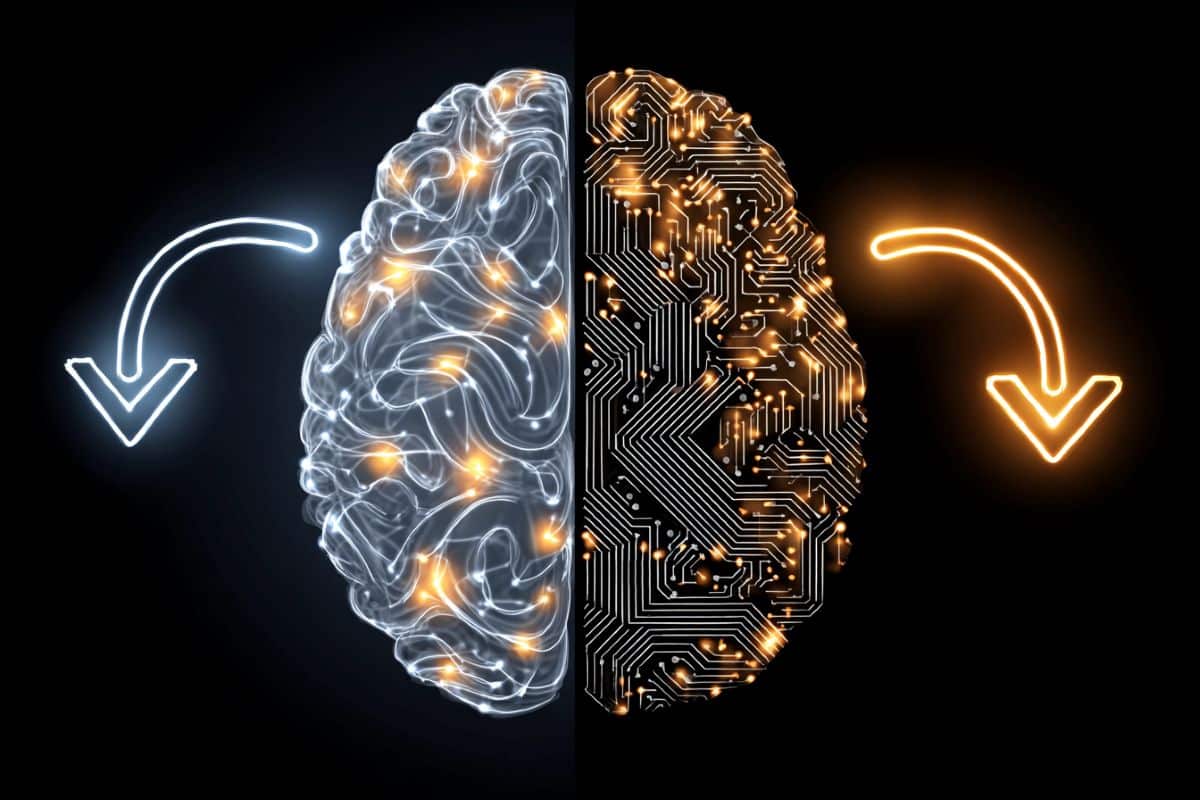

 Image source: Molly Riley/Wikimedia Commons




 Zuckerberg’s hot mic moment about not knowing “what number you wanted” suggests that these commitments aren’t emerging from detailed financial models, but rather from competitive dynamics and political positioning. The scale of spending has reached a point where traditional ROI calculations seem almost irrelevant. OpenAI’s projections jumping from $11 billion to $45 billion for 2028 alone show how unpredictable this technology remains, even for the companies building it. The acknowledgment of “false starts and do-overs” in AI training reveals an industry still figuring out the fundamentals.What’s most striking is how this infrastructure race has become an economic force unto itself. When AI capital expenditure drives more GDP growth than consumer spending, we’re seeing the emergence of an economy increasingly powered by speculative technology investment rather than traditional economic activity. Whether this produces the transformative returns these companies are betting on remains the trillion-dollar question.