Elon Musk: Neuralink will be a jet airplane for neurosurgeons. “I think this is going to be an incredibly powerful tool for neurosurgeons for helping to fix brain-related issues.

Posted in Uncategorized | Leave a comment

Bulletin of the Atomic Scientists: After Charlie Kirk’s killing, an expert in political violence explains how to stop it

After Charlie Kirk’s killing, an expert in political violence explains how to stop it

By Matt Field | September 17, 2025

The aftermath of Charlie Kirk's shooting.Attendees flee after Charlie Kirk was shot at a college event in Utah. Credit: Trent Nelson/The Salt Lake Tribune/Getty Images.Share

Robert Pape, a professor at the University of Chicago, has been studying political violence for 30 years. He says he’s advised every White House since 9/11 as well as the US military on various topics, including, for example, how to respond to the Bosnian civil war in the 1990s. That’s all to say Pape has firm ideas about what causes political tensions to boil over. There’s one central factor, he says, that is responsible for the increasingly violent tenor of US politics, most recently evidenced by right-wing activist Charlie Kirk’s on-stage assassination: massive demographic change. Since 1990, the United States has gone from being about 76 percent white to 58 percent white, and in 15 years, give or take, Pape says, whites will be in the minority.

Such demographic shifts can change the trajectories of political parties. It’s even possible that they have destabilized governments for centuries, playing a role in civil wars, revolutions, or rebellions throughout history. As Columbia University sociology professor Yao Lu puts it, tension over immigration has exacerbated political polarization in the United States and elsewhere, “giving rise to surging nativism and a democratic decline.” The arrival of newcomers can lead to a backlash against a supposed economic and cultural threat. (Think of the rise in the fortunes of the KKK in the 1920s or the era’s notorious Palmer raids to clamp down on dissent—which came on the heels of a decades-long massive surge in immigration to the United States.)

“That’s why immigration became Trump’s number one issue almost overnight,” Pape says.

But while the population shift in the country “is the big, big thing that’s radicalizing our politics,” Pape thinks that there’s something else that will need to be dealt with first—highlighted by the aftermath of Kirk’s murder.

Left to its own, Pape says, the emotion created by startling acts of political violence—such as terrorist attacks, for example—can grow and push a society in previously unimaginable directions, a cycle that has happened in other times or other countries.

The Kirk assassination “was done politically to wound a community,” Pape says. When a community faces a terrorist attack or political violence, “what you see is that they have initial emotions of sorrow and fear that morph into anger—and that can morph into very large support for political violence.”

To redirect the growing emotions around Kirk away from violence—Pape notes that the podcaster and activist has won millions of new fans in recent days—Pape wants political leaders, to hold a summit. In particular, he names President Donald Trump and two of his leading Democratic antagonists—governors Gavin Newsom of California and JB Pritzker of Illinois—as being key figures to get on board with any such summit.

“You’re not only trying to take the temperature down from your own side, but you’re showing you’re willing to live together,” Pape says.

Support for political violence, on the other hand, only begets more political violence. It creates a “mantle of legitimacy for volatile actors that can push them over the edge,” Pape says. “When you have that large amount of public support, that creates an additional perception that they’re doing a community good. And that is what can nudge people over the edge.”

RELATED:

Terrible takes on the Kirk killing, starting with Trump’s

Kirk’s shooting is just one of many recent examples of concerning political violence in the United States. Earlier this summer, a man killed Democratic Minnesota State representative Melissa Hortman and her husband after shooting and injuring another Democratic lawmaker and his wife.  A gunman who allegedly had become convinced that the COVID vaccine had made him sick—an idea that is prominent in some right-wing circles—shot at the Centers for Disease Control and Prevention (CDC) headquarters in August. An arsonist upset over the Israel-Palestine conflict lit a fire at Democratic Pennsylvania Gov. Josh Shapiro’s residence in April. A man broke into former House Speaker Nancy Pelosi’s house and beat her husband with hammer in 2022. There were two apparent attempts to kill Trump during the 2024 presidential election, including at a Pennsylvania rally where Trump was wounded.

According to Pape’s surveys, significant numbers of people support political violence. When the Chicago Project on Security & Threats, which Pape directs, conducted a poll in May on the topic, about 39 percent of Democrats, for example, supported the use of force to remove Trump from office while 24 percent of Republicans supported a military intervention to suppress protests against the “Trump agenda.”

The difference between the two numbers can be overstated, because the poll asked different questions to elicit the Democratic and Republican responses, Pape says. But in general, he feels that in the 1960s, the left was responsible a lot of the time for political violence; afterword, there were a few decades when the right and militia groups were more likely to take this approach, Pape says. He calls trying to find out which political faction is more responsible for political violence “a fool’s errand.”

Most people don’t support political violence—some 70 percent, according to Pape’s research. A lot of thinking around suppressing terrorism or political violence, Pape says, has focused on going after extremists.

“There is another approach, which is not at odds with the first one, but it is a force multiplier,” he says. “Lean into the 70 percent who abhor political violence, have them do more of the work.”

Having leaders reflect that 70 percent, Pape says, can help shrink the space for political violence on the political wings.

Pape has seen some promising signs, he says, pointing out an appearance by a Republican and a Democratic senator on CBS’s Face the Nation on Sunday as well as a segment on the same show that featured House Speaker Mike Johnson, a Republican, who called for political leaders to “turn down the rhetoric.”

Pape, meanwhile, is grading Trump’s response to the Kirk killing on a curve. Trump, after all, seems to love channeling anger and has advocated for violence against his political opponents.

Days before the Kirk assassination, Pape notes, Trump alluded to invading Chicago, posting an image of himself in fatigues in front of the city skyline, with helicopters flying by and flames shooting up from behind. “Chicago about to find out why it’s called the Department of War,” Trump wrote at the time.

Terrible takes on the Kirk killing, starting with Trump’s

RELATED:

After Kirk died, Trump last week released a video praising the activist as a “patriot who devoted his life to the cause of open debate” before blaming the radical left “for the terrorism that we’re seeing in the country today.”

Perhaps it could have been worse.

“It is important to see that if you compare it to just what happened the previous Saturday with his ‘Chi-pocalypse” posting, I do think he may well have thought he had taken the temperature down some,” Pape says of Trump’s Thursday video on Kirk.

“He really needs to do more, should do more to restrain his own side, to restrain the Republican side and the reaction to the Kirk assassination,” Pape says.

The next day, after 22-year-old Tyler Robinson, was arrested, Trump had totally dispatched with any attempt at a measured response and called leftwing radicals “vicious” and “horrible.”

“He said in that interview that the radicals on the right were essentially justified—the problem was only the radicals on the left,” Pape says. “And that is going to make matters worse.”

People close to Robinson—his father and his romantic partner, for example—have reportedly been helping law enforcement with the case.  And he is believed to have acted alone. Nevertheless, the Trump administration in recent days has been previewing a wide crackdown of groups on the left, holding a potentially large swath of people or organizations responsible for the killing.

The president has said he wants to designate unspecified groups as domestic terrorists and deploy so-called RICO cases against protest funders, citing a law commonly used against organized crime groups, the Racketeering Influenced and Corrupt Organizations Act. Vice President JD Vance guest-hosted an episode of Kirk’s podcast in which administration officials pledged to use, according to The New York Times, “every available lever of the federal government” to crack down on leftist nongovernmental organizations.

On the left, meanwhile, many have dissected Kirk’s many racist and hateful statements in online posts that sometimes seem to imply that Kirk was rhetorically responsible for his own murder. Some moderates have found themselves attacked for supposedly white-washing Kirk; former President Barack Obama was vilified among some for releasing a statement decrying political violence after Kirk was killed. In a similar vein, New York Times columnist Ezra Klein has come under heavy criticism for writing a column lauding Kirk for his spirt of political debate. The Bluesky social platform is awash with jokes and criticisms about Klein’s supposedly tepid moderation.

Pape believes the country is in a dire situation that could soon become even more so. “We’ve had all this whole spate of political violence already,” he says. “We were already in the heart and the grasp of what I call the era of violent populism before this.” The coming mid-term elections, which will likely be viewed as incredibly consequential, will only make it harder to slow down any growth in support for political violence.

“We got to have a real off-ramp.” Pape says. “Now is the time to do it. I’m not saying that we’ll stop trying to come up with off-ramps later, but now’s a pretty good time.”

Together, we make the world s

Posted in Uncategorized | Tagged , , , , | Leave a comment

Jeffrey Sachs: US and China Edge Toward War Over Taiwan

Glenn Diesen

Sep 18, 2025

Professor Jeffrey Sachs discusses the US and China possibly heading to war over Taiwan. While the US is increasingly committing itself to Taiwan’s secession, China has linked the issue to its historical memory of the Century of Humiliation. With neither side willing to make concessions, Taiwan would be the likely trigger for a war between the two superpowers. Follow Prof. Glenn Diesen: Substack: https://glenndiesen.substack.com/ X/Twitter: https://x.com/Glenn_Diesen Patreon:   / glenndiesen   Support the channel: PayPal: https://www.paypal.com/paypalme/Diesen79 Buy me a Coffee: buymeacoffee.com/gdieseng Go Fund Me: https://gofund.me/09ea012f

Posted in Uncategorized | Leave a comment

Ireland: Republic pays one third more than Northern Ireland and UK and Ireland pay the most for energy. Please listen to logic … X Chay Bowes

Posted in Uncategorized | Leave a comment

Jack Ma Returns to ‘Make Alibaba Great Again’

YouTube·Bloomberg Television·16 Sept 2025

Posted in Uncategorized | Leave a comment

EL PAIS: Hidden story … painting stolen by Nazis found in Argentina

Nazism

Looting, escape, and mystery: The hidden story behind the painting stolen by the Nazis and found in Argentina

After the recovery of ‘Portrait of a Lady,’ researchers are analyzing other seized works, such as a 17th-century still life spotted on the social media of the daughters of Nazi official Friedrich Kadgien

Pintura de Giuseppe Ghislandi encontrada en Buenos Aires
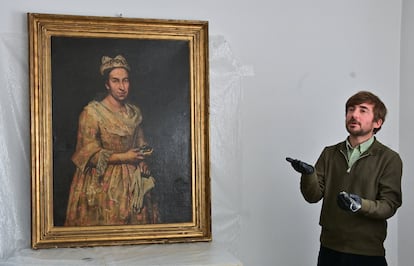
Giuseppe Ghislandi’s painting ‘Portrait of a Lady,’ located in Buenos Aires.Robles Casas & Campos
Javier Lorca

Javier Lorca

Buenos Aires – SEP 15, 2025 – 17:51 CEST

Share on Whatsapp

Share on Facebook

Share on Twitter

Share on Bluesky

Share on Linkedin

Copy link

Heinous crimes, art thefts, escapes, intrigues, and family secrets are the elements that make up the dark picture that was the life of Nazi official Friedrich Kadgien. A simple advertisement for a house sale in Argentina revealed the plot that, for more than 80 years, obscured the legacy of the so-called “financial wizard” of Nazism, characterized as “a snake” by the Allied officers who tried to arrest him in 1945. He was a close collaborator of war criminal Hermann Göring, who managed to recycle himself as a wealthy businessman in South America and died an illustrious citizen in Buenos Aires in 1978. When last month one of his daughters published photos in order to sell the family home in the coastal city of Mar del Plata, 250 miles south of the Argentine capital, she unwittingly revealed, dominating the living room, a painting that had long been sought by the Netherlands. That image untied the knot that Kadgien had tied around his past.

All traces of Portrait of a Lady, painted in the 17th century by Giuseppe Ghislandi (1655-1743), had been lost in Amsterdam during World War II, after the Jewish art dealer Jacques Goudstikker (1897-1940), its owner, was forced by Adolf Hitler’s regime to part with the more than 1,100 works that made up his valuable art collection. The painting has now been recovered by the Argentine authorities, and the courts must decide its fate. In the United States, Goudstikker’s heirs are claiming the painting.

The Nazi official’s daughter, Patricia Kadgien, and her husband are also being investigated in the same case. Both were detained for 72 hours and are prohibited from leaving the country. “They are charged with aggravated accessory after the fact,” explains the prosecutor in charge, Carlos Martínez. “The underlying crime being covered up is particularly serious: robbery in the context of genocide,” he explains.

While the discovery of the oil on canvas work began to answer a question that had been lingering for eight decades, it also posed new mysteries. During the search of the property owned by Patricia Kadgien and her sister Alicia, while looking for the Ghislandi painting, law enforcement officers found many other antique works: prints, plates, drawings, and engravings of various kinds, which will be examined by specialized experts to determine whether they were stolen by the Nazis.

Among the finds are two paintings that experts, after preliminary examination, believe date back to around 1840. The two works, which depict male figures and feature ornate carved wooden frames, will also be analyzed to determine their possible authorship and provenance.

obra de Giuseppe Ghislandi robada por los nazis
Presentation of the recovered painting in Mar del Plata.Jose Scalzo (REUTERS)

One of the still unexplained mysteries of the case concerns a painting that has yet to be recovered. The Cultural Heritage Agency of the Netherlands (RCE) records that at least two works from the collection of the art dealer Goudstikker ended up in Kadgien’s hands in the mid-1940s. In addition to the recently recovered Portrait of a Lady, there is also a still life by the Dutch artist Abraham Mignon (1640-1679). It is an oil on canvas measuring 88 by 66.5 centimeters and depicting flowers, fruit, and small animals.

Although investigators didn’t find it in the raided properties, a very similar painting — if not the same one — can be seen in photos posted by Alicia Kadgien on social media. In two Facebook images from 2011 and 2012, she is seen with other people posing inside a house; in the background is a work that is strikingly similar to Mignon’s.

That’s not the only surprise. In Buenos Aires, the National Museum of Decorative Art exhibits — as part of its collection — a still life almost identical to the missing one painted by Mignon. It is attributed to the Dutch artist Rachel Ruysch (1664-1750). Some experts suggest that Ruysch may have been attempting an imitation of Mignon’s work. Others suspect that, with or without malice, the authorship of one of the paintings may have been misassigned. In that case, the confusion would not be unique: there are other works that are not known to have been painted by Mignon or Ruysch; there is even a still life of flowers that belonged to the Dutch collector Gustaaf Hamburger (1887-1977), which was also stolen by the Nazis and is still being sought without it being specified which of the two artists painted it.

The origin

The inheritance that German lawyer Friedrich Gustave Kadgien (1907-1978) left to his daughters stemmed from his role as a financial expert for National Socialism. He joined the SS in 1935 and, from 1938, served as the right-hand man to Göring. According to various historiographical and journalistic investigations, he played a key role in purchasing foreign currency for the regime and in the plundering of German-occupied territories during the war.

As Nazi defeat loomed, he began preparing his escape by shipping diamonds and other valuables to Switzerland. He settled there in 1945 with his partners Ernst Rudolf Fischer, an official in the Third Reich’s Ministry of Economics, and Ludwig Haupt, a businessman. With the Swiss lawyer and civil servant Ernst Imfeld and his wife Tony — who were instrumental in helping their German friends evade Allied officials — they created a company and named it Imhauka (an abbreviation of Imfeld, Haupt, and Kadgien). It is presumed that through this and other companies, they laundered part of the money they had managed to steal.

Kadgien later spent a period in Brazil, where the partners purchased 85,000 hectares. Around 1950, he settled in Buenos Aires, where he also acquired land. Among other businesses, he sold German weapons to the Brazilian military regime of the time and represented Brazilian companies, such as Siemens, before the government of Juan Perón. Settling in the town of Vicente López, on the outskirts of the Argentine capital, he started a new family after the death of his first wife.

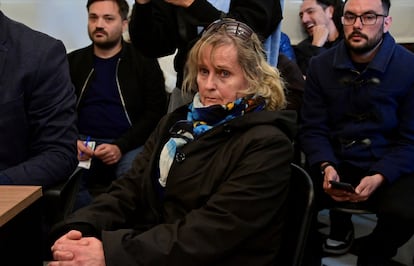
Patricia Kadgien, daughter of a former Nazi official, attends a hearing on charges of concealment and obstruction of justice, after authorities recovered a portrait of Contessa Colleoni by Italian artist Giuseppe Ghislandi, an iconic painting stolen decades ago by the Nazis, in Mar del Plata, Argentina
Patricia Kadgien, in Mar del Plata, on September 4.JOSE SCALZO (REUTERS)

While his remains now rest unpunished in the German Cemetery in Buenos Aires, his daughters are being investigated for allegedly covering up the crimes he committed as crimes against humanity, which are not subject to the statute of limitations under international law.

“The work I owned and exhibited for more than 35 years belonged to my father and was legitimately owned,” Patricia Kadgien argued before the Argentine court. The 59-year-old filed a lawsuit in a civil court to claim thatPortrait of a Lady belongs to her. She claimed it was purchased by a sister of her father’s first wife in February 1943 and that she learned through the media in recent weeks that it was stolen. “I was extremely surprised, given that I never hid this painting from third parties,” she explained.

Investigators are skeptical: they believe Kadgien and her husband, Juan Carlos Cortegoso, were aware that “it was an important and valuable work.” In fact, they claim to have evidence indicating that they had tried to sell the painting some time ago. They also emphasize that, when the Dutch newspaper Algemeen Dagblad revealed the presence of the painting in their home, they hid it and concealed it from the judicial authorities. They only handed it over days later, through their lawyer, when they were already under house arrest.

The judicial investigation is expected to continue for six months. Regardless of the outcome, the case will have revealed another conspiracy hatched thanks to Argentina’s openness to the leaders and officials of the Third Reich. The Commission for the Clarification of Nazi Activities in Argentina (Ceana) estimated that at least 180 war criminals arrived in the country between 1946 and the mid-1950s. Friedrich Kadgien earned the right to appear on that ominous list, which includes names such as Adolf Eichmann, Josef Mengele, Erich Priebke, and Reinhard Kopps.

Sign up for our weekly newsletter to get more English-language news coverage from EL PAÍS USA Edition

Posted in Uncategorized | Tagged , , , , | Leave a comment

El Pais English: Norway … Cocaine! Quote: “Consumption among young people ages 15 to 34 is the third highest on the continent, behind only The Netherlands and Ireland, according to the latest report from the European Drug Agency.”

Norway

How cocaine is flooding Norway

Consumption of the drug has skyrocketed in the Nordic country since the end of the pandemic, while gangs from Sweden are expanding throughout the country

Cocaine Norway
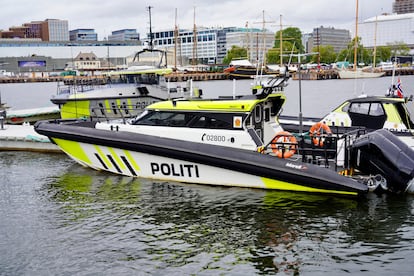
A Norwegian police boat in Oslo harbor on August 24.Wirestock (Getty Images)
Carlos Torralba

Carlos Torralba

Oslo – SEP 16, 2025 – 16:17 CEST

Share on Whatsapp

Share on Facebook

Share on Twitter

Share on Bluesky

Share on Linkedin

Copy link

At first glance, the surroundings of Oslo’s port on a sunny September afternoon look like something out of a postcard. Some brave souls dive into the cold North Sea after a sauna session; others glide at high speed on water skis while dodging dozens of kayaks. The terraces next to the Edvard Munch Museum are full of diners and seafood. From the roof of the imposing Opera House, hundreds of tourists gaze out at the landscape: a majestic fjord dotted with boats, a near-perfect image marred only by the port cranes, which are increasingly unloading containers of cocaine under the watchful eye of Swedish criminal gangs expanding into Norway.

“We are not prepared to deal with this,” admits Karin Tandero Schaug, president of the Norwegian Customs union, alluding to what some local media have described as a “cocaine tsunami.” Tandero Schaug points to the Covid pandemic as the turning point: “Between the end of 2021 and the beginning of 2022, we clearly saw an increase. Among young people, among the jet set, in various social settings, cocaine use was becoming normalized at parties.” The union leader asserts that warning signs were raised, but that it took more than a year for the political class to react.

Her colleague Rune Gundersen recalls that it was in March 2023 when the matter burst into the media, following the seizure of 820 kilos of cocaine in a container of bananas from South America. “We had never seen anything like this. We were used to intercepting small quantities, mostly for personal use, but not kilos,” he says. The year closed with 2.3 tons seized, more than in the entire previous decade.

Customs officers feel overwhelmed: they lack sufficient resources and personnel to cope with the avalanche of cocaine. They only have one scanner capable of inspecting full containers in Oslo, which they must share among several ports. After a period of cutbacks, during which they were on the verge of having to dispose of several vessels, the customs service’s budget has been increased in 2025, which has allowed for some reinforcement, among other things, with the acquisition of another scanner — “although it won’t be operational for another two years,” laments Gundersen. Despite the budget increase, Tandero Schaug emphasizes that many officers will retire in the coming years and that not enough young people are being trained to ensure generational renewal.

Oslo Mayor Anne Lindboe, a conservative, acknowledged a few months ago that the Norwegian capital’s port had become “one of Europe’s favorites for organized crime” and admitted that current control and security measures are insufficient.

Drugs, however, don’t just enter through the port of Oslo in large amounts. They also arrive via various points along the coast, through airports, or the more than 1,600 kilometers of land border with Sweden, along the dozens of roads that connect the two countries, “or even by snowmobile, on skis, or on foot,” says Tandero Schaug.

In an effort to curb cross-border criminal activity, a joint police station was inaugurated last week on the border between Norway and Sweden. The solemn ceremony was attended by Crown Princess Victoria of Sweden and Prince Haakon of Norway. It is the latest step taken in the strategy to strengthen cooperation between the Nordic countries with the aim of halting the spread of Swedish criminal gangs.

Princess Victoria of Sweden and Prince Haakon of Norway on Wednesday at the inauguration of a joint border police station.
Princess Victoria of Sweden and Prince Haakon of Norway on Wednesday at the inauguration of a joint border police station.Lise Aaserud (via REUTERS)

In their latest annual report on threats from criminal networks, Norwegian police admit that Swedish gangs are now operating in all regions of the country. Denmark announced last year that it would strengthen police controls on the border with Sweden. Iceland is also facing its own crisis, with several seizures in recent months that are unprecedented in the country’s history, both in terms of the quantities and purity of the drugs.

Danish Justice Minister Peter Hummelgard, a Social Democrat, justified the tightening of border controls with the neighboring country: “The reality right now is that not only Denmark but large parts of the Nordic countries are suffering the consequences of Sweden’s failed immigration and integration policies, and we take this matter very seriously.”

Normalization among youths

The increase in the cocaine influx into Norway is reflected in numerous statistics. Consumption among young people ages 15 to 34 is the third highest on the continent, behind only The Netherlands and Ireland, according to the latest report from the European Drug Agency. A study by the same agency, based on wastewater analysis, revealed that cocaine use in Oslo has tripled since the end of the Covid pandemic. And, according to an Ipsos survey, a quarter of Norwegians ages 16 to 19 consider the white powder to be as common as alcohol at parties.

Furthermore, a report by the Norwegian Institute of Public Health from late 2024 underscores that 17% of boys and 8% of girls in their final year of secondary school used this drug during that year. The number of citizens in treatment for cocaine addiction has also skyrocketed in the Scandinavian country.

It’s not just the numbers. The abundance of drugs in Norway is also reflected on the streets, especially in the Greenland neighborhood, right in the center of Oslo. A district of just over 10,000 residents, most of them foreign-born, it has become the epicenter of drug trafficking in the Scandinavian country. “It’s the place in Norway where the most drugs are sold,” says Gundersen. Around the subway entrances, and despite the frequent presence of patrol cars, there are young people — and not so young — offering hashish and cocaine to passersby almost at any time of day. Many move around on electric scooters and either don’t carry drugs or only carry tiny amounts, to avoid serious problems with the police.

However, you don’t have to go to Greenland to get drugs in Oslo. “Most young people buy them through social media or instant messaging apps like Snapchat,” notes Tandero Schaug. “Getting cocaine is easier than buying alcohol: no one will check your legal age. And it arrives at your home faster than a pizza delivery.”

The challenge, authorities recognize, is not only to stem the flow of drugs, but also to halt a normalization that has already permeated Norwegian society. Tandero Schaug wonders what the situation will be like in five years. She doesn’t rule out Norwegian customs officers starting to carry weapons, as has been the case in Sweden since last December. Even so, she is confident that the trend can be reversed: “I hope that, at least, buying cocaine will go back to what it was like when I was young; that it will require some contacts, that it will require a minimal effort to get it.”

Sign up for our weekly newsletter to get more English-language news coverage from EL PAÍS USA Edition

Posted in Uncategorized | Tagged , , , , | Leave a comment

Electricity through osmosis: Japan opens landmark osmotic power plant

Energy

Electricity through osmosis: Japan opens landmark osmotic power plant

By Chelsea Haney

September 16, 2025

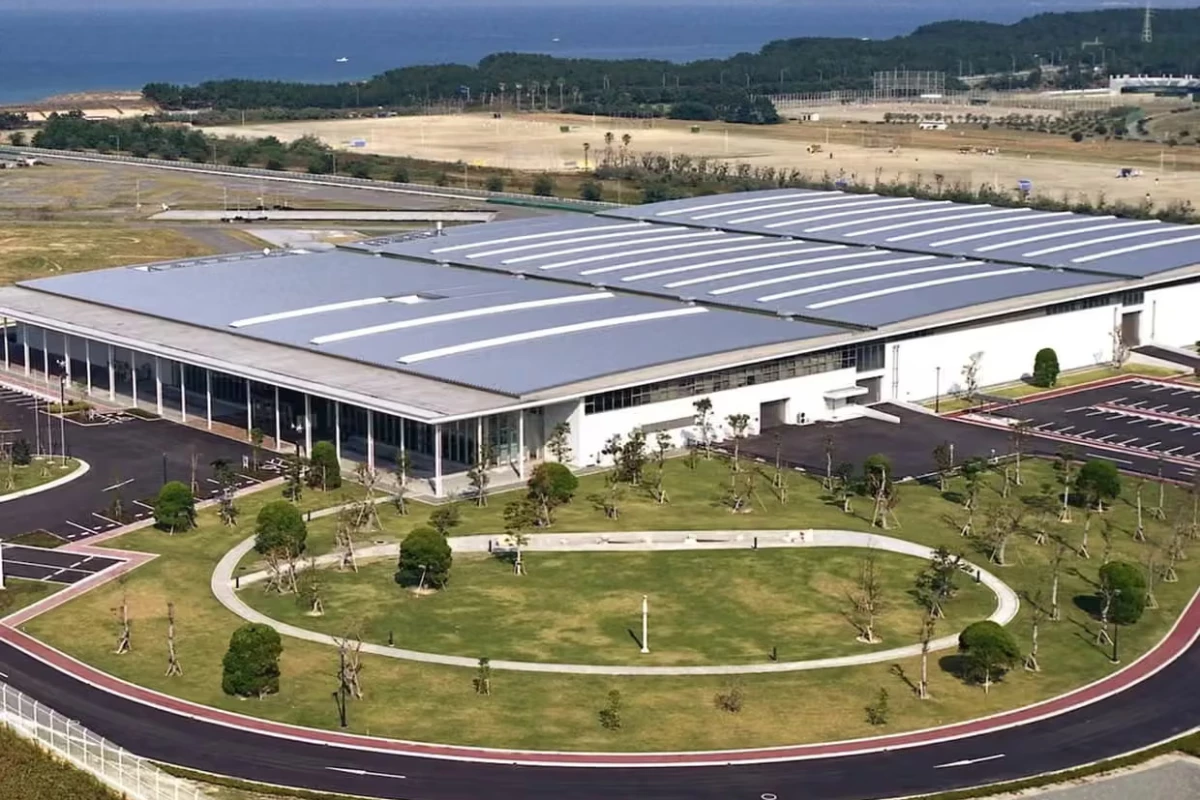
A desalination plant in Fukuoka has been connected to a new kind of osmotic electricity generator.

A desalination plant in Fukuoka has been connected to a new kind of osmotic electricity generator.

Fukuoka Area Waterworks

Imagine generating power not from sunlight or wind, but from the simple mixing of fresh and salt water. This is the quiet promise of osmotic energy, a renewable energy source generated where river meets ocean. The idea has been around for decades, but only now is it flowing into real-world use.

The principle behind osmotic potential is deceptively simple. When fresh and salt water are separated by a semi-permeable membrane, water molecules naturally move across the barrier to balance the difference. That flow builds up pressure strong enough to spin a turbine. No combustion, no emissions. And unlike wind or solar, there is no dependence on weather or daylight, making it capable of running continuously.

Slim ‘Hololuminescent’ display gives remarkable depth to onscreen visu

The first real push came in 2009, when the Norwegian company Statkraft built one of the world’s first prototype osmotic power plants. The four-kilowatt demonstration model proved the concept could generate electricity, but due to costs the technology mostly lingered in labs and small pilots.

Now, for only the second time since development of those prototypes, a full-scale facility has opened in Built by a consortium including the National Institute for Materials Science and local partners, it’s the world’s second osmotic power facility designed for continuous output following the launch of another plant in Denmark in 2023. While considered modest in scale, it will generate around 880,000 kilowatt-hours per year – enough to power 220 households or offset the energy needs of a desalination plant.

What sets the Fukuoka facility apart from any prior iterations of the technology is not the amount of energy it generates, but how it applies physics to infrastructure. By pairing with a desalination plant, it taps into concentrated brine waste that would otherwise be discarded, creating a sharper salinity contrast than rivers naturally provide. Those stronger gradients boost efficiency and grounds osmotic generation in existing systems rather than the lab.

Still, hurdles remain. Pumping losses and membrane fouling can erode efficiency, and advanced membranes are expensive.

“While energy is released when the salt water is mixed with fresh water, a lot of energy is lost in pumping the two streams into the power plant and from the frictional loss across the membranes,” said Professor Sandra Kentish of the University of Melbourne in a recent interview with The Guardian. “This means that the net energy that can be gained is small.”

Precisely the sort of challenges that pushed companies such as Statkraft to shutter its prototype after a few years.

While the Fukuoka facility doesn’t claim to have solved all of the issues, it shows that osmotic power can be folded into real-world infrastructure. Advances in membrane and pump technology are reducing the losses, Kentish noted, and Japan’s use of concentrated brine from desalination increases the energy available. That integration marks an engineering milestone – and underscores the core attraction of osmotic power: its reliability.

Unlike solar or wind, osmotic power can run continuously wherever fresh and saltwater meet; at estuaries, desalination plants, even inland salt lakes. Researchers say the global potential is vast, potentially one day rivaling hydropower if costs continue to come down. The launch of the Fukuoka plant signals renewed interest in exploring this emerging energy source.

And while osmotic power may never match the scale of solar or offshore wind, parity isn’t required for impact. As energy grids diversify, steady background renewables will matter more than ever, especially when they can plug into existing infrastructure.

In Fukuoka, salt and fresh water are already driving turbines, turning a long-studied concept into a working source of power. A modest step, showing osmotic power edging closer to real-world relevance.

Sources: Science Japan, The Guardian

Posted in Uncategorized | Tagged , , , , | Leave a comment

Neuroscience News: Identifying early signs of depression … AI input

This shows a woman's face and network lines.

Students who reported subthreshold depressive symptoms were rated by their peers as less friendly, expressive, and likable. Credit: Neuroscience News

AI Spots Subtle Facial Cues Linked to Early Depression Risk

FeaturedNeurosciencePsychology

·September 16, 2025

Summary: Depression’s earliest signs can be hard to spot, but a new study shows AI can detect them in subtle facial movements. Japanese students with subthreshold depression were perceived as less friendly and expressive by peers, despite not seeming nervous or fake.

AI analysis revealed specific eye and mouth muscle activity patterns that aligned with depression scores. The approach may one day enable accessible screening in schools, workplaces, and digital health platforms.

Key Facts

  • Peer Ratings: Students with subthreshold depression appeared less expressive, likable, and friendly.
  • AI Detection: Micro-movements in eyes and mouth strongly correlated with depression scores.
  • Early Screening Potential: The method offers a non-invasive way to detect depression before clinical symptoms appear.

Source: Waseda University

Depression is one of the most common mental health challenges, but its early signs are often overlooked. It is often linked to reduced facial expressivity.

However, whether mild depression or subthreshold depression (StD) (a mild state of depressive symptoms that does not meet the criteria for diagnosis but is a risk factor for developing depression) is associated with changes in facial expressions remains unknown.

In light of this, Associate Professor Eriko Sugimori and doctoral student Mayu Yamaguchi from the Faculty of Human Sciences, Waseda University, Japan, have now investigated changes in facial expression in Japanese undergraduates using facial data and artificial intelligence.

The study was published in the journal of Scientific Reports on 21 August 2025.

“As concerns around mental well-being have been rising, I wanted to explore how subtle non-verbal cues, such as facial expressions, shape social impressions and reflect mental health using artificial intelligence-based facial analysis,” says Sugimori.

The researchers asked 64 Japanese university students to record short self-introduction videos. Another group of 63 students then rated how expressive, friendly, natural, or likeable the speakers appeared. At the same time, the team used OpenFace 2.0, an artificial intelligence system that tracks micro-movements in facial muscles, to analyze the same videos.

The results revealed a consistent pattern. Students who reported subthreshold depressive symptoms were rated by their peers as less friendly, expressive, and likable. Interestingly, they were not judged as more stiff, fake, or nervous. This suggests that StD does not make people appear overtly negative but rather tones down their positive expressivity.

Artificial intelligence analysis revealed specific patterns of eye and mouth movements, such as the inner brow raiser, upper lid raiser, lip stretcher, and mouth-opening actions that were more frequent in participants with StD. These subtle muscle movements were strongly linked to depression scores, even though they were too fine for untrained observers to pick up on.

The researchers note that their study was conducted with Japanese students, an important consideration given that cultural norms influence how people express emotions.

“Our novel approach of short self-introduction videos and automated facial expression analysis can be applied to screen and detect mental health in schools, universities, and workplaces,” says Sugimori.

The proposed approach could be used in mental health technology, digital health platforms, or employee wellness programs to monitor psychological well-being efficiently.

“Overall, our study provides a novel, accessible, and non-invasive artificial intelligence-based facial analysis tool for early detection of depression (before the appearance of clinical symptoms), enabling early interventions and timely care of mental health,” concludes Sugimori.

About this AI and depression research news

Author: Armand Aponte
Source: Waseda University
Contact: Armand Aponte – Waseda University
Image: The image is credited to Neuroscience News

Original Research: Open access.
“Subthreshold depression is associated with altered facial expression and impression formation via subjective ratings and action unit analysis” by Eriko Sugimori et al. Scientific Reports


Abstract

Subthreshold depression is associated with altered facial expression and impression formation via subjective ratings and action unit analysis

Depression is often linked to reduced facial expressivity and to biases in recognizing others’ emotions. Whether subthreshold depression (StD)—a putative prodromal stage—shows comparable alterations remains unclear.

We recorded 10‑second self‑introduction videos of Japanese undergraduates (ratees; n = 64) and obtained subjective impression ratings from a separate group (raters; n = 63).

Both groups completed the Beck Depression Inventory‑II (BDI‑II). Raters’ depressive tendency was not associated with their impression ratings (p > .10, Benjamini–Hochberg corrected).

In contrast, ratees with StD (BDI‑II = 11–20) received significantly lower scores on positive items—expressive, natural, friendly, likeable—than healthy ratees (BDI‑II = 1–10; partial η² = 0.18–0.70).

Automated analysis with OpenFace 2.0 showed higher presence/intensity of AU01 (Inner Brow Raiser), AU05 (Upper Lid Raiser), AU20 (Lip Stretcher), AU25/26/28 (mouth‑opening AUs) in StD faces; five of these AUs correlated with BDI‑II after false‑discovery‑rate correction (q < 0.05).

Subthreshold depression was associated with muted positive expressivity and distinct eye‑ and mouth‑movement patterns, but did not bias observers’ first‑impression judgements. The observed AU signatures may aid early identification of individuals at risk for clinical depression.

Together, our findings suggest that subthreshold depression is associated with alterations in facial expressivity, particularly in positive expressions, while not significantly influencing how others perceive those expressions.

Posted in Uncategorized | Tagged , , , , | Leave a comment

X Sharia law has no place in Britain? What applies in Ireland?

Posted in Uncategorized | Leave a comment