Vladimir Putin News (@vladimirputiniu) posted at 4:40 am on Sat, Sept 27, 2025:
Life of President Putin

https://t.co/iUqkMMaUGK
(https://x.com/vladimirputiniu/status/1971781849753207145?t=6fcvuJx-B75wcEO4qUoz8g&s=03)
Vladimir Putin News (@vladimirputiniu) posted at 4:40 am on Sat, Sept 27, 2025:
Life of President Putin
https://t.co/iUqkMMaUGK
(https://x.com/vladimirputiniu/status/1971781849753207145?t=6fcvuJx-B75wcEO4qUoz8g&s=03)
Jacob Rees-Mogg (@Jacob_Rees_Mogg) posted at 7:19 pm on Sat, Sept 27, 2025:
It is important to defend free speech for people with whom one very strongly disagrees.
https://t.co/MzzBTHojaV
(https://x.com/Jacob_Rees_Mogg/status/1972003258379231513?t=cL1h5pC6ktl7bKq4nYee6A&s=03)
See new posts
Establishing Dail courts, crown courts after 1916 Rising. Who mooted it, designed the? Michael Comyn KC, when did he become involved?
Thought for 1m 3s
The Dáil Courts (also known as Republican Courts or Sinn Féin Courts) were established as an alternative judicial system to the British Crown courts in Ireland, emerging in the aftermath of the 1916 Easter Rising as part of the broader push for Irish independence. They began informally as arbitration courts to handle local disputes, particularly land-related issues, and were later formalized to assert republican authority and undermine British rule.Who Mooted (Proposed) the Dáil Courts? The concept of arbitration courts as a form of non-violent resistance to British authority was first prominently proposed by Arthur Griffith, founder of Sinn Féin, as early as 1904-1906 in the party’s policy agenda. This built on earlier nationalist ideas dating back to Daniel O’Connell’s Repeal campaign in the 1840s and the Land League in the 1880s, where “native” or popular courts were suggested to resolve disputes outside British systems.
3 sources
Spontaneous arbitration courts began appearing locally in 1917-1919, often driven by Sinn Féin branches and IRA volunteers in response to rising land agitation amid economic pressures from World War I.
Who Designed and Established Them
The design and formal setup involved several key figures and steps under the First Dáil Éireann:
Michael Comyn KC’s Involvement
Michael Comyn KC, an Irish barrister and nationalist, became involved in republican legal defense work shortly after returning from the United States in late 1916, where he had been during the Easter Rising. He focused on defending republican prisoners in British military courts and high-profile cases during the War of Independence (1919-1921) and Civil War (1922-1923), including the 1921 Clifford and O’Sullivan case (challenging death sentences) and Erskine Childers’ 1922 trial.
Regarding the Dáil Courts specifically, Comyn participated as a barrister appearing before them, defying a June 1920 Bar Council resolution that deemed such appearances professional misconduct. As a King’s Counsel, he likely handled cases in higher-tier Dáil Courts (e.g., district or supreme levels) dealing with civil matters like property and contracts, during the courts’ active period from mid-1920 to 1922. He also appeared before the post-1922 winding-up commission that resolved outstanding Dáil Court cases under the Free State.
No exact start date for his Dáil Court appearances is documented, but it aligns with the courts’ formal operation after June 1920, amid his broader nationalist legal activities.
6 web pages
Details on Austin Stack’s report
Erskine Childers’ trial
Sir David Foxton has written a book referring to Michael Comyn KC about Dail courts, as has Judge Sean Enright. Can you give a synopsis of what each have to say about Michael Comyn KC
Thought for 59s
David Foxton’s “Revolutionary Lawyers: Sinn Féin and Crown Courts in Ireland and Britain, 1916-1923”. In his book, David Foxton explores the role of Irish lawyers in navigating and challenging the British legal system during the Irish War of Independence. Regarding Michael Comyn KC, Foxton highlights him as a key example of a barrister who actively defied the Irish Bar Council’s June 1920 resolution, which declared appearances before Sinn Féin (Dáil) Courts as professional misconduct. Despite this, Comyn, a staunch republican and nationalist, participated in the Dáil Courts during their operational peak from mid-1920 to 1922. As a King’s Counsel, he likely appeared in higher-tier republican courts, such as district or supreme levels, handling civil matters like property disputes and contracts. Foxton uses Comyn’s actions to illustrate the broader tensions between professional ethics, nationalist ideology, and the republican effort to establish parallel judicial authority. Comyn’s involvement extended to the post-1922 winding-up commission under the Irish Free State, which resolved outstanding Dáil Court cases. Overall, Foxton’s portrayal emphasizes Comyn’s strategic use of law to support Irish self-determination, saving lives and challenging British authority amid conflict.
Judge Sean Enright’s “The Trial of Civilians by Military Courts: Ireland 1921”. Sean Enright, a former barrister and legal historian, examines the procedures, operations, and constitutional implications of British military courts trying Irish civilians during the height of the Anglo-Irish War in 1921. In relation to Michael Comyn KC, Enright discusses his prominent role in defending republican prisoners in these military tribunals. Comyn, having returned from the US in late 1916, became deeply involved in high-profile cases, including the 1921 Clifford and O’Sullivan trial, where he challenged death sentences imposed by a military court. Enright details how Comyn, alongside figures like Sir John Simon KC and his brother James Comyn, argued before the House of Lords on a preliminary objection just weeks after the military verdict, highlighting legal flaws in the martial law regime. While the book focuses more on military courts than the Dáil Courts, Enright contrasts the British system with the emerging republican alternatives, noting Comyn’s broader nationalist legal work that bridged both worlds. Comyn’s efforts are portrayed as part of a larger struggle to expose the injustices of ceding civilian trials to the military, ultimately contributing to debates on habeas corpus and the rule of law during the conflict.

2 sources
nephew James Comyn, argued before the House of Lords on a preliminary objection just weeks after the military verdict, highlighting legal flaws in the martial law regime. While the book focuses more on military courts than the Dáil Courts, Enright contrasts the British system with the emerging republican alternatives, noting Comyn’s broader nationalist legal work that bridged both worlds. Comyn’s efforts are portrayed as part of a larger struggle to expose the injustices of ceding civilian trials to the military, ultimately contributing to debates on habeas corpus and the rule of law during the conflict.
2 sources
3 web pages
Details on Clifford and O’Sullivan case
James Comyn’s legal career
More concise synopses
Michael Comyn KC you returned from America in 1916. What was he doing there? Is there any information about this visit at that time
Thoughts
…
This is now proven as incorrect. Arthur Griffith was not in America with Michael Comyn KC at the time of the Rising in 1916. Also there is a reference to Michael Comyn and his nephew James Comyn, this is his brother James Comyn SC
Thought for 1m 54s
Michael Comyn KC was in the United States—specifically Kansas City, Missouri—during the 1916 Easter Rising.
2 sources
Primary historical sources, such as his entry in the Dictionary of Irish Biography, do not specify the exact reason for his visit or provide additional details about its duration, purpose, or activities. Some secondary or anecdotal accounts (including unpublished family recollections and later historical analyses) suggest it may have been related to personal business, legal matters, or informal nationalist networking among Irish-American communities, but these are not substantiated in core biographical records.
3 sources
He returned to Ireland later in 1916 and promptly engaged in defending republican prisoners in British military courts, marking the start of his deeper involvement in the Irish independence movement.
Note that some online sources, including Wikipedia and certain blogs, erroneously claim Arthur Griffith accompanied him on this trip—this is inaccurate, as Griffith remained in Ireland throughout the Rising and was arrested in its aftermath.
2 sources
Additionally, references to James Comyn in contexts like the 1921 Clifford and O’Sullivan case refer to Michael’s brother, James Comyn KC (1872–1943), a fellow barrister—not his nephew, Sir James Peter Comyn (1921–1997), who was an infant at the time and later became a prominent judge in England.
5 sources
7 web pages
Details on Comyn’s unpublished autobiography
Role of Irish barristers in 1916 trials
Details on Comyn’s unpublished autobiography
Thought for 2m 8s
Michael Comyn KC did not publish an autobiography during his lifetime, but he left behind unpublished personal reflections and writings on his life and career, particularly his experiences as a barrister and judge. These appear to have been shared within his family and were partially recorded and incorporated into works by his nephew, Sir James Comyn (1921–1997), a prominent English judge and author.
3 sources
No full, standalone unpublished autobiography has been publicly released or cataloged in major archives, and details about its exact form (e.g., manuscript length, completion date, or storage location) remain scarce in historical records. However, key excerpts and insights from his writings are preserved through family accounts.Key
Details from Available Sources
If the unpublished autobiography refers to a specific manuscript beyond these reflections, it may be held in private family papers or referenced obliquely in biographical sources like the Dictionary of Irish Biography, which draws on family accounts but does not detail it explicitly. Further details could potentially be found through direct contact with Comyn descendants or specialized Irish legal archives.
10 web pages
Excerpts from Their Friends at Court
James Comyn’s legal memoirs
Quick Answer
ET OnlineLast Updated: Oct 14, 2024, 11:59:29 AM IST

Share
Font Size
Save
Comment
Sweden will soon pay immigrants up to 350,000 kronor to leave the country voluntarily starting in 2026. This new policy, announced by the right-wing government, aims to improve immigrant integration by encouraging voluntary departures. The decision comes despite concerns that large financial incentives could hinder integration efforts further.
Poland tightens visa rules as probe confirms previous government’s cash-for-visas scandal. Sweden raises salary threshold for foreign workers by almost 120%; mulls further hikes
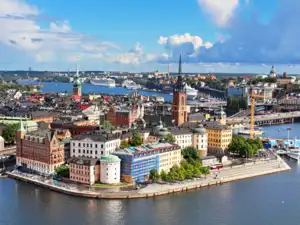
Sweden has unveiled a new migration policy offering payments of up to 350,000 Swedish kronor ($34,000) to immigrants who voluntarily leave the country, marking a significant shift from its traditional approach toward migration. The policy, announced last week by the right-wing government, reflects Sweden’s evolving stance as it moves away from being a longtime haven for refugees and asylum seekers.
Migration Minister Johan Forssell highlighted the change at a press conference, stating, “We are in the midst of a paradigm shift in our migration policy.” The government, supported by the anti-immigration Sweden Democrats, intends to implement the higher payments starting in 2026.
Currently, immigrants who opt to return to their home countries can receive 10,000 kronor per adult and 5,000 kronor per child, with a family payment cap of 40,000 kronor. The new plan significantly increases this amount to encourage voluntary returns, a step the government hopes will ease the challenges of immigrant integration that have persisted over the years.
Buy the Dip: Top 5 Dividend Stocks with Growth PotentialSeeking Alpha
A recent government-appointed inquiry had cautioned against such a large increase. Joakim Ruist, who headed the inquiry, argued that offering substantial financial incentives might send a negative message, implying that migrants are unwelcome, which could further hinder integration efforts.
Sweden’s policy aligns with other European nations offering similar return grants, though the amounts vary widely. Denmark offers more than $15,000 per person, while Norway, France, and Germany provide smaller sums of $1,400, $2,800, and $2,000 respectively.
Sweden, known for decades as a “humanitarian superpower,” has faced difficulties in assimilating newcomers into society, contributing to this policy shift. The government hopes the revised grants will address some of these issues by incentivizing voluntary departures, though it remains a topic of debate within the country.
By Joe Wilkins
Published Sep 25, 2025 8:00 AM EDT

While many working people are reasonably worried about AI taking their jobs and leaving them on the street, another consequence of the AI revolution is filling seats in mental health facilities.
New reporting by Wired, drawing on more than a dozen psychiatrists and researchers, calls it a “new trend” growing in our AI-powered world. Keith Sakata, a psychiatrist at UCSF, told the publication he’s counted a dozen cases of hospitalization in which AI “played a significant role” in “psychotic episodes” this year alone.
Sakata is one of many mental health professionals at the front lines of the urgent and poorly understood health crisis stemming from relationships with AI, which doesn’t yet have a formal diagnosis, but which psychiatrists are already calling “AI psychosis,” or “AI delusional disorder.”
Hamilton Morrin, a psychiatric researcher at King’s College in London, told The Guardian that he was inspired to co-author a research article on AI’s effect on psychotic disorders after encountering patients who had developed psychotic illness while using LLM chatbots.
Yet another mental health professional wrote a column in the Wall Street Journal after patients began bringing their AI chatbots into therapy sessions unprompted.
While a rigorous case study of AI’s impact on mental health patient loads has yet to be attempted, what we know so far isn’t looking great.
A recent preliminary survey of AI-related psychiatric impacts by social work researcher Keith Robert Head points to a coming society-wide crisis brought on by “unprecedented mental health challenges that mental health professionals are ill-equipped to address.”
“We are witnessing the emergence of an entirely new frontier of mental health crises as AI chatbot interactions begin producing increasingly documented cases of suicide, self-harm, and severe psychological deterioration that were previously unprecedented in the internet age,” Head writes.
Indeed, the stories emerging so far are grim. While there remains something of a debate whether LLM chatbots are causing delusional behavior or simply reinforcing it, real-life stories paint a disturbing picture.
Other anecdotes suggest that people with no history of mental health issues are falling victim to AI delusions. Recently, a longstanding OpenAI investor and successful venture capitalist became convinced by ChatGPT that he had discovered a “non-governmental system” that was targeting him personally — in terms, online observers quickly noticed, that appeared to be drawn from popular fan fiction.
Another disturbing tale involved a father of three with no history of mental illness spiraling into an apocalyptic delusion after ChatGPT convinced him he had discovered a new type of math.
One thing’s for sure: a flood of new psychiatric patients is the last thing our rapidly decaying mental health infrastructure needs.
More on chatbot psychosis: ChatGPT Is Blowing Up Marriages as Spouses Use AI to Attack Their Partners
I’m a tech and transit correspondent for Futurism, where my beat includes transportation, infrastructure, and the role of emerging technologies in governance, surveillance, and labor.