Illustration by Tag Hartman-Simkins / Futurism. Source: John Lamparski / Getty Images
Palantir cofounder and libertarian tech billionaire Peter Thiel has been giving a series of secret lectures about technology and religion, which centered on his theories about the antichrist — yes, the one from the Bible.
And according to leaked audio of the sessions, obtained by news outlets including The Washington Postand The Guardian, the events sound just about as weird as you might expect.
The political megadonor just wrapped up a stint of two-ish hour lectures titled “The Antichrist: A Four-Part Lecture Series,” which he delivered to sold-out crowds in San Francisco. During the seminars, Thiel — who described himself to the audience as a “small-o orthodox Christian” — reportedly argued that putting any limits on technological development would destroy America and roll out the red carpet for totalitarianism, in addition to simply being bad for business. And the antichrist somehow fits into that, of course.
“The antichrist comes to power by talking constantly about Armageddon, about rumors of wars,” Thiel told the audience during one of the lectures, according to The Guardian, “and scaring you into giving him control over science and technology.”
As for who Thiel thinks the antichrist might actually be? According to the leaked audio, the billionaire has his eyes on Greta Thunberg, the 22-year-old Swedish climate activist who is under five feet tall, and Eliezer Yudkowsky, the well-known AI doomer who recently cowrote a book arguing that AI must be stopped in its tracks or it will consume humanity (the volume’s not-so-subtle title: “If Anyone Builds It, Everyone Dies: Why Superhuman AI Would Kill Us All.“)
“In the 17th, 18th century, the Antichrist would have been a Dr. Strangelove, a scientist who did all this sort of evil crazy science,” Thiel said in his Sept. 15 opening talk, according to the recordings. “In the 21st century, the Antichrist is a Luddite who wants to stop all science. It’s someone like Greta or Eliezer.”
Thiel reportedly talked at length about other people he doesn’t like, but who he doesn’t think have the juice to actually be the antichrist. Among them were fellow tech billionaire Bill Gates, who he described as a “Dr. Jekyll and Mr. Hyde-type character,” but who’s not a “political leader” or “broadly popular” and thus can’t actually cause Armageddon. He also chided Gates for believing that “science and atheism are compatible.”
“I don’t think even someone like Bill Gates, who I think is a very, very awful person, is remotely able to be the antichrist,” Thiel said at one point, according to The Guardian.
Thiel also tore into fellow Silicon Valley accelerationist and venture capitalist Marc Andreessen, who he accused of spouting “pure Silicon Valley gobbledygook propaganda.” Meanwhile, Thiel spoke approvingly of peers like Tesla CEO and SpaceX founder Elon Musk, and described himself as “very-pro” Vice President JD Vance, to whom Thiel has given millions in campaign funds — though he did express that he’s concerned that the VP, who’s Catholic, might give too much credence to the Pope.
“The place that I would worry about is that he’s too close to the pope,” said Thiel, per The Guardian. “And so we have all these reports of fights between him and the pope. I hope there are a lot more.”
Thiel’s talks read as expansive and meandering, melding religious screeds with anti-regulatory ideology, all the while weaving in petty interpersonal feuds and fixations. But it seems Thiel thinks the only way to get his message across is in the extremity of a religious context.Without it, he argues, people simply won’t take his warnings seriously.
“There are a lot of rational reasons I can give why the one-world state’s a bad idea. Turn the planet into a prison. I think the tax rates would be very high,” Thiel told the audience, as quoted by The Guardian. “But I think if you strip it from the biblical context, you will never find it scary enough. You will never really resist.”
In other words, it’s the scripture according to Thiel. And suffice to say, his interpretation of who the antichrist might be, and what exactly they might threaten, seems pretty convenient to his business and political interests.
I’m a senior staff writer at Futurism, investigating how the rise of artificial intelligence is impacting the media, internet, and information ecosystems.
US–China relations are once again on edge. After Washington expanded export controls on Chinese tech firms, Beijing struck back with new limits on critical minerals. President Trump responded by threatening 100% tariffs, then quickly walked them back.
Ian Bremmer says neither side wants a full trade war: “Trump doesn’t want to risk inflation or crash the markets, and Xi knows both countries have real leverage over each other.”
As Trump and Xi prepare to meet, from TikTok control to Taiwan tensions, Ian explains why “this relationship is tense, but not heading for a blow-up.”
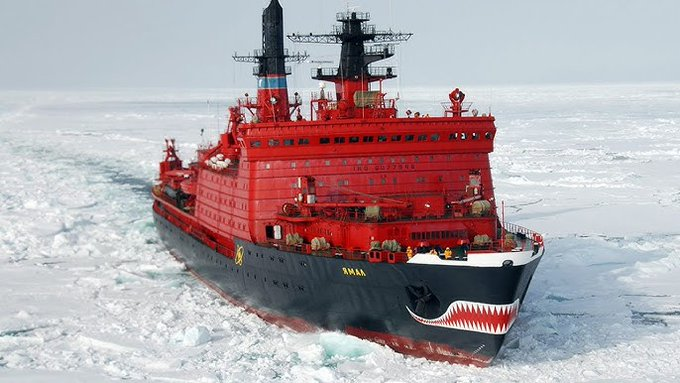
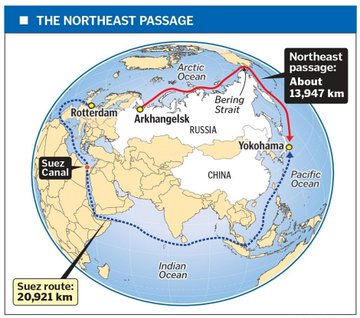
Russia and China are turning the Northern Sea Route into a major trade artery. First container transit from China to Europe arrived in just 20 days—twice as fast as traditional routes.
Russia and China sign the Northern Sea Route cooperation deal. The Northern Route saves 7,000km on Asia-Europe maritime transit, reduces shipping time by almost 40%. With Russia’s frozen Northern Sea opening up to climate, it’s looking to dominate the new trade route.
‘Deaths of despair’: Global mortality plummets, but increases among young people in North America due to drugs and suicides
The first snapshot of the state of health in the post-pandemic world reveals high levels of deaths among young people in the United States, Canada, and Mexico ‘driven by economic, social, and psychological factors’
Kensington, Philadelphia, where the impact of the opioid crisis sweeping the United States is evident.Carlos Rosillo
The world’s population is living longer than ever. According to the latest Global Burden of Disease report, published Sunday in The Lancet, life expectancy worldwide is 20 years higher than in the middle of the last century and now averages 76 for women and 71 for men — in wealthy countries, both are over 80. The risk of death is falling across the planet, and populations are generally healthier. But it’s not all good news. The report also reveals unfinished business and crystallizes some of the new challenges facing humanity, such as the increasing burden of mental disorders and the rising mortality rate among adolescents and young adults in North America and Latin America, mainly due to suicide and drug and alcohol abuse.
This macro-research, which compiles data from more than 200 countries for the year 2023, is the first global description of the state of health in the post-pandemic world. After the Covid-19 crisis shook healthcare systems around the world and distorted traditional statistics, becoming the leading cause of death, things — and trends — have returned to normal. Life expectancy, which fell during the pandemic, has recovered. And mortality, exacerbated by this infectious episode, has also declined. Heart attacks and strokes once again lead the most common causes of death, while Covid-19, for its part, falls to 20th place in this ranking.
The report reveals worrying dynamics in some specific territories and age groups. This has been true for young people in North America and Latin America since 2011.The largest increases in mortality have been observed there, especially in the United States, Canada, Mexico, and Brazil: in the last decade, it has risen by almost 32% among the 25-29 age group; and by 50% among those in their thirties. The authors point to the high rates of “deaths of despair” as the cause of these phenomena, a category of mortality “driven by economic, social, and psychological factors” and due primarily to suicide, alcoholism, and drug overdoses.
The United States has been immersed in an opioid epidemic for several years, claiming the lives of tens of thousands of young people: overdose deaths increased by 30% between 2019 and 2020, by 15% between 2020 and 2021, and in 2022, a record number of 111,029 deaths was recorded.
To contextualize the phenomenon in Latin America, Jesús Adrián Álvarez, a doctor in public health, also points to the impact of violence. “Among Latin American men, high homicide rates among young adults add a critical dimension to this mortality burden. This reveals a paradox: despite major investments in public health and social welfare, violence continues to shorten the lives of millions of people in the region,” he explains in a statement to the Science Media Center Spain website.
Over the past decade, the largest increases in mortality among 15- to 19-year-olds and 20- to 24-year-olds were recorded in Eastern Europe — a 54% and 40% increase, respectively. This phenomenon coincides particularly with Russia’s invasion of Ukraine: since then, mortality among these age groups in both countries (especially Ukraine) has skyrocketed.
Another area of wartime massacres is highlighted in the work: those perpetrated by Israel in Gaza. Although regional mortality rates in North Africa and the Middle East are no longer the highest, they note that “Palestine had the highest mortality rate and risk of dying before age 70 due to conflict and terrorism in the world.” Furthermore, they highlight for the Gaza Strip “an estimated loss of 30 years of life expectancy during the first 12 months of the war, a conservative estimate that practically halves pre-conflict life expectancy.”
Alert for Trump’s cuts
The study also serves as a wake-up call to the world about the effects of the Trump administration’s policy of cutting development aid. The authors note that the U.S. government contributed 22.6% of all development assistance for health in 2023, and the accompanying editorial recalls that the United States Agency for International Development (USAID, nearly dismantled by Trump after his return to office) alone was responsible for a 15% reduction in age-standardized all-cause mortality and a 32% reduction in under-five mortality, primarily in low- and middle-income countries, and particularly in Africa.
“To maintain progress or even avoid setbacks in under-five mortality in high-risk populations, it will be imperative to mitigate the effects of these funding cuts, while also expanding other sources of funding, such as those from nongovernmental organizations,” the researchers note. The editorial emphasizes that some preliminary estimates indicate that development assistance for health decreased by more than 50% between 2021 and 2025.
Drugs, violence and depression on the rise
The authors assume that “diabetes, substance use disorders, violence, and heat waves” are currently some of the fastest-growing threats to human health. In fact, since 2013, annual deaths linked to environmental exposure to cold and heat have increased by 6%; those related to substance use have increased by 5%; those related to diabetes have increased by 3%; and those associated with conflict and terrorism have increased by 1%.
However, the research also highlights the rise in mental health disorders: death and disability associated with anxiety and depression have increased by 63% and 26%, respectively, since 2010. The pandemic may have played a role, but the researchers go further: “There are several competing and complementary theories to explain this increase, including increased social media use, cyberbullying, child abuse, climate despair and the rising cost of living and income inequality, and greater awareness of mental health.”
According to the study, nearly half of global mortality and morbidity in 2023 was attributable to 88 risk factors. Specifically, the variables associated with greater health outcomes were elevated systolic blood pressure, particulate pollution, high blood sugar, smoking, low birth weight, premature birth, elevated body mass index (BMI), and high cholesterol, among others.
Population growth and aging, coupled with the transformation of the most worrisome risk factors, is changing the rules of the game. Government partnerships and health programs promoted over the past three decades have curbed the scourge of numerous infectious diseases (tuberculosis, respiratory and enteric infections, diphtheria, tetanus, etc.), to the point that non-communicable diseases, such as diabetes and ischemic heart disease, now account for almost two-thirds of total mortality and morbidity worldwide. “The rates of non-communicable diseases are increasing, especially in low- and middle-income countries. The speed and magnitude of this epidemiological transition from infectious to non-communicable diseases is a cause for urgent concern,” The Lancet admits in an accompanying editorial.
Everything is changing, and the world has entered a new era of global health challenges, reflects Christopher Murray, director of the Institute for Health Metrics and Evaluation (IHME) at the University of Washington and author of the research, in a statement: “The evidence presented in the study is a wake-up call, urging government and healthcare leaders to respond quickly and strategically to the disturbing trends that are reshaping public health needs.”
The lowest-income countries, although they have also improved their health status in recent decades, remain light years behind those in more affluent areas. For example: in Spain, Italy, and France, life expectancy is 85 years for women and 83 for men; while in sub-Saharan Africa, the average is 66 and 62 years, respectively. In the most deprived areas, two threats to health are beginning to coexist: the historic scourge of communicable diseases — such as tuberculosis, malaria, and other infections, whose incidence has decreased in recent decades but continues to kill millions of people — with the spread of other non-communicable diseases, such as obesity and diabetes.
Epidemiologist Jaume Marrugat, who was not involved in this research, welcomes the good news, such as the increase in life expectancy and the decrease in communicable diseases, but also expresses his “concern” about the risk of going backwards: “A large part of the improvement in communicable diseases is related to vaccination, and we are very concerned that there are countries with leaders who do not encourage vaccination. It has taken a long time for vaccines to free us from many diseases, and we run the risk of them rising again. This generates anxiety.”
Sign up for our weekly newsletter to get more English-language news coverage from EL PAÍS USA Edition
SoftBank might be deepening its ties with OpenAI. The Japanese investment giant is in talks to borrow $5 billion from global banks for a margin loan secured by its shares in chipmaker Arm, aiming to fund additional investments in OpenAI,Bloomberg reported on Friday.
It marks the latest in a string of major AI investments by SoftBank as the company aims to capitalize on the technology’s boom. Last week, the firm announced its $5.4 billion acquisition of the robotics unit of Swiss engineering firm ABB. It also acquired Ampere Computing, a semiconductor company, in March for $6.5 billion.
But perhaps the biggest beneficiary of SoftBank’s largesse has been OpenAI.
The model maker raised $40 billion in a funding round in late March, the biggest private funding round in history, with SoftBank investing $30 billion as its primary backer. The companies are also working side by side on Project Stargate, a $500 billion AI data center buildout aimed at bolstering the tech’s development in the U.S.
With OpenAI’s primary mission being its dedication to the development of artificial general intelligence, SoftBank may see the firm as central to its goal.
Campus, a college education startup backed by OpenAI’s Sam Altman, hired Jerome Pesenti as its head of technology, the company announced on Friday. Pesenti is the former AI vice president of Meta and the founder of a startup called Sizzle AI, which will be acquired as part of the deal for an undisclosed sum.
Sizzle is an educational platform that offers AI-powered tutoring in various subjects, with a particular focus on STEM. The acquisition will integrate Sizzle’s technology into the content that Campus already offers to its user base of 1.7 million students, advancing the company’s vision to provide personalized education.
The deal marks yet another sizable move to bring AI closer to academia – a world which OpenAI seemingly wants to be a part of.
In July, Instructure, which operates Canvas, struck a deal with OpenAI to integrate its models and workflows into its platform, used by 8,000 schools worldwide. The deal enables teachers to create custom chatbots to support instruction. OpenAI also introduced Study Mode in July, which helps students work through problems step by step, rather than just giving them answers.
While the prospect of personalized education and free tutoring makes AI a draw for the classroom, there are downsides to integrating models into education. For one, these models still face issues with accuracy and privacy, which could present problems in educational contexts.
Educators also run the risk of AI being used for cheating: A report by the Center for Democracy and Technology published last week found that 71% of teachers worry about AI being used for cheating.
Christopher Hitchens was a prophet. I’ll raise a big fuck you to #Islamophobia A made up nonsense word designed to protect the very people who seek to destroy our nation from within. A word designed to prosecute people willing to stand up and speak truth to power. Go fuck yourselves
Could those who argued that Ireland had influence in the Middle-East, with colonial history and neutrality often cited as factors, explain why Ireland will not be attending the signing ceremony in Egypt? Prime minister of Nato-member Norway, a country of similar size and distance from the region, is invited.
In this week’s Quick Take, Ian Bremmer talks about the landmark moment in the Middle East: All 20 remaining Israeli hostages held by Hamas have been released, and a ceasefire agreement between Israel and Hamas has been signed—brokered by President Trump.