Illustration by Tag Hartman-Simkins / Futurism. Source: Getty Images
Budget-wise, there have certainly been better times to be a PC gamer in search of higher framerates.
For the past few months, RAM prices have been shooting through the roof, as the rapid buildout of AI datacenters causes an ever tightening shortage of memory chips. What was once considered to be one of the most affordable components of building a gaming rig has now doubled or even tripled in price. Prices are so volatile, in fact, that some retailers are now selling RAM kits at market prices that go up and down — or usually up and up — by the day, instead of having a fixed price tag. Or as The Verge put it: they’re being sold “like lobster.”
And now, a new omen is casting a somehow even more ominous shadow over the future to come.
On Wednesday, the computer hardware company Micron announced that it was ending its “Crucial” line of consumer RAM kits and solid-state drives (SSD), and will instead “improve supply and support” for its “larger, strategic customers in faster-growing segments,” it said in an announcement.
Those “larger, strategic customers,” of course, are AI companies. In effect, the US manufacturer is ditching gamers for good to cash in on the LLM hype train.
“The AI-driven growth in the data center has led to a surge in demand for memory and storage,” Sumit Sadana, executive vice president and chief business officer at Micron, said in the announcement.
The Crucial brand has been a staple of affordable PC gaming for nearly three decades, and its death is being seen as a canary in a coal mine. It won’t just be gamers who are affected, either: pricier RAM means pricier laptops, tablets, and even smartphones for everyone. RAM prices have already surged by 171 percent year-over-year on average, with many products seeing even worse price hikes. The pre-built PC company CyberPowerPC warned last month that surging RAM prices have “had a direct impact on the cost of building gaming PCs” that are forcing it to raise prices.
Micron is considered to be one of the three major memory chip manufacturers, along with the South Korean conglomerates Samsung and SK Hynix. As of this year’s second quarter, it boasted an almost 25 percent market share of DRAM production, which is what forms the RAM used in consumer computers.
Now all of it will practically be vanishing from the shelves. That’s because DRAM is also used to create what’s known as high bandwidth memory, or HBH, which data centers need to quickly process the vast amounts of data used to train AI models. Perhaps trillions of dollars are expected to be spent building more and more data centers over the coming years. ChatGPT maker OpenAI’s astronomical Stargate project to expand its data center empire is projected to cost $500 billion on its own.
All that’s to say is that don’t expect RAM to become cheap again anytime soon. The death of Crucial epitomizes how the tech industry’s single-minded obsession with pushing AI tech — which many consumers have no interest in — is making casualties out of beloved products left and right.
I’m a tech and science correspondent for Futurism, where I’m particularly interested in astrophysics, the business and ethics of artificial intelligence and automation, and the environment.
Elinor HarrisonLecturer, Performing Arts Department, Faculty Affiliate, Philosophy-Neuroscience-Psychology, Washington University in St. Louis
Disclosure statement
Elinor Harrison received funding from the National Institutes of Health, the National Endowment for the Arts and the Grammy Museum Foundation. She is affiliated with the International Association of Dance Medicine and Science and the Society for Music Perception and Cognition.
Republish our articles for free, online or in print, under Creative Commons licence.Republish this article
Share article
Print article
On the first Sunday after being named leader of the Catholic Church in May 2025, Pope Leo XIV stood on the balcony of St. Peter’s Basilica in Rome and addressed the tens of thousands of people gathered. Invoking tradition, he led the people in noontime prayer. But rather than reciting it, as his predecessors generally did, he sang.
The Vatican has been at the forefront of that push, launching an online initiative to teach Gregorian chant through short educational tutorials called “Let’s Sing with the Pope.” The stated goals of the initiative are to give Catholics worldwide an opportunity to “participate actively in the liturgy” and to “make the rich heritage of Gregorian chant accessible to all.”
These goals resonated with me. As a performing artist and scientist of human movement, I spent the past decade developing therapeutic techniques involving singing and dancing to help people with neurological disorders. Much like the pope’s initiative, these arts-based therapies require active participation, promote connection, and are accessible to anyone. Indeed, not only is singing a deeply ingrained human cultural activity, research increasingly shows how good it is for us.
The same old song and dance
For 15 years, I worked as a professional dancer and singer. In the course of that career, I became convinced that creating art through movement and song was integral to my well-being. Eventually, I decided to shift gears and study the science underpinning my longtime passion by looking at the benefits of dance for people with Parkinson’s disease.
The neurological condition, which affects over 10 million people worldwide, is caused by neuron loss in an area of the brain that is involved in movement and rhythmic processing – the basal ganglia. The disease causes a range of debilitating motor impairments, including walking instability.
Our mission is to share knowledge and inform decisions.
Early on in my training, I suggested that people with Parkinson’s could improve the rhythm of their steps if they sang while they walked. Even as we began publishing our initial feasibility studies, people remained skeptical. Wouldn’t it be too hard for people with motor impairment to do two things at once?
But my own experience of singing and dancing simultaneously since I was a child suggested it could be innate. While Broadway performers do this at an extremely high level of artistry, singing and dancing are not limited to professionals. We teach children nursery rhymes with gestures; we spontaneously nod our heads to a favorite song; we sway to the beat while singing at a baseball game. Although people with Parkinson’s typically struggle to do two tasks at once, perhaps singing and moving were such natural activities that they could reinforce each other rather than distract.
A scientific case for song
Humans are, in effect, hardwired to sing and dance, and we likely evolved to do so. In every known culture, evidence exists of music, singing or chanting. The oldest discovered musical instruments are ivory and bone flutes dating back over 40,000 years. Before people played music, they likely sang. The discovery of a 60,000-year-old hyoid bone shaped like a modern human’s suggests our Neanderthal ancestors could sing.
In “The Descent of Man,” Charles Darwin speculated that a musical protolanguage, analogous to birdsong, was driven by sexual selection. Whatever the reason, singing and chanting have been integral parts of spiritual, cultural and healing practices around the world for thousands of years. Chanting practices, in which repetitive sounds are used to induce altered states of consciousness and connect with the spiritual realm, are ancient and diverse in their roots.
Though the evolutionary reasons remain disputed, modern science is increasingly validating what many traditions have long held: Singing and chanting can have profound benefits to physical, mental and social health, with both immediate and long-term effects.
Vocalizing can even improve your immune system, as active music participation can increase levels of immunoglobulin A, one of the body’s key antibodies to stave off illness.
Moreover, chanting may make you aware of your inner states while connecting to something larger. Repetitive chanting, as is common in rosary recitation and yogic mantras, can induce a meditative state, inducing mindfulness and altered states of consciousness. Neuroimaging studies show that chanting activates brainwaves associated with suspension of self-oriented and stress-related thoughts.
Singing as community
Singing alone is one thing, but singing with others brings about a host of other benefits, as anyone who has sung in a choir can likely attest.
Group singing provides a mood boost and improves overall well-being. Increased levels of neurotransmitters such as dopamine, serotonin and oxytocin during singing may promote feelings of social connection and bonding.
In my own research, singing has proven useful in yet another way: as a cue for movement. Matching footfalls to one’s own singing is an effective tool for improving walking that is better than passive listening. Seemingly, active vocalization requires a level of engagement, attention and effort that can translate into improved motor patterns. For people with Parkinson’s, for example, this simple activity can help them avoid a fall. We have shown that people with the disease, in spite of neural degeneration, activate similar brain regions as healthy controls. And it works even when you sing in your head.
Whether you choose to sing with the pope or not, you don’t need a mellifluous voice like his to raise your voice in song. You can sing in the shower. Join a choir. Chant that “om” at the end of yoga class. Releasing your voice might be easier than you think.
We often hear that we live in a ‘post-truth world’ and, around the globe, unscrupulous and opportunistic politicians are banking on people being so confused or disenchanted that they close their eyes to injustice and cruelty. More than ever we need a diversity of voices. To help us provide those, please consider supporting us.
The Rundown: Amazon is reportedly weighing a breakup with the USPS, exploring plans to yank the billions of packages it routes through the postal service and rely solely on its own delivery empire as early as next year.
The details:
Amazon is considering ending its long-running delivery contract with the U.S. Postal Service and shifting those volumes into its internal logistics network.Discussions hinge on what happens after the current deal expires in Oct. 2026, potentially unwinding a partnership that helped transform USPS into an e-commerce workhorse.Amazon has already built a massive in-house delivery arm, including planes, Rivian vans, and drones, and is evaluating whether it can fully cover USPS’s role.Under the current agreement, Amazon accounts for roughly 7.5% of USPS’s revenue in 2025.
Why it matters: If Amazon pulls the plug, USPS could lose billions in revenue at a moment when it faces privatization pressure.The loss could degrade mail service nationwide while transforming Amazon from retail giant into a dominant parcel logistics backbone, reshaping how millions of Americans receive packages.
The Rundown: OpenAI just published new research on a technique called “Confessions” that trains models to produce a second, honesty-only output — where the model reports rule violations, shortcuts, or deceptive workarounds.
The details:
After generating a response, the model writes a separate confession report listing all instructions it received and whether it actually followed them.Admissions carry no penalty, with the model earning ‘rewards’ for truthful self-reporting even if the original answer was misleading or gamed the grader.In stress tests on GPT-5 Thinking, ‘false negative’ cases where the model broke rules and hid it occurred just 4.4% of the time. OpenAI said the Confessions research does not prevent misaligned behavior, but helps surface it as another tool to leverage in a stack of AI safety methods.
Why it matters: Visibility into model behavior is improving, but the systems themselves are improving faster. Confessions give researchers a way to catch shortcuts and deception early, though the real test is whether interpretability can keep pace as systems grow more sophisticated and subsequently harder to test and control.
‘The Crawlers’ were the lowest of the British poor. This elderly widow is sitting outside a tailor’s shop, holding a baby while its mother works. She was given a cup of tea and a slice of bread daily in return.
The photograph titled “The Crawlers” was taken in 1877 and captures one of the harshest realities of Victorian poverty in London. The term “crawlers” referred to some of the most destitute people in society — often the elderly, widowed, or disabled, who were too frail to work and forced to rely on scraps of charity to survive. They were called “crawlers” because many were so weakened by hunger, disease, or age that they could only move slowly, often crawling or dragging themselves along the streets.
In this haunting image, an elderly widow sits outside a tailor’s shop, cradling an infant. The baby’s mother, likely a working-class woman struggling to make ends meet, left her child in the widow’s care while she labored inside. The widow’s payment for this exhausting responsibility was meager: a cup of tea and a slice of bread a day. Such arrangements were common, as survival for the poorest relied on fragile networks of mutual aid and the charity of others.
Professor John Crown launches a podcast “Second Opinions, with John Crown”
We are delighted to announce that Professor John Crown has recently launched a podcast interviewing stalwarts in cancer research both locally and globally.
First up, is an interview with Dr. Dennis Slamon, an American oncologist and chief of the division of Hematology-Oncology at UCLCA. Dr Slamon is best known for his work identifying the HER2/neu oncogene that is amplified in 25–33% of breast cancer patients and the resulting treatment trastuzumab or Herceptin.
A long time friend and colleague of Prof Crown and the recipient of the Irish Presidential Distinguished Service Award in 2020 for his work in Science, Technology & Innovation, Dr Slamon has had a great impact on cancer research not only in the US but here in Ireland. Thousands of patients owe their lives to his efforts.
To listen to what inspired him to become a doctor and how his work has impacted him and continues to make a difference for cancer patients click on the following link https://secondopinions.podbean.com/e/episode-1-dr-dennis-slamon/ and subscribe to the podcast to hear about future interviews with other heroes of cancer research.
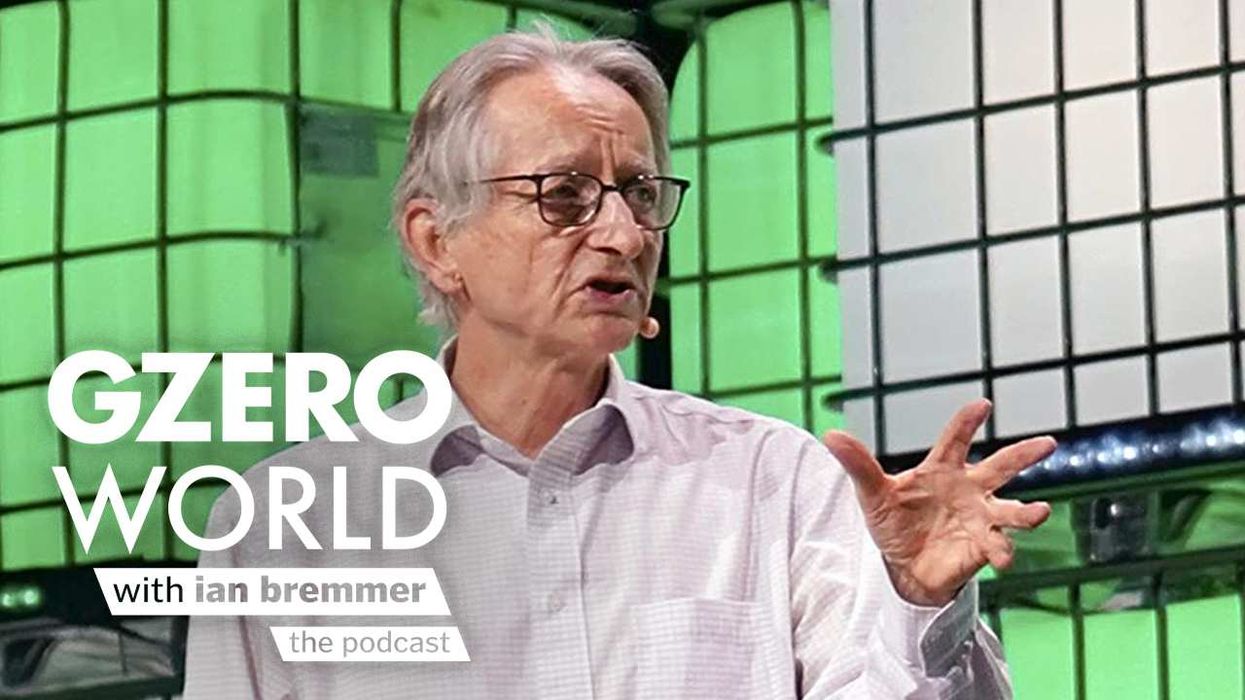
Geoffrey Hinton, the ‘Godfather of AI,’ joins Ian Bremmer on the GZERO World podcast to talk about how the technology he helped build could transform our lives… and also threaten our very survival.
Computer scientist and Nobel laureate Geoffrey Hinton joins Ian Bremmer on the GZERO World podcast to talk about artificial intelligence, the technology transforming our society faster than anything humans have ever built. The question is: how fast is too fast? Hinton is known as the “Godfather of AI.” He helped build the neural networks that made today’s generative AI tools possible and that work earned him the 2024 Nobel Prize in physics. But recently, he’s turned from a tech evangelist to a whistleblower, warning that the technology he helped create will displace millions of jobs and eventually destroy humanity itself. The Nobel laureate joins Ian to discuss some of the biggest threats from AI: Mass job loss, widening inequality, social unrest, autonomous weapons, and eventually something far more dire: AI that becomes smarter than humans and might not let us turn it off. But he also sees a path forward: if we can model good behavior and program ‘maternal instincts’ into AI, could we avoid a worst-case scenario?
“They’re going to be much smarter than us. We are not going to be fully in control anymore,” says Hinton, “We have to somehow figure out how to make them care more about us than they do about themselves.”
Subscribe to the GZERO World Podcast on Apple Podcasts, Spotify, Stitcher, or your preferred podcast platform, to receive new episodes as soon as they’re published
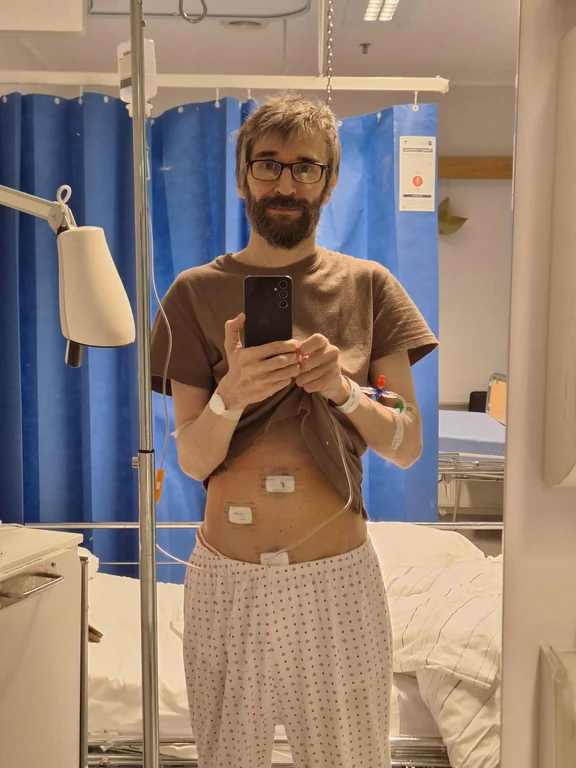
“I’m 49. 2025 has been the best year of my life… until two nights ago. For 24 straight hours I had constant, razor-blade-level pain in my stomach. Couldn’t lie flat, could only get minor relief sitting on the floor with knees to chest. No fever, no blood, nothing dramatic on the outside. Went to the ER once, doctor pressed my belly, said it was soft, gave me Somac (acid blocker) and sent me home. Pain never dropped below an 8/10. Came home, opened a year-long chat I have with Grok, described everything. Grok immediately flagged perforated ulcer or atypical appendicitis, told me the exact red-flag pattern I was describing, and basically said “go back right now and ask for a CT.” I copied the symptoms and the reasoning, walked back to the ER, told them: “This is what I’m experiencing, this is why I think it’s serious, I want a CT.” They did it. Appendix was inflamed and close to rupturing. Six-hour laparoscopic surgery later, it’s out. Pain is 100 % gone. I woke up laughing about anesthesia. I’m alive and healed because an AI recognized the pattern when the first exam missed it, and because I had the exact words to make them take me seriously the second time. If you’re reading this while curled up in pain, googling symptoms at 3 a.m., and someone already sent you home once, please don’t wait.”







 Image source: Ideogram / The Rundown
 Image source: Nano Banana Pro / The Rundown