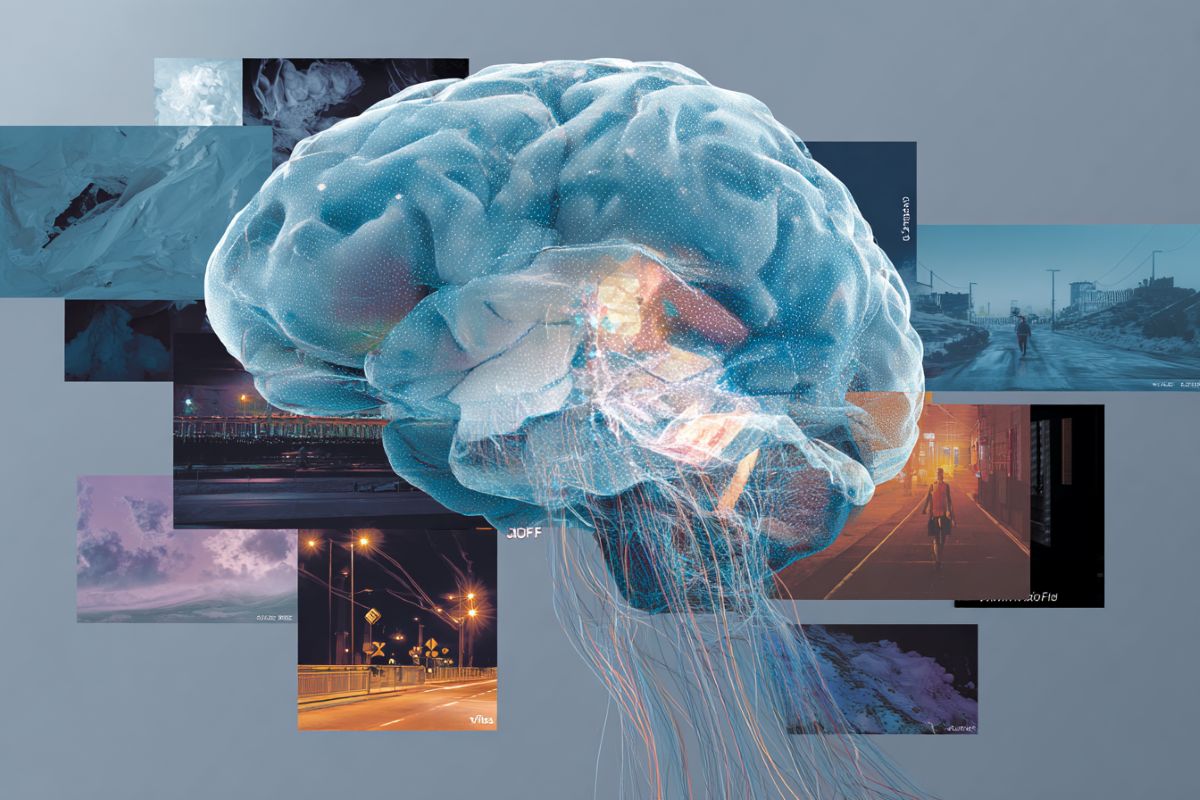
Invisible people: Machine(s) behind Anti-Homeless Rhetoric. Comment: Ireland. Sunday Mail concerning McVerry Trust needs major scrutiny moving beyond the PAC and possibly criminalising some of the people who were in key positions. The people who suffer are those who are homeless while greed is exercising its right to power.

It’s Not Just One Anchor: The Machine Behind Anti-Homeless Rhetoric

The Machine Behind Anti-Homeless Rhetoric

Credit Image: © Richard B. Levine/Levine Roberts via ZUMA Press

This piece exposes the well-funded media and policy ecosystem that reframes homelessness as personal failure, making cruelty seem reasonable and paving the way for criminalizing unhoused people instead of housing them.

From Right-Wing Think Tanks to Viral Creators, a Well-Funded Media Ecosystem Is Shaping Public Opinion and Policy Against America’s Unhoused Neighbors

We are living through one of the most successful propaganda campaigns in modern America — one that convinces people to fear their unhoused neighbors instead of asking why housing has become impossible to afford.

A Dangerous Narrative

Across the country, a powerful shift is underway in how Americans perceive homelessness. Increasingly, people are being told that homelessness isn’t the result of rising rents, stagnant wages, medical debt, or the lack of affordable housing, but the result of individual failure.

This shift did not happen on its own. It has been shaped by a well-funded network of think tanks, media outlets, political messaging firms, and viral content creators, all of whom benefit from framing homelessness as a personal problem rather than a systemic one. And as that narrative spreads, so does the belief that punishment, not support, is the appropriate response.

We saw the consequences clearly when 30-year-old street performer Jordan Neely was killed on a New York City subway after expressing hunger and distress. Neely had not attacked anyone. Yet initial media coverage framed him not as a person in crisis, but as a threat. Commentators defended Daniel Penny’s actions, claiming the killing was justified — even necessary.

That reaction did not emerge from nowhere. It reflects years of messaging that has made the public more willing to see unhoused people as dangerous, hopeless, or less deserving of empathy. The violence is not theoretical. Since 1999, the National Coalition for the Homeless has documented at least 588 unhoused victims who lost their lives in violent attacks, and people without housing are up to 25 times more likely to experience violent assault than those who are housed.

And the rhetoric continues to escalate.

In September, Fox News anchor Brian Kilmeade suggested on national television that homeless people should be given lethal injections. The statement was shocking — but it was not isolated.

As Invisible People founder Mark Horvath said, “What the Fox News anchor said was awful — but the truth is he’s just repeating what a lot of people already think. The negative messaging around homelessness is spreading like cancer.”

This is not a cultural shift happening organically. It is the result of a deliberate narrative project, one designed to make systemic failure appear as personal fault, to divert public frustration away from the housing crisis itself and toward the people suffering from it.

And as housing costs continue to rise, and the social safety net continues to erode, that narrative has made cruelty seem reasonable, and solutions seem impossible. At the same time, more Americans find themselves living beneath the poverty line, only a paycheck away from experiencing homelessness themselves.

How We Got Here: The Architects of the Firehose Spewing Anti-Homeless Rhetoric

The story of how we reached this point didn’t begin with social media, but it has been supercharged by it. Over the past decade, organizations such as the Cicero Institute, PragerU, and the Discovery Institute have invested heavily in reshaping the public conversation around homelessness.

Their message is clear: reject evidence-based approaches like Housing First, and recast homelessness as a personal or moral failure rather than a systemic one. What started as a policy agenda has evolved into a coordinated media campaign — one that thrives in the digital attention economy.

Through white papers, model legislation, and slick “educational” videos, these groups have built a foundation of rhetoric that redefines human suffering as a consequence of bad behavior.

Terms like vagrant, drifter, service-resistant, and choice have been repeated so often that they’ve lost all connection to truth. Each one carries an invisible argument that people are on the streets because they deserve to be.

As Barb Poppe, former executive director of the U.S. Interagency Council on Homelessness, explained:

“When we use language that is dehumanizing — ‘the criminals on our streets,’ ‘the mentally ill,’ ‘the homeless’ — we lump together whole groups of people as undesirables. It stops us from seeing them as neighbors, coworkers, or family members. That language makes inaction acceptable.”

Those narratives don’t just influence public opinion; they shape policy. Anti-camping bans, sit-lie ordinances, and RV prohibitions all stem from the same poisoned well — one in which homelessness has been rebranded as a public nuisance rather than a humanitarian crisis.

The Modern Ecosystem: Rage for Profit

Today, those early narratives have metastasized into a content economy — one that thrives on rage. Incidentally, rage bait, defined as “online content deliberately designed to elicit anger or outrage by being frustrating, provocative, or offensive, typically posted in order to increase traffic to or engagement with a particular web page or social media content,” was named Oxford’s 2025 Word of the Year.

On YouTube, TikTok, and Instagram, faceless “street documentary” channels and 24-hour livestreams of places like Los Angeles’ Skid Row and Philadelphia’s Kensington broadcast human suffering for entertainment and financial gain.

Invisible People has documented nine live streams in Kensington and three in L.A. alone. In some cases, creators earn hundreds of thousands of dollars a month through ads, donations, and memberships. Their thumbnails often feature close-ups of people in visible distress, stripped of consent or context.

Meanwhile, right-wing influencers pump out daily commentary that turns systemic failure into moral panic. Their audiences, often numbering in the millions, are told that compassion is weakness and cruelty is common sense.

Mark Horvath warns, “It’s not just one Fox anchor. The real danger is the nonstop negative content circulating on social platforms that’s shaping the views of millions, especially young adults.”

This isn’t fringe. U.S. viewers watch more than 1 billion hours of YouTube content daily across both TVs and mobile devices combined. And YouTube has become the dominant streaming platform on television screens — in the U.S., it captures the largest share of total TV viewing time. Viewership among adults over 65 has nearly doubled year-over-year. Algorithms prioritize engagement, and anger tends to be the most effective way to engage users.

The result is an attention economy that monetizes dehumanization. Invisible People explores this topic in greater depth in part 2, which examines the financial benefits behind creators and platforms that profit from human suffering.

The Business Model of Outrage

How did we get from televised compassion campaigns like We Are the World to viral videos calling for crackdowns on poverty-stricken people?

Follow the incentives.

Platforms profit from engagement; creators profit from outrage. The more polarizing the content, the more it spreads and the more it earns. This dynamic rewards misinformation over accuracy and moral panic over nuance.

And it’s not limited to social media. National outlets, facing shrinking newsrooms and rising competition for attention, increasingly echo the same fear-based framing. “Homelessness crisis,” “zombie drug,” “urban decay” — these are not neutral descriptors. They’re algorithm-friendly bait that keeps audiences angry and advertisers happy.

The difference is that this new wave of rhetoric comes with faces and feeds that people know. They feel connected to their favorite “truth tellers,” who blur the line between journalism and entertainment. As Horvath said, “We’re not just up against misinformation — we’re up against entire ecosystems built to profit from it.”

Words That Kill

When the public is constantly fed messages that unhoused people are dangerous, dirty, or beyond help, violence becomes easier to justify.

According to the National Coalition for the Homeless, from 2020 to 2022, there were 97 documented violent attacks on people experiencing homelessness, 47 of them fatal. Many of the victims were male, and many of the perpetrators were young. The data show these attacks are not isolated and are often linked to criminalizing survival behaviors.

Each viral clip of an encampment “cleanup,” each headline that blames addiction rather than housing shortages, reinforces the idea that the people suffering are the problem to be solved.

As Poppe reminds us, the real issue isn’t lack of resources; it’s lack of will. “We have the wherewithal to house everyone,” she said. “We just haven’t invested in the housing, shelter, and supports that people need.”

Dehumanizing language gives policymakers permission to look away. When unhoused neighbors are framed as threats, policies shift from support to punishment. Housing budgets shrink while policing budgets grow. The results are visible on every city sidewalk and in every obituary that lists exposure as a cause of death.

Poverty Profiteers: From Think Tank to City Hall

Behind the talking points are organizations that have perfected the art of turning ideology into law.

The Cicero Institute, founded by billionaire Joe Lonsdale, has authored a series of “model bills” promoting the criminalization of homelessness. Their work has been adopted, often word-for-word, by state legislatures and city councils across the country.

At the same time, PragerU and similar “education” brands package anti-housing rhetoric into short, classroom-ready videos aimed at young people. They frame punitive policy as common sense, a marketing campaign disguised as moral clarity.

The overlap is no accident. The same donors who fund these think tanks also bankroll media networks and social content ecosystems that amplify their talking points. What begins as a white paper ends up as a viral meme, then as legislation.

When Perception Becomes Policy

Public opinion doesn’t just reflect policy — it writes it.

According to the Pew Research Center, 54% of U.S. adults say they get news from social media at least sometimes, a shift that diminishes the boundaries between reporting and entertaining. In this algorithm-driven environment, much of what people see isn’t the result of editorial decisions but what the feed decides to show them.

And as Navigator Research recently found, Americans are split between “active” and “passive” news consumers, with 57% saying they actively seek out news, while 43% say the news simply “comes to them.” That passive audience is precisely who the propaganda machine targets. They don’t go looking for information; it finds them — in their feed, in their autoplay queue, in the background of their favorite podcast.

And when those feeds are filled with dehumanizing narratives, voters and policymakers absorb them as truth. The result is a self-fulfilling cycle: misinformation fuels fear, fear drives punitive laws, and those laws reinforce the lies that justified them.

“The homeless sector has failed to educate the public or counter this harmful wave of content,” Horvath said. “Without the funding to scale, we can’t compete at a moment when our work is needed most.”

Nonprofits have been slow to adapt. Many organizations still rely on press releases and awareness campaigns that struggle to cut through the noise. Meanwhile, groups like PragerU and the Discovery Institute operate as full-fledged media publishers, flooding every platform with high-production videos, influencer partnerships, and data-driven distribution strategies.

Their methods work because they’re built for the digital world we actually live in.

Make the Truth Louder

This series exists because silence has consequences.

Every unchecked falsehood makes violence more likely and solutions harder to fund. Every dehumanizing headline pushes housing further out of reach. The anti-homeless narrative machine thrives in that silence, and it will keep growing until truth becomes louder, faster, and more accessible.

That means rethinking what advocacy looks like. It means building audiences, not just awareness. It means telling stories rooted in dignity, consent, and context, and doing it at scale.

Invisible People is committed to being that counter-voice: to exposing the harm, explaining the mechanisms, and offering alternatives rooted in evidence and humanity. Because when homeless people are dehumanized, harm follows. But when stories center dignity, change becomes possible.

“We need to make the truth louder.” — Mark Horvath

This is Part 1 of a six-part Invisible People series examining how a well-funded media ecosystem — from think tanks to viral creators — shapes public perception of homelessness and drives punitive policies. Part 2 in the series follows the money behind rage-bait content. Please share this series and help us make the truth louder!


Erin Wisneski

Erin Wisneski is the Managing Editor of Invisible People, the only nonprofit newsroom in the country dedicated solely to homelessness. She oversees editorial strategy, supports dozens of writers including those with lived experience, and ensures every story is grounded in dignity, accuracy, and a commitment to shifting public understanding toward real solutions.

Cynthia

Cynthia Griffith


Cynthia Griffith is a freelance writer dedicated to social justice and environmental issues.

Jocelyn Figueroa


Jocelyn Figueroa studied Creative Non-Fiction at The New School and is a blogger and freelance writer based out of New York City. Formerly homeless, she launched her own blog discussing shelter life in New York City. Today, Jocelyn is on a mission to build connections through storytelling and creative writing. Check out her book about homelessness at https://ko-fi.com/scartissueproject


Related Topics

Posted in Uncategorized | Tagged , , , , | Leave a comment

Grok 4 AI: The Rising fall-out. Sir John Maxwell. Looking for connection to Michael Comyn K.C. March 2026. Recommend Grokipedia search Michael Comyn

See new posts

This letter is from a file in the Eamon De Valera Papers (P150/512) with the title ‘British Documents Re: 1916’.

The file consists of intelligence reports and despatches between Irish Command [i.e. successive Commanders-in-Chief of British Forces in Ireland–Major-General L.B. Friend, (Lieutenant)-General Sir John Maxwell and (Lieutenant)-General Sir Bryan Mahon] or their various officers; the Commander-in-Chief, Home Forces and his staff; the War Office; M.I.5.G. and the Royal Irish Constabulary. Michael Comyn KC was in communication with Sir John Maxwell and Lieutenant Friend but I cannot find details, can you assist

Thought for 2m 36s

The Eamon De Valera Papers file P150/512, titled “British Documents Re: 1916,” primarily consists of British military intelligence reports, despatches, telegrams, memos, and related materials from October 1915 to November 1917 (with some later annotations). It focuses on pre-Rising intelligence, the suppression of the Easter Rising, surrenders, interrogations, courts-martial, executions, prisoner transfers, martial law, and post-Rising analyses.

Key correspondents include Major-General L.B. Friend (Commander-in-Chief of British Forces in Ireland until April 1916), Lieutenant-General Sir John Maxwell (who took over in late April 1916), Lieutenant-General Sir Bryan Mahon, the War Office, M.I.5.G., the Royal Irish Constabulary, Lord French, Lord Kitchener, Lord Wimborne, and others. The file does not contain any mentions of Michael Comyn KC or communications involving him. Based on biographical sources, Michael Comyn KC (1871–1952), an Irish barrister and nationalist, was in Kansas City, USA, during the Easter Rising itself (April 1916). He returned to Ireland shortly afterward and became involved in defending republican prisoners before military courts under martial law, which were overseen by Maxwell until his departure in November 1916. This defense work likely involved communications with Maxwell or his staff in the context of appeals, trials, or commutations for prisoners sentenced in May–June 1916 (e.g., around 90 death sentences were issued, with 15 executed and the rest commuted due to political pressures). However, no specific details of direct communications between Comyn and Maxwell or Friend have been found in historical records, including the P150/512 file, UCD Archives catalogues, or secondary sources like the Dictionary of Irish Biography and contemporary accounts.

Comyn’s more documented legal and political roles appear in later periods, such as the Irish War of Independence (1919–1921), where he defended prisoners and advised on republican matters, and post-Treaty activities (e.g., in De Valera Papers files like P150/1287, P150/1647, and P150/1811, involving litigation, peace proposals, and legal opinions). If you have additional context about the communications (e.g., a specific date, case, or prisoner), I can search further. Otherwise, you may want to contact UCD Archives directly for access to the full digitized P150/512 collection (currently limited online due to platform redevelopment) or explore Comyn’s mentions in other De Valera Papers files.

Posted in Uncategorized | Tagged , , , | Leave a comment

New Atlas: One apartment per day: Student housing gets 3D printed crazy fast. Comment: Weekend article on Kilsaran suggests they will be able to build 4,000 apartments a year. Watch this space

Architecture

One apartment per day: Student housing gets 3D printed crazy fast

By Adam Williams

December 12, 2025

The 3D-printed student housing development, named Skovsporet, was built on-site using a COBOD BOD3 printer

The 3D-printed student housing development, named Skovsporet, was built on-site using a COBOD BOD3 printer

SAGA

View 5 ImagesView gallery – 5 images

Described as Europe’s largest 3D-printed housing project, the Skovsporet development is currently underway in Denmark. A total of 36 student apartments were built with remarkable speed, as the cutting-edge technology allowed the equivalent of more than one apartment per day to be printed.

Designed by SAGA Space Architects, with 3DCP and COBOD, Skovsporet is located in the town of Holstebro. It was commissioned by affordable housing organization NordVestBo for a local university campus.

The development consists of six buildings in all, with the 36 student apartments spread between them. It was built on-site using a COBOD BOD3 3D printer, which is the 3D-printing firm’s successor to the BOD2 model used on the VeroVistas and the world’s largest 3D-printed building.

Skovsporet will consist of 36 student residences when it's completed
Skovsporet will consist of 36 student residences when it’s completed

The 3D printer extruded a cement-like mixture out of a nozzle in layers to create the basic structure of the apartments from a pre-designed blueprint. Thanks to the automated nature of the printing process, just three people were needed on site and over time progress was sped up significantly.

“Over the course of the project, printing productivity increased significantly,” explains COBOD. “Printing time reduced from several weeks on the first building of six apartments to just five days on the last, equal to more than one apartment per day.”

The student residences range in size from 40 to 50 sq m (431 to 538 sq ft), with each unit including a kitchen, study area, lounge, bathroom, and a bedroom with a double bed. Large roof windows maximize natural light, and the interior decor makes use of coated plywood and glass to offset the coldness of the concrete.

However, it’s important to stress that while the 3D printing robot has completed its work, the job’s not yet completed. A human workforce has now taken over and is currently fitting windows, interiors, furniture, and everything else required to turn a basic shell into actual housing. Outside, landscaped gardens, walking paths, and bicycle parking are also being added to help foster a student-friendly environment.

Skovsporet's interiors are partially finished in wood to offset the coldness of the 3D-printed concrete
Skovsporet’s interiors are partially finished in wood to offset the coldness of the 3D-printed concrete

Skovsporet is expected to be completed by August 2026. The project comes during what has been a remarkable 3D-printing boom in 2025, with the burgeoning technology moving to the mainstream in Europe, Australia, and the United States.

Sources: COBOD, SAGA Space ArchitectsView gallery – 5 images

Tags

ArchitectureBuilding and Construction3D PrintingHousing

1 comment

Adam Williams

Adam Williams

Adam scours the globe from his home in Spain in order to bring the best of innovative architecture and sustainable design to the pages of New Atlas. Most of his spare time is spent dabbling in music, tinkering with old Macintosh computers and trying to keep his even older VW bus on the road.

Posted in Uncategorized | Leave a comment

Neuroscience News: Self-Centeredness. “…Rather, the top five countries were Germany, Iraq, China, Nepal and South Korea, with the five countries with the lowest narcissism scores being Serbia, Ireland, the United Kingdom, the Netherlands and Denmark…”. U.S. was No 16

Neuroscience News Logo

Study Challenges Myths About Self-Centeredness

FeaturedNeurosciencePsychology

·December 14, 2025

Summary: A large international study of more than 45,000 people shows that narcissism is a universal personality trait—not one concentrated in any single country. Although nations differed somewhat, the five highest-scoring countries were Germany, Iraq, China, Nepal, and South Korea, with the United States ranking 16th. Across all 53 countries, the same patterns emerged: young adults scored higher than older adults, and men scored higher than women.

The findings suggest that age-related declines in narcissism, and gender differences in the trait, are remarkably consistent worldwide. These results challenge assumptions about cultural influences and highlight how both biology and life experience shape self-focused tendencies.

Key Facts

  • Universally Present: Narcissism appeared consistently across 53 countries, showing shared global patterns.
  • Not a U.S.-Centric Trait: The United States ranked 16th, well below the highest-scoring nations.
  • Age & Gender Effects: Young adults and men scored higher on narcissism in nearly every country studied.

Source: Michigan State University

If you watch TV, read popular books or even study research articles, you may walk away believing narcissism is a uniquely United States-based characteristic, whether most common in American young adults, professionals in law, business or entertainment, or politicians.

But a recent study from researchers at Michigan State University’s Department of Psychology found that narcissism is a universal trait with consistent patterns across cultures. Interestingly, their findings indicate the U.S. is not even in the top five countries with the highest levels of narcissism — and that rates are higher among young adults and men.

This shows the outline of a man's head.
The researchers also found consistently across cultures that young adults were more narcissistic than older adults and that men were more narcissistic than women. Credit: Neuroscience News

Narcissism, which is a psychological trait that involves excessively high self-esteem but relatively low empathy, also involves an excessive positive focus on the self and a low regard for others.

The study, published in Self and Identity, included over 45,000 people from 53 countries who provided survey data on how narcissistic they were. This data set used one of the largest and most culturally diverse data collections on psychological characteristics available.

The researchers examined how age, gender and perceived status differences in narcissism manifested across countries, including examining the roles of individualism/collectivism values and each country’s gross domestic product, or GDP.

The study found that the five countries with the highest overall narcissism scores didn’t include the United States—which came in at 16 on the list. Rather, the top five countries were Germany, Iraq, China, Nepal and South Korea, with the five countries with the lowest narcissism scores being Serbia, Ireland, the United Kingdom, the Netherlands and Denmark.

The researchers also found consistently across cultures that young adults were more narcissistic than older adults and that men were more narcissistic than women.

“We found that there were differences across cultures, including that people from higher GDP countries were more narcissistic, but the degree to which younger adults were narcissistic compared to older adults didn’t matter much on what country you were from,” said William Chopik, co-author of the study and associate professor in the Department of Psychology.

Previous research has shown that cultures play a significant role in shaping one’s personality and the lived experiences of people from different demographic backgrounds, but this study suggests that there are aspects of cultures that might not exert as strong of an influence.

“Being young nearly everywhere involves focusing on yourself and thinking you’re better than you are,” Chopik said. “But life can be a humbling experience, and it seems to humble people in a similar way across cultures.”

The researchers were also surprised to find that people from highly collectivistic, or group-oriented countries had similar patterns to more individualistic-thinking countries.

“Even cultures we may consider to be group-oriented don’t necessarily suppress self-focused behaviors,” said Macy Miscikowski, co-author and research associate.

“Insights like these encourage us to think about the balance between cultural and biological influences on personality. It also suggests exciting avenues for studies on how life experiences, societal expectations and economic contexts interact to shape the expression of narcissistic traits across one’s lifespan.”

Key Questions Answered:

Q: Is narcissism more common in the United States than elsewhere?

A: No. The study found that several countries scored higher overall, placing the U.S. in the middle of the global rankings.

Q: Are age and gender differences in narcissism culturally specific?

A: No. Young adults consistently scored higher than older adults, and men scored higher than women across nearly all countries.

Q: Do cultural values like collectivism reduce narcissism?

A: Not significantly. Even group-oriented cultures showed similar self-focused patterns to more individualistic countries.

Editorial Notes:

  • This article was edited by a Neuroscience News editor.
  • Journal paper reviewed in full.
  • Additional context added by our staff.

About this psychology and self-centeredness research news

Author: Jack Harrison
Source: Michigan State University
Contact: Jack Harrison – Michigan State University
Image: The image is credited to Neuroscience News

Original Research: Open access.
“Cultural moderation of demographic differences in narcissism” by William Chopik et al. Self and Identity

Posted in Uncategorized | Tagged , , , , | Leave a comment

August 2016 Admiral James Lyons, American Freedom Alliance: “Islam is a totalitarian ideology bent on world domination masquerading as religion”

Posted in Uncategorized | Leave a comment

Alfred Adler: An excellent mind and his interpretation of psychology is worth attention

https://share.google/oBCvPaossdtm4IVl4

Posted in Uncategorized | Leave a comment

The findings showed that oxytocin specifically reduces both the subjective feeling of fear and its corresponding neural signature in social contexts, but not in non-social ones. Credit: Neuroscience News. AI to rescue “To overcome this, they developed an advanced AI-inspired brain model that can precisely track the conscious experience of fear in these dynamic, naturalistic situations.”

This shows a brain.

The findings showed that oxytocin specifically reduces both the subjective feeling of fear and its corresponding neural signature in social contexts, but not in non-social ones. Credit: Neuroscience News

AI Brain Model Reveals How Fear Works in Real Life

FeaturedNeurosciencePsychology

·December 12, 2025

Summary: Researchers have developed an AI-driven brain model that can track fear as it unfolds in real-world situations, offering a major shift from traditional lab-based approaches. Classic fear studies often rely on static images, but these do not reflect how the brain processes fear in dynamic contexts. The new model accurately captured fear responses during naturalistic experiences and revealed that oxytocin specifically reduces fear in social situations.

These findings point to a targeted mechanism for treating social anxiety, social phobia, and related conditions. The work also provides a powerful tool for developing clinical interventions that better reflect real-life emotional processing.

Key Facts

  • Real-World Fear Mapping: An AI-inspired brain model captured fear responses during naturalistic experiences better than traditional lab paradigms.
  • Social Fear Reduction: Oxytocin reduced both subjective fear and its neural signature specifically in social contexts.
  • New Treatment Pathway: Findings support a targeted approach for conditions marked by excessive social fear, including anxiety and autism-related challenges.

Source: University of Hong Kong

Researchers at The University of Hong Kong (HKU) have unveiled a transformative approach to understanding and treating social anxiety, challenging decades of laboratory-based assumptions and opening doors to targeted therapies.

By developing an AI-driven brain model that accurately captures fear in real-world scenarios, the discovery offers new hope to millions affected by disorders such as social phobia and autism, while paving the way for clinical interventions using innovative tools.

Fear is a natural survival instinct, but for many, it can become a debilitating condition like social anxiety. A fundamental challenge in treating such disorders is that traditional laboratory studies of fear fail to capture how the emotion is experienced in dynamic, real-world situations.

In two recent studies, a research team led by Professor Benjamin Becker from the Department of Psychology at HKU has made a significant breakthrough. The team first revealed that existing brain models of fear, developed using static images in labs, do not reliably track fear responses during real-life experiences, such as watching a scary movie. To overcome this, they developed an advanced AI-inspired brain model that can precisely track the conscious experience of fear in these dynamic, naturalistic situations.

Building on this innovation, the researchers used the new model to test the effects of the hormone oxytocin. The findings showed that oxytocin specifically reduces both the subjective feeling of fear and its corresponding neural signature in social contexts, but not in non-social ones. This suggests a highly targeted mechanism for alleviating social fear.

Key implications of the research:

  • Challenges the validity of hundreds of previous laboratory studies, showing they may not accurately describe how the brain processes fear in daily life.
  • Provides compelling evidence for a new, targeted treatment approach for disorders marked by excessive social fear, such as social anxiety, social phobia, and autism.
  • Creates a powerful new AI-driven tool for bridging the gap between lab research and real-life emotional experiences, paving the way for more effective clinical interventions.

Key Questions Answered:

Q: Why do traditional fear studies fail to capture real-life anxiety?

A: Traditional studies use static images and simplified stimuli, which do not reflect the complexity of real-world fear. The new AI-based model shows that fear processing changes dramatically in dynamic environments, revealing gaps in decades of laboratory research.

Q: How does oxytocin reduce social fear according to the new model?

A: Oxytocin lowered both subjective fear ratings and the neural patterns linked to fear, but only in social situations. This selective effect suggests a precise mechanism for treating disorders involving social fear.

Q: How could this research change treatment for social anxiety?

A: By revealing fear signatures in real-world contexts, the model enables more targeted interventions and supports therapies that specifically address social fear circuitry. This offers new potential for personalized, mechanism-based treatments.

Editorial Notes:

  • This article was edited by a Neuroscience News editor.
  • Journal paper reviewed in full.
  • Additional context added by our staff.

About this AI and fear research news

Author: Jaymee Ng
Source: University of Hong Kong
Contact: Jaymee Ng – University of Hong Kong
Image: The image is credited to Neuroscience News

Original Research: Open access.
“Oxytocin Reduces Subjective Fear in Naturalistic Social Contexts via Enhancing Top-Down Middle Cingulate Amygdala Regulation and Brain-Wide Fear Representations” by Benjamin Becker et al. Advanced Science

Posted in Uncategorized | Tagged , , , , | Leave a comment

Futurism: Time Magazine Deploys AI……

Time’s Up

Time Magazine Deploys AI “Ask Me Anything” Box That Covers Up Its Actual Journalism and Can’t Be Closed

Thanks, we hate it.

By Frank Landymore

Published Dec 11, 2025 2:08 PM EST

The website for Time magazine now features a big AI chatbox that can't be closed and won't go away, blocking even its main headlines.
Illustration by Tag Hartman-Simkins / Futurism. Source: Time Magazine

It may not surprise you that Time magazine has elected to highlight the AI industry in its annual “Person of the Year” issue. Or should we say persons: the collective billionaire “architects of AI,” it announced.

But what may surprise you is a new feature prominently displayed on Time‘s website: a window for an AI chatbot.

“Ask me anything,” it reads.

It does not go away. Instead, the chatbot window stays fixed to the bottom center of your screen, blocking any text that’s in the way. In fact, depending on the size and resolution of your device’s screen, it completely blots out the home page’s featured headline — including today’s much-discussed article, “Person of the Year 2025: The Architects of AI.”

There’s no x-button to close the AI window, and as far as we can tell, no other means of swatting it away. If you click in the text box, it expands to filling the entire page. Call it an ironic metaphor for the tech and AI’s industry capturing of news and media, if you want. It’s also just plain annoying.

Emily M. Bender, a computational linguistics expert at the University of Washington and author of the book “The AI Con,” complained about the intrusive AI feature on social media.

“Any journalistic outfit that values the work of their journalists wouldn’t offer to present it as papier-mâché,” Bender said of the AI chatbot, “and certainly wouldn’t put that offer in the way of the other bit of journalism their audience might be trying to read.”

Time unveiled the AI in late November, though apparently without much fanfare. It’s not merely an AI chatbot, it insists, but an AI agent — meaning it’s supposed to be autonomous — and trained on the magazine’s 102-year-old archive of nearly 750,000 magazine issues, web articles, and other assets, generating summaries, audio rundowns, and answers to user questions. It was built in partnership with Scale AI, a controversial data annotation company whose services are essential to the generative AI industry.

“People spend hours and hours with agents, and hopefully this means that they will spend a lot more time with our journalism,” Time editor-in-chief Sam Jacobs told Axios after its unveiling.

The “TimeAI” agent wasn’t featured on the magazine’s homepage at launch, which is perhaps why it flew under the radar until now. This, however, is not Time‘s first stab at experimenting with AI.

When it crowned Donald Trump as Person of the Year in 2024, Time used the announcement to unveil what in retrospect seems a prototype of the AI we’re presented with today, also built with Scale AI. One sign of progress, or at least shifting industry trends? It merely called its predecessor an AI chatbot, and not an “agent.” It’s not yet clear how the new AI is supposed to be agentic.

Certainly Time isn’t the only newsroom picking up AI. Outlets like The Washington Post and Bloomberg have some form of AI that provides a summary of articles or answers questions, though neither are as intrusive as Time‘s. The New York Times uses it to generate headlines. WaPo is particularly AI obsessed: it’s considered using an AI to help non-professional write entire articles that could be published in the paper, and is now launching an AI-generated podcast service.

More on AI: McDonald’s Issues Extremely Weird Response to Its Disastrous AI Ad

Frank Landymore

Contributing Writer

I’m a tech and science correspondent for Futurism, where I’m particularly interested in astrophysics, the business and ethics of artificial intelligence and automation, and the environment.

Posted in Uncategorized | Tagged , , , , | Leave a comment

Queen Victoria wanted to have lots of children, hoping that her offspring would come to dominate the courts of Europe…The queen faced widespread criticism for her decision from physicians who felt the use of anesthesia in childbirth was too dangerous, and from clergy who said that reducing a woman’s pain during childbirth was unbiblical.

ArchaeoHistories

@histories_arch

Queen Victoria wanted to have lots of children, hoping that her offspring would come to dominate the courts of Europe. But at the same time, she hated having to endure the pain of childbirth. For the impending birth of her eighth child, Victoria made a bold and controversial decision—she allowed herself to be anesthetized with chloroform. The queen faced widespread criticism for her decision from physicians who felt the use of anesthesia in childbirth was too dangerous, and from clergy who said that reducing a woman’s pain during childbirth was unbiblical. But, being the queen, Victoria was free to ignore the criticism. So, when her son Leopold made his royal entry into the world, Queen Victoria was blissfully unconscious. She was so pleased with the effect of the chloroform that she had it administered again in 1857 for the birth of her daughter Beatrice, the queen’s ninth and final child. Queen Victoria gave birth to Prince Leopold on April 7, 1853. Following the queen’s lead, the women of the British aristocracy, and later women of all social classes, began asking for chloroform during childbirth. The photo is Queen Victoria and 9-year-old Prince Leopold. Because he suffered from hemophilia and epilepsy, Leopold had a difficult childhood. Nevertheless, he grew up to marry a German princess, only to die at age 31 after falling down a flight of stairs in Cannes, just prior to the birth of his son Charles Edward, who went on to become a Nazi general.

Posted in Uncategorized | Leave a comment

The Conversation: Two centuries ago, US President James Monroe declared the Western Hemisphere off-limits to European powers in what would became known in history books as the “Monroe Doctrine”.

Academic rigour, journalistic flair

Arts + CultureBusiness + EconomyEducationEnvironmentHealthPolitics + SocietyScience + TechWorldPodcastsInsights

Authors

  1. Juan Zahir Naranjo CáceresPhD Candidate, Political Science, International Relations and Constitutional Law, University of the Sunshine Coast
  2. Shannon Brincat Senior Lecturer in Politics and International Relations, University of the Sunshine Coast

Disclosure statement

The authors do not work for, consult, own shares in or receive funding from any company or organisation that would benefit from this article, and have disclosed no relevant affiliations beyond their academic appointment.

Partners

University of the Sunshine Coast provides funding as a member of The Conversation AU.

The Conversation UK receives funding from these organisations

View the full list

DOI

CC BY ND

We believe in the free flow of information

Republish our articles for free, online or in print, under Creative Commons licence.Republish this article

Share article

Print article

Two centuries ago, US President James Monroe declared the Western Hemisphere off-limits to European powers in what would became known in history books as the “Monroe Doctrine”.

The proclamation established the foundation for a new era of US dominance and “policing” of the region.

In the decades that followed, almost a third of the nearly 400 US interventions worldwide took place in Latin America. The United States toppled governments it deemed unfavourable or used force later ruled illegal by international courts.

In 2013, then-Secretary of State John Kerry announced “the era of the Monroe Doctrine is over”. It signalled a shift towards treating the region as partners rather than a sphere of influence.

Now, however, the National Security Strategy released last week by the Trump administration has formally revived that old doctrine.

It helps explain the administration’s interventionist actions in the region over the past couple months, from its deadly boat strikes in the Caribbean to its selective use of sanctions and pardons.

Why Latin America is so important

In typical hubristic fashion, the document openly announces a “Trump Corollary” to the Monroe Doctrine, elevating the Western Hemisphere as the top US international priority. The days when the Middle East dominated American foreign policy are “thankfully over”, it says.

The document also ties US security and prosperity directly to maintaining US preeminence in Latin America. For example, it aims to deny China and other powers access to key strategic assets in the region, such as military installations, ports, critical minerals and cyber communications networks.

Crucially, it fuses the Trump administration’s harsh rhetoric on “narco-terrorists” with the US-China great power competition.

It frames a more robust US military presence and diplomatic pressure as necessary to confront Latin American drug cartels and protect sea lanes, ports and critical infrastructure from Chinese influence.

How the strategy explains Trump’s actions

For months, the Trump administration has been striking suspected drug boats in the Caribbean Sea and eastern Pacific Ocean, killing dozens of people.

International law experts and human rights officials say these attacks breach international law. The US Congress has not authorised any armed conflict in these waters, yet the strikes have been presented as necessary to protect the US from “narco‑terrorists”.

Venezuelan President Nicolás Maduro has also been branded a “narco‑dictator”, though Venezuela is a minor player in the flow of drugs to the US.

On December 2, President Donald Trump told reporters that any country he believes is manufacturing or transporting drugs to the US could face a military strike. This includes not just Venezuela, but also Mexico and Colombia.

On the same day, Trump also granted a pardon to Juan Orlando Hernández, Honduras’ former president. He had been sentenced to 45 years in prison for helping move hundreds of tons of cocaine into the US.

Honduras’ President Juan Orlando Hernandez speaking at a climate conference in 2021. Andy Buchanan/AFP Pool/AP

The new National Security Strategy attempts to explain the logic behind these contradictory actions. It emphasises the need to protect US “core national interests”, and stresses:

President Trump’s foreign policy is […] not grounded in traditional, political ideology. It is motivated above all by what works for America — or, in two words, ‘America First’.

Within this logic, Hernández was pardoned because he can still serve US interests. As a former president with deep links to Honduran elites and security forces, he is exactly the kind of loyal, hard-right client Trump wants in a country that hosts US military personnel and can help police migration routes to the US.

The timing underlines this: Trump moved to free Hernández just days before Honduras’ elections, shoring up the conservative networks he once led to support Trump’s preferred candidate for president, Nasry Asfura.

In Trump’s “America First” calculus, pardoning Hernández also sends a couple clear signals. Obedient partners are rewarded. And power, not principle, determines US policy in the region.

The obsession with Venezuela

The new security strategy explains Trump’s obsession with Venezuela, in particular.

Venezuela has the world’s largest proven oil reserves and a long coastline on the Caribbean Sea, which is a vital sea lane for US goods travelling through the Panama Canal.

Under years of US sanctions, Venezuela signed several energy and mining deals with China, in addition to Iran and Russia. For Beijing, in particular, Venezuela is both an energy source and a foothold in the hemisphere.

The Trump administration’s National Security Strategy makes clear this is unacceptable to the United States. Although Venezuela is not named anywhere in the document, the strategy alludes to the fact China has made inroads with like-minded leaders in the region:

Some foreign influence will be hard to reverse, given the political alignments between certain Latin American governments and certain foreign actors.

A recent report suggests the Maduro government is now attempting a dramatic geopolitical realignment. The New York Times says Maduro’s government offered the US a dominant stake in its oil and gold resources, diverting exports from China. If true, this would represent a clear attempt to court the Trump administration and end Venezuela’s international isolation.

But many believe the Trump administration is after regime change instead.

The Venezuelan opposition leader, María Corina Machado, who won the 2025 Nobel Peace Prize, is pitching a post‑Maduro future to US investors, describing a “US$1.7 trillion (A$2.5 trillion) opportunity” to privatise Venezuela’s oil, gas and infrastructure.

For US and European corporations, the message is clear: regime change could unlock vast wealth.

Latin America’s fragmented response

Regional organisations remain divided or weakened, and have yet to coordinate a response to the Trump administration. At a recent regional summit, leaders called for peace, but stopped short of condemning the US strikes off Latin America.

Governments are instead having to deal with Trump one by one. Some hope to be treated as friends; others fear being cast as “narco‑states”.

Two centuries after the Monroe Doctrine, Washington still views the hemisphere as its own backyard, in which it is “free to roam” and can meddle as it sees fit.

The Conversation meets a real need in the information ecosystem. Our authors are subject-matter experts who offer clarity and insight into the issues facing the world. An outlet where you can find real expertise from authors without axes to grind, published by an organisation with no agenda to push. Thousands of media organisations worldwide republish our content for their readers. But the same business model that has freed us from the influence of billionaire owners or big business advertisers comes with its own challenges. Universities are under enormous financial pressure, their income streams squeezed in every direction. Your support as our readers is crucial to securing The Conversation’s future. Donations are an essential bulwark against unexpected loss of income. Around 2,000 of our readers give monthly to support our work. If you’re not among them but value what we do, please consider giving today.

I’ll support you

Avatar

Stephen Khan

Editor-in-Chief, The Conversation UK

You might also like

With a deadline looming, Lebanon is under pressure to disarm Hezbollah or risk another war

What the US national security strategy tells us about how Trump views the world

From evil to upheaval and beyond: How the ‘axis’ metaphor shaped modern geopolitics

Why China is watching Trump’s Venezuela campaign closely

Events

More events

Privacy policyTerms and conditionsCorrections and complaints

Copyright © 2010–2025, The Conversation Trust (UK) Limited

Posted in Uncategorized | Tagged , , , , | Leave a comment