Courage.Media – The Future Surveillance Dystopia

Commentary

The Future Surveillance Dystopia

“The eyes of the state can be on you at all times”

4 Feb 2026

Josh Ferme

View articles

The United Kingdom is currently overseeing the testing and gradual deployment of a suite of technologies designed to monitor, analyse, and predict the behaviour of its citizens in ways that were previously confined to dystopian fiction. The scale of these systems, and more importantly the philosophy underpinning their use, should concern anyone regardless of political persuasion or criminal intent.

These technologies will not remain confined to the UK. There is a long and well-established precedent of individual states operating as de facto pilot studies, trialling new forms of surveillance and control before they are adopted elsewhere. Controversial technologies trialled in one country today often become conventional practice globally tomorrow.

Become a Free Member

Enjoy independent, ad-free journalism – delivered to your inbox each week

Join Today

The UK itself provides clear historical examples. In the 1990s, Britain became the most surveilled democracy on earth, with the highest density of CCTV cameras anywhere in the world. This set a template that other Western nations soon followed. Britain remains one of the most surveilled nations on earth, but has since been surpassed by both China and the United States. The same pattern can be seen with Automatic Number Plate Recognition technology, which uses optical character recognition to read vehicle registration plates. It was first extensively deployed in the UK and is now embedded across policing, border control, and private security throughout the Western world. This suggests that technological innovations deemed successful are likely to expand far beyond the borders of their country of origin.

The most concerning recent development in UK surveillance is the use of AI to predict crime before it happens. According to reporting in The Telegraph, police chiefs in the UK are currently evaluating around 100 separate AI projects, with the Government investing £4 million in the creation of an interactive, AI-powered map of England and Wales intended to be fully operational by 2030. Its stated purpose is to identify areas likely to experience criminal activity and to recommend police intervention before any criminal activity actually takes place. Sir Andy Marsh, head of the College of Policing, has described plans to identify the 1,000 most “dangerous predatory men” believed to pose the highest risk to women and girls. These individuals would be flagged for crimes they are statistically likely to commit based on data and case histories. Marsh has stated openly that the aim is to make such men “frightened because the police are coming after them”.

There are several problems with this approach. The first is epistemic. Men willing to engage in highly taboo, predatory behaviour are already demonstrating a willingness to defy social norms and legal constraints. They are, by definition, less predictable than average citizens. Treating them as stable data points risks giving police a false sense of control over individuals who do not conform to statistical regularities to the same degree as the average citizen. Equally, if they are aware they are being observed it would make sense for them to alter their behavioural patterns to render the AI’s predictive abilities far less effective. This could lead to a situation in which, because they are being monitored by artificial intelligence rather than human police officers, they are able to commit crimes so long as they do not adhere to the prior patterns of criminality used by the AI to predict their behaviour in the first place.

The second problem is that monitoring these 1,000 predatory men is not as effective as other interventions. Predictive systems may create an illusion of containment while diverting attention from the reality that the most reliable way to prevent certain crimes is the physical removal of genuinely dangerous individuals from society. This could be either through imprisonment or, in more serious cases, capital punishment. The return of the latter is still supported by a majority of Britons. In the context of the current shortage of prison space in Britain, this will incentivise subsequent governments to release dangerous criminals into society, free to commit further crimes, but with the illusion of preventative measures in place.

This approach also further erodes the boundary between what is a crime and what is not. How do you deal with someone who is predicted to commit a crime but has yet to do so? Do you still treat them as a criminal? Until very recently, the police recorded “non-crime hate incidents”, which resulted in police intervention despite, by definition, no crime being committed. Being “guilty” of such an incident could result in police visiting one’s home or even a trip to the police station. These incidents also appeared on enhanced background checks despite no criminal conviction taking place. Non-crime hate incidents were only scrapped following a considerable campaign against them. Nevertheless, they support the view that individuals can be effectively criminalised for behaviour deemed problematic by the state despite no actual crime having occurred.

While efforts to protect women and girls are undeniably admirable, it would be naïve to assume these tools will remain narrowly confined to this domain if they are deemed successful. There are powerful institutional incentives to expand their application. Once a system exists to identify high-risk individuals, the definition of risk inevitably broadens. Political dissidents, protest movements, journalists, and activists all generate behavioural patterns that can be framed as disruptive. Within the increasingly dominant technocratic, data-driven governance model, it seems inevitable that such technology would eventually be employed in this manner.

If this were not concerning enough, it comes alongside plans to implement live facial recognition technology in every town centre across the country. Such systems allow police to identify individuals in real time, track their movements, and retrospectively reconstruct their behaviour. When combined with predictive analytics, this creates the technical foundations for continuous population monitoring regardless of criminality.

The political architect of much of this vision is the Home Secretary, Shabana Mahmood, who has described her ideal system as a “panopticon” in which “the eyes of the state can be on you at all times”. She recently articulated this vision to Tony Blair, a figure synonymous with the expansion of technocratic governance and surveillance powers, and received his stamp of approval.

The panopticon is a prison design that originated with the 18th-century philosopher Jeremy Bentham. It consists of a rotunda with cells arranged along the outer circumference across multiple levels. The side of each cell facing the centre of the circle has iron bars, while the outer side has a window, allowing light to pass through the cell and silhouette the prisoner, making them easily visible. At the centre is a watchtower from which a single guard can observe all prisoners without being seen himself. Although one guard cannot physically monitor every prisoner at once, prisoners can never know when they are being watched and are therefore compelled to behave as though they always are. It is effectively a prison designed to induce self-regulation through uncertainty.

Applied at the level of an entire population, the implications are deeply sinister. A panoptic surveillance state goes far beyond punishing dissent. It prevents it from forming in the first place. People moderate their behaviour, speech, and associations long before the state needs to intervene. From the perspective of a potentially tyrannical government, this is the most effective technique for maximising obedience among its subjects.

Functionally, a future surveillance dystopia emerges incrementally through pilot projects such as these, using the framing that they are well-intentioned attempts to target criminals. Much like a parasite, by the time it is recognised as a problem in the body politic, it is already deeply embedded and difficult to remove. Unless current trends are disrupted we may well find ourselves living inside our very own panopticon, forever watched by unseen authorities, despite doing nothing wrong.

Donate today

Help Ensure our Survival

Make a One-Off Donation

Comments (0)

Posted in Uncategorized | Tagged , , , , | Leave a comment

@EricLDaugh: BREAKING: President Trump just PUMMELED the “experts” “The “Experts” said that if I hit 50,000 on the Dow by the end of my Term, I would have done a great job, but I hit 50,000 today, three years ahead of schedule — Remember that for the Midterms, because the Democrats will CRASH the Economy!” He’s right!

Eric Daugherty

@EricLDaugh

BREAKING: President Trump just PUMMELED the “experts” “The “Experts” said that if I hit 50,000 on the Dow by the end of my Term, I would have done a great job, but I hit 50,000 today, three years ahead of schedule — Remember that for the Midterms, because the Democrats will CRASH the Economy!” He’s right!

Posted in Uncategorized | Leave a comment

A step into the human side of President Ronald Reagan. A letter to his son on his wedding day. The importance of Love.

Crazy Vibes

@CrazyVibes_1

Ronald Reagan was the first U.S. president who had been divorced. His first marriage, to actress Jane Wyman, ended because she chose to walk away. By all accounts, she wasn’t the easiest person to be married to — she filed for divorce from her second husband just a month after marrying him, and her third marriage didn’t last long either.

But Reagan’s second marriage, to Nancy, was a different story. They were together for 52 years, and their relationship was widely seen as a model of love and partnership. In 1971, when Reagan was Governor of California, his eldest son Michael was getting married. Reagan couldn’t be there in person, so he sent him a letter. What he wrote wasn’t just a note of congratulations — it was honest advice from a father who had lived, learned, and deeply valued his own marriage:

Dear Mike, You’ve probably heard all the jokes from people who are bitter or cynical about marriage. But here’s the truth: you’re about to start the most important relationship in your life. And it will become whatever you choose to make it. Some men try to act tough by living like the guys in locker room stories — thinking that what their wife doesn’t know won’t hurt her. But believe me, even without lipstick on your collar or shady excuses about where you were at 3 a.m., a wife always knows. And when that trust starts to break, the magic in the relationship starts to fade. More often than people realize, the ones who say marriage doesn’t work are the same ones who put the least into it. It’s like physics — you get out exactly what you put in. If you only give half, you’ll only get half back. Sure, there’ll be moments when you’re tempted — when you notice another woman or miss your old single life. But I’ll tell you something: real strength, real masculinity, is sticking with one woman your whole life. Anyone can cheat — that’s easy. But to stay interesting and loving to the same woman, through all the normal, messy, everyday stuff — that takes real character. If you love her, really love her, you’ll never embarrass her by flirting with others or making her question where you’ve been. And you’ll never put her in a position where another woman could give her a knowing smile — like she knows a secret your wife doesn’t. Even for one second. You, more than most, understand what it’s like to grow up in an unhappy home. Now, you have the chance to build something better.

There’s no greater feeling than coming home after a long day and knowing someone’s waiting just to hear the sound of your footsteps. With love, Dad P.S. Say “I love you” at least once a day. It really does help.

Those words came from more than just a father — they came from someone who knew what marriage meant and how important it is to nurture love and loyalty every day.

Reagan made sure Nancy never had to doubt she mattered. He made sure she always waited for him with love. As people say, you reap what you sow. And Nancy — graceful, strong, and loyal — chose him just as much as he chose her. She wasn’t just the First Lady of the United States. She was, first and always, the First Lady of his heart. And Ronald Reagan — the strong, determined leader known to the world — never forgot who he was at home: a husband, a father, and a man who truly loved his family. Like many good men in this world.

Posted in Uncategorized | Tagged , , , , | Leave a comment

Mosab Hassan Yousef: His father was a senior member of Hamas … He says “Palestine is NOT a cool thing. It’s Jihad….

Posted in Uncategorized | Leave a comment

Leitrim Live: New documentary from RTÉ Investigates reveals the psychiatric care scandal in Ireland

ADVERTISEMENT

Advertise with Leitrim Live

New documentary from RTÉ Investigates reveals the psychiatric care scandal in Ireland

Families from all over Ireland tell their heartbreaking stories

New documentary from RTÉ Investigates reveals the psychiatric care scandal in Ireland

Lili Lonergan

05 Feb 2026 8:07 AM


In a special two-part TV series, RTÉ Investigates examines Ireland’s mental health system and uncovers how the criminalisation of mental illness leaves families and individuals impacted and abandoned by the State.

Two decades after the Government’s landmark policy “A Vision for Change” promised a shift from large psychiatric institutions to modern, community-based care, RTÉ Investigates asks whether that transformation has truly taken place.

READ NEXT: RTÉ issue update on new series of Home of the Year following death of presenter Hugh Wallace

Twenty years ago the State unveiled big plans for psychiatric care in Ireland. Many old wards were shut, with a plan to open specialist services instead.

“Which should have meant opening up lots of facilities, healthcare facilities. It could have been assisted living, nurses, care.

It didn’t happen.”

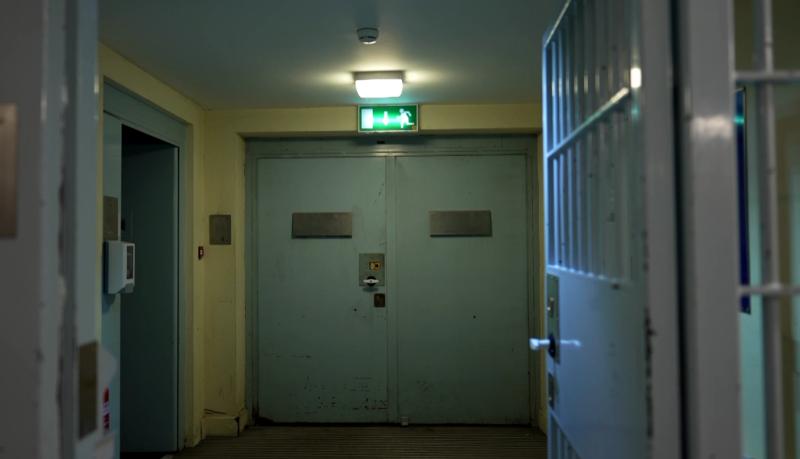
Without acute beds – patients with mental illness are being sent to prison.

To investigate the true extent of this, reporter Conor Ryan and producer Frank Shouldice travelled to court hearings and inquests across the country.

They spoke to the families of inmates and those working at the coal face. They pored over hundreds of first hand accounts, investigation reports and post-mortems. And they visited the prison landings that are struggling to cope.

READ NEXT: Witnesses urged to come forward following tragic death of pedestrian in his 70s

In the first programme this Monday night at 9.35pm, RTÉ Investigates lays bare how the criminalisation of mental illness continues to affect individuals and their families.

“These people need to be in hospital, not in jail.”

Key to the promised reform was the establishment of a brand new Central Mental Hospital in Portrane in north Dublin.

In Tuesday night’s programme, RTÉ Investigates questions whether this service has delivered the change that was promised in the face of growing waiting lists and ongoing concerns about the community services people are being discharged to.

READ NEXT: RIP: ‘Beautiful soul ‘- Shock and heartbreak after young woman passes away at home

“He killed our son three years ago and now he’s allowed out, what’s going on?”

Watch RTÉ Investigates: The Psychiatric Care Scandal this Monday, February 9 and Tuesday 10 at 9.35pm on RTÉ One and RTÉ Player.

Posted in Uncategorized | Tagged , , , , | Leave a comment

Carl Jung’s Answer About God That Religion Doesn’t Want You to Hear

Posted in Uncategorized | Leave a comment

The Chris Hedges YouTube Channel: Interview with Professor Mearsheimer “What will the Future Look Like in the New World Order”. Left or Right?

Posted in Uncategorized | Leave a comment

The Rundown Tech: Boring Company … just watch this destined for Dubai “4-mile EV-only tunnel with four underground stations”…

BORING COMPANY
🪏 Boring Company lands first deal outside U.S.
Image source: The Boring Company
The Rundown: Dubai just approved its first international Loop project with Elon Musk’s Boring Company: a $154M, 4-mile EV-only tunnel with four underground stations linking the Dubai International Financial Centre to Dubai Mall.
The details:
The Loop will run as an EV-only public shuttle using Tesla vehicles operated by Boring Company staff — riders can’t drive their own cars through the tunnels.Dubai plans to start construction immediately, with the first phase targeted for completion within about one to two years.The route is projected to move roughly 13K passengers per day at launch, with the wider network eventually handling up to 30K daily. A full buildout could expand the Loop into a roughly 15-mile network with 19 stations, estimated at $545 million.
Why it matters: Dubai’s Loop is the first international deployment of Musk’s “Teslas in tunnels” transit model and the biggest test yet of whether smaller-bore tunnels can actually compete with conventional metro systems in a major city. Success could validate the still-contentious Music City Loop in Nashville.
Posted in Uncategorized | Leave a comment

US tech giants like Google ($15B), Microsoft ($17.5B) and Amazon ($35B) are pouring capital into India’s AI infrastructure.

Steve Hanke

@steve_hanke

US tech giants like Google ($15B), Microsoft ($17.5B) and Amazon ($35B) are pouring capital into India’s AI infrastructure. At last, some foreign investment is headed for the world’s FASTEST GROWING ECONOMY.

Posted in Uncategorized | Leave a comment

@clashreport Astrophysicist David Kipping says science has crossed a real threshold

Posted in Uncategorized | Leave a comment