OCCRP: The Cat and the Stock-Footage CEO

The Cat and the Stock-Footage CEO: How a Digital Trail Helped Unmask an Iranian Money Machine

Investigation

A woman named Elizabeth Newman supposedly runs two U.K.-registered crypto exchanges. But she appears to be a corporate fiction used as a front for a convicted embezzler whom the United States has accused of moving billions of dollars’ worth of digital assets on behalf of Iran’s repressive regime.

Banner: James O’Brien/OCCRP

Episode 3: There You Are, Carmelo

A secret recording from a clandestine sting operation reveals the plans of financial experts enlisted to help former Venezuelan oil ministry official Carmelo Urdaneta move the illicit money and bypass international banking controls.

Reported by

OCCRP

February 27, 2026

On paper, Elizabeth Newman is a financial titan behind two U.K.-based cryptocurrency exchanges that claim to process more than a billion dollars’ worth of digital assets every day.

To believe U.K. corporate records and a promotional video, the short-haired Dominican in her 40s maintains a global footprint, listing correspondence addresses ranging from a beachfront Caribbean property to London’s charming Covent Garden and a 68-story skyscraper in Dubai.

But in reality, this person doesn’t seem to exist at all. 

An OCCRP investigation has discovered that the woman presented to the world as the director of these two major crypto firms is actually a stock-footage model. While the U.K.’s business registry accepted her as a “person with significant control” over the companies, reporters found no evidence of a physical person corresponding to the Elizabeth Newman described in filings. 

Newman’s companies were listed as “dormant” in official corporate filings. But U.S. authorities allege they were active engines for Babak Zanjani, a notorious Iranian financier sanctioned last month for providing financial backing for major projects that support the Islamic Revolutionary Guard Corps (IRGC) and the Iranian regime more broadly. 

By allowing Newman to front these entities, the U.K. provided a veneer of Western legitimacy to a crypto network alleged to have helped bypass global financial blockades.

Iran had sentenced Zanjani to death for embezzlement of state oil funds in 2016, but he has bounced back into favor with the country’s hardline Islamist authorities; his sentence was commuted in 2024 and he was formally released last year.

Credit: Ali Shirband/Mizan News Agency

Babak Zanjani at the Revolutionary Court of Tehran, Iran on November 1, 2015.

The U.S. Treasury claims he was freed to launder money for the very regime that had imprisoned him. It describes his two exchanges, Zedcex and Zedxion, both registered as U.K. companies, as part of an operation helping the IRGC bypass sanctions, moving billions of dollars’ worth of funds through a global financial hub with total anonymity.

The exchanges are among the latest in a sophisticated toolkit Tehran uses to make and receive payments. TRM Labs, a blockchain analytics company, said in a January report that cryptocurrencies appear to play an increasingly prominent role in the financing of the IRCG, a military organization that doubles as a multi-billion-dollar business empire and enforces the agenda of Iran’s theocratic regime.

In January the IRGC played a leading role in violently quashing nationwide protests in which thousands were killed, rights groups reported.

TRM Labs reported that the Zedcex and Zedxion crypto exchanges also handled millions of dollars in transfers from the IRGC to a man the U.S. accuses of financing a Yemeni armed group responsible for attacking commercial shipping in the Red Sea.

Credit: Morteza Nikoubazl/NurPhoto/NurPhoto via AFP

The burned East Tehran General Directorate of Tax Affairs headquarters in the aftermath of protests in Tehran, Iran, on January 21, 2026.

Zedcex and Zedxion have processed approximately $1 billion in funds linked to the IRGC, according to TRM Labs’ analysis of crypto wallets attributable to the exchanges’ operations. 

In the weeks following the mass protests, Western governments have scrambled to choke off funding for the IRGC and other Iranian state bodies.

“Treasury will continue to target Iranian networks and corrupt elites that enrich themselves at the expense of the Iranian people,” said U.S. Treasury Secretary Scott Bessent in a January 30 statement where his department applied sanctions on Zanjani and the two U.K. crypto exchanges.

“This includes the regime’s attempts to exploit digital assets to evade sanctions and finance cybercriminal operations.”

In response, Zanjani said on the social media site X that the U.S. accusations were “merely a pretext for seizing 660 million Tether [U.S. dollar-pegged stablecoin crypto assets], and extortion.” He has not directly confirmed or denied having a connection to the firms. 

Zanjani did not respond to questions about his role in the crypto exchanges. OCCRP sent questions addressed to Elizabeth Newman to both Zedcex and Zedxion, but received no response.

The Stock-Footage CEO

Both exchanges have said on their websites they are directed by a woman named “Elizabeth Newman,” but despite a months-long search, OCCRP was unable to find any real-life individual matching the “Elizabeth Newman” persona.

An official Zedxion marketing video from March 2022 featured an image of a woman called “Elizabeth” — identified as the platform’s “executive director.”

That woman, in fact, was a stock-footage model from a video titled “Pretty black woman talking to camera” available on Shutterstock.

The same video named the firm’s supposed finance administrator as “Smith” and team leader as “Muhammad,” but their images were also stock footage.

Posted in Uncategorized | Leave a comment

George Galloway interviews Judge Napolitano. Who owns the Government in the U.S.

Posted in Uncategorized | Leave a comment

The Psychology of Jeffrey Epstein: Power, Control, and Grooming. How Epstein Groomed Adults

Posted in Uncategorized | Leave a comment

Robert Reich: Why does Trump attack unions so much?

Posted in Uncategorized | Leave a comment

The Skeleton…

Posted in Uncategorized | Leave a comment

John Mearsheimer: The Case for a Nuclear Iran

168,093 views Feb 25, 2026

John J. Mearsheimer is the R. Wendell Harrison Distinguished Service Professor of Political Science at the University of Chicago, where he has taught since 1982. Prof. Mearsheimer argues why Iran should be considered a rational actor, and why Iran should develop nuclear weapons as the ultimate deterrent.

Follow Prof. Glenn Diesen: Substack: https://glenndiesen.substack.com/ X/Twitter: https://x.com/Glenn_Diesen Patreon:   / glenndiesen  

Posted in Uncategorized | Leave a comment

The Harvard Gazette: Enhance or Eliminate? How AI Will Likely Change These Jobs

Enhance or Eliminate? How AI Will Likely Change These Jobs

Research by Suraj Srinivasan finds that employers are seeking more AI-related skills in certain fields, while demand for structured and repetitive tasks is waning. Find out which roles will be augmented or automated in this interactive graphic.

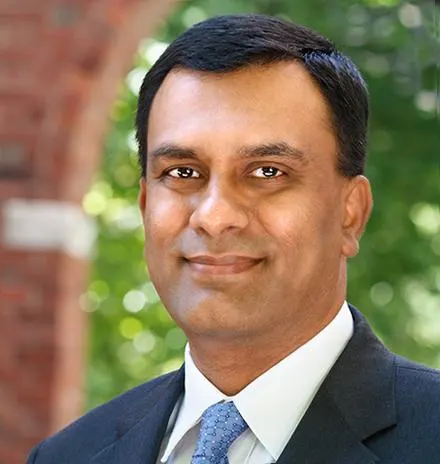
Headshot of Suraj Srinivasan

Featuring Suraj Srinivasan. By Ana Elena Azpúrua on February 20, 2026.

  1. Harvard Business School
  2. Working Knowledge
  3. Enhance or Eliminate? How AI Will Likely Change These Jobs

Will generative AI replace your job or improve it? What has been the impact on the labor market so far?

After the public launch of ChatGPT in November 2022, job postings for occupations that involve lots of structured and repetitive tasks, likely replaceable by generative AI, decreased by 13%. Meanwhile, employer demand for jobs that require more analytical, technical, or creative work—potentially enhanced by artificial intelligence—grew 20%, according to a working paper coauthored by Harvard Business School Professor Suraj Srinivasan.

The findings offer early clues for how companies are adopting generative AI, which has sparked a corporate search for efficiency and existential dread among employees. The research team assessed job postings from 2019 through March 2025 using a large dataset that covers nearly all US vacancies.

“Rather than solely eliminating jobs, generative AI creates new demand in augmentation-prone roles, suggesting that human-AI collaboration is a key driver of labor market transformation,” says Srinivasan. The largest reductions were in the finance and technology sectors.

Srinivasan, the Philip J. Stomberg Professor of Business Administration, collaborated on the working paper “Displacement or Complementarity? The Labor Market Impact of Generative AI” with Wilbur Xinyuan Chen, of the Hong Kong University of Science and Technology, and Saleh Zakerinia of Ohio State University. The paper was first released in December 2024 and was updated in August.

Occupations with potential for AI augmentation handle tasks that can be automated using generative AI alongside other tasks that require human involvement. Those most prone to augmentation tend to involve greater use of social and hands-on technical skills. Microbiologists, financial analysts, and clinical neuropsychologists are three examples with high augmentation potential. In finance, as Srinivasan explains, investment managers and analysts use AI-powered tools to process and evaluate market data, but ultimately, their judgment and decision-making remain crucial.

The research team used OpenAI’s ChatGPT to categorize over 19,000 job tasks across more than 900 occupations, assessing their potential for automation through generative AI. They also constructed an augmentation score based on the share of exposed and unexposed tasks in each occupation.

https://flo.uri.sh/visualisation/25683904/embed?auto=1

https://flo.uri.sh/visualisation/25685234/embed?auto=1

The number of skills required for roles prone to automation are shrinking, the researchers found. They registered 7% fewer of those skills in job postings and also fewer skills emerging in these occupations. At the same time, they detected more AI-related skills—such as prompt writing or using AI tools—in jobs with high augmentation potential. As workflows transform with the new technology, new skills have also emerged.

The researchers note that the study focuses on the short-term impact of generative AI on the US labor market, so the effects on other regions or long-term impacts “remain uncertain as adoption scales.”

How companies integrate generative AI technologies is decisive for job loss or growth, the paper warns. Given that it impacts jobs differently, Srinivasan recommends that companies:

  • Invest in reskilling programs to transition workers to roles enhanced by AI. “Retraining is essential for jobs where generative AI is reducing skill diversity. In automation-prone occupations, workers may face displacement unless they develop non-automatable skills, such as judgment and interpersonal communication skills.”
  • Continuous upskilling in generative AI to leverage new tools. “In augmentation-prone occupations, generative AI is broadening skill requirements, increasing the demand for AI literacy, human-AI collaboration, and domain-specific AI applications.”

“Firms should view generative AI as an augmentation tool rather than merely a cost-cutting measure and align workforce training programs accordingly to support both job transitions and evolving skill demands,” says Srinivasan.

Featured Faculty

Article By:

Ana Elena Azpúrua, data visualization and graphics editor at HBS Working Knowledge

Illustrated portrait of Ana Azpúrua, a data visualizations editor at Harvard Business School's Working Knowledge online publication

Topics:

Artificial IntelligenceCareer and WorkplaceCompetency and SkillsData and TechnologyHuman ResourcesPerformanceTechnology Adoption

Share:

FacebookLinkedInPrint

Email

Latest from HBS facult

Posted in Uncategorized | Tagged , , , , | Leave a comment

Massimo Scientists may have found a cure for Type-1 Diabetes

Posted in Uncategorized | Leave a comment

Gad Saad: Quote by Thomas Sowell. Think about “Suicidal Empathy”

Posted in Uncategorized | Leave a comment

The Harvard Gazette: After rare condition robbed drummer of ability to play music, science led him back. Comment: my blog is partially influenced by recommendations for improvements in health for people who have suffered from TBI (hearing vision 50% no taste no smell, amnesia et al), bipolar, anxiety, chronic fatigues, breast cancer (see book Fortune Favours the Brave on Amazon by Michelle Marcella Clarke). Hence this article is very important.

Christy DeSmith

Harvard Staff Writer

February 25, 2026 4 min read

After rare condition robbed drummer of ability to play music, science led him back

The first symptoms appeared during a concert.

In 2009, Satoshi Yamaguchi, a drummer with the Japanese rock quartet RADWIMPS, found himself lost during a familiar bridge.

“The sound stopped suddenly,” Yamaguchi recalled in a 2023 TV news interview with NHK World-Japan. “I wanted to use my right foot to hit the drum twice, but I ended with the first try. At that instant, my brain really drew a blank. I thought, ‘What’s going on?’”

It took five years to receive the diagnosis of musician’s dystonia, which causes involuntary muscle spasms. The neurological disorder, impacting roughly 1 percent of professional musicians globally, eventually forced Yamaguchi’s exit from the band he had co-founded in 2003. But it also opened a remarkable new chapter in the percussionist’s story.

In a recent event hosted by the Reischauer Institute of Japanese Studies, Yamaguchi recalled his journey from rock stardom to scientific researcher intent on solving the mysteries of his condition. He also showed off the voice-activated drum kit that enabled his return to live performance in 2024, nearly a decade after he left RADWIMPS.

“My children had only ever seen me play the drums on the screen,” Yamaguchi recalled, sharing a photo of his family of five. “This was the first time they heard me perform live.”

Key to Yamaguchi’s trajectory was drummer-turned-scientist Shinya Fujii of Keio University’s NeuroMusicLab. The pair, who met when Yamaguchi arrived as a visiting researcher in 2021, went on to pursue a series of academic inquiries into musician’s dystonia.

Their first paper, published in 2024, charted the disorder’s impact on Yamaguchi’s musicianship. The effects may seem subtle to the untrained ear. But when symptoms appeared, the researchers confirmed, the drummer fell out of rhythm with a metronome.

For Yamaguchi, the findings came as a relief. “When I was still active in the band, I had no way to share the difference or the struggle with the people around me,” he told a packed house at Smith Campus Center. “But through science, I was finally able to reveal the true nature of that ghost.”

“When I was still active in the band, I had no way to share the difference or the struggle with the people around me. But through science, I was finally able to reveal the true nature of that ghost.”Satoshi Yamaguchi

Inspired, Yamaguchi went on to conduct a large-scale survey of professional and amateur Japanese musicians. Results show musician’s dystonia is more prevalent among pros, with the right lower limbs most frequently afflicted.

Also uncovered was a potential link with the stress caused by in-ear metronomes, increasingly used in the music world by drummers, conductors, and other designated timekeepers. The devices dictate the rhythm of each piece, with a click track delivered directly to the eardrum.

“In recent years,” Yamaguchi explained, “large-scale live performance has evolved into a total entertainment experience that includes not only listening to performance, but also synchronizing the music with visuals, lighting, special effects, and programmed sound sources.”

In 2023, Yamaguchi moved to the Bay Area for a residency at Stanford University’s Center for Computer Research in Music and Acoustics. It was an unlikely place to discover the joys of taiko drumming, a traditional Japanese art form. He ended up performing in a 50th anniversary concert with the group San Jose Taiko.

The art form’s whole-body rhythms are taught orally — not via sheet music, Yamaguchi noted. While learning this way, he was struck by an idea. “What if I could use my voice to create the sound of the bass drum?” he recalled wondering. “My voice could become my instrument.”

Developed in collaboration with Yamaha, VXD is a bass-drum interface operated via vocal cues and throat sensor. Yamaguchi met privately last week with scientists from the Harvard Biodesign Lab, who wanted to understand how the system works. At the public event, Yamaguchi showed off VXD by playing a few RADWIMPS favorites.

An audience member gasped with delight when he started drumming “Sparkle,” featured in the 2016 hit anime film “Your Name.” Also performed were early releases “25-kome no senshokutai” (“The 25th Chromosome”) and “Iindesuka?” (“Is It Alright?”).

“Music has given me life,” Yamaguchi said near the end of his talk. “Music has also caused me pain. I lost it once, and then I found my way back to it — and it saved me.”

The event closed with the high-energy “Zenzenzense” (“Past Past Past Life”), which was also featured in “Your Name.” Yamaguchi pursed his lips into the microphone as he repeated the “don” syllable that triggers the VXD system’s bass drum. His right foot, pressed firmly to the floor, appeared as an anchor. The rest of his body was lifted by the beat.

Share this article

Posted in Uncategorized | Tagged , , , , | Leave a comment